
This Abandoned Florida Ghost Town Feels Like Something Straight Out Of A Horror Movie
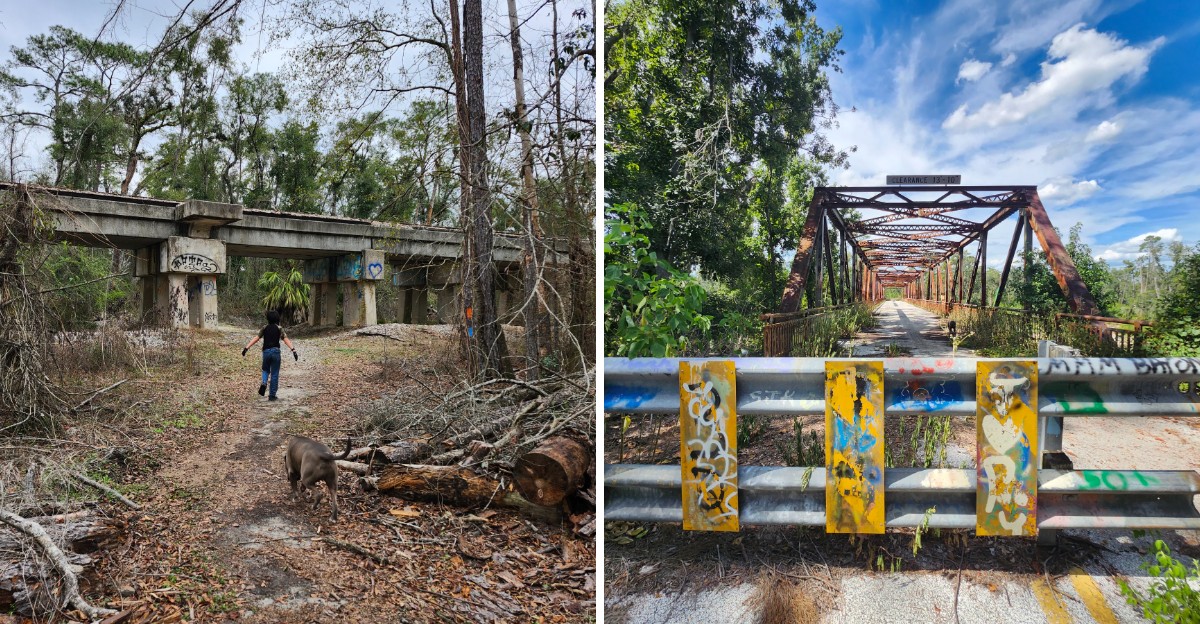
A whole town was named after one woman, and almost nothing of it remains. Two churches, two schools, a steamboat dock, and roughly 1,000 people once filled this patch of riverbank.
Now the woods have taken over. A rusty bridge sits closed off over dark water, and a mansion foundation hides under the leaves until winter thins them out.
I appreciate places that tell their stories quietly. This one sits in North Florida where two rivers meet, and it practically whispers through the pines.
Once a thriving mill town filled with workers and industry, this place is now little more than ruins hidden among the trees. What happened to everyone who called it home?
A Governor Built It, Then The Forest Took It Back
Around 1861, a businessman named George Franklin Drew founded the Town of Ellaville on the Suwannee River. He later became Florida’s 12th governor and its first after Reconstruction.
Drew named the town after Ella, a woman who worked for his household for many years. That personal touch makes the empty landscape feel even more haunting today.
Back then, the place was anything but quiet. Drew’s steam-powered sawmill grew into one of the largest in the state and employed about 500 people.
By the early 1870s, roughly 1,000 residents lived here. The town had a rail line, a steamboat dock, a Masonic lodge, and a commissary.
It also had two churches and two schools. That’s a real community, with Sunday mornings, school lessons, and busy afternoons by the river.
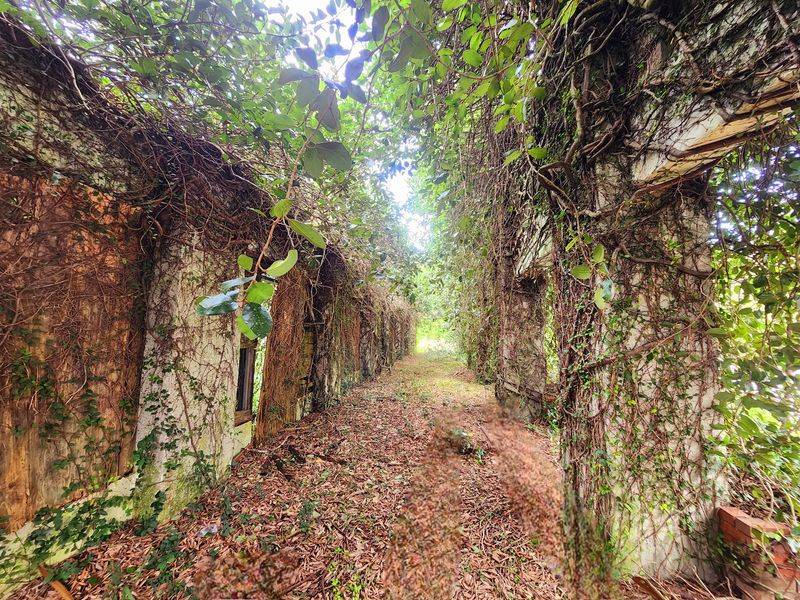
Now try finding any of that. Most of it has vanished under pine needles, vines, and more than a century of Florida weather.
The contrast is what gives the Town of Ellaville its eerie pull. You’re standing where a thriving town once buzzed, and the woods act like nothing ever happened.
Honestly, that silence does more storytelling than any museum display could manage.
How A Boomtown Slowly Faded Into Silence
Fire struck first. In 1898, flames destroyed the original sawmill that kept the whole town running.
Workers rebuilt it, which shows how much this place mattered to people. Sadly, the local yellow pine supply ran thin fast.
By 1900, the mill closed for good. When the main employer shuts down, a company town feels it immediately.
Then the rivers piled on. Several major floods of the Suwannee and Withlacoochee rivers battered the area in the early 1900s.
The Great Depression pushed things further downhill. Families left, buildings emptied, and the streets grew quieter each year.
In 1942, the Ellaville post office officially closed. That marked the end of the town as a real, working community.
It’s a slow-motion story, not one dramatic night. Every setback chipped away a little more until only scraps remained.
Knowing this timeline changes how you see the ruins. Each foundation and rail scrap becomes a clue in a mystery spread across decades.
I’d suggest reading the history kiosk near the site before exploring. It helps the scattered pieces click together as you hike.
That Rusty Old Bridge Looks Ready For Its Close-Up
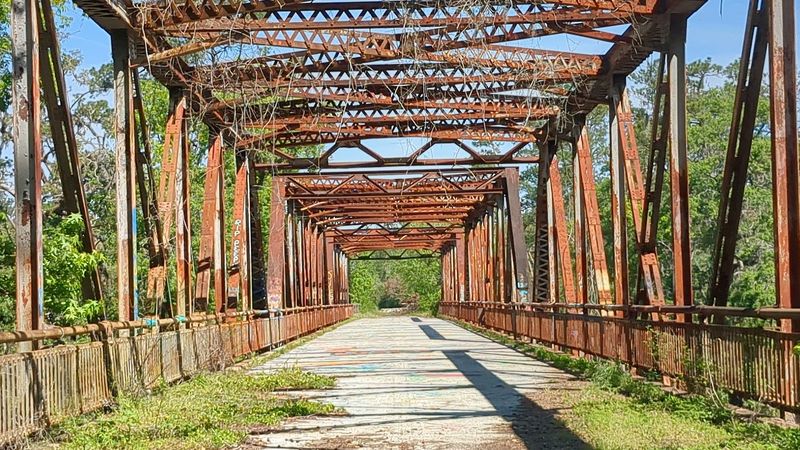
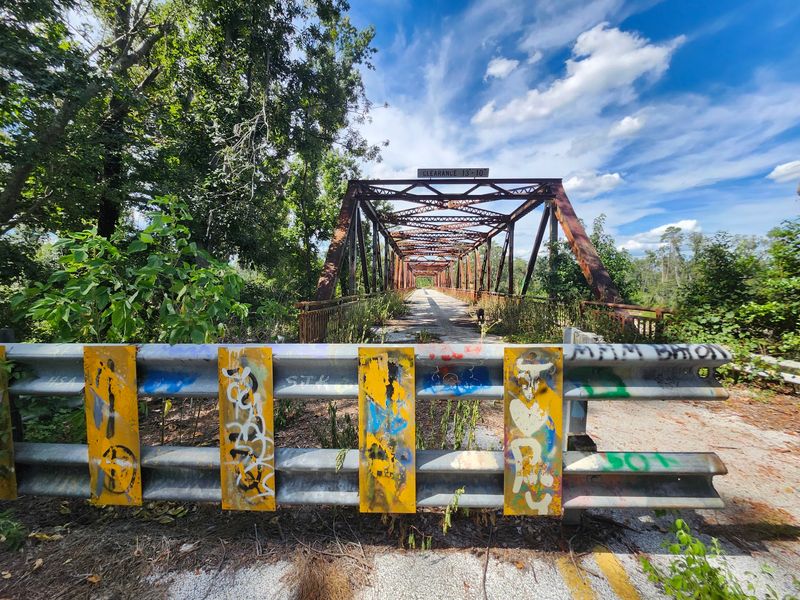
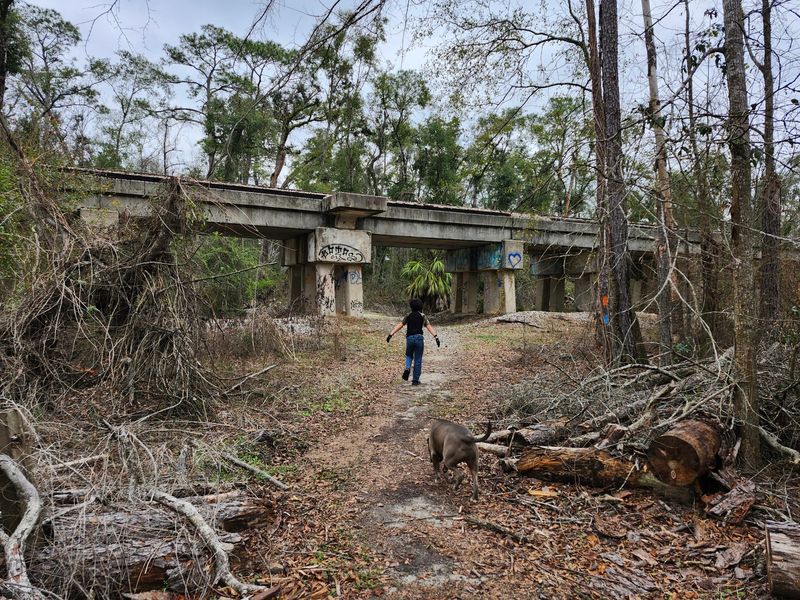
Built in 1925, the Hillman Bridge once carried travelers across the Suwannee River. It’s the most famous leftover of the Town of Ellaville.
In 1986, a new bridge and highway route opened nearby. Traffic moved on, and the old bridge was left standing alone.
Its weathered steel frame stretching over dark water feels straight out of a spooky film. The trees crowding around only add to the drama.
Here’s a heads-up before you go. The bridge entrance has been fenced off for safety, so walking across isn’t an option right now.
That’s disappointing, sure. Still, the view from the riverbank remains one of the best photo spots in the area.
Try visiting early or late in the day for softer light. The steel and river look especially moody when the sun sits low.
Bring a zoom lens if you have one. It helps you capture rivets, rust, and details without getting close to the barrier.
Respect the fence, though. Old structures can hide real hazards, and no photo is worth a risky shortcut.
Go In Winter If You Want To Find The Mansion
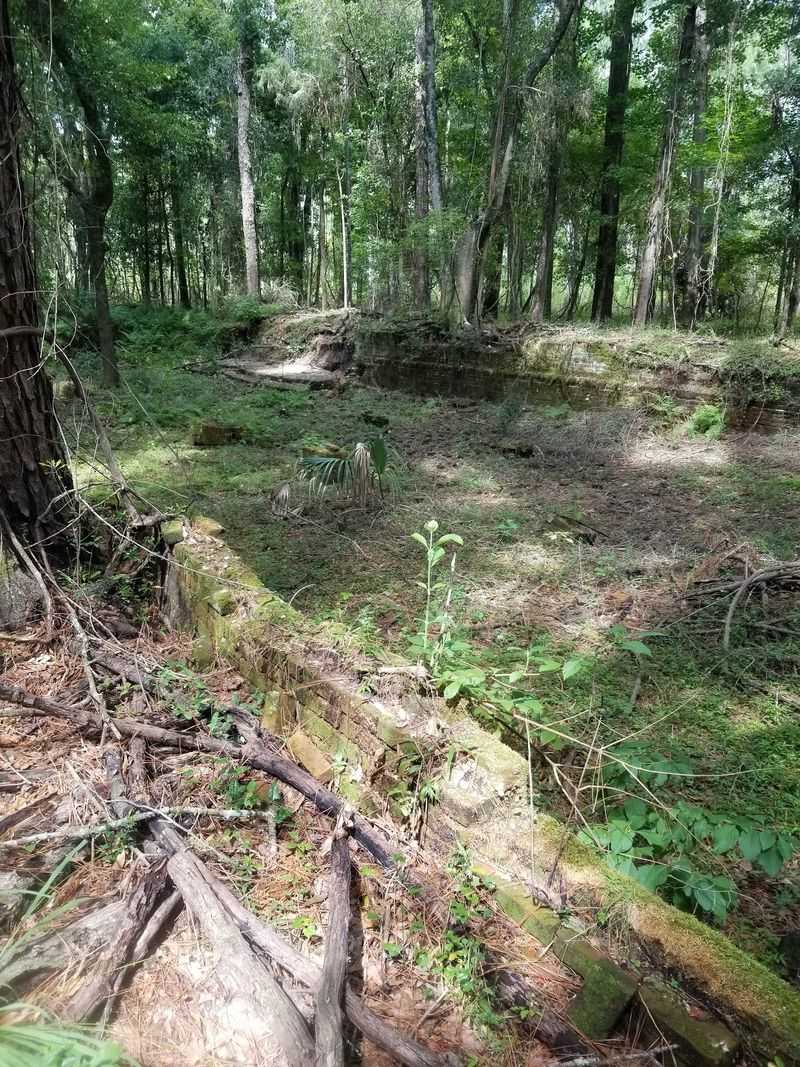
Leaves make excellent hiding spots, and the Drew Mansion proves it. Its stone foundation is easiest to spot during the colder months.
In summer, thick vegetation swallows the ruins almost completely. Winter strips the cover away and reveals what remains.
The mansion belonged to the town’s founder, George Franklin Drew. After flood damage, it sat abandoned and suffered from vandalism.
Then, in the 1970s, fire destroyed it. Only the base stones survived to mark where a governor’s home once stood.
Finding it feels a bit like a treasure hunt. You scan the forest floor, then suddenly notice straight lines nature didn’t make.
That moment is half the fun of the Town of Ellaville. The ruins don’t announce themselves with big signs or flashy displays.
Cooler weather also makes hiking far more comfortable. Florida summers bring heat, humidity, and plenty of bugs.
Pack sturdy shoes, water, and patience. Look carefully, step lightly, and leave every stone exactly where you found it.
The Abandoned River Store Brings Serious Spooky Energy
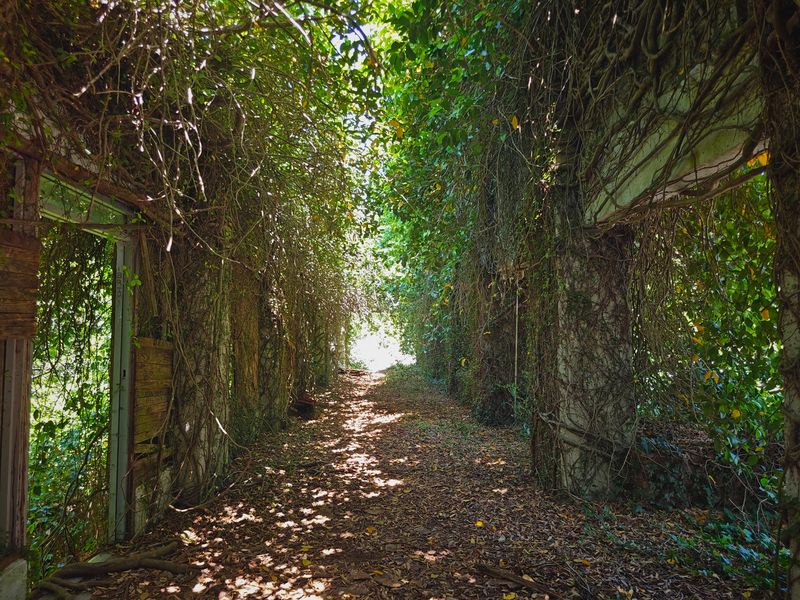
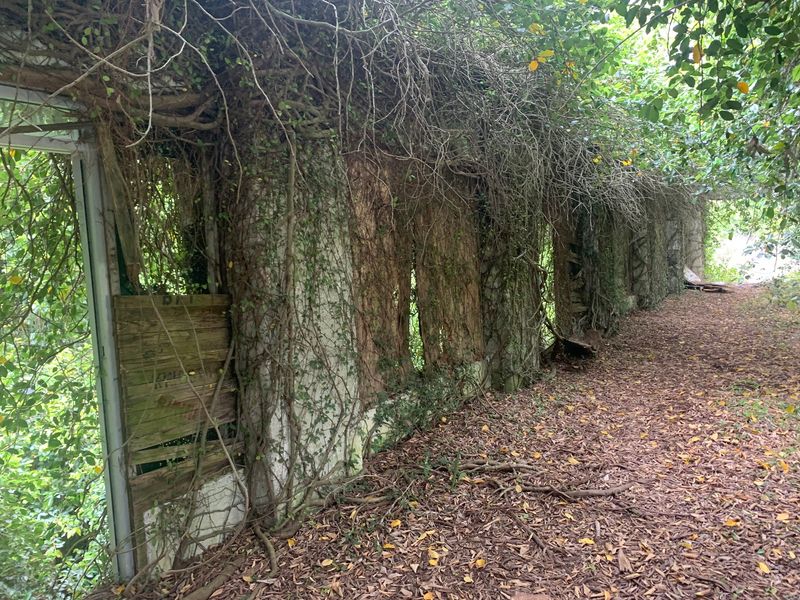
Nothing says horror movie quite like an empty roadside store. The ruins of the old Suwannee River Store deliver that feeling instantly.
This spot once served as a river store and fueling station. Now it stands silent, with nature creeping in from every side.
Don’t expect snacks or cold drinks, obviously. The store has been closed for a very long time.
That’s exactly why it’s so fascinating. You can almost picture travelers pulling over before the new highway changed everything.
Crumbling walls and open doorways invite curiosity. Still, use common sense around any old structure.
Watch your footing and avoid climbing on walls. Floors and ceilings in abandoned buildings can be unstable.
Going with a friend or small group is smart. It’s safer, and someone else can help spot hidden details.
It also gives you someone to jump at when a squirrel rustles the leaves. Trust me, that’s part of the experience here.
Bring your camera and plenty of curiosity. This little ruin packs a lot of atmosphere into a small footprint.
Lace Up For A Hike Through Five-Plus Miles Of Pines
Five and a half miles of trail can tell a lot of stories. The Ellaville Loop Trail winds through pine forests along the Suwannee River.
This is the main way to explore the area. Marked trails guide you past ruins, river views, and quiet stretches of woods.
A section of the Florida Trail also passes through. It’s open for both hiking and biking, which keeps things flexible.
Hurricane Idalia hit the region in September 2023. Fallen trees made exploring trickier for a while.
Trails have been cleared, but conditions can shift after storms. Checking with Suwannee River State Park before you go is a smart move.
The site is open year-round from 8 a.m. until sunset. That gives you plenty of daylight for a relaxed adventure.
Wear supportive shoes and bring more water than you think you need. Bug spray and sunscreen belong in your bag too.
I’d plan for a slow pace. The best parts of Ellaville often hide just off the path, waiting for patient eyes.
Two Rivers Meet Here, And The Views Are Ridiculous
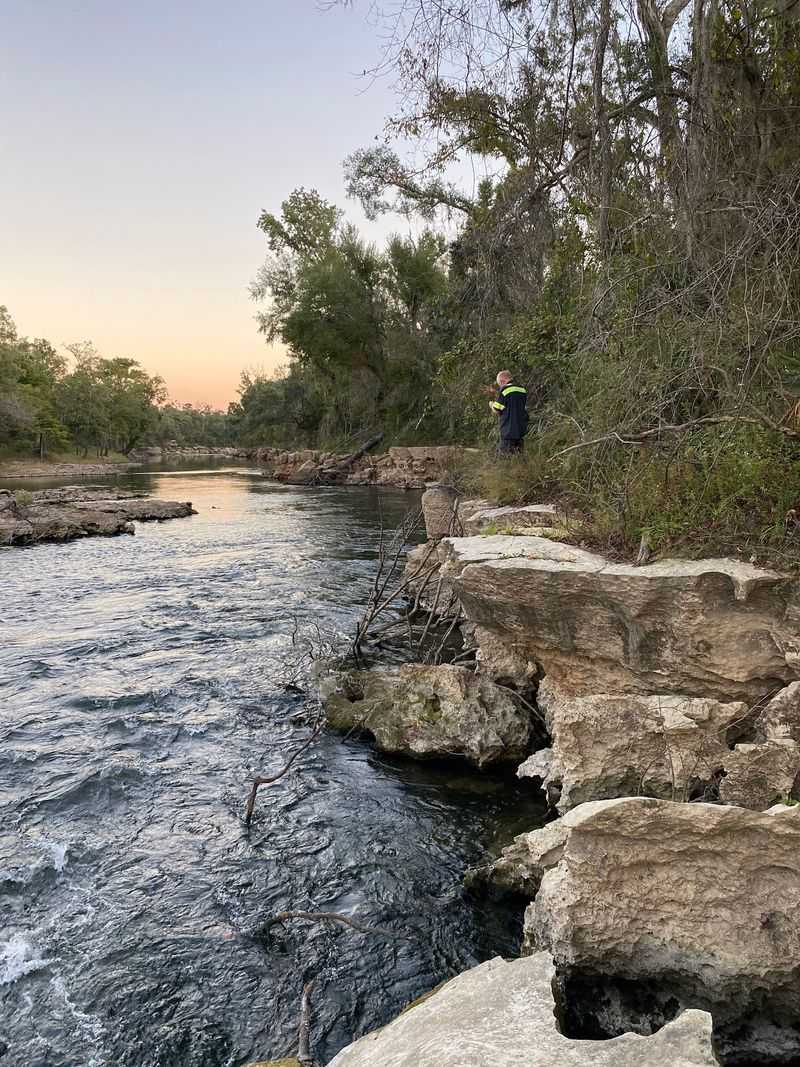
Few ghost towns come with a front-row seat to two rivers. Ellaville sits where the Suwannee and Withlacoochee rivers come together.
The Suwannee’s limestone banks make the scenery especially striking. Pale rock against dark water creates a wild, almost moody look.
Wildlife adds another layer of fun. White-tailed deer, river otters, and many bird species call this area home.
Spotting an otter would make anyone’s day. Moving quietly and keeping your eyes on the water improves your chances.
Binoculars are worth packing. Birds often perch high in the trees, and a closer look makes a big difference.
Keep a respectful distance from all animals. They’re wild, and this is their neighborhood, not a petting zoo.
The riverbanks can be slippery, especially after rain. Stay back from the edges and keep kids close.
Honestly, the natural beauty here balances the creepy vibe nicely. One minute feels eerie, the next feels peaceful and calm.
Quiet Reminders Of Real Lives Still Linger
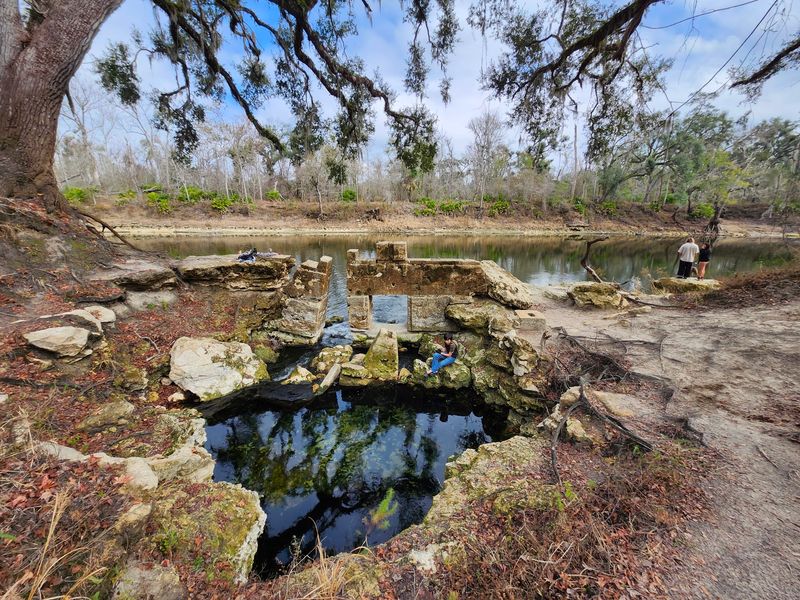
Tucked-away graves and rusted tracks hint at everyday life long ago. These small remnants make the history feel personal.
An old cemetery sits on River Road, south of Highway 90. It’s a peaceful, solemn place connected to the town’s past.
Please visit gently. Stay on paths, avoid touching headstones, and keep voices low out of respect.
Sections of old railroad tracks also remain in the area. They recall the rail line that once helped the lumber business thrive.
Remnants of the sawmill survive too. A flywheel from the mill is displayed at nearby Suwannee River State Park.
Seeing that flywheel helps you grasp the mill’s size. It’s a hefty reminder of the noisy industry that once filled these woods.
Together, these pieces build a fuller picture. Homes, work, travel, and family all left a mark here.
I find that these quieter details stick with you longest. They turn a spooky outing into something thoughtful and meaningful.
Here’s How To Plan Your Own Ghost Town Adventure
Getting there is easier than you’d expect for a vanished town. A common access point sits at 596 NE Drew Way, Lee, FL 32059.
Hikers and cyclists often start from this trailhead. A kiosk nearby shares a bit of the town’s history.
Ellaville is in Madison County, near Suwannee River State Park. Many visitors explore the ghost town through the park.
A small entrance fee applies for the park area. Rates differ for vehicles and for walkers or bikers.
Picnic areas offer a nice break between ruins. Pack lunch and enjoy it under the pines.
Designated campsites are also available. Spending the night lets you catch both sunset and sunrise by the river.
North Florida’s weather varies a lot by season. Winter brings cooler hikes and better ruin spotting.
Leave no trace, take only photos, and respect closed areas. That keeps the Town of Ellaville around for the next curious explorer.
So grab a friend and a flashlight. Just maybe don’t watch a horror movie the night before.