
This Forgotten Florida Park Has Been Left Frozen In Time And Its Story Is Fascinating
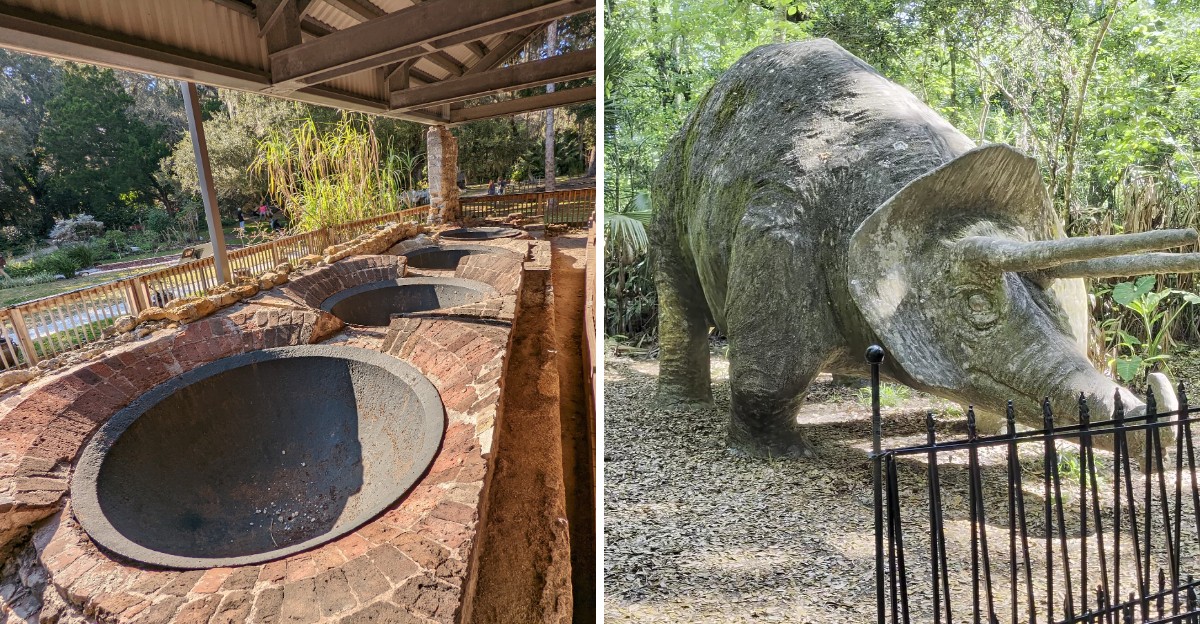
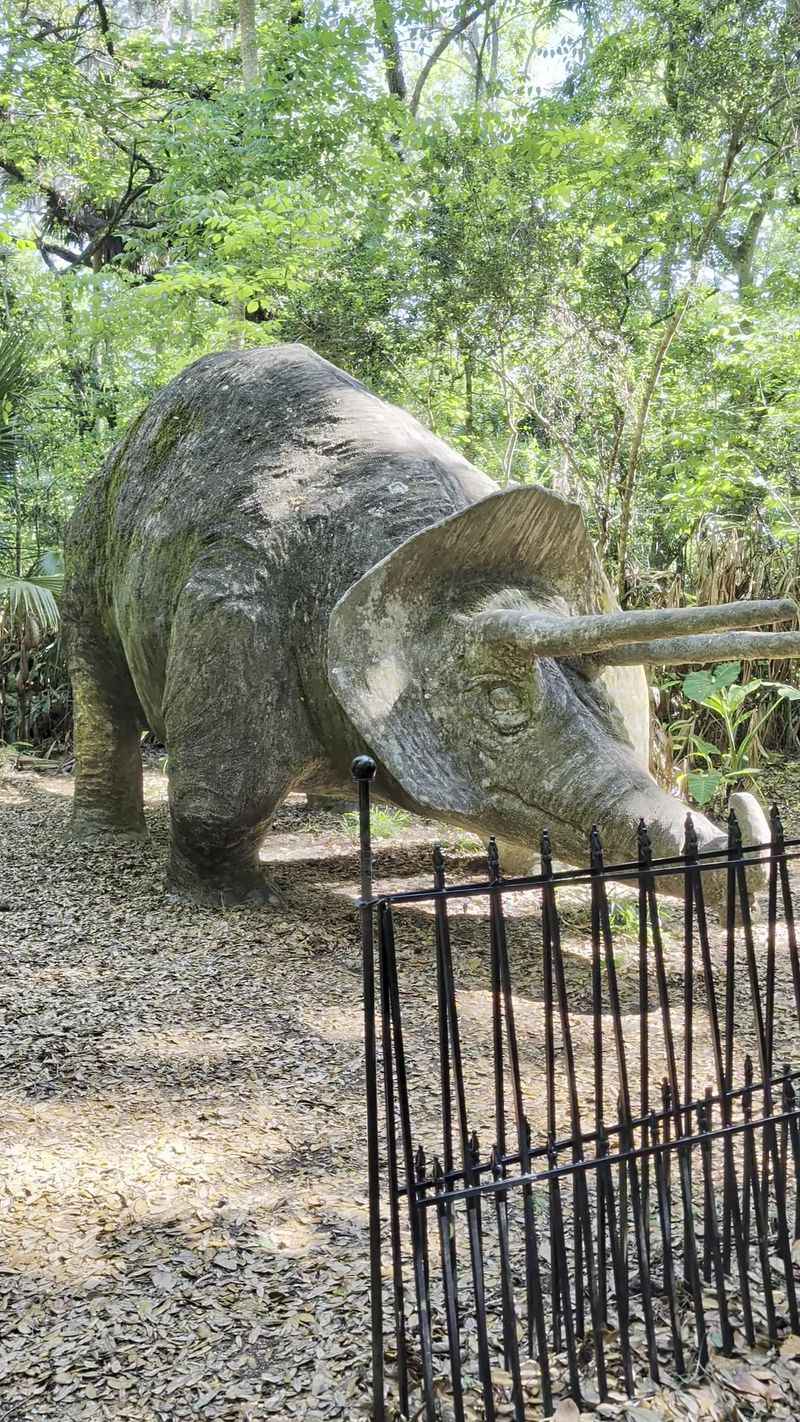
A concrete triceratops about 25 feet long is still lounging in the shade, roughly seven decades after its theme park shut down. It has company, too. A stegosaurus, a dimetrodon, and a giant ground sloth are hanging around nearby.
The park lasted less than five years. It was named after a baboon. Honestly, that detail alone had me hooked.
These creatures share the grounds with the crumbling ruins of a 19th-century sugar mill. Lush botanical gardens now wrap around everything. It feels like Florida stacked three totally different stories on one quiet patch of land.
I appreciate that nobody tried to polish this place into something slick. The dinosaurs are weathered, the mill is real, and the plants keep growing.
A Doctor, A Baboon, And A Dinosaur Dream Started It All
Bongoland Ruins began with a Daytona Beach dermatologist named Dr. Perry A. Sperber. He loved dinosaurs enough to lease land and build a whole attraction around them.
The park opened in 1948. Its name came from Bongo, a baboon who lived on the property. That might be the most charming naming story in Florida tourism history.
Back then, Bongoland offered much more than statues. Guests could take tractor tours and visit a small zoo. There was also a miniature train ride and a replica Seminole Indian village.
Sadly, the crowds never showed up in big numbers. Bongoland closed in 1952 after a reported lack of public interest. That gave it a run of less than five years.
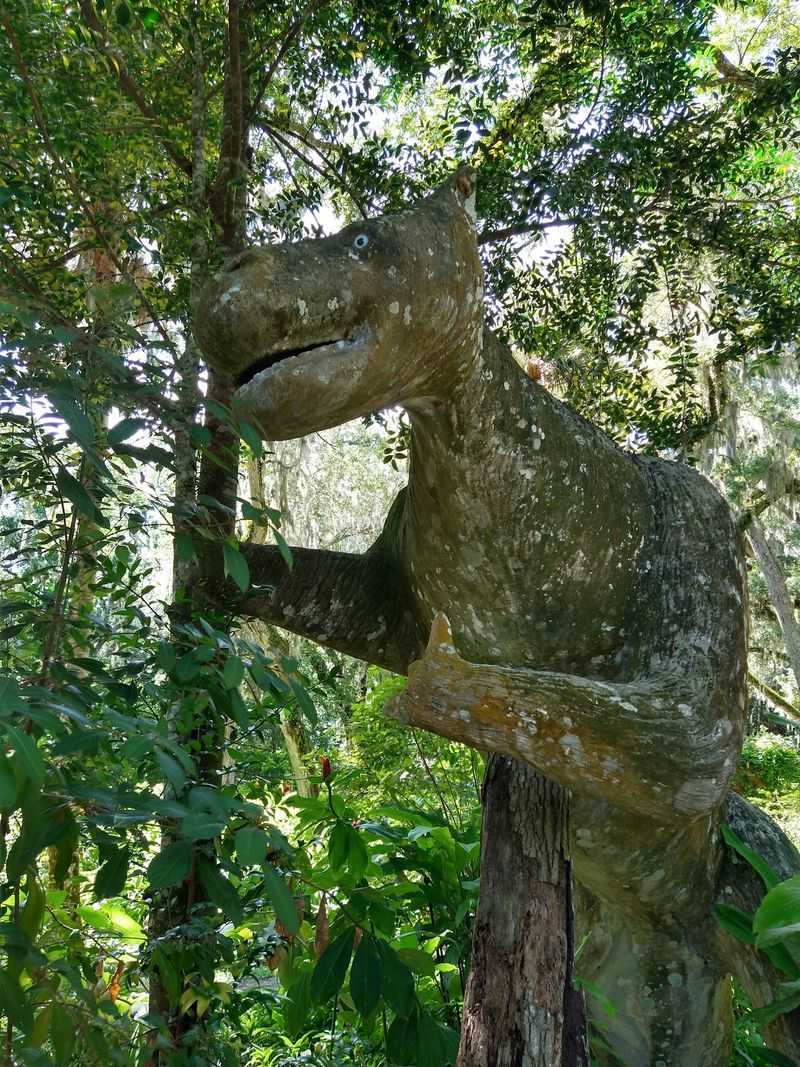
Plenty of roadside parks vanished completely after closing. Bongoland left behind something far stranger, a herd of concrete creatures that simply stayed put. They’re still standing in the same spot where the doctor imagined them.
Today, the site sits inside the Dunlawton Sugar Mill Gardens. You can wander the grounds and spot pieces of that short-lived dream. It’s a rare chance to see a 1940s attraction that never got bulldozed into memory.
Go Dinosaur Hunting Without Leaving The Garden Path
Local artist Manuel D. “Manny” Lawrence sculpted the concrete prehistoric monsters that made Bongoland famous. Several of his creations still stand in the gardens today.
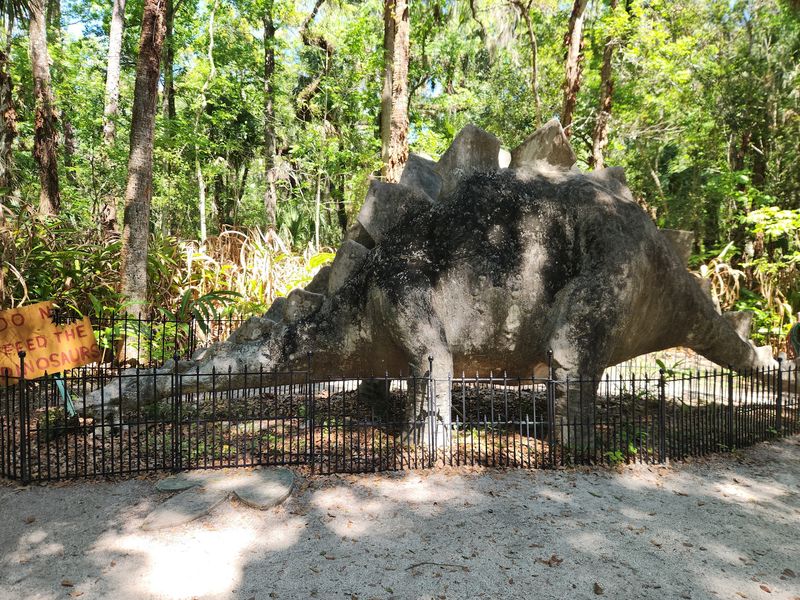
The biggest star is a triceratops measuring around 25 feet. A stegosaurus and a dimetrodon round out the reptile crew. Then there’s a giant ground sloth, which feels like a delightful curveball.
Originally, five main sculptures lived here. The T-Rex collapsed in 2019, so you won’t find the king of the dinosaurs anymore. The remaining figures still pack plenty of personality.
Part of the fun comes from spotting them among the greenery. They aren’t lined up like museum displays. You turn a corner on the trail, and suddenly there’s a prehistoric face peeking through the plants.
Kids will probably want to treat it like a scavenger hunt. Adults might secretly want the same thing. I’d grab a map near the entrance and try to find every one.
One important rule keeps these beauties around. Climbing on the dinosaurs isn’t allowed because of their age and fragile condition. Snap all the photos you want, but keep your feet on the ground.
The Sugar Mill Ruins Are Older Than You’d Guess
Long before any concrete dinosaur arrived, sugar was the big business here. The Dunlawton Sugar Mill was established in 1832 by Sarah Anderson.
Its name blends her maiden name, Dunn, with the name of the land agent, Lawton. The mill processed sugar and molasses using enslaved labor. That hard truth is part of the story, and it deserves remembering.
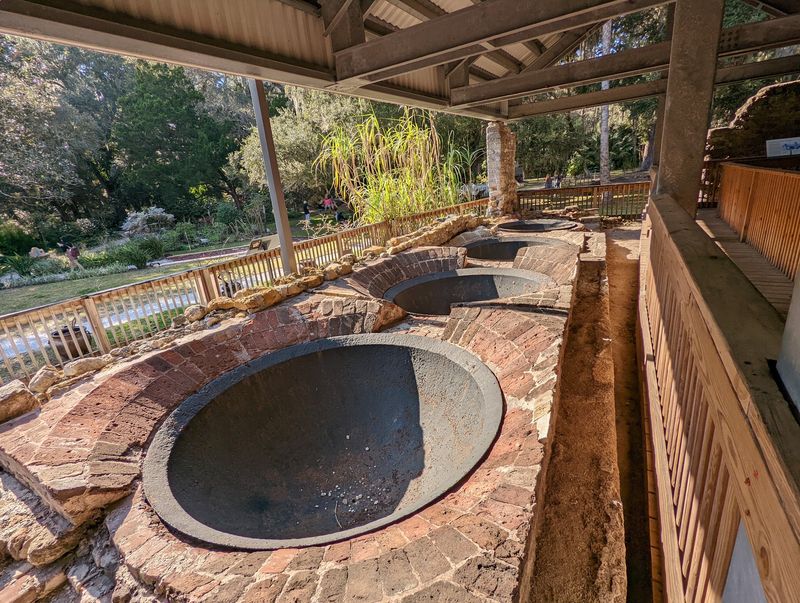
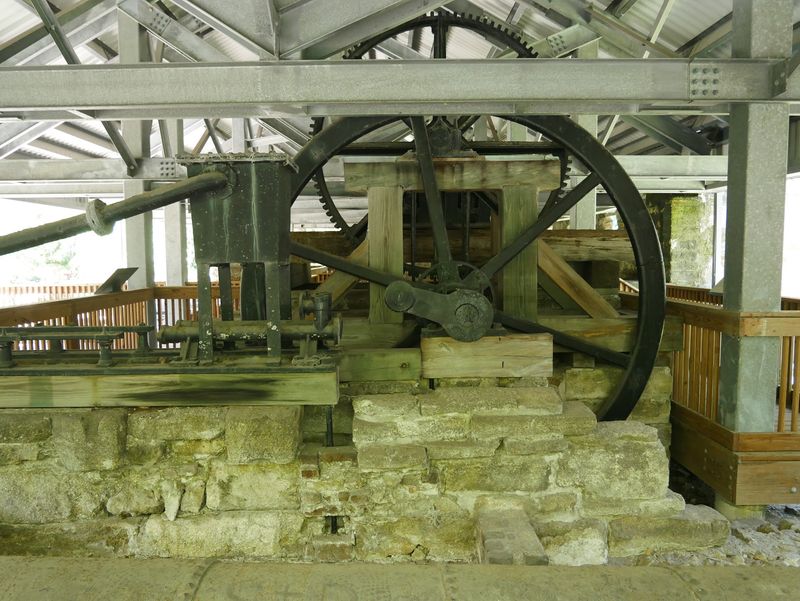
The ruins you can see today are built from coquina block and brick. Coquina is a Florida stone made from compressed shells. It gives the walls a rugged, textured look.
Original sugar-processing equipment still remains on site. You’ll find massive gearworks from the cane press and iron boiling kettles. There’s also the steam furnace and piston assembly.
This collection counts among the earliest surviving examples of sugar production machinery in the United States. That’s a big claim for a quiet garden in Port Orange.
Take a few minutes to read the markers as you explore. The machinery makes much more sense once you understand how cane became sugar. It’s history you can actually stand next to, not just read about in a textbook.
Two Centuries Of Drama Happened On This Land
Few Florida properties have changed hands and purposes this many times. The story begins in 1804, when Patrick Dean received a 995-acre land grant.
Dean came from the Bahamas and started a plantation. He grew cotton, rice, and sugar cane on the property. His time there ended in 1818, likely during the First Seminole War.
The Dunlawton mill came next and faced plenty of trouble. It burned during the Second Seminole War, which ran from 1835 to 1842. John Marshall rebuilt it in 1846.
Then it burned again in 1856 during the Third Seminole War. During the Civil War, the site served as a Confederate base. The old kettles were put to work making salt.
After all that, a dermatologist showed up with dinosaurs. You honestly can’t make this stuff up. The timeline jumps from frontier plantations to roadside kitsch in about a century.
The property now appears on the National Register of Historic Places. That recognition fits a site with so many layers. Every corner seems to whisper a different chapter of Florida’s past.
Flowers Took Over Where The Theme Park Left Off
After Bongoland closed, the land got a much greener second act. Owner J. Saxon Lloyd donated the property to Volusia County in 1963.
In 1988, the non-profit Botanical Gardens of Volusia, Inc. took over maintenance. The group is run entirely by volunteers. Their work shaped the gardens you see today.
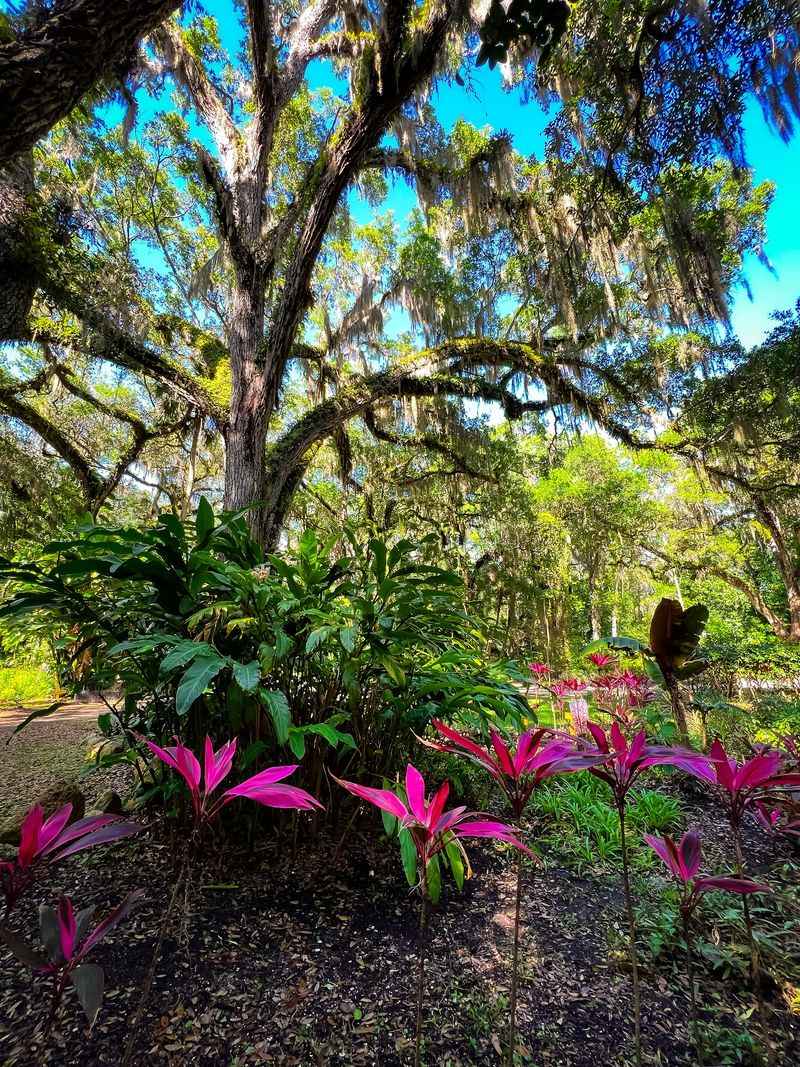
The Dunlawton Sugar Mill Gardens cover roughly 10 to 12 acres. Flowering trees and native Florida plants fill the grounds. You’ll also see magnolias, succulents, ferns, bromeliads, ginger, and cacti.
That variety keeps every stretch of trail feeling fresh. One minute you’re near spiky desert plants. The next, you’re surrounded by leafy tropical greenery.
Plant lovers could easily lose track of time here. Even folks who can’t tell a fern from a philodendron will enjoy the scenery. The dinosaurs certainly don’t seem to mind their leafy roommates.
Knowing volunteers keep it all thriving makes the place feel even more special. I’d happily drop a donation in the box just to thank them. Their care is the reason this forgotten park still feels so alive.
Little Surprises Hide Around Nearly Every Bend
Dinosaurs get most of the attention, but the smaller features deserve a look too. The gardens are packed with quirky touches that reward curious explorers.
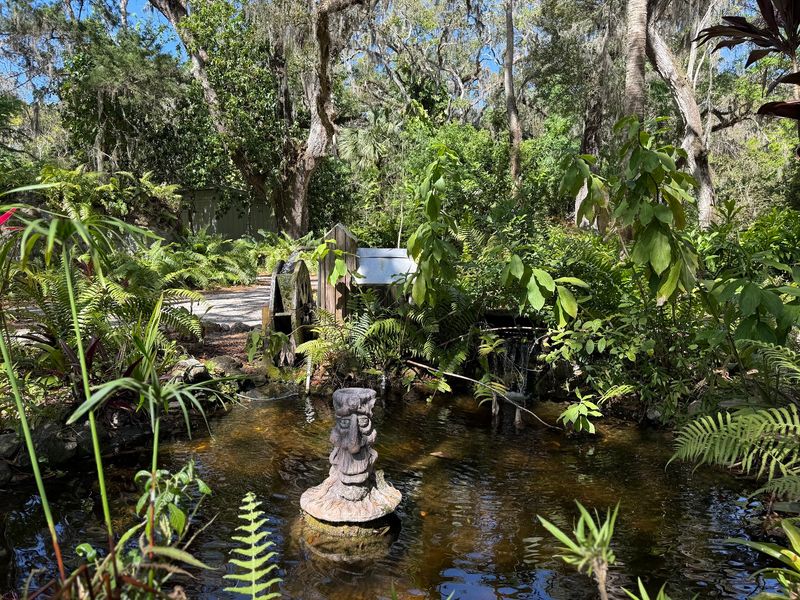
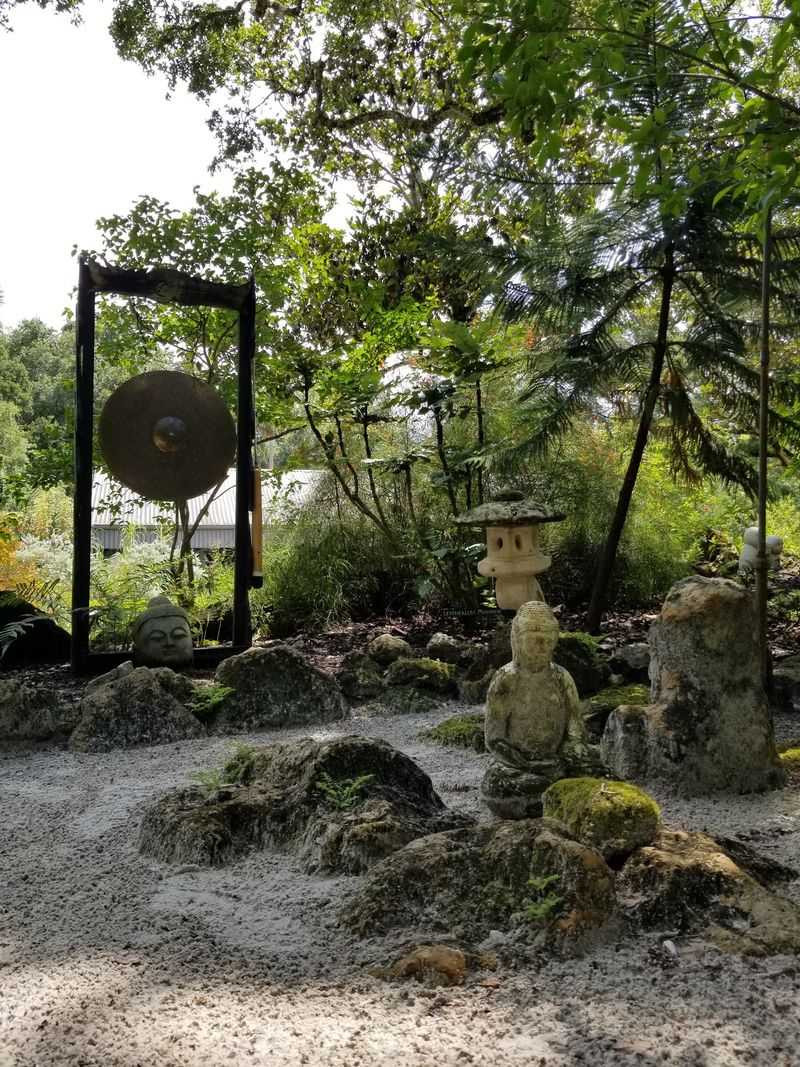
A butterfly garden offers a colorful stop for winged visitors. There’s also an Asian garden with statuary and a fountain. It brings a calmer, more reflective mood to the walk.
Families will appreciate the children’s garden. Nearby, an herb garden is shaped like the state of Florida. That’s a clever way to sneak a geography lesson into a stroll.
Then come the playful extras. A human sundial lets you become part of the timekeeping. A birdhouse tree adds a cheerful bit of whimsy.
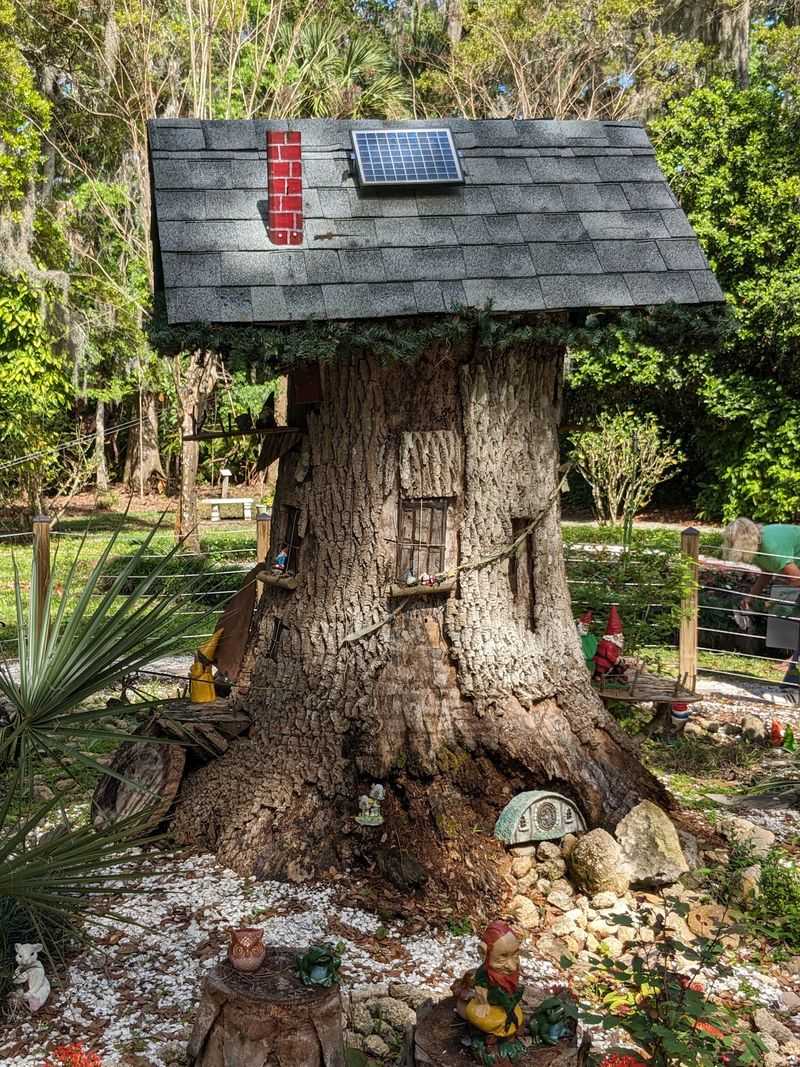
Keep an eye out for the gnome home, too. It’s a tiny, charming detail that kids will love finding. Grown-ups may pretend they aren’t excited, but nobody’s fooled.
Don’t overlook the ancient live oak, sometimes called the Confederate Oak. This centuries-old tree has witnessed most of the property’s long story. Standing beneath it puts the whole timeline into perspective.
Free Admission Makes This An Easy Yes
Good news for your wallet: admission to the gardens is free. Donations are appreciated and help keep the site maintained.
You’ll find Bongoland Ruins inside the Dunlawton Sugar Mill Gardens at 950 Old Sugar Mill Road, Port Orange, FL 32129. Free parking is available on-site. That makes it an easy add-on to a Daytona-area day.
Hours are worth checking before you go. The gardens open at 8 AM, but listed closing times vary. Some sources say 7 PM, while Google lists 5 PM daily.
The gardens close on Christmas and New Year’s Day. Every other day of the year, the dinosaurs are ready for company. Planning an earlier visit gives you the most breathing room.
Walking trails are made of hard-packed shell. That surface makes the paths wheelchair accessible. Strollers should handle them nicely, too.
A plant sale area sits near the restrooms. You might find something green to bring home. Taking a little piece of this Florida garden with you sounds like a pretty great souvenir.
A Few Simple Rules Keep The Magic Intact
Peace and quiet are part of the appeal here. To protect that mood, the gardens follow a short list of rules.
Food and drinks aren’t allowed on the grounds. Smoking is off-limits, too. Plan your snacks for before or after your visit.
Pets need to stay home, though service animals are permitted. Your dog may feel left out of dinosaur day. Think of it as a great excuse for a treat later.
Picking flowers isn’t allowed either. The volunteers work hard to keep everything blooming. Leaving the plants alone lets the next visitor enjoy them, too.
And yes, the dinosaur rule bears repeating. These sculptures are old and fragile, so climbing is a firm no. After surviving since the 1940s, they’ve earned a little respect.
None of these rules feel like a burden. They simply help a delicate place stay standing. Following them means more generations get to meet these concrete giants among the flowers.
You’ll Leave Wondering What Bongoland Could Have Become
Some attractions fade quietly and disappear forever. Bongoland closed fast, yet its creatures outlasted nearly everything around them.
That’s what makes this spot so fascinating. A failed theme park accidentally became a time capsule. Now it shares space with sugar mill ruins and a thriving garden.
Few places in Florida mix this much history, nature, and goofy charm. You get a frontier plantation story and a 1940s roadside dream. Then you get a botanical garden tying it all together.
Bongoland Ruins works for all kinds of visitors. History fans can study the mill machinery. Families can hunt for dinosaurs, and plant lovers can simply wander.
I can’t help picturing what Dr. Sperber would think today. His park didn’t draw crowds back then. Now people seek out his dinosaurs on purpose.
So go meet the triceratops, the stegosaurus, and that wonderful ground sloth. Say hello to the old oak and peek at the gnome home. Just don’t be surprised if Bongo the baboon becomes your favorite piece of Florida trivia.