
This Arkansas Trail Follows The River Through Gorgeous Autumn Colors
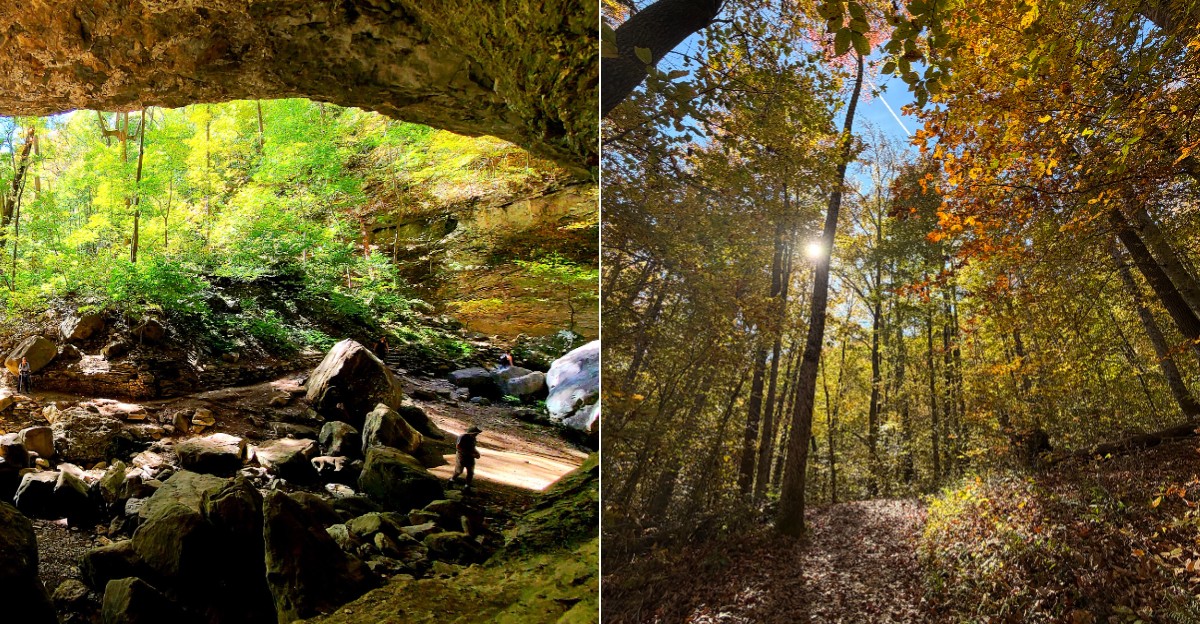
A 53-foot waterfall pours down at the end of a trail that’s only a little over a mile long. Somewhere behind it, a cave hides a second waterfall you have to crawl toward with a flashlight.
That’s a lot of payoff for a short walk in the Arkansas Ozarks. The path hugs a clear, rocky creek through a box canyon that may have started life as an underground cavern.
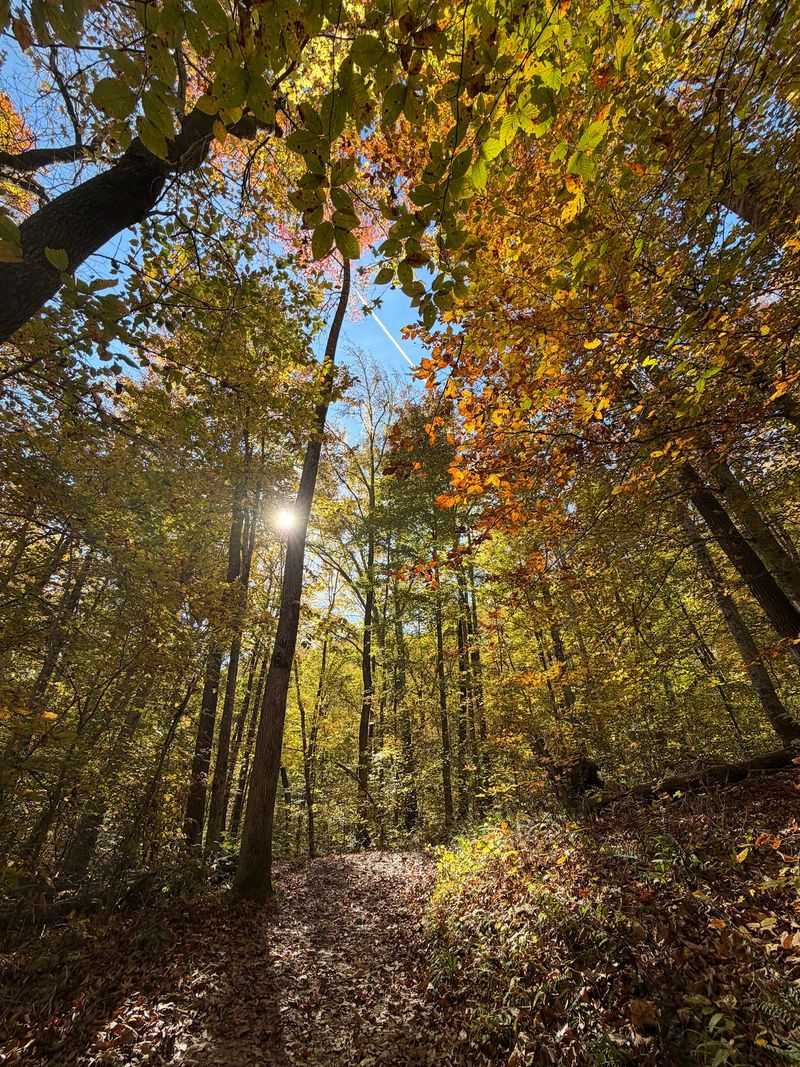
Then autumn shows up every year and paints the whole place. Sweet gums flash red, hickories glow orange, and walnut trees go bright yellow along towering bluffs.
I like how the easy first stretch welcomes almost anyone, from little hikers to grandparents. Still, I believe the steeper second half is where the real adventure waits, so how fast can you lace up your boots?
The First Stretch Is So Easy You Might Forget You’re Hiking
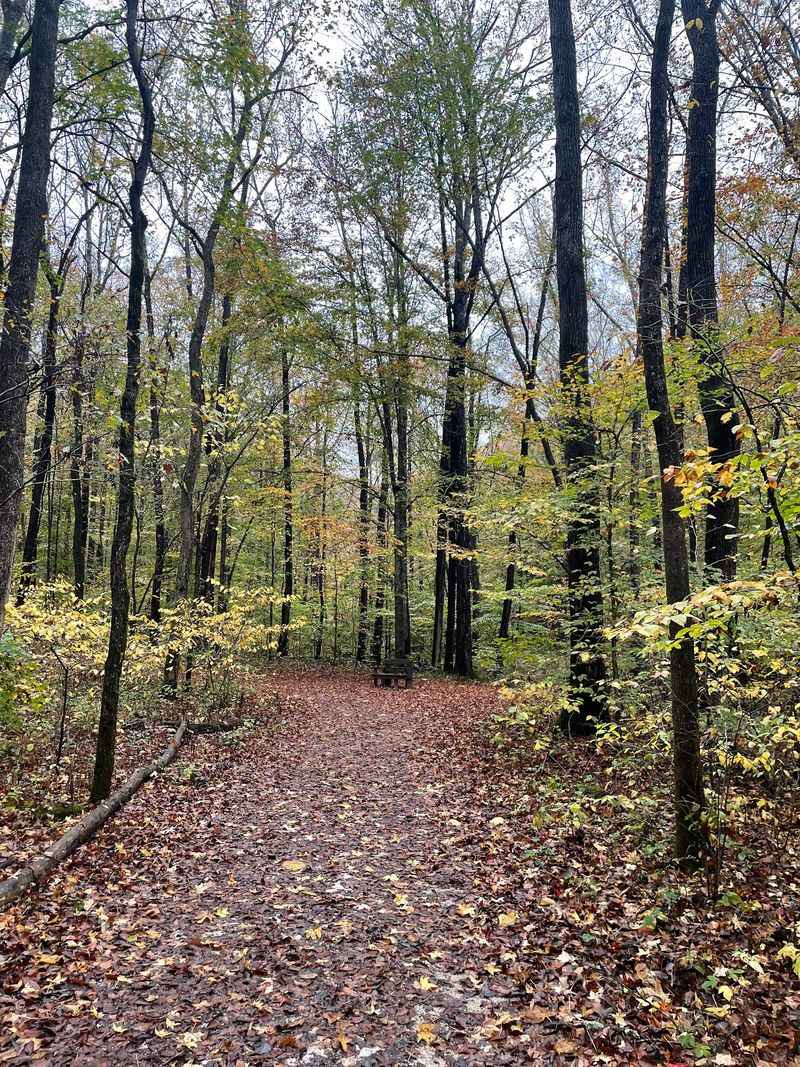
Good news for anyone who prefers scenery over sweat. Lost Valley Trail starts with a level, friendly first half mile inside the Buffalo National River area of Arkansas.
Parts of that early stretch are accessible for strollers and wheelchairs. That means toddlers, grandparents, and everyone in between can share the opening act together.
The whole out-and-back route runs about 2.2 to 2.4 miles round trip. Most hikers finish it somewhere between an hour and a half and three hours.
Benches sit along the trail for quick rests and longer daydreams. Self-guided brochures help explain what you’re seeing as the canyon unfolds around you.
The rating lands in the easy to moderate range overall. The second half climbs, twists, and gets rockier, but the opening stretch stays smooth and calm.
That setup works beautifully for mixed groups with different energy levels. Faster hikers can push ahead to the falls while others enjoy the creekside stroll.
No fees or permits are required to hike here. Free admission plus waterfalls sounds like a pretty great deal to me.
The area is open for day use only, so plan your hike during daylight. Morning or afternoon, the canyon makes a fine backdrop for a family adventure.
Bring sturdy shoes anyway, because the back half will ask more from your feet. Your future self, climbing stone steps, will thank you.
Autumn Turns This Canyon Into A Giant Box Of Crayons
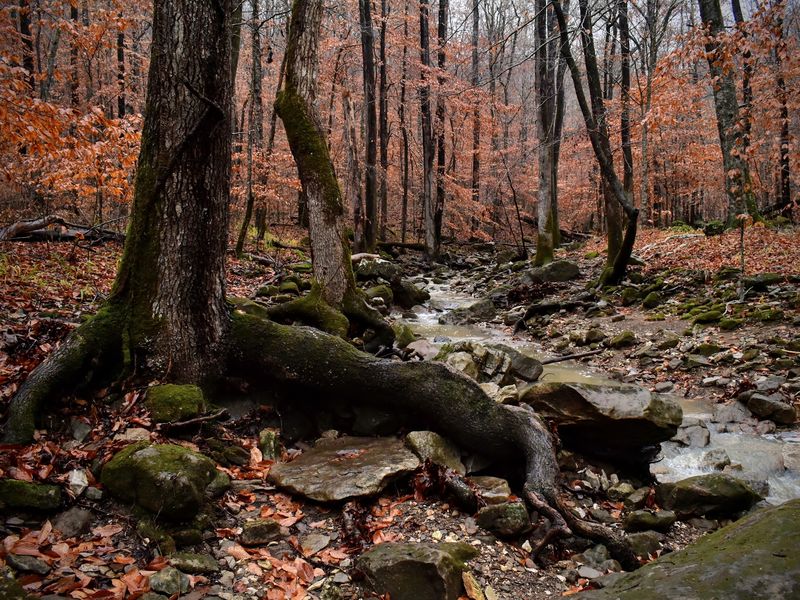
Sweet gum trees go first with bright, fiery reds that look almost too bold to be real. Hickories answer back with glowing oranges along the trail.
Dogwoods and redbuds chip in deep burgundy tones. Wild black walnut trees add sunny yellows, while oaks finish with rusty orange shades.
Put all of that together and Lost Valley Trail becomes a full autumn color show. The towering cliffs give those leaves a dramatic frame on every side.
Groves of American beech trees grow here too. Their presence makes the woods feel layered, with plenty of variety in shape and color.
This is the season the title promises, and Arkansas delivers it in style. A short walk lets you soak up a big helping of fall without an all-day trek.
Bring a camera or at least a fully charged phone. Moss-covered rocks and ferns along the path add green contrast to the warm-colored canopy above.
One tip helps a lot in fall. Clark Creek can run low or slip underground in late summer and early autumn, so the leaves may steal the show.
After a good rain, though, the water and colors can team up. That combo is worth watching the forecast for.
Plan a slow pace on this visit. Leaf peeping goes better when nobody is rushing back toward the parking lot.
A Creek With A Sneaky Habit Of Vanishing
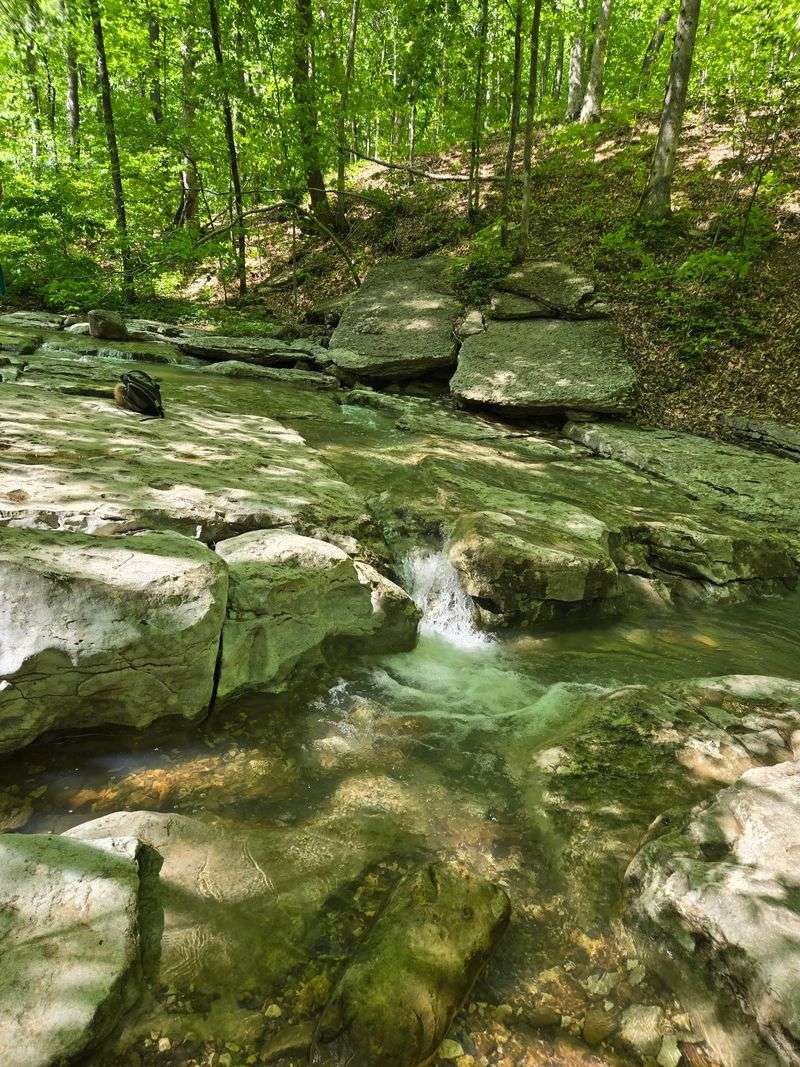
Clark Creek has a trick up its sleeve. In parts of the year, this tributary of the Buffalo River simply slips underground and keeps going out of sight.
The trail follows the creek through Lost Valley, so it’s your companion for most of the walk. Its flow changes with the seasons, which keeps every visit a little different.
Late summer and early fall can leave stretches of the creek bed dry. No need to worry, since the water often reappears farther up the canyon.
Rocky creek beds still look striking even without much water. Giant rocks, smooth stones, and moss give your eyes plenty to explore.
After rain, the whole personality of the creek shifts. Waterfalls perk up, pools fill in, and the canyon comes alive.
Clark Creek feeds the Buffalo River, which the National Park Service protects as a national river. That gives this little creek some serious bragging rights.
Kids especially enjoy a creek that plays hide-and-seek. Point out where the water disappears and reappears, and you’ve got a built-in science lesson.
The box canyon itself may have started as an underground cavern long ago. Water carving through rock is basically the theme of this whole place.
Wear shoes that can handle a splash or two. Water crossings show up on the way, especially when the creek is running strong.
Walk Right Through A Hole In The Bluff At Natural Bridge
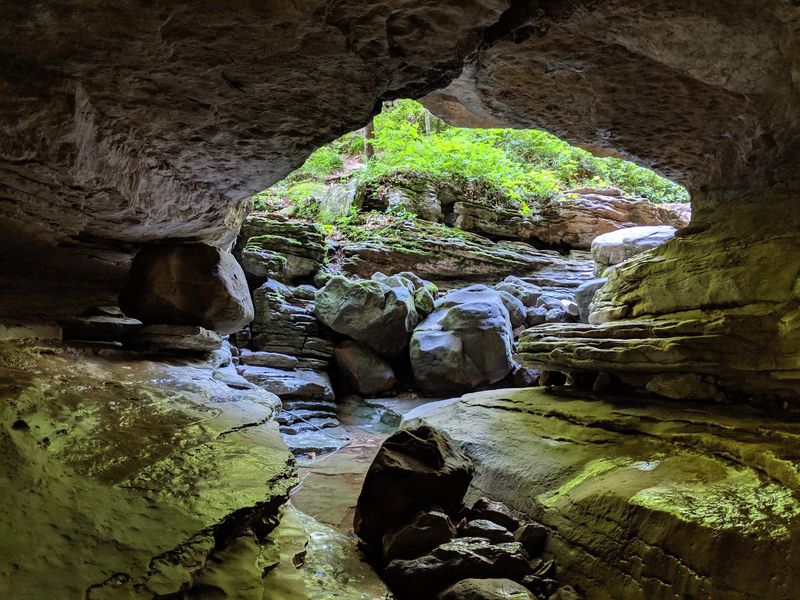
Water came first, and the rock gave way. At Natural Bridge, an 8-foot waterfall pours out of a small opening in the bluff.
That water lands in an emerald-blue pool below. It’s one of the first big wow moments on Lost Valley Trail.
The best part is that you can explore it as a walkable tunnel through the rock. How often do you get to stroll straight through a bluff?
Natural Bridge sits around the point where the easy part of the trail ends. Beyond it, the path turns steeper, rockier, and more rugged.
That makes it a smart turnaround spot for anyone who wants a gentler outing. Little legs can call it a win here and still feel like explorers.
Watch your footing inside the tunnel, since wet rock gets slippery. Take your time and let your eyes adjust to the shadows.
The scene looks especially vivid after a solid rain. When the creek runs higher, the little waterfall gets stronger and everything turns more dramatic.
Pack a snack and pause here for a few minutes. The mix of rock, water, and color makes it one of the best rest stops on the route.
In fall, colored leaves gather around the pool. That splash of red and gold against blue-green water is hard to beat.
Grab a photo at the opening before heading in. Then grab another from the far side, because the angle changes everything.
Cob Cave Holds Clues From People Who Came Long Before
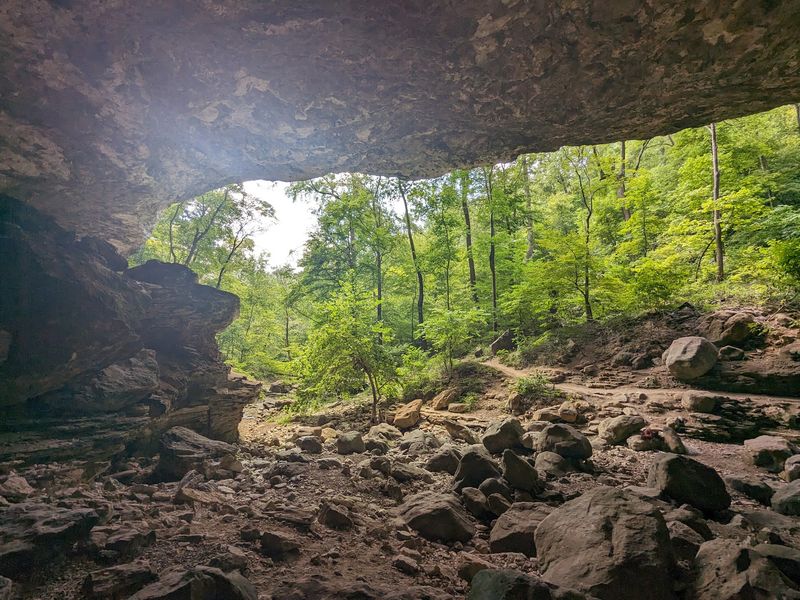
Corn cobs might not sound thrilling. At Cobb Cave, though, they’re a clue that early Native Americans may have used this spot long ago.
The cave is really a massive bluff shelter, a huge overhang carved into the cliff. Its size alone makes you stop and tilt your head back.
Shelters like this offered protection from weather. It’s easy to understand why people would choose such a roomy natural roof.
The self-guided brochures help explain the history here. Reading along turns a pretty hike into a time-travel lesson.
Please treat the area with respect. Leave everything where it is, so the story stays intact for the next curious hiker.
Cobb Cave sits along the upper section of Lost Valley Trail, past Natural Bridge. Expect some stone steps and a steeper climb to reach it.
That effort pays off quickly. The shelter feels like a giant stone room open to the forest on one side.
Young explorers can have fun with this one. Let them guess what life was like for families who once gathered here.
It’s also a fine place to catch your breath before Eden Falls. The falls are close, and the best scenery is still ahead.
History, geology, and adventure all share one spot here. That’s a pretty generous mix for a short trail in Arkansas.
Fifty-Three Feet Of Falling Water Steals The Whole Show
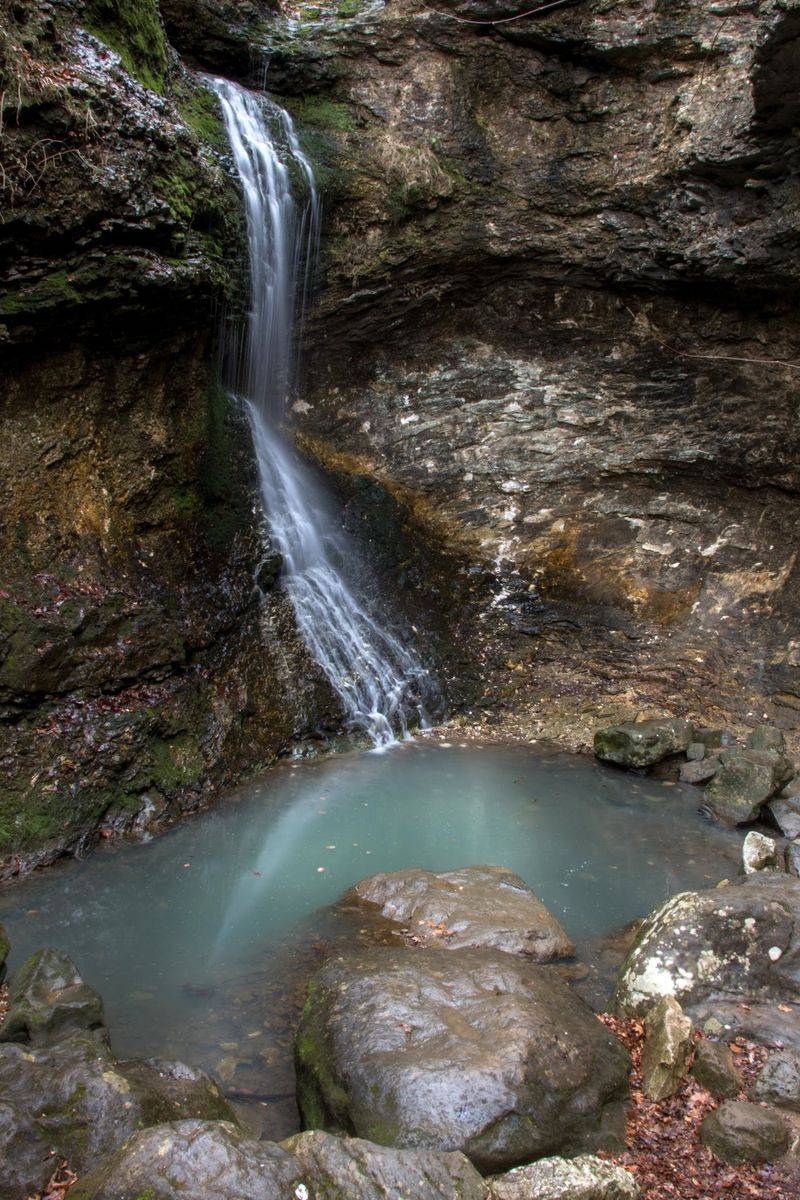
Fifty-three feet of tumbling water is a big reward for barely more than a mile of walking. Eden Falls is the star of Lost Valley Trail, and it knows it.
This multi-tiered waterfall cascades down the rock in several steps. Each tier adds its own little splash to the overall show.
Timing matters a lot here. The falls look most impressive after periods of rain, when the creek has plenty to give.
Check recent weather before you head out. A few rainy days beforehand can turn a gentle trickle into a full performance.
Getting there takes some work on the steeper, rockier back half of the trail. Stone steps lead you upward, so pace yourself and enjoy the climb.
Towering cliffs and bluffs surround the area. The setting makes the waterfall feel like the grand finale of a well-planned movie.
In autumn, the falls get even more dramatic backup. Red, orange, and yellow leaves frame the water from every angle.
Find a safe spot to sit and just watch for a while. Nobody hands out medals for rushing past a 53-foot waterfall.
Bring water and a light snack for this stop. You’ll probably want to linger longer than you planned.
And yes, the adventure keeps going past the falls. A cave waits just beyond, with a surprise of its own.
Grab A Flashlight, Because A Secret Waterfall Hides Underground
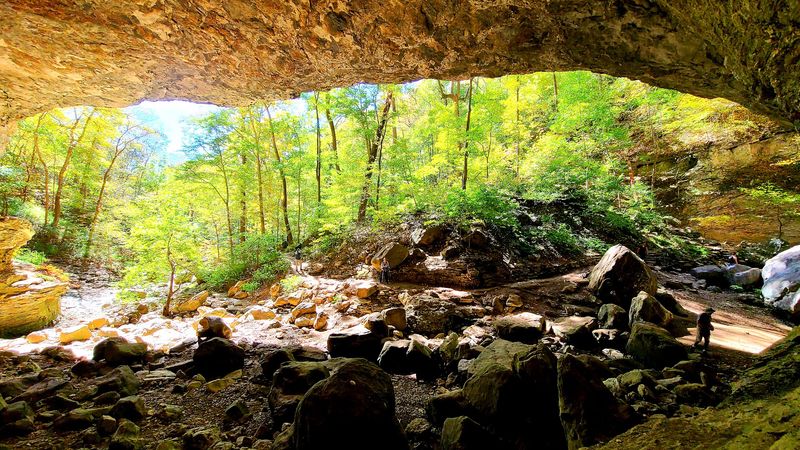
A waterfall inside a cave sounds like something from a fantasy novel. Eden Falls Cave makes it real, just beyond Eden Falls on Lost Valley Trail.
Getting there takes a little grit. The passages are dark, wet, and muddy, so a reliable light source is a must.
About 200 feet inside, the cave asks you to crawl through tight spaces. Hands and knees will definitely get involved.
The reward is a 25-foot waterfall hidden in the darkness. That’s a pretty wild prize for a short crawl through a mountain.
The National Park Service urges visitors to use extreme caution in the caves. Take that advice seriously and know your limits before heading in.
Headlamps work great because they keep your hands free. Pack a backup light too, just in case batteries quit at the worst moment.
Wear clothes you don’t mind getting messy. Shoes with good grip and toe protection make the slippery rock much easier to handle.
Water levels can affect the cave too. Go slowly, stay together, and turn back if the passage feels too wet or tight.
Not ready to crawl? That’s totally fine, since the cave entrance and Eden Falls already make the trip worthwhile.
For brave explorers, though, this could become the favorite story of the whole trip. Few trails in Arkansas end with a hidden underground waterfall.
Pack Smart, Park Easy, And Watch For Elk On The Way Out
Elk sightings are possible in nearby Boxley Valley, so keep your eyes on the fields as you drive. That’s a pretty great bonus for a day hike.
Lost Valley Trail sits within the Buffalo National River area near Ponca in Newton County. The trailhead is on a paved access road off Highway 43.
You’ll find it roughly 1.5 to 2 miles south of Ponca. The official address is Lost Valley Rd, Kingston, AR 72742, which makes navigation simple.
A parking area, restrooms, and a picnic pavilion wait at the trailhead. Pack a lunch and enjoy it before or after your hike.
Pets aren’t allowed on the trail, except for documented service animals. Plan ahead so your furry friend has a comfy spot back home.
The area is open for day use only. Start early enough to explore the caves and falls without feeling rushed.
The land has an interesting past too. Lost Valley was once an Arkansas State Park before the National Park Service acquired it in 1975.
Today it’s part of the Buffalo National River. That history gives this short trail a proud place within a protected national river.
Fall makes the trip extra rewarding. Time your visit for peak leaf season and you’ll get colors, cliffs, and creek in one easy outing.
Bring a flashlight, sturdy shoes, water, and a sense of adventure. Lost Valley is ready when you are.