
Hear Songs Played On Ancient Stalactites Inside A Virginia Cave
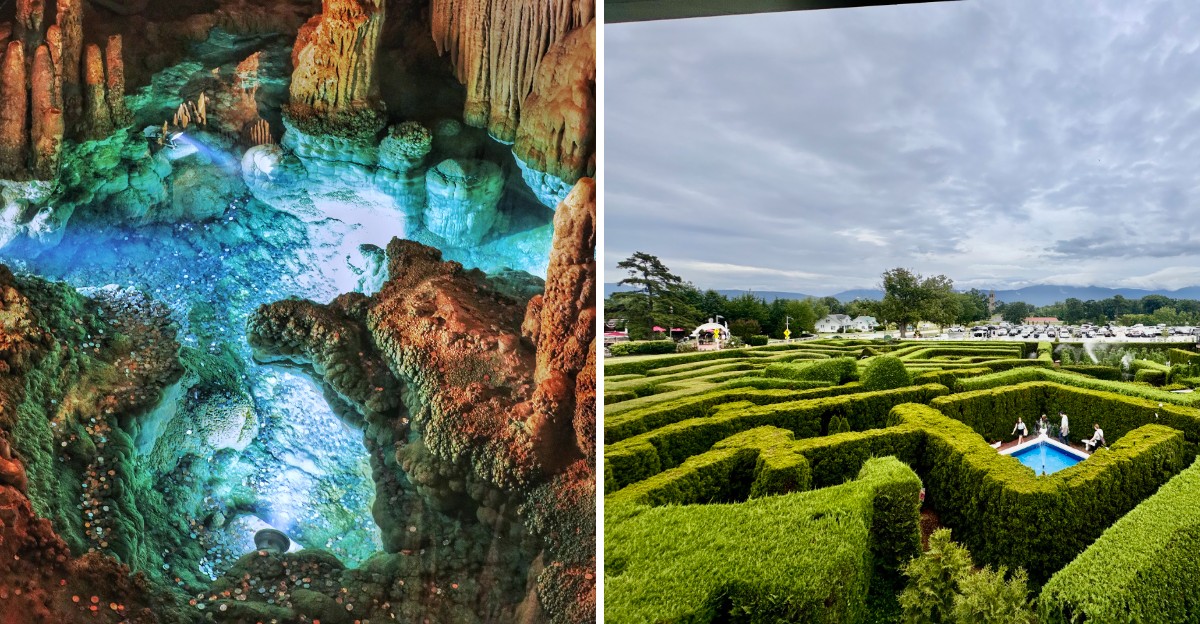
A Pentagon mathematician spent three years tuning stalactites to concert pitch. Now rubber mallets tap them to play real music underground.
Guinness World Records calls it the largest natural underground musical instrument. Who knew a cave could double as a concert hall?
I love that it all started with a simple idea. Someone heard a stone ring and wondered what a whole cave could sound like.
I cannot imagine a more creative use of a Virginia hillside.
The cave stays a steady 54 degrees all year. Rain, snow, and heat never reach the stone rooms below.
Above ground, museums, a hedge maze, and mountain views round out the day. Is there a cooler way to spend an afternoon in Virginia?
So where do you go to hear a stone concert?
Stone Music Starts With A Rubber Mallet
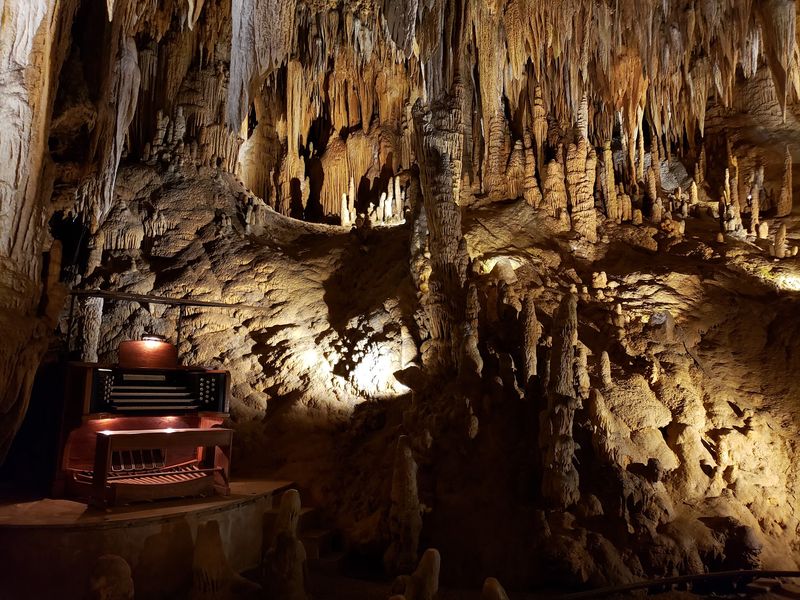
Luray Caverns is home to the Great Stalacpipe Organ, and Guinness World Records calls it the largest natural underground musical instrument in the world.
Mallets tap real stalactites inside the cave. The stone answers with a clear, ringing tone.
Leland W. Sprinkle invented it in 1954.
He was a mathematician and electronics scientist who worked at the Pentagon. The project took three years of careful work.
The idea may have come from a tour guide tapping a stalactite. Another story says his son bumped his head on one.
Nobody can say for sure which tale is true, and that keeps it fun.
Here is the neat part about how it works. Sprinkle chose stalactites from over three and a half acres of the cavern.
Each one was shaved and tuned to concert pitch.
Wires run through the cave to a four-manual console. Press a key, and a rubber plunger strikes the matching stalactite.
Out comes a single resonant note.
Because it hits stone, experts call it a lithophone. That makes it a percussion instrument, not a pipe organ.
The name is a bit misleading, but the sound is the real deal.
Luray Caverns sits in Virginia, and this organ is its signature act.
How A Cave Became A Concert Hall
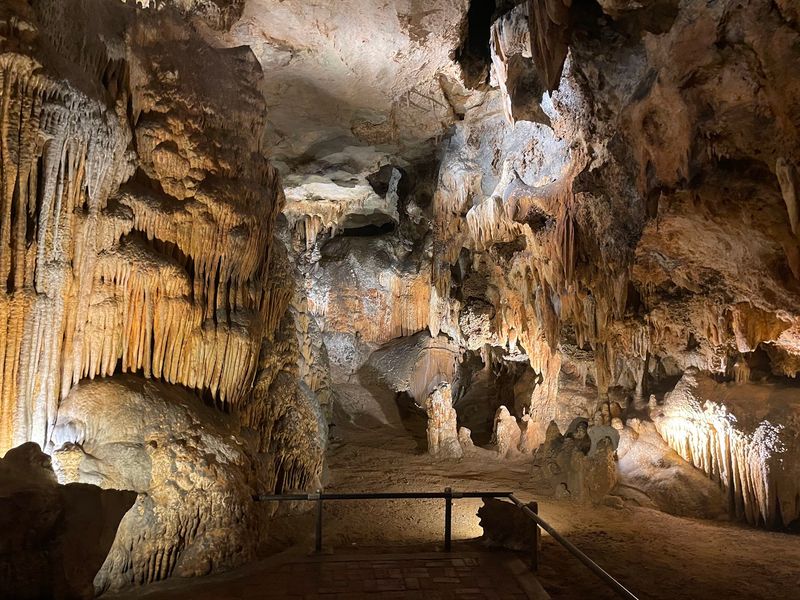
Sound travels differently underground. The cavern’s acoustics carry each note across the organ’s 3.5-acre spread.
You can hear it throughout the cave’s 64-acre confines.
That means the music does not stay in one corner. It drifts through big stone rooms like a slow echo.
Some chambers have ceilings up to ten stories high.
Think about the setup for a moment. Electronic mallets are wired throughout the cave and linked to the console.
Each mallet waits near its own tuned stalactite.
Today the organ usually plays on an automated system. It works much like a child’s music box.
A person can still play it by hand when needed.
One recent guest heard a hymn when the guide started it. That tells you the organ can play real tunes, not just single notes.
Waiting for the guide to start it can be worth the pause.
The organ has also reached a big audience. It has appeared on National Public Radio, Good Morning America, Voice of America, and Mister Rogers’ Neighborhood.
Not many concert halls can say that. And none of them are 54 degrees year-round.
A Walk Through Rooms As Tall As Ten Stories
Luray Caverns bills itself as the largest and most popular cavern system in Eastern America.
It is also a U.S. Natural Landmark.
It is also a U.S. Natural Landmark.
A group of locals found it on August 13, 1878.
The tour is self-guided. Paved, well-lit walkways lead you through the formations at your own pace.
Numbered stops match a free booklet, so you can read as you go.
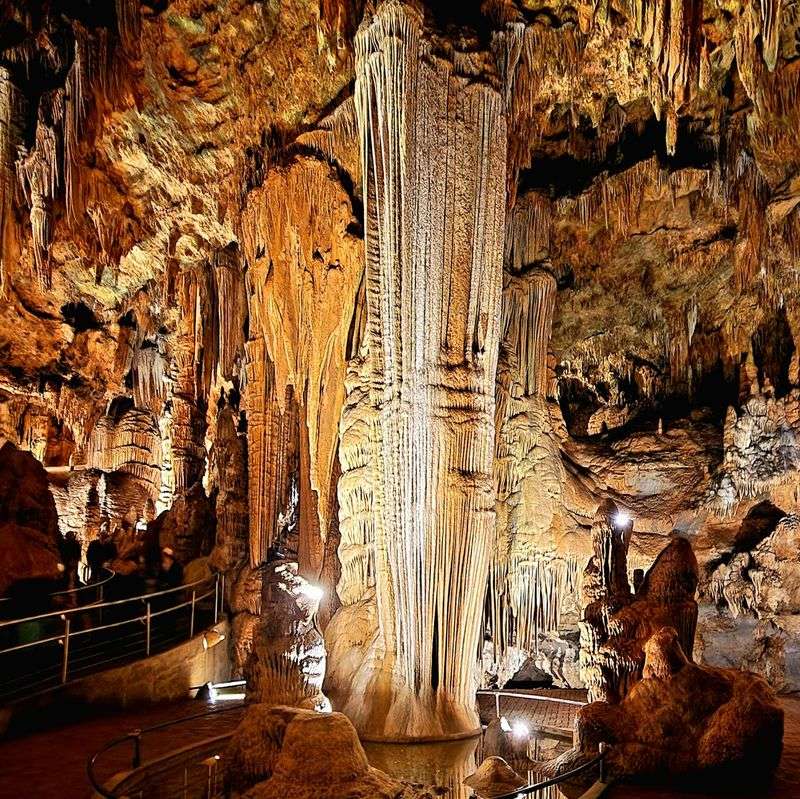
Expect cathedral-sized rooms. Columns, stalactites, stalagmites, flowstone, and shimmering draperies fill them.
One standout is the Double Column, which stands 47 feet tall.
The entrance has no steps. Walkways are paved, so wheelchairs and small strollers can roll through.
Some areas have moderate grades, so a helper may be useful.
Plan on about one to two hours underground, depending on how long you linger. That gives you plenty of time to hunt for shapes in the stone.
A fun game is spotting faces and animals in the rock.
Leave the snacks and drinks above ground. Food and drinks are not allowed inside the caverns.
Restrooms are above ground only, so make a stop first.
Dream Lake Is Shallower Than You Think
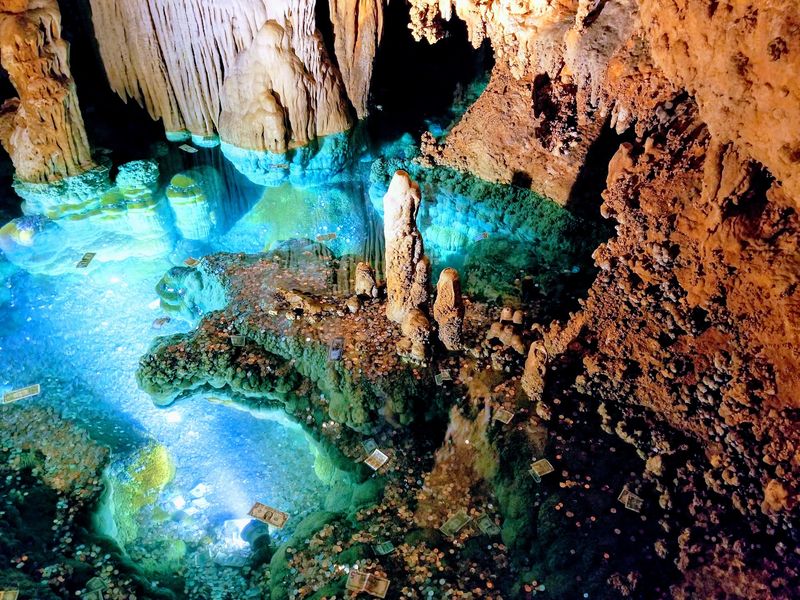
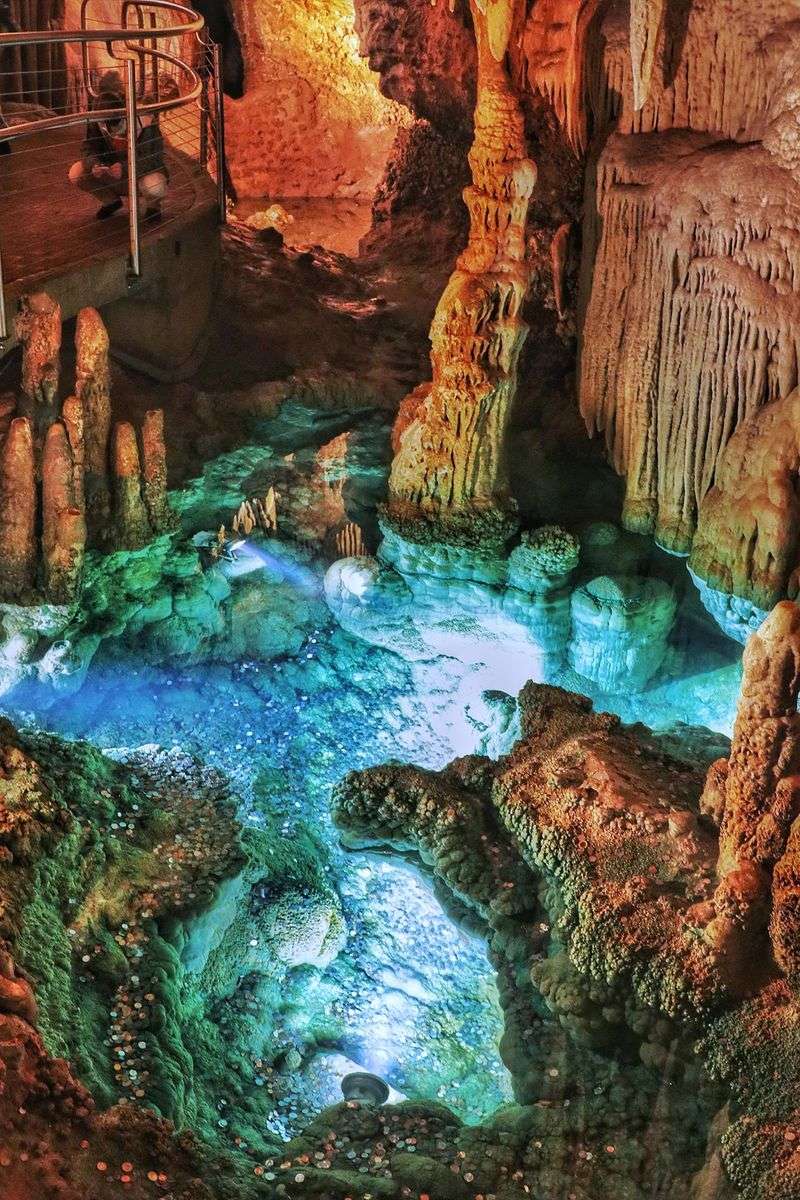
Eighteen to twenty inches. That is how deep Dream Lake really is.
It looks far deeper, and that is the whole trick.
The still water works like a mirror. It reflects the stalactites above and makes the cave seem to drop away below.
Your brain just fills in the rest.
It is a great spot to slow down. Stop and look from a few angles before moving on.
A camera helps here, though your eyes do fine too.
Other pools in the cave are crystal clear as well. Their quiet surfaces add calm between the big rooms.
Water is what built this place, one slow drip at a time.
Those drips deposit minerals that grow into stalactites, stalagmites, and columns. The growth is slow beyond easy imagining.
That is why the formations here feel truly ancient.
Visitors often pick Dream Lake as a favorite moment. The reflections can look almost unreal.
Give it a pause before heading on to the organ.
A Museum Packed With Rolling History
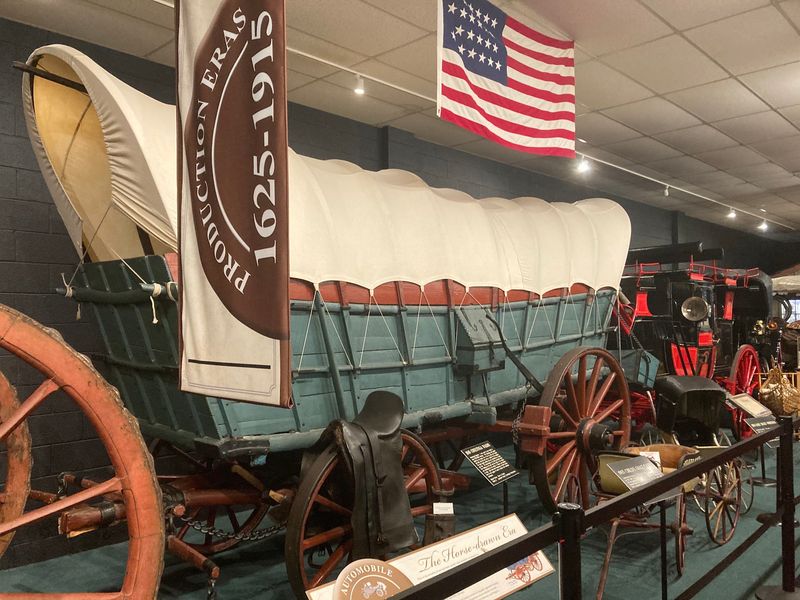
Climb out of the cave and you can step straight into a different century. The Car and Carriage Caravan Museum shows more than 140 historic vehicles.
Cars, carriages, and coaches fill the displays.
Some date back to the mid-1700s. You can spot an 1892 Benz and a 1908 Baker Electric.
A Stanley Steamer is on the list too.
Admission to the caverns includes the museum. No extra ticket is needed for this one.
That makes it an easy bonus after the tour.
Car fans will linger over the engines. Others may enjoy the carriages and the old styles of travel.
It is a quick way to see how people got around before highways.
The museum fits nicely into a day at Luray Caverns. The cool cave air gives way to indoor exhibits at an easy pace.
Your feet get a break, and your curiosity gets a refill.
Give yourself time to wander without rushing. Kids can pick a favorite ride.
Adults might pick the same one.
Step Back Into A 19th-Century Farm Town
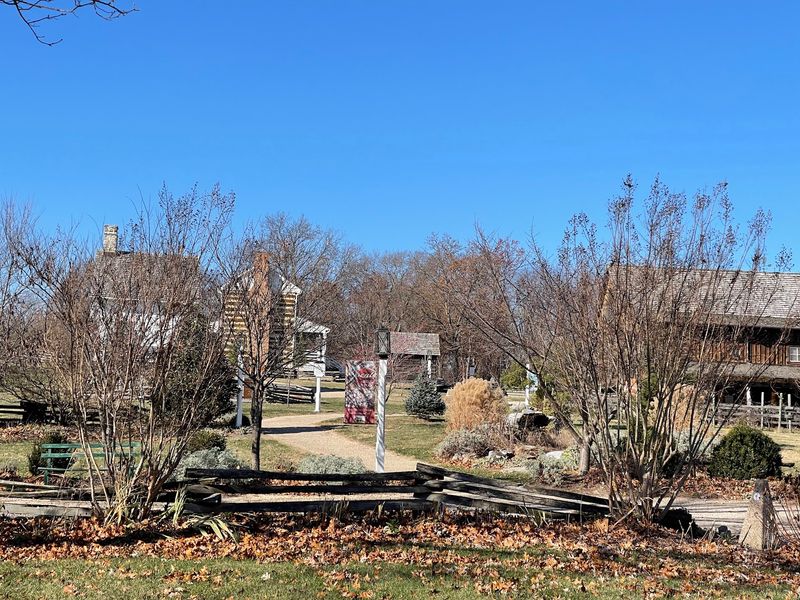
Old buildings can tell a story without saying a word. Shenandoah Heritage Village gathers restored historic structures.
Together they copy a 19th-century farming community.
Inside the village sits the Luray Valley Museum. Its artifacts come from the Shenandoah Valley.
They span the 1750s to the 1920s.
Entry is included with general admission. That makes it a low-pressure add-on to the cave visit.
Take a stroll and see how daily life once looked.
The setting helps too. Blue Ridge views surround the grounds, and fresh air feels good after the cave.
Pictures here come out nicely.
History fans get a lot from the small details. Tools, furnishings, and building styles show how people worked and lived.
Kids can compare it with their own homes.
Take your time and read the displays. A little knowledge makes the cave itself feel richer.
You will see how the valley’s story fits together above and below ground.
Trains, Toys, And Tiny Towns
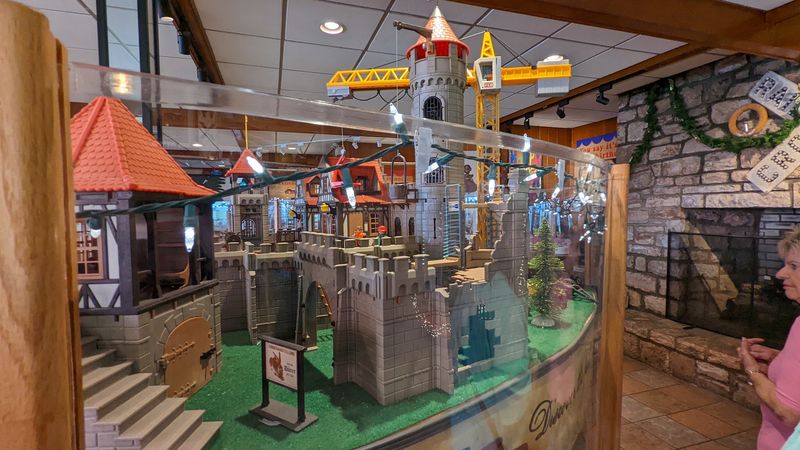
More than thirty trains roll through Toy Town Junction. Miniature themed areas surround them.
Thousands of toys and train artifacts fill the rest.
It is the third above-ground attraction included with general admission. Kids tend to love it.
Grown-ups often find a toy from their own childhood.
The scenes are small, so look closely. Tiny details reward patient eyes.
A slow walk beats a quick lap.
This stop works well after the cave. Little legs get a different kind of fun.
Parents get a seat and a smile.
The attraction adds a playful touch to the whole complex. It proves a cave trip can fill more than one mood.
Fans of trains will find plenty to enjoy.
Plan it into the day instead of squeezing it in at closing. Hours change by season, so check the schedule first.
A relaxed visit makes the toys more fun.
Maze, Ropes, Bells, And Fudge

Extra fun waits outside the cave. The Garden Maze is a one-acre hedge puzzle.
It ranks among the largest in the Mid-Atlantic.
Rope Adventure Park adds two levels of ropes course challenges. Both the maze and the ropes need separate tickets.
Plan ahead if you want them.
A 117-foot Singing Tower stands across U.S. 211 from the caverns.
The sound drifts over the grounds.
Hungry? Snacks and food are available near the Welcome Center.
Picnics are allowed on the grounds. Luray Fudge Company is on site for a sweet treat.
Gift shops are here too. Pets on leashes are welcome on the grounds.
Small pets can even be carried on the cavern tour.
Free, ample parking helps, including spaces for RVs. A golf resort with an 18-hole course belongs to the larger complex.
Shawnee Farms Estate, a historic farm home for events, sits two miles away.
Plan Your Visit To The Address Below
You can find Luray Caverns at 101 Cave Hill Road, Luray, VA 22835. It is open every day of the year.
Weather does not change the tour.
Self-guided tours begin after 9 AM. Closing times shift with the seasons.
From November 1 to March 31, it closes at 4 PM on weekdays and 5 PM on weekends.
From April 1 to June 14, it closes at 6 PM. From June 15 to Labor Day, it closes at 7 PM.
After Labor Day through October 31, it closes at 6 PM.
Bring a light layer if you run cool. The cave stays 54 degrees year-round.
That is easy walking weather in any month.
Shenandoah National Park and Skyline Drive sit nearby. Pair the mountains above with the stone world below.
It makes a full Virginia day.
Make time to hear the organ. It may be the most unusual concert in the state.
And the stage is made of stone.