
This Mississippi College Campus Founded In 1848 Makes A Walkable Family Stroll Past Historic Buildings
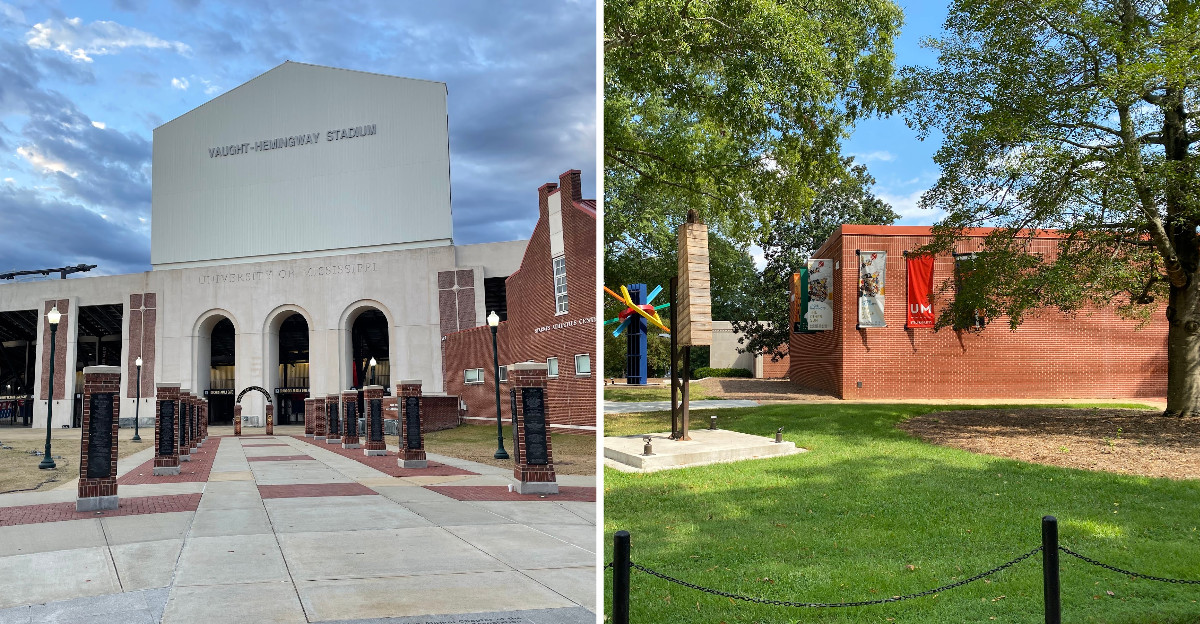
We only meant to stretch our legs for twenty minutes on a road trip through northern Mississippi. Two hours later, the kids were still racing between giant oaks and pointing at columns older than anyone’s great-great-grandparents.
A college campus turned out to be one of the easiest, cheapest family outings we have ever stumbled into. Brick paths, shady lawns, a free museum, and stories around every corner make it a stop worth planning a whole morning around.
A Public University on the Edge of a Small Southern Town

Sitting right beside Oxford in north Mississippi, the University of Mississippi is a large public research school that opened its doors in 1848. Most people know it as Ole Miss, and plenty know it for its athletics programs.
For families, though, the real draw is something simpler: a campus you can explore entirely on foot.
Visitors often describe the grounds as walkable and packed with historic buildings. That combination matters when you are traveling with kids, because nobody has to buckle back into car seats every ten minutes.
You park once, then wander between brick halls, shady lawns, and open green spaces at your own pace.
The official address is simply University, MS 38677, which tells you how much the school shapes its corner of the state. Campus feels like its own little town, with places to eat in the student union and plenty of benches for breaks.
Oxford’s town square sits about a 15 minute walk away, according to people who have made the trip. That makes it easy to pair a campus stroll with lunch or shopping in town.
Think of the university as the anchor of a full family day rather than a quick photo stop.
Roots Reaching Back to 1848

When the first classes began in 1848, Mississippi had been a state for barely three decades. The early campus had five original buildings.
Only one of them still stands today, and that survivor sets the tone for everything around it.
Walking here with children offers a natural history lesson without a textbook. Kids can count the years on their fingers and realize the oldest building is more than 175 years old.
That kind of math tends to stick far better than a date on a worksheet.
History on this campus is not always comfortable, and honest parents may want to mention that. The university was not welcoming to Black students for much of its past, and it later became an important stop connected to the civil rights movement.
Older kids often have thoughtful questions, and a walk gives space for those conversations.
Today the school feels very different, with families of many backgrounds sharing good experiences. Some visitors who arrived with worries have reported pleasant surprises once their grandchildren settled in.
Learning how a place changed over time can be one of the most meaningful parts of the visit.
Eight Buildings Around The Circle

Round lawns are rare on college campuses, which is part of what makes The Circle so memorable. This historic district wraps eight academic buildings around a shared common area.
The Lyceum is the star, but its neighbors deserve a slow look too.
One visitor noted that the buildings follow a similar facade, and that sense of harmony is easy to spot. Brick, columns, and tidy trim repeat from one structure to the next.
For kids, it becomes a game of spotting what matches and what stands out.
Walking the loop takes only a few minutes, yet families often linger. The grass in the middle invites a short rest, a snack, or a quick game of tag.
Strollers handle the paths well, which helps when younger siblings need a ride.
During football season, The Circle transforms into one of the school’s iconic tailgating areas. On a regular weekday, it feels much calmer and more open.
Plan accordingly depending on the experience you want, whether lively crowds or peaceful wandering. Either way, this loop gives a quick introduction to the architecture that shapes the entire campus.
Ten Shady Acres of The Grove
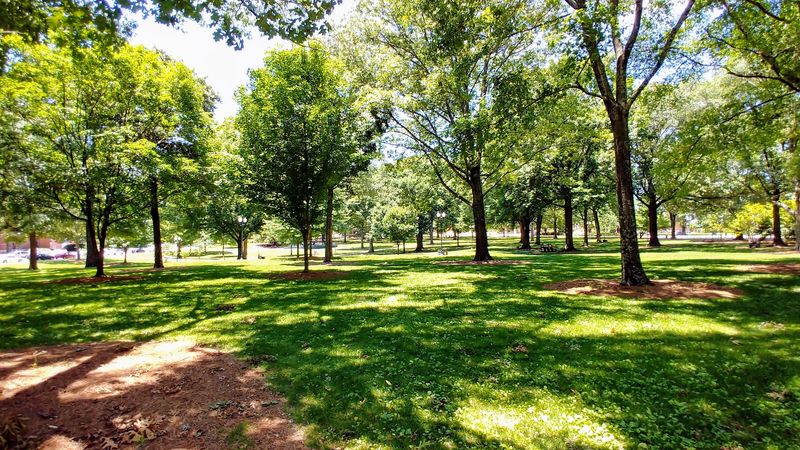
Under a canopy of oaks, elms, and magnolias, the temperature seems to drop a few degrees. The Grove covers about ten acres at the heart of campus, and it feels more like a quiet forest than a college lawn.
On a hot Mississippi day, that shade is a real gift for families.
Even on busier weekdays, a surprising hush often settles under the trees. Children can run, roll, and explore while parents find a comfortable spot nearby.
It is the kind of open space where everyone relaxes without needing a plan.
Bring a blanket and a simple picnic if your crew needs a break. Wide paths cross the lawn, so it is easy to keep little ones in sight.
Magnolia blossoms and fallen acorns give curious kids plenty to collect and examine.
Football fans know The Grove for something entirely different. On game days, it fills with tents and crowds for some of the most famous tailgating in college sports.
Visitors say the school takes tailgating pretty seriously, so check the schedule. A non-game weekday offers the calmest version of this green retreat.
Tree Trail Scavenger Hunt for Young Explorers
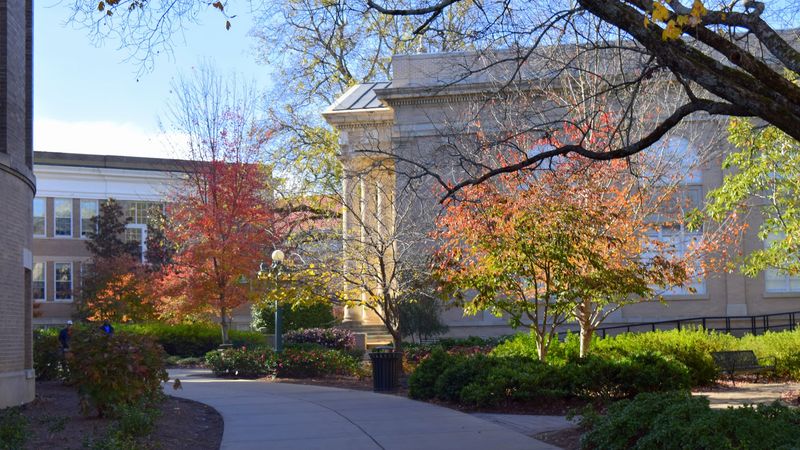
More than 200 species of trees grow across these grounds. That number alone can turn a simple walk into an adventure.
The university offers a self-guided digital tree trail, which works nicely as a scavenger hunt for kids.
Load the trail on a phone, then let children lead the way from one tree to the next. Each stop becomes a small mission: find it, touch the bark, compare the leaves.
Younger kids enjoy the hunt, while older ones may get curious about the names.
Visitors have mentioned spotting native plants like Osage orange, walnuts, and dogwoods. Osage orange makes a fun talking point, since its bumpy green fruit looks a bit like a brain.
Dogwoods put on a show in spring with their pale blossoms.
Bring a small notebook so kids can sketch their favorite tree or press a fallen leaf. That turns the outing into something they can take home and remember.
Since the trail is digital and self-guided, there is no fee and no fixed schedule. You can do a few stops or the whole route, depending on how long little legs hold up.
Ventress Hall’s Gothic Tower
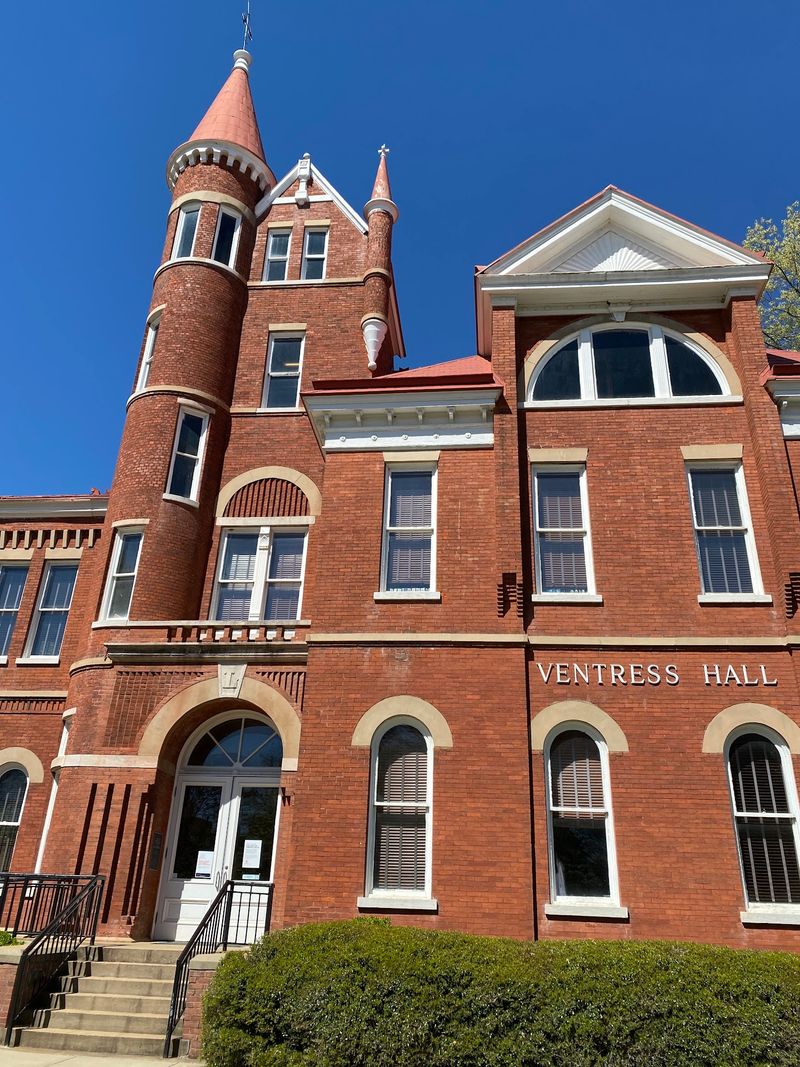
Among all the columns and classic brick, one building looks like it wandered out of a storybook. Ventress Hall, completed in 1889, stands out for its Gothic design and elegant tower.
It breaks the pattern in the best possible way.
Kids often call it the castle building, and honestly, that is not far off. Pointed details and the tall tower give it a dramatic profile against the sky.
Ask your children what they think the tower might have been used for, and enjoy the creative answers.
Comparing Ventress Hall with the Lyceum makes a quick architecture lesson. One borrows from ancient Greece, while the other leans toward medieval Europe.
Built about forty years apart, they show how tastes changed even within a single century.
Photographers in the family will want a few minutes here. The tower looks especially striking framed by surrounding trees, and different angles reveal new details.
Since it remains part of the working campus, enjoy it mostly from the outside. A short stop is plenty, but it often ends up being the building kids remember most when they talk about the trip afterward.
Barnard Observatory and a Star-Gazing Past

Built between 1857 and 1859, Barnard Observatory is one of the most significant historic landmarks on campus. Its name alone sparks curiosity in kids who love space.
An observatory from before the Civil War sounds like something out of an adventure novel.
Telling children that people studied the night sky here more than 160 years ago can open big conversations. What did astronomers see without modern technology?
How did they record what they found? Those questions keep young minds busy as you walk.
Interest in the stars has not faded at the university. One visitor even mentioned being inspired by the astronomy department to pursue higher learning.
That connection between past and present makes the observatory a meaningful stop for science-loving families.
Plan to admire the building from outside, as it is part of the active campus. The grounds around it offer a pleasant spot to pause and take photos.
For a fun follow-up, try a little backyard stargazing that night and talk about what astronomers here might have spotted long ago. It is a simple way to stretch the lesson beyond the walk itself.
The Old Chapel, Known as the Y Building

Dating to 1853, the Old Chapel is only a few years younger than the university itself. Many people know it by a second name, the Y Building.
Today it serves as home to the Croft Institute for International Studies.
That shift from chapel to global studies center makes a neat story for kids. Buildings, like people, can take on new roles as they grow older.
Ask your crew what job they would give an old building if they could choose.
The structure adds another chapter to the walking tour without requiring much extra effort. It sits within easy reach of other historic spots, so it fits naturally into a loop.
Families who enjoy collecting landmarks will want to check it off the list.
Look closely at the brickwork and windows, which carry the marks of the mid-1800s. Small details like these help children notice how construction looked long before modern materials.
Combined with the Lyceum and Barnard Observatory, the Y Building rounds out a trio of pre-Civil War structures. Seeing all three in one morning gives a real sense of how the early campus took shape.
Bailey Woods Trail to Rowan Oak

A wooded path connects campus to one of Mississippi’s most famous homes. Bailey Woods Trail leads a short distance to Rowan Oak, built in 1844 and once the residence of Nobel Prize-winning author William Faulkner.
The walk itself feels like a mini nature hike.
Children who need a break from buildings will enjoy the change of scenery. Trees close in overhead, and the trail feels peaceful compared with busier campus paths.
Wear sturdy shoes, since this route is more rugged than the brick walkways.
At the end, the white house appears among the trees like a scene from an old novel. A small fee applies to enter the house itself.
Wandering the serene grounds surrounding Rowan Oak, however, costs nothing.
Younger kids might not know Faulkner’s books, but they can still appreciate a home older than the university. Older students studying literature may find the visit especially exciting.
Parents can share that a famous writer once walked these same grounds while dreaming up stories. Pairing the trail with your campus stroll turns a casual outing into a fuller half-day adventure with nature, history, and a touch of literary magic.
Free Art and Antiquities at the University Museum
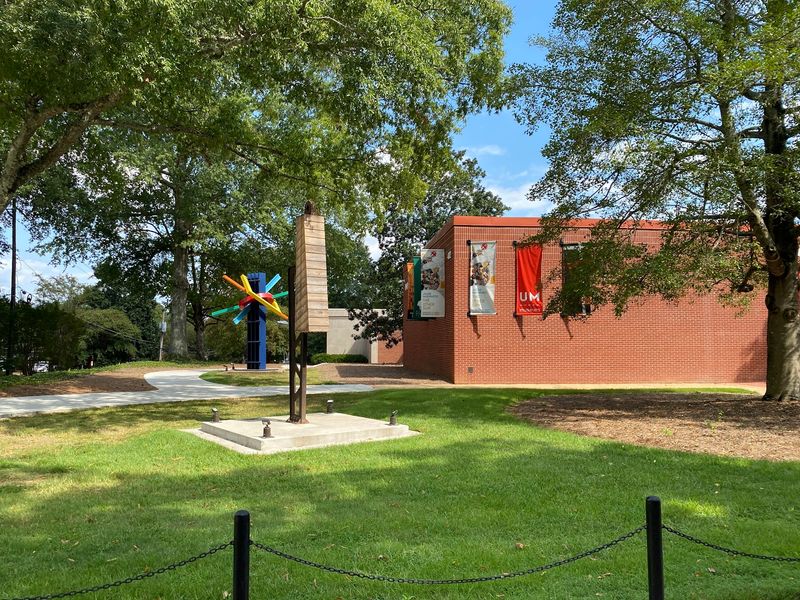
Rain clouds rolling in? Tired little legs?
The University of Mississippi Museum offers a welcome indoor option, and admission to its collections is free. That makes it an easy stop for families watching their budget.
Inside, the collections cover fine art, ancient Greek and Roman antiquities, and historical scientific instruments. Kids who just saw Greek Revival columns on the Lyceum can now spot real objects from ancient Greece.
Connecting the two makes the whole day feel like a story.
Scientific instruments tend to fascinate curious minds. Old tools and devices show how people measured and studied the world before computers.
Pair that with the earlier stop at Barnard Observatory, and science fans will be thrilled.
The museum also hosts free arts programs throughout the year. One favorite, called Sketchbook Saturdays, invites people of all ages to try creative activities.
Check the schedule ahead of time if you want to join in. Even a short visit gives everyone a chance to cool off, rest, and recharge before heading back out to explore.
Bring a pencil so kids can sketch something that catches their eye.
Rolling Hills, Clean Paths, and a Friendly Feel
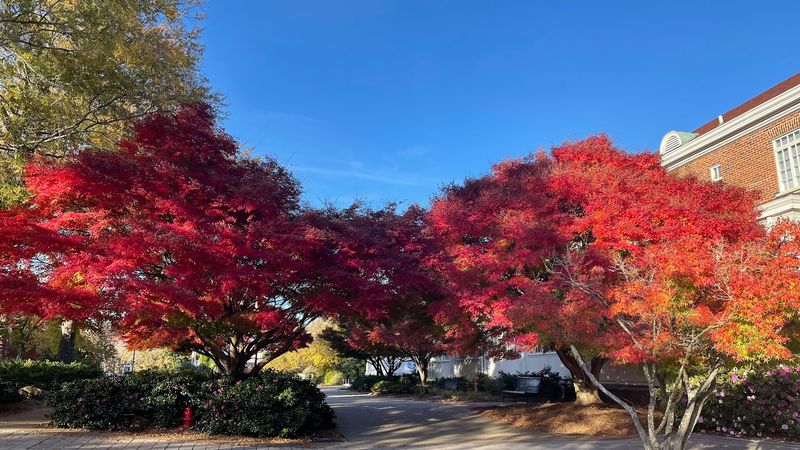
Families dropping off college students often arrive expecting a busy, ordinary day. Many leave talking about the scenery instead.
Visitors describe the campus as spotless, with grounds that always seem to be in great shape.
Rolling hills run throughout, giving the landscape a gentle, scenic quality. Flowers, landscape grasses, and towering trees blend with historic architecture.
Some say it ranks among the most beautiful campuses they have ever seen.
People here are often described as friendly and respectful. Staff and students tend to offer help, which comforts parents navigating an unfamiliar place.
That welcoming mood makes it easier to relax and let kids explore a little.
Hills do mean some climbing, so plan breaks for younger walkers. A stroller with good wheels helps, and carriers work well for babies.
Much of the campus has been renovated recently, and new construction appears in places, so you might see a few work zones. Plenty of open space remains for peaceful wandering.
On a weekday, the steady buzz of student life adds energy without feeling overwhelming, and kids often enjoy imagining themselves heading to class someday.
Hours, Parking, and Getting Around

Planning ahead makes a campus visit far smoother. University offices keep weekday hours from 8 AM to 5 PM, Monday through Friday, and they are closed on weekends.
Outdoor spaces like The Grove and The Circle remain the main attraction for families.
Free parking lots and garages make arrival easy. That counts as a real perk, since paid parking can quickly add up on family trips.
Once parked, nearly everything worth seeing sits within walking distance.
Hungry kids? Places to eat can be found in the student union.
Oxford’s restaurants and shops sit about a mile away, roughly a 15 minute walk to the town square. One visitor noted the courthouse there is a nice sight too.
Drivers should expect several roundabouts, which some visitors find a bit much. Biking can be tricky because hills are steep and dedicated bike lanes are limited, so walking is the simplest choice.
For questions, the main university line is 662-915-7211, and more details are posted at olemiss.edu. Check the football schedule before you go, because game days bring huge crowds and change the whole experience on campus.
A Gentle Verdict for Family Wanderers

Free parking, free museum admission, and free grounds make this one of the most budget-friendly outings in Mississippi. Add 175-plus years of history, and the value becomes hard to ignore.
Families get architecture, nature, and learning in a single walkable package.
Little ones will remember running beneath giant oaks and hunting trees on the digital trail. Older kids may connect with the civil rights history, the Faulkner home, or the observatory.
Parents get a relaxing stroll with plenty of shade and spots to rest.
Timing shapes the experience more than anything else. Quiet weekdays offer calm lawns and easy parking, while football weekends bring tents, crowds, and loud school spirit.
You may hear fans shouting Hotty Toddy, a cheer that sums up the local pride.
Budget at least two or three hours for the main loop, and more if you add Rowan Oak or downtown Oxford. Comfortable shoes, water bottles, and a small snack bag will keep everyone happy.
A college campus might not top most family bucket lists, yet this one quietly delivers a morning that kids and grown-ups alike will talk about long after the drive home.