
13 Forgotten Destinations In South Carolina You Won’t Want To Miss
South Carolina holds more secrets than most travelers realize.
Beyond the bustling streets of Charleston and the famous beaches of Myrtle, there are hidden corners where nature runs wild, history whispers through ruins, and quiet beauty waits for those willing to wander off the beaten path.
These forgotten destinations offer something rare: the chance to experience South Carolina as it used to be, before crowds and commercialism changed everything.
Ready to discover places that even locals sometimes overlook?
1. Congaree National Park (Near Columbia)

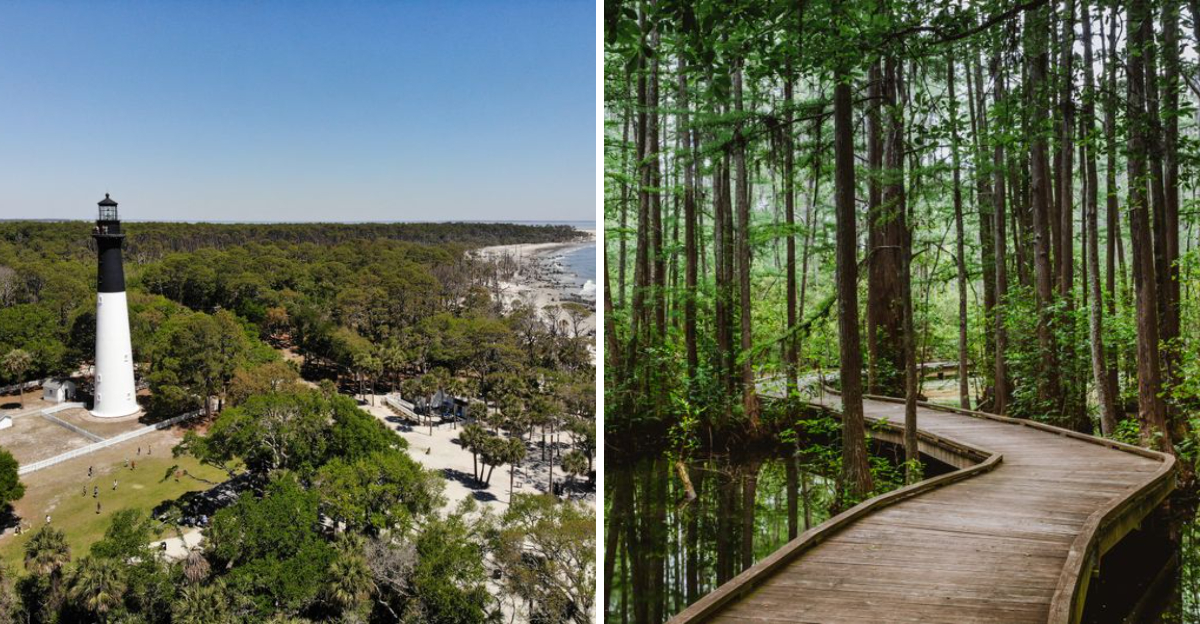
Ancient trees tower overhead like nature’s own cathedral, their roots twisting through murky waters that reflect the sky above.
Congaree National Park protects one of the last remaining old-growth bottomland hardwood forests in the entire United States.
The park’s 2.4-mile boardwalk loop lets you walk among champion trees—some of the tallest in the eastern U.S.—without getting your feet wet.
Kayaking through Cedar Creek offers a completely different perspective, where you paddle beneath Spanish moss curtains and listen to owls calling in broad daylight.
Firefly synchronization happens here each May, when thousands of insects light up the forest in perfect harmony.
Most visitors stick to Columbia’s downtown, never realizing this wilderness wonderland sits just twenty minutes away.
Bring mosquito spray, comfortable shoes, and your sense of adventure.
The silence here feels almost sacred.
2. Hunting Island State Park (Near Beaufort / St. Helena Island)
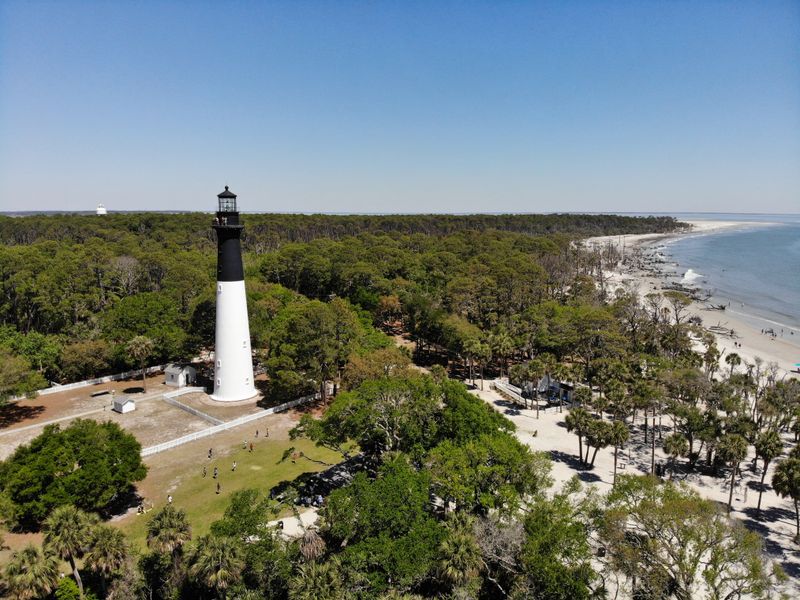
Climbing the 167 steps inside South Carolina’s only publicly accessible lighthouse rewards you with views that stretch forever across the Atlantic.
Hunting Island State Park combines everything coastal dreams are made of: five miles of pristine beach, a maritime forest thick with palmetto and live oak, and a lagoon perfect for kayaking.
The beach here changes constantly as erosion reshapes the shoreline, creating a dramatic boneyard of fallen trees that photographers adore.
Camping right by the ocean means falling asleep to wave sounds and waking to dolphin sightings.
The nature center offers programs about loggerhead sea turtles that nest here each summer.
Despite being stunning, this park rarely feels crowded like Myrtle Beach does.
Locals from Beaufort consider it their backyard paradise, but tourists often miss it entirely.
Pack a picnic and plan to stay all day.
3. Edisto Beach State Park (Edisto Island)
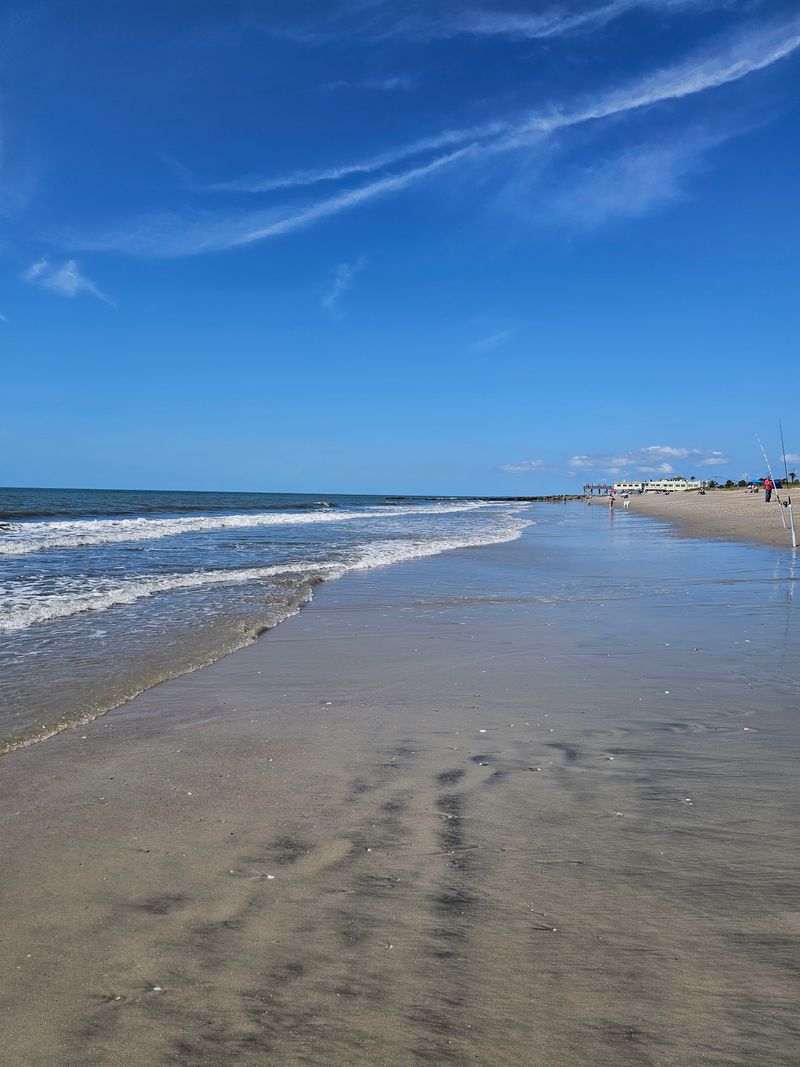
Edisto Island moves at a pace the modern world has mostly forgotten.
No high-rise hotels block the horizon here, no neon lights compete with the stars, and no traffic jams interrupt your thoughts.
Edisto Beach State Park protects 1,255 acres of maritime forest and salt marsh where alligators sun themselves and herons hunt patiently.
The beach yields an incredible variety of shells—sand dollars, whelks, and shark teeth wash up with each tide.
Four miles of hiking trails wind through the forest, revealing a completely different ecosystem just steps from the sand.
Cabins and campsites book up fast among those in the know, especially during fall when temperatures cool but the water stays warm.
The nearby town of Edisto Beach maintains its old-school charm with family-owned restaurants and zero chain stores.
This island refuses to change, and that’s exactly its appeal.
4. Hampton Plantation State Historic Site (McClellanville Area)
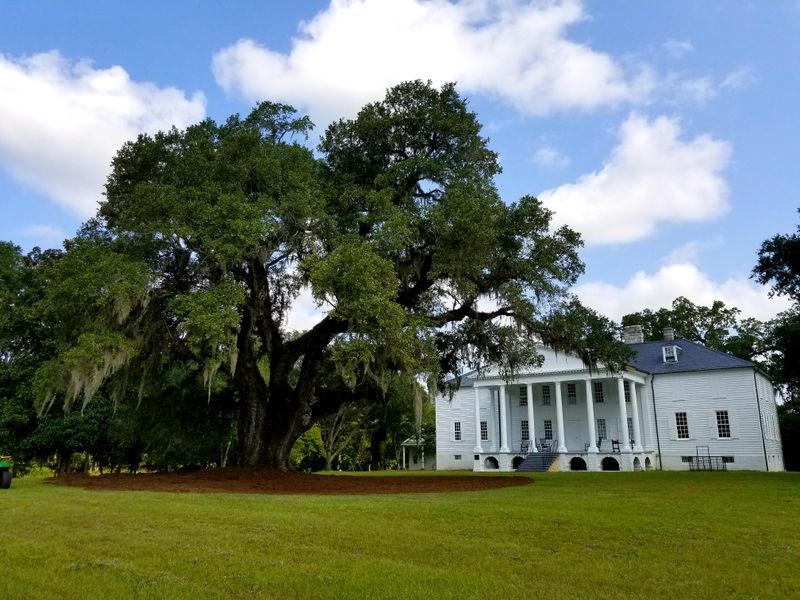
A massive live oak spreads its limbs like protective arms over this Georgian mansion where rice once made fortunes and enslaved people built an empire.
Hampton Plantation State Historic Site preserves both the grandeur and the difficult truths of South Carolina’s rice plantation era.
The house itself remains deliberately unrestored, with exposed walls revealing construction techniques from the 1700s.
Walking through empty rooms, you can almost hear echoes of the past—both the privilege upstairs and the suffering in the fields beyond.
The grounds include remnants of the rice field system that made this plantation prosperous.
Interpretive programs don’t shy away from discussing slavery’s central role in the plantation economy.
Poet Archibald Rutledge, who grew up here, later donated the property so its stories wouldn’t be forgotten.
The McClellanville area sees few tourists, making this historic site feel like a private discovery.
5. Penn Center + York W. Bailey Museum (St. Helena Island)
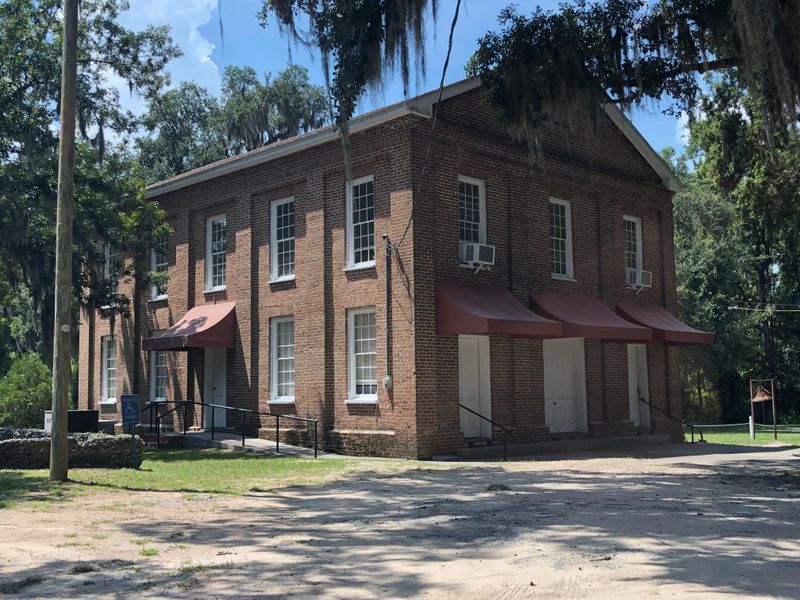
Founded in 1862, Penn Center became one of the first schools in the South established specifically for formerly enslaved African Americans.
Today, this National Historic Landmark District preserves Gullah Geechee culture and tells stories that textbooks often gloss over.
The York W. Bailey Museum houses artifacts, photographs, and documents chronicling the Sea Islands’ unique African American heritage.
Dr. Martin Luther King Jr. visited Penn Center multiple times during the civil rights movement, using it as a retreat for planning strategy.
Walking the campus grounds, shaded by ancient oaks, you feel the weight of history and the power of education as resistance.
The Gullah culture here—with its distinct language, crafts, and traditions—survived because of geographical isolation and community determination.
Guided tours reveal connections between West African traditions and contemporary Lowcountry life.
This isn’t just South Carolina history; it’s American history that deserves far more attention.
6. Old Sheldon Church Ruins (Near Yemassee)
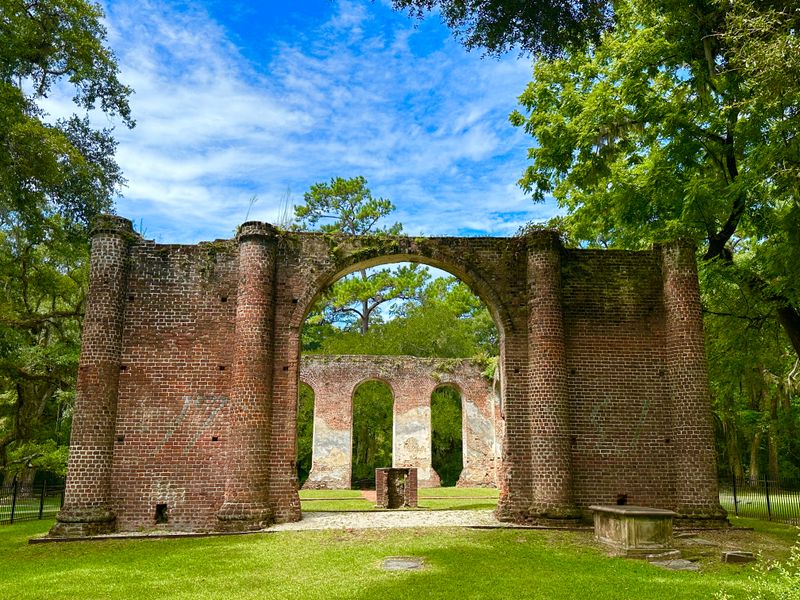
Brick columns reach toward the sky where a roof once stood, creating one of the most hauntingly beautiful sites in the South.
Old Sheldon Church was burned twice—first by the British in 1779, then by Sherman’s troops in 1865—yet its skeleton remains standing as a monument to resilience and loss.
Live oaks frame the ruins, their branches draping Spanish moss over walls that once echoed with hymns.
The cemetery surrounding the church holds graves dating back centuries, their weathered stones telling stories of families who shaped the Lowcountry.
Photographers flock here for the dramatic light filtering through empty windows and doorways.
Twice yearly, services are still held among the ruins, continuing a tradition that refuses to die.
The site sits on a quiet country road where you’re more likely to encounter deer than crowds.
Bring your camera and your imagination.
7. Landsford Canal State Park (Catawba, Near Rock Hill)
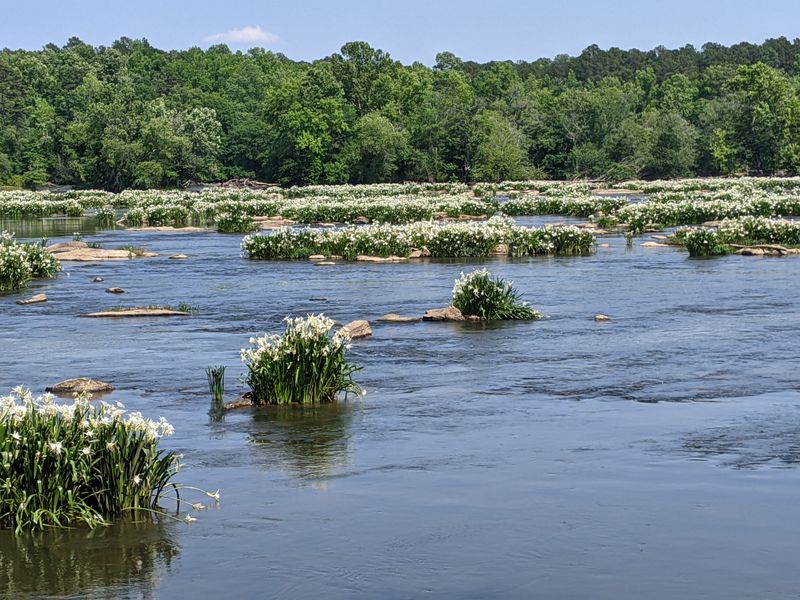
Each May, something magical happens along the Catawba River that most people never witness.
Rocky shoals spider lilies—found nowhere else on Earth except a few Southern rivers—blanket the rocks in a spectacular white bloom.
Landsford Canal State Park protects this rare phenomenon along with remnants of a canal system built in the 1820s to bypass river rapids.
Walking the canal trail, you pass lock ruins and imagine the boats that once hauled cotton to market.
The river here runs wild and beautiful, perfect for experienced kayakers when water levels cooperate.
Even outside lily season, the park offers peaceful hiking through hardwood forest and excellent birdwatching opportunities.
Rock Hill sits close to Charlotte, yet this park feels worlds away from urban sprawl.
Locals guard this secret carefully, visiting during the brief lily bloom when the river transforms into something from a fairy tale.
8. Devils Fork State Park (Lake Jocassee)
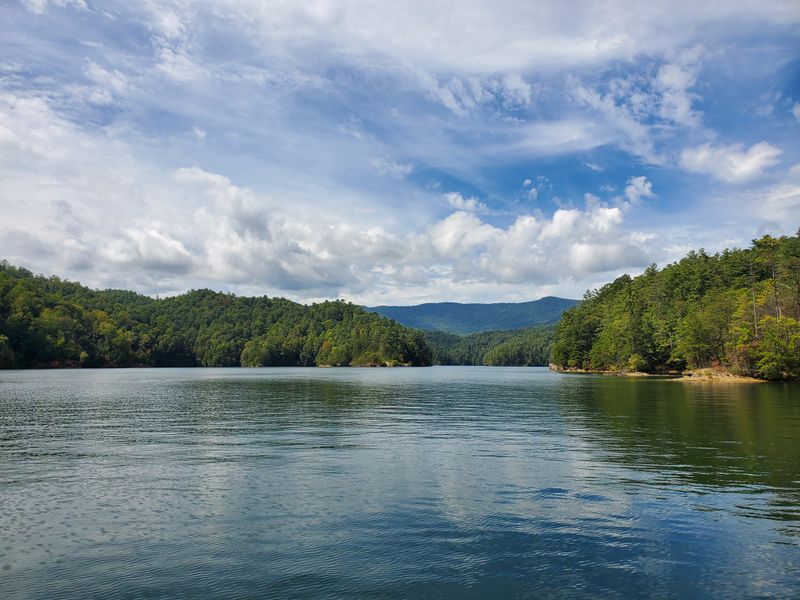
Lake Jocassee’s water runs so clear and cold that scuba divers come from across the country to explore submerged valleys and waterfalls.
Devils Fork State Park sits on the shores of this mountain reservoir where the Blue Ridge foothills meet the water.
The lake reaches depths of 300 feet, fed by mountain streams that keep it pristine and chilly even in summer.
Twenty villas perch right on the waterfront, offering luxury camping with million-dollar views.
Boating here feels like navigating a maze of coves and inlets, each more beautiful than the last.
Anglers chase trophy trout and bass in waters consistently ranked among the cleanest in the nation.
Hiking trails climb into the surrounding forest where waterfalls cascade down rocky slopes.
Most South Carolina tourists never make it to the upstate’s mountain corner, leaving this stunning park blissfully uncrowded.
The water’s emerald-green color looks almost tropical despite the mountain setting.
9. Cheraw State Park (Cheraw)

Longleaf pines tower over sandy trails where you might spot a red-cockaded woodpecker if you look carefully.
Cheraw State Park protects a slice of the sandhills ecosystem that once covered much of the Southeast.
Two lakes offer fishing, swimming, and paddling opportunities, while an eighteen-hole golf course winds through the pines for those seeking different recreation.
The terrain here feels completely different from coastal South Carolina—rolling hills, sandy soil, and pine-scented air that reminds you of the Carolinas’ ecological diversity.
Cabins and campsites provide comfortable bases for exploring the park’s seven miles of trails.
The town of Cheraw itself charms visitors with antebellum architecture and claims to fame as Dizzy Gillespie’s birthplace.
Being tucked in the state’s northeastern corner means Cheraw sees far fewer visitors than parks along major tourist routes.
Peaceful doesn’t begin to describe it.
10. Aiken State Park (Near Windsor)
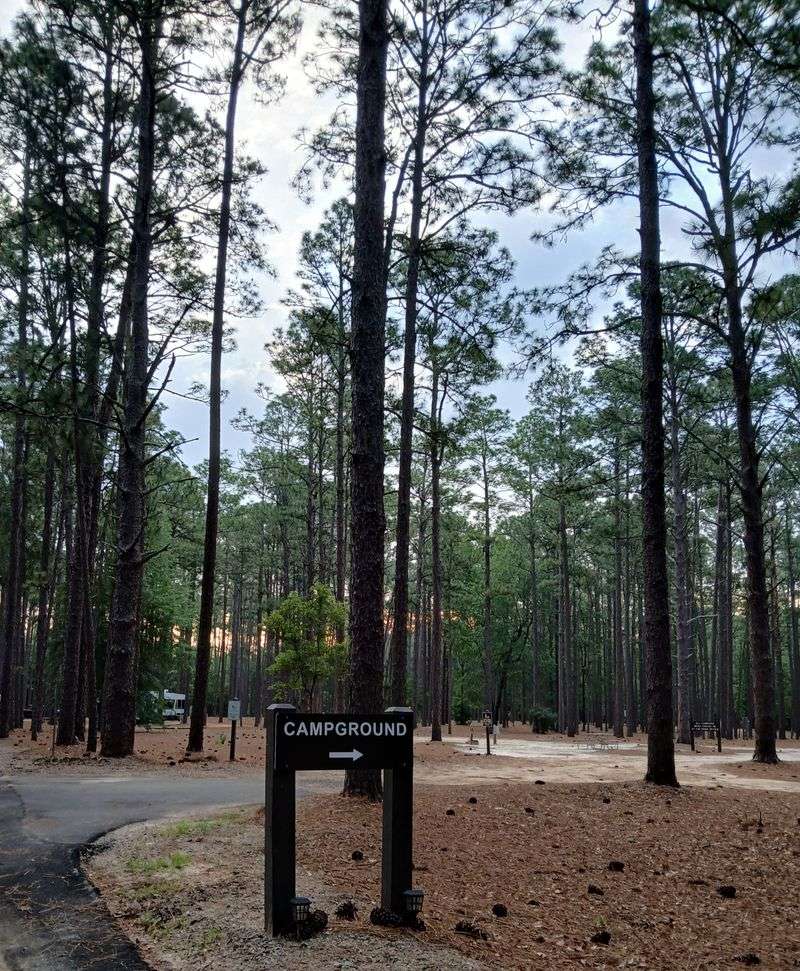
Dark water reflects the sky like black glass as you paddle beneath a canopy of cypress and tupelo.
Aiken State Park borders four miles of the South Edisto River, a blackwater stream stained tea-colored by tannins from decaying vegetation.
Canoeing here feels like entering another time, where alligators sun on logs and wading birds stalk the shallows.
The park’s 1,067 acres include hiking trails through mixed pine and hardwood forest where deer browse and turkeys scratch for acorns.
A spring-fed lake offers swimming when the river runs too high or cold for comfort.
Cabins dating from the Civilian Conservation Corps era provide rustic accommodations with modern conveniences.
Windsor barely registers on most maps, and the park maintains that same low profile despite offering outstanding outdoor recreation.
Fall colors here rival anything in the mountains, as sweetgum and cypress turn brilliant shades before dropping their leaves.
11. Lee State Park (Near Bishopville)

An artesian well bubbles up from deep underground, creating a spring that’s flowed continuously since the park’s creation in the 1930s.
Lee State Park wraps around the Lynches River, offering over two miles of river frontage perfect for fishing and quiet contemplation.
The Civilian Conservation Corps built much of the park’s infrastructure during the Depression, and their craftsmanship still stands strong.
Hiking trails wind through bottomland hardwood forest where the understory grows thick and green.
The river here moves slowly, stained dark like sweet tea, carrying nutrients from upstream forests.
Equestrian trails attract horseback riders seeking sandy paths through pine woods.
Bishopville sits in rural Pee Dee country where agriculture still dominates the landscape and tourists rarely venture.
The park’s remoteness guarantees solitude even on beautiful weekends when more accessible parks overflow.
Sometimes the best destinations are the ones you’ve never heard of.
12. Woods Bay State Park (Olanta)
Carolina bays—those mysterious oval depressions that dot the coastal plain—remain one of geology’s unsolved puzzles.
Woods Bay State Park protects one of the finest examples of these unique wetlands, where a 1,150-acre bay supports an incredible diversity of plant and animal life.
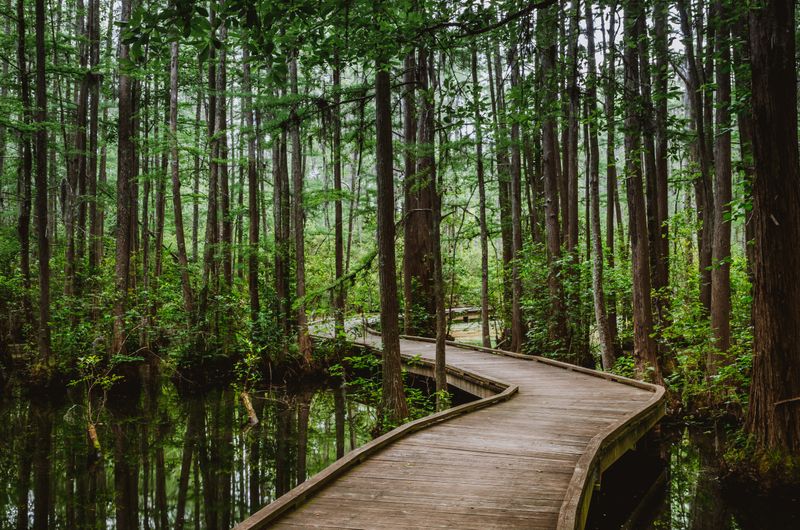
A boardwalk and canoe trail let you explore this swamp ecosystem without disturbing its delicate balance.
Cypress knees poke up through dark water carpeted with duckweed and dotted with water lilies.
Scientists still debate how Carolina bays formed—theories range from meteor impacts to wind and wave action from ancient seas.
Whatever their origin, these wetlands provide crucial habitat for species from otters to prothonotary warblers.
Olanta barely shows up on most road maps, and the park maintains that same obscurity despite its ecological significance.
Visit during spring when frogs chorus so loudly you can barely hear yourself think.
13. Carolina Sandhills National Wildlife Refuge (Near McBee)
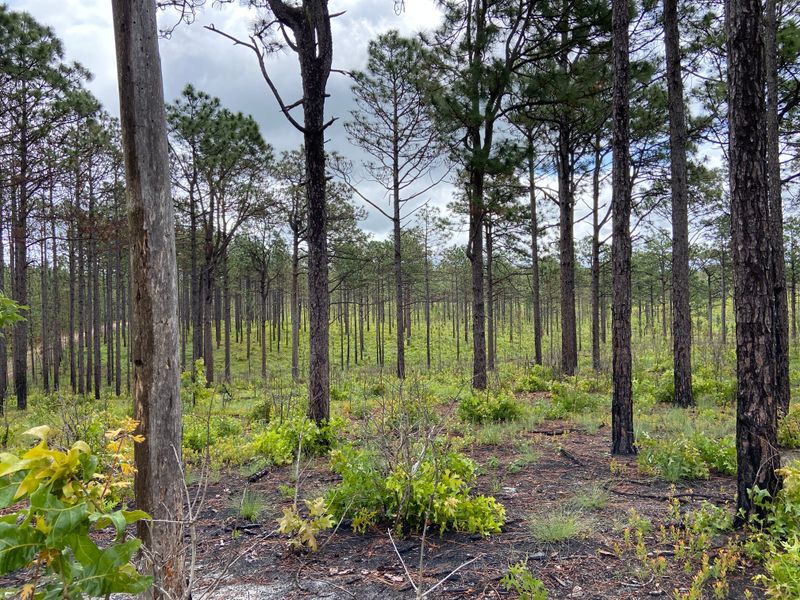
Longleaf pine savanna stretches to the horizon, an ecosystem so rare that less than three percent of its original range survives.
Carolina Sandhills National Wildlife Refuge protects 45,000 acres of this critically endangered habitat, where prescribed fire maintains the open understory that wildlife depends on.
The endangered red-cockaded woodpecker thrives here, drilling nest cavities in living pines marked by distinctive white resin streaks.
Over 190 bird species have been recorded in the refuge, making it a premier destination for serious birders.
Sandy roads wind through the pines, passing small ponds where wood ducks nest and otters play.
White-tailed deer, wild turkeys, and even bobcats roam these woods, though spotting the latter requires serious luck.
McBee sits in rural Chesterfield County where the sandhills ecosystem once dominated.
The refuge offers a glimpse of what much of the Southeast looked like before development changed everything forever.