
This Wisconsin Outdoor Museum Is So Strange, You Have To See It To Believe It

Deep in the northern woods of Wisconsin, along State Highway 13 near Phillips, sits a collection of concrete figures that defies simple explanation. Fred Smith’s Wisconsin Concrete Park sprawls across a former tavern property where hundreds of sculptures emerge from the landscape like frozen memories.
Built entirely by one man over the course of fifteen years, this outdoor museum blends folk art, local history, and pure creative vision into something that feels more like stumbling into someone’s dream than visiting a traditional attraction.
Remote Park With Hundreds Of Concrete Sculptures

Fred Smith’s creation sits at N8236 State Highway 13 in Phillips, a town most travelers pass through on their way to somewhere else. What began as a retirement project in 1948 grew into one of the most unusual art environments in the Midwest.
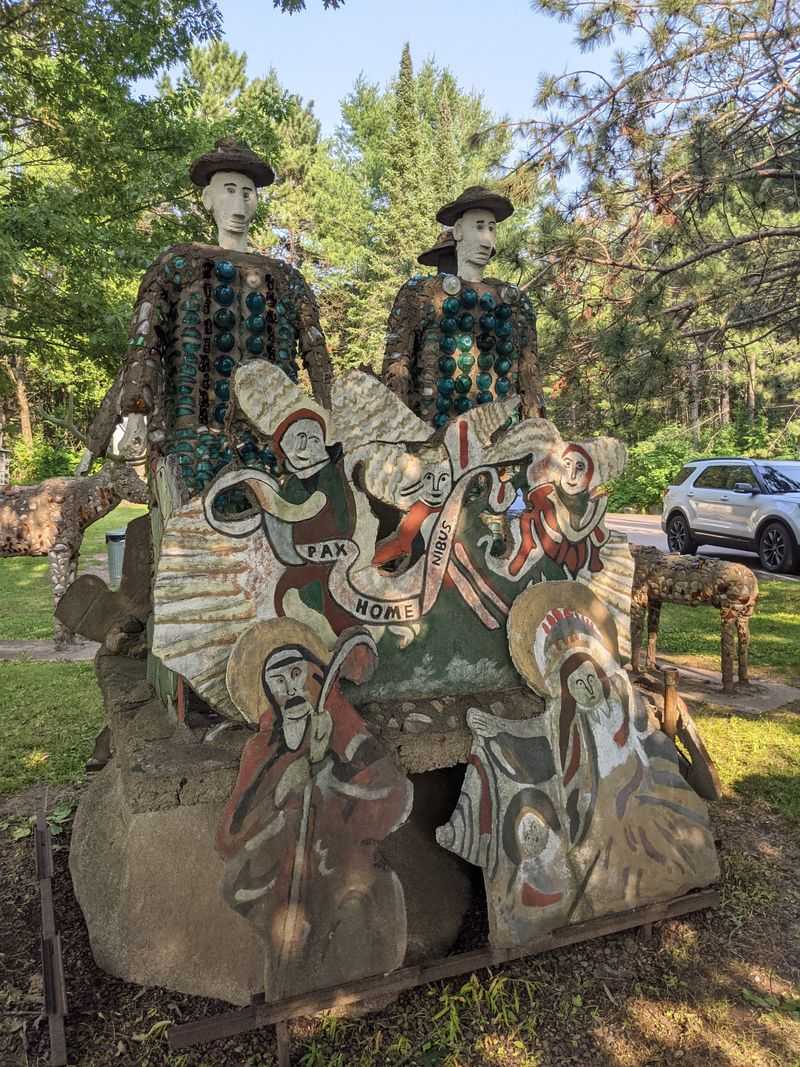
Smith worked alone, mixing concrete and embedding glass bottles into figures that now number well over two hundred across the property.
The sculptures range from life-sized human figures to animals and mythical creatures. Each piece carries its own story, pulled from Smith’s memories of logging camps, local legends, and historical events.
Walking through the grounds feels like moving through a three-dimensional scrapbook where concrete replaces photographs.
Visitors often arrive expecting a small roadside curiosity and find themselves wandering trails for an hour or more. The park operates year-round with free admission, though the gift shop keeps seasonal hours.
Bathrooms and parking make it easy to turn a quick stop into a proper visit.
The Entire Park Was Built By One Man Working Alone
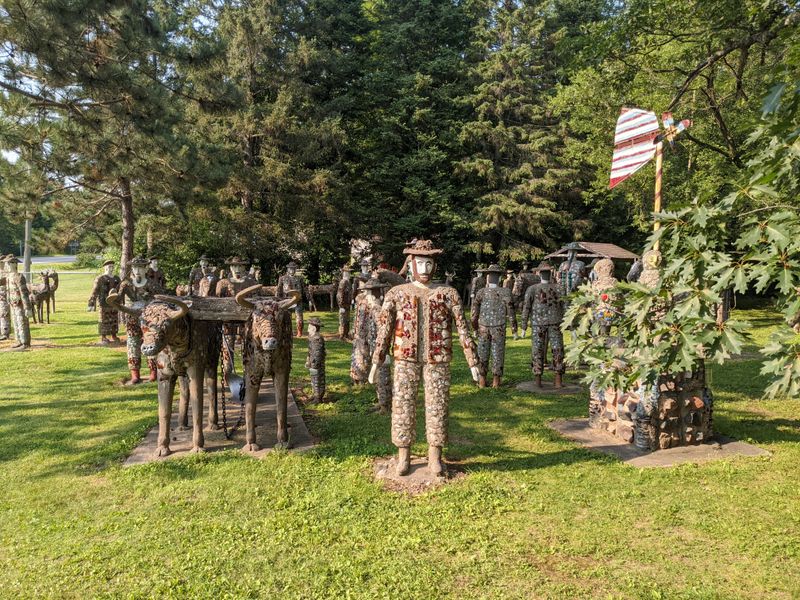
Fred Smith started building after he retired from logging and running a small tavern on the property. He had no formal art training and no crew to help him lift, pour, or shape the concrete.
At age sixty-five, when most people slow down, Smith began what would become his most ambitious work.
He spent fifteen years constructing the park, working through Wisconsin winters and summers until arthritis finally forced him to stop in 1964. Smith built wooden frames for each figure, covered them with wire mesh, and then applied layers of concrete mixed by hand.
The bottles from his tavern became decorative elements embedded into the sculptures, catching light and adding color.
His dedication transformed an ordinary piece of land into something that now sits on the National Register of Historic Places. The Kohler Foundation later helped preserve the work after Smith could no longer maintain it.
Every figure stands as evidence of what one person can accomplish with vision and persistence.
None Of The Sculptures Were Ever Meant To Be Temporary
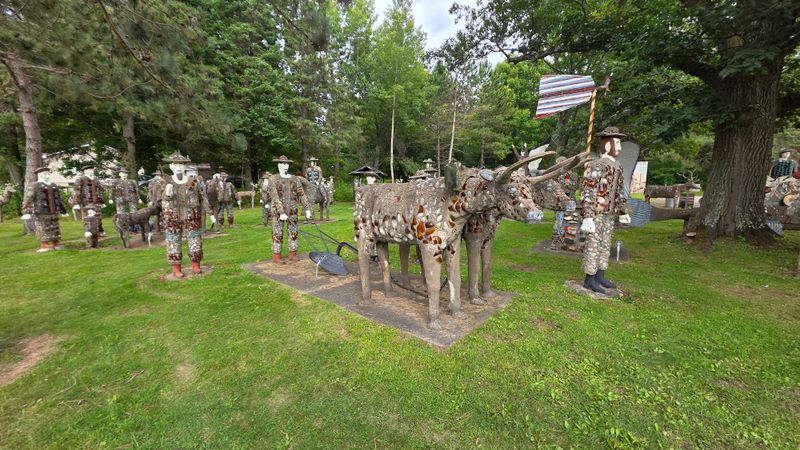
Smith built with permanence in mind, choosing concrete because it could withstand decades of weather without rotting or rusting away. Each sculpture received the same careful attention whether it depicted a famous figure or an anonymous logger.
He reinforced his work with sturdy frames and multiple layers, treating every piece as if it would outlive him.
That commitment to durability means the park still stands strong more than sixty years after Smith stopped working. The concrete has weathered and aged, but the sculptures remain intact and recognizable.
Some pieces show cracks or fading, yet they continue to hold their forms and tell their stories.
Preservation efforts have helped maintain the collection, but much of its survival comes down to Smith’s original craftsmanship. He understood that concrete, unlike wood or metal, could resist the harsh northern Wisconsin climate.
His choice of materials turned a personal project into a lasting legacy that continues drawing visitors from across the country.
The Figures Appear Suddenly From The Woods
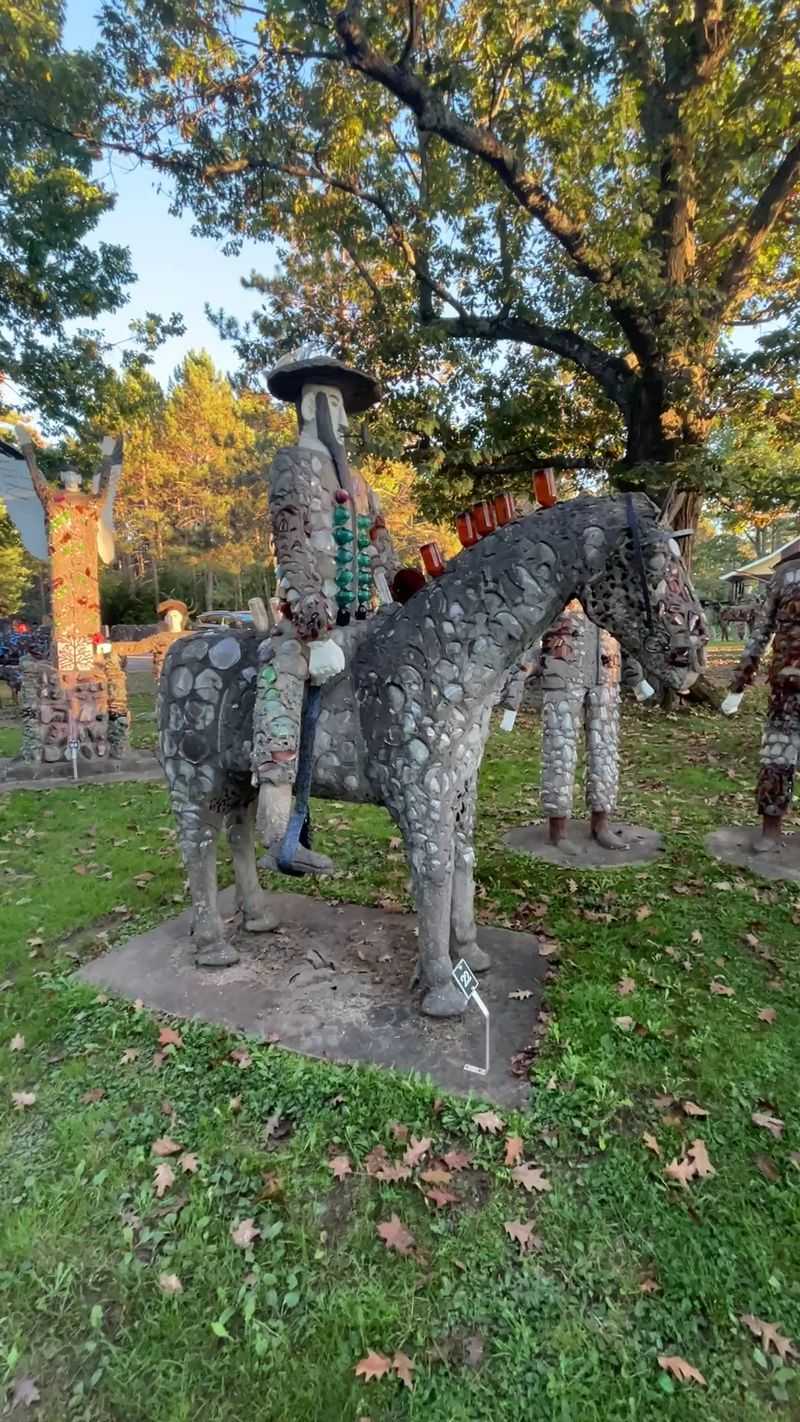
Walking the trails at Wisconsin Concrete Park means encountering sculptures that seem to materialize without warning. A cowboy on horseback emerges from behind a cluster of pines.
A group of figures engaged in conversation appears around a bend. The layout creates a sense of discovery that keeps visitors moving forward to see what comes next.
Smith placed his work throughout the property rather than clustering everything in one viewing area. This approach means you might spot a sculpture partially hidden by undergrowth or standing alone in a small clearing.
The effect feels less like a curated museum and more like stumbling upon evidence of some parallel world.
Trees and natural vegetation have grown up around many pieces, integrating them further into the landscape. Some sculptures stand in full sunlight while others remain in perpetual shade.
The interplay between nature and art gives the park an atmosphere that shifts with the seasons and the angle of the light.
The Park Blends Folk Art, History, And Pure Imagination
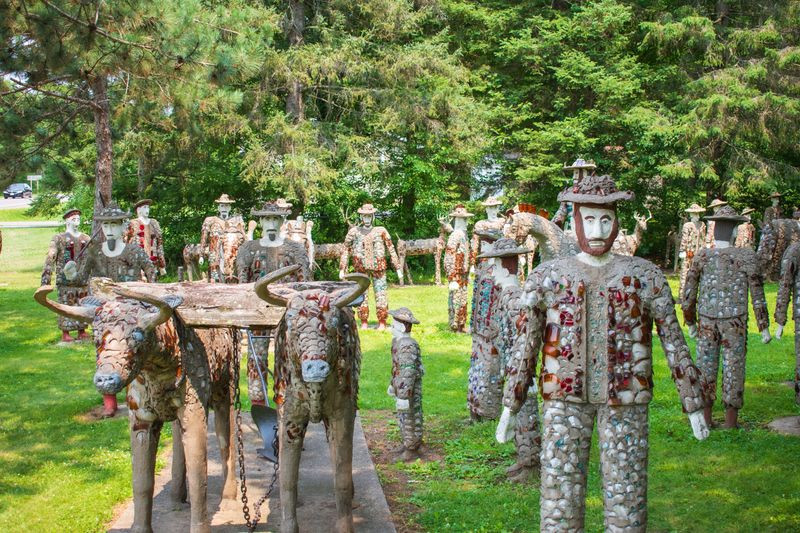
Smith drew inspiration from multiple sources when deciding what to create. Some sculptures depict historical figures like Paul Bunyan and Abe Lincoln.
Others show scenes from his own experiences in logging camps and tavern life. Still others seem to come from pure imagination, figures that belong to no particular time or place.
This mixture gives the park an unusual character that resists easy categorization. You might see a Native American chief standing near a team of draft horses, with a fantastical creature visible in the distance.
The juxtaposition feels random at first, then starts to make sense as a reflection of one man’s interior landscape.
Folk art experts recognize the park as an important example of outsider art, created without concern for mainstream artistic trends or expectations. Smith built what interested him, following his own rules and aesthetic preferences.
The result captures something genuine about rural Wisconsin culture while also transcending any single time or place.
Many Sculptures Depict Scenes From Everyday Life
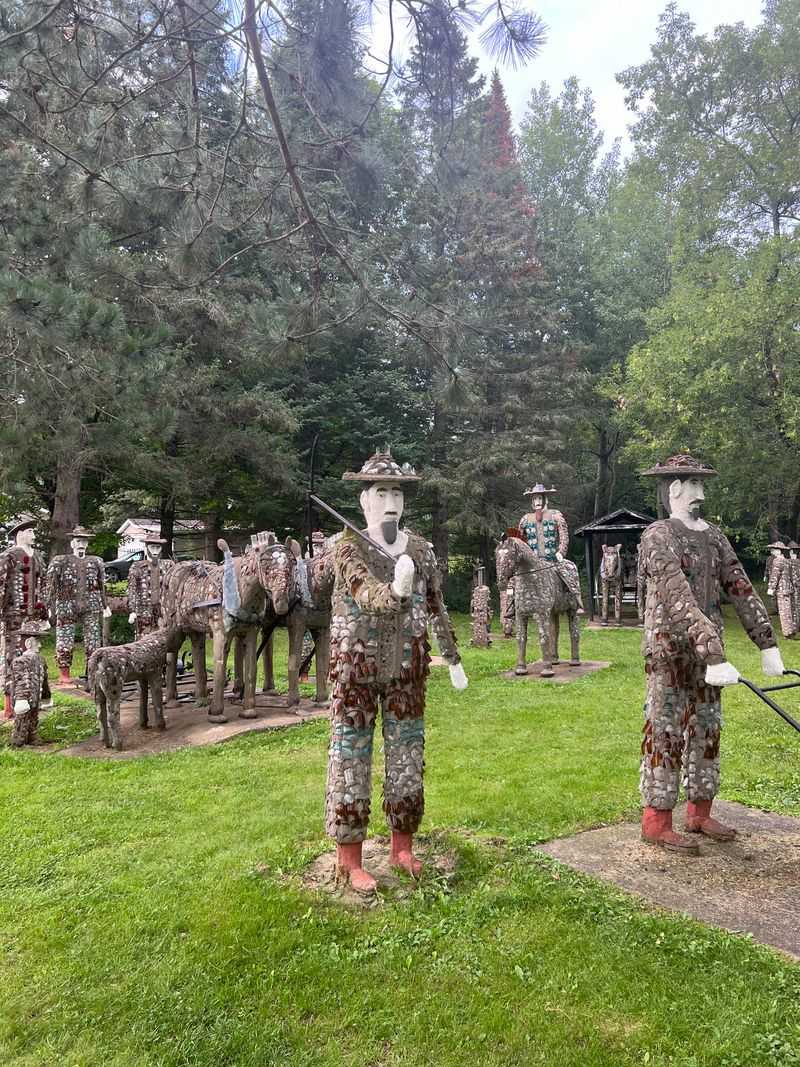
Among the more famous figures and mythical creatures, Smith included plenty of ordinary people doing ordinary things. A woman sits in a chair.
A man holds a beer. Groups of figures stand in conversation, frozen mid-sentence.
These quieter pieces reveal Smith’s interest in documenting the world around him.
The everyday scenes carry as much detail as the grander subjects. Smith paid attention to clothing, posture, and the small gestures that make a figure feel lifelike.
A tilt of the head or the position of a hand adds personality to what could have been generic forms.
Plaques throughout the park provide context for many sculptures, explaining who or what they represent. Some descriptions come from Smith’s own notes, while others reflect research done by preservationists.
Reading these explanations adds another layer to the experience, connecting the concrete figures back to the real people and events that inspired them.
Nothing About The Layout Feels Planned Or Polished

Smith arranged his sculptures without following any master plan or design principles. Figures appear where he decided to place them, creating an organic layout that feels spontaneous rather than calculated.
There are no symmetrical arrangements or carefully measured distances between pieces.
This unpolished quality adds to the park’s charm rather than detracting from it. The lack of formal organization means each visit can feel different depending on which path you take.
You might miss certain sculptures entirely or discover something new even on a return trip.
The grounds themselves remain relatively simple, with mowed grass, dirt trails, and natural vegetation. No one has tried to landscape the property into something more refined.
The rough edges and informal presentation suit the artwork perfectly, maintaining the spirit of Smith’s original vision. Professional museum design would probably diminish rather than enhance what makes this place special.
The Park Has No Traditional Museum Walls Or Rooms
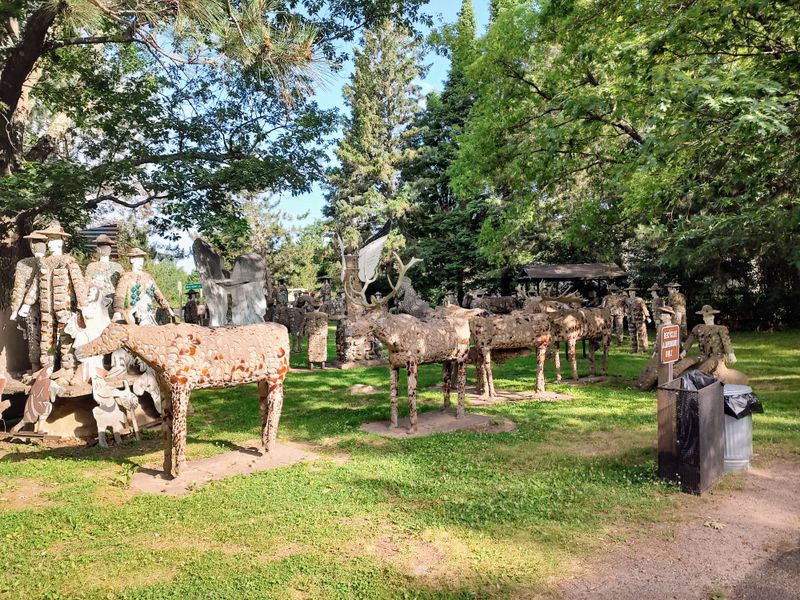
Everything at Wisconsin Concrete Park sits outdoors, exposed to weather and visible from multiple angles. There are no climate-controlled galleries or roped-off viewing areas.
Visitors walk among the sculptures rather than observing them from a distance, creating an intimate relationship with the work.
This open-air approach means the experience changes with conditions. Morning fog might soften the figures into ghostly shapes.
Bright afternoon sun creates sharp shadows that emphasize texture and detail. Rain darkens the concrete and makes embedded glass bottles glisten.
The only indoor space is the small gift shop, which operates Thursday through Sunday during warmer months. The original house where Smith lived still stands on the property and can be toured seasonally.
Otherwise, the park functions as a true outdoor museum where nature and art exist in constant dialogue. Visitors should dress for the weather and bring bug spray during summer months when mosquitoes emerge from the surrounding woods.
Visitors Often Don’t Know What To Expect Until They Arrive
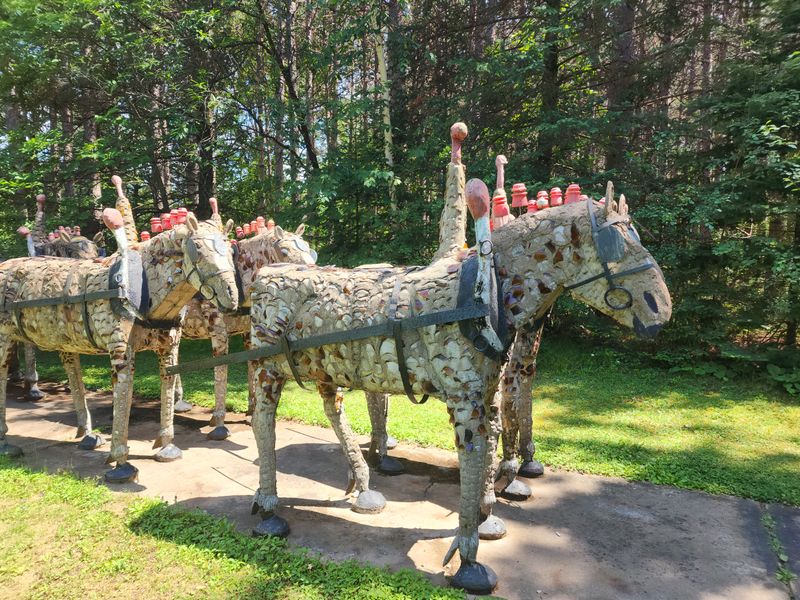
Most people discover Wisconsin Concrete Park by accident, spotting sculptures from the highway and deciding to investigate. Even those who arrive intentionally often underestimate what they’ll find.
The park’s reputation as a roadside curiosity doesn’t fully prepare anyone for the scope and strangeness of the actual experience.
Reviews frequently mention surprise at how extensive the collection is and how much time visitors end up spending. What looks like a small attraction from the road expands into trails, clearings, and hidden corners full of unexpected figures.
Children especially enjoy the scavenger hunt quality of searching for sculptures.
The park’s website and informational materials try to convey what awaits, but words and photographs struggle to capture the atmosphere. Standing among hundreds of concrete figures embedded with glass bottles, surrounded by Wisconsin woods, creates a sensation that resists description.
First-time visitors often leave planning a return trip, knowing they missed details or want to experience the place in a different season.
The Park Feels More Like A Vision Than An Attraction
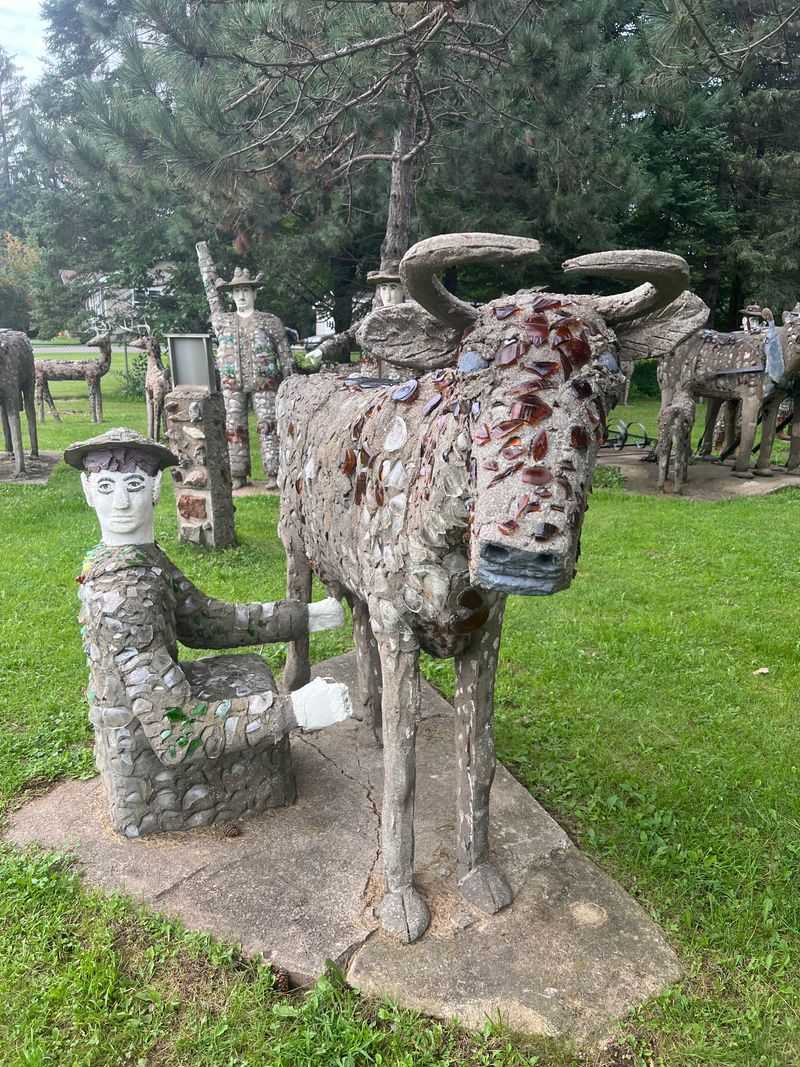
Spending time at Wisconsin Concrete Park creates an impression of having entered someone else’s dream. The sculptures don’t follow conventional artistic logic or tourist-friendly presentation.
They exist because Fred Smith wanted them to exist, arranged according to his private sense of order and meaning.
This quality separates the park from typical roadside attractions that aim to entertain or educate in predictable ways. There’s no gift shop pressure, no admission fee, and no guided tour pushing you through in thirty minutes.
The experience unfolds at whatever pace feels right, allowing for contemplation or quick browsing.
Many visitors describe feeling moved or unsettled by the park, responding to something beyond the concrete and glass. Smith’s obsessive dedication and solitary labor come through in every piece.
Walking among his creations feels like bearing witness to one man’s need to leave something permanent behind, to mark his time on earth with monuments to memory and imagination.
Wisconsin Concrete Park Is Unlike Anything Else In The State
Wisconsin has no shortage of unusual attractions, from the House on the Rock to the National Mustard Museum. Yet Wisconsin Concrete Park stands apart even in this company.
The combination of scale, artistic vision, and backstory creates something genuinely unique that can’t be replicated or franchised.
The park represents a type of American folk art that emerged from rural communities in the mid-twentieth century. Artists like Fred Smith worked outside academic traditions, creating personal monuments that reflected their own experiences and imaginations.
These environments rarely receive the attention given to mainstream art, yet they often prove more memorable and affecting.
Located at 45.6712555, -90.3908469, the park sits far enough from major cities that it remains relatively undiscovered despite its National Register status. This isolation helps preserve its character, keeping it from becoming overly commercialized or sanitized.
For travelers willing to venture into northern Wisconsin, the reward is an encounter with something truly original and strange.