
10 Abandoned Places In Pennsylvania Every Explorer Must See
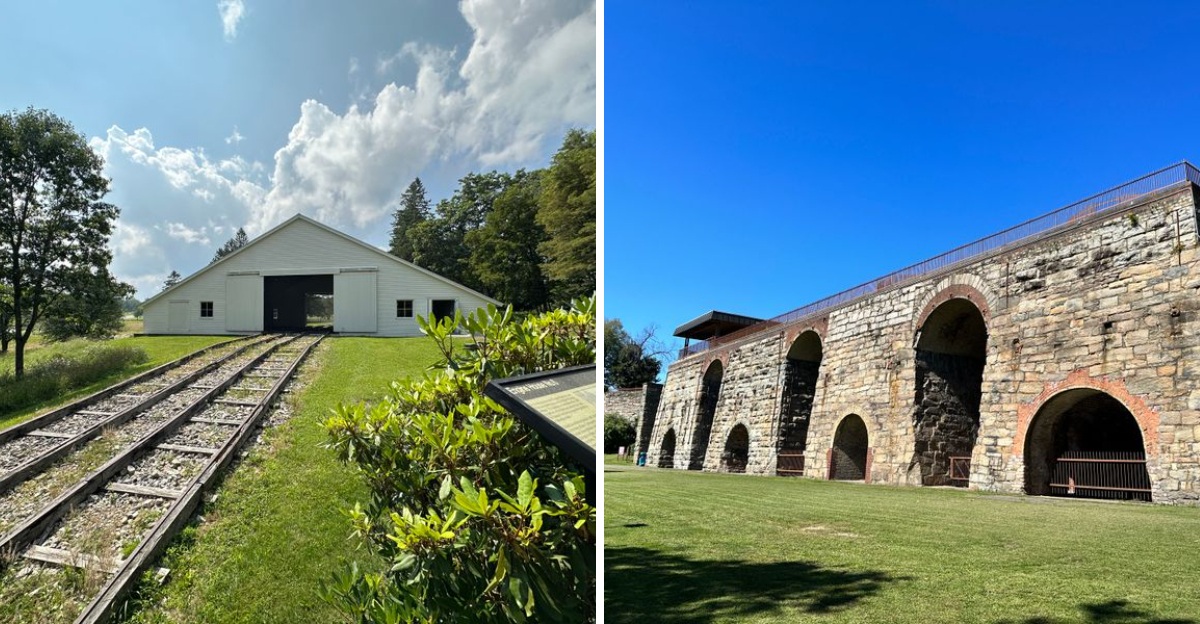
Across Pennsylvania, history lingers in the shadows. Crumbling prisons, forgotten highways, and rusted steel giants remain frozen in time, quietly waiting for curious souls to uncover their stories.
Each site offers a haunting mix of eerie beauty and rich past lives. For anyone drawn to atmosphere and forgotten places, these abandoned landmarks have the power to transport visitors straight into another era.
1. Abandoned Pennsylvania Turnpike (Bedford & Fulton Counties)
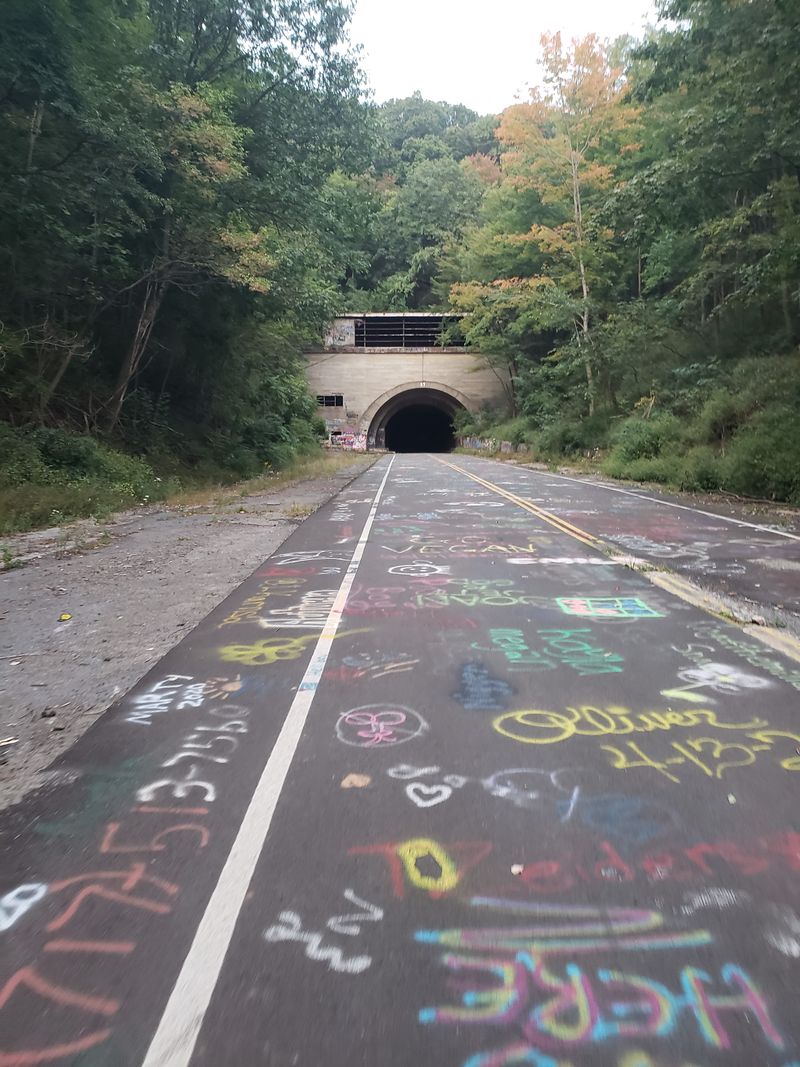
Imagine driving through a tunnel where no cars have passed in decades. The Abandoned Pennsylvania Turnpike stretches over 13 miles through Bedford and Fulton Counties, featuring two massive tunnels that once carried thousands of vehicles daily.
When the turnpike was rerouted in 1968, this section became a time capsule of mid-century highway engineering.
Walking or biking through the Rays Hill and Sideling Hill tunnels feels like stepping into another dimension. Graffiti artists have transformed the walls into colorful canvases, creating an unexpected underground gallery.
The darkness inside can be unsettling, so bring a powerful flashlight and maybe a friend for company.
Nature has slowly reclaimed the roadway between the tunnels, with trees pushing through cracks in the pavement. You’ll find remnants of old road signs and mile markers still clinging to their posts.
This place offers photographers incredible opportunities, especially during golden hour when sunlight streams through the tunnel entrances.
Plan at least two hours for exploration, and wear sturdy shoes since the pavement is uneven.
2. Austin Dam Memorial Park (Austin)
What happens when 400 million gallons of water suddenly break free? Austin, Pennsylvania, learned the devastating answer on September 30, 1911.
The Austin Dam collapse sent a 30-foot wall of water crashing through the valley, destroying everything in its path and claiming 78 lives in one of Pennsylvania’s worst disasters.
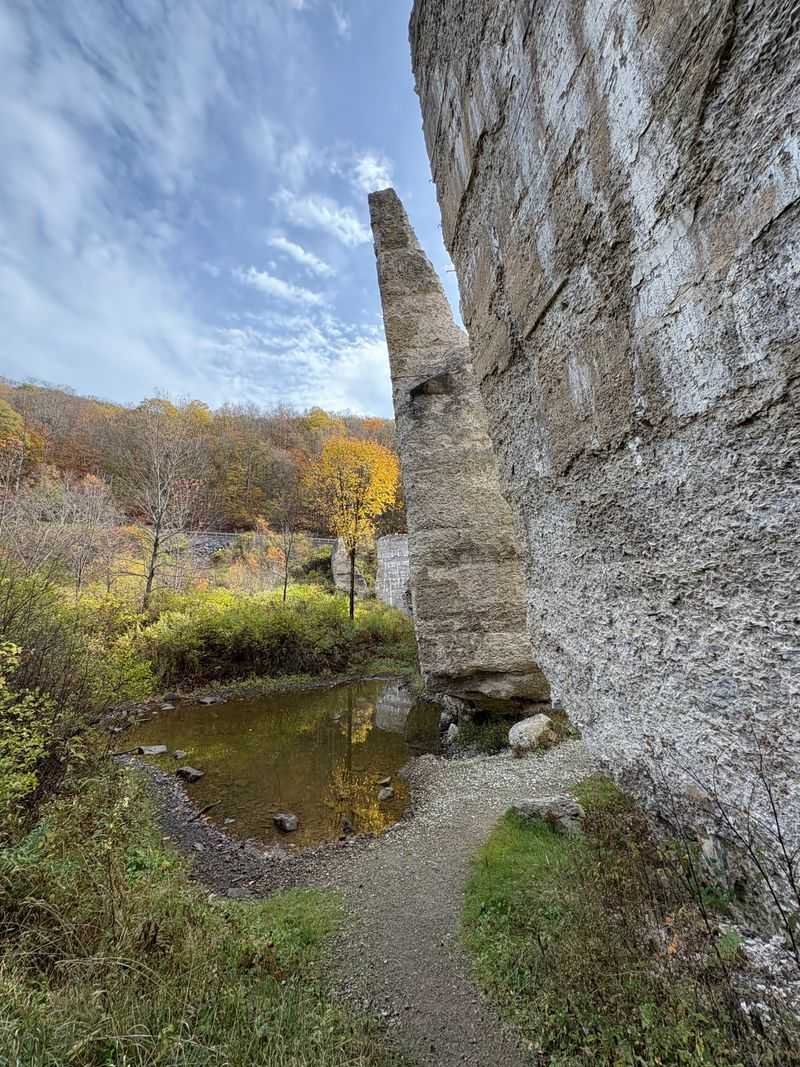
Today, massive concrete chunks lie scattered across the park like broken teeth of a sleeping giant. These ruins serve as both memorial and warning, reminding visitors of nature’s power when human engineering fails.
Walking among the rubble, you can still see the scale of what was once considered a modern marvel.
The park has interpretive signs explaining the dam’s construction and catastrophic failure. Trees now grow between the concrete slabs, and wildflowers bloom where a thriving town once stood.
It’s a peaceful place now, though the weight of history hangs heavy in the air.
Bring a picnic and spend time reflecting on this powerful reminder of the past.
3. Eastern State Penitentiary (Philadelphia)
Gothic towers rise from a Philadelphia neighborhood like a medieval fortress dropped into the modern world. Eastern State Penitentiary opened in 1829 and revolutionized prison design with its radical concept of solitary confinement meant to inspire penitence.
Famous inmates like Al Capone and Willie Sutton walked these halls, though their experiences were vastly different from the luxury Capone enjoyed in his furnished cell.
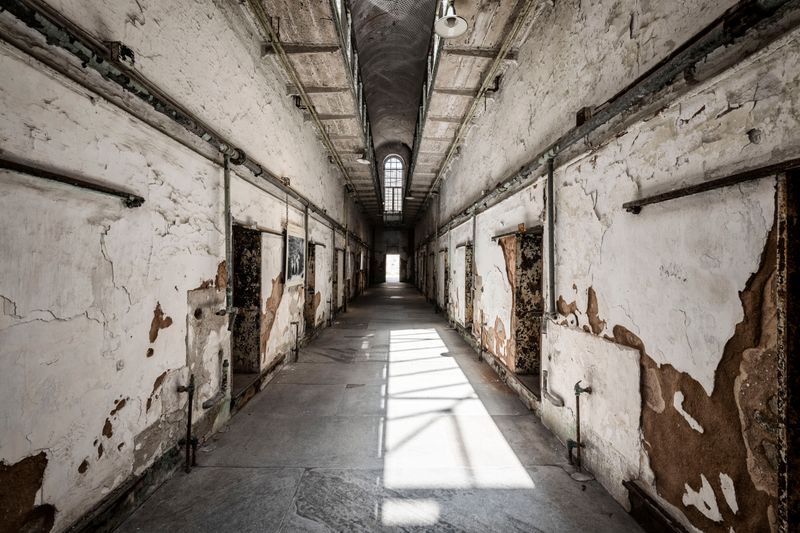
The prison closed in 1971, and decay has transformed it into something hauntingly beautiful. Peeling paint, rusted cell doors, and vegetation creeping through skylights create an atmosphere that’s both eerie and photogenic.
The cellblocks radiate from a central hub like spokes on a wheel, allowing guards to observe everything from one position.
Unlike some abandoned sites, Eastern State offers official tours year-round, with special Halloween programming that’s legitimately terrifying. Audio guides narrated by Steve Buscemi provide fascinating historical context.
The facility also hosts art installations that complement its deteriorating architecture.
Don’t miss Al Capone’s restored cell or the medical wing where primitive surgical equipment still sits waiting.
4. Pennhurst Asylum (Spring City)
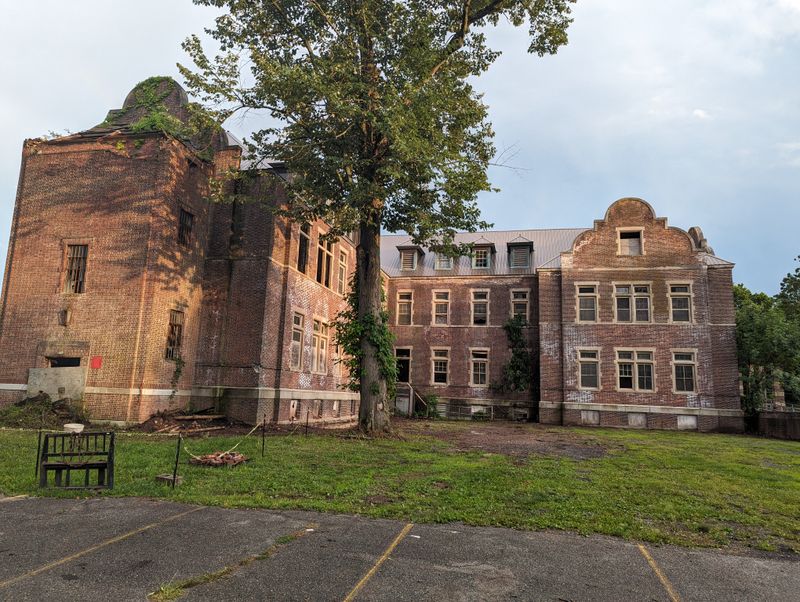
Few places in Pennsylvania carry as much emotional weight as Pennhurst. Opened in 1908 as a state school for people with intellectual disabilities, it became infamous for horrific conditions that shocked the nation when exposed in 1968.
The facility finally closed in 1987, leaving behind buildings filled with painful memories and countless stories of suffering.
Walking through Pennhurst’s decaying corridors is genuinely unsettling. Wheelchairs sit abandoned in hallways, medical equipment rusts in examination rooms, and patient records litter the floors.
The buildings have been used for Halloween attractions, but even without actors, the atmosphere is heavy with sadness and history.
Preservation efforts have tried to balance historical education with respect for former residents. Some buildings are too dangerous to enter, while others offer guided tours that explain both the institution’s dark past and the disability rights movement it helped spark.
Paranormal investigators frequently visit, claiming it’s one of America’s most haunted locations.
Approach this site with respect and sensitivity to the real suffering that occurred here.
5. Carrie Blast Furnaces (Rankin/Swissvale)
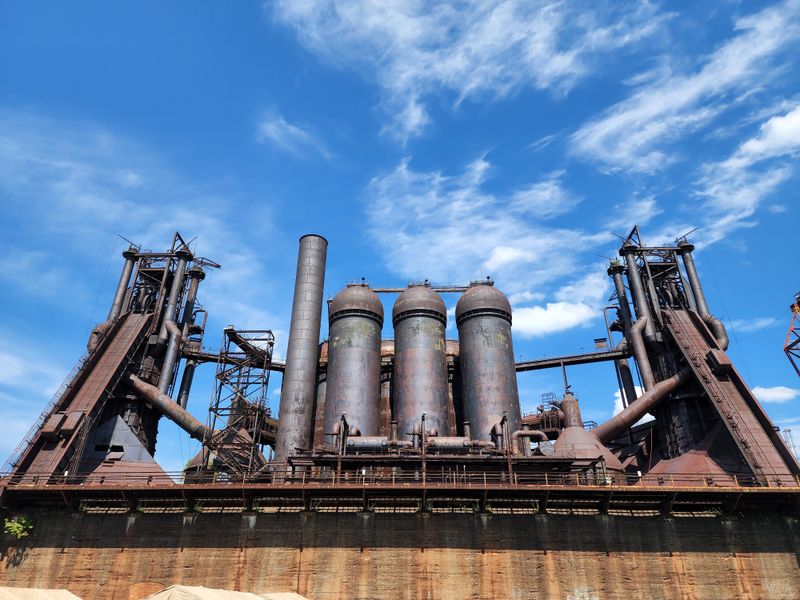
Steel built America, and nowhere is that more visible than at the Carrie Blast Furnaces. These seven massive structures once produced iron for the Carnegie Steel Company, operating from 1907 until 1978.
Standing before them, you’ll feel absolutely tiny compared to their industrial majesty rising over 90 feet into the sky.
The furnaces represent Pittsburgh’s transformation from industrial powerhouse to post-industrial city reinventing itself. Rust coats every surface in shades of orange and brown, creating accidentally beautiful patterns.
The site is managed by Rivers of Steel National Heritage Area, which offers occasional tours that let you climb inside these mechanical monsters.
Photographers flock here for the dramatic industrial landscapes, especially during sunrise or sunset when light plays across the oxidized metal. The contrast between nature reclaiming the space and the enduring strength of steel creates powerful imagery.
You’ll also see the Monongahela River flowing nearby, once a highway for barges carrying raw materials.
Check the Rivers of Steel website for tour schedules since access is restricted for safety reasons.
6. Allegheny Portage Railroad National Historic Site (Cresson/Lilly)
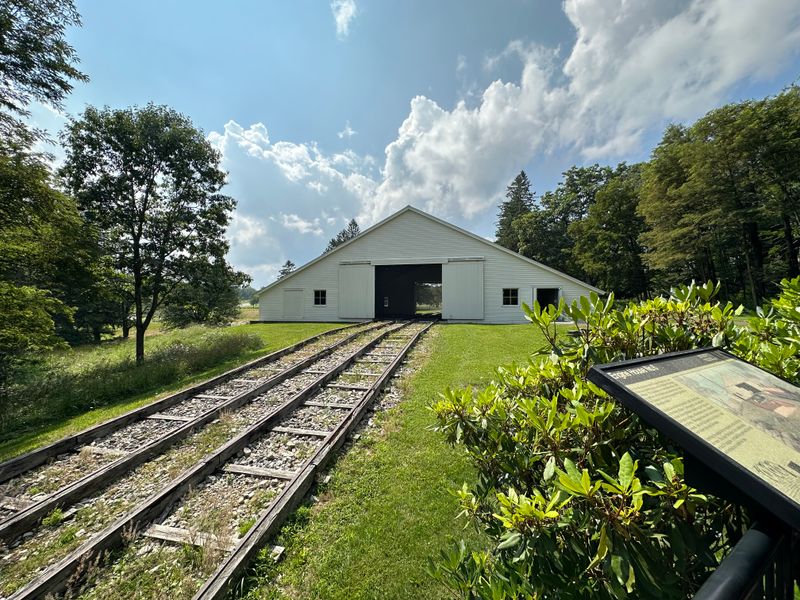
Before trains could easily cross mountains, engineers created something remarkable. The Allegheny Portage Railroad, completed in 1834, used a system of inclined planes and stationary steam engines to haul canal boats over the Allegheny Mountains.
For its time, this engineering feat was absolutely mind-blowing, cutting travel time between Philadelphia and Pittsburgh from weeks to just days.
Today, you can explore the remains of this transportation marvel. Stone culverts, engine houses, and the Lemon House tavern still stand as testaments to 19th-century ingenuity.
The National Park Service maintains the site beautifully, with hiking trails connecting various historical features. Interpretive exhibits help you understand how this complex system actually worked.
The Skew Arch Bridge is particularly impressive, demonstrating sophisticated stone masonry that has endured nearly two centuries. Walking the same paths that transported goods and passengers during America’s canal era connects you directly to history.
The surrounding forest has reclaimed much of the railroad, creating a peaceful blend of nature and ruins.
Visit during fall when leaves turn the mountainside into a spectacular color display.
7. Oil Creek State Park (Oil City/Titusville Area)
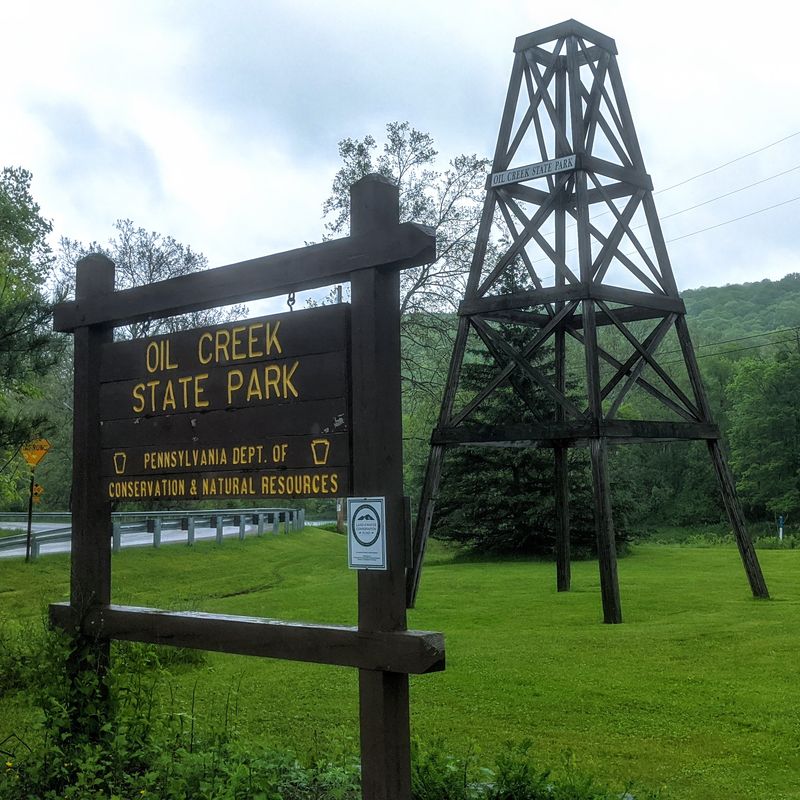
Pennsylvania’s oil industry began here in 1859 when Edwin Drake drilled the world’s first successful commercial oil well. Oil Creek State Park preserves this birthplace of the petroleum age, where fortunes were made and lost almost overnight.
The park combines natural beauty with industrial archaeology, offering hiking trails that pass abandoned oil wells, ruined pump houses, and forgotten drilling sites.
Nature has done an impressive job reclaiming what was once an environmental disaster zone. The creek that gave the park its name runs clear now, though you can still occasionally spot oil sheens on the water’s surface.
Interpretive signs along the trails explain how the oil boom transformed America and the world, fueling everything from lamps to automobiles.
The Drake Well Museum sits just outside the park, featuring a replica of the original well and extensive exhibits. Inside the park, you’ll find remnants of the Boughton Petroleum Company and other operations slowly dissolving back into the forest.
The bike trail following Oil Creek is particularly scenic, winding past historical sites and natural beauty.
Spring wildflowers and fall foliage make those seasons ideal for visiting.
8. Scranton Iron Furnaces (Scranton)
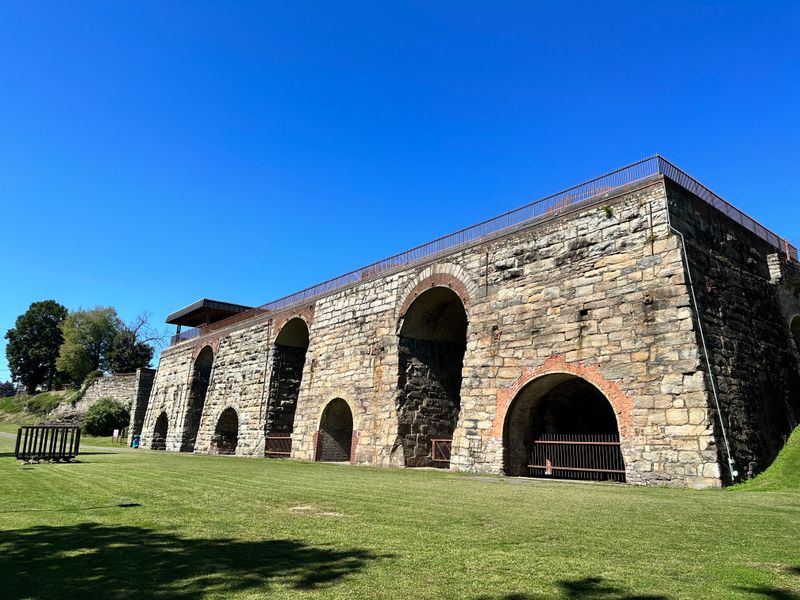
Four massive stone blast furnaces stand in downtown Scranton like monuments to an industrial past. Built in the 1840s and 1850s, these furnaces produced iron that built railroads across America.
The Lackawanna Iron and Coal Company transformed Scranton from a small settlement into a thriving industrial city, and these furnaces were the heart of that transformation.
The furnaces stopped operating in 1902, but their stone structures have endured remarkably well. Standing over 50 feet tall, they dominate the small park that now surrounds them.
Interpretive signs explain the iron-making process and the workers who labored in dangerous, sweltering conditions. At night, the furnaces are dramatically lit, creating an almost otherworldly atmosphere.
You can walk right up to these giants and peer inside, though obviously don’t climb on them. The contrast between these industrial relics and the modern city around them is striking.
Nearby, the Steamtown National Historic Site offers more context about Scranton’s railroad and industrial heritage.
The furnaces are easily accessible and free to visit, making them perfect for a quick historical stop while exploring Scranton.
9. Bethlehem SteelStacks / Former Bethlehem Steel (Bethlehem)
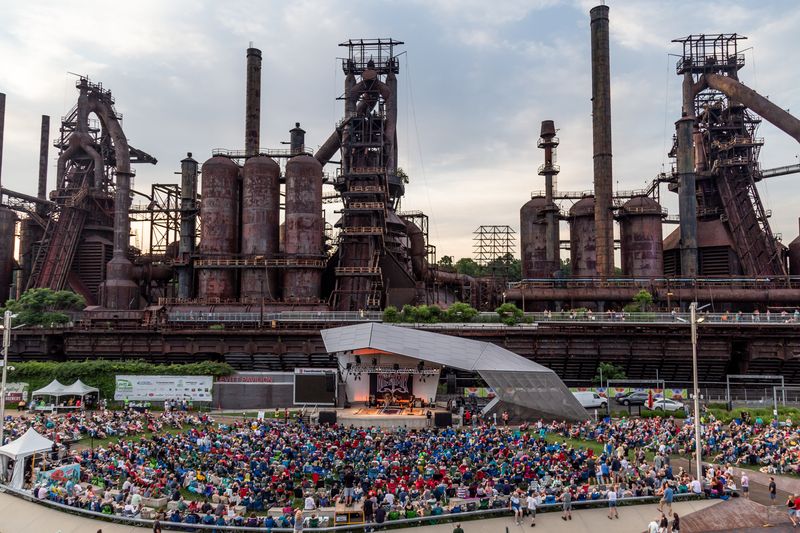
Five enormous blast furnaces rise against the Bethlehem skyline, silent now but still commanding respect. Bethlehem Steel was once America’s second-largest steel producer, forging materials for the Golden Gate Bridge, the Hoover Dam, and countless skyscrapers.
The plant closed in 1995, ending over a century of steel production that defined this city’s identity.
Rather than demolish the furnaces, Bethlehem transformed them into the centerpiece of a cultural campus. The SteelStacks arts center hosts concerts, festivals, and events with the towering industrial structures as backdrop.
You can take guided tours that venture into the furnaces themselves, climbing catwalks and exploring areas where temperatures once exceeded 2,000 degrees.
At night, the furnaces are illuminated with changing colored lights, creating a spectacular display visible for miles. The site brilliantly balances preservation with adaptive reuse, showing how industrial heritage can serve new purposes.
Museums on-site document steel-making processes and worker experiences through engaging exhibits.
The Christmas market and summer concerts draw huge crowds, so visit during off-hours if you want a more contemplative experience with the ruins.
10. Concrete City (Nanticoke)
Built in 1911 to house coal miners, Concrete City was an experimental housing project constructed entirely from concrete. The development consisted of 20 duplex homes designed to be fireproof, modern, and comfortable for mining families.
Unfortunately, the concrete retained moisture, making the homes cold and damp. Workers hated living there, and the development was abandoned by 1924.
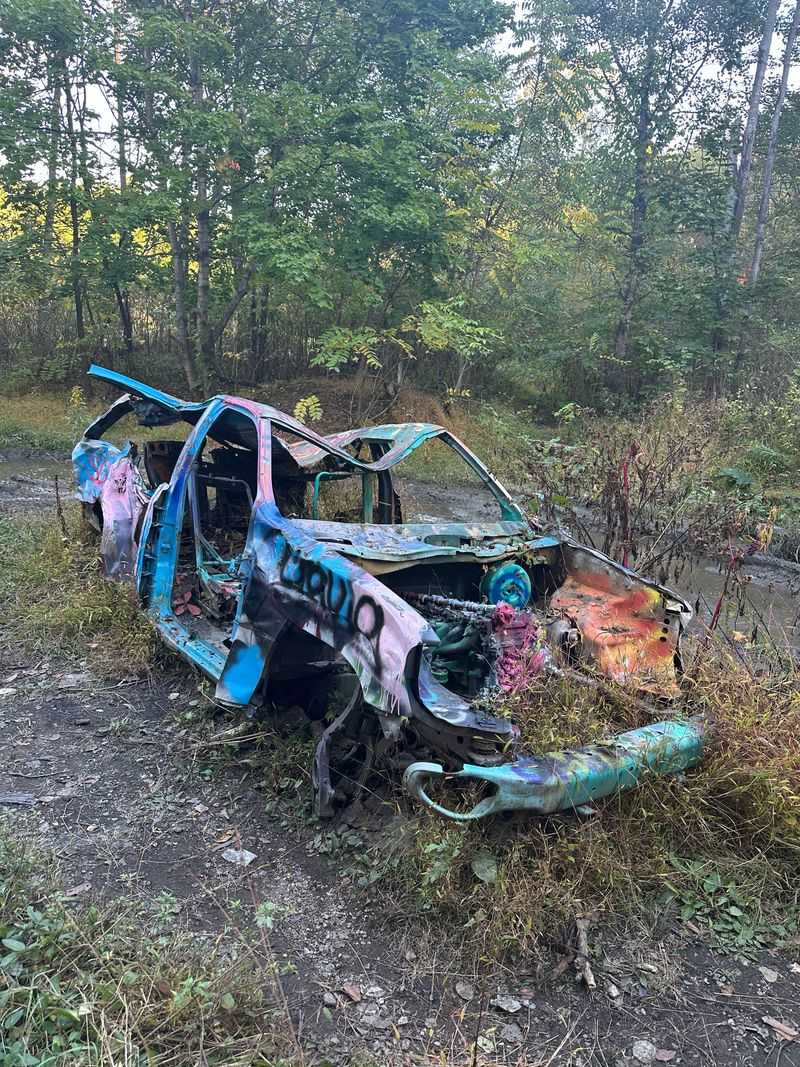
The concrete shells still stand, though they’re heavily tagged with graffiti and increasingly dangerous. Nature grows through windows and roofs, while walls crumble from decades of weathering.
It’s a fascinating example of good intentions meeting poor execution, and how even innovative solutions can fail if they ignore human needs.
Technically, Concrete City is on private property and trespassing is illegal. However, it remains a popular spot for urban explorers and photographers despite the risks.
The structures are genuinely unsafe, with weak floors and unstable walls. If you choose to visit, understand you’re doing so at your own risk.
The site represents an important piece of coal mining history and early 20th-century urban planning experiments, even if those experiments ultimately failed.