
The Secluded Northern Michigan Coastal Village Travellers Keep Missing
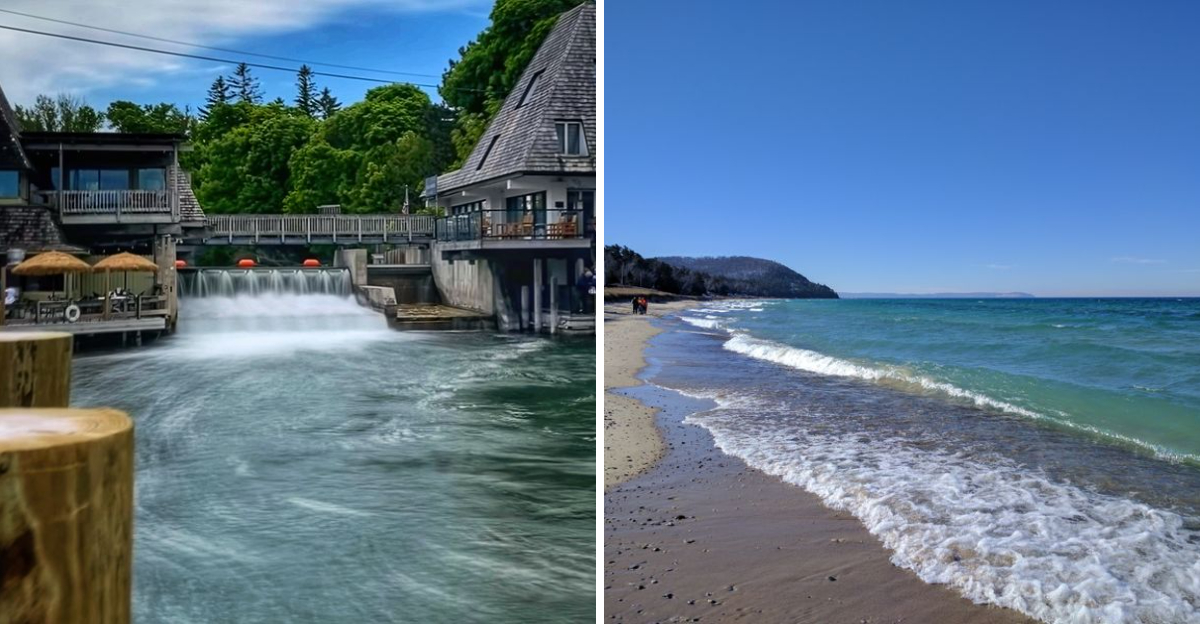
Most travelers racing up US-31 toward Sleeping Bear Dunes never take the turn toward Leland, and that oversight might be northern Michigan’s best-kept secret. This waterfront village of barely four hundred residents sits on the shores of Lake Michigan, offering a genuine fishing village atmosphere that disappeared from most American coastlines decades ago.
While nearby Traverse City draws summer crowds by the thousands, Leland remains refreshingly unhurried, its historic harbor and weathered docks still functioning much as they did a century ago.
The Charming Village Of Leland
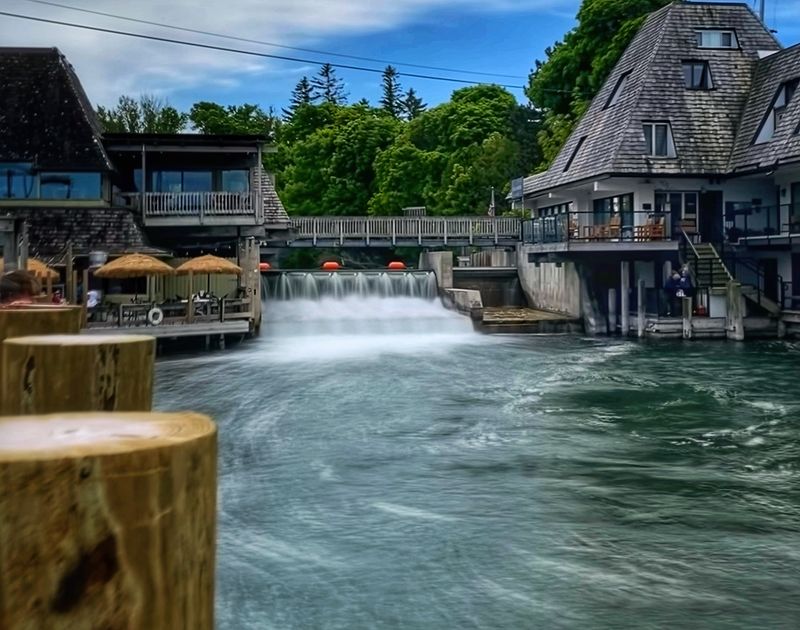
Population statistics rarely tell the whole story, but four hundred and ten residents managing to preserve an entire fishing village speaks volumes. Leland sits at the mouth of the Leland River where it empties into Lake Michigan, a geographic advantage that shaped its identity over a century ago.
The village occupies prime real estate in Leelanau County, yet somehow escaped the development fever that transformed other lakefront communities into resort towns.
Walking through downtown requires maybe fifteen minutes if you stop to read every historical marker. The pace here operates on a different frequency than the rest of northern Michigan.
Shop owners still know their customers by name, and the concept of rush hour remains blissfully foreign.
Summer brings visitors, certainly, but Leland never feels overrun. The village maintains its working waterfront identity even as tourism provides economic support.
Finding this balance between preservation and progress defines Leland’s particular charm, making it feel discovered rather than developed.
Why Leland’s Historic Fishtown Is A Must-See
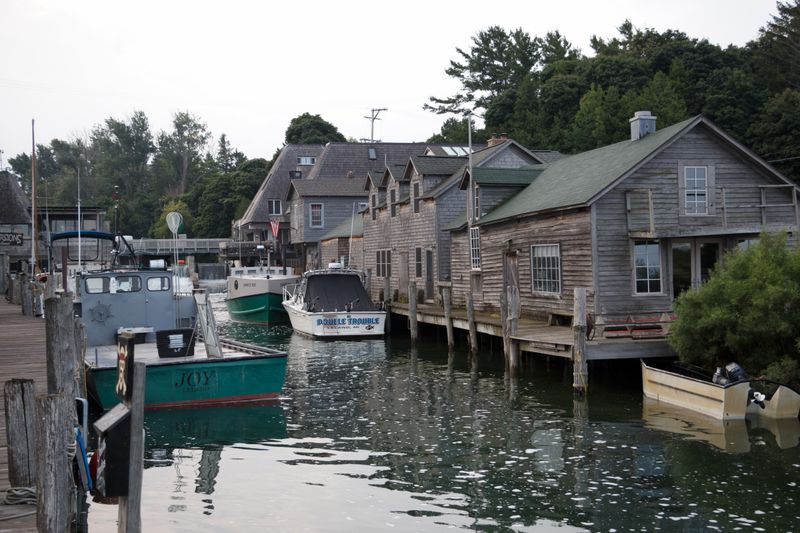
Fishtown operates as a living museum without the velvet ropes or admission fees. These weathered gray shanties lining the harbor represent one of the last intact commercial fishing operations on the Great Lakes.
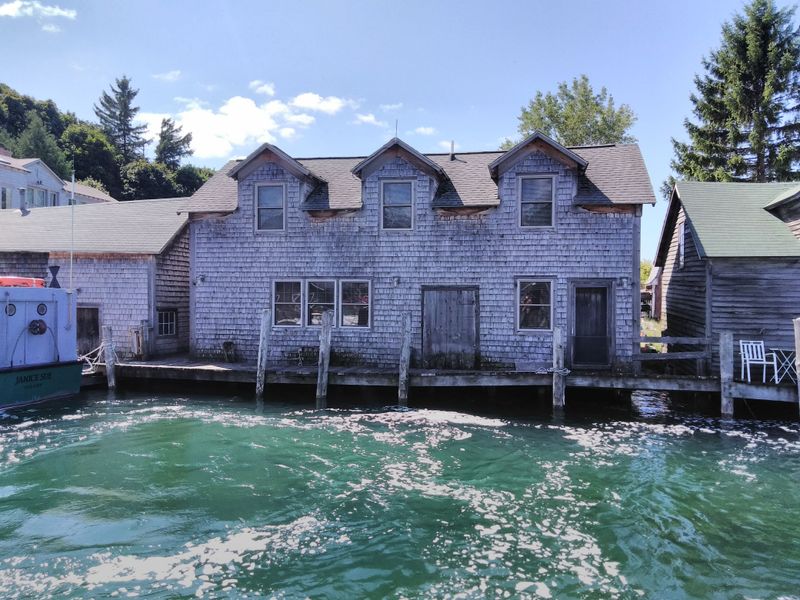
The structures date back to the 1800s, their silvered wood and tilting rooflines proof of survival through countless harsh winters.
Commercial fishing boats still tie up at these docks, though the industry operates on a fraction of its former scale. The shanties now house a mix of working fish houses, galleries, and shops selling everything from smoked whitefish to handmade pottery.
This combination of commerce and preservation creates an authentic atmosphere that staged historical villages can never quite capture.
Visitors often stumble upon Fishtown by accident, following the Leland River downstream from the dam. The surprise discovery adds to its appeal.
Morning light hits the old buildings perfectly, and the smell of smoked fish drifts across the harbor, grounding the experience in something real rather than recreated.
How Leland’s Small-Town Vibe Makes It A Peaceful Alternative To Traverse City
Traverse City sits just thirty miles south, drawing massive crowds to its beaches, breweries, and waterfront festivals. Leland offers the same Lake Michigan access and Leelanau Peninsula location without the traffic jams or restaurant wait times.
The difference in atmosphere becomes apparent within minutes of arrival.
No chain stores interrupt the downtown streetscape. Local ownership defines the business district, from the bakery to the bookshop.
This creates a cohesiveness that planned developments try to manufacture but rarely achieve. The buildings themselves tell decades of stories through their architecture and weathered facades.
Parking never requires circling blocks or consulting apps. The beaches accommodate visitors without feeling crowded.
Restaurants serve dinner without requiring reservations made weeks in advance. These practical advantages matter more than tourism brochures typically acknowledge, especially for travelers seeking genuine relaxation rather than scheduled activities and managed experiences.
Leland’s Rich History As A Fishing Village That’s Still Alive Today
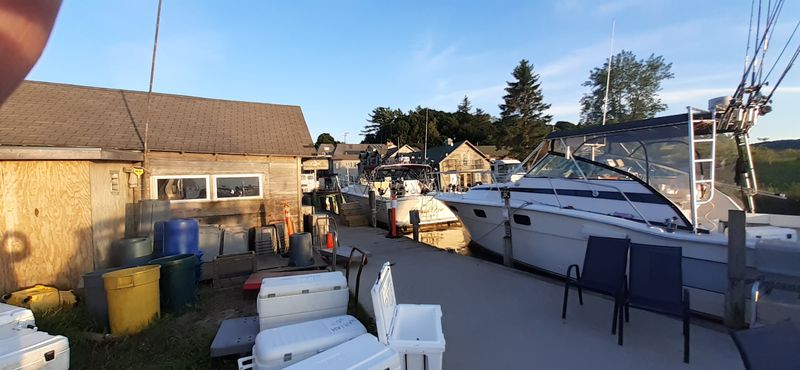
Commercial fishing operations in Leland predate Michigan statehood by several years. The first fish houses appeared in the 1830s when settlers recognized the abundance of whitefish, lake trout, and perch in these waters.
The industry supported entire families for generations, creating a culture distinct from farming communities inland.
Modern regulations and changing lake ecosystems reduced the commercial fleet significantly. A handful of licensed operations continue working from Fishtown, maintaining traditions their great-grandfathers practiced.
Watching these boats depart before dawn or return with their catch connects visitors to an economic history that shaped the entire Great Lakes region.
The Leland Historical Society maintains archives documenting this fishing heritage. Photographs show dozens of boats crowding the harbor during peak seasons, their holds filled with catches measured in tons rather than pounds.
Understanding this context transforms Fishtown from a quaint attraction into a testament to adaptation and survival in a changing industry.
A Step Back In Time: The Old-School Vibes Of Leland’s Downtown
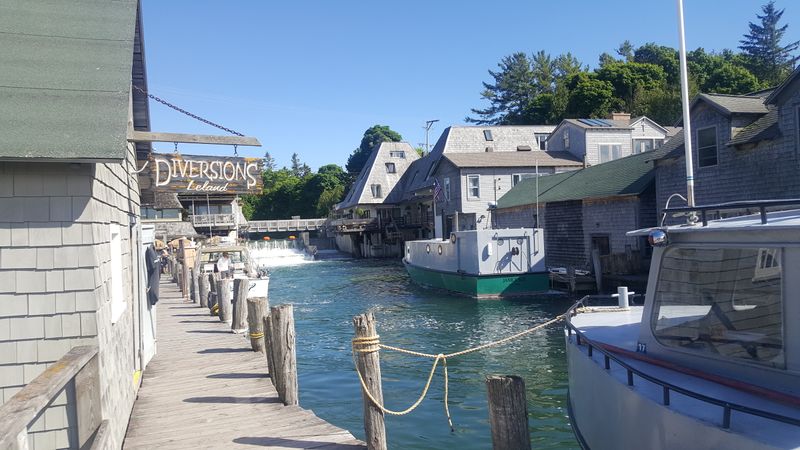
Modern commerce operates here, but the setting refuses to acknowledge the twenty-first century. Storefronts maintain their original configurations, with large windows and recessed doorways designed for a slower era.
The scale remains human, with buildings rarely exceeding two stories and sidewalks wide enough for actual conversation while walking.
Several businesses have occupied their locations for decades. The hardware store still stocks items that disappeared from big-box inventories years ago.
The general store sells penny candy from glass jars, though inflation adjusted the price somewhat. These continuities matter more than they might seem, providing anchors in an increasingly homogenized retail landscape.
Cell phone reception works fine, and credit cards process without issue, but the essential character remains unchanged. This authenticity attracts visitors tired of destinations that exist primarily for Instagram documentation.
Leland simply continues being itself, which paradoxically makes it more interesting than places trying desperately to manufacture character.
Why Leland’s Sunsets Over Lake Michigan Are Unlike Any Other
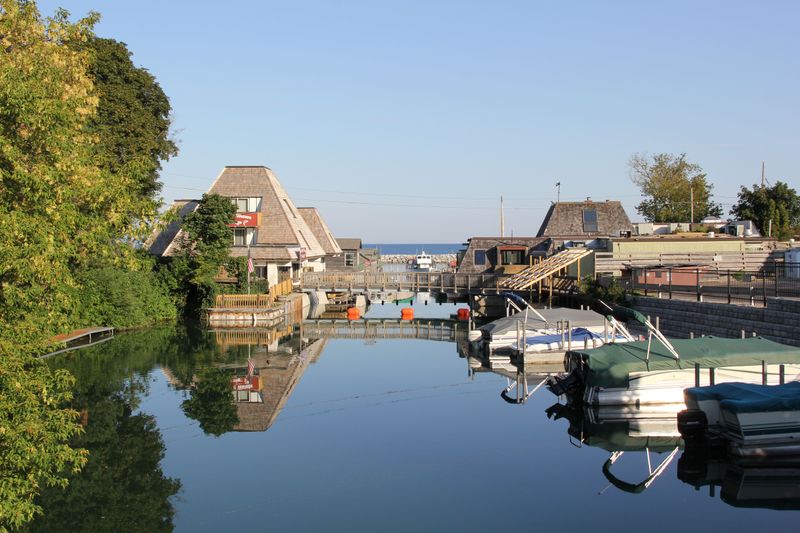
Lake Michigan sunsets benefit from western exposure and atmospheric conditions unique to the Great Lakes. Leland’s particular geography enhances the display.
The harbor provides foreground interest, with masts and pilings creating compositions that change with each evening’s light.
Summer sunsets occur late, sometimes after nine o’clock, giving the day an extended quality that encourages lingering. The colors intensify as the sun approaches the horizon, transforming ordinary clouds into theatrical displays.
Locals claim they never tire of the show, and their continued attendance at the harbor each evening supports that assertion.
Photography captures only partial truth. The experience includes temperature dropping as light fades, the sound of water against docks, and the gradual appearance of stars as the sky darkens.
Visitors often plan their entire day around catching sunset from the harbor, and Leland rewards that dedication with reliable beauty that varies just enough to remain interesting across multiple viewings.
The Secret Of Leland’s Amazing Local Art And Craft Scene
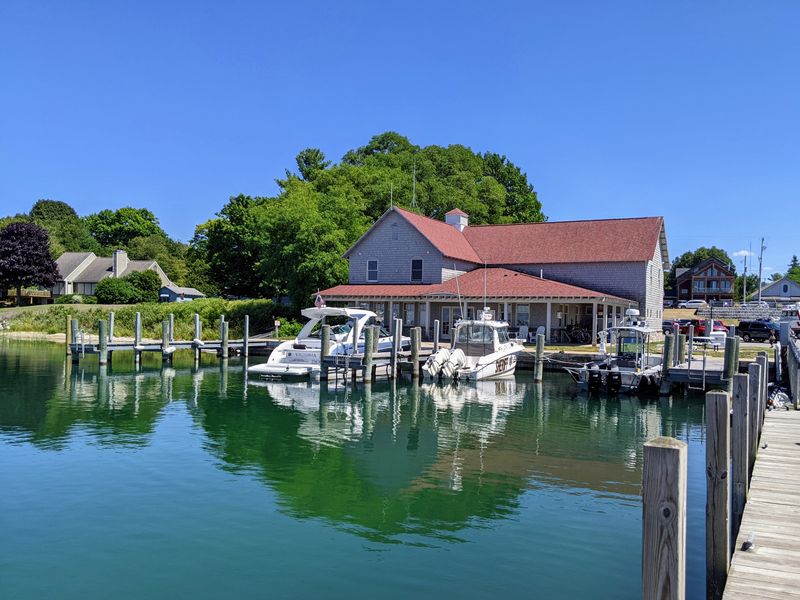
Creative communities gravitate toward places with affordable space and inspiring surroundings. Leland provides both, resulting in a concentration of artists disproportionate to its tiny population.
The old fishing shanties in Fishtown now house several galleries, their rough exteriors concealing sophisticated work inside.
Pottery studios, painting galleries, and craft shops occupy downtown storefronts. The work reflects northern Michigan themes without becoming repetitive or cliched.
Many artists maintain year-round studios here, treating Leland as home rather than seasonal opportunity. This commitment to place shows in the quality and authenticity of their output.
First Friday gallery walks during summer months let visitors meet artists and see working studios. The informal atmosphere encourages conversation about process and inspiration.
Prices remain reasonable compared to resort town galleries, and the selection ranges from affordable small pieces to serious investment works. Supporting local artists while traveling adds meaning that manufactured souvenirs never provide.
Leland’s Quaint Harbor: A Quiet Retreat For Boaters And Nature Lovers
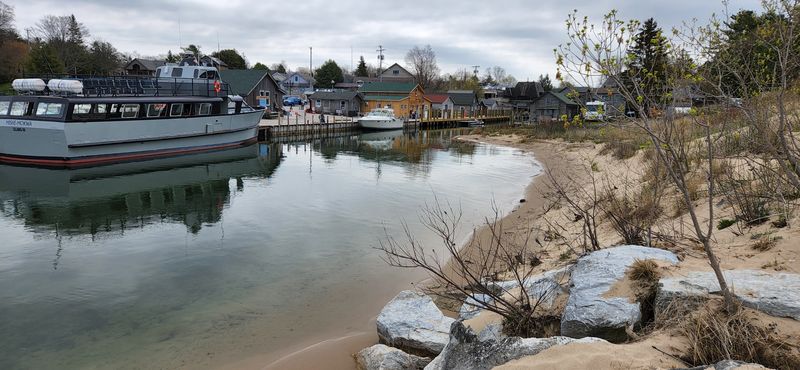
The harbor accommodates transient boaters with facilities that balance function and aesthetics. Docks provide secure mooring without the sterile uniformity of modern marinas.
Boats of all descriptions tie up here, from serious cruisers to modest fishing rigs, creating visual interest that concrete and steel installations never achieve.
Kayakers and paddleboarders launch from the river mouth, exploring the shoreline or heading upstream past the dam. The water remains remarkably clear, allowing views of rocky bottom and occasional fish.
Morning paddlers often encounter great blue herons fishing the shallows, their prehistoric silhouettes adding drama to quiet explorations.
Nature observation requires no special equipment or expertise here. Simply sitting on the harbor wall reveals an active ecosystem.
Gulls and terns patrol the water, ospreys hunt from above, and harbor seals occasionally appear near the mouth. The proximity of wilderness to human activity creates opportunities for encounters that feel accidental rather than staged.
Why Leland’s Beaches Are Some Of Michigan’s Best-Kept Secrets
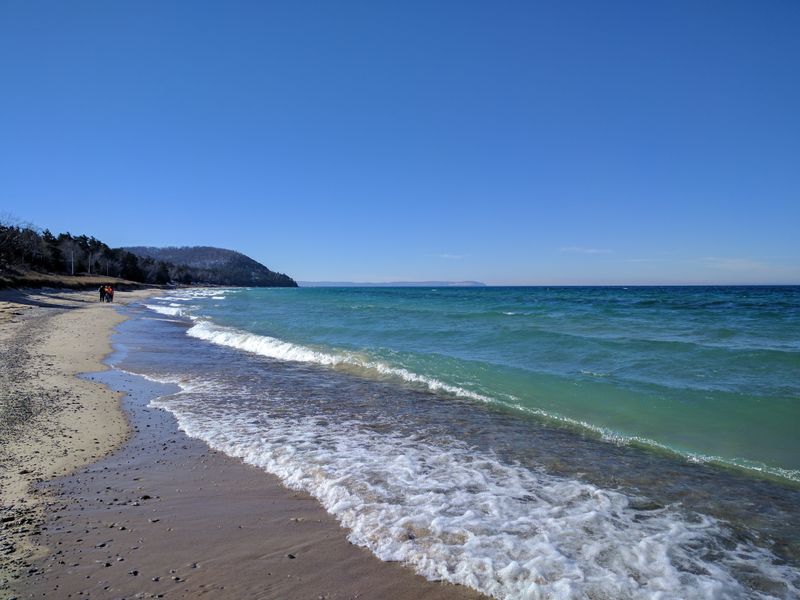
Beach access points near Leland avoid the crowds that pack more publicized stretches of Lake Michigan shoreline. The sand quality matches famous beaches elsewhere on the peninsula, but parking rarely fills and towels never compete for space.
Water clarity rivals tropical destinations, though temperatures remind visitors this remains the Great Lakes.
Van’s Beach in downtown Leland provides convenient access for families and casual swimmers. The protected location keeps waves manageable for children, and the sandy bottom slopes gradually.
Lifeguards patrol during summer months, and facilities include restrooms and picnic areas without feeling overdeveloped.
More adventurous visitors explore beaches north and south of the village, finding nearly private stretches during weekdays. The shoreline varies from sandy expanses to rocky points, each section offering different character.
Collecting Petoskey stones and Leland Blues becomes addictive, and the beaches provide ideal hunting grounds for these fossilized corals that define Michigan’s geological heritage.