
This Whimsical Wisconsin Garden Is Filled With Massive Iron Sculptures
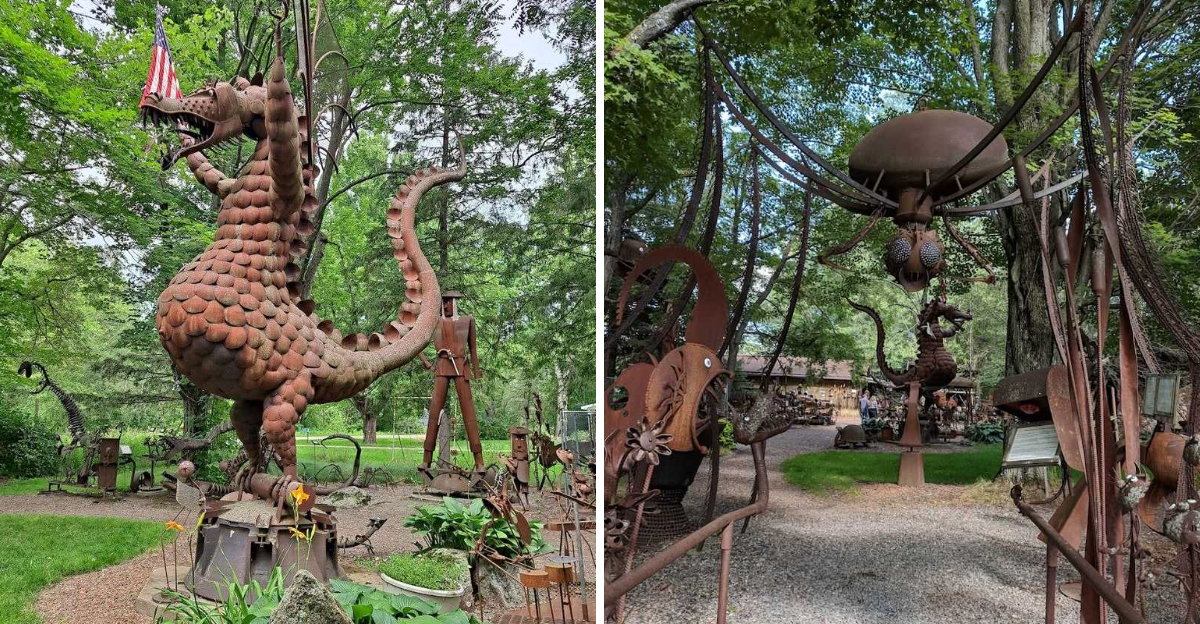
Along a quiet country road in central Wisconsin, something unexpected waits for anyone willing to take a small detour. It starts with a glimpse of towering metal shapes rising through the trees, then quickly turns into something far more imaginative.
Massive iron creatures, including dragons and other larger-than-life figures, appear one after another, each built with remarkable detail and creativity. The entire setting feels like stepping into a world shaped by pure imagination, where scrap metal has been transformed into something unforgettable.
It’s a place that continues to surprise visitors and turn a simple drive into a memorable experience.
A Scrap Metal World Built By One Wisconsin Artist
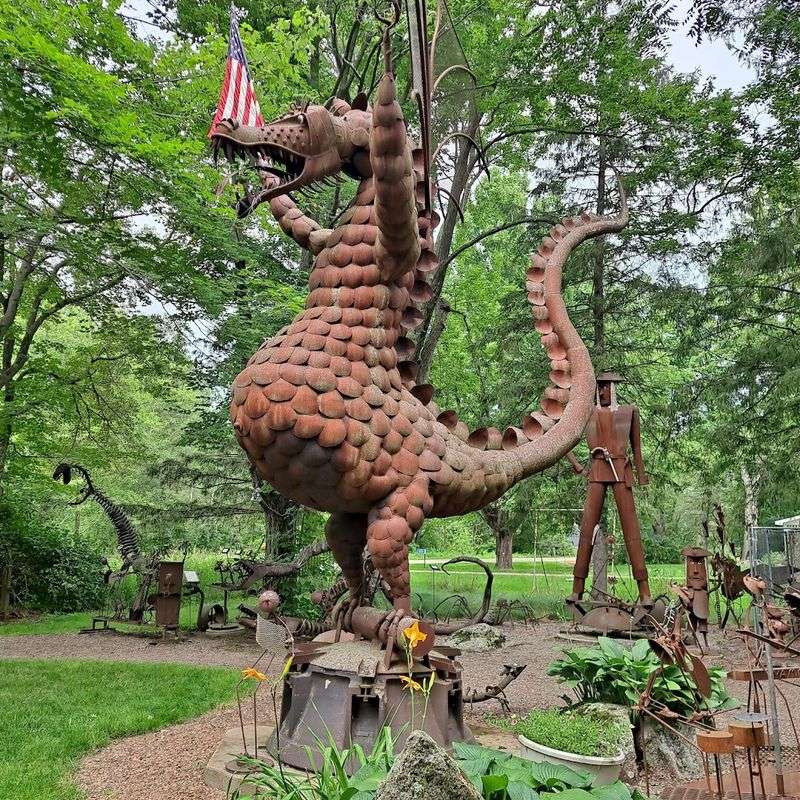
Clyde Wynia did not set out to build a museum. He started welding discarded metal pieces together because the shapes spoke to him, and somewhere along the way, a park was born.
Working from his property in Marshfield, Wisconsin, Clyde has spent decades transforming salvaged iron into an ever-growing collection of creatures that defy easy categorization.
His background is not in formal fine art education. The work comes from instinct, humor, and an almost geological patience for detail.
Each sculpture carries a handwritten sign nearby, often laced with dry wit that makes the whole experience feel like a conversation with the artist himself.
Clyde’s wife Nancy contributes her own artistry through glasswork and woven pieces sold in the adjacent shop. Together, they have created something rare: a genuinely personal artistic world that grew organically from one couple’s imagination and never stopped expanding.
Massive Iron Dragons Steal The Show
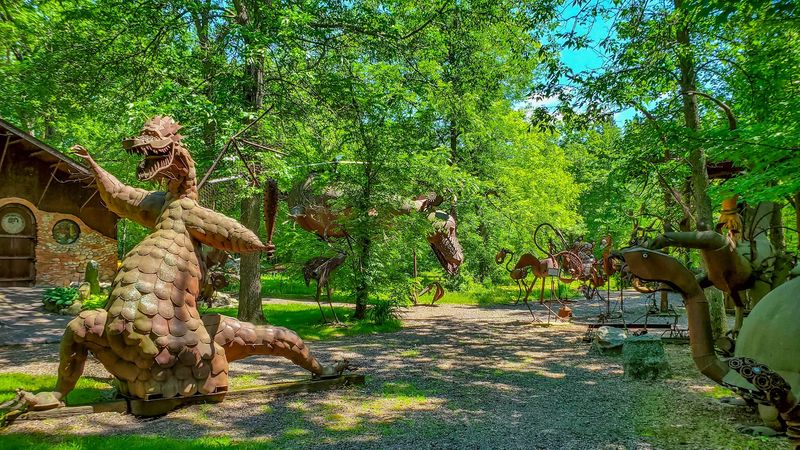
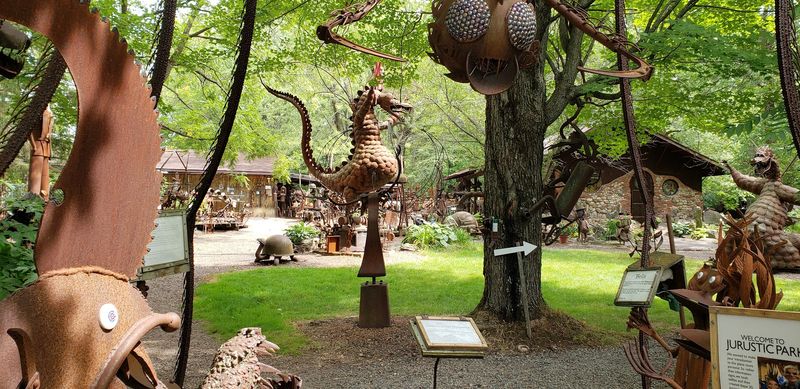
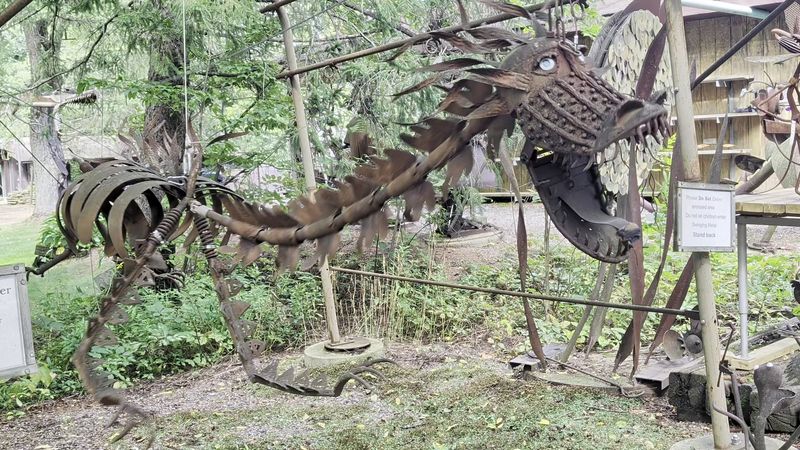
The dragons are the first thing most visitors notice, and they earn every bit of that attention. Constructed from salvaged iron parts, pipes, gears, and assorted industrial scrap, these creatures rise dramatically from the landscape with a presence that is difficult to describe without simply standing in front of one.
Clyde approaches dragon-making with the confidence of someone who has studied the subject firsthand. The jaws are articulated, the scales are layered with deliberate texture, and the overall scale of each piece commands genuine respect.
Some stretch upward to heights that make a grown adult feel appropriately small.
What separates these dragons from decorative yard art is the sense of personality each one carries. No two expressions are alike, and the positioning of each sculpture within the landscape suggests that Clyde thought carefully about how they would be encountered.
Walking among them feels like navigating a world with its own internal logic.
Every Sculpture Is Made From Reclaimed Metal
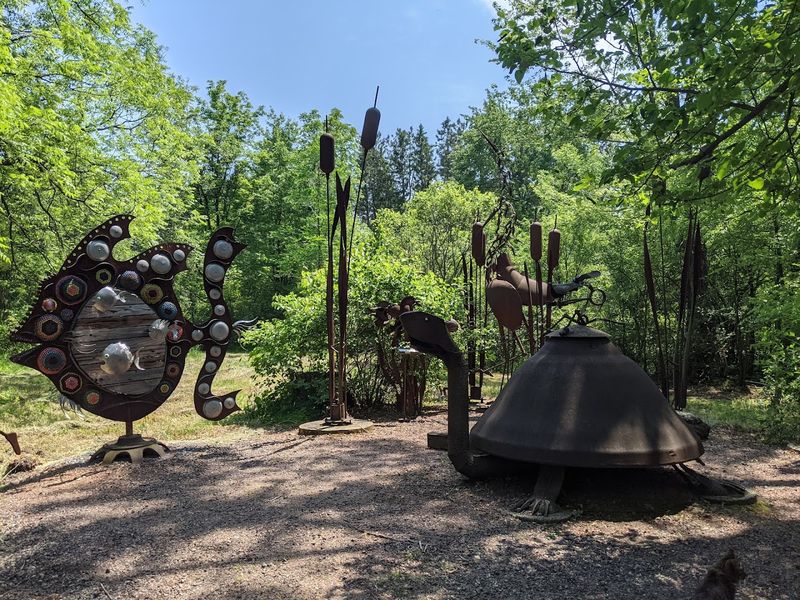
Reclaimed material is not just a stylistic choice at Jurustic Park. It is the entire foundation of the artistic process.
Clyde sources scrap metal from farms, junkyards, and industrial sites, then sorts and studies the pieces until the right combination suggests a new creature waiting to emerge.
Old tractor parts become ribcages. Coiled springs transform into tails.
Saw blades and sprockets find new purpose as scales, teeth, or decorative armor. The resourcefulness on display throughout the park is as impressive as the artistic vision itself, and the two qualities are genuinely inseparable here.
Visitors who slow down and examine the individual components of each sculpture often experience a kind of double vision, seeing both the finished creature and the raw industrial history embedded within it. That layered quality gives the work a depth that purely decorative sculpture rarely achieves.
The material carries memory, and Clyde seems to understand that completely.
The Park Feels Like A Walk Through A Fantasy Landscape
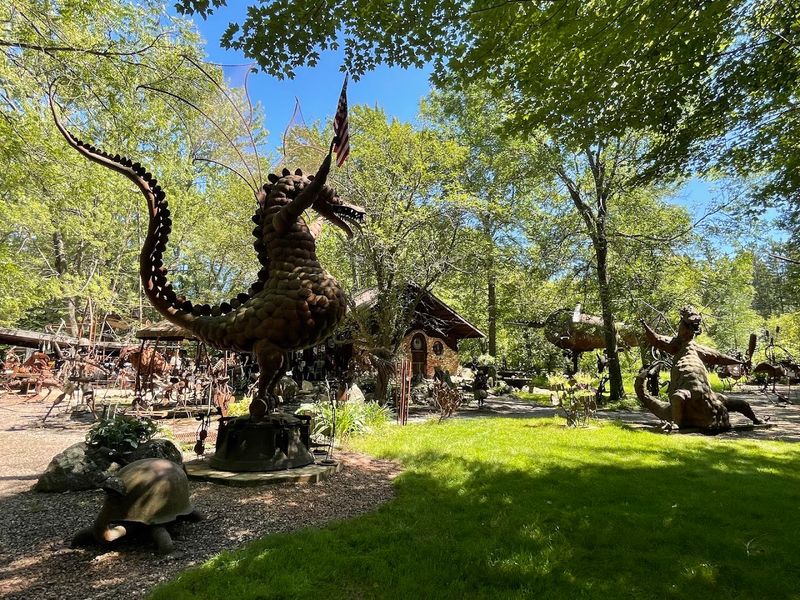
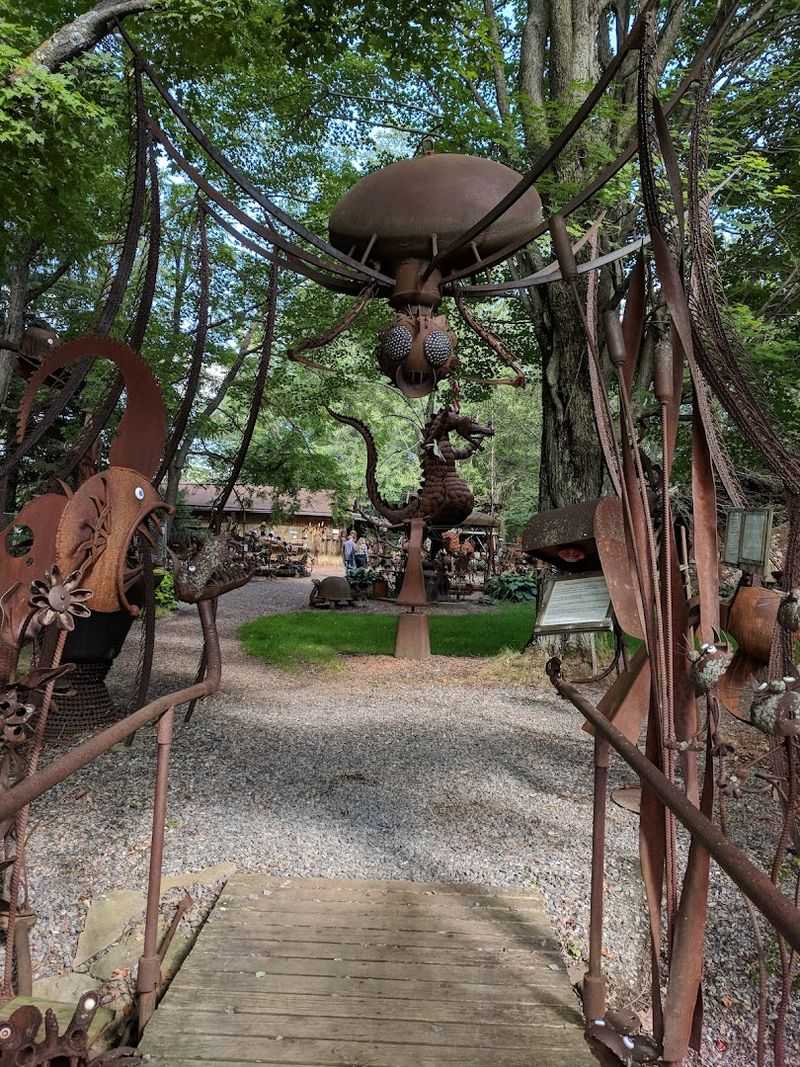
Stepping onto the grounds of Jurustic Park, the ordinary world recedes rather quickly. Iron creatures line the pathways, peer from between trees, and emerge from patches of tall grass with an air of quiet authority.
The arrangement of the sculptures feels deliberate without being rigidly formal, which gives the property an open, exploratory quality.
The natural setting amplifies everything. Trees frame the larger pieces, and seasonal foliage changes how the sculptures read against the sky.
A visit in full summer greenery produces a very different atmosphere than one taken during the spare geometry of early spring.
There is no scripted route through the park, which encourages visitors to move at their own pace and make their own discoveries. Some sculptures announce themselves immediately while others reveal themselves gradually, tucked behind larger pieces or positioned to catch light at specific angles.
The entire property rewards patience and a willingness to wander without agenda.
Some Sculptures Tower Over 20 Feet Tall
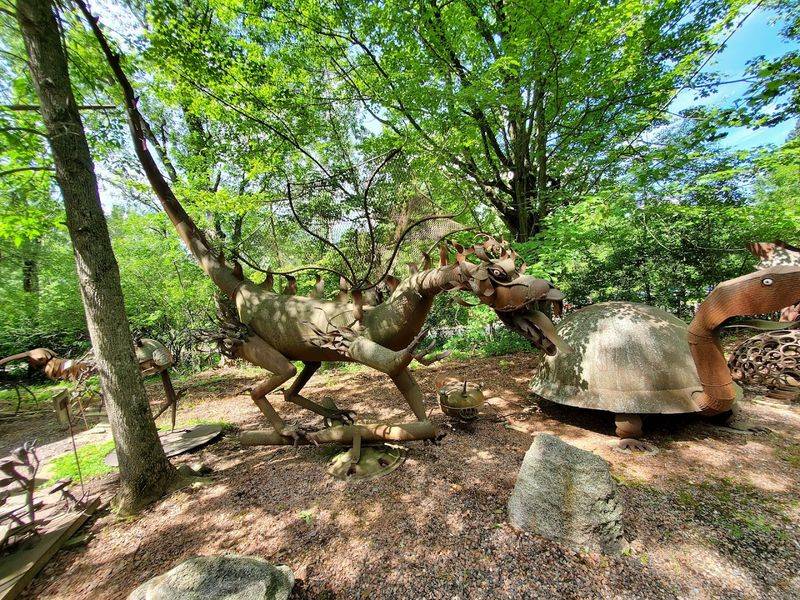
Scale is one of the most immediately striking qualities of Jurustic Park. Several sculptures reach heights that require visitors to step back and tilt their heads upward to take in the full form.
The physical presence of these larger pieces changes the atmosphere of the surrounding space in a way that smaller works simply cannot replicate.
Building at this scale from reclaimed metal requires both engineering knowledge and physical stamina. Clyde has managed both across decades of work, producing pieces that remain structurally sound through Wisconsin winters and the full range of seasonal weather the region delivers.
The tall sculptures also serve a practical function within the park’s layout. They act as landmarks, visible from multiple vantage points across the property, helping visitors orient themselves as they explore.
Standing beneath one of the larger dragons and looking up through its iron framework against a blue Wisconsin sky is an experience that photographs struggle to fully capture.
Many Pieces Move Or Interact In Surprising Ways
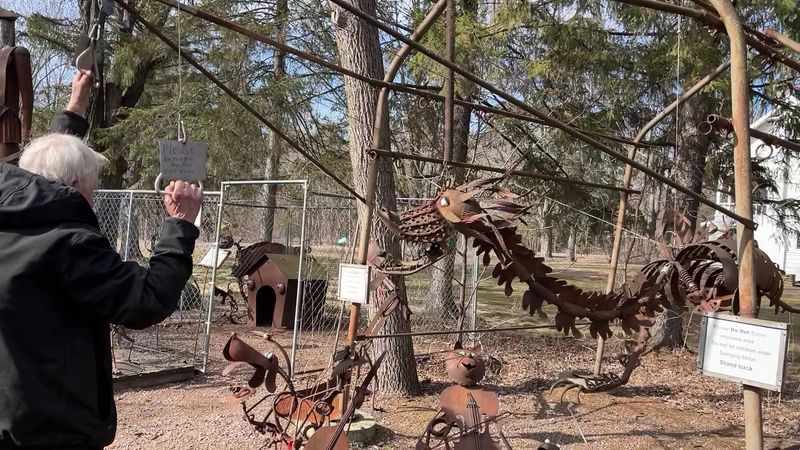
A number of sculptures at Jurustic Park are not static objects. Clyde has engineered movement into many of his pieces, incorporating pivoting joints, spinning elements, and counterweighted sections that respond to touch or wind.
The kinetic quality transforms the viewing experience from passive observation into active participation.
When Clyde is present on the property, he often demonstrates these features personally, narrating each mechanism with the kind of dry humor that makes the explanation as entertaining as the movement itself. Watching a massive iron creature suddenly shift or rotate under his direction produces a reliable collective gasp from visitors of all ages.
The mechanical ingenuity embedded in these pieces reflects a side of Clyde’s talent that pure aesthetics alone would not reveal. He understands how things work, how weight distributes, and how simple engineering principles can produce surprisingly elegant results.
The moving sculptures are not gimmicks. They are extensions of the same creative intelligence that shapes everything else on the property.
No Two Creations Look The Same
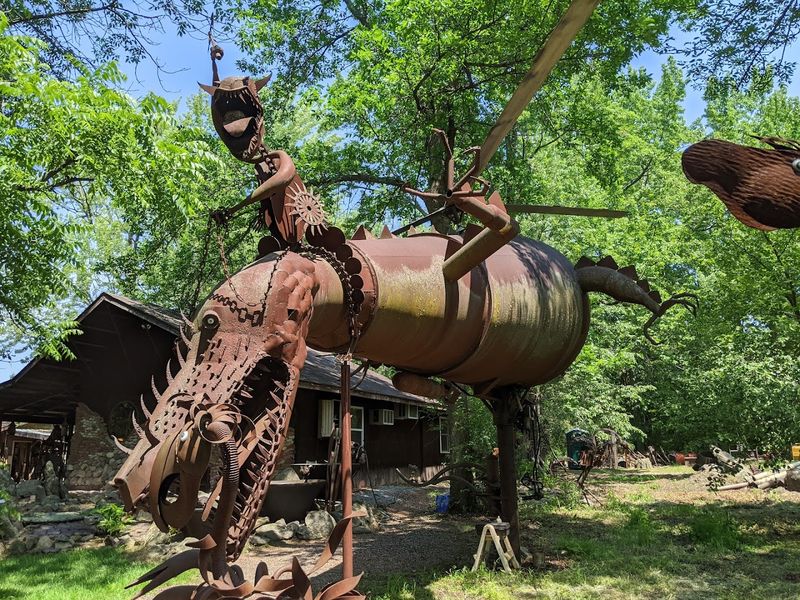
Repetition has no place in Clyde Wynia’s creative vocabulary. Across an entire property filled with dozens of iron creatures, no single sculpture shares its basic form, posture, or character with another.
The variety is not accidental. It reflects a working philosophy that treats every new piece as a genuinely separate problem to solve.
Some creatures are clearly inspired by prehistoric animals, carrying the heavy gravitas of something that once ruled an ancient landscape. Others are purely imagined, assembled from shapes that suggested a personality before a name was assigned.
A few lean toward the comic, with expressions or proportions that signal Clyde’s sense of humor as clearly as any of his spoken jokes.
The cumulative effect of so much variety is that the park never feels repetitive, even during a second or third visit. Each pass through the property tends to surface details that went unnoticed before, ensuring the experience remains genuinely fresh regardless of how many times a visitor returns.
The Entire Experience Is Free To Visit
Admission to Jurustic Park costs nothing. Visitors walk onto the property, explore at their own pace, and leave whenever they choose, all without any transaction taking place.
In an era when most memorable experiences come with a price attached, that straightforward generosity deserves acknowledgment.
The decision to keep the park free reflects something genuine about Clyde and Nancy Wynia’s relationship to their work. The sculptures were not made to generate revenue.
They were made because making them was the point, and sharing them publicly is simply an extension of that same impulse.
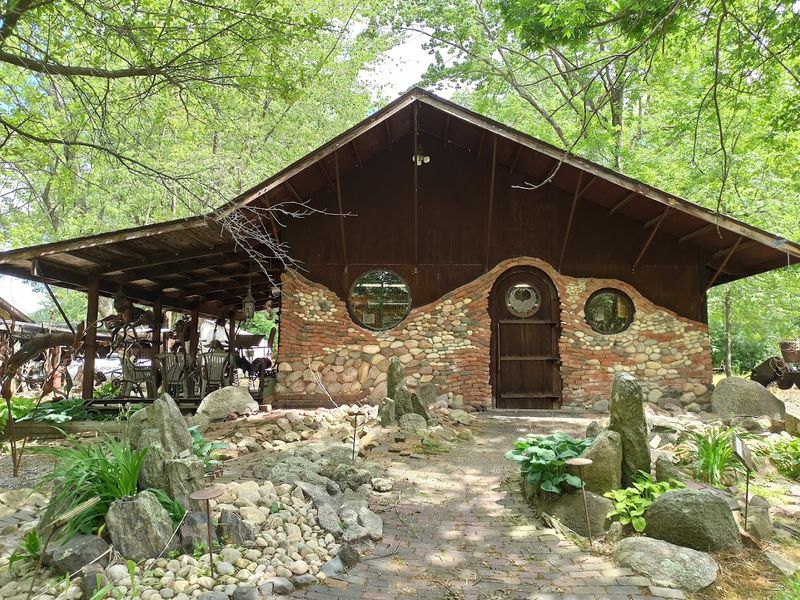
A small shop on the property offers Nancy’s glass pieces and other handmade items for purchase, providing visitors who want to support the artists with a direct way to do so. Cash is the preferred payment method in the shop.
Bringing some along is a practical consideration, and purchasing something feels far less like a commercial obligation than a personal gesture of appreciation for what the Wynias have built here.
It’s Open Seasonally With A Relaxed, Self-Guided Experience
Jurustic Park operates on a seasonal schedule, generally welcoming visitors from late spring through fall. During the open season, hours run Monday through Saturday from 10 AM to 4:30 PM and Sunday from noon to 4:30 PM.
The phone number for the park is 715-387-1653, and the website at jurustic.com carries current seasonal information.
The self-guided format suits the property well. There are no timed entry windows, no audio tours competing for attention, and no staff directing foot traffic.
Visitors move through the grounds according to their own curiosity, which is precisely the right approach for a place built from one person’s unscripted imagination.
One practical note worth mentioning: the turn onto Sugarbush Lane is easy to miss, and signage along the road is minimal. Keeping the address and GPS coordinates at hand before arriving saves the mild frustration of overshooting the entrance.
The address is 112021 Old Sugarbush Ln, Marshfield, WI 54449, and the approach rewards a slow, attentive drive.
Visitors Often Spend Hours Exploring Every Corner
An hour sounds like enough time to see a small outdoor sculpture park. At Jurustic Park, that estimate tends to collapse quickly.
The density of detail across the property, combined with the changing quality of light and the reward of finding something unexpected around each corner, extends most visits well beyond initial expectations.
Visitors who arrive and simply walk the grounds at a moderate pace often find themselves backtracking to examine something they passed too quickly. The sculptures invite close inspection in a way that rewards physical proximity, and the layered construction of each piece means that what looks complete from ten feet away reveals additional complexity at arm’s length.
If Clyde happens to be on the property and offers a guided tour, accepting without hesitation is the obvious choice. His narration adds context, humor, and biographical detail that transforms a pleasant afternoon into something genuinely memorable.
The stories he tells about specific sculptures give each piece a history that independent exploration alone cannot fully provide.
A True Example Of Creativity Turning Scrap Into Art
Jurustic Park stands as a clear argument that artistic vision requires no particular material, no formal training, and no institutional support to produce something genuinely significant. Clyde Wynia started with salvaged metal and a set of welding tools, and over several decades built a body of work that occupies its own category entirely.
The park belongs to no established art movement and fits no convenient curatorial label. It is folk art in the truest sense: work made by a person for personal reasons, shaped by individual experience, and shared openly with anyone willing to make the drive down a quiet Wisconsin road.
What makes Jurustic Park worth the journey is not any single sculpture or any particular feature of the property. The value lies in encountering a place that exists entirely on its own terms, created by someone who never asked permission to imagine something extraordinary.
That quality is rarer than any material used to build it, and it is exactly what makes the experience stay with visitors long after they have driven home.