
This Dreamy 25-Foot Waterfall In Wisconsin Looks Almost Too Perfect To Be Real
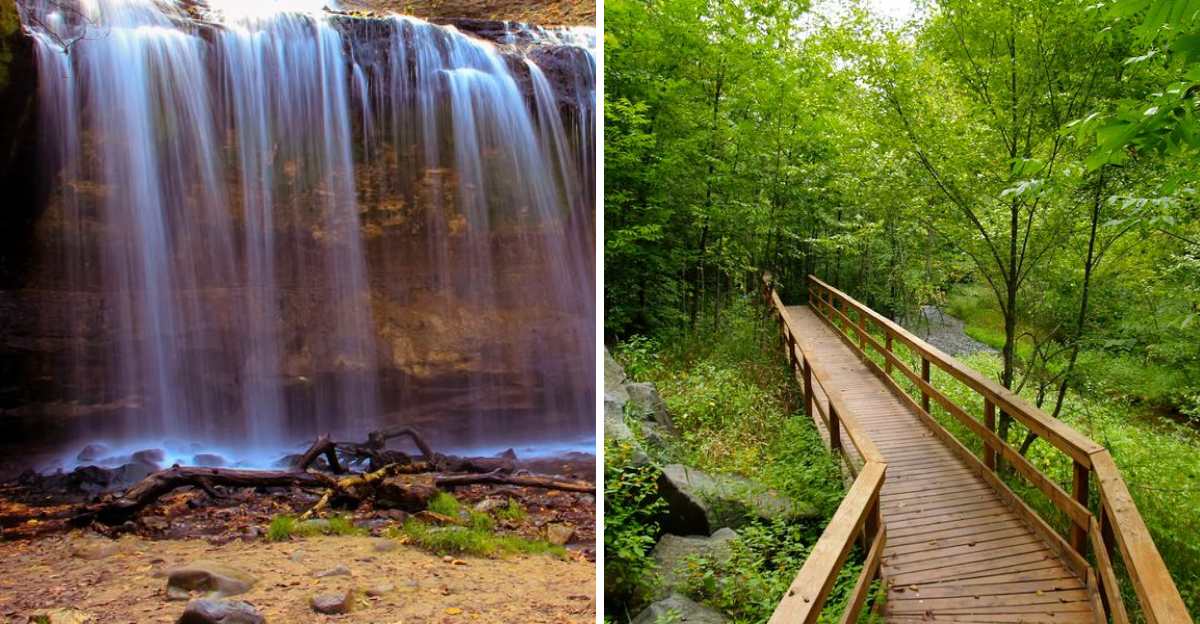
Some places have a way of stopping you mid-step, and this one does exactly that. A 25-foot Wisconsin waterfall spills through a narrow sandstone gorge with the kind of quiet authority that feels almost cinematic.
The scene unfolds in a small town, yet the setting feels worlds away once you reach the overlook. The sound of rushing water echoes gently through the gorge, drawing your eyes toward the cascade below.
It is the kind of stop that works just as well for a quick visit as it does for a longer wander, offering a surprisingly dramatic experience for anyone who happens to pass through.
A Surprisingly Tall Waterfall Hidden In Wisconsin’s Northwoods
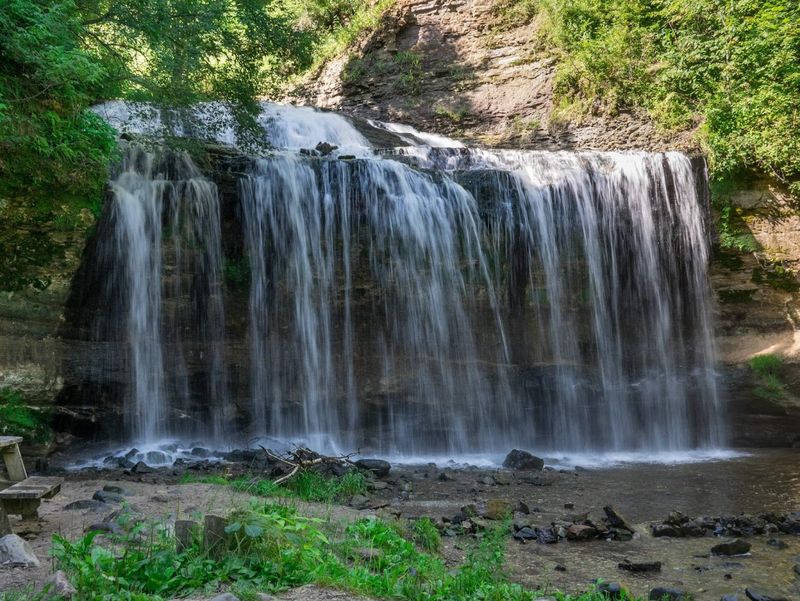
Most people passing through Osceola have no idea that a 25-foot waterfall is waiting just steps from the town center. Cascade Falls drops with genuine force through a sandstone gorge carved by centuries of flowing water, and the sight of it stops most first-time visitors cold.
The sheer height of the falls relative to the compact gorge gives the whole scene an almost theatrical quality that photographs can barely capture.
Cascade Creek feeds the falls year-round, though its personality changes dramatically with the seasons. In summer, the water moves with a steady, musical persistence that fills the gorge with sound.
The surrounding rock walls, stained with mineral deposits and draped in fern growth, add texture and age to a setting that feels genuinely ancient.
For a state with no shortage of scenic parks, this waterfall earns its place among Wisconsin’s most visually striking natural features without needing any exaggeration to make the case.
The Wooden Staircase That Leads Visitors Straight Into The Gorge
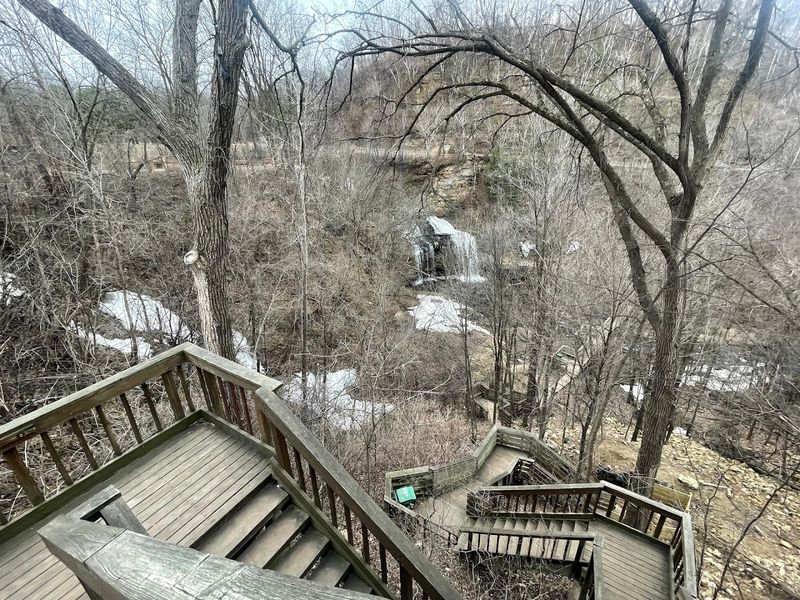
The staircase at Wilke Glen is not for the faint of heart, and it makes no apology for that. Roughly 156 steps descend from street level into the gorge below, and the angle is steep enough to make your calves register a formal complaint by the time you reach the bottom.
That said, handrails line most of the route, and the descent moves through a canopy of trees that makes the effort feel more like an adventure than a chore.
On the way down, the sound of falling water grows steadily louder, building anticipation in a way that feels almost deliberate. Each landing offers a brief pause and a shifting view of the gorge walls closing in around you.
The climb back up is the honest part of the bargain. It is short, it is steep, and it is absolutely worth every step for what waits at the bottom.
Wilke Glen Park’s Quiet Forest Setting
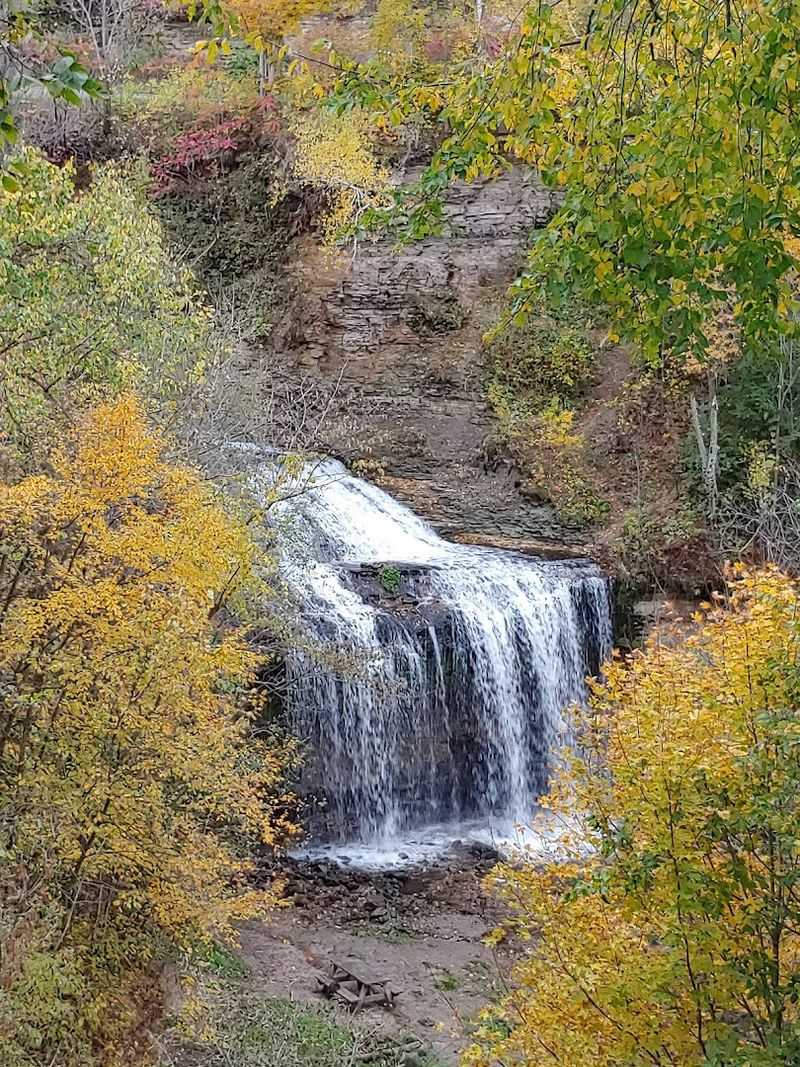
Wilke Glen operates at a pace that the modern world rarely allows. The park surrounds Cascade Falls with a dense corridor of mature trees, exposed rock faces, and creek-side vegetation that muffles the noise of the town above almost entirely.
Once you descend into the glen, the atmosphere shifts into something calmer and more deliberate, as though the landscape itself encourages a slower way of moving through it.
The gorge walls rise sharply on both sides, creating a narrow channel of sky overhead that frames the forest canopy in a way that feels composed rather than accidental. Moss clings to the sandstone in thick patches, and the air carries a consistent coolness even on warm summer days.
Families, solo walkers, and photographers all seem to find their own rhythm here without interrupting each other. The park has a natural capacity for solitude, even when it draws a modest crowd on a clear afternoon.
A Scenic Boardwalk That Makes The Walk Easy For Most Visitors
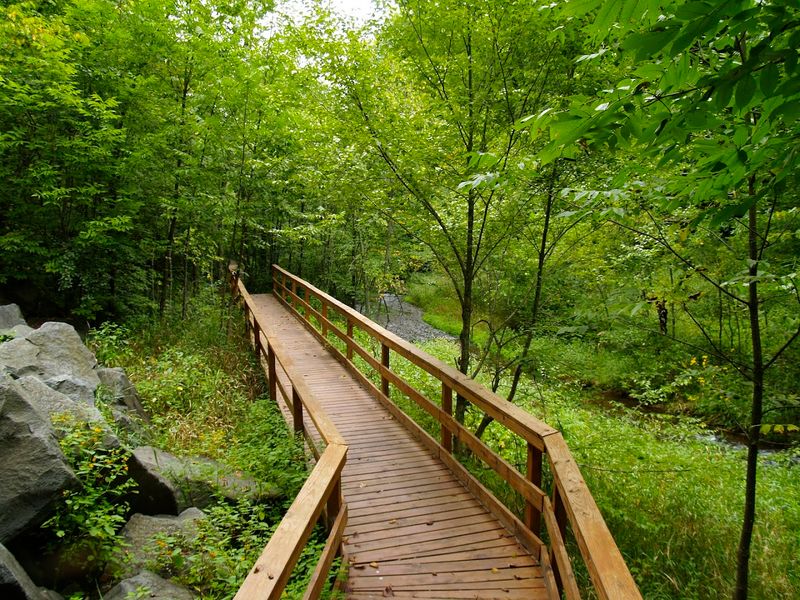
Beyond the staircase and the falls themselves, Wilke Glen offers a riverside trail that follows Cascade Creek toward the St. Croix River. The path is relatively flat once you reach the gorge floor, making it accessible to visitors who may find the stairs manageable but prefer gentler terrain for the rest of their walk.
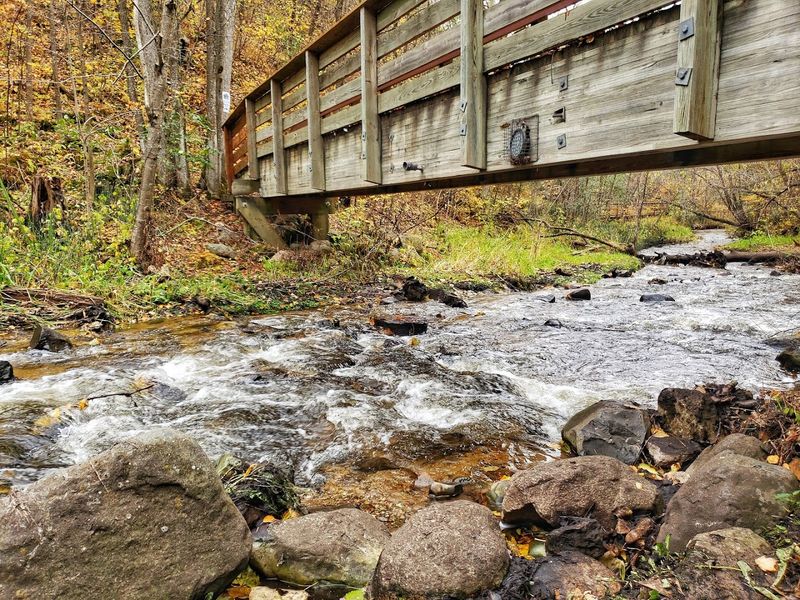
The trail moves through a corridor of overhanging trees with the creek running alongside at a close, companionable distance.
Sections of the path include boardwalk construction that keeps feet dry over softer ground and adds a pleasant, deliberate quality to the walk. The sound of water accompanies every step, and the light changes constantly as the canopy shifts above.
At the far end, the creek opens toward the St. Croix River, offering a broad view that contrasts sharply with the enclosed intimacy of the gorge. It is a satisfying conclusion to a walk that rewards patience at every turn.
Spring Snowmelt Turns Cascade Falls Into A Powerful Rush
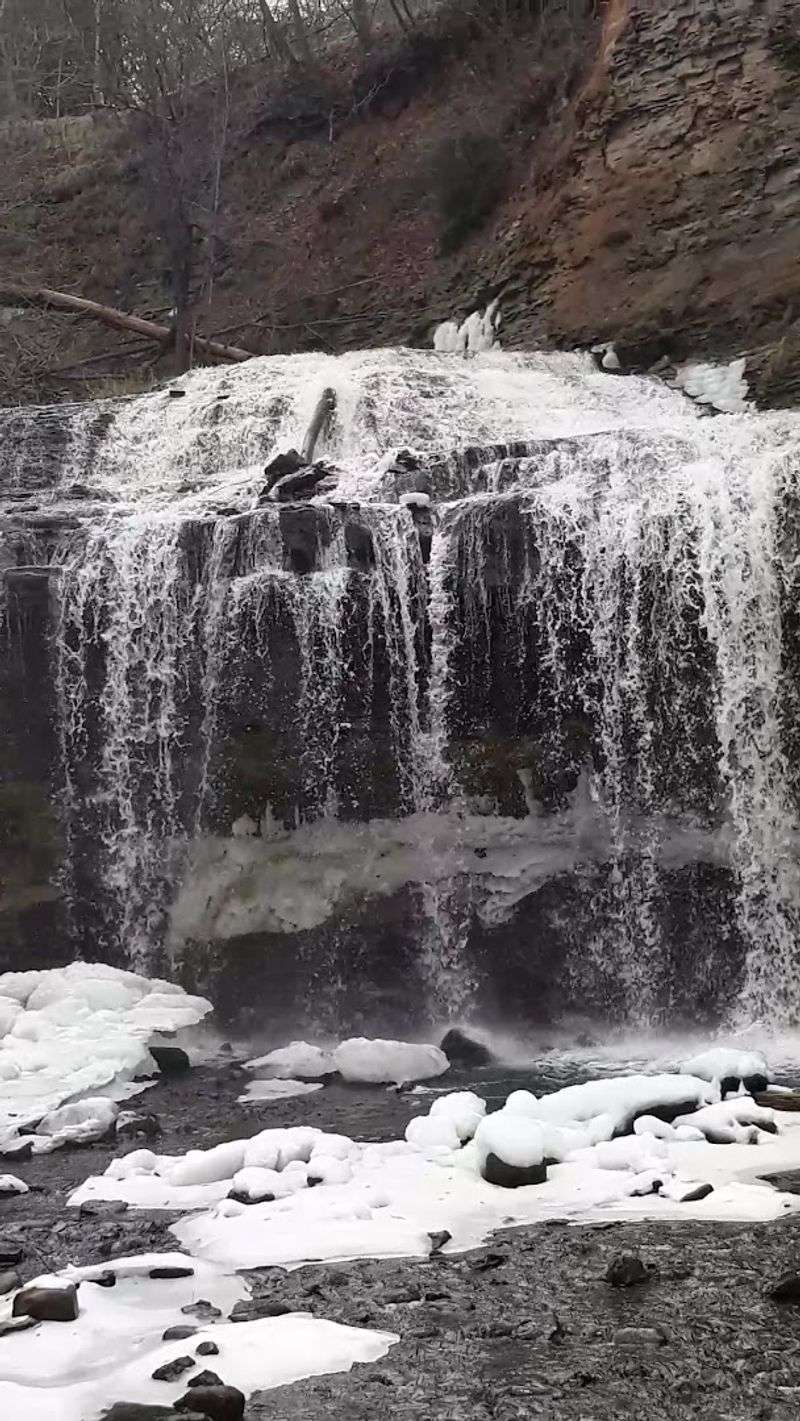
Early spring is when Cascade Falls earns its most dramatic reputation. As snowmelt from the surrounding watershed funnels into Cascade Creek, the volume of water pushing over the falls increases substantially, transforming the usual steady drop into something considerably more forceful.
The sound alone is enough to feel in your chest when you stand at the base of the gorge.
The gorge walls take on a deeper saturation during this period, with water seeping through the sandstone and feeding the ferns and mosses that cling to every available surface. The contrast between the cold grey stone and the rushing white water makes for some of the most compelling photographs the site produces across the full calendar year.
Visitors who time their trip to coincide with peak snowmelt in late March or early April will find a version of Cascade Falls that feels fundamentally different from its summer self, wilder and considerably less composed.
Autumn Brings Brilliant Colour To The Gorge
Few settings in Wisconsin show autumn colour as effectively as a narrow gorge, and Wilke Glen proves that point with considerable confidence each October. The trees lining the gorge walls turn in shades of amber, copper, and deep red, and because the gorge is enclosed on both sides, the colour surrounds you rather than simply appearing in the distance.
The effect is genuinely immersive in a way that open landscapes rarely manage.
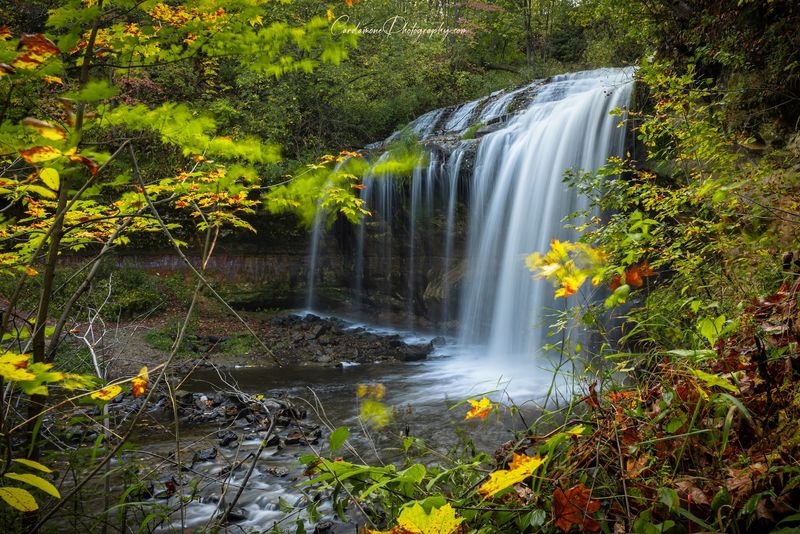
Cascade Falls itself takes on a warmer visual character during this period, with fallen leaves drifting into the pool at the base and the low autumn light cutting at angles that emphasize the texture of the rock walls. Photographers who visit in mid-October typically find the gorge at its most compositionally generous.
The contrast between the cool, mineral-grey stone, the white water, and the saturated foliage creates a colour palette that feels almost too deliberate to be entirely natural.
A Short Stop That Delivers Big Views
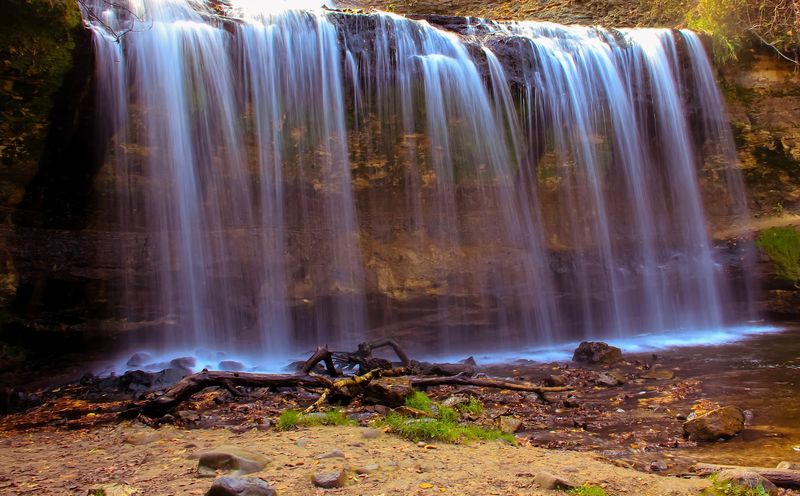
One of the most underappreciated qualities of Wilke Glen is its efficiency as a destination. The round trip from the parking area down to the falls and back up the stairs takes most visitors between 30 and 45 minutes, yet the visual return on that modest investment is genuinely impressive.
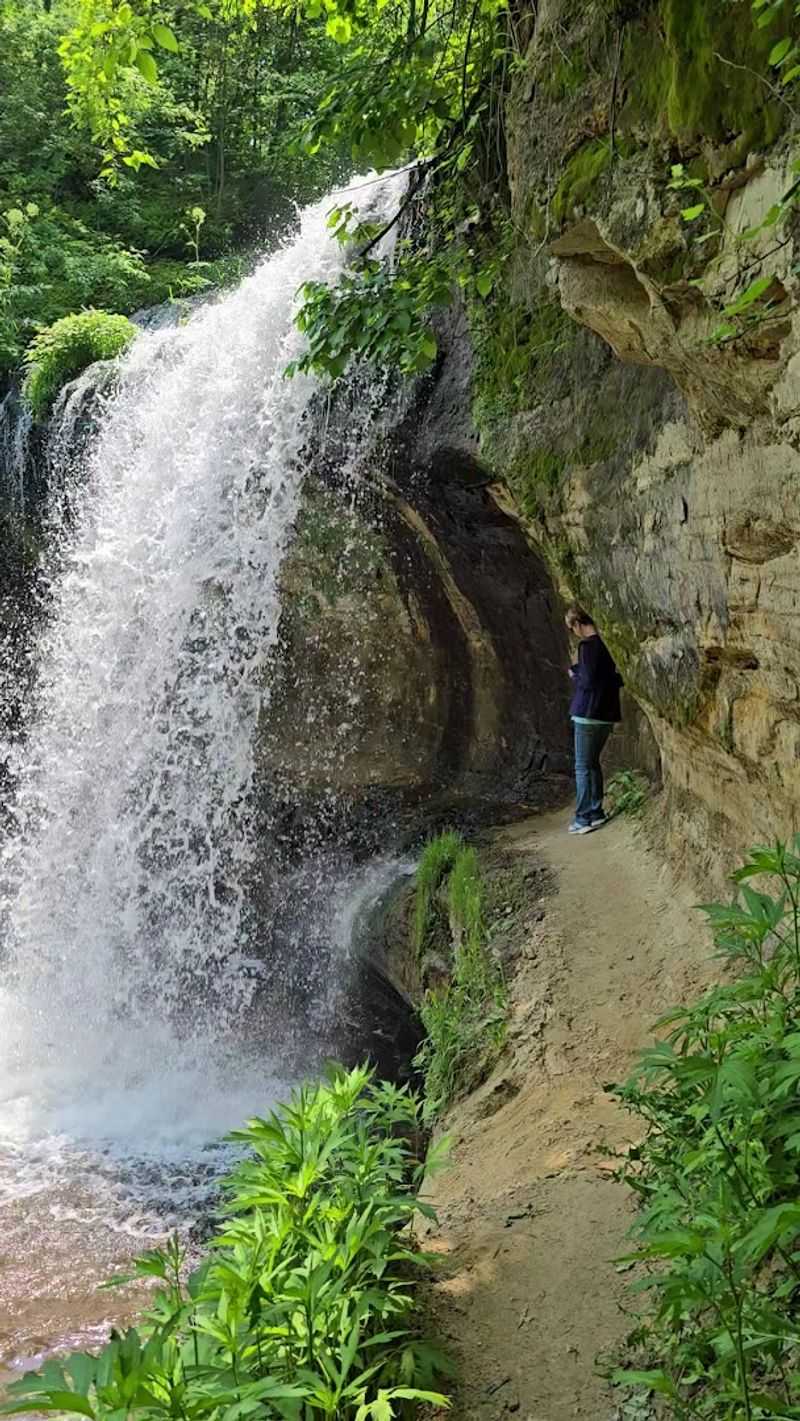
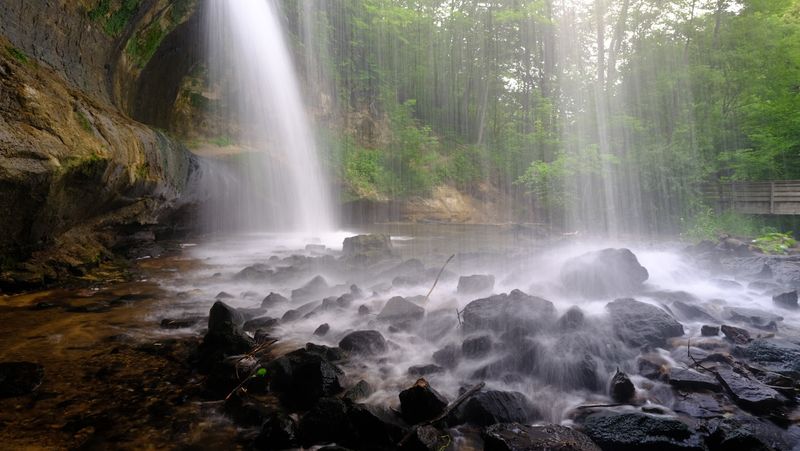
You descend through a forested gorge, arrive at a 25-foot waterfall, and can even walk behind the curtain of falling water if conditions allow.
The park sits directly across from a picnic area with restrooms, which makes the logistics of a stop here straightforward and family-friendly. Osceola’s small town center is within easy walking distance, offering coffee shops and local restaurants for those who want to extend the afternoon.
For travellers passing between Minneapolis and other points east, Cascade Falls makes an ideal road-trip pause, one that offers genuine scenery rather than the usual highway-exit compromise of a gas station and a stretch.
The History Behind Wilke Glen Park
Osceola is one of the older communities in western Wisconsin, established in the mid-19th century along the St. Croix River during a period when the region’s timber and milling industries were drawing settlers from the east. Cascade Creek and its falls were part of the landscape that early residents encountered, and the gorge has been a point of local pride for generations.
The park itself reflects that long-standing community investment in preserving access to the site.
Wilke Glen takes its name from local history, and the infrastructure within it, the stairs, the boardwalk sections, and the maintained trails, represents ongoing civic effort to keep the gorge accessible without diminishing its natural character. The balance between access and preservation is one the park manages with reasonable care.
Understanding the history adds a layer of appreciation to what might otherwise read as simply a pretty stop. Places like this exist because communities decided, repeatedly, that they were worth maintaining.
Wildlife And Birdsong Surround The Falls
The gorge at Wilke Glen functions as a natural corridor for wildlife moving between the surrounding woodland and the St. Croix River. The dense canopy, the persistent water source, and the relative quiet of the park make it attractive to a range of bird species that visitors often hear before they see.
Wood thrushes, warblers, and kingfishers are among the regulars, and their calls layer over the sound of the falls in a way that adds considerable atmosphere to the experience.
Small mammals are present as well, and the creek itself supports aquatic life that draws herons to the shallower sections downstream from the falls. Early morning visits tend to produce the most wildlife activity, before the day’s foot traffic settles in.
Bringing a pair of binoculars requires no special planning and rewards the effort immediately. The gorge is compact enough that birds perched on the opposite wall are visible without any strain.
One Of Wisconsin’s Most Underrated Small Waterfall Parks
Wisconsin has no shortage of waterfalls, particularly in its northern counties, but Cascade Falls in Osceola occupies an interesting position in that landscape. At 25 feet, it is not the tallest in the state, and the park surrounding it is modest in scale.
What it offers instead is a combination of accessibility, visual quality, and atmosphere that larger, more promoted sites occasionally fail to deliver despite their reputations.
The falls are reachable by almost anyone willing to manage the stairs, the gorge is genuinely scenic across all four seasons, and the town of Osceola provides enough character to justify lingering beyond the park itself. The proximity to Taylors Falls, Minnesota, makes a combined day trip entirely practical for visitors coming from the Twin Cities area, roughly an hour’s drive to the west.
Parks like Wilke Glen persist quietly, accumulating loyal visitors who return seasonally and rarely feel the need to announce the discovery too loudly.