
The World’s Largest Carousel Lives Inside This Fascinatingly Strange House In Wisconsin

Somewhere in the rolling hills of southwestern Wisconsin, along a winding stretch of Highway 23, stands one of the most genuinely unusual places in the United States. This place defies easy description, which is precisely what makes it worth the drive.
At first glance, the structure perched dramatically atop a rocky outcrop already feels a little mysterious. Step inside, though, and the experience becomes something entirely different.
Built by eccentric collector Alex Jordan Jr., what began as a single house gradually expanded into a sprawling maze of galleries, curiosities, and astonishing displays. The biggest surprise waits deeper inside the complex: a gigantic carousel unlike anything else on Earth.
Plan to spend several hours exploring, because this fascinating place reveals one remarkable sight after another.
Home To The World’s Largest Carousel
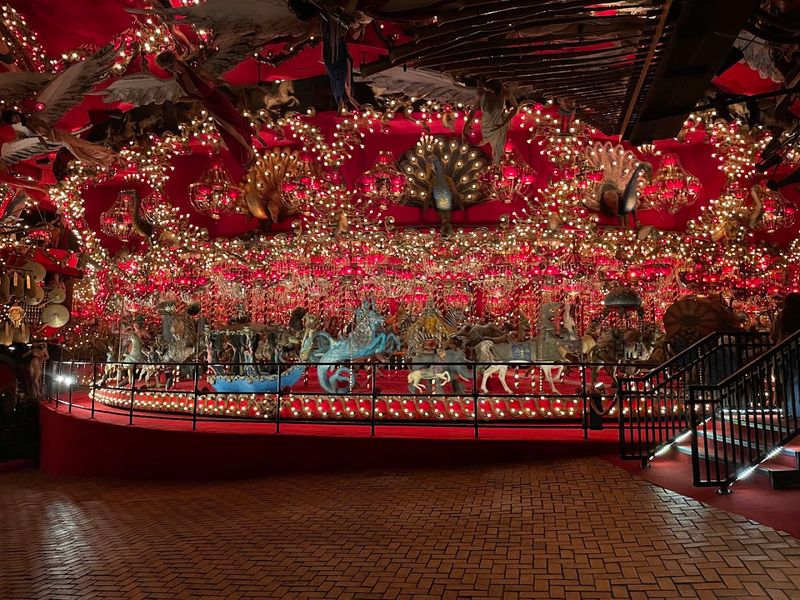
Few superlatives in travel hold up to scrutiny the way this one does. The carousel at the House on the Rock holds the Guinness World Record as the largest carousel on earth, and standing in its presence makes that credential feel entirely believable.
Spanning 35 feet in height and stretching across a room that seems almost too large to exist indoors, the carousel features 269 hand-carved animals, not one of which is a horse. Mythological creatures, sea beasts, and fantastical figures rotate in slow, hypnotic procession beneath a canopy of more than 20,000 lights.
Visitors cannot ride the carousel, which somehow makes it feel more like art than amusement. The room surrounding it is just as spectacular, lined with hundreds of glowing chandeliers that cast warm light across every surface.
Arriving at this room after walking through the earlier exhibits feels like reaching the destination you never knew you were headed toward.
Built By Visionary Collector Alex Jordan Jr.
Alex Jordan Jr. was not an architect, an engineer, or a formally trained designer. He was something rarer and harder to categorize: a man of relentless curiosity and stubborn creative will who simply decided to build something extraordinary and kept going for decades.
Jordan began constructing the original house atop a natural rock formation called Deer Shelter Rock in the 1940s, reportedly inspired by the organic architecture philosophy of Frank Lloyd Wright, whose own Taliesin studio sits just a few miles away. The two men reportedly had a complicated relationship, which adds an interesting layer of context to the whole enterprise.
What Jordan built over his lifetime grew far beyond any single vision. He collected obsessively, displayed boldly, and expanded continuously until the property became a sprawling monument to personal imagination.
His story is told in presentations at the attraction, and taking time to absorb it makes every subsequent room feel more meaningful and alive.
A House Perched Dramatically Above Wyoming Valley
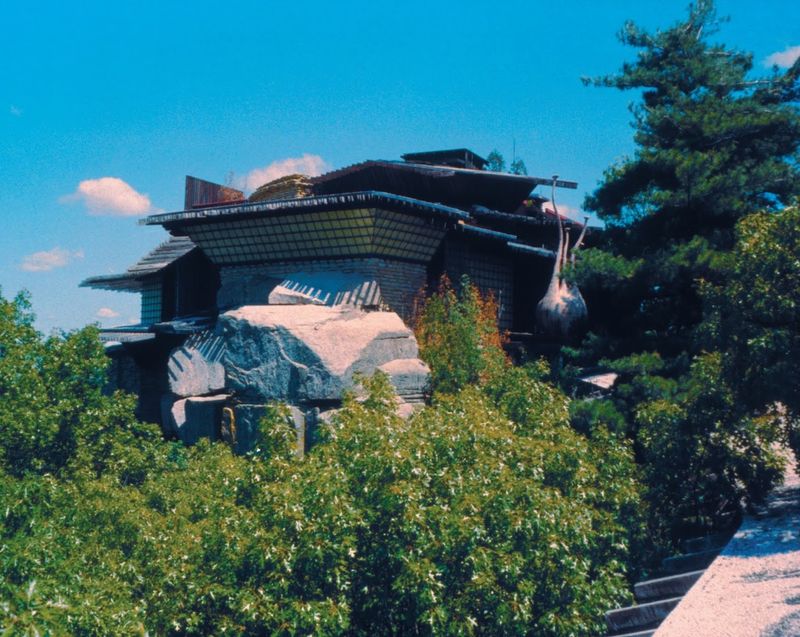
The original structure is the starting point of every tour, and it rewards attention. Jordan built his home directly atop a narrow spire of rock rising 60 feet above the forest floor, creating a dwelling that feels both precarious and perfectly placed within its surroundings.
The interior of the original house reflects Jordan’s affinity for low ceilings, organic curves, and intimate spaces that feel carved rather than constructed. Rooms flow into one another with a logic that is more intuitive than architectural, and natural light filters in through carefully positioned windows that frame the valley below like paintings.
Located at 5754 WI-23, Spring Green, Wisconsin, the property sits within a landscape that changes dramatically with the seasons. Autumn brings amber and crimson to the surrounding hillsides, while summer wraps the whole site in dense green canopy.
The original house, modest by comparison to what follows, sets an atmospheric tone that the rest of the attraction builds upon with considerable ambition.
The Famous Infinity Room Extends 218 Feet Over The Valley
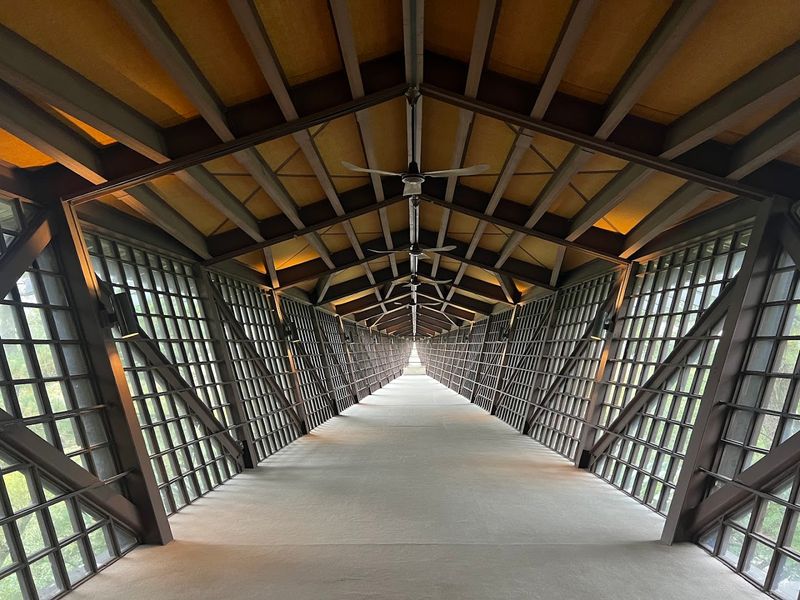
Confidence in engineering and a certain disregard for conventional comfort combine in the Infinity Room, one of the most genuinely vertiginous experiences available at any tourist attraction in the Midwest. The room extends 218 feet beyond the edge of the hillside with no structural support beneath it, cantilevering over the treetops of the Wyoming Valley.
Walking its length requires a willingness to trust physics, because the floor beneath your feet sways almost imperceptibly and the windows on all sides offer an unobstructed view of open air and distant hills. The room narrows toward its far end, creating an optical illusion that makes the space feel even longer than it actually is.
More than 3,000 windows line the structure, and on a clear day the views stretch across the valley with remarkable clarity. Visitors who are sensitive to heights may find the experience genuinely challenging, which is worth knowing in advance.
Those who press through to the end are rewarded with a perspective that is difficult to replicate anywhere else.
Rooms Filled With Eclectic And Unusual Collections
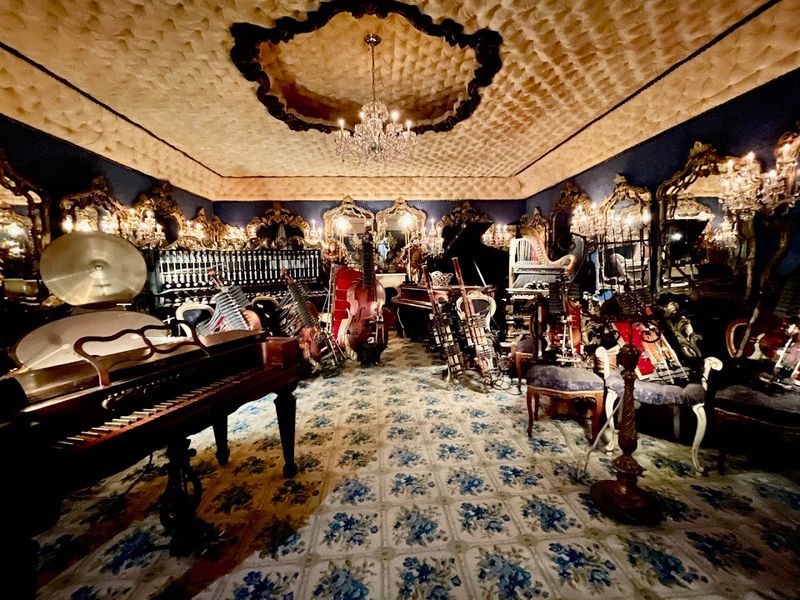
Jordan collected with a breadth that suggests he had a policy against restraint. Suits of armor, antique firearms, vintage toys, model ships, dolls, circus memorabilia, and hundreds of other categories of objects fill the rooms and corridors of the attraction in arrangements that feel simultaneously chaotic and deliberate.
Walking through the collection rooms requires a slow pace and a willingness to look in every direction. Objects hang from ceilings, line floors, crowd shelves, and fill glass cases stacked to the rafters.
The sheer volume of material on display can feel overwhelming at first, but a rhythm develops after a while and the eye begins to find its own points of focus.
The collections span centuries and continents, and while not every item carries a detailed label, the cumulative effect is that of a personal museum assembled by someone who found almost everything interesting. That perspective, however unconventional, gives the space a character that no curatorial committee could have designed or approved.
Hundreds Of Chandeliers Lighting The Carousel Room
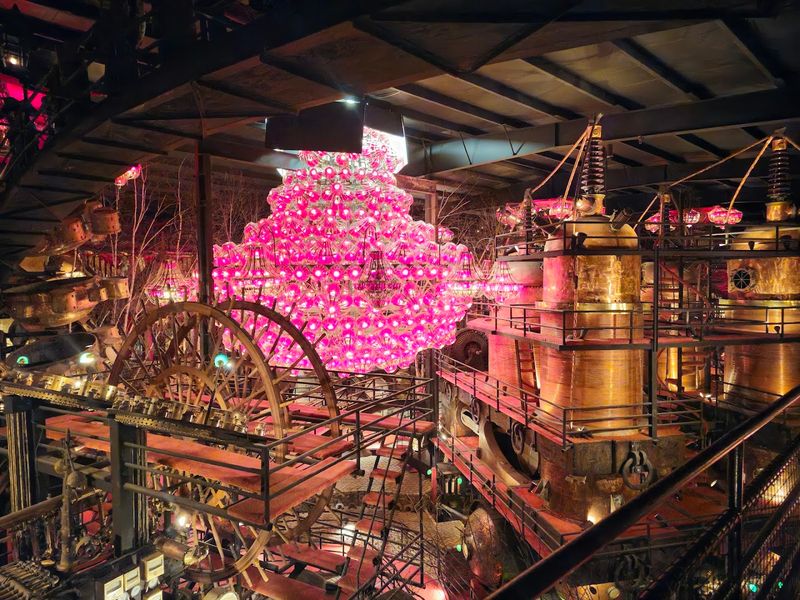
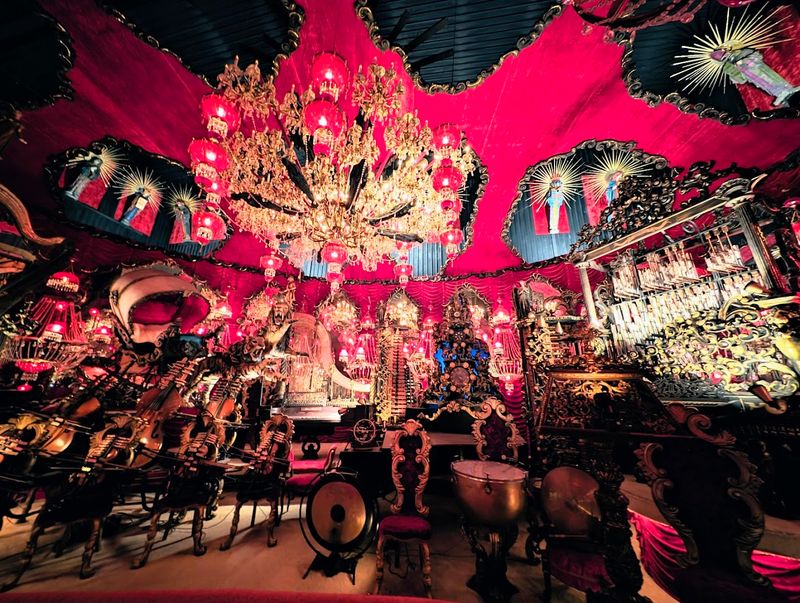
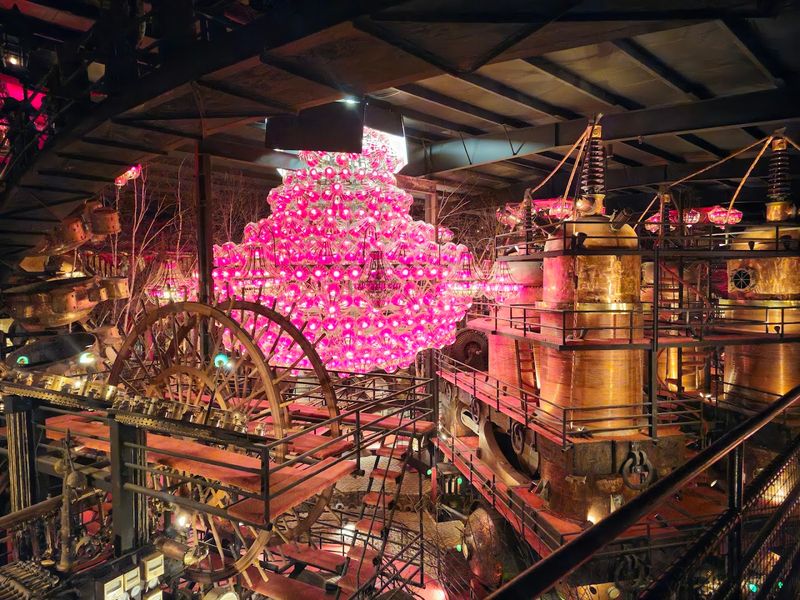
The ceiling above the carousel deserves as much attention as the carousel itself. Hundreds of chandeliers, gathered from auctions, estate sales, and collection circuits over many decades, hang at varying heights above the rotating figures below, creating a canopy of light that transforms the room into something closer to theater than exhibition.
Each chandelier is distinct in style, scale, and origin. Some are delicate crystal arrangements, others are heavy brass fixtures from another era entirely, and a few appear to be custom creations that match nothing in any catalog.
Together they produce a warm, layered illumination that flatters everything it touches.
Photographing the ceiling is a natural impulse, and almost no single frame captures it adequately. The experience of standing beneath it, with the carousel turning slowly below and the light shifting across thousands of reflective surfaces above, is one of those rare moments where a place delivers something that images simply cannot carry.
Plan to linger longer than you expect to.
A Giant Sea Creature Suspended Inside One Exhibit Hall
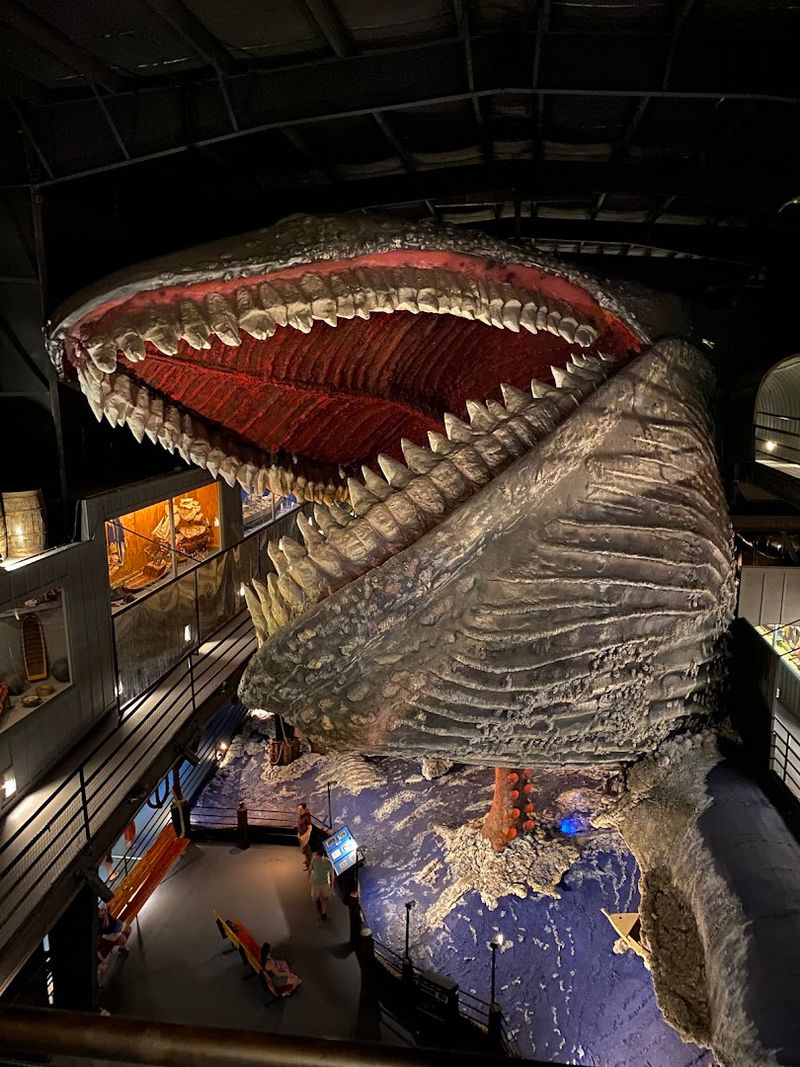
One of the most startling moments in the entire tour arrives when visitors enter the exhibit hall containing a massive sculpted sea creature suspended overhead. The figure is enormous, detailed, and lit in a way that makes it feel both ancient and alive, occupying the upper reaches of the room with a presence that is genuinely difficult to ignore.
The creature, a giant octopus-like form locked in battle with a whale, was fabricated for the attraction and represents the kind of theatrical ambition that separates the House on the Rock from more conventional museums. It exists for spectacle, and it achieves that goal with considerable success.
Children tend to stop completely when they enter this room, which is a reliable measure of visual impact. Adults respond similarly, though they may take a few extra seconds to process what they are seeing.
The exhibit around the creature fills out the oceanic theme with additional maritime objects, but the suspended figure commands the space so thoroughly that everything else reads as supporting material.
Massive Musical Machines That Fill Entire Rooms
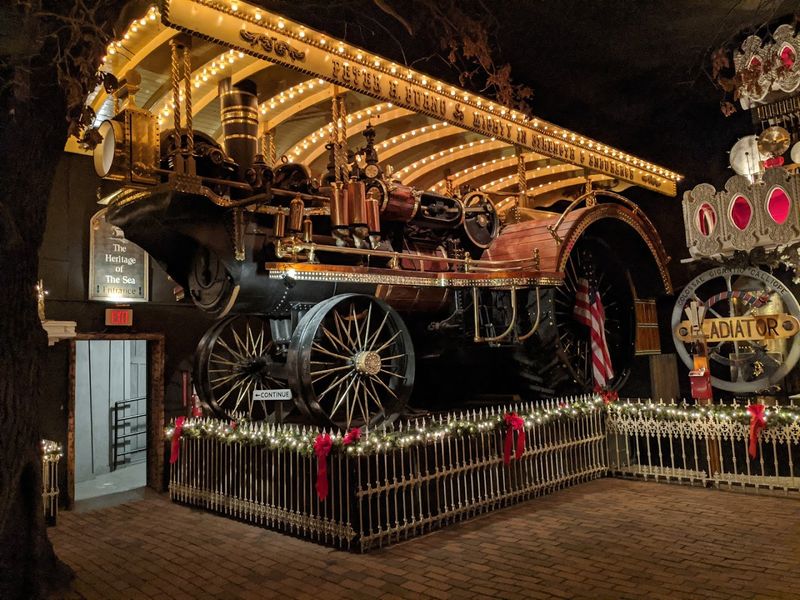
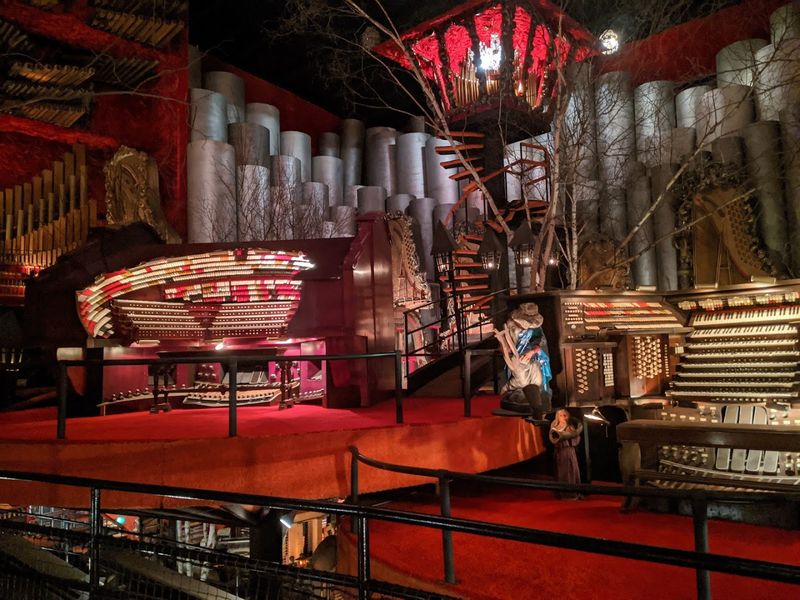
Music has a physical presence in several rooms of the attraction, produced not by performers but by mechanical instruments of remarkable scale and complexity. Orchestrions, calliopes, band organs, and automated orchestras fill entire chambers with sound, their moving parts visible behind glass panels that allow visitors to watch the mechanical logic at work.
Tokens purchased at the entrance allow visitors to activate certain machines, and the experience of triggering a full mechanical orchestra in an enclosed room is something that stays with you. The instruments play with a precision and volume that feels almost confrontational in the best possible sense, filling the air completely.
Jordan collected these machines throughout his lifetime, recognizing in them a form of ingenuity that aligned with his own sensibility. Each one represents hundreds or thousands of hours of craftsmanship from eras when automated entertainment was considered a marvel of modern engineering.
Seeing them operational, rather than behind museum rope in static silence, makes the visit feel participatory rather than purely observational.
Detailed Miniature Worlds And Model Displays
Patience and craftsmanship converge in the miniature displays scattered throughout the attraction. These are not simple dioramas assembled from kits.
They are elaborate, hand-crafted environments depicting circus scenes, historical settings, and fantastical landscapes at a scale that rewards close inspection and a slow pace.
Some displays are lit from within, which gives the tiny worlds a warmth and depth that flat overhead lighting could never achieve. Figures no larger than a thumbnail go about their frozen activities with an attention to detail that feels almost excessive until you realize that excess is precisely the point of everything here.
Families with children often spend considerable time at these exhibits, which offer a different kind of engagement than the larger spectacle rooms. Adults who allow themselves to slow down and actually look at the craftsmanship involved tend to find the displays among the most quietly impressive elements of the entire property.
Good things, as it turns out, sometimes come in very small packages.
One Of Wisconsin’s Most Unusual Attractions
Wisconsin has no shortage of worthwhile destinations, but the House on the Rock occupies a category of its own. No other attraction in the state combines architecture, personal obsession, mechanical ingenuity, and sheer accumulated wonder in quite the same proportions or with quite the same unapologetic confidence.
The property is open Thursday through Monday from 9 AM to 3 PM, closed on Tuesdays and Wednesdays, and can be reached by phone at (608) 935-3639 or through the official website at thehouseontherock.com. Tickets are available online in advance, which is the recommended approach during busier seasons when lines at the entrance can extend the start of your tour considerably.
Comfortable footwear is genuinely important here. The full tour covers approximately two and a half miles of ramps, stairs, and corridors, some of which are not temperature-controlled.
Bring a layer regardless of the season, arrive early, and allow more time than you think you will need. The House on the Rock consistently delivers more than expected.