
This Quiet Wisconsin Town Is Home To One Of The State’s Most Spectacular Parks
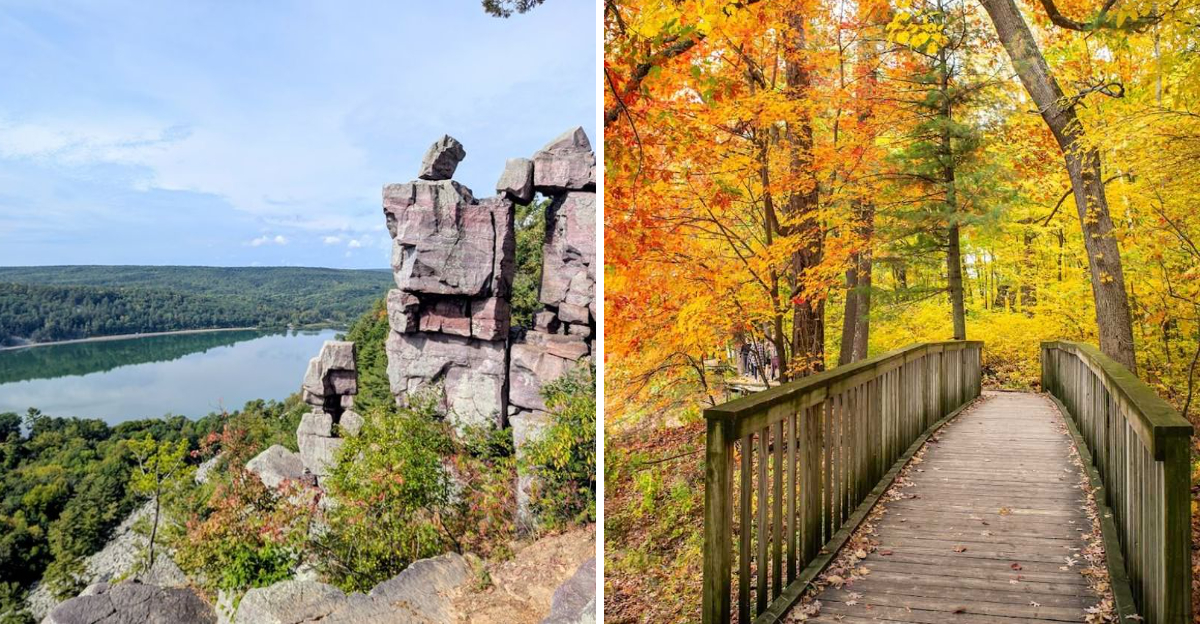
Look up, and the view stops you in your tracks. Sheer rock bluffs rise high above a quiet lake, hiking trails wind along dramatic ridgelines, and the surrounding forest makes the entire landscape feel both rugged and inviting.
Just outside a small Wisconsin town that many travellers barely notice, one of the Midwest’s most striking natural areas waits to be explored. Visitors come for the clear water, towering quartzite cliffs, and miles of trails that welcome beginners and experienced hikers alike.
The scenery carries a sense of deep history shaped over thousands of years, and every visit reveals another corner worth lingering over.
Baraboo Is The Gateway To Devil’s Lake State Park
Few small towns carry as much natural weight as Baraboo, Wisconsin. Positioned in Sauk County along the Baraboo River, the town serves as the primary access point for Devil’s Lake State Park, and its modest downtown gives visitors a calm, grounded place to prepare before heading into the bluffs.
The drive from the town center to the park entrance takes only a few minutes, passing through a pleasant mix of residential streets and open countryside.
Baraboo itself has a character worth noting. The town is home to the Circus World Museum, a nod to its history as the winter quarters of the Ringling Brothers Circus, which adds an unexpected layer of personality to an already interesting destination.
Local shops, diners, and lodging options make it a practical base for multi-day visits to the park. Arriving in Baraboo feels like stepping into a place that takes pride in its surroundings without making a fuss about it.
Devil’s Lake Is Wisconsin’s Largest And Most Visited State Park
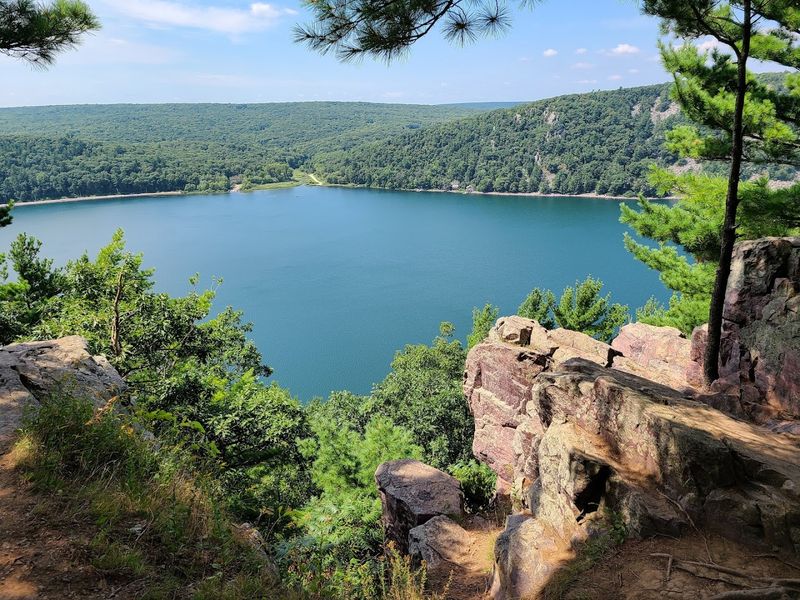
Devil’s Lake State Park holds a firm place at the top of Wisconsin’s state park system, both in size and in the sheer number of people who make the trip each year. Managed by the Wisconsin Department of Natural Resources, the park spans over 10,000 acres and draws well over three million visitors annually, making it the busiest state park in the state by a considerable margin.
That popularity is earned rather than manufactured.
The park’s appeal comes from its unusual combination of geological drama, recreational variety, and accessibility. Families, solo hikers, climbers, paddlers, and campers all find something here that fits their pace.
The facilities are well maintained, trails are clearly marked, and the natural scenery does the heavy lifting without any need for embellishment. For anyone building a Wisconsin travel itinerary, Devil’s Lake is not a footnote but a centerpiece that justifies the drive on its own merits.
A 360-Acre Lake Lies At The Heart Of The Park
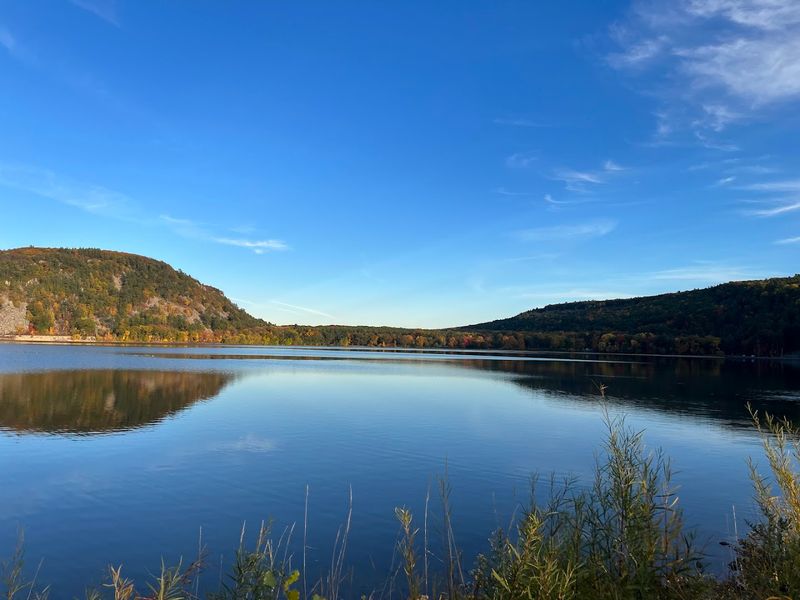
At the geographic and emotional center of the park sits Devil’s Lake itself, a 360-acre body of water that has no surface inlet or outlet. The lake is fed entirely by underground springs, which keeps the water remarkably clear and gives it an almost luminous quality on calm mornings.
Depths reach approximately 47 feet at the deepest point, making it suitable for swimming, kayaking, and paddleboarding throughout the warmer months.
The absence of gas-powered boats on the water is one of the park’s more appreciated policies, keeping the lake quiet and the surface clean for swimmers and non-motorized watercraft. Rental equipment is available at the park for visitors who arrive without their own gear.
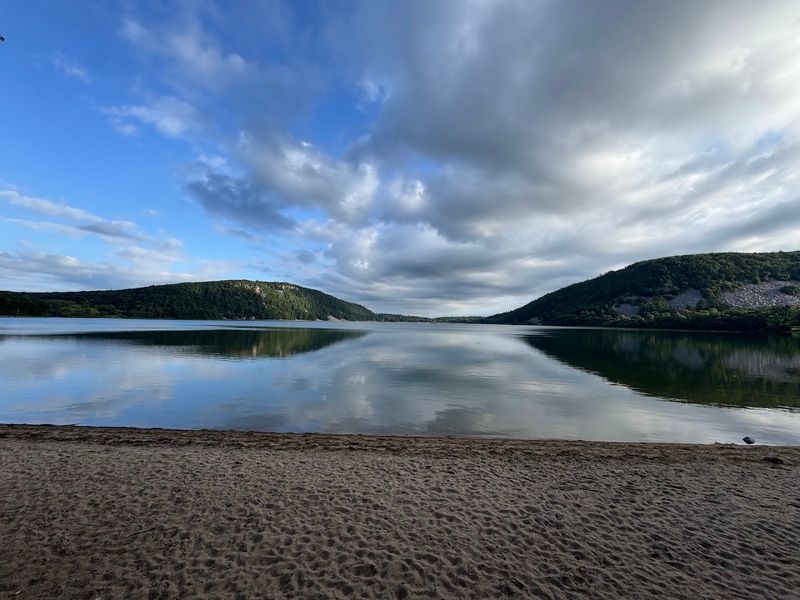
On a weekday morning before the crowds arrive, the lake reflects the surrounding bluffs with a stillness that feels almost meditative. It is the kind of scene that stays with a person long after the drive home.
Towering Quartzite Bluffs Rise Hundreds Of Feet Above The Water
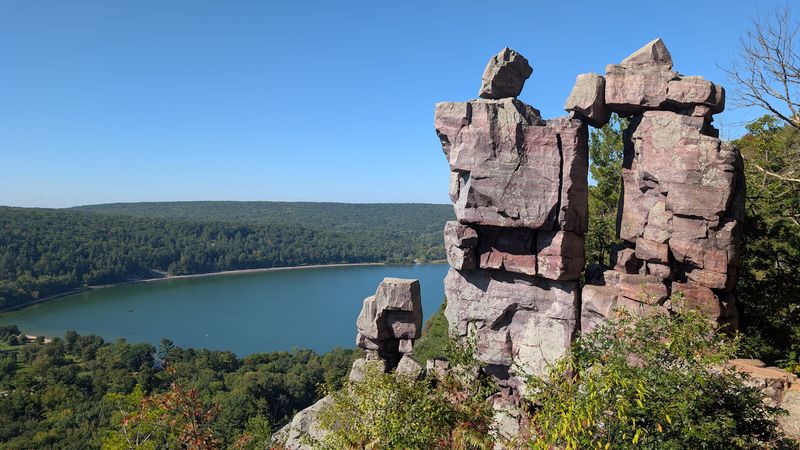
The bluffs that frame Devil’s Lake are among the most visually striking geological features in the Upper Midwest. Composed of Precambrian quartzite estimated to be around 1.6 billion years old, these rocky walls rise approximately 500 feet above the lake surface on both the east and west sides.
The stone carries a warm reddish-pink hue that shifts in color depending on the time of day and the quality of the light, giving the landscape a different character at dawn than it has at midday.
Geologists regard the Baraboo Hills, of which these bluffs are a part, as one of the oldest mountain ranges in North America. What visitors see today are the worn remnants of peaks that once rivaled the Rockies in height.
Standing at the base and looking up, it is easy to appreciate why this place carries such a strong sense of permanence. The rock here has outlasted nearly everything else on the continent.
The Park Offers More Than 29 Miles Of Hiking Trails
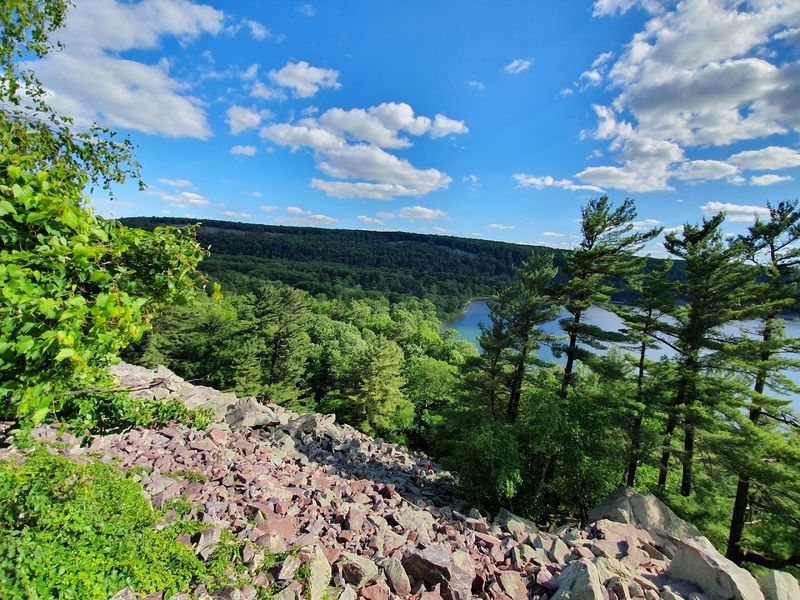
Twenty-nine miles of trails spread across the park in a network that accommodates everyone from casual walkers to experienced hikers who want a genuine physical challenge. The trail system is divided into routes of varying difficulty, with some meandering through shaded woodland floors and others ascending steeply over exposed rock faces with significant elevation gain.
Trail conditions are generally well maintained, though some routes become slippery when wet and demand appropriate footwear regardless of the season.
Popular routes include the East Bluff Trail, the West Bluff Trail, the Grottos Trail, and the Potholes Trail, each offering a distinct perspective on the park’s terrain. Hikers who string multiple trails together can spend a full day moving through the landscape without retracing their steps.
A useful tip from experienced visitors is to hike in a counterclockwise direction on certain loop trails to manage the steepest sections more comfortably. Bringing plenty of water and a trail map before setting out is strongly advised.
Balanced Rock Is One Of The Park’s Most Famous Landmarks
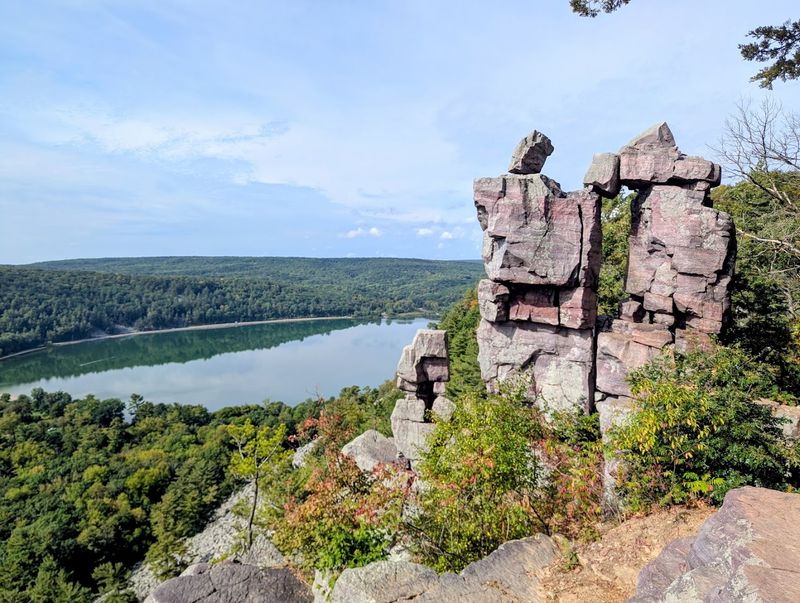
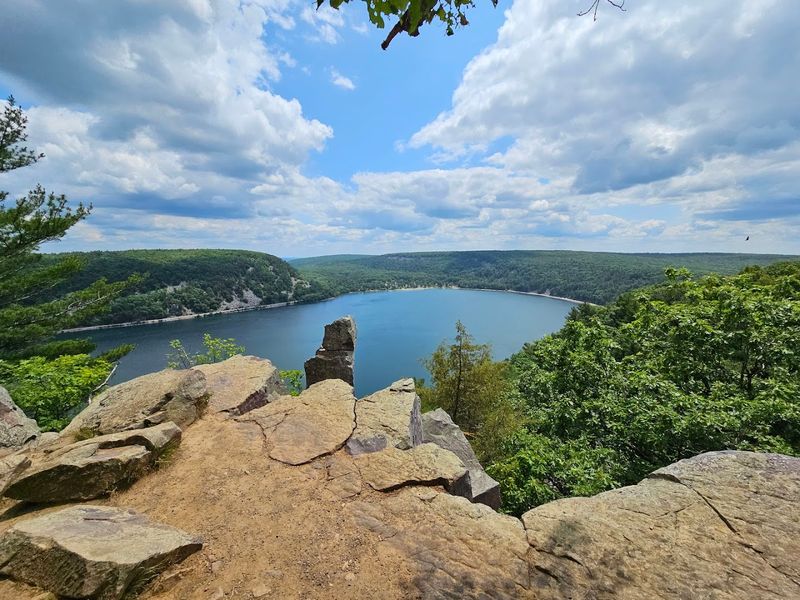
Perched along the East Bluff, Balanced Rock is a large quartzite boulder that appears, against all reasonable expectation, to be resting on a very small base. The rock has become one of the park’s most photographed features, and the trail bearing its name is considered one of the most demanding routes in the park.
The Balanced Rock Trail involves a steep, rocky ascent with significant exposure in places, and experienced hikers with proper footwear will still find it demanding on the descent.
The boulder itself is a product of glacial and erosional forces working over an immense span of time, gradually isolating it from the surrounding rock face. Up close, it is larger than photographs suggest, and the views from the surrounding bluff are genuinely impressive.
For visitors who complete the trail on a clear day, the combination of the landmark and the lake panorama below creates a moment that feels like a fair reward for the effort involved in getting there.
The Ice Age Shaped The Dramatic Landscape Here
The landscape at Devil’s Lake is a direct product of glacial activity during the last Ice Age, when massive sheets of ice moved across North America and fundamentally rearranged the terrain. The Baraboo Hills formed a natural barrier that redirected glacial flow, and when the ice eventually retreated roughly 12,000 years ago, it left behind the lake basin, the boulder-strewn slopes, and the dramatic moraine deposits that visitors walk through today.
The park sits along the Ice Age National Scenic Trail, which traces the terminal moraine of the last glacier across Wisconsin.
Geologists and naturalists consider this area one of the best places in the Midwest to observe glacial geology up close. Features like the potholes, grottos, and talus slopes are all direct evidence of the forces that shaped this terrain.
The park’s interpretive materials do a solid job of explaining the science in accessible terms, making a visit here as educational as it is scenic for anyone curious about how landscapes form over deep time.
Two Long Sandy Beaches Draw Visitors All Summer
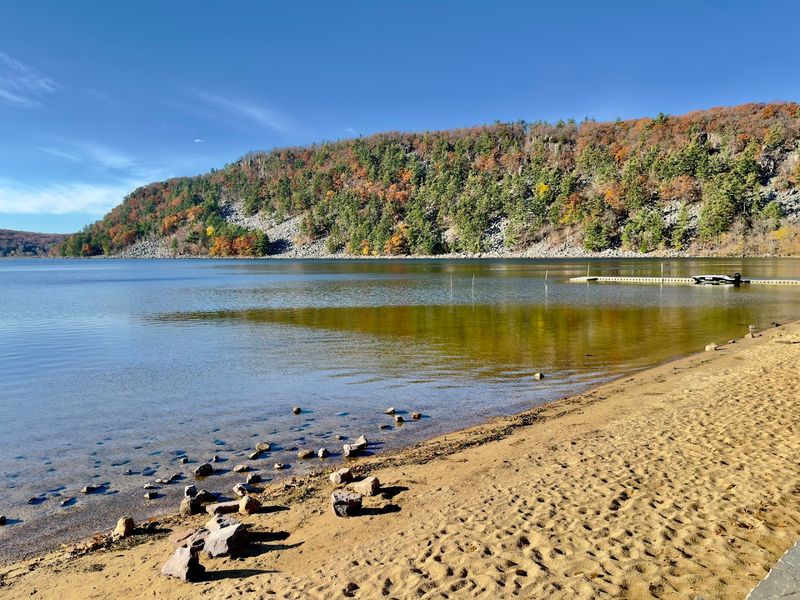
The north and south shores of Devil’s Lake each feature a sandy beach that becomes a popular gathering point throughout the summer months. Both beaches offer designated swimming areas, and the water quality is consistently good thanks to the spring-fed lake and the absence of motorized boat traffic.
The south beach tends to attract larger crowds, particularly on weekends, while the north beach offers a slightly more relaxed atmosphere for families who prefer more room to spread out.
Concession stands near the south beach carry food, drinks, and basic supplies, which is convenient for day visitors who arrive without a packed lunch. Picnic areas are scattered throughout both beach zones, and the views of the bluffs from the waterline are among the best in the park.
Arriving early on weekend mornings is genuinely practical advice, as parking fills quickly during peak season. Midweek visits offer a noticeably calmer experience with more space to enjoy the water at a comfortable pace.
Devil’s Lake Is A Popular Destination For Rock Climbers
The quartzite bluffs at Devil’s Lake have earned a strong reputation in the climbing community, drawing participants from across the Midwest and beyond. The rock offers a variety of route difficulties, from beginner-friendly faces to technical multi-pitch climbs that challenge even experienced climbers.
The texture of quartzite provides solid grip in dry conditions, and the sheer number of established routes means that climbers can return repeatedly without exhausting the options available to them.
Climbing at Devil’s Lake requires awareness of park regulations, including designated climbing zones and seasonal closures that protect nesting raptors on certain sections of the bluffs. Climbers are expected to follow Leave No Trace principles and to avoid disturbing vegetation on the rock faces.
The climbing community here has a generally respectful culture, and the park staff work to balance recreational access with long-term preservation of the rock surfaces. For anyone interested in outdoor climbing in Wisconsin, this destination stands above the rest in both variety and scenery.
Scenic Overlooks Provide Some Of Wisconsin’s Best Views
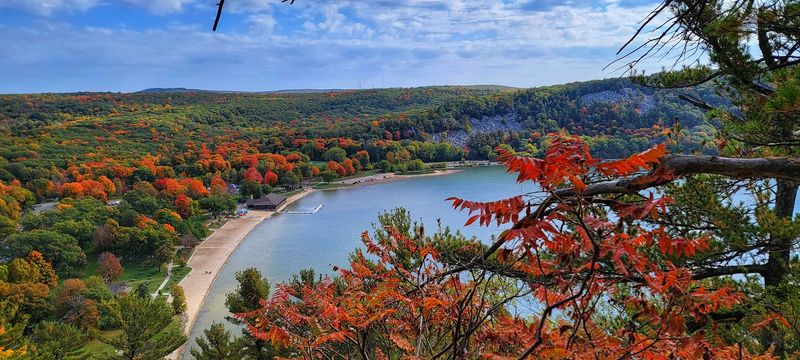
From the ridgelines of both the East and West Bluffs, the views over Devil’s Lake and the surrounding Baraboo Hills are the kind that make the climb feel entirely worthwhile. On clear days, the visibility extends far beyond the park boundaries, offering a broad sense of the glaciated Wisconsin landscape that stretches in every direction.
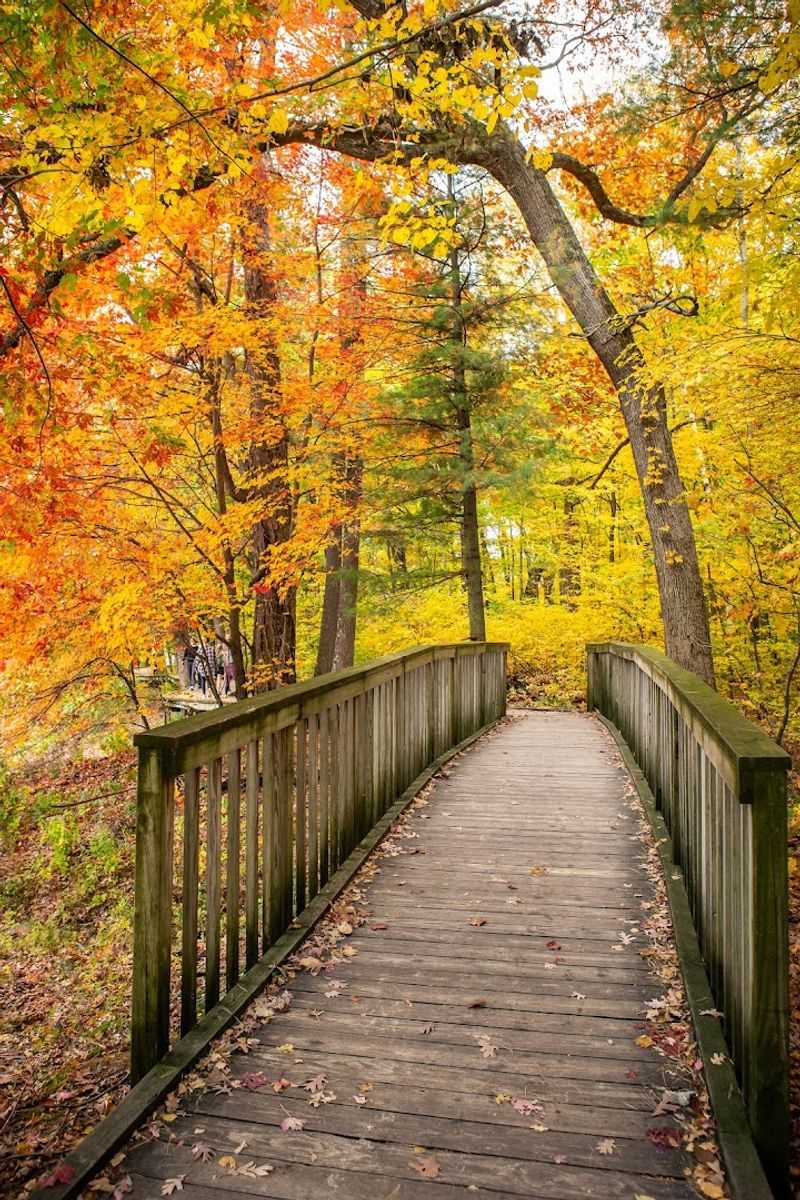
In autumn, the forested slopes turn a deep mix of amber, red, and gold that frames the lake with considerable intensity.
Several designated overlook points along the bluff trails provide natural resting spots with unobstructed sightlines down to the water. These spots are well worth pausing at rather than simply photographing and moving on.
The West Bluff Trail in particular offers a long, sustained view corridor that changes character as you move along the ridge. Mornings tend to offer cleaner light and fewer people at the overlooks, making an early start one of the better decisions a visitor can make at Devil’s Lake.