
This 20-Acre Sculpture Park In Wisconsin Feels Like Stepping Onto Another Planet
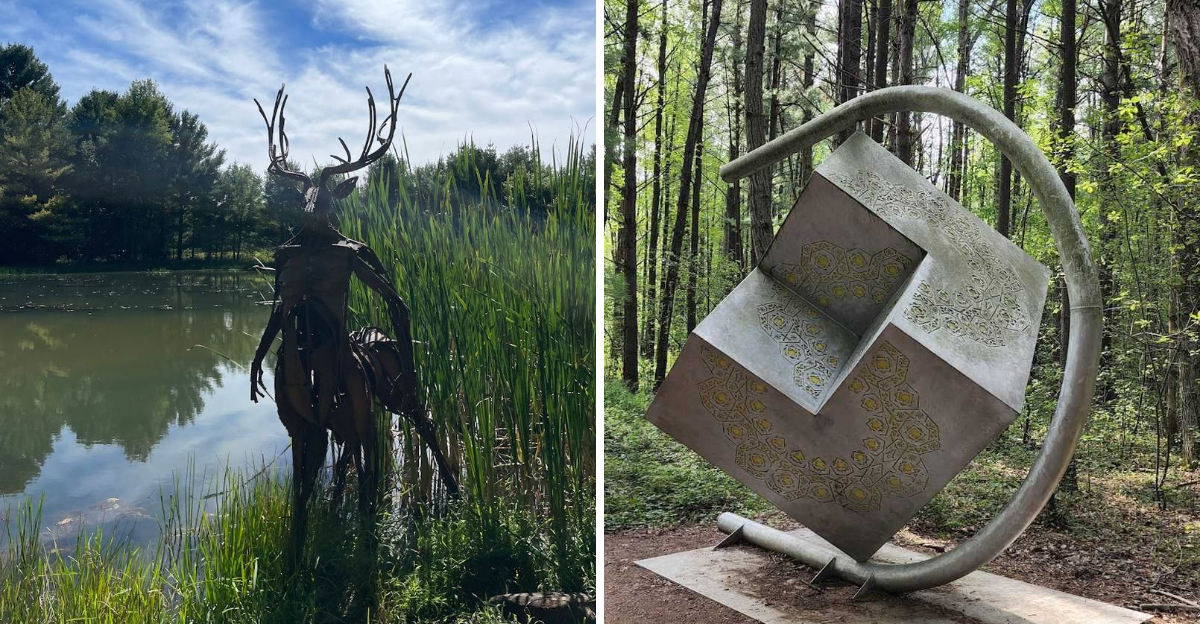
A quiet trail winds through the woods, and then something unexpected appears ahead. A towering metal structure rises between the trees.
Strange shapes and bold creations stand scattered across the landscape like artifacts left behind by another civilisation. At the Stevens Point Sculpture Park in Wisconsin, art refuses to stay inside gallery walls.
Spread across twenty acres of forest and open space, this outdoor gallery blends imagination with nature in the most surprising ways. Each turn along the path reveals another striking installation, making the entire park feel less like a typical walk in the woods and more like a journey across an entirely different world.
A 20-Acre Outdoor Art Playground
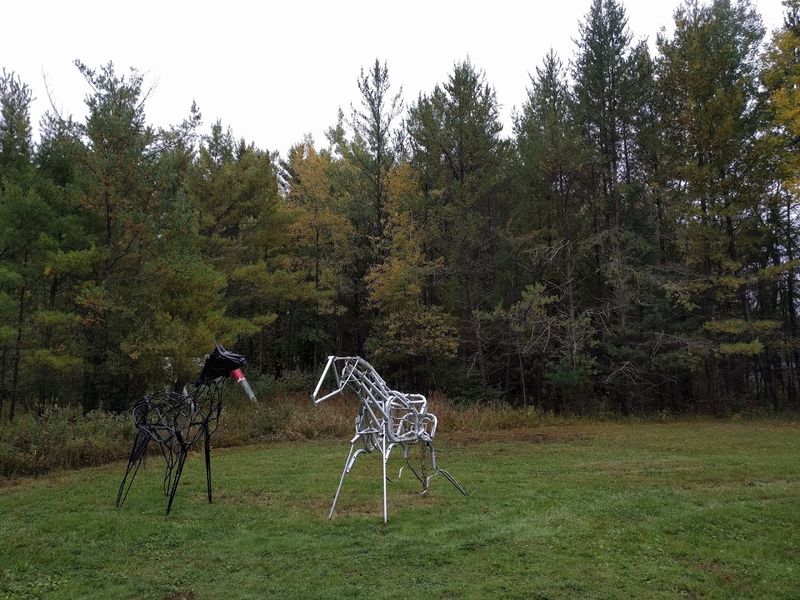
Stevens Point Sculpture Park sprawls across twenty acres of woodland just north of downtown. The space functions as both nature preserve and exhibition hall, with crushed granite trails winding past installations that change with the seasons.
Parking sits directly off 2nd Street North, and from there the path leads into a forest that feels removed from the rest of the city.
The park connects to the Green Circle Trail, a larger network that loops around Stevens Point. Visitors arrive on foot, by bicycle, or by car, and the flat terrain makes the walk manageable for most fitness levels.
No admission fee applies, and the gates open early enough to catch morning light filtering through the pines.
Art pieces rotate throughout the year, so repeat visits reveal different works. Some installations stand tall and metallic, while others blend into the landscape as though they grew there naturally.
The combination creates an environment that feels both curated and wild.
Where Art Meets The Wisconsin Forest
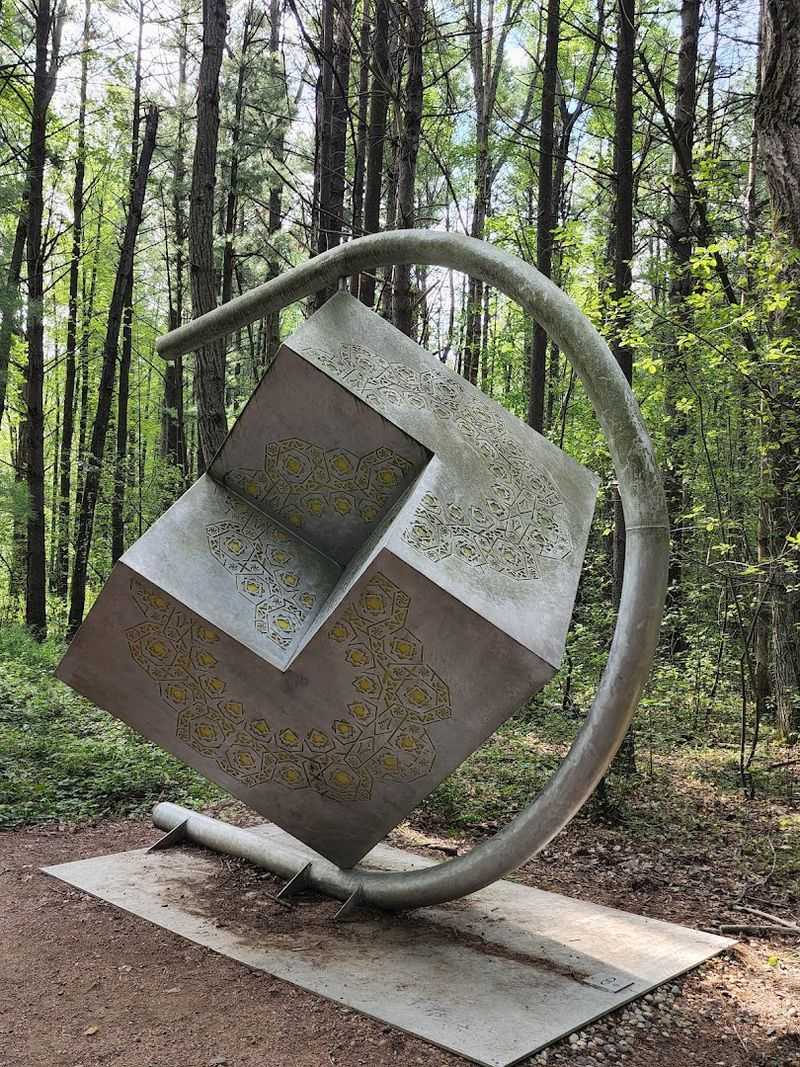
The forest here predates the sculpture park by decades. Tall pines rise overhead, their trunks creating natural columns that frame the art below.
Streams trickle past installations, and ponds reflect both sculptures and sky. The setting adds dimension to every piece, turning static objects into elements that shift with weather and light.
Local artists designed many of the works specifically for this environment. They considered how rain would affect metal, how snow would settle on horizontal surfaces, and how shadows would move across their creations.
The result feels intentional, as though art and landscape had always belonged together.
Woodland creatures share the space with human visitors. Songbirds nest in the canopy, while smaller animals move through the underbrush.
The park maintains trails carefully, keeping paths clear while leaving the surrounding forest intact. This balance allows art to exist without overwhelming the natural world that hosts it.
More Than Thirty Sculptures Hidden Among The Trees
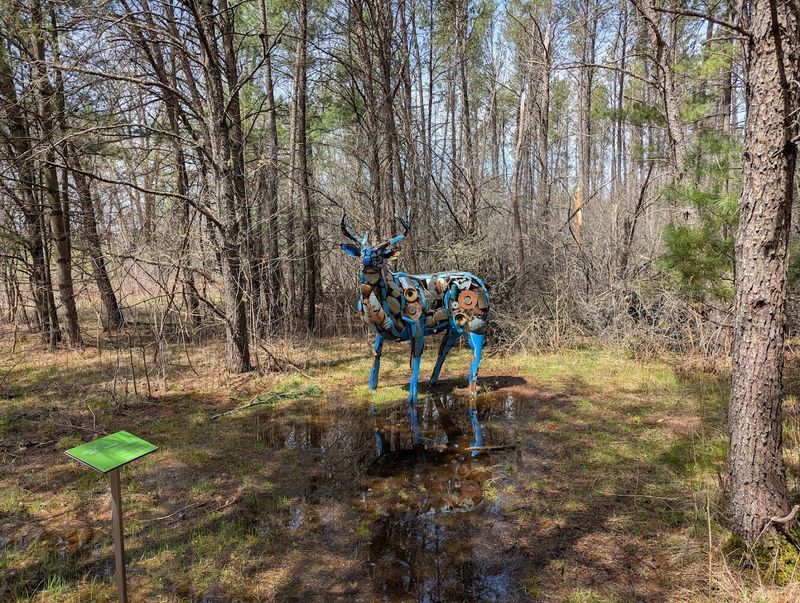
Over thirty sculptures populate the trails at any given time. Some stand prominently at trail intersections, impossible to miss.
Others hide in clearings off the main path, rewarding visitors who take time to explore. The collection includes abstract forms, representational figures, and installations that defy easy categorization.
Materials range from weathered steel to polished stone, from reclaimed wood to industrial components repurposed into art. Each piece ages differently in the outdoor environment.
Metal develops patina, wood takes on the color of the forest floor, and some works evolve in ways their creators likely anticipated.
Plaques accompany most sculptures, offering artist statements and context. Some explanations feel straightforward, while others lean toward the conceptual.
Visitors form their own interpretations regardless, and the art holds up to scrutiny from multiple angles. The quantity ensures that even brief visits yield several memorable encounters.
A Trail That Turns Into An Open-Air Gallery
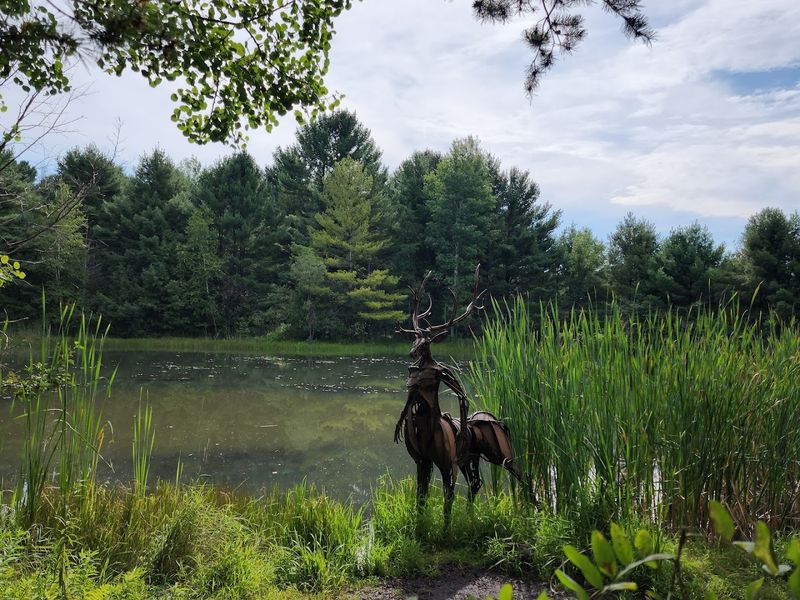
The main trail forms a loop that takes most visitors between forty-five minutes and an hour to complete. Crushed granite provides firm footing even after rain, and the path stays relatively level throughout.
Side trails branch off occasionally, leading to additional sculptures or viewpoints overlooking ponds and wetlands.
Signage appears at regular intervals, directing visitors toward specific installations or back to the main loop. The layout prevents confusion while still allowing for spontaneous detours.
Cyclists use the trail as well, since it connects to the broader Green Circle system, though foot traffic dominates within the sculpture park itself.
The gallery aspect emerges gradually. Early sections of the trail feel like standard woodland walking, then sculptures begin appearing with increasing frequency.
By the midpoint, art surrounds visitors on all sides, turning the forest into an immersive exhibition space. The transition happens naturally, without announcement or fanfare.
Giant Metal Creatures And Surreal Art Installations
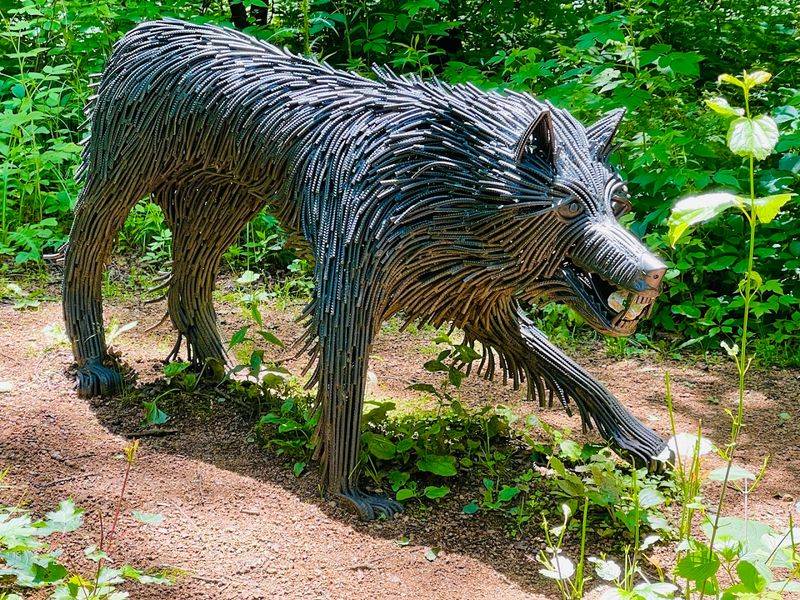
Scale varies dramatically throughout the park. Some sculptures rise fifteen feet or higher, dominating their surroundings and visible from multiple points along the trail.
These larger works often incorporate industrial materials, their bulk and texture contrasting sharply with the organic forms of the forest. Rust patterns and welded seams add character that photographs capture well.
Surreal elements appear in unexpected places. A figure might emerge from a tree trunk, or geometric shapes might float at eye level, suspended by nearly invisible supports.
These installations play with perception, making visitors pause and reconsider what they noticed at first glance.
The combination of natural and manufactured materials creates tension that some find appealing and others find jarring. Metal creatures seem to inhabit the woods alongside actual wildlife, and abstract forms assert themselves against the chaos of undergrowth and fallen leaves.
The effect varies by season and time of day.
A Community Project Built By Local Artists
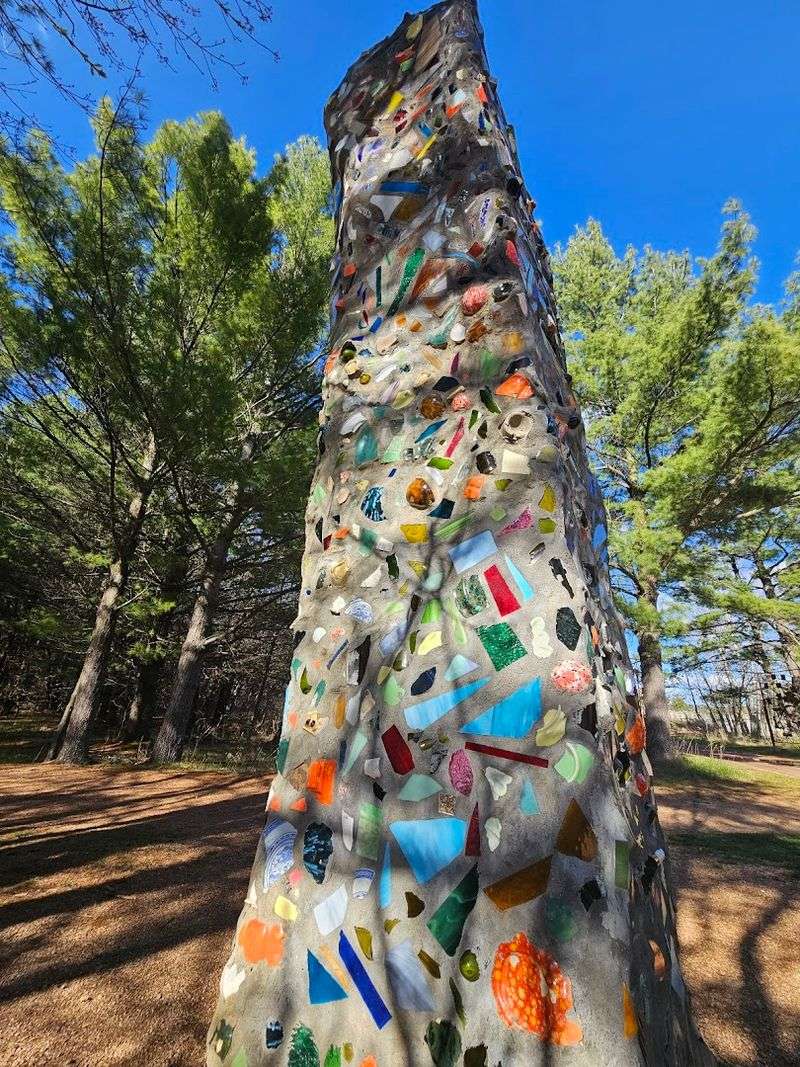
Stevens Point Sculpture Park exists because local artists and community members advocated for public art space. The project began years ago with modest goals and expanded as interest grew.
Artists from the region submit proposals, and a selection committee chooses works that fit the park’s mission and environment.
This local focus gives the collection coherence despite stylistic variety. Artists understand Wisconsin seasons, the behavior of materials in cold climates, and the character of the landscape.
Their work reflects regional sensibilities without becoming provincial or overly safe in concept.
Elementary school contributions add another layer to the experience. Hand-drawn banners created by local students hang along certain sections of trail, their bright colors and earnest designs contrasting with the more sophisticated adult works.
These additions remind visitors that the park serves educational purposes alongside aesthetic ones, introducing young people to art outside classroom walls.
Why Every Visit Feels Completely Different
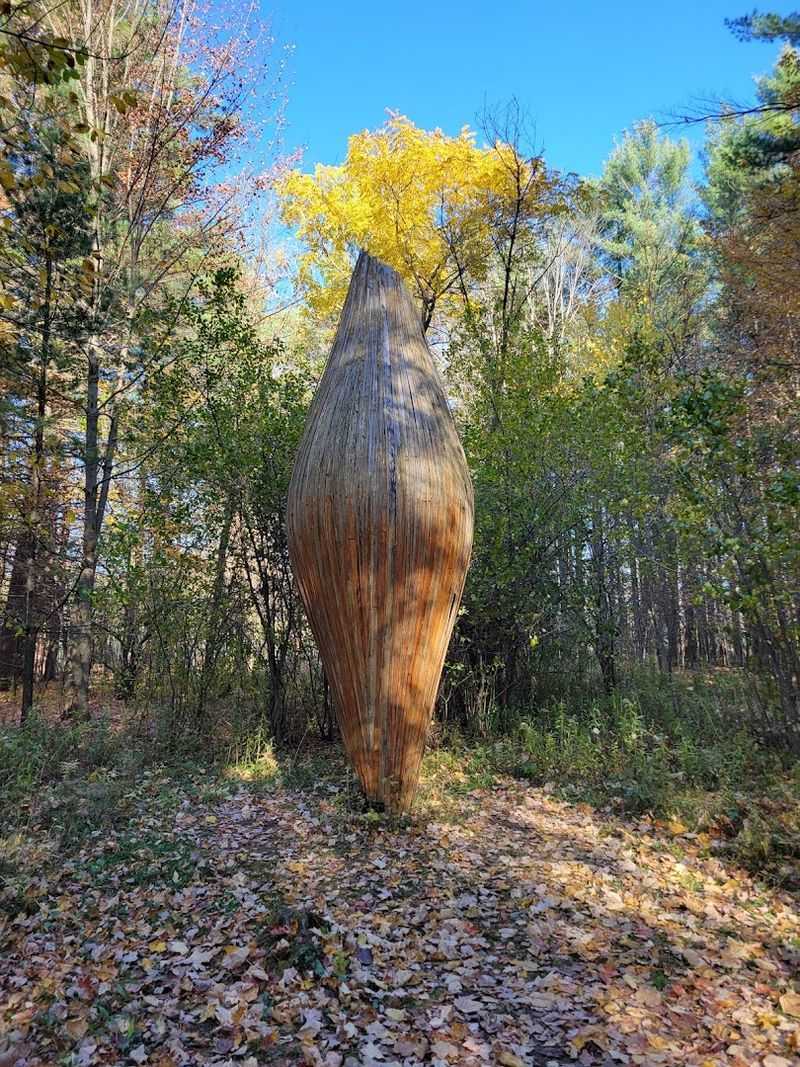
Seasonal changes transform the park completely. Spring brings wildflowers that soften the base of sculptures, while summer growth can partially obscure smaller works.
Fall colors provide dramatic backdrops, and winter snow settles on horizontal surfaces, altering proportions and adding white highlights to dark materials. Ice forms on metal, creating temporary embellishments the artists never planned.
The rotating exhibition model means sculptures come and go. Works installed for a year or two eventually give way to new pieces, keeping the collection fresh for repeat visitors.
Some installations age gracefully, while others show wear that becomes part of their story. The park accepts this evolution rather than fighting it.
Time of day matters as well. Morning light slants through trees from the east, creating long shadows and highlighting textures.
Afternoon sun warms metal surfaces, and evening brings cooler tones that change how colors appear. Overcast days flatten contrast, while bright sun creates harsh divisions between light and shadow.
A Quiet Nature Walk With Unexpected Art Around Every Corner
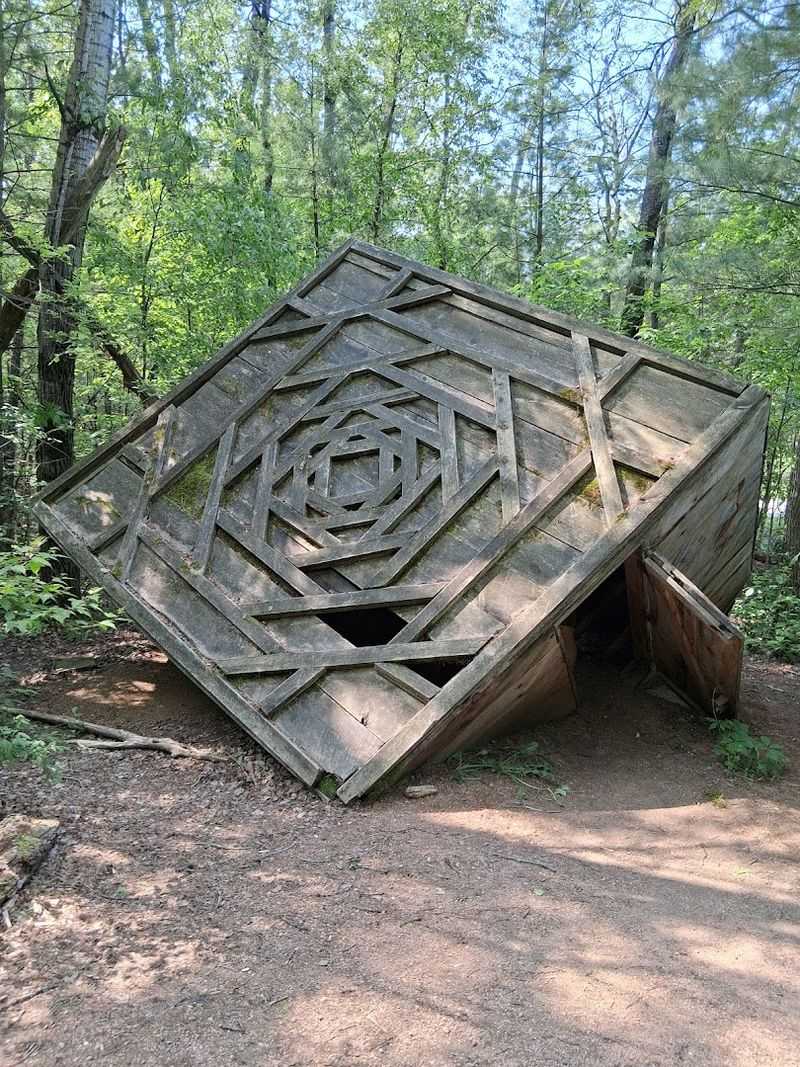
Silence dominates much of the park. Traffic noise fades quickly once visitors move into the woods, replaced by bird calls and wind moving through pine branches.
The trail surface muffles footsteps, and most people walk quietly, absorbed in looking. Conversations happen in lowered voices, as though the setting demands a certain reverence.
Art appears when least expected. A turn in the path might reveal nothing, or it might present a sculpture that stops visitors mid-step.
This unpredictability keeps attention engaged throughout the walk. Even people who claim no interest in art find themselves pausing to examine pieces more closely.
The park functions equally well as nature walk or art tour. Some visitors focus primarily on the forest itself, treating sculptures as pleasant bonuses.
Others come specifically for the art and appreciate the natural setting as context. Both approaches work, and the park accommodates varying levels of engagement with either element.
Why Photographers Love This Park
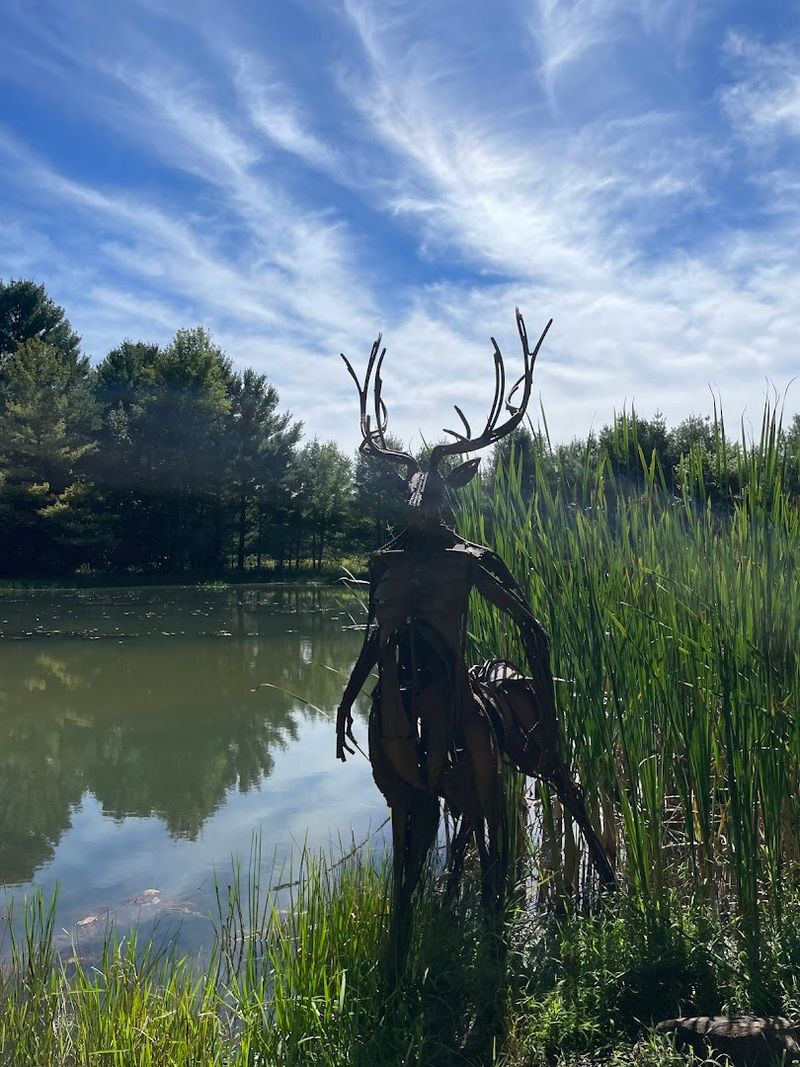
Light and composition opportunities abound throughout Stevens Point Sculpture Park. Sculptures provide ready-made subjects, while the forest offers natural framing and texture.
Photographers arrive at different times of day chasing specific lighting conditions, and the changing seasons provide endless variation in color palette and atmosphere.
The three-dimensional nature of sculpture rewards photographers who circle their subjects. A piece that looks unremarkable from one angle might reveal fascinating details from another.
The forest setting adds layers of depth, allowing for shots that incorporate foreground, subject, and background in ways that create visual interest.
Weather adds drama. Fog softens edges and creates mystery.
Rain intensifies colors and adds reflective surfaces. Snow simplifies compositions by covering distracting elements.
Even harsh midday sun, typically challenging for outdoor photography, can work here by creating strong shadows that emphasize sculptural form. The park essentially functions as a constantly changing outdoor studio.
A Place Where Art And Nature Collide
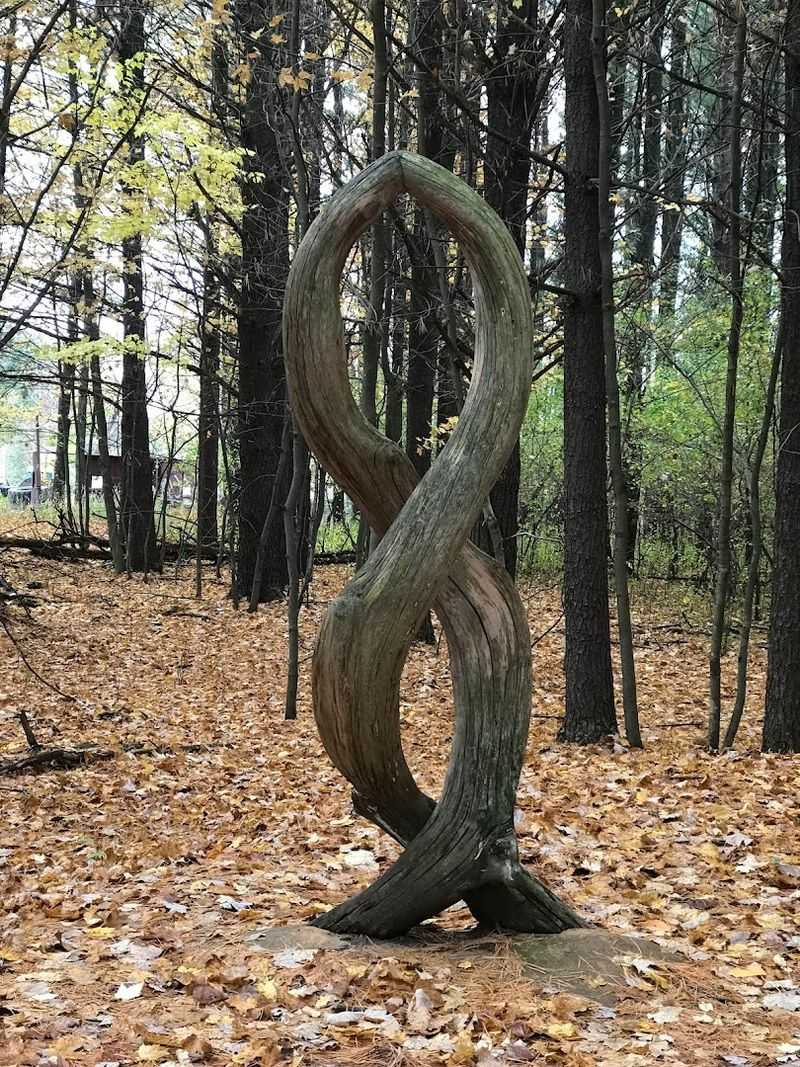
The relationship between art and environment defines Stevens Point Sculpture Park. Neither element dominates completely, and the tension between manufactured and natural creates the park’s distinctive character.
Some sculptures assert themselves boldly against the forest, while others attempt integration, using materials and forms that echo organic shapes.
This collision produces moments of genuine surprise. A rusted metal form might mirror the texture of tree bark nearby, or a polished surface might reflect surrounding foliage in ways that blur boundaries.
The forest reclaims space constantly, with moss growing on bases and vines beginning to climb certain pieces. Artists who created works years ago might barely recognize them now.
The park acknowledges that both art and nature will continue changing. Sculptures weather and evolve, trees grow and occasionally fall, and the landscape shifts with each season.
This acceptance of impermanence gives the place an unusual quality among public art spaces, which typically prioritize preservation and stasis.