
The Breathtaking Cave Trail In Wisconsin That Hikers Cannot Stop Talking About
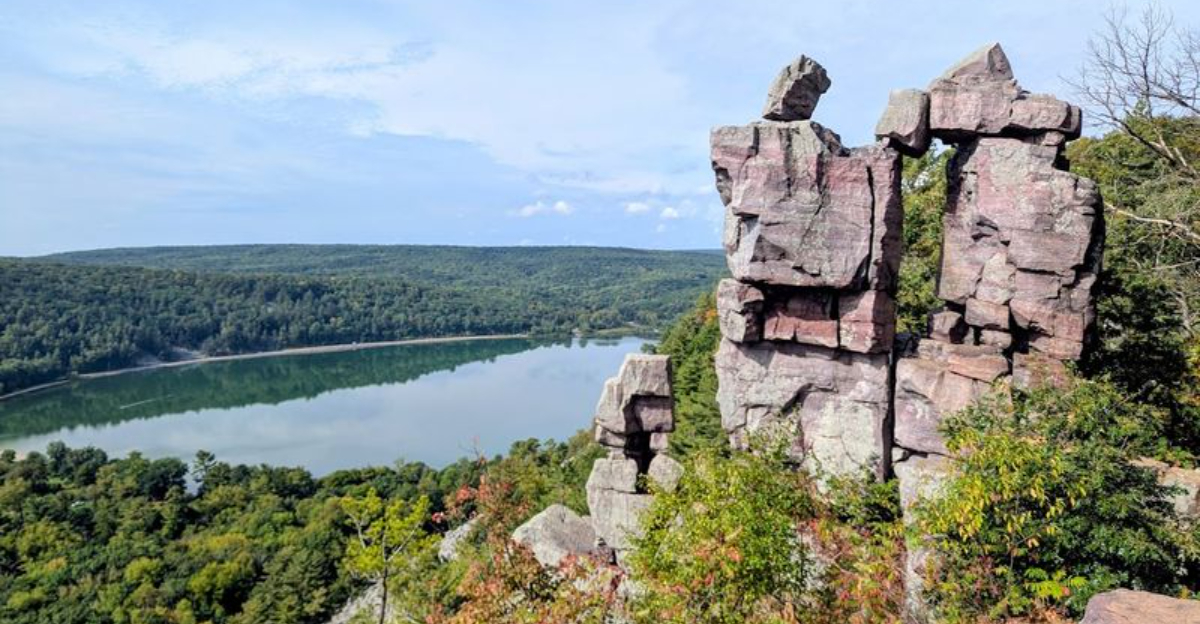
Most hikes give you a nice view at the end. This one gives you something to talk about the entire way up. In Wisconsin, one standout trail has earned a reputation for its steep terrain, striking rock formations, and cave-like passages.
It also leads to the kind of overlooks that make hikers stop and take it all in. It is not simply a scenic walk. It feels more active, more rugged, and a lot more memorable than the average weekend trail.
Every section gives you another reason to keep going. The climb keeps you engaged, the narrow spaces between rock formations add excitement, and the payoff higher up makes the effort worth it. That balance of challenge and scenery is exactly why people keep coming back.
If you are after a hike that feels exciting before you even reach the best view, this is one trail that deserves a closer look.
Why This Cave-Filled Hike Stands Out
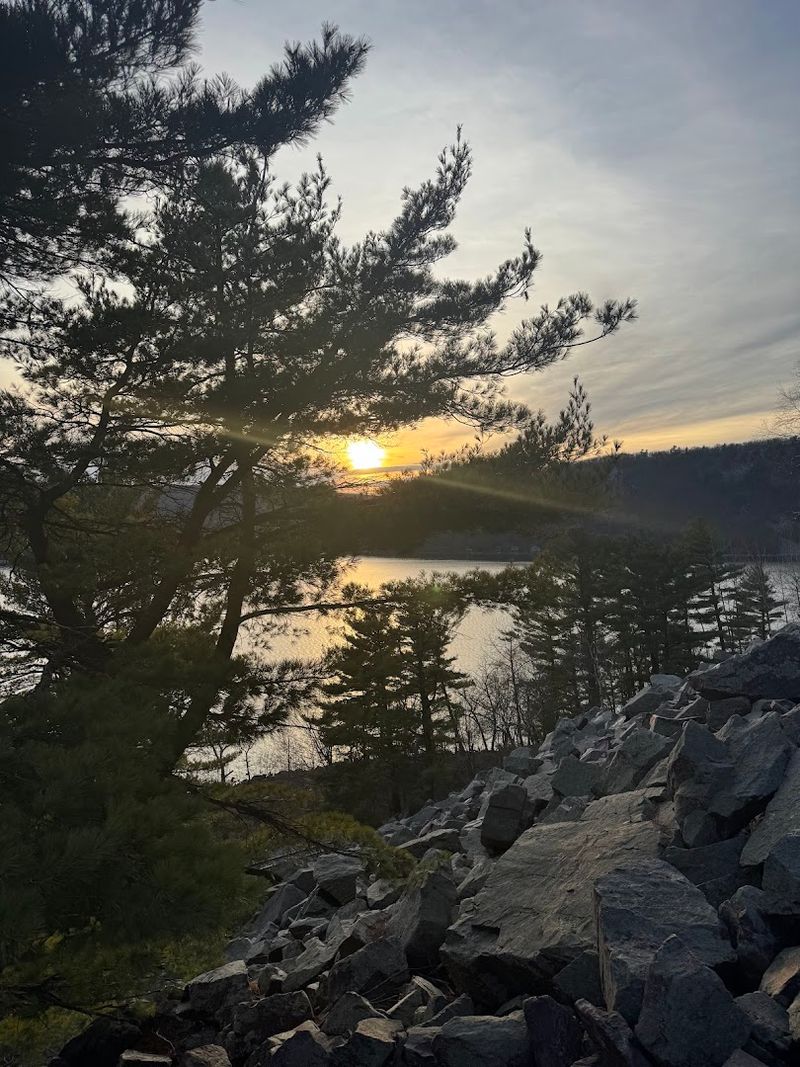
Not every trail earns a reputation by word of mouth alone, but the Cave Trail at Devil’s Lake State Park has done exactly that. Hikers talk about it because it genuinely delivers something different from your average forest walk.
The trail passes through an area of the park known for its dramatic quartzite bluffs and boulder fields that have been sitting in place for over a billion years.
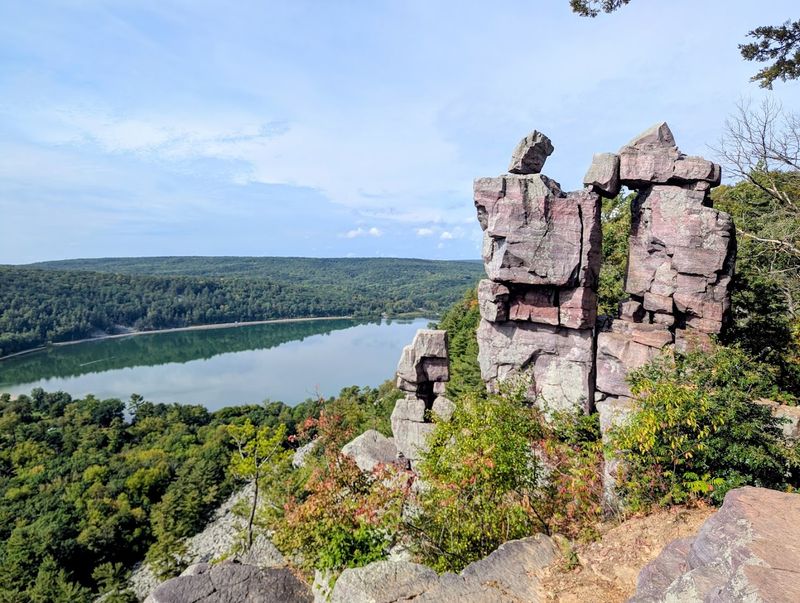
What sets this trail apart is the combination of geological features you encounter along the way. You will pass rock overhangs, crevices, and cave-like formations created by massive quartzite boulders that shifted over thousands of years.
These are not man-made structures or guided cave tours. They are raw, natural formations that feel ancient and powerful up close.
The Grottos Trail, which is part of the broader cave trail experience on the east bluff side of the park, takes you directly through some of these boulder piles. You can squeeze between rocks, peer into dark crevices, and feel the cool air that seeps out from the gaps.
It is the kind of trail that makes you slow down and actually look at what is around you. The park is located at S5975 Park Rd, Baraboo, WI 53913, and the trail system is well-marked and accessible from multiple entry points.
The Geology Behind The Rock Formations You Will See
The rocks at Devil’s Lake are not just scenic backdrops. They tell a story that goes back roughly 1.6 billion years, making them some of the oldest exposed rock formations in North America.
The quartzite bluffs on both sides of the lake were once part of an ancient mountain range. Over time, erosion wore the rest away and left these hard, weather-resistant ridges standing tall.
Quartzite is extremely hard rock, which is why it has survived so long while the softer rock around it wore down. Over time, freeze-thaw cycles cracked and split the bluffs, sending boulders tumbling down the slopes.
Those fallen boulders piled up in ways that created natural shelters, tunnels, and cave-like gaps that you can explore along the trail today.
You will notice that some of the rocks have a pinkish or reddish hue. That coloring comes from iron minerals embedded in the quartzite.
The layering and folding in the rock faces show the effects of immense pressure deep underground long before humans walked the earth.
Understanding what you are looking at adds a whole new layer of appreciation to the hike. These formations are not random.
They are the result of billions of years of natural force, and you get to walk right through the middle of them.
How To Tackle This Cave Trail The Smart Way
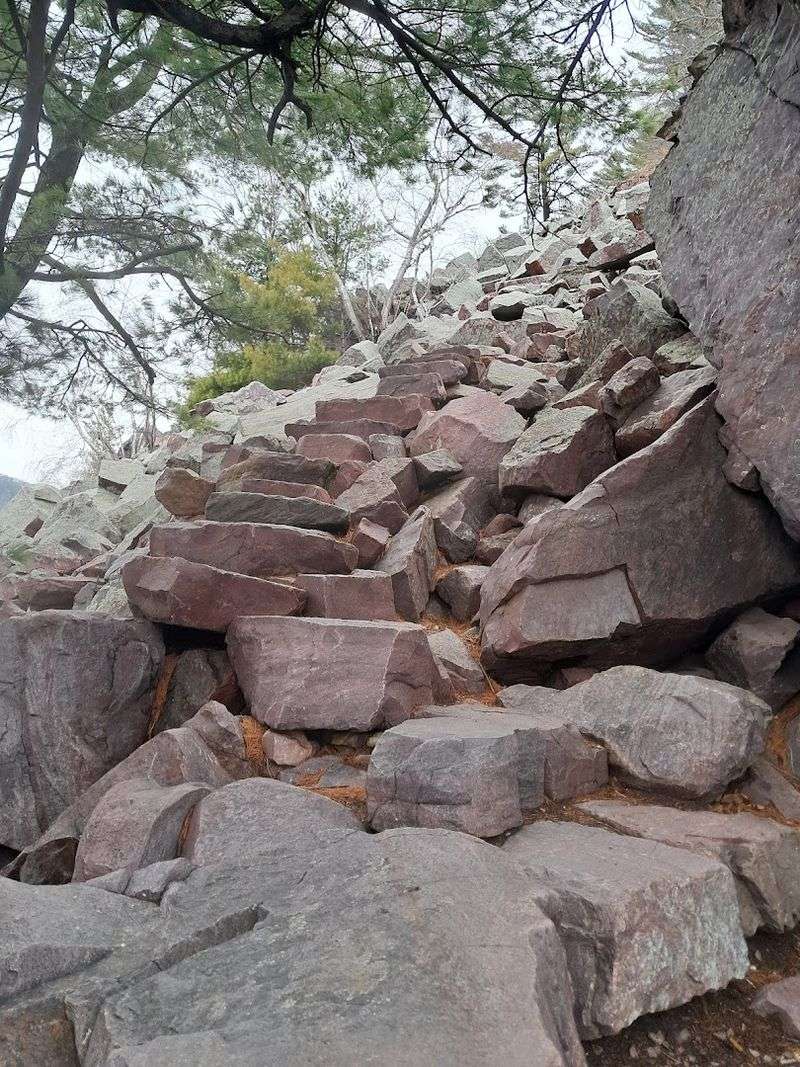
The Grottos Trail runs along the east bluff side of the park and is the section most hikers refer to when they talk about the cave trail experience. It is rated as a moderate to difficult trail, and that rating is honest.
The terrain involves uneven rock surfaces, steep sections, and areas where you need to use your hands to steady yourself as you move through boulder gaps.
Starting from the east bluff trailhead gives you a solid approach to the grottos area. Many hikers recommend going counterclockwise around the trail loop, which means you tackle the steeper sections while your legs are still fresh.
The Potholes Trail connects to this area and adds more geological interest, with circular rock depressions formed by ancient glacial activity.
Wear proper hiking shoes with good grip. Flat-soled sneakers are not a good idea here, especially on dry quartzite, which can be surprisingly slippery.
Bring more water than you think you need, because the rocky terrain slows your pace and the sun reflects off the light-colored rock.
Starting early in the morning helps you avoid the biggest crowds. On weekends, getting there before 9 a.m. gives you a more peaceful experience and more room to move through the boulder formations at your own pace.
Why Hikers Keep Pushing For The Overlooks
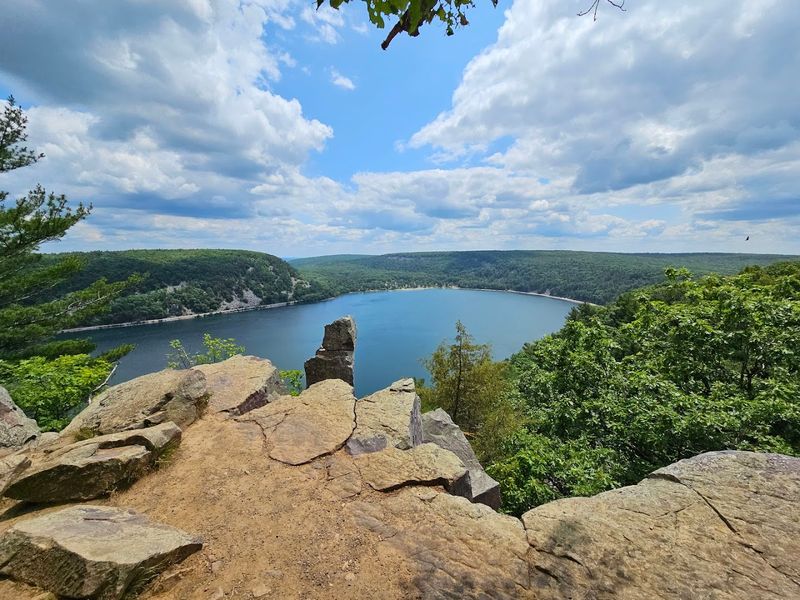
Once you climb past the boulder fields and reach the upper east bluff, the view opens up in a way that surprises many first-time visitors. Devil’s Lake sits 360 acres below you, its water catching the light in shades of blue and green depending on the time of day and season.
The west bluff ridge lines up across the water, and the dense forest canopy stretches in every direction.
Fall is widely considered the best time to take in this view. In October, the surrounding hillsides turn orange, red, and yellow, creating a striking contrast with the dark quartzite rock and the lake below.
Summer offers a different kind of beauty, with lush green canopy and the activity of swimmers and kayakers visible on the water far below.
The east bluff overlooks are accessible at several points along the trail, so you do not have to wait until the very end to get a good look. There are natural rock platforms along the way where you can stop, catch your breath, and take in the landscape.
These natural rest spots are part of what makes the trail feel rewarding rather than exhausting. The climb earns you the view, and the view absolutely delivers on that promise every single time you reach it.
What The Balanced Rock Trail Adds To The Experience
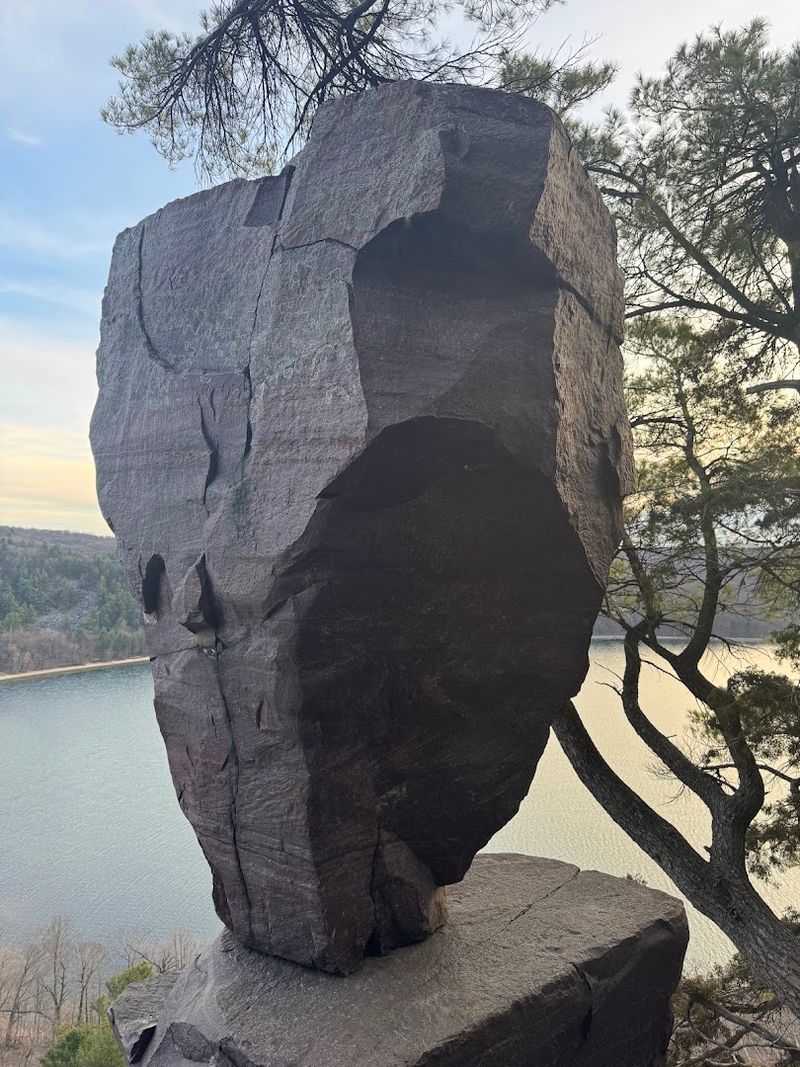
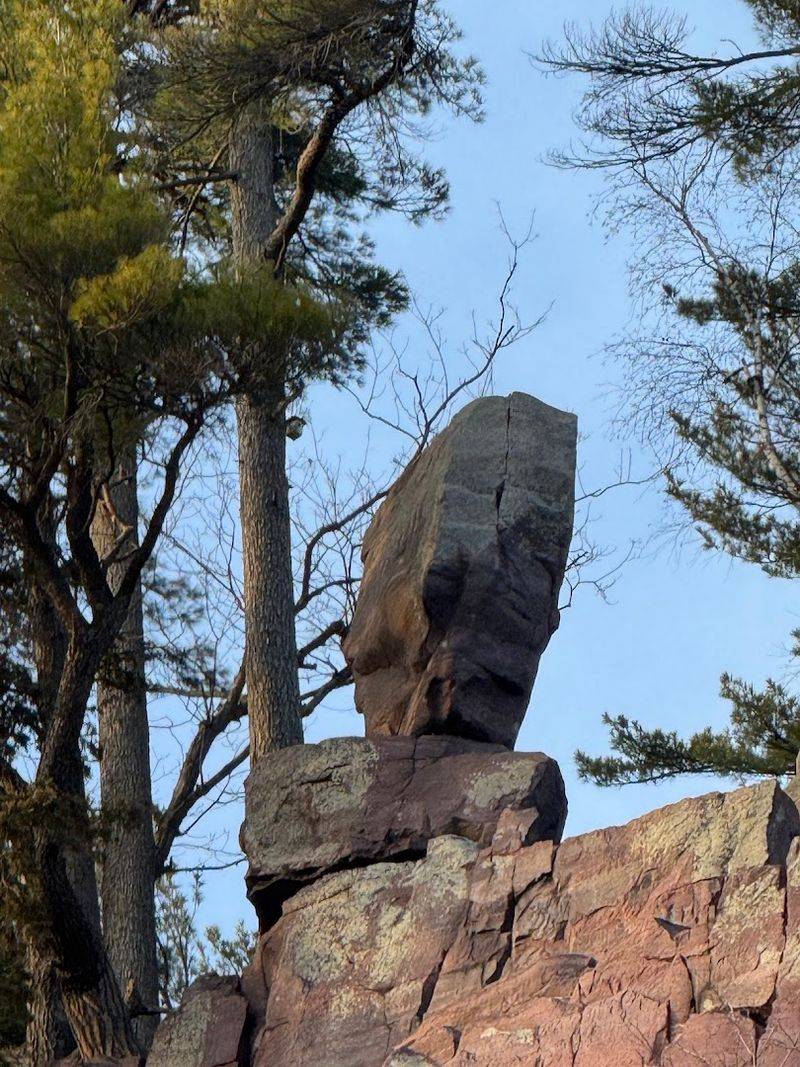
Just off the main cave trail loop, the Balanced Rock Trail offers one of the most photographed features in the entire park. Balanced Rock is a large quartzite boulder perched on a narrow base, seeming to defy gravity.
It has been sitting that way for thousands of years, shaped by erosion and glacial forces that carved away the softer material beneath it.
The trail to Balanced Rock from the south shore is short but steep. You gain significant elevation quickly, and the rocky path demands attention.
Once you arrive, the rock itself is impressive up close, but the real reward is the view back down toward the lake from that vantage point.
You get a clear sightline across the water to the north shore, and the scale of the park becomes much more apparent from up there.
This trail connects well with the broader cave trail system, and many hikers combine it with the Grottos Trail for a fuller east bluff experience.
Doing both in one outing is very doable for moderately fit hikers, though you should allow three to four hours to cover both sections without rushing.
The Balanced Rock Trail is also a good option if you want a shorter but still challenging route that gives you a taste of what makes Devil’s Lake so memorable.
Timing Your Visit For The Best Trail Conditions
Timing matters more at Devil’s Lake than at most parks. The trail system draws massive crowds on summer weekends, and the parking situation can become stressful by mid-morning.
Arriving before 9 a.m. on a summer weekend gives you a better shot at parking and getting on the trail before the crowds build.
Weekday visits are a completely different experience. Trails are quieter, parking is easy, and you can move through the boulder sections and grottos without a line of other hikers behind you.
If your schedule allows for a Tuesday or Wednesday visit, you will likely have stretches of the trail nearly to yourself, which changes the whole feeling of the hike.
Spring and fall offer the most comfortable hiking temperatures, generally in the 50s and 60s Fahrenheit. Fall color peaks in mid to late October and draws its own crowds, but the scenery makes it worth the extra company.
Winter visits are possible for experienced hikers, but the quartzite becomes extremely slippery when wet or icy, and the trail difficulty increases substantially. The park recommends checking trail conditions before you go, regardless of the season.
You can visit the official website to get current information.
Natural Details That Make This Hike Even Better
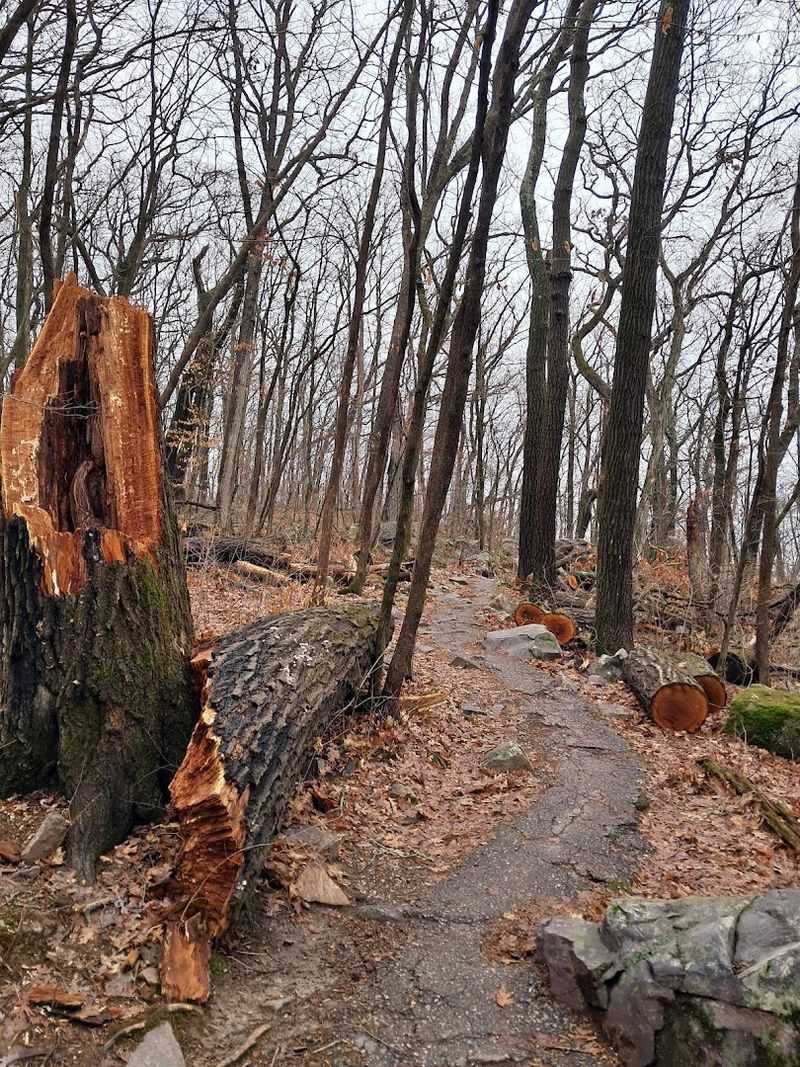
The cave trail and grottos area are not just about rock. The forest around and between the boulder fields is rich with native plant life.
The park’s wildlife adds another layer to the hike that is easy to miss when your attention is on the terrain.
White-tailed deer are common throughout the park, especially in the early morning and evening hours near the forest edges.
Wild turkeys move through the wooded areas regularly, and red-tailed hawks are often spotted riding thermals above the bluffs. In spring, the forest floor along the lower trail sections blooms with trillium, wild ginger, and other native woodland flowers.
The shaded, cool microclimate created by the boulder piles in the grottos area supports mosses and ferns that thrive in low-light, moisture-rich conditions.
Pay attention to the lichen growing on the quartzite surfaces. Some lichen colonies grow very slowly, so a small patch of color on a rock face may represent decades or even centuries of growth.
The park asks visitors to stay on marked trails, which protects both the plant life and the rock surfaces from damage. Wisconsin takes conservation seriously here, and that care shows in how healthy and intact the trail environment feels.
Everything Else The Park Offers Beyond The Cave Trail
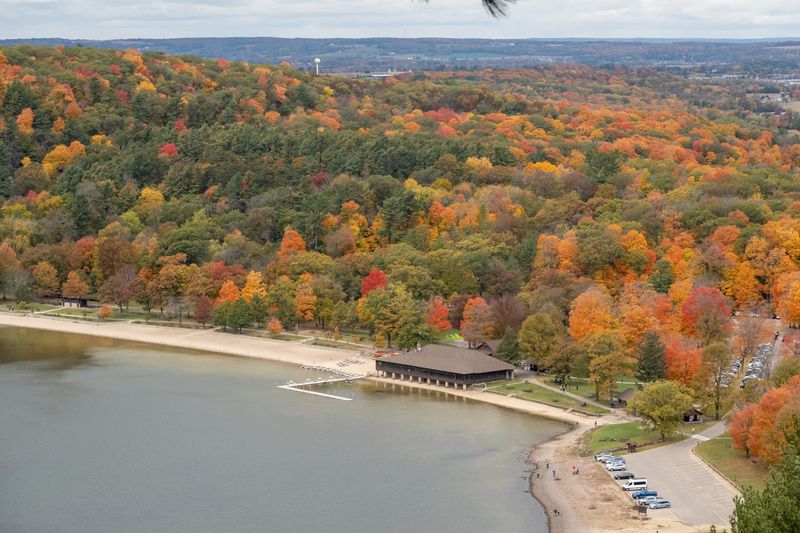
The cave trail and grottos experience is the highlight for many visitors, but Devil’s Lake State Park offers a full day of activity well beyond the boulder fields. The 360-acre lake at the center of the park is open for swimming, kayaking, and paddleboarding.
Two sandy beaches on the north and south shores give families and casual visitors a comfortable place to relax after a morning on the trails.
The park has a concession area near the south beach that offers food and basic supplies, which is useful if you forgot to pack lunch. Rental equipment for water activities is also available during the summer season.
Camping is a popular option at Devil’s Lake, with both wooded and open sites available throughout the park.
The campground fills up quickly on summer weekends, so reserving your spot well in advance is strongly recommended.
The Ice Age Trail also passes through the park, linking it to a larger hiking network that traces the edge of the last glacial advance across Wisconsin. For hikers who want more mileage, that connection opens up significant additional terrain.
A few hours here can feel rewarding, and a full weekend gives you even more variety, beauty, and an outdoor experience that sticks with you. It earns its reputation every single time.
Grab your water bottle and a little determination, because this park is ready to make your weekend look a lot better.