
Riverboating from Cambodia to Vietnam: on to Ho Chi Minh City
By Eileen Oginz
We were on the back of motorbikes desperately hanging on as the drivers weaved through Ho Chi Minh City Vietnam traffic, dodging taxis, buses, cars, and hundreds of other motorbikes down tiny alleys, across big bridges and main thoroughfares.
I was alternately terrified and excited seeing the neon lights of the city as we flew by. It was a Saturday night, and it seems much of the city was out and about enjoying a beer or street food.
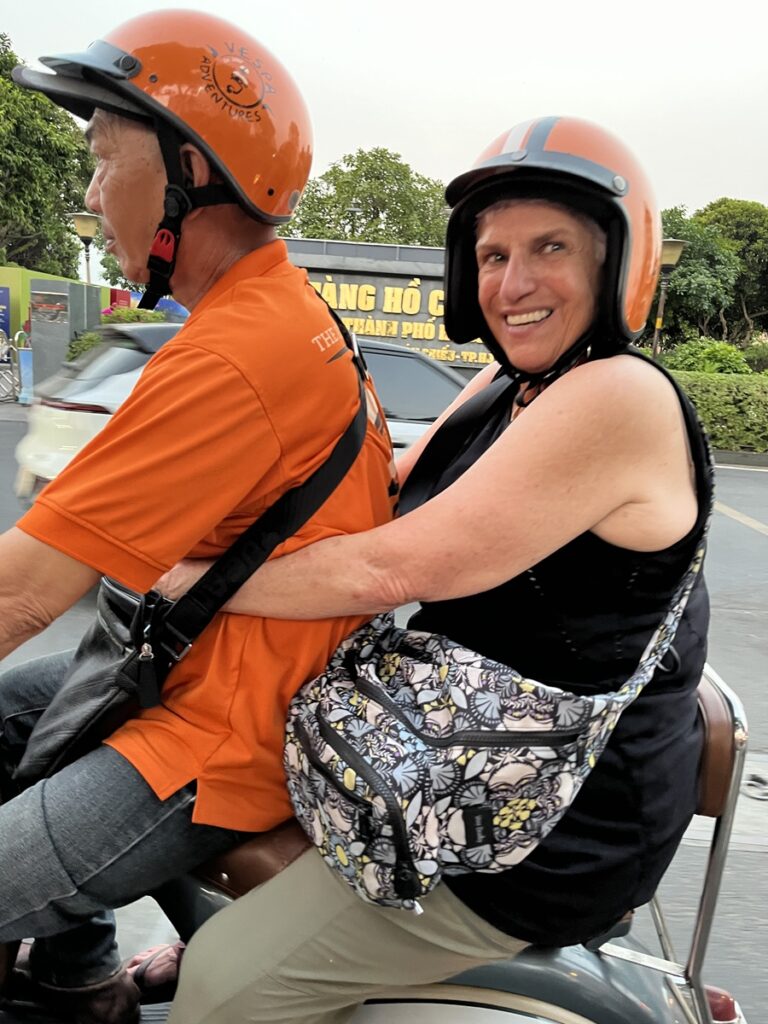
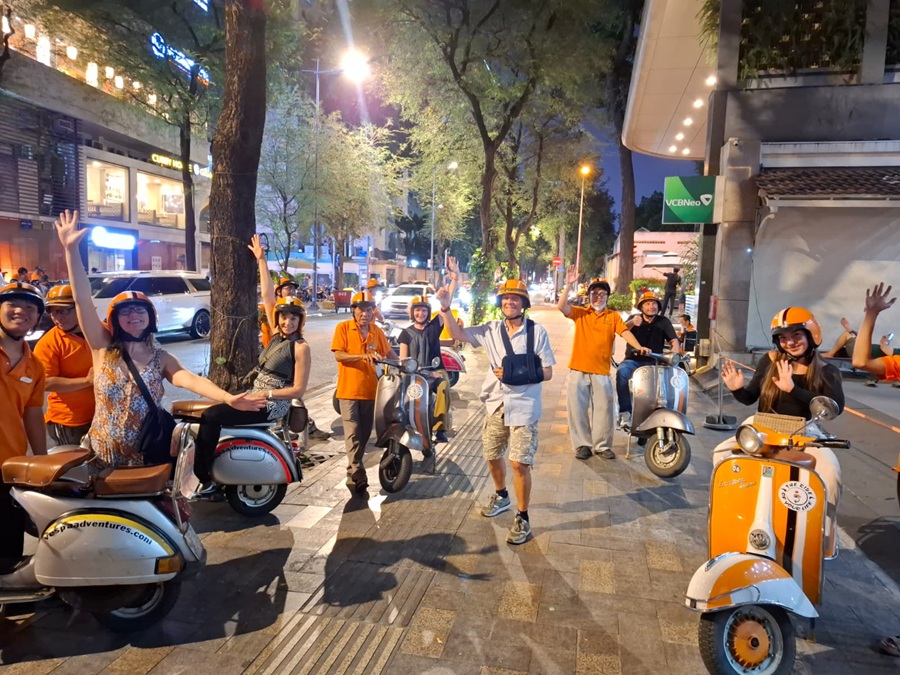
The 12 passengers on our CroisiEurope Toum Tiou II adventure cruise were being treated to a Vespa Adventures nighttime ride and food tour through the city that was hopping with weekend revelers. First we stopped at the Hanting Hotel for a spectacular SKYBAR view and drinks. Then it was on to Hun Hanh Phue Vu Qui Khak for seafood and “jumping chicken” – grilled frog. There were stir-fried noodles with tofu, clams poached in a seasoned broth, tiny crab legs — more food than we could eat. Then it was back on our motor bikes. (My driver Mr. Su kept asking me if I was OK). Next we sampled spring rolls and Vietnamese fried pancakes at a restaurant called Oc Ghe that were stuffed with meat and veggies and then wrapped with greens, rolled in edible rice paper. Tasty but messy. We took a pass on a last stop at a Spanish bar and flamenco dancing.
A few days earlier, our group learned how to make those pancakes at a cooking class.
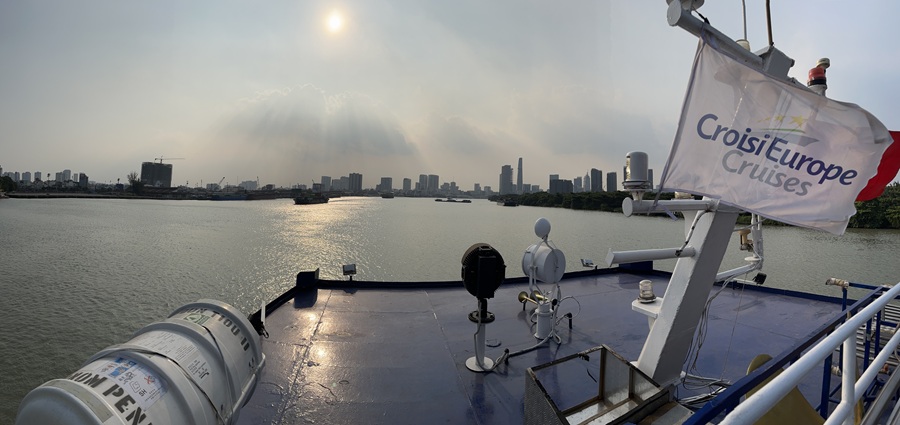
As we came to the end of our cruise that started in Cambodia and sailed to Ho Chi Minh City, I felt lucky to have had such experiences that wouldn’t be possible on a larger boat cruising the Mekong River. That included sailing through the man-made Cho Gao canal built by the French at the end of the 19th Century to connect to Saigon to the Mekong Delta. The canal made it much quicker to get into the city with crops from remote farms. Along the route we saw homes and fruit orchards, had the opportunity to meet locals, cycle or tour early morning local markets. It was fun as long as you could tolerate the heat and humidity.
Three day earlier, we crossed into South Vietnam on our CroisiEurope Mekong River cruise that started in Cambodia. Unlike the other CroisiEurope ships and those from other river cruise companies on the Mekong River, our boat, RV Toum Tiou II is tiny, just 14 small cabins. There are just 12 passengers and 15 crew.
We stopped in the city of Chau Doc for the day where we visited the famous Ba Chua Xu Temple. Many local people were making offerings — everything from fruit baskets to BBQ pork to the Lady God, praying for fertility and prosperity. We also took a cable car up to the top of Sam Mountain. That afternoon we went bird-watching.
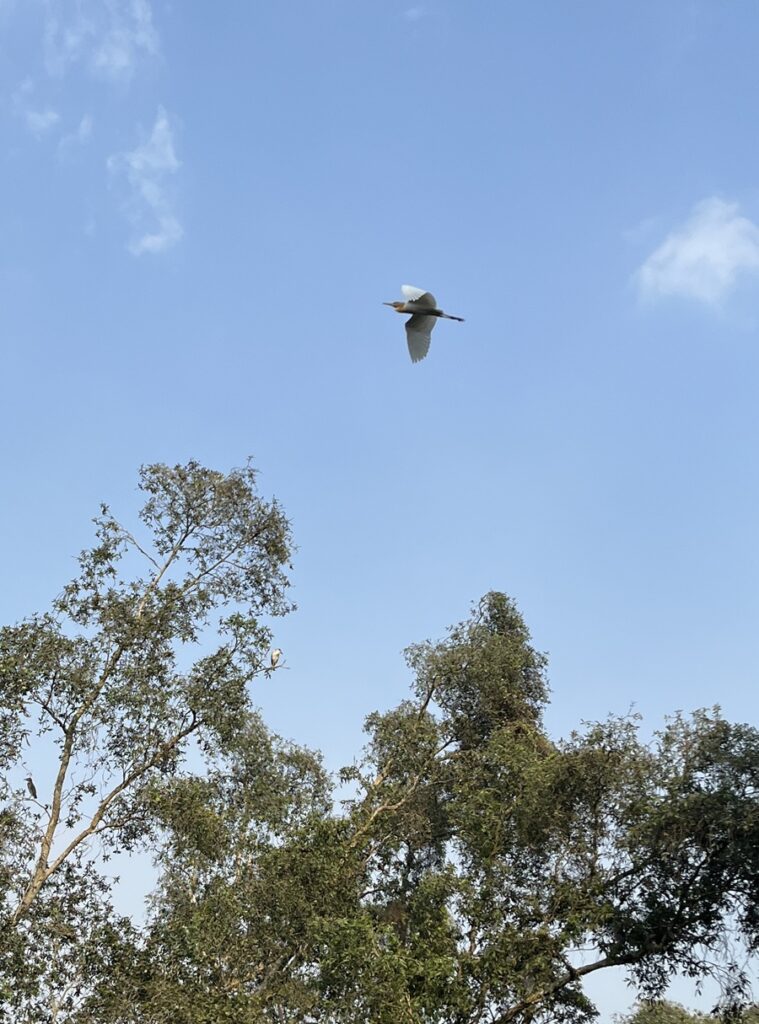
How many birds can you identify? An elderly Vietnamese man rowed us through a narrow canal, past gorgeous pink lotuses with birds nesting in trees, on the grass and flying overhead. We spotted dozens of herons, egrets, cormorants and many other species that we couldn’t readily identify.
The Mekong flows more than 3,000 miles through six countries—China, Myanmar, Laos, Thailand, Cambodia, and Vietnam. The economies of the many towns and villages on its banks depend on fish and water to irrigate their farms and rice paddies.
This is the rice bowl of Vietnam and indeed, we saw many local farmers loading their rice onto boats for processing. Southern Vietnam produces three rice harvests per year, compared to only one in the hillier terrain of northern Vietnam.
Vietnam’s section of the delta is home to some 17 million people and provides more than half of the country’s food crops. Consider that rice has been harvested here since the first century AD, with the fields providing enough rice to feed more than 300 million people.
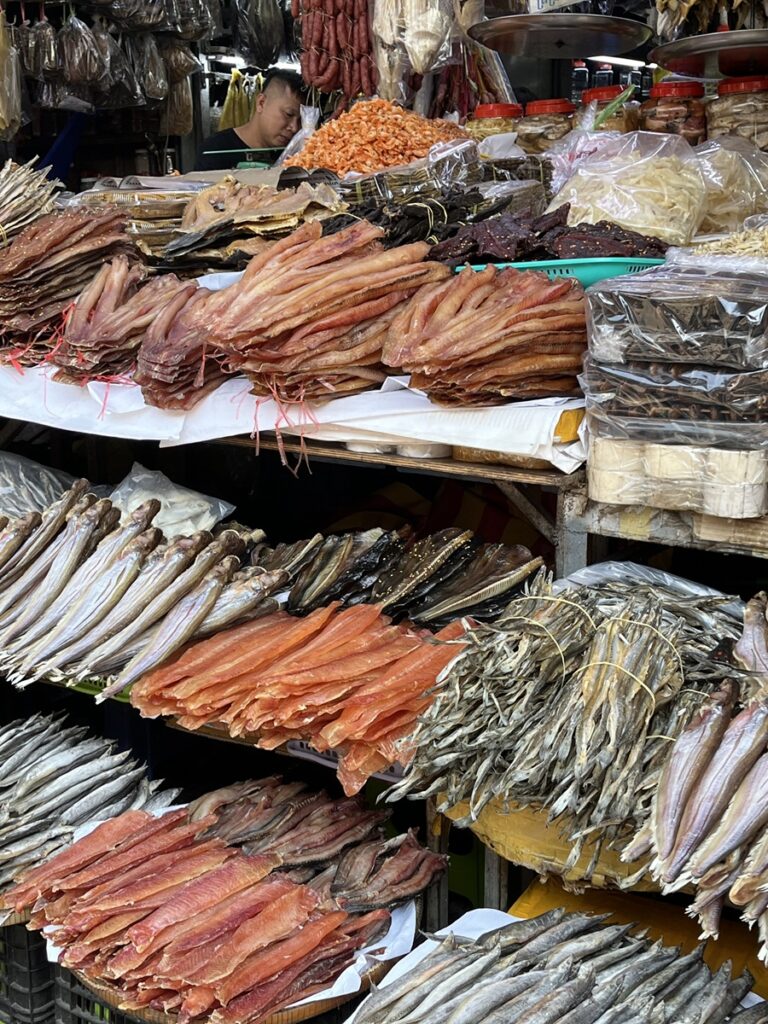
Many here are fishermen and the local population eats more than 500,000 tons of fish a year. At the local market we saw fermented fish, salted fish drying in the sun, and fresh fish. Our young Vietnamese guide “Dion” explains that locals — kids and adults — typically come home for a lunch prepared by the grandparents who would have shopped at the local market for fresh fish and other ingredients. The generations all live together.
As it is close to the Cambodian border, Chau Doc is multi-cultural with Chinese and Khmer residents. Tra Su Cajuput Forest, where we spent time bird-watching is home to many varieties of birds in the wetlands. However, we learned this is man-made to emulate the natural canals here with floating plants and soaring Cajuput trees also known as Paper Bark trees as the bark peels off easily, looking like paper. There is also an Orchid Maze, motorboat rides and walking trails through high bamboo bridges.
We didn’t count the birds but saw plenty — cormorants, herons, egrets, ducks and others we didn’t immediately recognize — some were red, blue, brown…
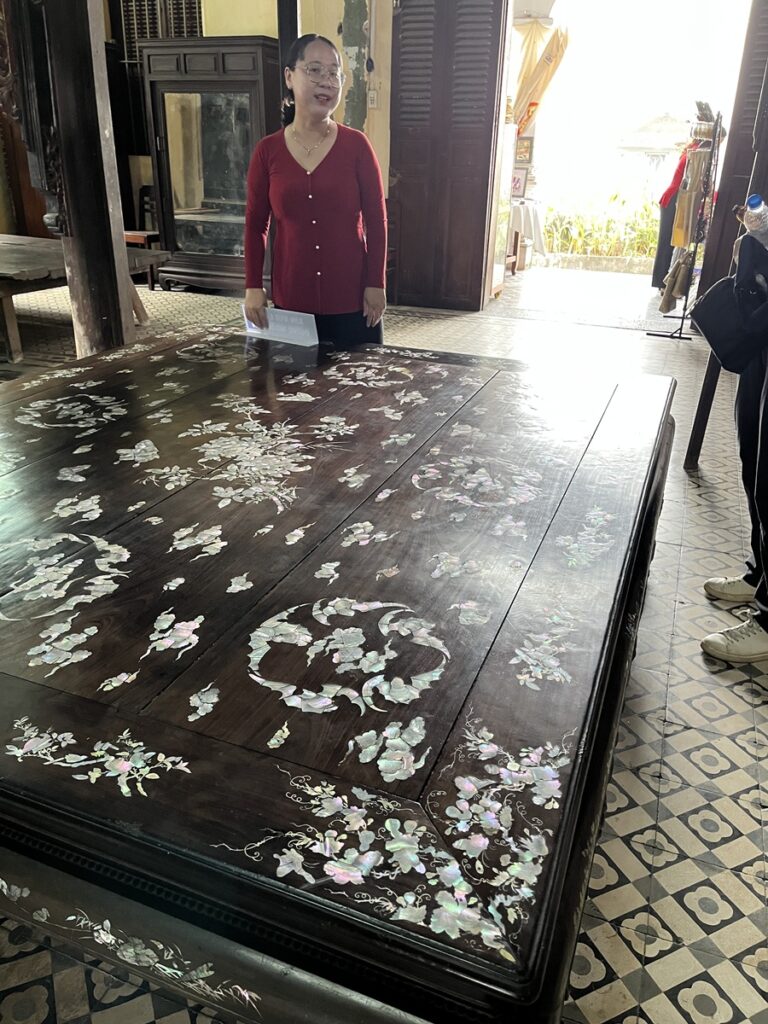
The next day we visited the sleepy town of Sa Dec, famous for its roses. Indeed, the flower market was beautiful and fragrant. The wet markets for fish fowl were fragrant in their own way too. The ancient house of Huynh Thuy Le in Sa Dec, where we had tea, is known as the “Lover’s House” in a novel by Marguerite Duras. In the afternoon, we got a lesson in local craft making, including rice cakes, rice wine, and a weird looking “wine” with a well-marinated cobra snake fermenting inside the jar. We took a pass on a tasting.
A local restaurant put on another cooking demonstration of spring rolls, our third spring roll lesson of this three-week trip and by now we were pretty accomplished. We vowed to try this at home. The excursion ended with a slow paddle in a canal through a jungle area off of the Mekong. It was hot and humid, but at least it wasn’t raining and infested with mosquitos.
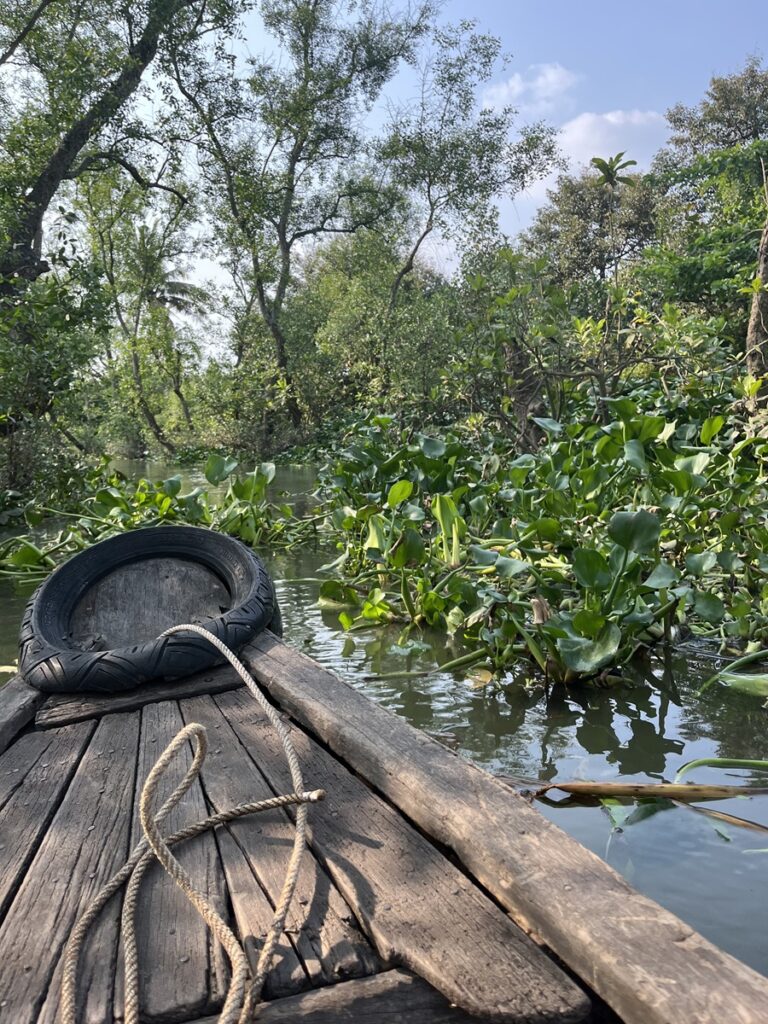
While unpleasant, we agreed that it gave us something of a feel for how miserable it must have been for soldiers on both sides of the long US military involvement in South Vietnam more than half a century ago. Not to mention the terror of not knowing what was lurking beyond the next river bend.
Our last full day in Ho Chi Minh City we visited the central city where, after the fall of Saigon in April 1975, lines of Vietnamese were waiting to board helicopters on the roof of the US Embassy. Today, a sign “landing zone” was all that was left of the landmark.
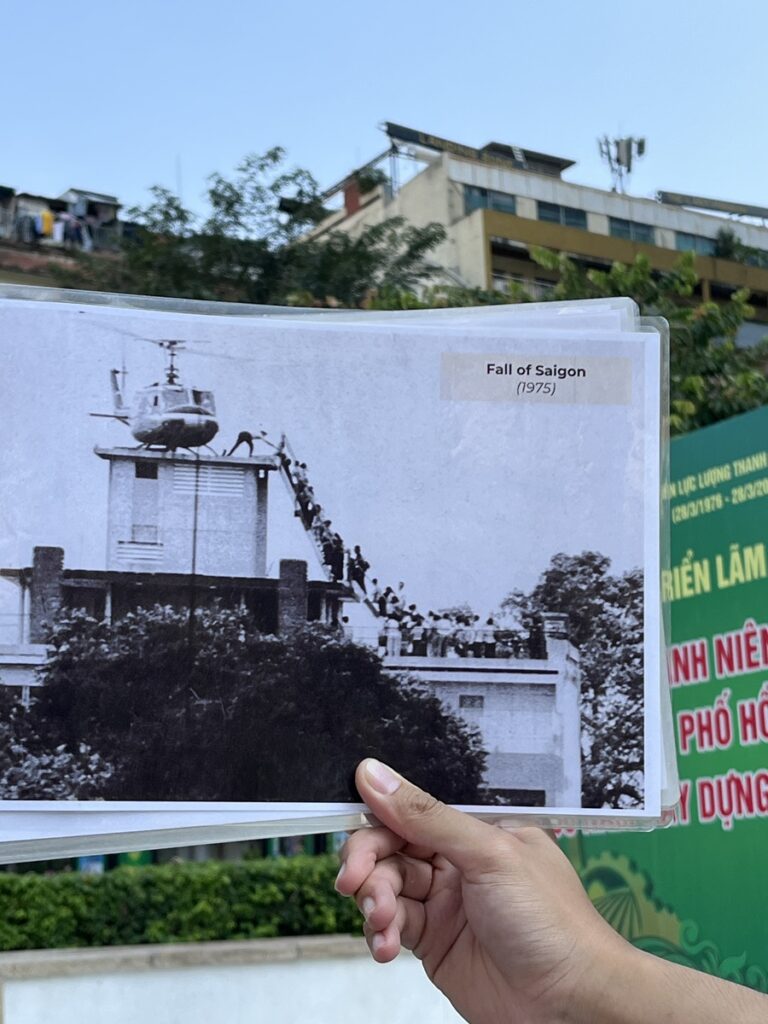
We toured the Presidential Palace where the Viet Cong famously crashed through the gate in tanks. The reunification was April 30, 1975, when the South Vietnamese government surrendered and that date is celebrated annually here with great fanfare.
Scores of tourists and Vietnamese students were at the Presidential Palace, posing for their high school graduation photos. The palace, which was extensively rebuilt following a bombing in 1962, was not as luxurious as you might expect. Underneath was a bunker in which much of the fighting by the South Vietnamese army and its allies (mainly the US) was planned and coordinated.
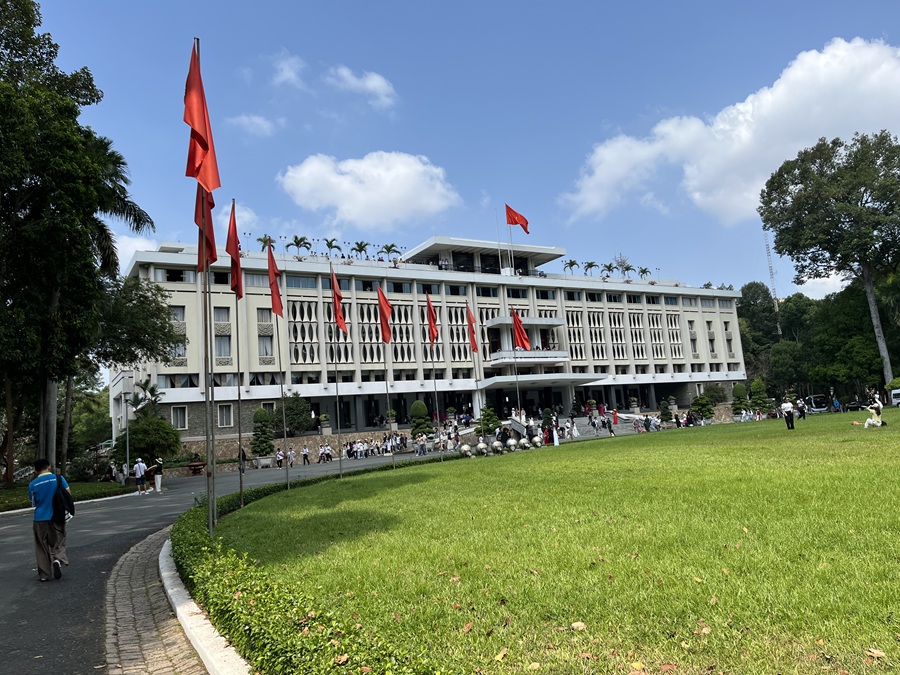
It was also where on November 2, 1963, a military coup ousted President Ngô Đình Diệm and his brother, resulting in their assassinations as they fled the palace. US President John F. Kennedy, who disliked the corrupt Diem and his policies, had asked the CIA to explore ways to remove Diem from power, was reportedly “shaken” by the killings. Kennedy reportedly questioned the USA’s continuing involvement with South Vietnam. But 20 days later, Kennedy himself was assassinated — and the rest is history.
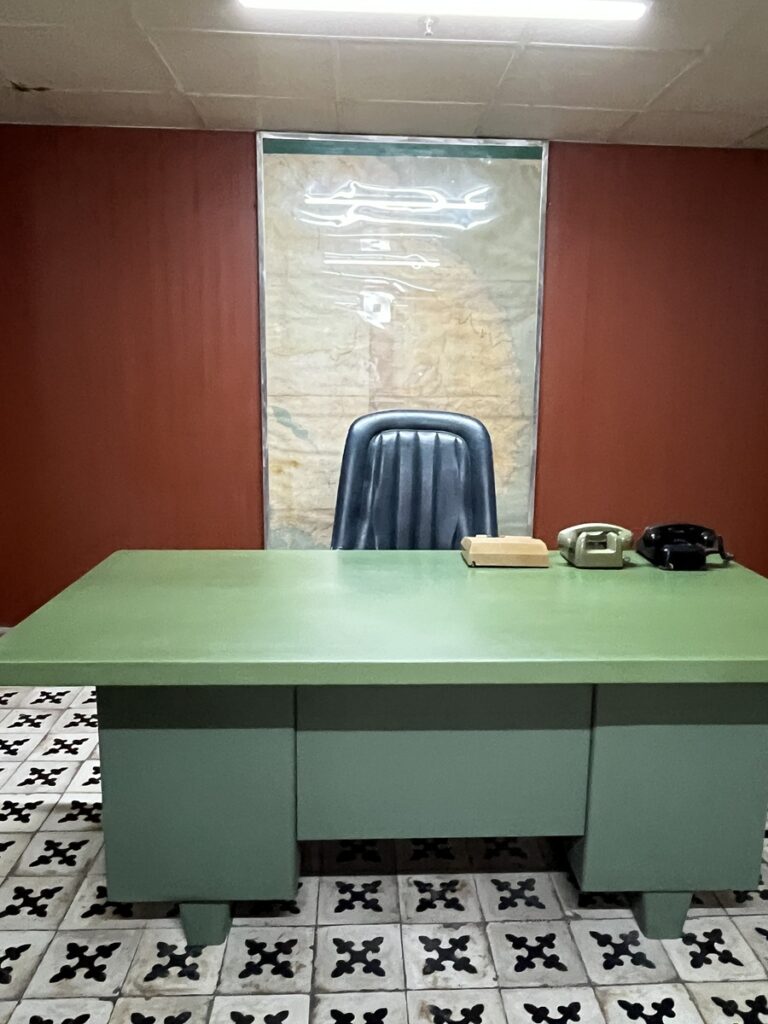
Twelve years later, after more than 58,000 American deaths,150,000 injuries, and more than 500,000 troops committed to the war at its peak, the helicopter pad on the roof of the Saigon Presidential Palace was busy as the penultimate South Vietnamese President Ngo Dinh Diem fled in the country. His vice president was left behind to surrender on April 30, 1975.
The number of dead and injured Vietnamese from that war is unknown but is estimated at nearly one million. Some are still dying of cancer caused by the American use of the defoliant Agent Orange. Yet in Vietnam today, gruesome toll of the American involvement in this country is largely unmentioned, except in museums, books, and lectures.
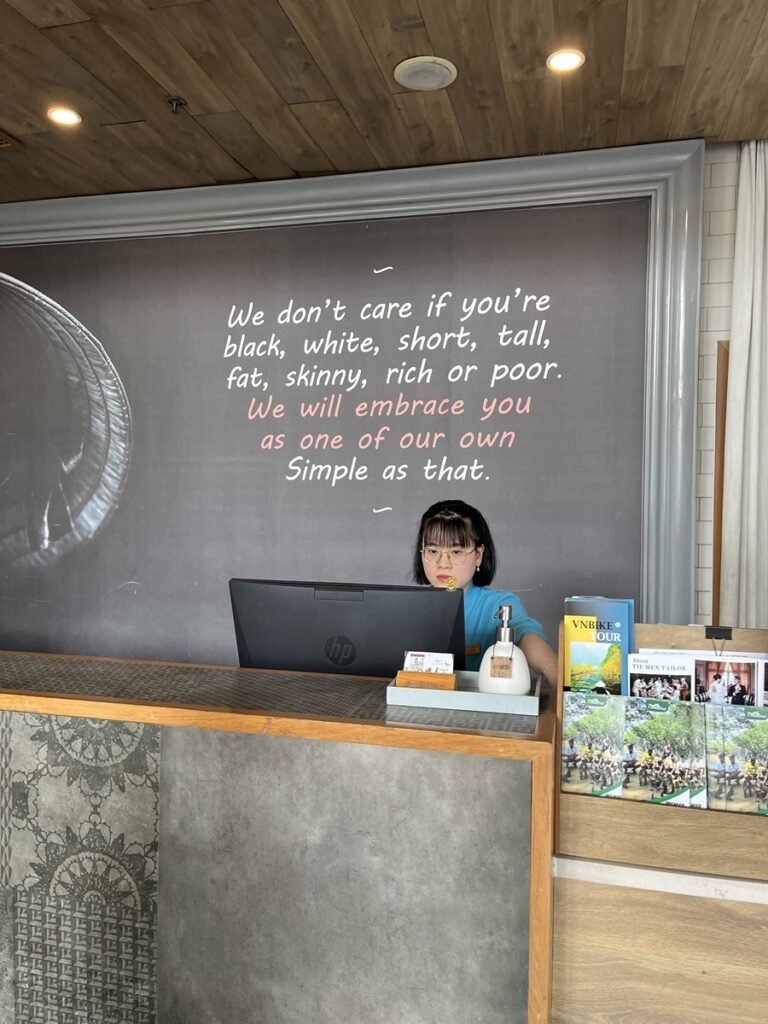
Our last night we stayed in the FusionSuites hotel. We love the extraordinary photos of locals that decorate the lobby, hallways and the room. “We don’t care if you are black, white, short, tall, fat, skinny, rich or poor. We will embrace you as one of our own” is written in large letters with a beautiful photo of an elderly Vietnamese woman behind the reception desk. I love that we have a massage included and that they will give us a to-go breakfast because we must leave so early for our flight.
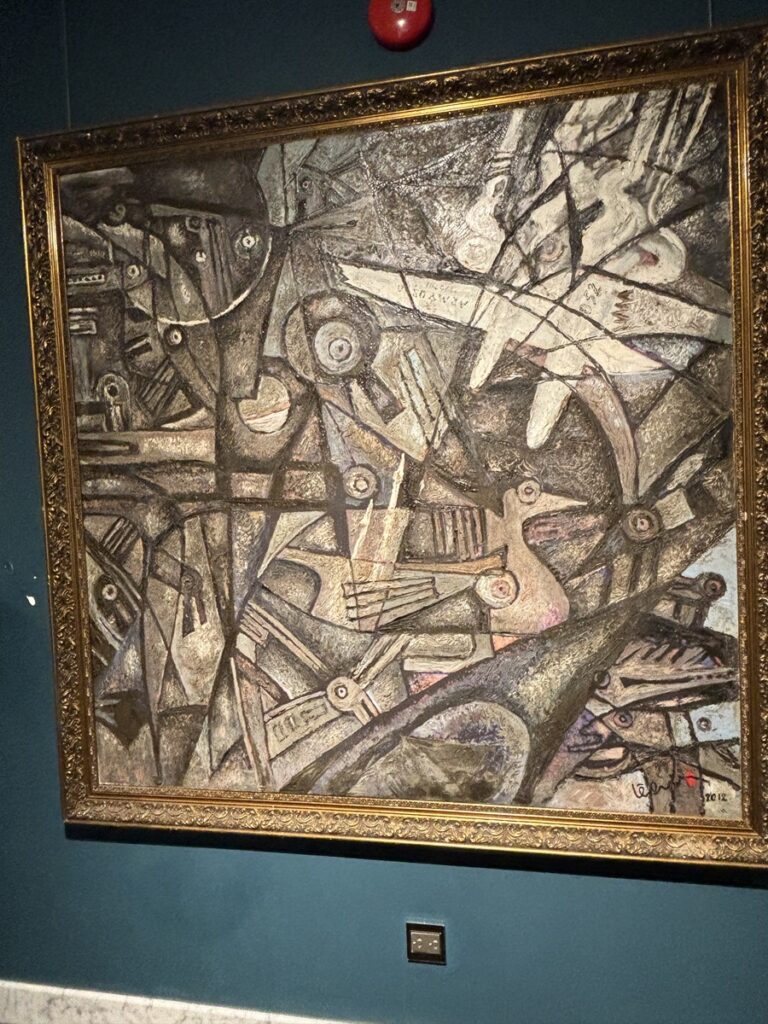
On the last full day of the CroisiEurope cruise, we begged off the prescribed afternoon tour—it was too hot, we decided, to explore any more outdoors-for the excellent Quang San Art Museum, opened just three years ago to preserve and celebrate Vietnamese fine arts with over 1600 significant art works. It was founded by Nguyen Thieu Quang who wanted to make his collection accessible to a wider audience from the Indochine period (1925-1945) through the war years and modern art. There are many sketches and paintings that depict the war years and the close bond the Viet Cong had with villagers, for example, some sketches preserved in used bazooka tubes and a beautiful portrait of Ho Kan Lich, who led 49 battles against the Americans and was said to have shot down an American plane using just a rifle. “When the enemy is at the gate, even women will fight,” was a popular saying as women took up arms.
At the sobering War Remnants Museum there is a special exhibit about Nguyen Thi Binh who fought for the cause of the Vietnamese Revolution and was the country’s foreign minister, speaking eloquently at the Paris Peace Conference in 1975 that ended the war. The museum, consistently rated a must-see exhibit, attracts about 500,000 visitors a year is one of the most visited sites in the entire country. It is a member of the International Network of Museums for Peace.
Here we learned from the Vietnamese perspective the cost of war, both to the Vietnamese and the Americans, not only to those tens of thousands who died in battle but those on both sides that were exposed and injured by Agent Orange, the toxic chemical that was sprayed to deforest land, making it easier to locate the Vietcong. Sadly, the toxicity not only harmed those directly exposed but their children in both countries. There are very sad photos of those victims. It wasn’t until May 1984 that the Agent Orange class action lawsuit brought by U.S. veterans was settled.
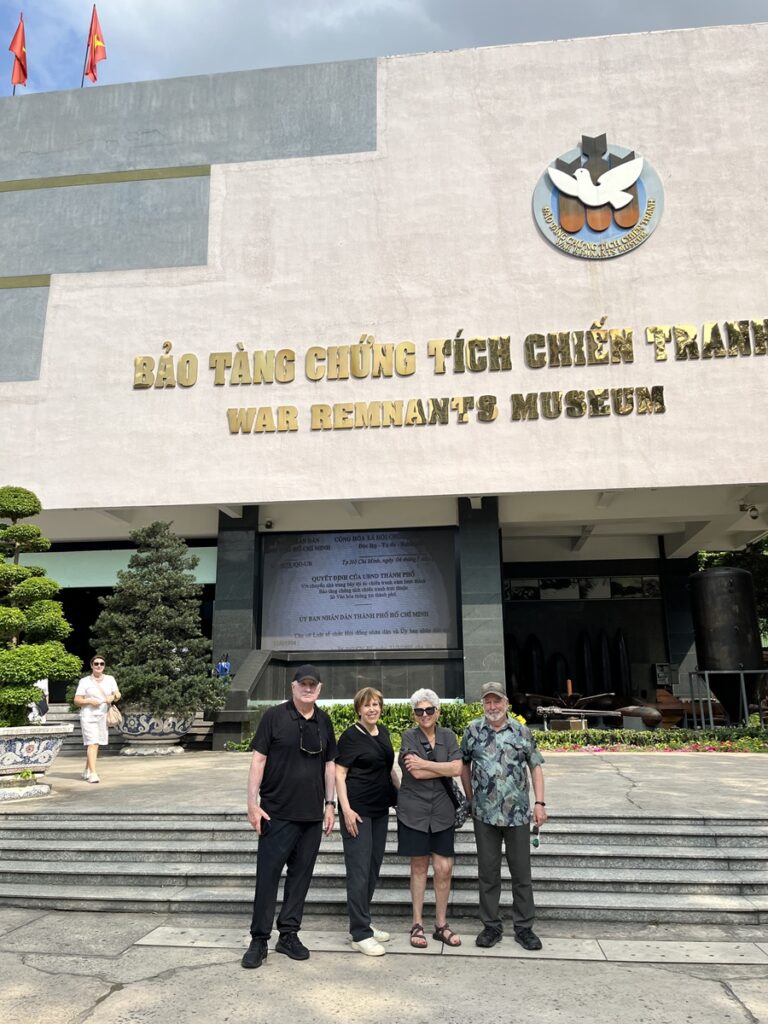
Another powerful exhibit showcases not only the photographs of combat news photographers that contributed to the antiwar movement in the US but details how at least 63 and possibly more than 100 died during the Vietnam War between 1955-1975. They included photographers for Life, Associated Press and United Press International. The book Requiem, a memorial project by photographers Horst Faas and Tim Page documents 135 photographers who died or disappeared covering the wars in Vietnam, Cambodia and Laos between 1945 and 1975. Americans suffered the highest losses with 20 deaths including some of the most famous war photographers including Robert Capa, Dickey Chapelle, the first female American reporter killed in combat and Larry Burrows, who was killed along with three other prominent photographers when their helicopter was shot down in 1971. In some cases, images from film still in their cameras are part of the exhibit.
As difficult as it is to visit this museum, it is important to visit, not only to appreciate the cost of war here but the cost of war as conflicts rage around the world.