
This Breathtaking Waterfall In New York Is One Of The Finger Lakes’ Must-See Spots
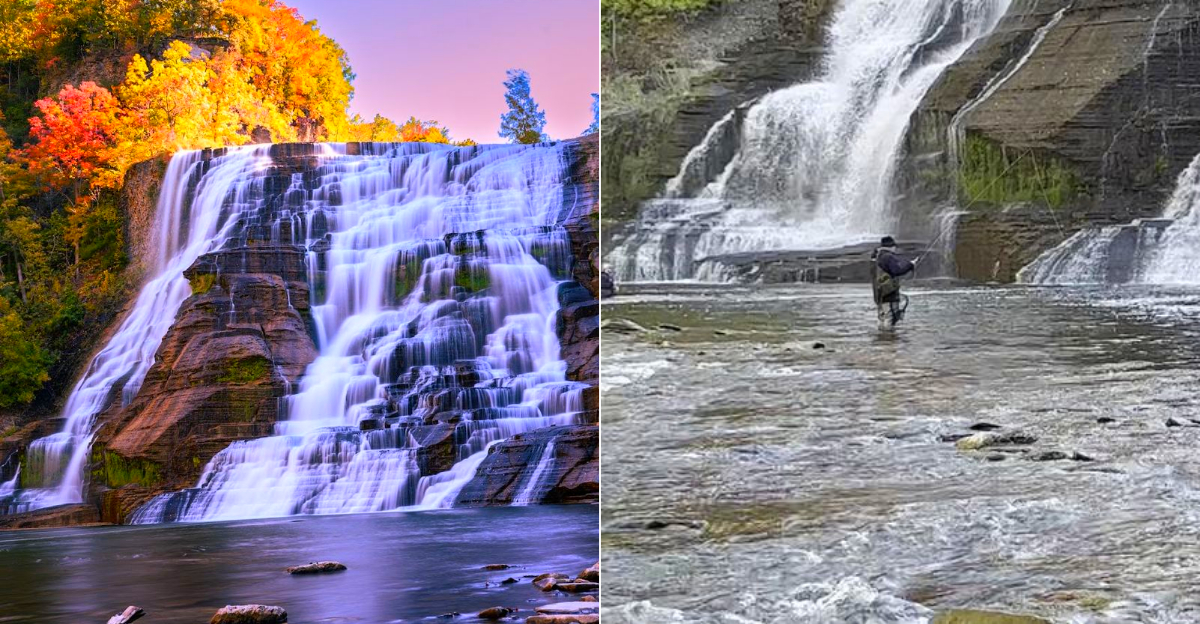
The Finger Lakes region is known for its natural beauty, but there is one waterfall that truly stands out the moment you see it. Water cascades down layered rock in a dramatic display, creating a scene that feels both powerful and peaceful at the same time.
The sound alone draws you closer, building anticipation with every step.
Surrounded by lush greenery and scenic trails, the setting makes it easy to spend time simply taking it all in. Visitors pause for photos, follow nearby paths, and enjoy the refreshing atmosphere that comes with being so close to rushing water.
Among the many beautiful spots in the region, this breathtaking New York waterfall has earned its place as a must-see destination in the Finger Lakes.
A Waterfall That Earns Every Bit Of The Hype
Some natural attractions get talked up so much that the real thing feels like a letdown. Ithaca Falls is not one of those places.
The moment the sound of rushing water reaches your ears before you even round the final bend of the trail, something shifts in the air around you.
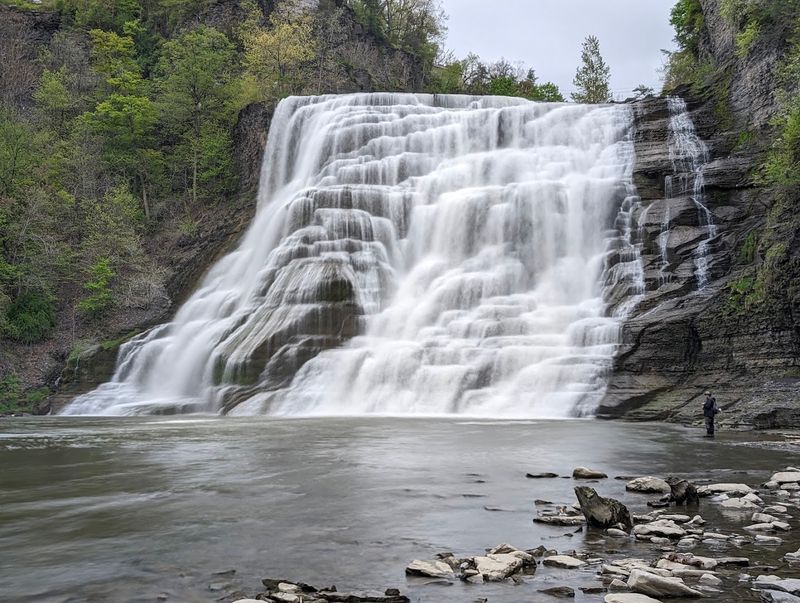
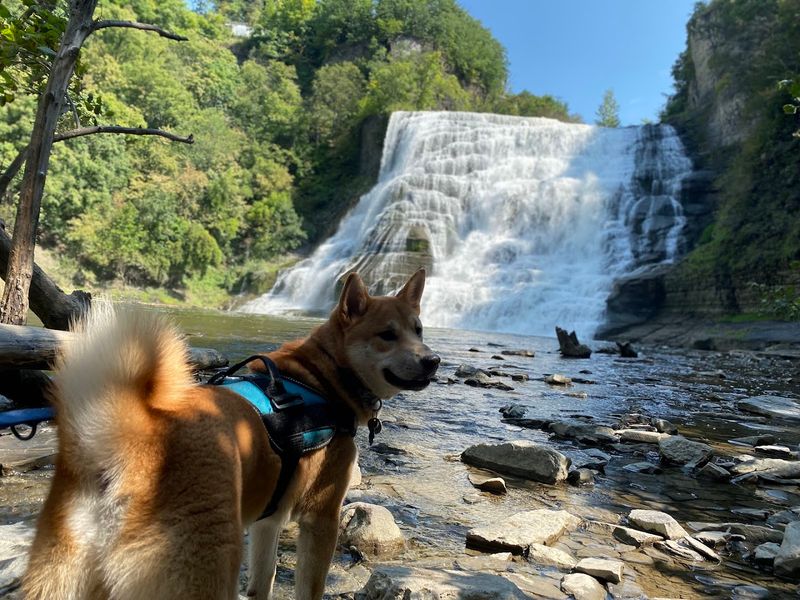
The waterfall stretches impressively wide across a layered rock face, sending a curtain of white water crashing into the pool below with a force that you can feel in your chest. Mist drifts outward from the base, cooling the air noticeably even on warm afternoons.
Standing that close to moving water on that scale gives you an immediate sense of perspective.
What makes the experience even more striking is the setting. Dense tree cover frames the gorge on both sides, creating a green corridor that feels far removed from the streets of Ithaca just a short walk away.
The contrast between the urban surroundings and this dramatic natural feature is part of what makes the visit so memorable. Rated 4.8 out of 5 stars by hundreds of visitors, the falls consistently deliver exactly what they promise.
The Location And What To Know Before You Go
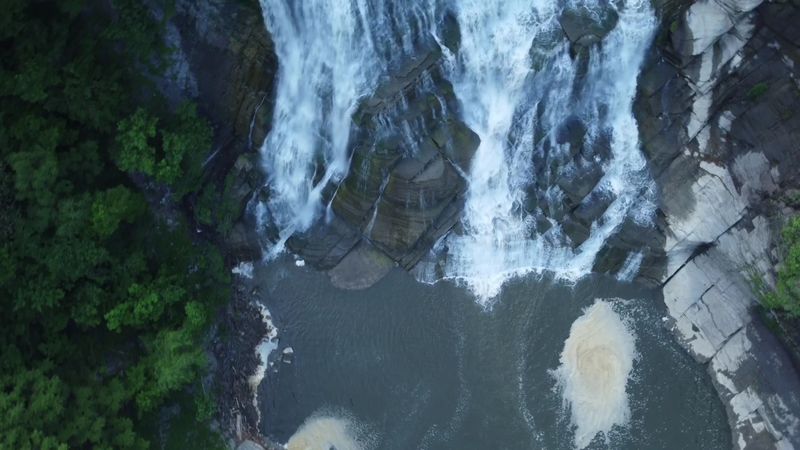
Ithaca Falls sits along Fall Creek in the northern part of Ithaca, New York, at the address listed simply as Ithaca, NY 14850. Finding it is straightforward, and getting there requires almost no effort compared to many other waterfalls in the region.
Free parking is available in a small lot nearby, with additional street parking along Fall Street when the lot fills up.
The walk from the parking area to the base of the falls takes only about five minutes on a relatively flat path. As you move closer, the trail surface transitions from packed earth to exposed bedrock and scattered rocks, so wearing sturdy shoes is a smart call.
The footing near the base can become slippery where water spreads across the stone.
No admission fee is charged, which makes the visit accessible to everyone regardless of budget. Dogs are welcome on the trail, making it a popular outing for pet owners as well.
Swimming is not permitted at the falls, though fishing in the natural pool below is a common and completely legal activity. The site is open year-round, and each season brings a noticeably different character to the experience.
The Scale Of The Falls Up Close Is Genuinely Surprising
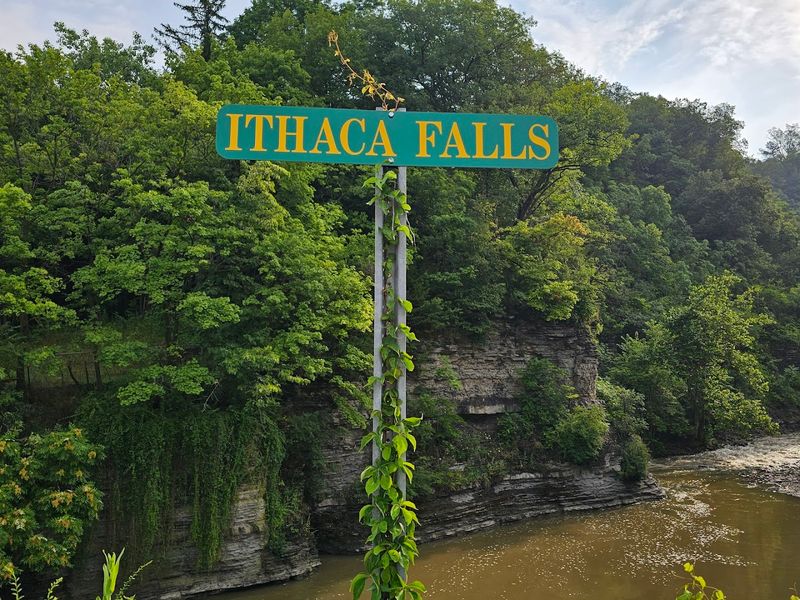
Numbers on a page rarely prepare you for the reality of standing at the base of a 150-foot waterfall. The width of Ithaca Falls adds to the spectacle in a way that height alone cannot capture.
Water moves across the full span of the rock face, creating a broad, layered cascade rather than a single narrow plume.
Getting to within a few feet of the base is entirely possible, and many visitors do exactly that. The mist reaches you well before you arrive at the closest point, and the sound of the water fills the entire gorge with a steady, deep roar that makes conversation feel almost unnecessary.
It is the kind of place that naturally encourages quiet observation.
After a period of heavy rain, the volume of water increases dramatically. The falls shift from impressive to genuinely thunderous, with the pool below churning white and the mist rising in visible clouds.
Visiting on the day after rainfall rewards you with a version of Ithaca Falls that feels almost twice as powerful. Even during drier stretches, the flow remains strong enough to deliver a full and satisfying experience for anyone making the trip.
Seasonal Visits Reveal A Completely Different Waterfall Each Time
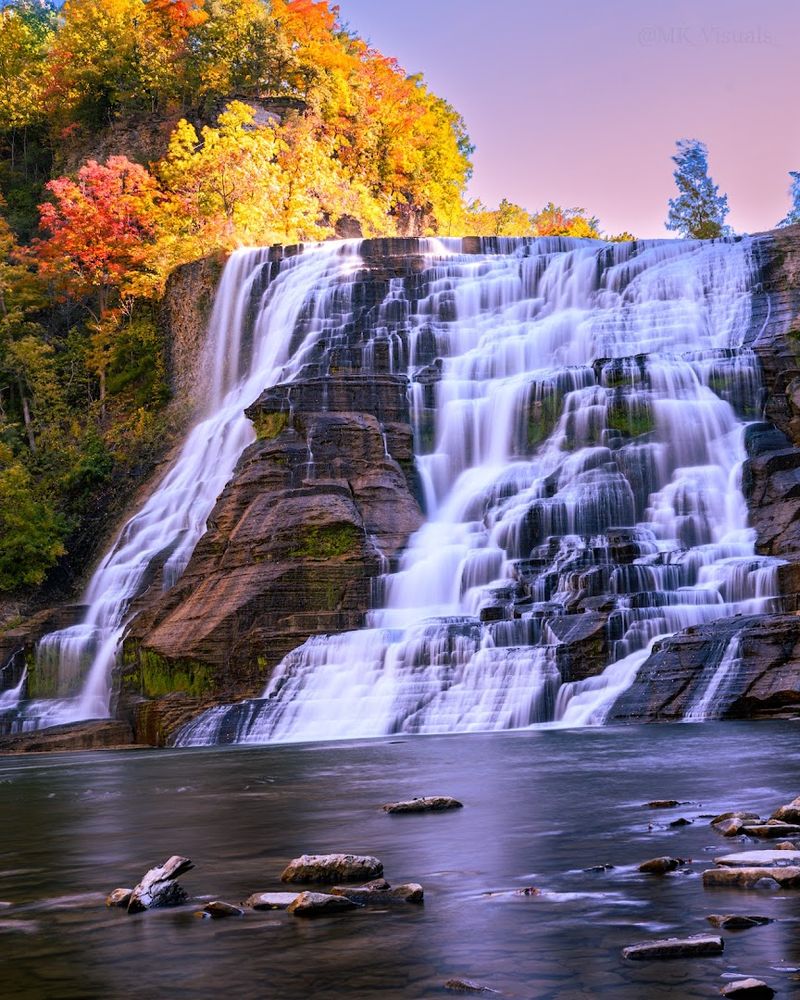
Early October visits to Ithaca Falls offer something that summer trips simply cannot match. The surrounding trees begin shifting into shades of amber, rust, and gold, wrapping the gorge in color that makes every photograph look almost too good to be candid.
Arriving near sunset during peak foliage season gives the falls a warm, glowing quality that visitors consistently describe as exceptional.
Spring brings the highest water volume of the year, fed by snowmelt and seasonal rain across the watershed. The falls run fast and full during April and May, producing a level of noise and energy that sets the spring visit apart from all others.
The gorge feels charged with movement during those months, and the trail stays lively with hikers eager to witness the peak flow.
Winter transforms the site into something quieter and more austere. Ice formations build along the edges of the rock face, and the reduced flow reveals structural details in the stone that warmer months hide beneath rushing water.
The trail can become icy near the base, so extra caution is warranted during cold snaps. Summer remains reliably pleasant, with shade from the tree canopy keeping temperatures comfortable even during warmer afternoons.
How The Trail Works And What The Walk Actually Feels Like
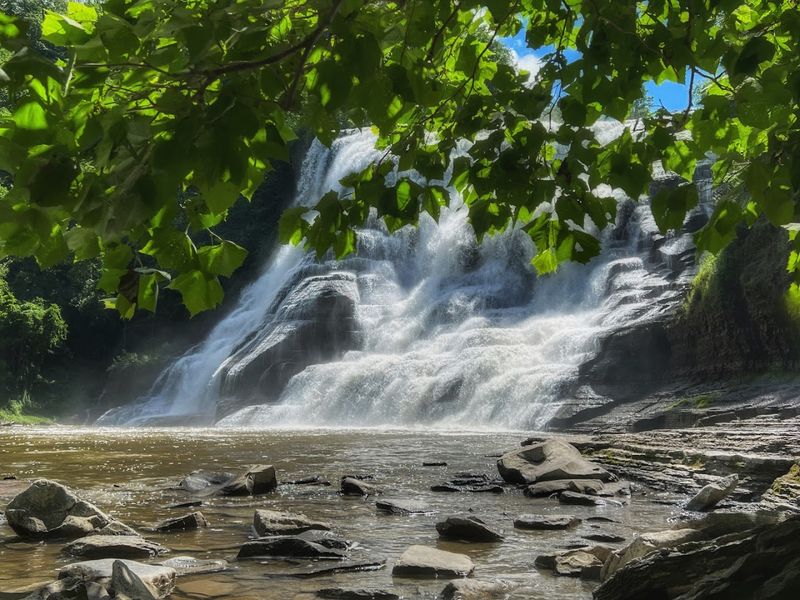
The trail to Ithaca Falls is short, flat, and genuinely accessible to a wide range of visitors. From the parking area, the path runs along the edge of Fall Creek, passing through a corridor of trees before opening up at the gorge where the falls come into full view.
The entire walk takes under ten minutes at a casual pace.
Early sections of the trail are smooth and easy underfoot, suitable for most footwear. As the path approaches the base of the falls, the terrain shifts to natural rock, and some of the stones are large enough to require a bit of careful stepping.
A hiking stick can be helpful for visitors who prefer extra stability, particularly on the return trip when fatigue sets in after the excitement of the falls themselves.
The bridge that crosses Fall Creek near the entrance provides an elevated view of the waterfall that frames the full height and width of the cascade in a single glance. Many visitors stop here first before continuing down to the base for a closer look.
Both vantage points offer something distinct, and taking the time to experience both makes the visit feel complete rather than rushed. The trail is not strenuous by any measure, but it rewards those who take it slowly.
Fishing Below The Falls Is A Quiet And Rewarding Tradition
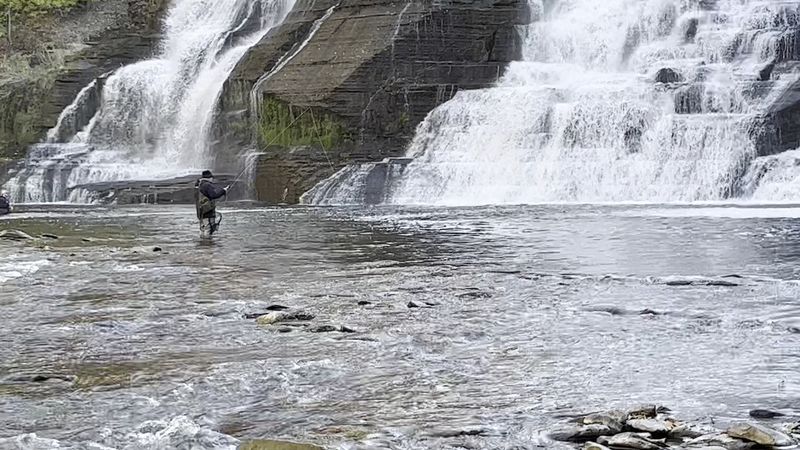
The natural pool at the base of Ithaca Falls has drawn anglers for generations, and the tradition shows no signs of fading. Fly fishing below the falls is a particularly popular pursuit, with the deep pool and oxygenated water creating conditions that fish find attractive year-round.
Watching a skilled angler work the water directly beneath a 150-foot cascade is one of the more memorable incidental sights the falls have to offer.
Fall Creek supports a healthy population of trout, and the area around Ithaca Falls is a recognized fishing destination among locals and visiting anglers alike. The rocky edges of the pool provide stable footing for those who prefer to cast from the bank rather than wading into the current.
Fishing here requires a valid New York State fishing license, which is easy to obtain online before your visit.
The combination of the waterfall backdrop and the focused quiet of fishing creates an atmosphere that feels almost meditative. Even visitors with no interest in fishing tend to linger near the pool when an angler is at work, drawn by the visual contrast of human patience set against the constant motion of the falls.
It is one of those small, unremarkable moments that somehow stays with you long after the trip ends.
Ithaca Falls Within The Larger Context Of The Finger Lakes Region
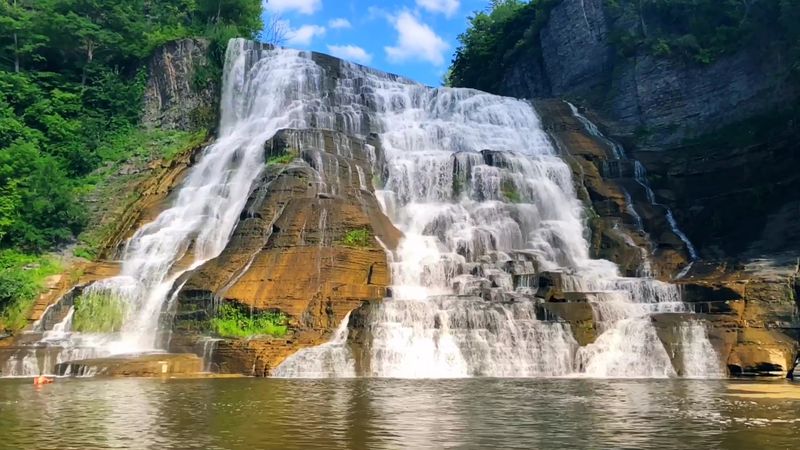
The Finger Lakes region of New York contains an impressive number of waterfalls, gorges, and natural features packed into a relatively compact geographic area. Ithaca alone sits near enough to Buttermilk Falls State Park, Robert H.
Treman State Park, and Taughannock Falls to make a multi-stop waterfall itinerary entirely practical within a single day or weekend.
Taughannock Falls, located near Trumansburg north of Ithaca, holds the distinction of being the tallest single-drop waterfall east of the Rocky Mountains at 215 feet, making it a natural companion destination for anyone visiting Ithaca Falls. The two waterfalls offer contrasting experiences, with Taughannock sitting within a developed state park and Ithaca Falls occupying a more informal, neighborhood-adjacent setting.
What sets Ithaca Falls apart within this competitive regional lineup is its urban accessibility combined with its undeveloped character. Most major waterfalls in the Finger Lakes require a longer drive and a more committed hike.
Ithaca Falls delivers comparable visual impact with a fraction of the logistical effort, which makes it an ideal first stop for visitors new to the region or those working with limited time. The Finger Lakes rewards exploration, and Ithaca Falls is an excellent place to begin that process.
Practical Tips That Will Make Your Visit Run Smoothly
Arriving early on weekday mornings gives you the best chance of having the falls largely to yourself. Weekend afternoons draw more visitors, particularly during the summer months and peak fall foliage season.
The site never becomes overwhelmingly crowded given its neighborhood location, but a quieter visit is simply more enjoyable for taking in the full sensory experience of the falls.
Wearing closed-toe shoes with grip is the single most useful preparation you can make before the visit. The rocky approach near the base of the falls is manageable in most footwear, but slick-soled shoes turn the final stretch into an unnecessary challenge.
Bringing a light jacket is also worth considering, since the mist zone near the base stays noticeably cooler than the surrounding trail regardless of the season.
No food vendors operate near the falls, so packing snacks and water before you arrive keeps the visit comfortable. The parking lot on Fall Street is small and fills quickly on busy days, making street parking along the surrounding blocks a reliable backup option.
Visiting during a weekday after recent rainfall combines optimal water volume with minimal crowds, which is about as close to a perfect visit as the site allows. The falls are free, accessible, and consistently worth the stop.