
11 Wisconsin State Parks That Make May The Best Time To Visit
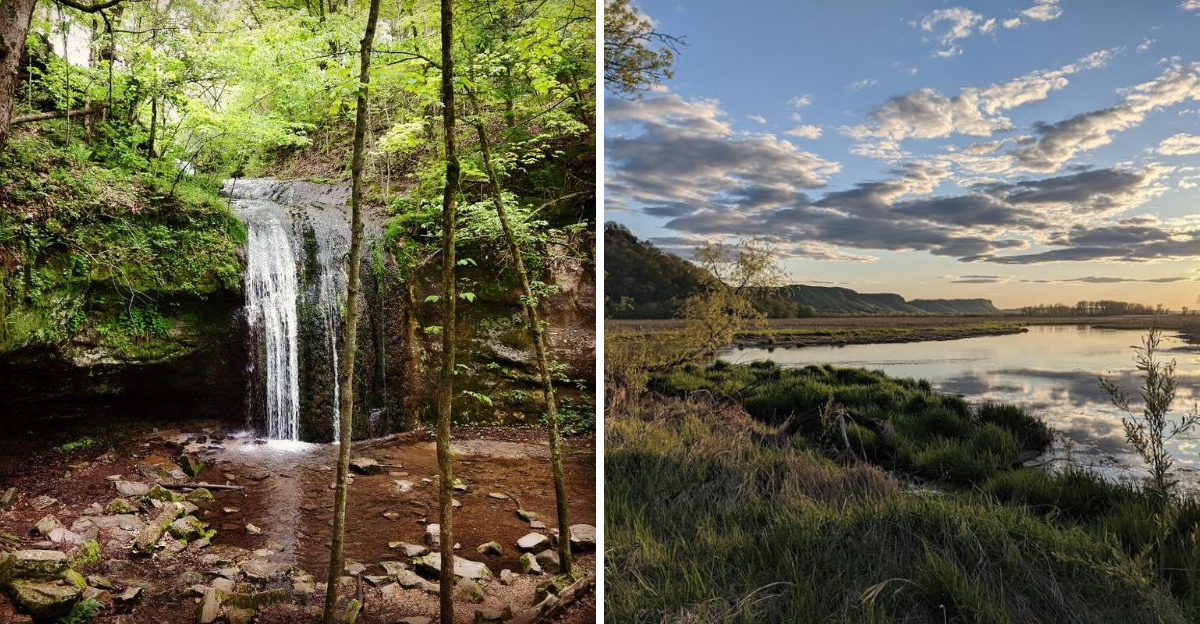
Spring in Wisconsin brings something magical to the state parks that you just can’t find any other time of year. May hits that sweet spot when wildflowers carpet the forest floors, waterfalls rush with snowmelt, and the trees explode in fresh green without the summer crowds jamming the trails.
I’ve spent years exploring these parks, and I can tell you that visiting in May means you get the best weather for hiking, the most dramatic scenery, and peaceful moments that disappear once school lets out for summer.
1. Devil’s Lake State Park
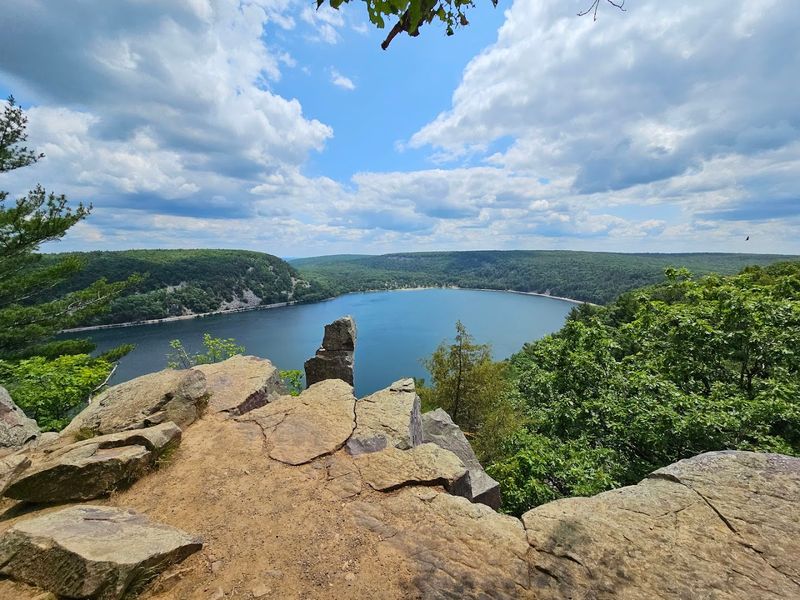
The towering bluffs at Devil’s Lake turn into something out of a fantasy novel come May. Ancient purple quartzite cliffs rise 500 feet above water so clear you can see straight to the bottom, and the spring runoff makes the lake shimmer like polished glass.
Wildflowers blanket the trails before summer heat withers them away. You’ll spot trilliums, bloodroot, and wild columbine tucked between rocks as you climb the East or West Bluff trails.
The temperature stays comfortable for scrambling over the rocky sections without overheating.
Birds migrate through in waves during May, making it prime time for spotting warblers, vireos, and thrushes. The park sits along a major flyway, so bring binoculars if you’re into that sort of thing.
Early mornings offer the best wildlife viewing before day-trippers arrive.
Swimming feels refreshing but not bone-chilling yet, and the beaches stay relatively empty compared to July madness. Rock climbers love May because the cliff faces dry out from winter moisture but haven’t gotten slick with summer humidity.
Pack layers since mornings start cool but afternoons warm up quickly, and don’t skip the Balanced Rock trail for Instagram-worthy geology.
2. Peninsula State Park
Door County’s crown jewel becomes absolutely stunning when cherry and apple blossoms explode across the peninsula in May. Peninsula State Park captures that perfect moment when everything blooms at once, creating clouds of white and pink flowers against the deep blue of Green Bay.
Biking the park roads feels like pedaling through a postcard. Eight miles of paved routes wind past historic lighthouses, through tunnels of flowering trees, and along clifftop overlooks where you can watch sailboats glide across the water.
Traffic stays light before summer tourists flood the area.
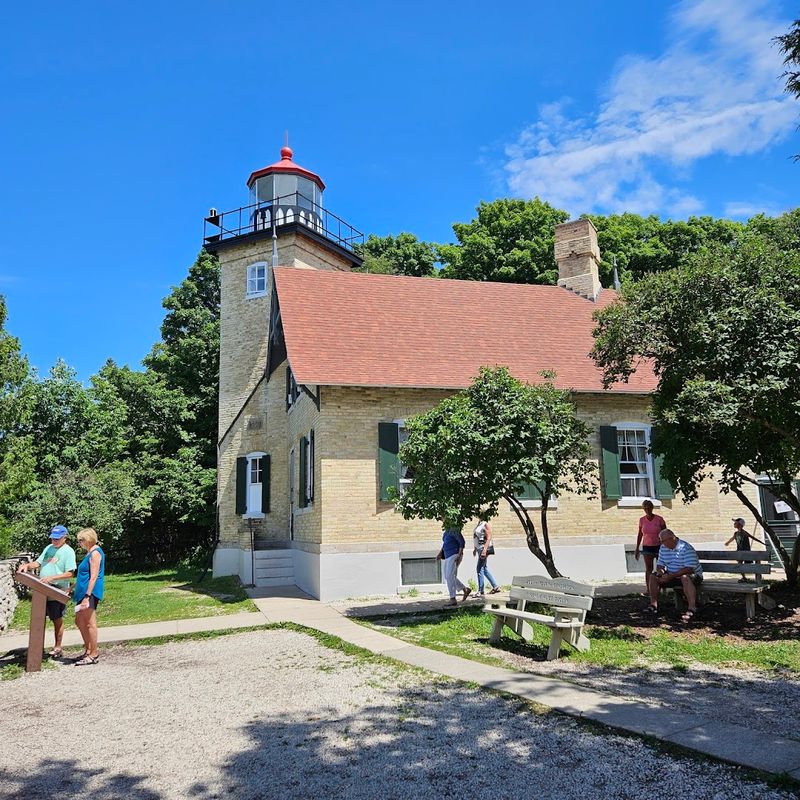
Eagle Bluff Lighthouse opens for tours right as the weather warms up, giving you panoramic views from 76 feet above the shoreline. The climb up the spiral staircase rewards you with vistas that stretch for miles across the bay.
On clear May days, you can see all the way to Michigan’s Upper Peninsula.
Hiking Nicolet Bay Trail takes you through forests just waking up from winter dormancy. Fresh leaves create that special bright green color that only lasts a few weeks, and the forest floor springs to life with ferns unfurling.
Camping spots fill up fast even in May, so book ahead if you want waterfront sites at Nicolet Bay Campground.
3. Copper Falls State Park
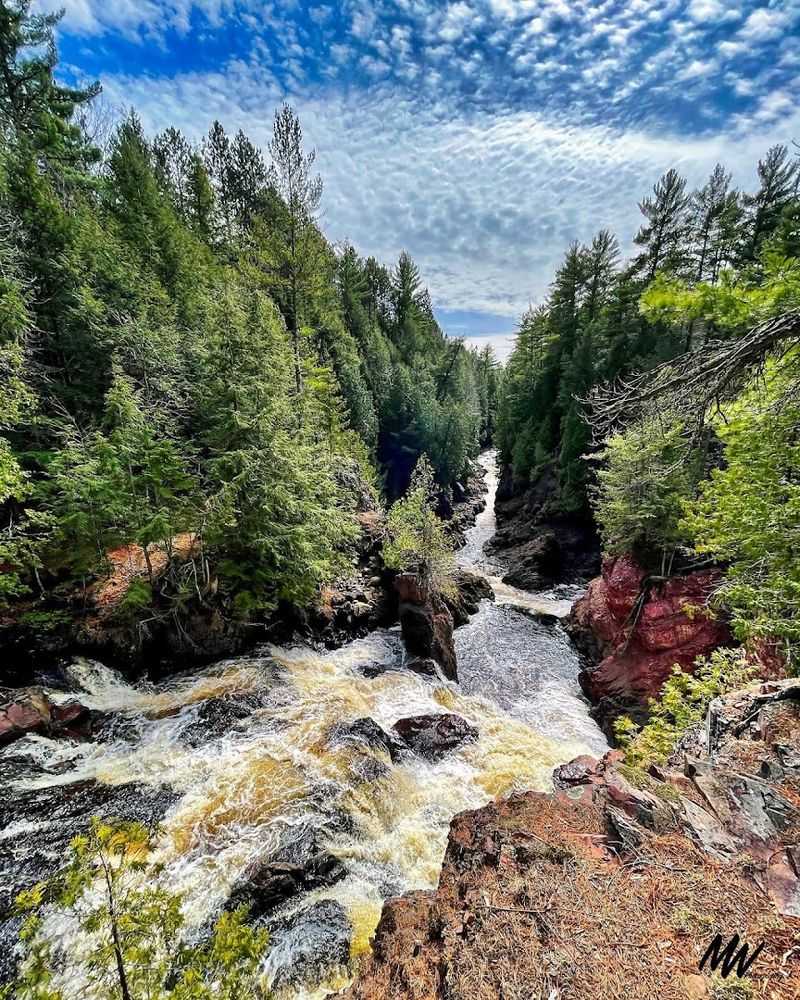
Waterfalls thunder with snowmelt power in May at Copper Falls, creating mist clouds that catch rainbows in the afternoon sun. The Bad River swells to several times its summer flow, sending torrents of water crashing over ancient lava formations that glow reddish-brown when wet.
Two major waterfalls within easy walking distance make this park a photographer’s dream during spring. Copper Falls drops 30 feet into a gorge carved through billion-year-old rock, while Brownstone Falls creates a wider curtain of water just downstream.
The observation platforms get slick with spray, so watch your footing.
Trails stay muddy in spots but passable with decent boots. The three-mile loop connecting both waterfalls winds through hemlock forests and along cliff edges where you can peer down into the churning gorge below.
Spring peepers and wood frogs create a deafening chorus near wetland areas.
Fishing picks up as water temperatures rise, with brook trout becoming more active in the river’s pools and eddies. May offers that window before black flies and mosquitoes reach their peak annoyance levels.
Bring a rain jacket since spring showers pop up frequently in northern Wisconsin, but they usually pass quickly and leave everything smelling fresh and earthy.
4. Kohler-Andrae State Park
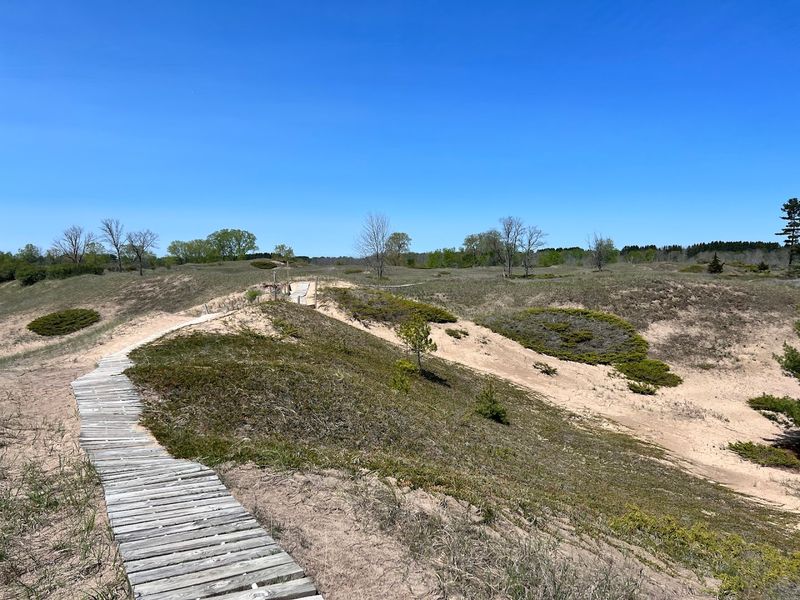
Lake Michigan beaches stretch empty and pristine in May at Kohler-Andrae, offering miles of sand without the shoulder-to-shoulder crowds of summer. The water stays too cold for most swimmers, but beachcombing becomes addictive when you’ve got the shoreline mostly to yourself.
Dune ecosystems come alive with rare plants found nowhere else in Wisconsin. The Dunes Cordwalk Trail takes you through fragile habitat on elevated boardwalks, protecting sensitive vegetation while giving you up-close views of beach pea, dune grass, and wild rose just starting to bloom.
Interpretive signs explain how these plants survive harsh conditions.
Bird migration peaks along the lakeshore in May, making it exceptional for spotting both shorebirds and forest species. Piping plovers occasionally stop here during their journey north, and warblers fill the black pine forests with song.
Bring layers since lake breezes keep temperatures cooler near the water.
The campground opens for the season with spacious sites tucked into pine woods just steps from the beach. Morning walks along the water’s edge reveal treasures washed ashore, from Petoskey stones to colorful beach glass smoothed by decades of wave action.
Sunset views over Lake Michigan paint the sky in oranges and purples that reflect off wet sand at low tide.
5. Willow River State Park
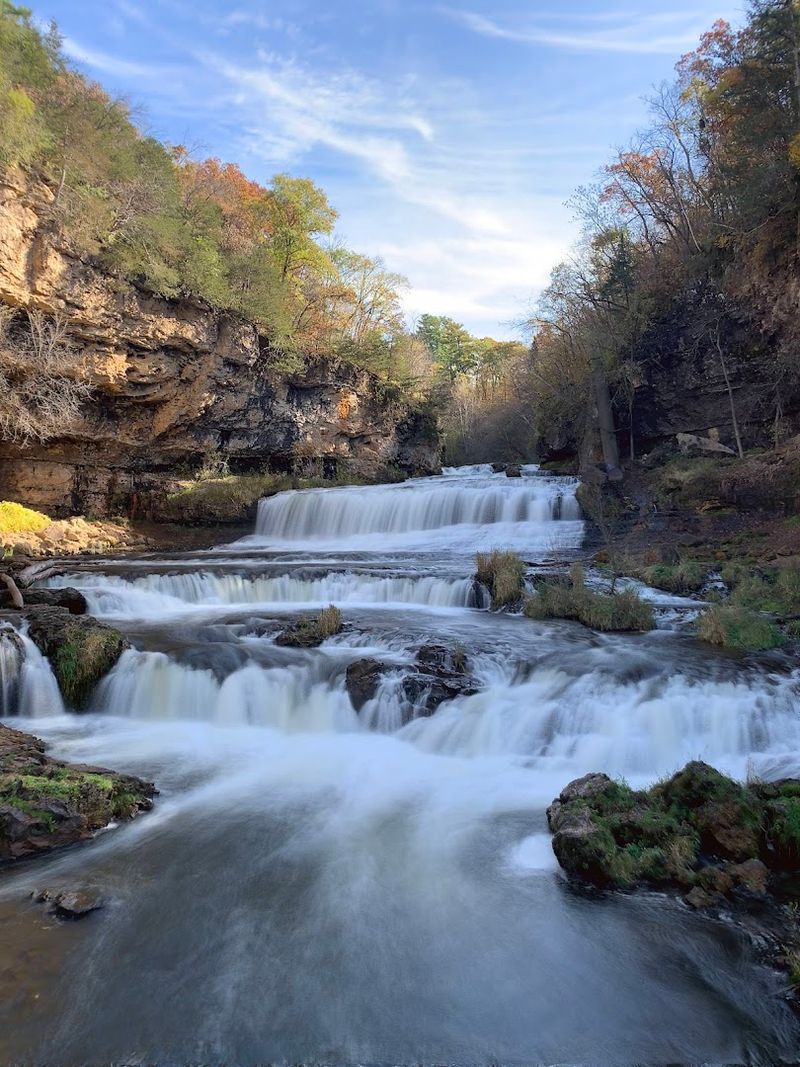
Willow Falls transforms into a multi-tiered spectacle in May when spring runoff sends water tumbling down a series of rocky ledges. The main drop plunges into a deep pool surrounded by limestone cliffs draped in moss and early-season wildflowers that somehow find purchase in the rock crevices.
Stairs and platforms built into the gorge let you experience the falls from multiple angles. You can stand at the top where water first spills over, descend to mid-level viewpoints where mist soaks your face, or walk to the bottom pool where the thunder of falling water drowns out all other sounds.
Each perspective offers something different.
The park sits just outside Hudson, making it an easy escape from the Twin Cities metro area without driving hours. Trails beyond the falls wind through oak forests showing off spring ephemeral flowers before the canopy closes in.
Trout lilies, Dutchman’s breeches, and hepatica bloom in waves throughout May.
Little Falls Lake offers calm water for kayaking or canoeing when you need a break from hiking. The lake warms faster than bigger bodies of water, and bass fishing picks up as May progresses.
Picnic areas near the beach provide perfect spots for lunch with a view, and the swimming area officially opens Memorial Day weekend if you’re brave enough for chilly water.
6. Governor Dodge State Park
Rolling hills and hidden valleys define Governor Dodge, where the Driftless Area’s unique topography creates landscapes that glaciers never touched. May brings that special moment when oaks leaf out later than other trees, creating a patchwork of greens across the hillsides that shifts daily as different species emerge from dormancy.
Twin Lakes and Cox Hollow Lake offer contrasting experiences within one park. Twin Lakes sits in a forested valley perfect for quiet paddling, while Cox Hollow sprawls larger with better fishing for bass and panfish.
Water levels peak in May, filling swimming beaches that shrink by late summer.
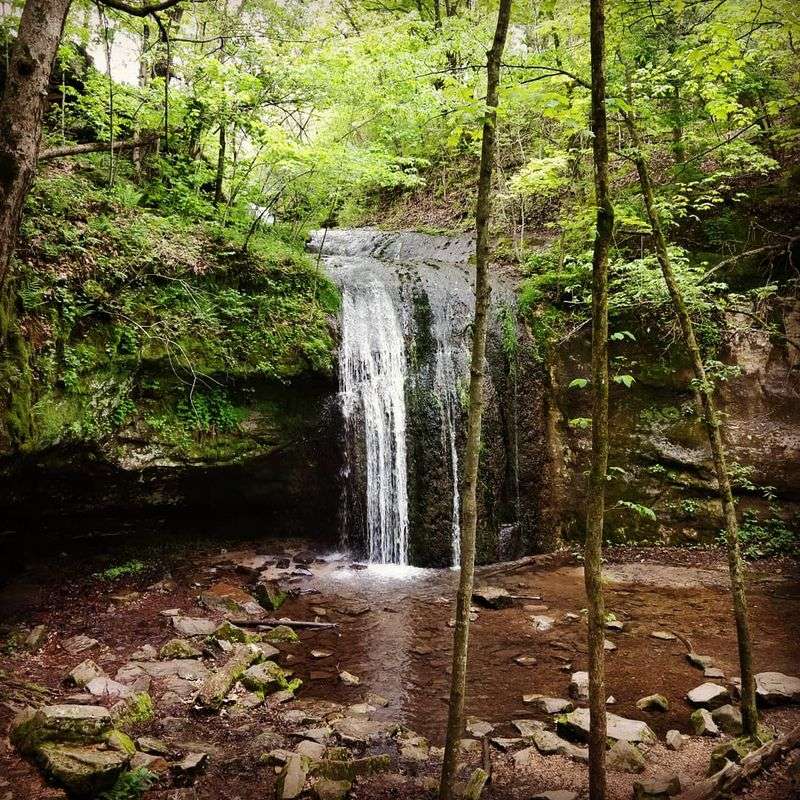
Hiking trails range from easy lakeside strolls to challenging climbs up limestone bluffs that reward you with sweeping views across the countryside. The Stephens Falls Trail leads to Wisconsin’s tallest waterfall, which flows strongest during spring before drying to a trickle by August.
Wildflowers carpet the forest floor along this route.
Horseback riding trails crisscross the park’s 5,000 acres, and May weather makes for comfortable saddle time. The campground offers both wooded privacy and open sites, with modern amenities that make it great for families.
Morning fog often fills the valleys, creating mystical scenes as it burns off under the rising sun and reveals the landscape layer by layer.
7. Perrot State Park
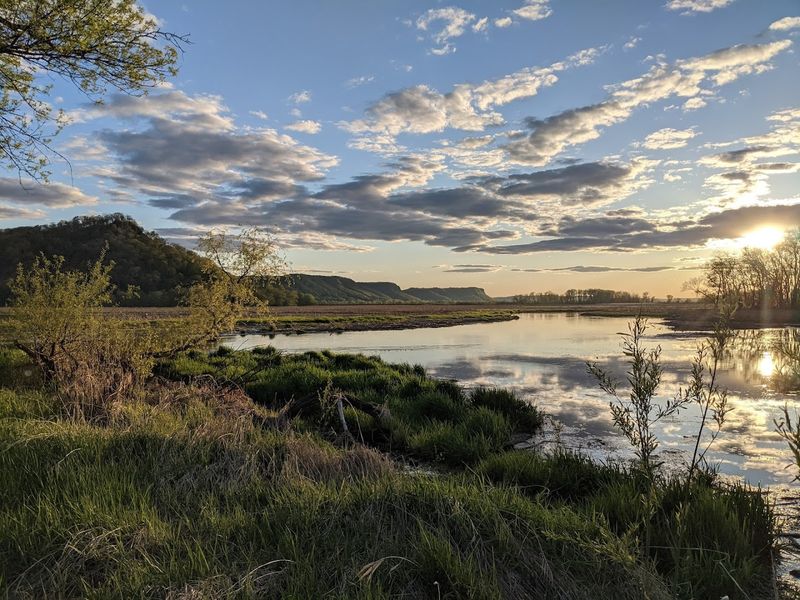
Bluffs shoot straight up from the Mississippi River valley at Perrot, creating some of the most dramatic topography in the state. Brady’s Bluff Trail climbs 520 feet in less than a mile, a lung-burner that pays off with panoramic views across the river and three states visible on clear May days.
Spring migration turns Perrot into a birding hotspot as thousands of birds funnel through the Mississippi flyway. Warblers, orioles, and tanagers arrive in waves, and bald eagles nest in tall cottonwoods along the river.
The park’s location where the Trempealeau River meets the Mississippi creates diverse habitats that attract incredible variety.
Prairie restoration areas burst into bloom throughout May with lupine, phlox, and prairie smoke coloring the hillsides. These native plantings attract butterflies and pollinators that disappeared from much of Wisconsin’s landscape.
Walking through restored prairie feels like stepping back to what settlers first encountered.
The Great River State Trail runs right through the park, offering flat biking along the Mississippi for those who’d rather save their knees than climb bluffs. River towns like Trempealeau sit within easy pedaling distance, with cafes and ice cream shops perfect for refueling.
Camping spots near the water let you fall asleep to the sound of barges pushing upriver and wake to songbirds greeting the dawn.
8. Mirror Lake State Park
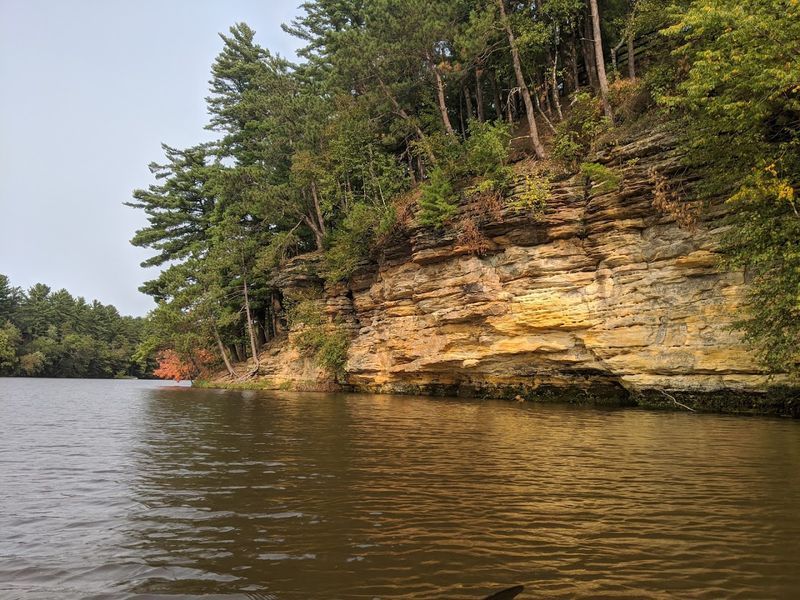
Sandstone cliffs rise straight from water so still it perfectly reflects the sky and surrounding forest, giving Mirror Lake its name. May brings out the best in this relatively small park, with dogwoods blooming white against darker pine and oak, and the lake calm before motorboat traffic picks up later in summer.
Canoeing or kayaking feels like gliding through glass on calm mornings. The lake stretches just over a mile long, perfect for a peaceful paddle without committing to an all-day expedition.
Cliffs along the north shore show the same formations that make the nearby Dells famous, carved by ancient rivers into swooping curves and overhangs.
Hiking trails loop through both prairie and forest ecosystems, showcasing the ecological diversity packed into 2,000 acres. The Fern Dell Gorge Trail follows a small creek through a narrow canyon thick with ferns that unfurl their fiddle-heads in May.
It feels like walking through a secret garden hidden from the tourist chaos of Wisconsin Dells just a few miles away.
The park provides a quieter alternative to the commercialized Dells while still offering sandstone scenery. Campgrounds book solid on summer weekends, but May offers better availability and more peaceful nights.
Fish for bass and panfish from shore or boat, and watch for great blue herons stalking the shallows at dawn and dusk.
9. Harrington Beach State Park
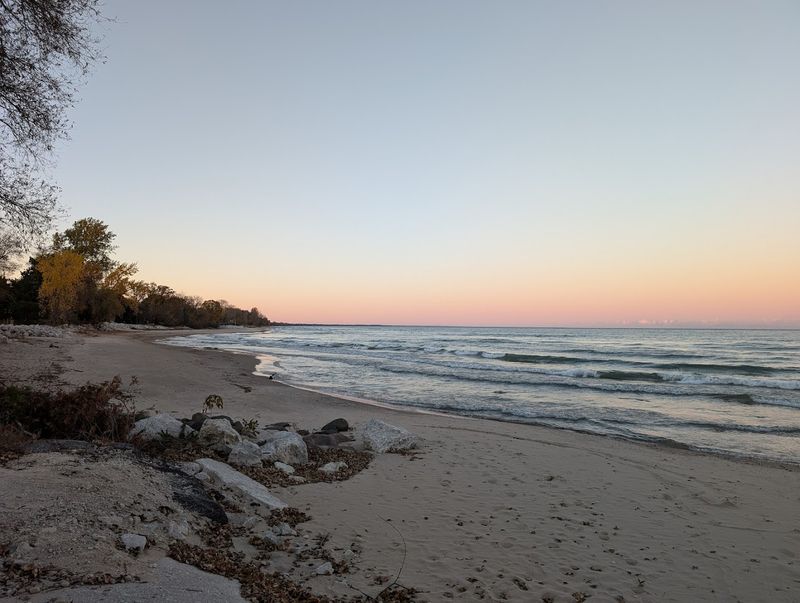
An abandoned limestone quarry creates the most unique feature at Harrington Beach, now flooded and transformed into a inland lake that attracts nesting birds and curious visitors. The quarry lake sits just inland from Lake Michigan, separated by a narrow strip of land where you can stand between two completely different water bodies.
Lake Michigan shoreline stretches for a mile of rocky beach quite different from sandy shores found elsewhere. Smooth stones in endless shades of gray, white, and tan cover the beach, perfect for rock collecting or simply walking and listening to waves rattle the pebbles.
May brings relatively calm water before summer storms stir things up.
The Ansay Nature Trail winds through restored prairie and wetlands where spring wildflowers bloom in succession throughout May. Boardwalks keep your feet dry while crossing marshy areas where red-winged blackbirds and marsh wrens nest in cattails.
Interpretive signs explain restoration efforts bringing native plants back to areas once dominated by invasive species.
Historic buildings from the park’s days as a private estate dot the landscape, including an old barn and pump house that add character. The park sits close to Milwaukee, making it an easy day trip for city dwellers craving nature.
Bring binoculars for spotting migrating waterfowl on both the quarry and lake, and pack a lunch to enjoy at picnic areas overlooking the water.
10. Wildcat Mountain State Park
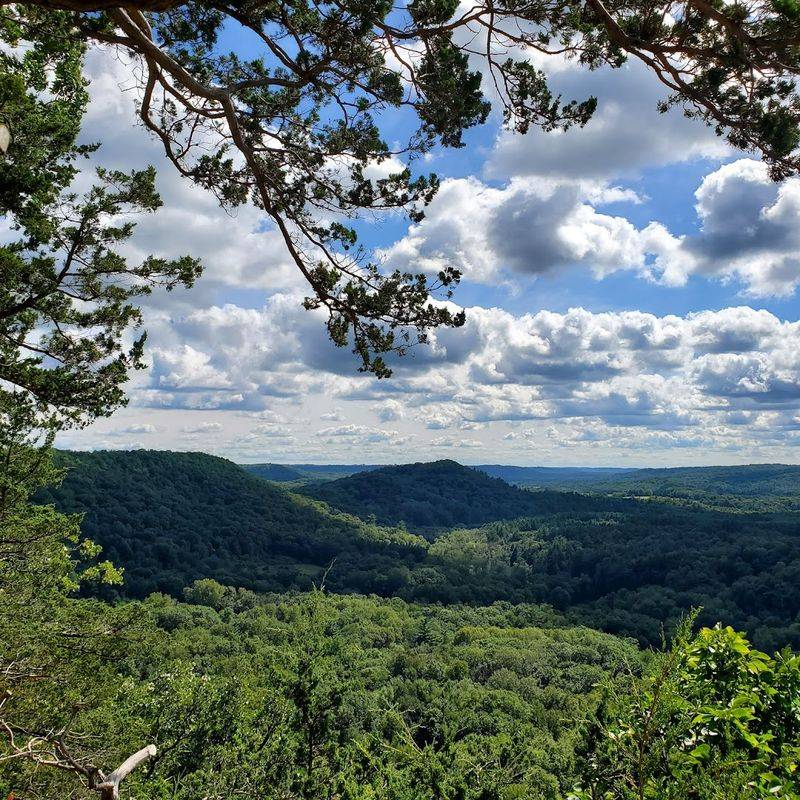
The Kickapoo River snakes through valleys far below observation points at Wildcat Mountain, creating views that stretch for miles across some of Wisconsin’s most rugged terrain. Spring green covers the hills in May, that brilliant chartreuse color that only lasts a few weeks before deepening to summer’s darker shades.
An observation tower adds extra elevation for even more impressive vistas across the Driftless Area’s distinctive topography. Climbing to the top puts you above the treetops where you can trace the river’s wandering course and spot hawks riding thermal currents.
The Kickapoo earned the nickname “crookedest river in the world” for its meandering path.
Horseback riding trails wind through 3,600 acres of forest and meadow, and May weather makes for ideal conditions before heat and humidity arrive. The park caters specifically to equestrian campers with special facilities, though hikers can enjoy the same trails.
Wildflowers bloom along open stretches, and the forest floor comes alive with spring ephemerals.
Canoe camping on the Kickapoo River starts from the park, offering multi-day trips through remote countryside. May water levels usually stay high enough for easy paddling without the summer crowds clogging the river.
The Kickapoo flows gently despite its twisting course, making it perfect for beginners or families wanting a relaxed float through beautiful scenery.
11. Blue Mound State Park
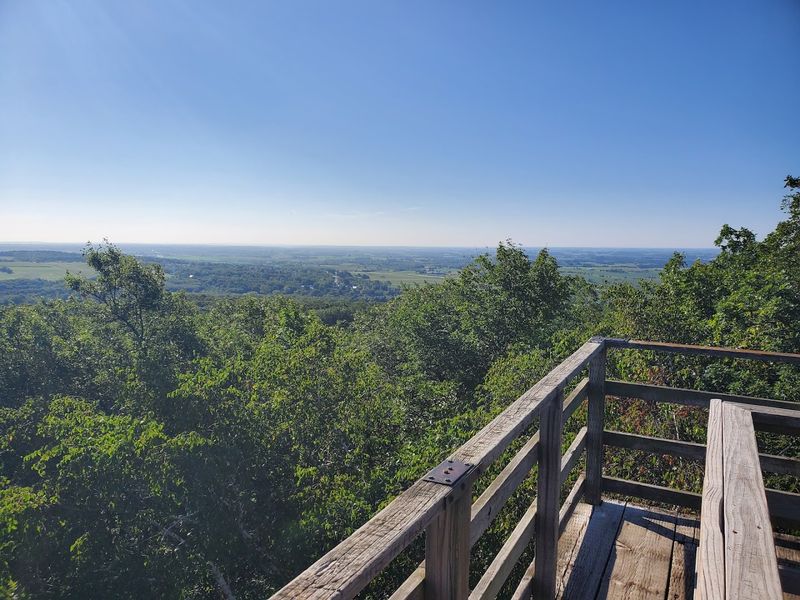
Standing at the highest point in southern Wisconsin feels significant at Blue Mound, where observation towers let you see for 25 miles in every direction on clear days. At 1,719 feet above sea level, you’re literally looking down on the surrounding countryside, with a patchwork of farms, forests, and small towns spreading to the horizon.
Prairie restoration covers much of the park’s open areas, and May brings waves of wildflowers that native peoples and early settlers would have recognized. Purple lupine, yellow coneflowers, and pink phlox paint the hillsides in shifting colors as different species bloom.
These prairies attract butterflies, bees, and birds that depend on native plants.
Two observation towers offer different perspectives, with the west tower providing sunset views that photographers plan trips around. The east tower catches sunrise light illuminating the landscape as morning mist lifts from valleys below.
Both require short walks from parking areas, making them accessible without serious hiking.
Trails range from easy walks to more challenging routes through forests of oak and hickory. The park’s location near Madison makes it popular with locals, but May weekdays offer solitude that disappears on summer weekends.
Swimming pool facilities open Memorial Day weekend, and the campground provides a convenient base for exploring the surrounding Driftless Area’s attractions, wineries, and scenic back roads.