
This 2,350-Acre Wisconsin State Park Is A Scenic Escape You Didn’t Know You Needed
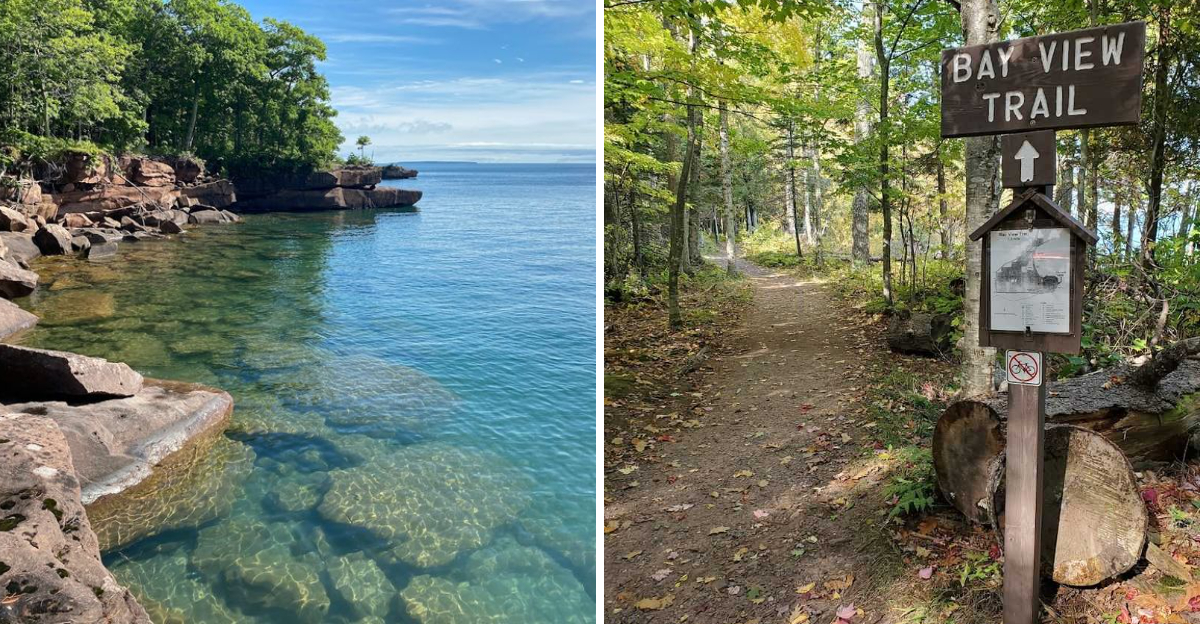
It begins with a ferry ride, where the shoreline slowly fades and the rhythm of everyday life starts to slip away. The crossing feels like a reset.
By the time you arrive, the air is cooler, the views are wider, and everything moves at a slower pace. What waits on the other side is a stretch of rugged coastline, quiet forest trails, and open spaces that invite you to wander without a plan.
Waves roll in against rock and sand, paths wind through dense trees, and there’s a constant sense that you’ve stepped somewhere far removed from the usual routine. It’s the kind of place where you can spend hours exploring or simply sit back and take it all in.
A 2,350-Acre Escape On Wisconsin’s Largest Lake
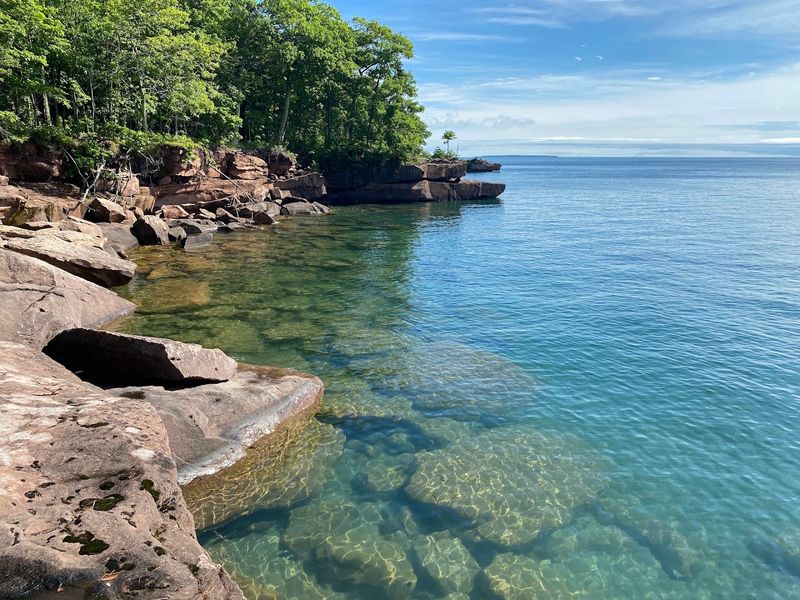
Big Bay State Park occupies a substantial portion of Madeline Island’s southern shore, stretching across enough territory to absorb visitors without ever feeling crowded. The park sits at 2402 Hagen Rd in La Pointe, accessible only by ferry from the mainland town of Bayfield.
Lake Superior forms the entire southern boundary, creating miles of interaction between forest and water.
Seven miles of hiking trails wind through the property, connecting different ecosystems and viewpoints. The terrain shifts between dense woodland, open beach areas, and elevated sections that provide perspective on the surrounding landscape.
Park hours run from 6 AM to 11 PM daily, giving visitors flexibility in how they structure their time.
The size of the park means you can find solitude even during busier periods. Spaces exist for both active exploration and quiet observation, with enough variety to justify multiple visits throughout different seasons.
Miles Of Sandstone Cliffs That Look Straight Out Of A Postcard
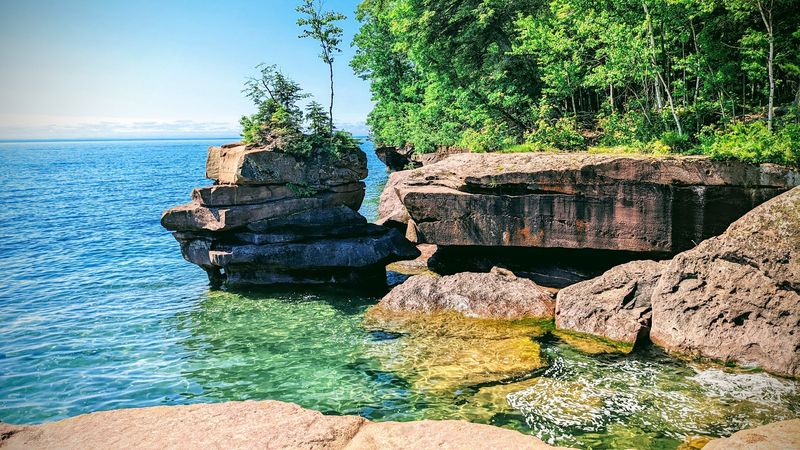
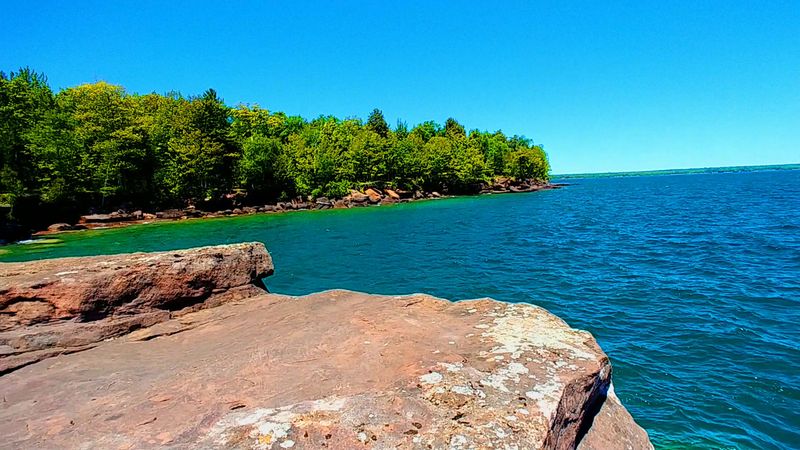
The sandstone formations along the park’s shoreline create some of the most photographed scenery in northern Wisconsin. These cliffs rise directly from Lake Superior’s edge, their stratified layers telling geological stories that span thousands of years.
The rock displays shades of rust, amber, and cream depending on light conditions and time of day.
Several overlook points provide safe vantage spots for viewing these formations without requiring technical climbing skills. The Bay View Trail brings hikers close to the cliff edges, where the meeting of ancient rock and massive freshwater lake produces memorable scenery.
Some sections allow careful scrambling for those wanting a closer look at the rock texture and patterns.
The cliffs remain impressive across all seasons but take on different characters with changing weather. Summer sunlight emphasizes their warm tones, while autumn storms create dramatic contrasts between dark water and illuminated stone faces.
A Boardwalk Trail That Floats Through A Quiet Boreal Forest
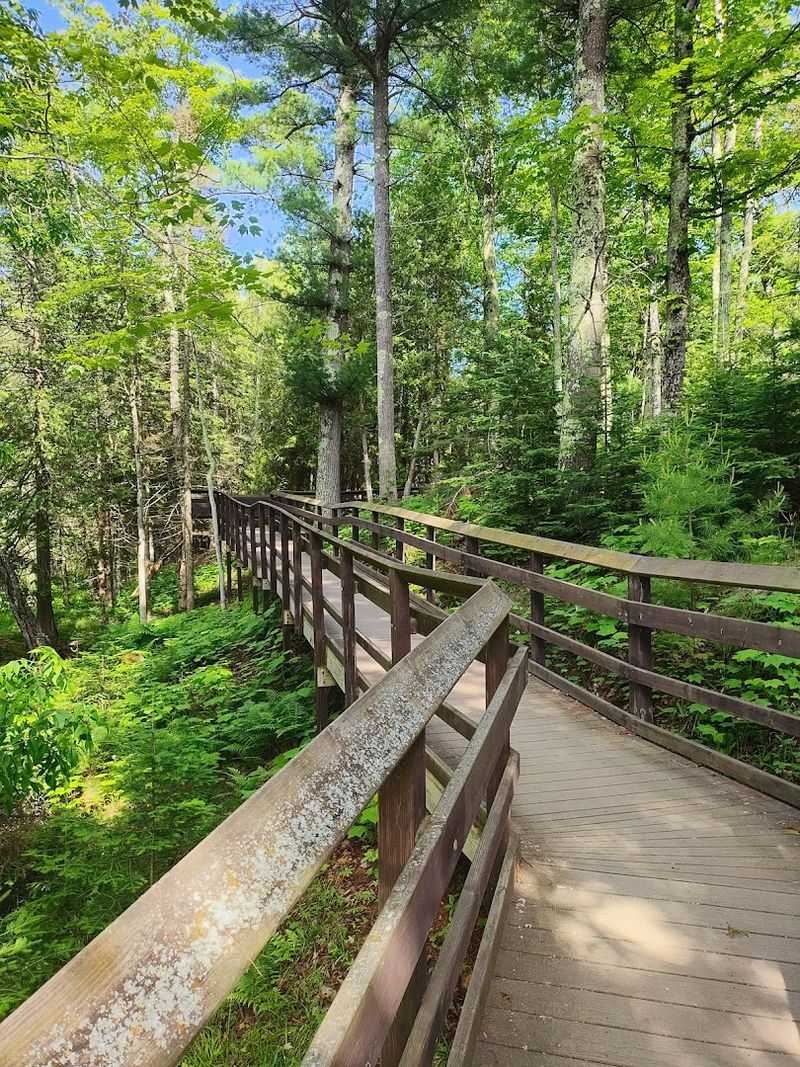
A mile-long boardwalk section carries visitors through terrain that would otherwise require muddy bushwhacking. This elevated pathway moves through a boreal forest environment that remains relatively rare this far south in the Great Lakes region.
The structure keeps feet dry while minimizing human impact on the delicate forest floor ecosystem.
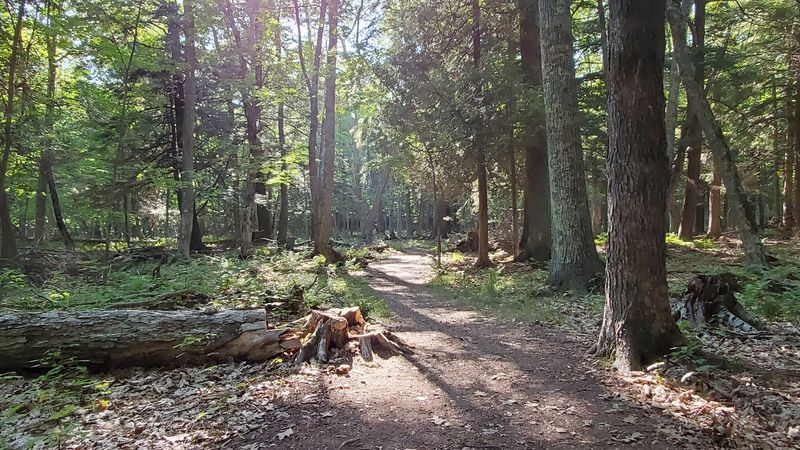
The boardwalk connects the beach area with interior trails, functioning as both transportation and destination. Walking across it provides close encounters with moss-covered logs, mushroom colonies, and the kinds of ferns that thrive in cool, moist conditions.
The path maintains a level grade, making it accessible for visitors with varying mobility levels.
Bird activity increases in the early morning hours along this route, with warblers and thrushes moving through the canopy. The boardwalk’s design allows for quiet movement, reducing the disturbance that typically accompanies hikers on crunchy forest trails.
Late afternoon light filters through the evergreen canopy in shafts that illuminate patches of undergrowth.
One Of Wisconsin’s Most Peaceful Lakeside Beaches
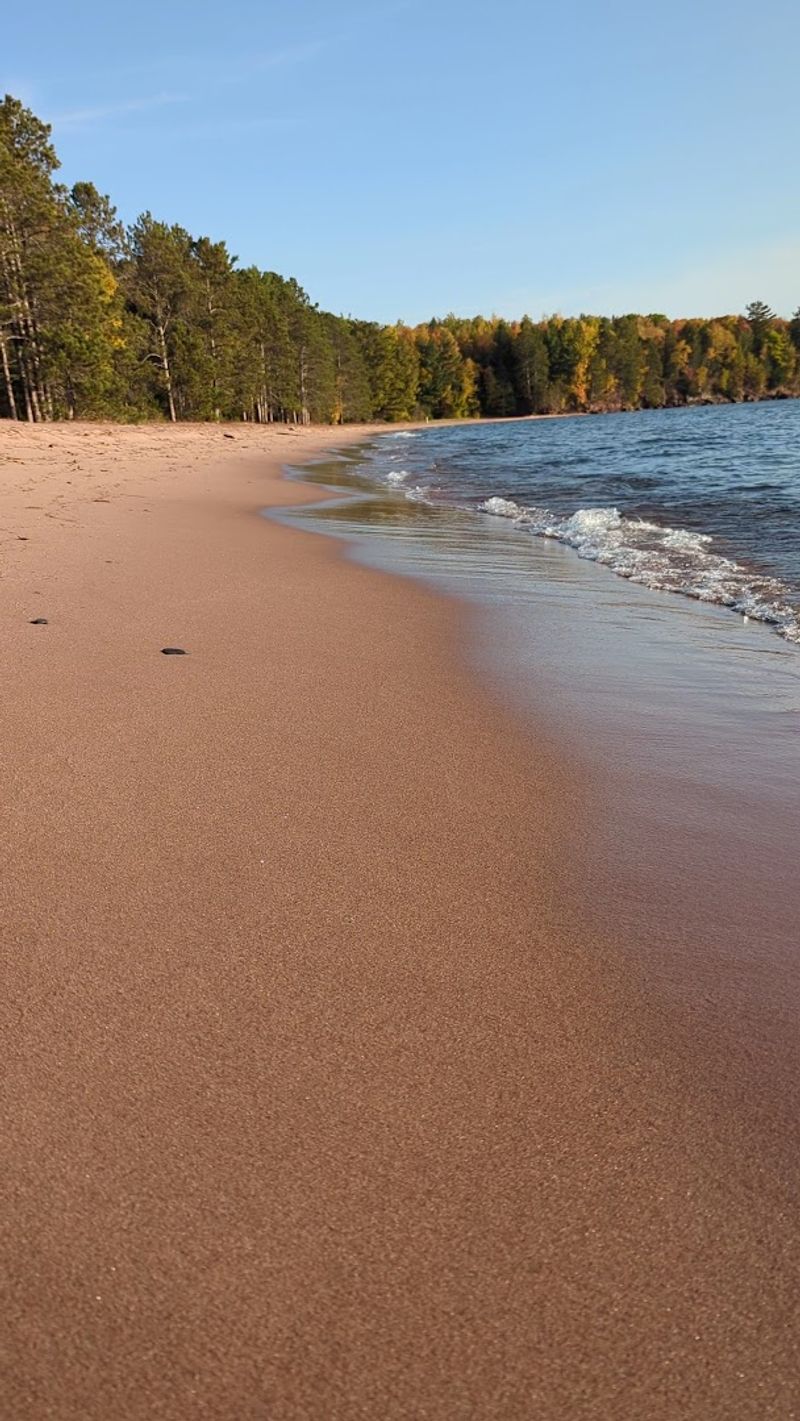
Barrier Beach forms a crescent of sand protected by the surrounding geography of Big Bay. The water here stays calmer than exposed Lake Superior shoreline, creating conditions suitable for wading and swimming during warmer months.
The sand extends wide enough to accommodate beachgoers without creating a crowded atmosphere, even on popular weekends.
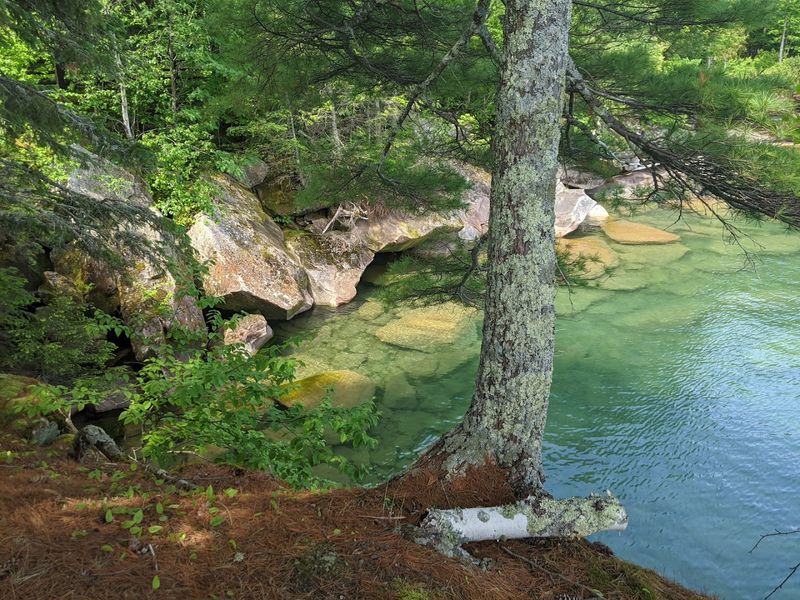
Water clarity at this beach often surprises first-time visitors accustomed to murkier inland lakes. You can watch your feet on the bottom in waist-deep water, and the gradual depth increase makes it appropriate for families with younger swimmers.
The bay’s protection means waves rarely exceed gentle lapping, quite different from the dramatic surf found on open Superior shores.
The beach remains open until park closing time at 11 PM, allowing for evening visits when the crowds thin out. Sunset viewing from this spot provides unobstructed western exposure, with the sun dropping behind distant points of land across the water.
Wildlife Sightings That Feel Surprisingly Close
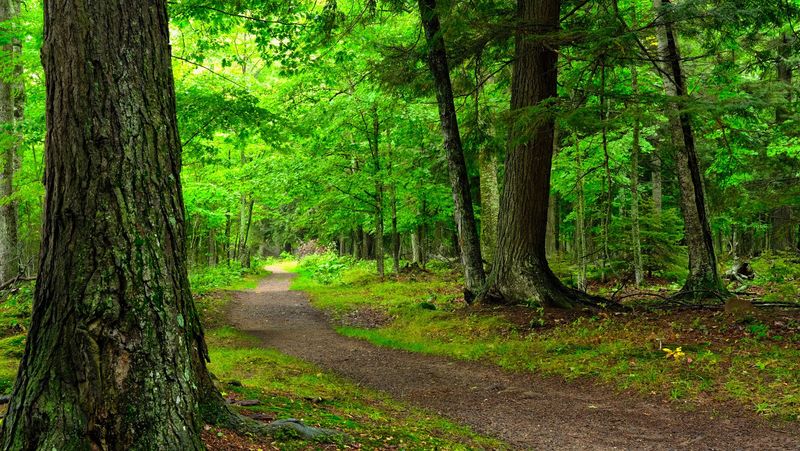
The island environment concentrates wildlife in ways that increase encounter frequency compared to mainland parks. White-tailed deer appear regularly along trails, often showing less wariness than their mainland cousins due to limited hunting pressure.
Black bears inhabit the island as well, though sightings remain relatively uncommon and the animals generally avoid human contact.
Birdlife provides the most consistent wildlife viewing, with species diversity shifting through the seasons. Spring migration brings warblers moving through the boreal sections, while summer hosts nesting loons on quieter water areas.
Bald eagles patrol the shoreline throughout the year, and their distinctive silhouettes against the sky become familiar sights during extended visits.
Smaller mammals including red squirrels, chipmunks, and snowshoe hares occupy the forest zones. Early morning and dusk hours produce the highest activity levels for most species.
The relative isolation of the island means animals maintain more natural behavior patterns than in heavily visited mainland locations.
Sunrises Over Lake Superior That Are Worth Waking Up For
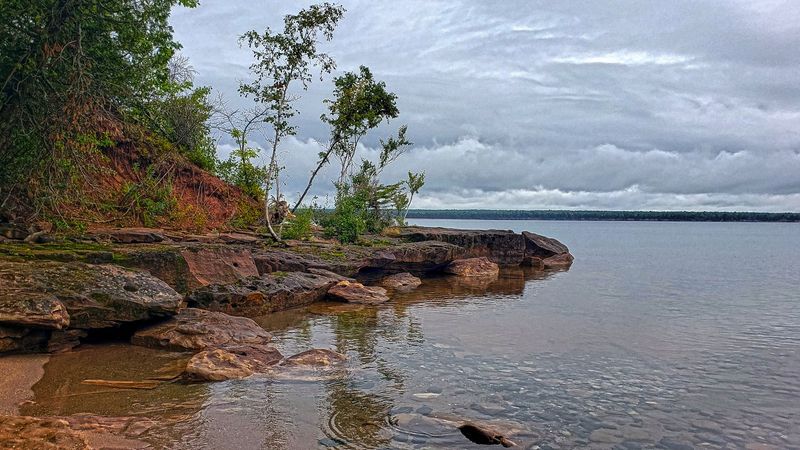
Lake Superior’s eastern horizon provides unobstructed views of sunrise for anyone willing to reach the shore before dawn. The experience differs substantially from sunset viewing, with cooler tones and often clearer atmospheric conditions.
Summer sunrises occur early enough that reaching a good vantage point requires genuine commitment, but the display rewards the effort.
The best viewing locations sit along the Bay View Trail or directly on Barrier Beach. Arriving fifteen minutes before official sunrise time allows you to watch the progressive color changes as light spreads across the sky.
The lake’s surface often lies calm in early morning, creating mirror effects that double the visual impact.
Fall and spring sunrises carry particular drama due to more varied cloud formations and the lower angle of light. The temperature differential between cold lake water and warming air sometimes produces fog banks that add atmospheric depth to the scene.
Photography enthusiasts find these conditions ideal for capturing the lake’s moody character.
Hiking Trails That Range From Easy Walks To Rugged Shoreline Paths
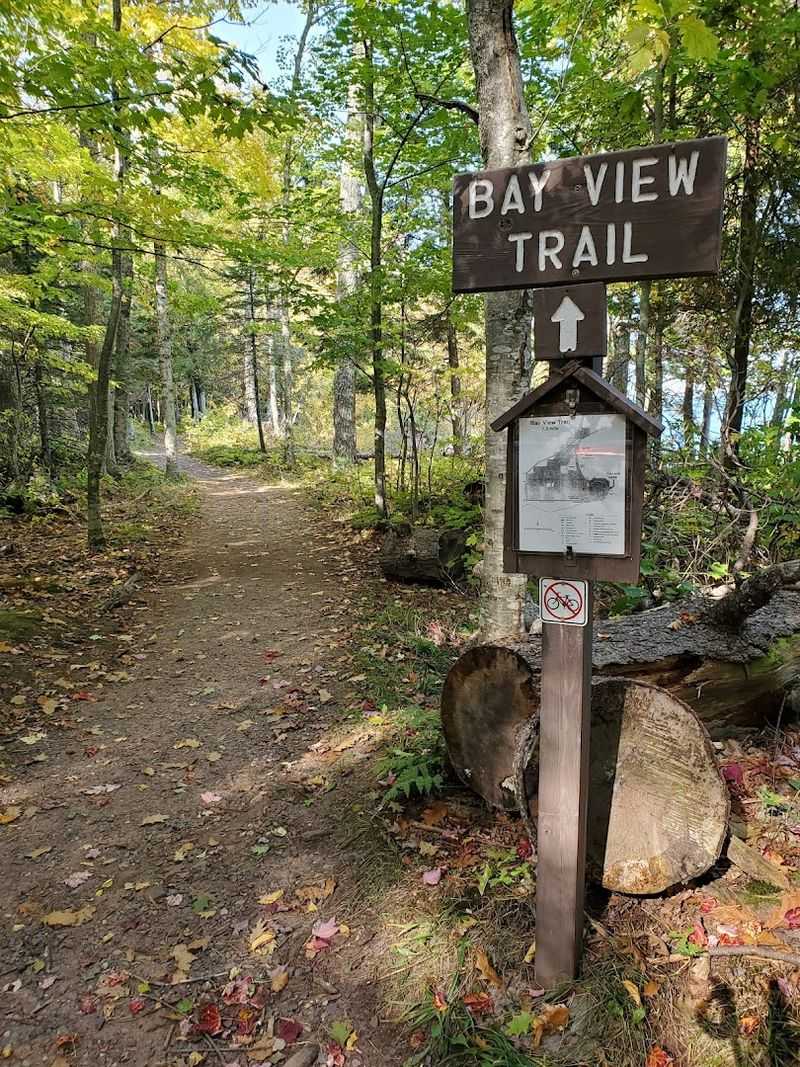
The park’s seven miles of trails divide into distinct experiences based on terrain and difficulty. The Lagoon Ridge Trail presents the most challenging option, with elevation changes and sections that become quite muddy after rainfall.
This route moves through varied ecosystems, providing education in how different plant communities adapt to subtle changes in drainage and exposure.
Bay View Trail hugs the shoreline for much of its length, offering easier walking on improved surfaces with regular scenic overlooks. Point Trail extends to the furthest reaches of the park’s peninsula, delivering isolation and dramatic water views for those willing to make the longer trek.
The boardwalk sections connect these routes, creating options for loop hikes of different lengths.
Trail conditions vary seasonally, with spring often bringing the muddiest surfaces and fall offering the most reliable footing. The park provides trail maps at the entrance, and following marked routes prevents navigation confusion in the denser forest sections.
A Remote Island Setting That Changes The Whole Experience
Madeline Island’s separation from the mainland creates an immediate psychological shift that begins the moment you board the ferry. The twenty-minute crossing from Bayfield establishes a boundary between ordinary life and park time, making the destination feel more significant than its actual distance would suggest.
This island quality affects everything from the pace of movement to how visitors interact with their surroundings.
The ferry requirement also functions as a natural crowd control mechanism. Day visitors must plan around the boat schedule, which runs regularly but not constantly.
This rhythm prevents the kind of continuous traffic flow that characterizes easily accessible parks. The island location means no through traffic exists, so everyone present has chosen to be there specifically.
Cell service becomes spotty in many park areas, completing the disconnection from mainland routines. This limitation frustrates some visitors initially but often becomes appreciated as time passes.
The island setting concentrates attention on immediate surroundings rather than distant obligations.
Campsites Surrounded By Forest And Lake Breezes
The campground contains sites spread through wooded areas that provide natural separation between neighbors. This spacing reduces the communal parking lot feeling that plagues some state park camping areas.
Sites divide between those with electrical hookups for RVs and more primitive options for tent campers, allowing visitors to choose their preferred level of amenity.
Lake breezes reach most camping areas, providing natural cooling during summer nights and helping control insect populations. The facilities include clean restrooms with running water, and shower buildings serve campers who prefer not to rough it completely.
Reservations become essential during peak summer weeks and fall color season, as the campground fills reliably during these periods.
The campground’s location within the larger park means trailheads sit within easy walking distance. Morning coffee can transition directly into a shoreline hike without requiring any vehicle movement.
Evening campfires become enhanced by the surrounding forest sounds and the occasional distant foghorn from boats navigating Superior’s waters.
A Short Ferry Ride That Feels Like The Start Of An Adventure
The Madeline Island Ferry operates year-round, though winter service switches to a wind sled when ice conditions permit. The summer boats carry both vehicles and foot passengers, with the crossing taking roughly twenty minutes depending on weather conditions.
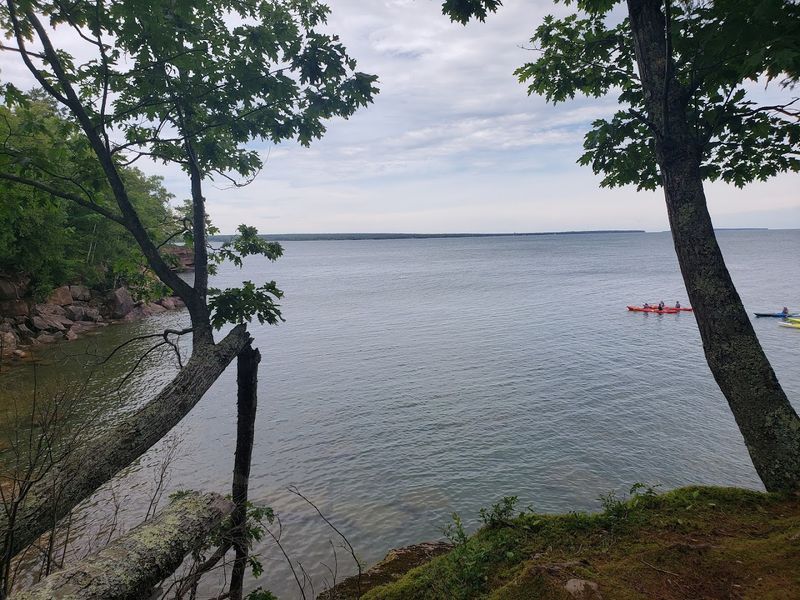
Standing on the outer deck during the passage provides panoramic views of the Apostle Islands archipelago spreading across the horizon.
The ferry ride transforms a simple park visit into something that feels more expedition-like. Water surrounds you completely during the crossing, and the gradual approach to the island builds anticipation in ways that driving directly to a park entrance cannot match.
The boat’s movement and engine sounds create a transitional experience that marks the shift from mainland to island mindset.
Ferry schedules require some planning, particularly for day visits, but the constraint adds structure rather than frustration. The ride back to Bayfield at day’s end provides time to process the experience while watching the island recede behind the boat’s wake.
Seasonal Colours That Completely Transform The Landscape
Spring arrives late on Madeline Island, with wildflowers emerging in June when mainland areas have already moved into summer mode. The delayed season means blooming periods compress into intense displays, with trilliums, lady slippers, and other forest flowers appearing in concentrated waves.
The boreal forest sections show their freshest greens during this period, with new growth contrasting against darker mature evergreens.
Fall color peaks typically in late September or early October, when the island’s hardwood trees ignite in shades that seem almost artificial in their intensity. Maples dominate the color show, their reds and oranges standing out against the constant green of pines and spruces.
The combination of colored foliage, blue lake water, and sandstone cliffs creates layered visual compositions that shift with every change in viewing angle.
Winter transforms the park into a quieter but equally striking environment, with snow coverage and ice formations along the shoreline. The seasonal changes ensure that return visits never duplicate previous experiences.