
A Family Has Been Running This Wisconsin Cheese Shop For More Than 100 Years
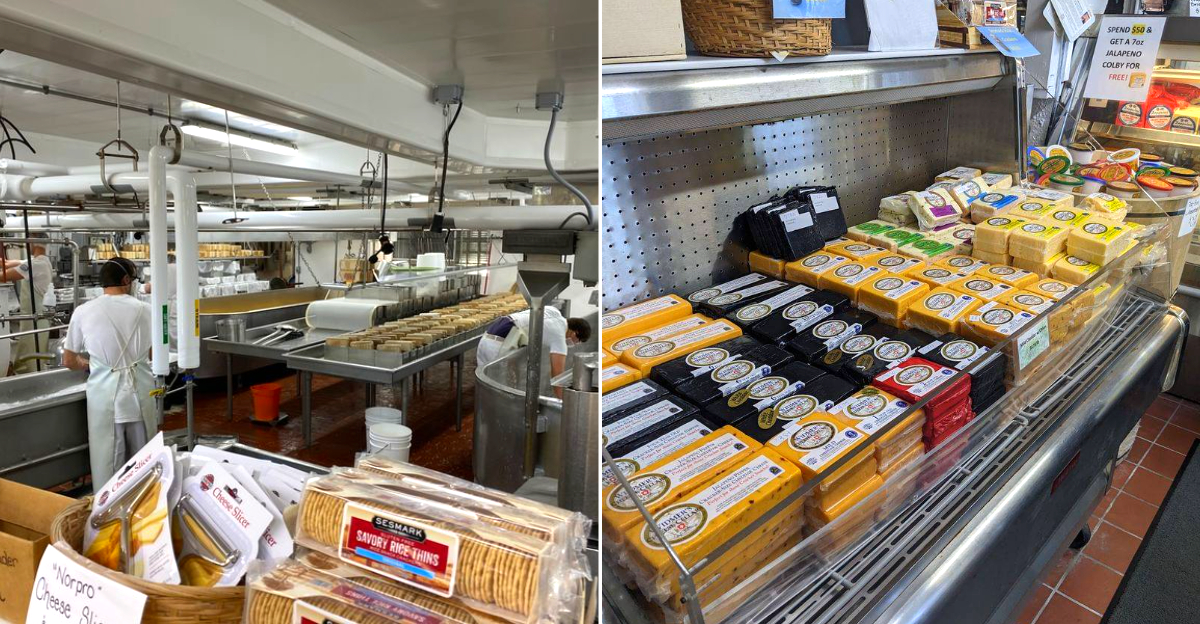
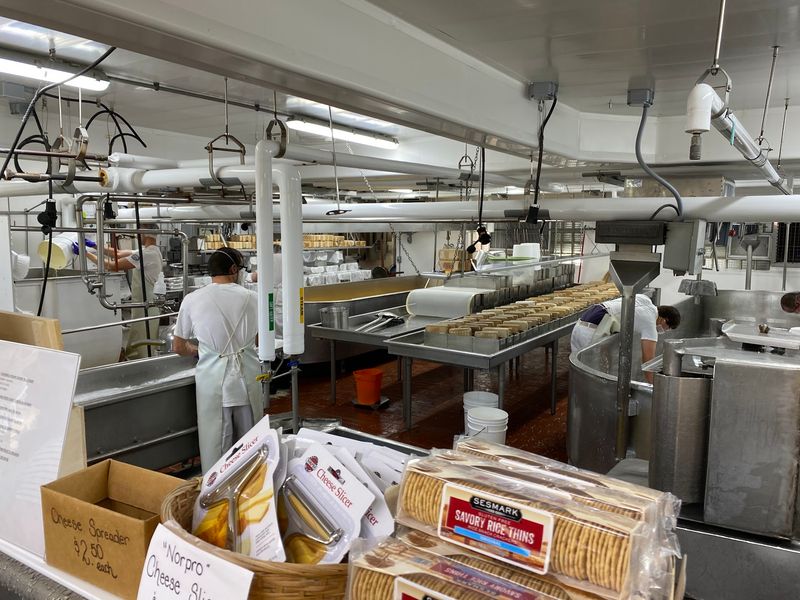
Fresh cheese has a way of stealing the spotlight fast. In Wisconsin, this small factory keeps things simple, hands-on, and full of flavor. The shop sits close to the production floor, so the action feels immediate. Cheesemakers stir, press, and stack while visitors browse nearby.
That working rhythm gives the stop plenty of personality without trying too hard. The family behind it has been making cheese for generations. Traditional methods still shape much of what comes across the counter.
Fresh curds bring the squeak. Brick cheese adds local character. Long-aged cheddar gives serious cheese fans something extra to chase.
There is no need for flashy extras here. The appeal comes from watching the process, sampling the results, and leaving with a cooler packed for the road. It is an easy detour that turns a quick food stop into something far more memorable.
A Century Of Cheesemaking Passed Down Through One Family
Back in 1922, Swiss immigrant John O. Widmer settled in Theresa after learning the cheesemaking trade as an apprentice in Wisconsin. More than a hundred years later, the same family name still hangs on the building.
Widmer’s Cheese Cellars is now run by the third generation, and the fourth has stepped into the business too. That kind of continuity is rare in food production, where big operations usually swallow up the small ones.
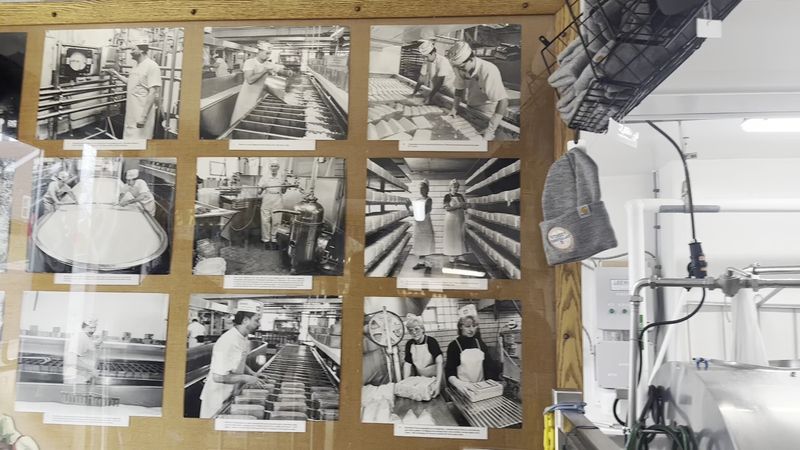
You feel the history the moment you look around. Old photographs line the walls, showing milk cans, horse-drawn wagons, and workers in white aprons doing the same jobs people do there today.
What strikes me most is how little has changed on purpose. The family kept the original building, the original recipes, and much of the original equipment because they believe it produces better cheese.
When you buy a block here, you are not just picking up a snack. You are supporting a Wisconsin business that has survived depressions, wars, and a century of shifting food trends by simply doing one thing extremely well.
Brick Cheese Made The Old Way, With Actual Bricks
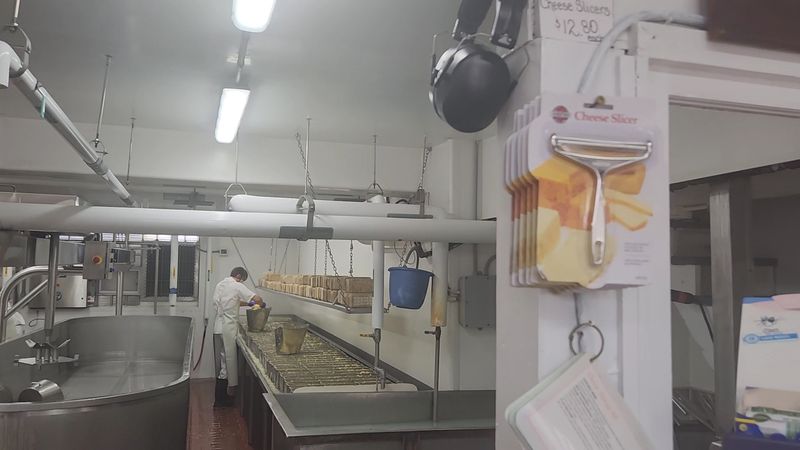
Here is the detail visitors talk about most: the bricks are real. Widmer’s Cheese Cellars still presses its signature brick cheese using genuine clay bricks, some of them the very ones John O. Widmer used back in the 1920s.
The bricks sit on top of the fresh curd, squeezing out whey slowly and evenly. Modern factories use mechanical presses, but this family stuck with the original method because the texture comes out different.
Brick cheese itself is a Wisconsin invention, created in the 1870s by a cheesemaker named John Jossi. Very few producers still make it the traditional way, which makes this shop something of a living museum.
You can buy it mild, which is buttery and soft with a gentle tang, or aged, which turns bold and pungent in a way that fans crave.
My advice is simple. If you have never tried brick before, start with the mild version and grab an aged variety too. The smoked one stays soft and mellow, and it disappears fast once you open the package at home.
Cheddar That Has Been Aging For Years
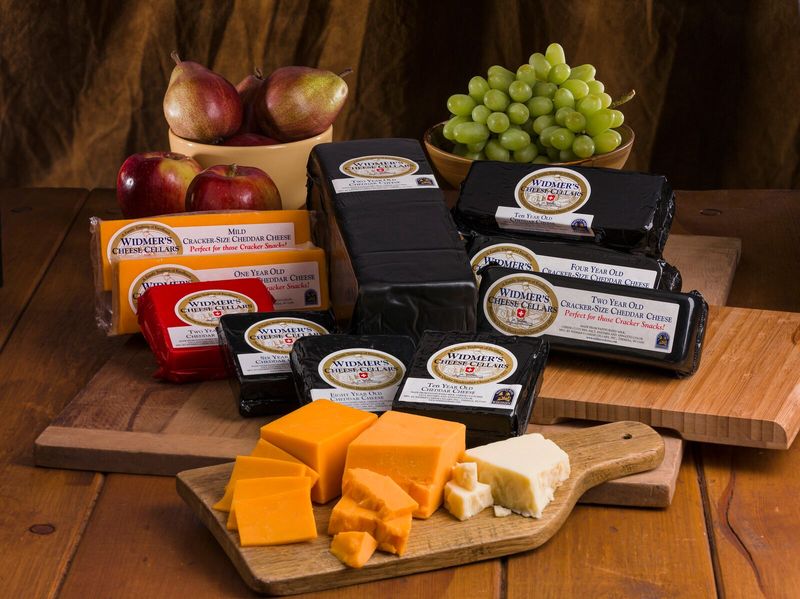
Patience tastes like something, and the cheddar here proves it. Depending on what is available, you can find blocks aged four years, six years, ten years, and even fifteen years.
Long aging changes cheddar completely. The moisture drops, the flavor sharpens, and tiny crunchy crystals form throughout the paste. Those crystals are calcium lactate, and cheese lovers treat them as a badge of quality.
Sampling the ladder from young to old is one of the best parts of stopping at Widmer’s Cheese Cellars. You taste four-year first, then jump to fifteen, and the difference is dramatic enough that you actually understand what aging does.
The very old cheddars are intense. Some people may find the oldest cheddars too sharp, and that is fine. Six-year tends to be the sweet spot for most visitors, balanced and nutty without overwhelming your tongue.
Store what you buy wrapped in wax paper inside a loose bag, not plastic wrap alone. Aged cheddar needs a little air, and treating it right at home keeps it tasting the way it did at the counter.
Squeaky Curds That Are Best The Day They Are Made
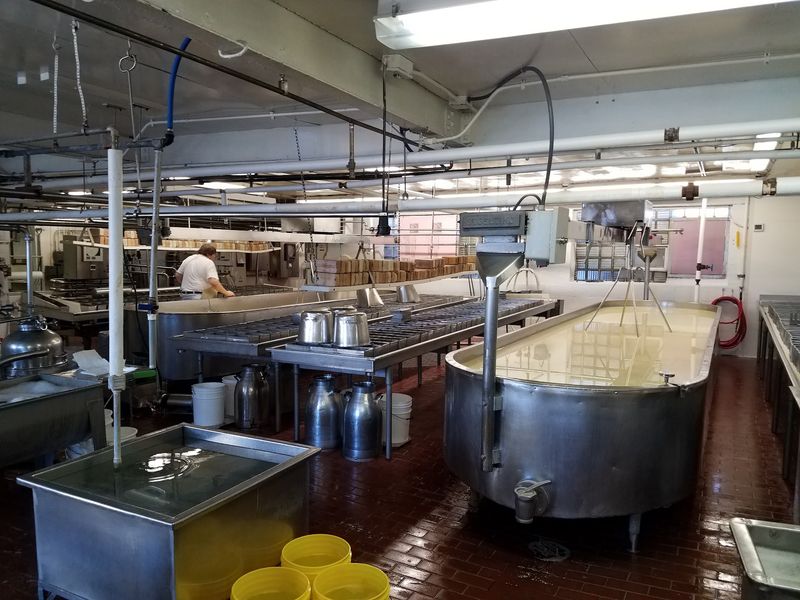
Fresh curds are known for their squeak, which gradually fades with time and refrigeration. Wisconsin takes this seriously, and so does the crew in Theresa.
Curds come out of the vat in batches, which means they are not available every single day. Calling ahead saves you disappointment, and the shop can tell you whether a fresh batch is planned.
Both cheddar curds and brick curds show up at Widmer’s Cheese Cellars, and the brick version is the one you cannot easily find elsewhere. It is softer, creamier, and a little milkier than the cheddar style.
Eat them at room temperature for the best flavor. Cold curds lose their squeak, though warming them gently for a few seconds in a microwave brings some of it back.
Plenty of folks fry them at home in a light batter, but honestly, fresh curds need nothing. Grab a bag, eat a handful in the parking lot, and save the rest if you can manage that kind of willpower.
Watching Cheesemakers Work Right In Front Of You
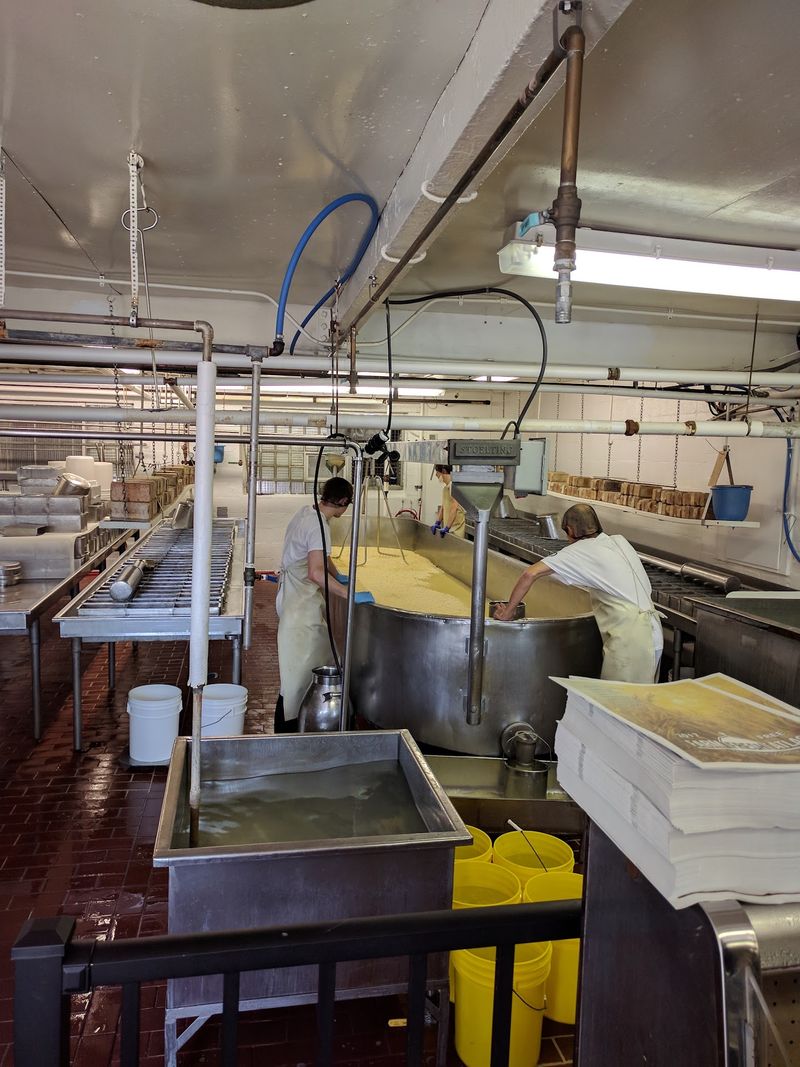
Most food gets made somewhere far away, behind walls you never see. Not here. The retail counter sits inside the working plant, so you look through the window and watch the whole process unfold.
Mornings are the best time. Cheesemakers stir vats, cut curd, drain whey, and stack blocks, and the rhythm of it is oddly relaxing to watch.
Weekdays give you the highest chance of seeing production, since Widmer’s Cheese Cellars runs its main operations Monday through Friday. Weekend visitors often catch cleanup instead, which is still interesting in its own way.
The address is 214 W. Henni St., Theresa, WI 53091, and street parking sits just steps from the door. Doors are open from 7 AM to 5 PM Monday through Saturday, with Sunday hours from 10 AM to 3 PM from June through October.
Staff members answer questions while they work, and they clearly enjoy explaining what is happening in the vats. Bring your curiosity, ask about the bricks or the aging cellar, and you will leave knowing more about cheese than when you arrived.
Samples That Turn A Quick Stop Into A Full Shopping Trip
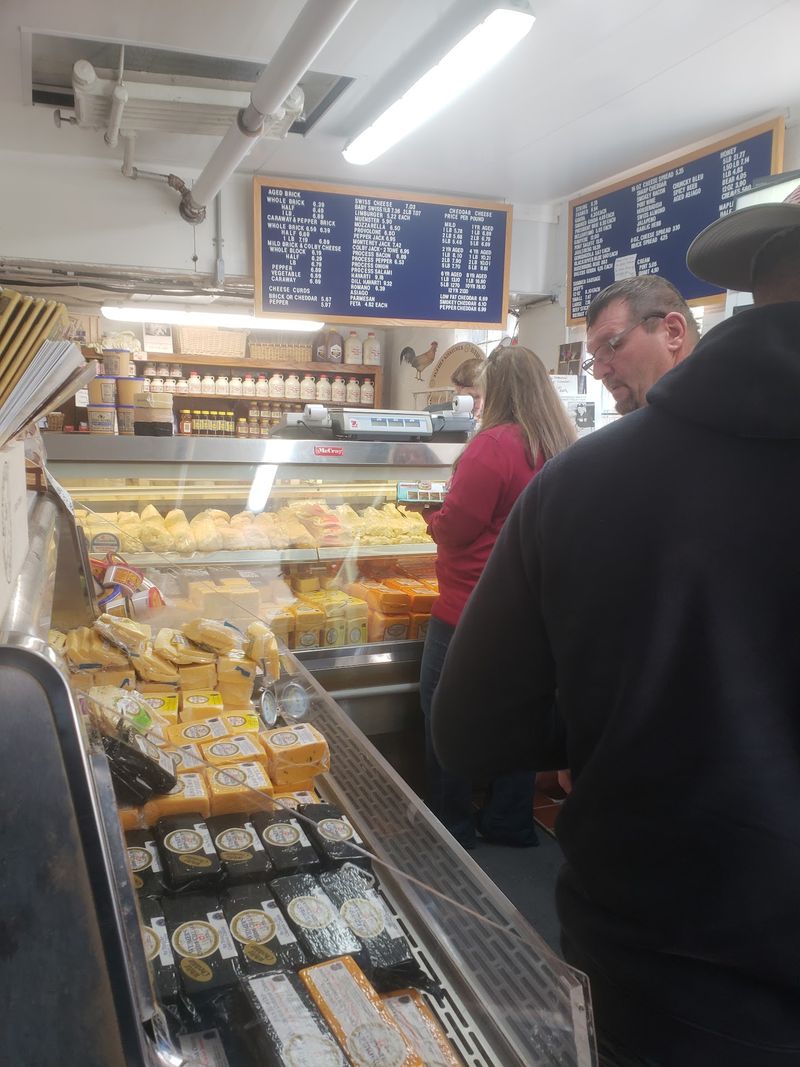
Warning: you will walk in planning to buy one block and leave with six. The sampling tray is the reason.
Cubes of brick, cheddar, colby, and whatever else is on hand sit ready for tasting, and the staff encourages you to try things you have never heard of. Butterkäse surprises a lot of people, since it is soft, mild, and almost buttery in the mouth.
Tasting side by side teaches you more than any label ever could. You notice how a four-year cheddar differs from a ten-year, or how smoked brick compares to plain.
Because Widmer’s Cheese Cellars is a small operation, the person handing you samples usually knows exactly how each one was made. Ask which cheese pairs well with apples or which melts best, and you get a real answer.
Bring a cooler if you are traveling. Wisconsin summers are warm, and good cheese deserves better than a hot back seat. A cooler with ice packs lets you shop freely without worrying about the drive home.
Colby, Butterkäse, And Other Wisconsin Classics On The Shelf
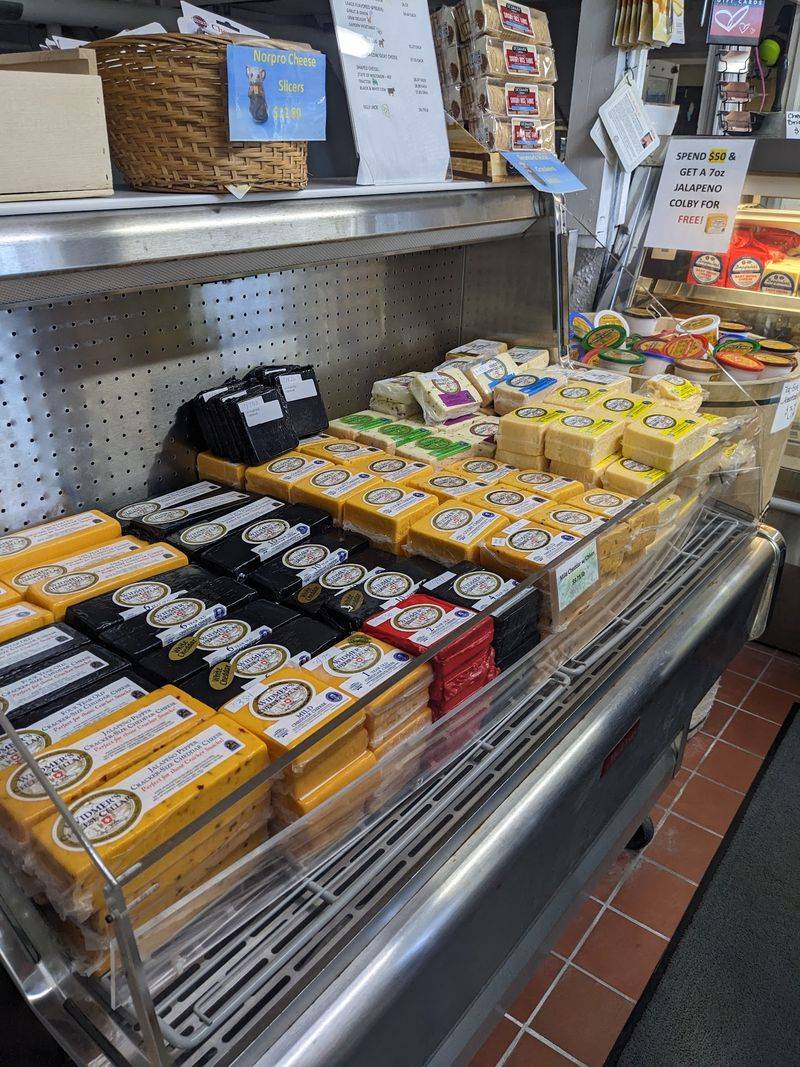
Colby was born in Wisconsin in 1885, invented in a small town about an hour away, and the state has been proud of it ever since. You can pick some up here, softer and more open in texture than cheddar, with a mellow flavor kids love.
Butterkäse deserves attention too. The name means butter cheese in German, and the texture lives up to it, smooth enough to spread across warm bread.
Beyond the house-made varieties, Widmer’s Cheese Cellars stocks products from other regional makers, along with summer sausage, cream, and spreads that pair naturally with cheese.
The brick spread is a solid pick if you want something ready for crackers without any slicing. Heavy cream from local dairies shows up too, and people use it for homemade butter or ice cream.
Shopping here works best if you build a small board in your head. Choose one mild cheese, one sharp aged block, one spread, and something savory to go alongside. That mix keeps everyone at your table happy, no matter their taste.
Planning Your Visit To Theresa And Why It Sticks With You
Theresa is a village of roughly 1,200 people in Dodge County, sitting a short drive off Interstate 41 between Fond du Lac and Milwaukee. The detour takes minutes, and the payoff lasts a lot longer.
Give yourself thirty to forty-five minutes inside. Rushing through means missing the sampling, the historical photos, and the view of the production floor.
Arriving early on a weekday gives you the fullest experience at Widmer’s Cheese Cellars, since production is usually underway and fresh batches are most likely. Calling 888-878-1107 beforehand confirms curd availability.
What sticks with me about places like this is the sense of scale. A handful of cheesemakers, one old building, and a family that refused to modernize away the things that mattered.
You leave with cheese, sure, but also with a clearer picture of how Wisconsin earned its reputation. Traditions survive because people choose to keep them alive, day after day, batch after batch.
Add it to your next drive through the state. Small stops like this one are exactly what make a road trip memorable.