
A Free Half-Mile Boardwalk On Mississippi’s Natchez Trace Takes You Past Turtles, Gators, And Giant Cypress Trees
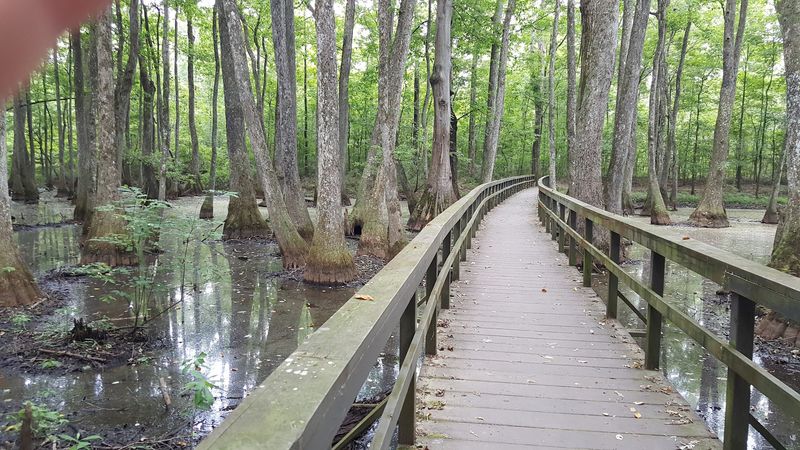
I only pulled over to stretch my legs, expecting a quick look and nothing more. Instead, a wooden walkway carried me straight out over dark, glassy water in the middle of Mississippi, with giant trees rising all around.
Turtles slid off logs, birds called from the branches, and the whole place felt like a different world. Best of all, it costs nothing to walk in, which makes it an easy stop for any family on the road.
A Swamp Stop at Milepost 122
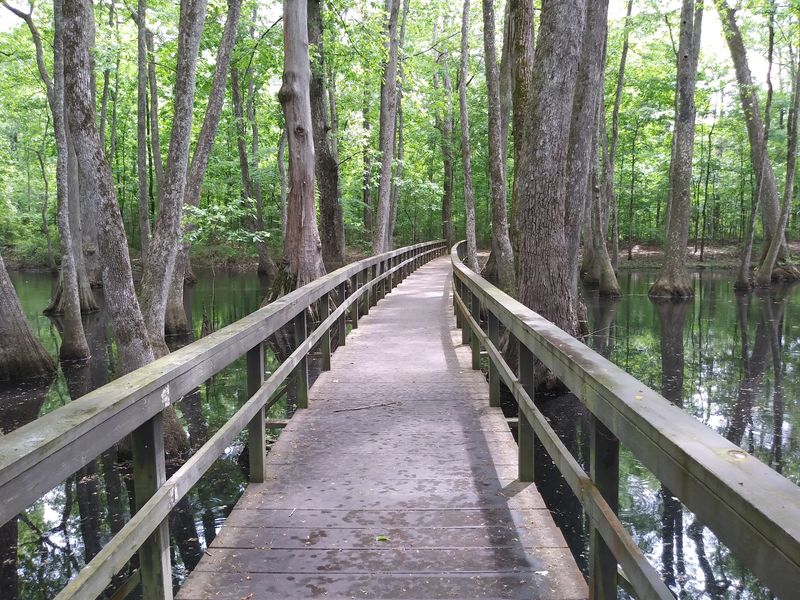
Drivers cruising the Natchez Trace Parkway in central Mississippi can easily roll right past it. Look for milepost 122, near the town of Canton, where a small parking area marks the start of a half-mile loop trail through a real cypress swamp.
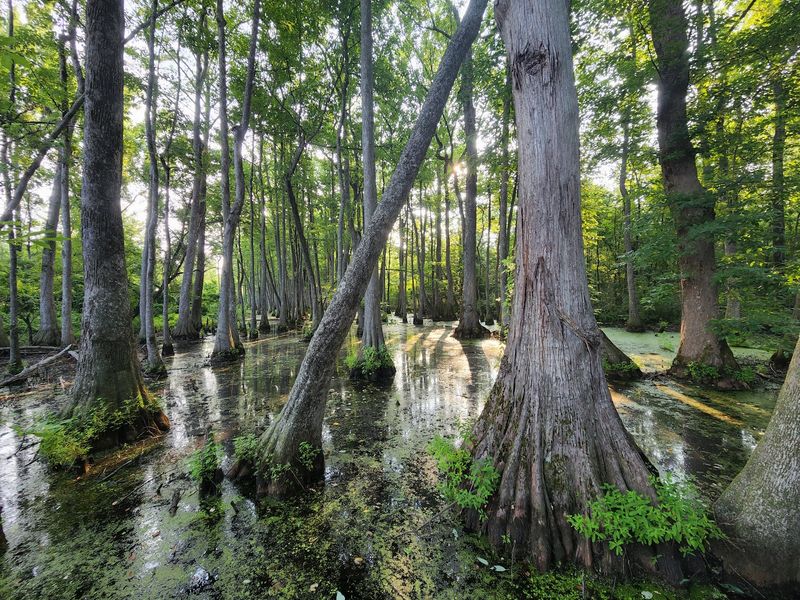
The setting is simple but striking. A wooden boardwalk and bridge lead visitors out over still, dark water, where tall trees stand with their roots soaked year after year.
You do not need special gear, a guide, or a ticket to enjoy it.
Plenty of travelers treat it as a quick break from the long, quiet road. Many say they stopped for a second and ended up staying much longer than planned.
Others mention that you would never guess such a photo-worthy spot was tucked there unless you actually parked and stepped out.
The site is managed by the National Park Service as part of the parkway, which stretches across several states. That connection means the trail is maintained as a public natural area rather than a commercial attraction.
For families mapping out a road trip, it offers a chance to see a wetland up close without leaving the main route or spending a single dollar.
An Old River Channel Left Behind
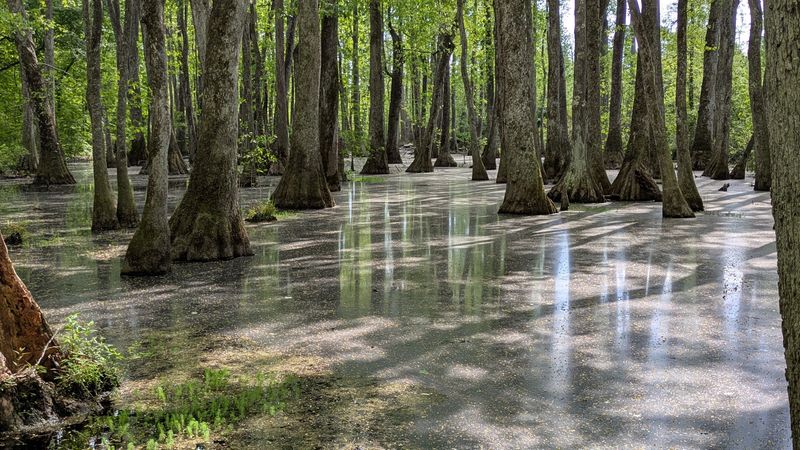
Long before any boardwalk existed, the Pearl River flowed through this spot. Over time, the river shifted course, leaving behind an abandoned channel that slowly filled with shallow, slow-moving water.
Nature took that leftover channel and turned it into something new. Trees that can handle wet ground moved in, and the old riverbed became the swamp you see today.
The water looks black because it sits still and shaded, stained by leaves and plant matter that settle on the bottom.
Knowing this history changes how the walk feels. You are not just looking at a pond in the woods.
You are standing above the ghost of a river that once carved its way across Mississippi, then wandered off somewhere else.
Water levels can change from year to year, too. Some visitors have walked the trail during a drought and still found it lovely, then returned a year later to see the channel fuller and greener.
That shifting quality is part of what makes repeat visits interesting. Each season and rainfall pattern paints the swamp a little differently, so the scene you remember may not match exactly what greets you on the next trip.
Bald Cypress and Water Tupelo Giants
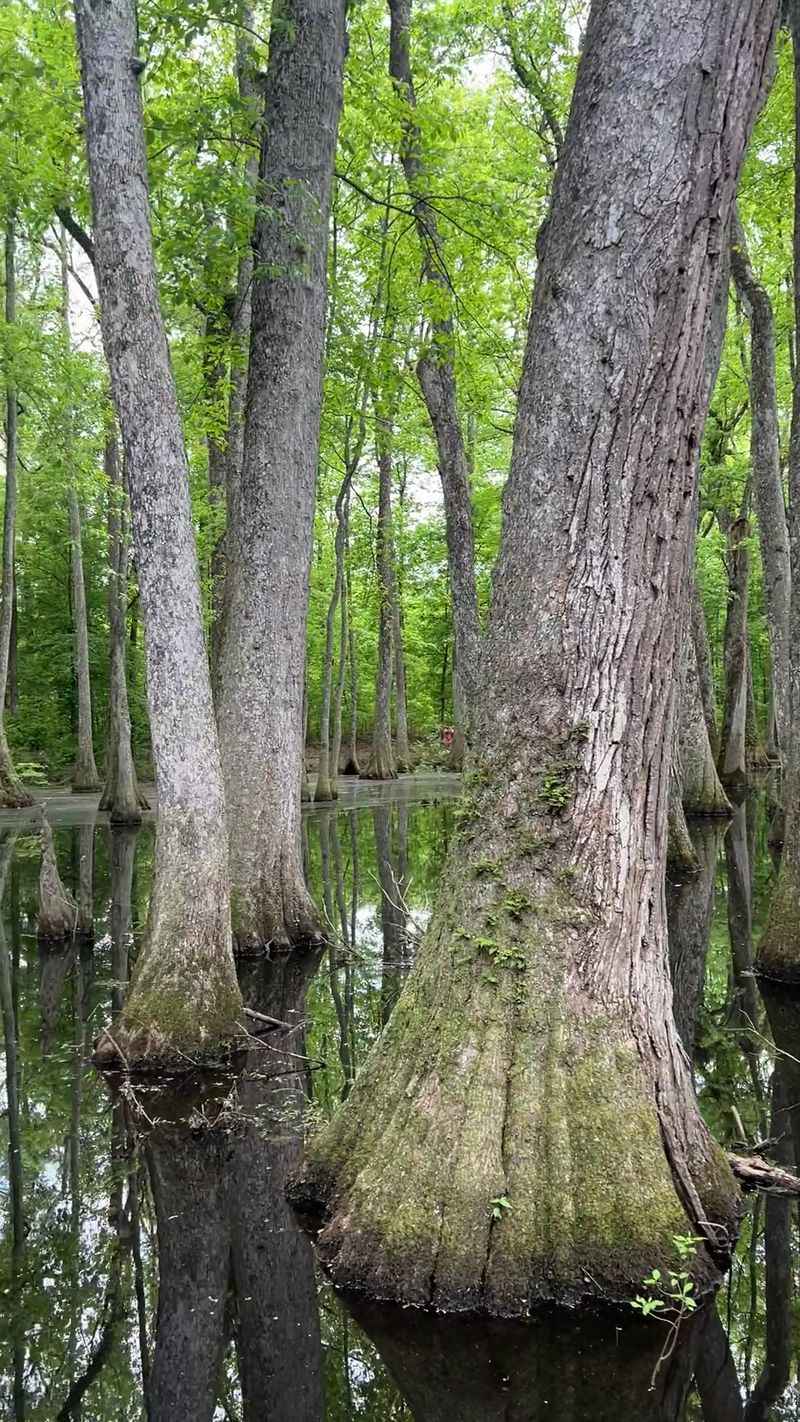
Tilt your head back. The bald cypress trees here rise high above the boardwalk, their trunks flaring wide at the bottom like the skirt of a dress.
Alongside them grow water tupelo trees, another species built to live with wet feet. Together, these two kinds of trees shape almost everything about the swamp, from the shade overhead to the reflections on the water below.
Many visitors describe them as old, huge, and majestic.
Look closely at the water and you will notice odd knobby shapes poking up around the trunks. These are cypress knees, woody growths that rise from the roots.
Scientists still discuss exactly why they form, which makes them a fun mystery to share with curious young walkers.
Here is a quick fact worth tucking away: bald cypress trees are conifers, yet they drop their needles every fall. That habit is where the word bald comes from.
So if you visit in winter, the branches may look bare and spooky, while spring and summer bring soft green needles back. The trees give the swamp a very different personality depending on the month you arrive.
Planks Over the Black Water
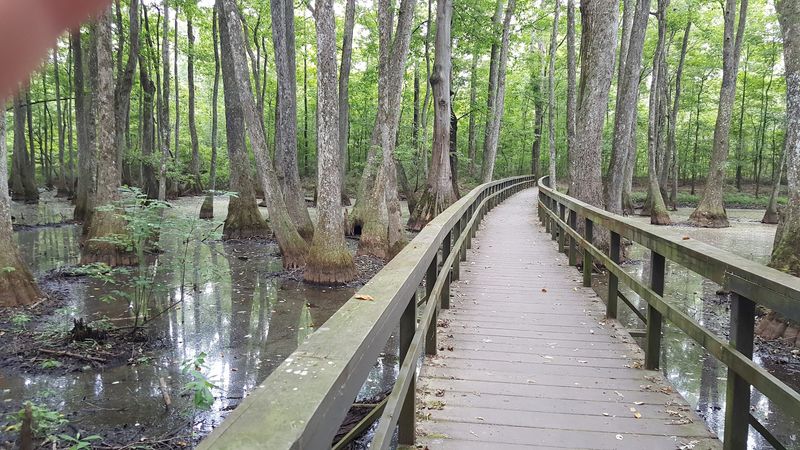
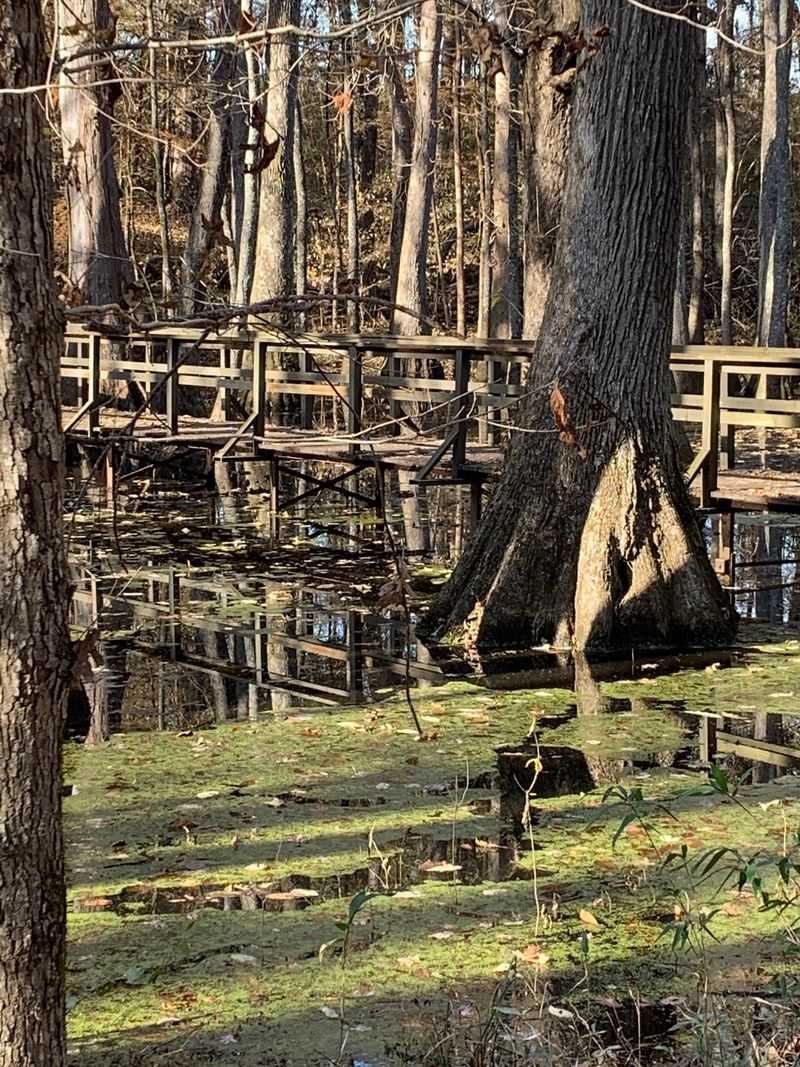
Wooden planks creak softly underfoot as the trail leaves solid ground and stretches out across the swamp. That moment, when the water suddenly surrounds you on both sides, is the highlight for many people.
The boardwalk and bridges are mostly made of wood and include railings along the water crossings. Those railings help parents relax a bit while little ones lean over to search for turtles.
Visitors often call the pathway a safe way to get up close and personal with the trees.
Some travelers say the boardwalk bridge alone is really all you need to experience. If time is short, simply walking out onto it and pausing in the middle gives you the best views of the black water and towering trunks.
It feels a little like walking across a stage set built just for the swamp.
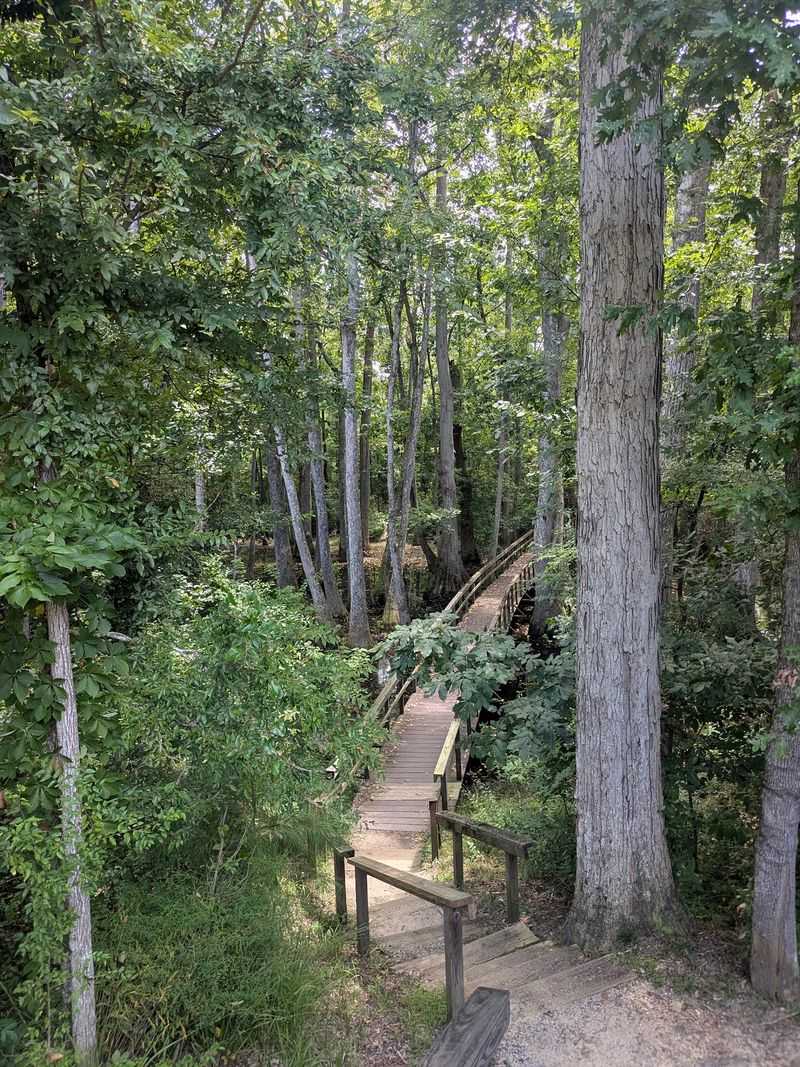
Getting to the boardwalk does involve a short set of stairs heading down from the parking area. Once you are on the wood, though, the walking is flat and easy.
Take it slowly, stop often, and let your eyes adjust to the shadows. Details hiding in the water have a way of appearing only after you stand still.
Gators, Turtles, and Wading Birds
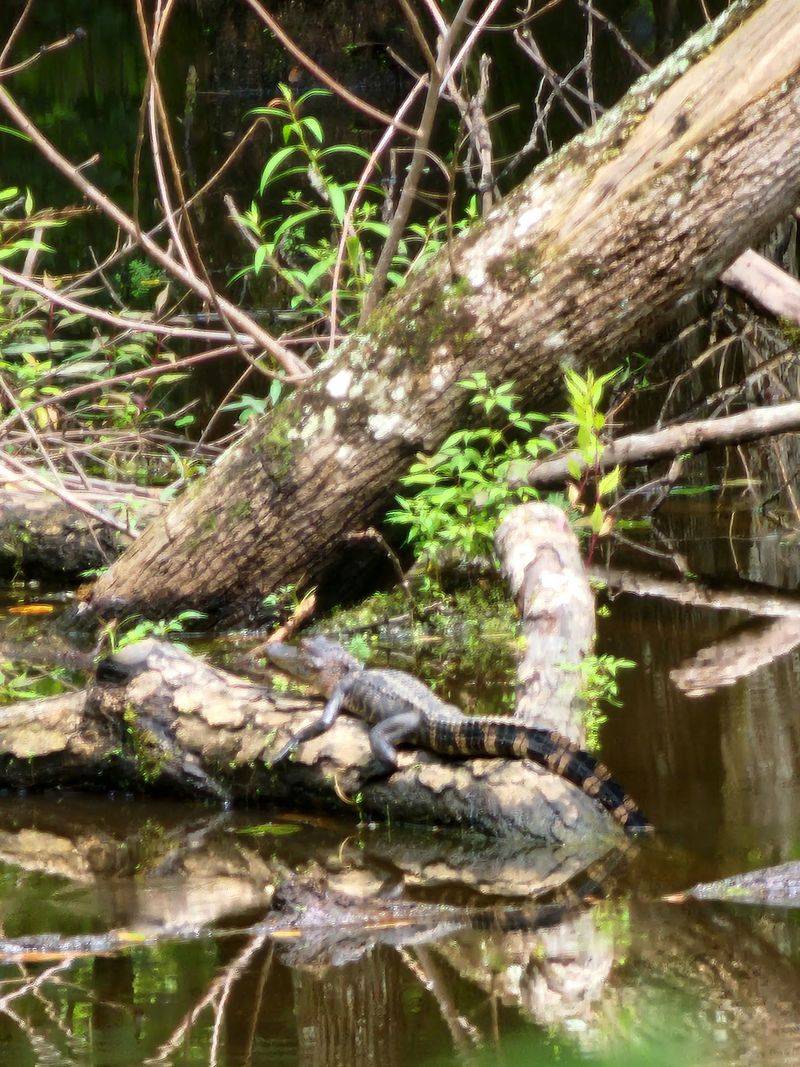
Did somebody just spot a gator? At this swamp, that question gets asked a lot, and sometimes the answer is yes.
Small alligators are among the most talked-about sights here. Visitors report seeing them basking on logs, floating among plants, or even playing around in the water.
Others leave without spotting one, so treat any sighting as a lucky bonus rather than a promise.
Turtles are a far more reliable find. People regularly mention seeing several at once, and a few have noticed some impressively large ones.
Wading birds and a variety of other birds move through the trees, making the trail a pleasant spot for birdwatching.
Smaller creatures fill in the rest of the picture. Tiny fish dart through the shallow water, crickets chirp from the edges, and some walkers notice mysterious swirls on the surface they cannot quite identify.
Even the insects can be surprisingly bright and colorful.
Warmer weather tends to bring more activity. Folks who visited on chilly days have said they plan to return when it heats up, hoping the reptiles will be more active.
Bring patience, keep your voice low, and scan the logs carefully, because swamp animals blend in remarkably well.
Trailside Signs That Teach
Curious walkers will appreciate the interpretive signs placed along the path. They explain the plants, animals, and natural forces that shaped this unusual patch of Mississippi.
The trail itself is clearly marked, so there is little chance of getting turned around. Between the markers and the signs, the loop works almost like a small outdoor classroom.
Families homeschooling on the road, or simply trying to sneak a lesson into vacation, can use each stop as a conversation starter.
Try turning the signs into a game. Read one aloud, then challenge everyone to find an example nearby, whether it is a cypress knee, a tupelo trunk, or a bird perched above the water.
Younger children tend to remember facts much better when they can point at the real thing.
The information also helps adults see the swamp with fresh eyes. Learning how the trees survive in standing water, or why the channel exists at all, adds depth to what might otherwise be a pretty stroll.
It turns a quick stop into a small story about how land, water, and living things change together over many years, something that sticks long after the car pulls away.
The Full Half-Mile Loop
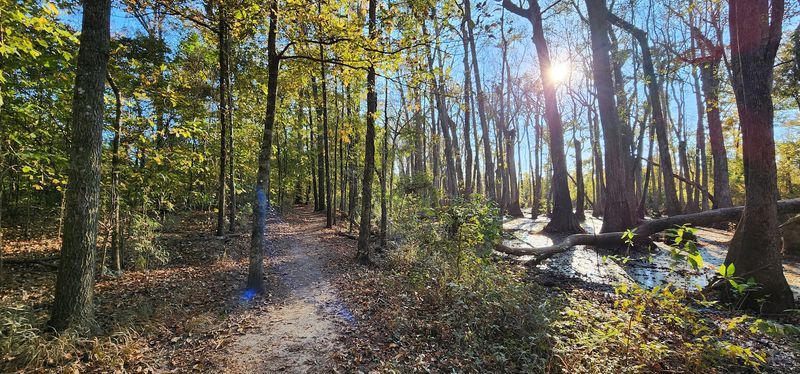
Fifteen to twenty minutes is about all it takes to complete the loop at a steady pace. Many visitors, however, find themselves lingering for an hour or more.
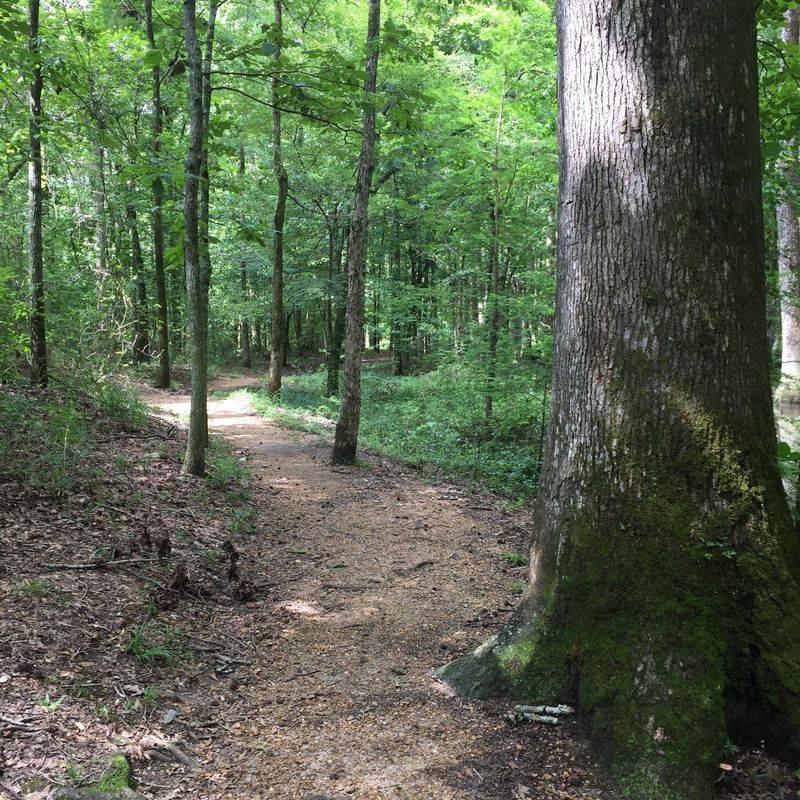
After crossing the boardwalk, the half-mile trail continues through shady woods around the swamp. The ground is mostly flat, making it a nice, easy walk for most ages and fitness levels.
Several people describe it as a relaxing stroll rather than a true hike.
Opinions differ a little about the back portion. Some walkers love the quiet shade and the chance to keep exploring.
Others feel the boardwalk section delivers the best views, and that the rest of the loop is less exciting and buggier.
A few notes help set expectations. Parts of the trail could use a bit of upkeep, and some visitors have noticed fallen trees in the area.
Watch your footing and pay attention to the path.
If you have time and energy, walking the entire loop gives you a fuller sense of the swamp and the surrounding forest. If you are short on either, enjoying the bridge and turning back is perfectly fine.
The choice depends on your group, the weather, and how hungry everyone is getting.
Stillness, Shadows, and Reflections
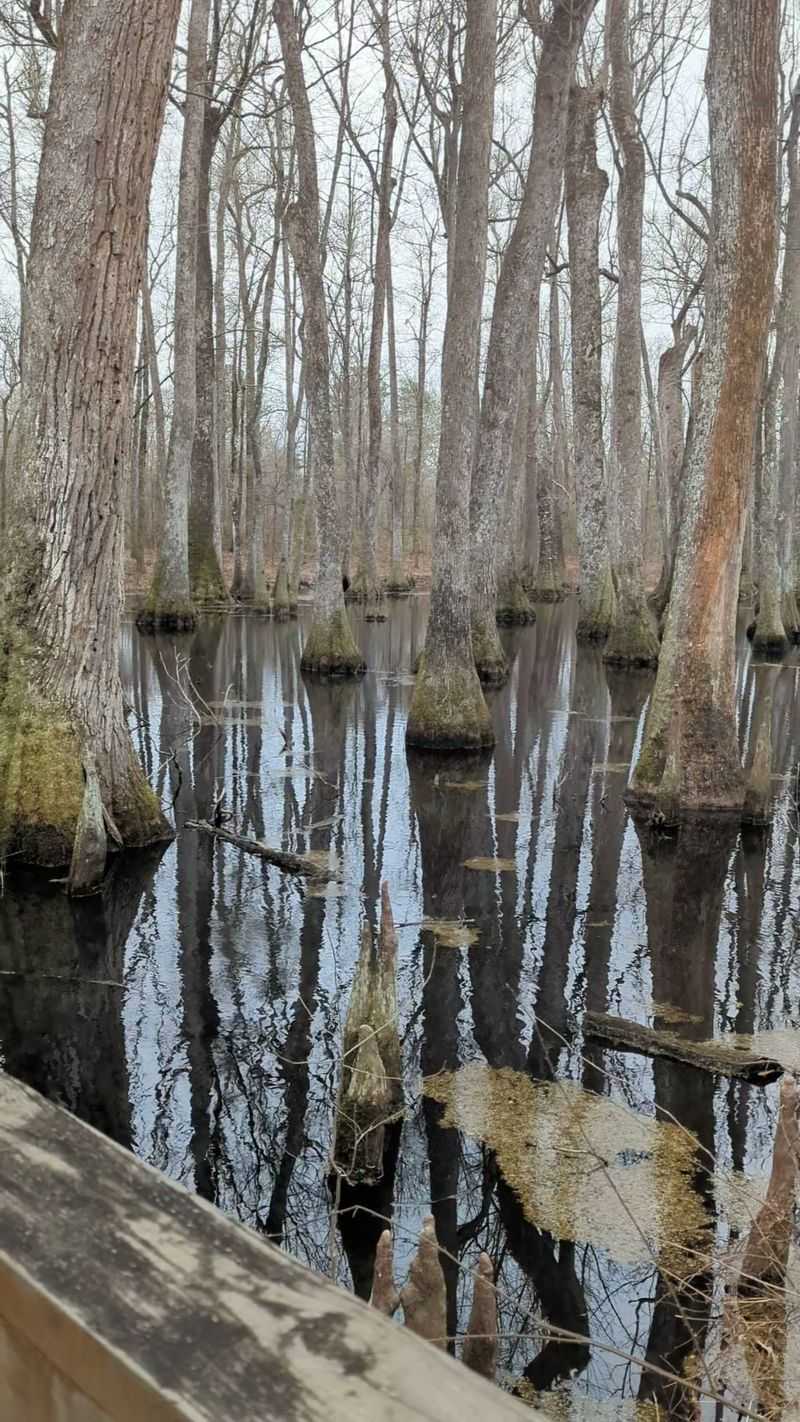
Silence settles over the swamp in a way that surprises people. Visitors often use words like otherworldly, eerie, and mysterious to describe the mood.
The black water acts almost like a mirror, reflecting the trunks, branches, and sky above. On calm days, it can be hard to tell where the trees end and their reflections begin.
That doubled view is a big reason photographers love this spot.
Sound plays a role, too. Bird calls, chirping crickets, and the occasional splash carry clearly through the still air.
Some describe a quiet so deep it feels ghostly, with a constant sense that a gator might be watching from somewhere just out of sight.
Gloomy weather does not ruin the experience. In fact, overcast skies and murky water can make the atmosphere feel even more dramatic and unique.
A few travelers have said the moodiness was exactly what they enjoyed most.
For anyone wanting a break from busy highways and crowded attractions, the calm here works like a reset button. Sometimes visitors even have the entire boardwalk to themselves.
Standing there in the shade, surrounded by water and tall trees, it is easy to forget the road is only steps away.
Who the Walk Suits Best
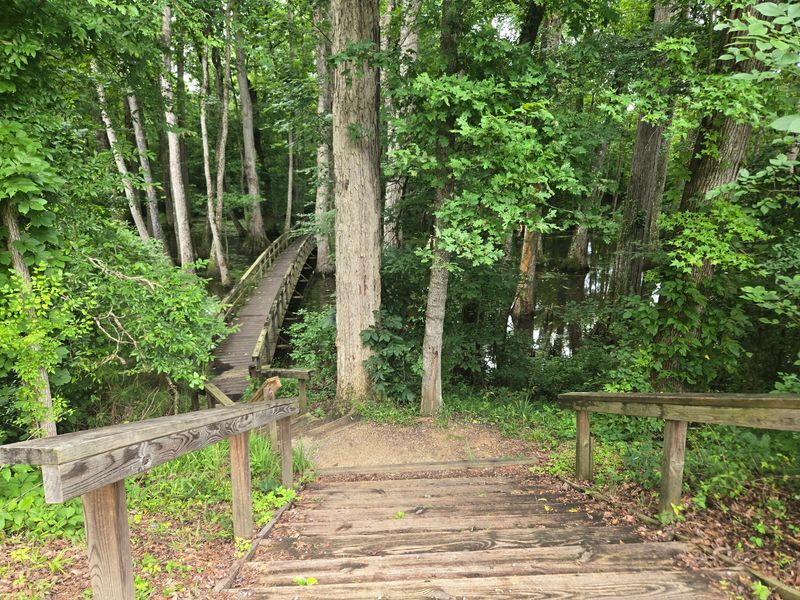
Picture a grandparent, a couple of grade-schoolers, and the family dog all on the same outing. That kind of mixed group fits this trail nicely.
Visitors frequently describe the walk as short, easy, and good for all ages. The flat terrain and boardwalk railings make it manageable for young children and older travelers alike.
Kids tend to enjoy exploring and searching the water for creatures, which keeps them engaged without wearing them out.
Dog owners are often seen strolling the loop with their pets. Photographers and birdwatchers also find plenty to keep them busy, from reflections on the water to birds flitting through the canopy.
There is one important limitation. A set of stairs leads down to the boardwalk, so the trail is not considered suitable for wheelchairs.
Families using strollers may want to plan on carrying them for that stretch, or bring a baby carrier instead.
Couples looking for a peaceful pause will feel at home, too. Some have shared that they took their time, soaked in the scenery, and spent far longer than expected.
Whether you want a quick leg stretch or a slow nature lesson, the trail adapts to the pace you bring.
Bug Spray and Other Packing Smarts
Mosquitoes are the swamp’s least welcome residents, and visitors mention them again and again. Several people call them vicious, and some say they still got bitten despite using spray.
Packing insect repellent is the single most useful tip for this stop. Long sleeves and lightweight pants can help, especially if you plan to walk the full loop through the wooded section where bugs tend to be thicker.
Ticks are another concern. At least one visitor found a Lone Star tick after their walk, so it is smart to check everyone, including pets, once you are back at the car.
Making a quick tick check part of the routine is an easy habit for families.
Facilities are very limited. There are no restrooms or picnic tables at the site itself, though visitors note that bathrooms can be found about a mile away.
Plan bathroom breaks accordingly, especially with little ones.
Bringing water and a few snacks in the car is wise, since you will not find anything to buy here. A camera or phone with space for photos is also a good idea.
With a little preparation, the bugs become a minor annoyance rather than the main memory.
Hours, Cost, and Getting There
Free. That single word covers the admission price, which makes this one of the easiest nature outings in Mississippi to fit into any budget.
The swamp sits along the Natchez Trace Parkway at milepost 122, with an address listed near Canton. Mapping apps can guide you to the parking area, but watching the mileposts along the parkway works well too.
The stop is a short detour, so it pairs nicely with a longer drive down the Trace.
Specific operating hours are not spelled out in detail, so check the National Park Service website for the most current information before you go. The site is managed as part of the parkway, and the park service posts updates there about conditions and any closures.
Timing matters more than you might think. Spring and fall bring milder temperatures, vibrant scenery, and possibly fewer insects.
Summer offers more wildlife activity but also more heat and mosquitoes. Winter visits can feel quiet and stark, with bare cypress branches and cooler reptiles less likely to appear.
Plan on spending anywhere from fifteen minutes to an hour. Allow extra time if you want photos, wildlife watching, or a slower family pace.
A Short Detour With Lasting Pull
Some stops fade from memory before the next gas station. This swamp tends to stick around a lot longer than its short trail length would suggest.
Part of the appeal is how little it asks. There is no fee, no long hike, and no complicated planning.
You simply park, walk down a few steps, and find yourself standing above black water among ancient-looking trees.
The rewards feel bigger than the effort. Turtles sunning on logs, the chance of a small alligator, birds overhead, and that strange, hushed atmosphere combine into something many travelers describe as a must-see along the Trace.
Even on gray days or during dry spells, people still find beauty here.
Of course, it is not perfect. Mosquitoes can be fierce, facilities are missing, the stairs limit accessibility, and parts of the trail could use care.
Going in prepared makes those drawbacks much easier to handle.
For families craving a quick taste of wild Mississippi, the boardwalk delivers a memorable twenty minutes, or an unhurried hour if you let it. Pack the bug spray, keep an eye on the logs, and give the swamp a chance to show you its quieter side before you hit the road again.