
America’s Oldest Botanic Garden Still Stands As One Of Pennsylvania’s Most Overlooked Gems
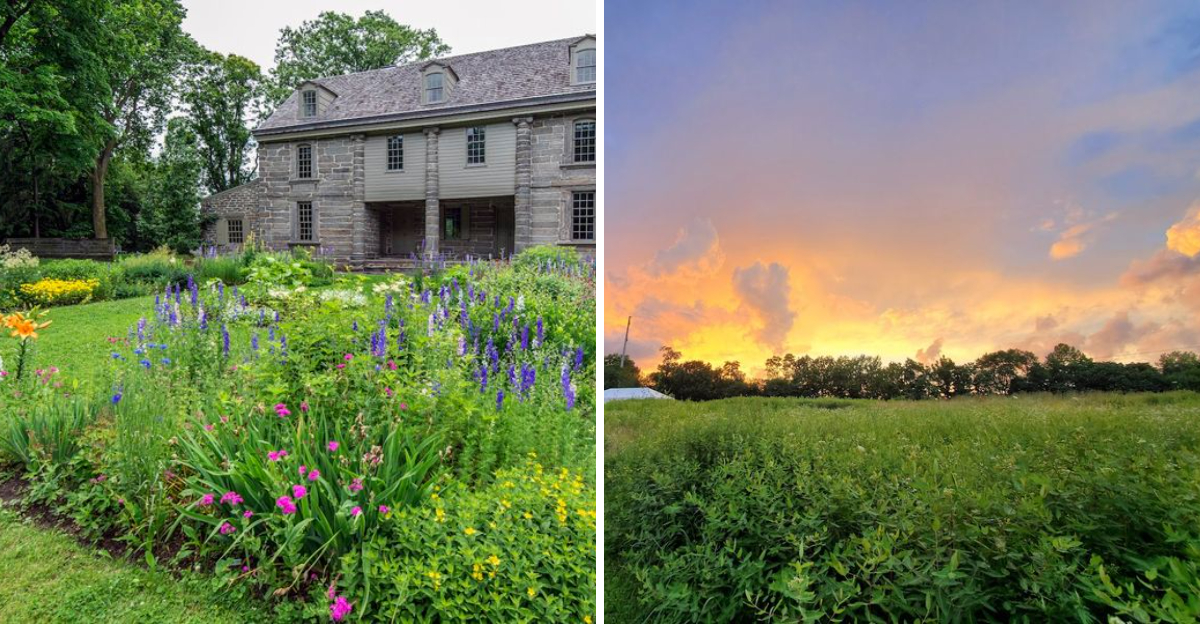
Tucked away along the Schuylkill River in Philadelphia lies a hidden gem, America’s oldest surviving botanic garden. Founded in 1728 by John Bartram, this 50-acre sanctuary preserves centuries of botanical history while offering a tranquil escape from the hustle of city life.
With its rare plants and rich legacy, Bartram’s Garden has inspired naturalists for nearly three centuries. Yet, despite its historical significance and natural beauty, many travelers miss out on this peaceful retreat that stands as a testament to America’s early botanical exploration.
America’s Oldest Botanic Garden: A Living Piece Of History
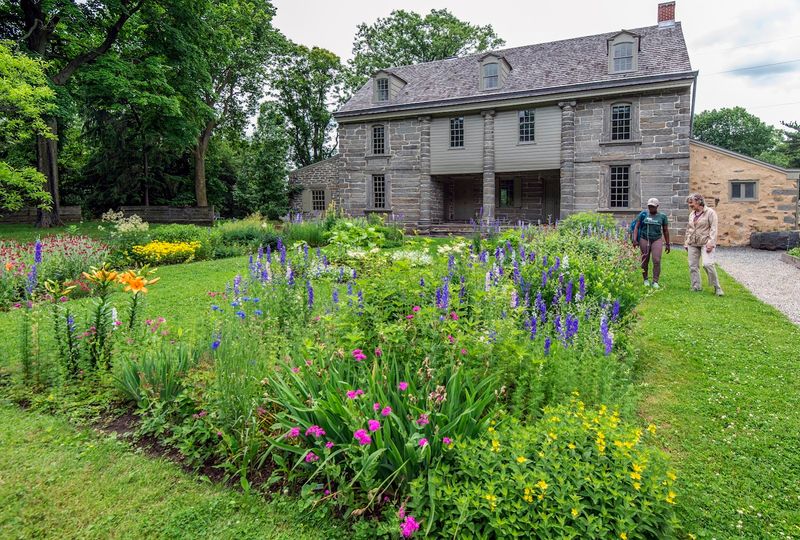
Walking through Bartram’s Garden feels like stepping into a botanical time capsule that has been carefully maintained since colonial America. John Bartram established this sanctuary in 1728, and it remains the oldest living botanic garden in the nation.
The property at 5400 Lindbergh Boulevard preserves not just plants but an entire philosophy of scientific curiosity and natural observation.
The garden’s collection includes specimens that Bartram himself cultivated during his expeditions across the American frontier. He corresponded with European botanists and introduced countless native American species to the wider world.
His stone house, built in 1731, still stands as a testament to his dedication to both architecture and horticulture.
Visitors today can trace the same paths Bartram walked while developing his revolutionary approach to plant collection and classification. The garden operates daily from 9 AM to 4 PM, offering free admission to explore this remarkable historical treasure that continues teaching new generations about American botanical heritage.
Bartram’s Garden: Preserving Over 300 Years Of Botanical Heritage
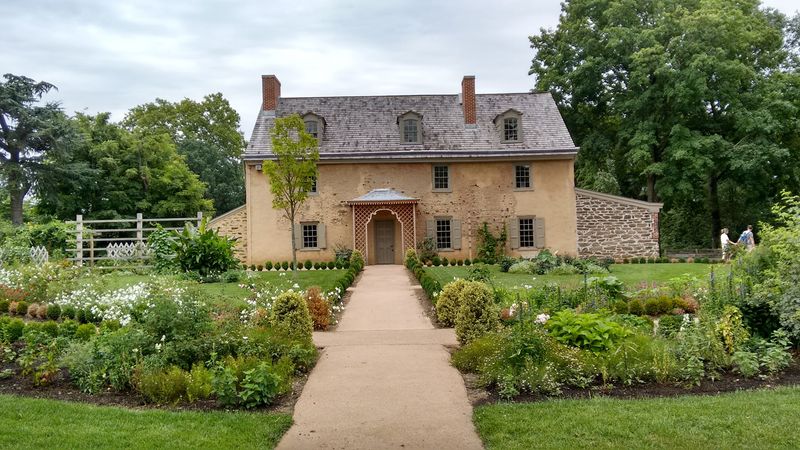
Few places in America can claim an unbroken botanical legacy spanning three centuries. Bartram’s Garden has maintained its living collections through wars, economic depressions, and dramatic urban development all around it.
The garden’s commitment to preservation extends beyond simply keeping plants alive—it maintains the original vision of botanical exploration that John Bartram championed.
The site functions as both museum and active research facility. Staff members continue the tradition of plant propagation using techniques that blend historical methods with modern conservation science.
Many specimens growing today descended directly from plants Bartram collected during his travels through unexplored American territories.
The garden’s role in American horticultural history cannot be overstated. It served as the first botanical exchange point between the New World and Europe, fundamentally changing how people understood North American flora.
This heritage attracts botanists, historians, and garden enthusiasts who appreciate seeing botanical science practiced in its birthplace, where curiosity about the natural world first took institutional form in America.
The Founding Family Behind Bartram’s Garden
John Bartram earned recognition as America’s first native-born botanist, but his achievements extended far beyond personal accolades. Born in 1699, he developed an insatiable curiosity about the natural world that drove him to explore territories most colonists considered too dangerous or remote.
His self-taught approach to botany impressed European scientists who couldn’t believe someone without formal training could make such significant discoveries.
The Bartram family transformed their farm into a center for botanical exchange. John’s son William followed his father’s path, becoming an accomplished naturalist and artist whose detailed illustrations of American wildlife and flora influenced generations.
Together, they created a legacy that persists in the garden’s continued operation.
Their collaborative work established Philadelphia as a hub for natural science in colonial America. The family welcomed visiting scientists, shared seeds and cuttings, and maintained extensive correspondence with botanists across the Atlantic.
This tradition of scientific generosity and knowledge-sharing remains central to the garden’s mission today.
A Tranquil Escape In The Heart Of Philadelphia
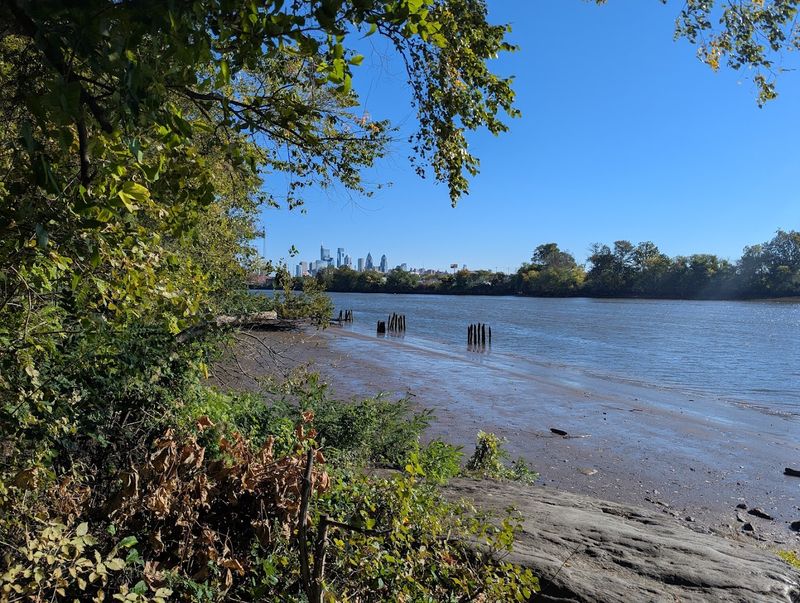
Just four miles from Philadelphia International Airport, Bartram’s Garden offers an unexpected oasis where city sounds fade into birdsong and rustling leaves. The 50-acre property provides the kind of mental decompression that modern urban dwellers desperately need.
Visitors consistently describe the experience as discovering another world that exists somehow separate from the surrounding metropolis.
The garden’s location along the Schuylkill River enhances its peaceful atmosphere. Well-maintained trails wind through diverse plantings, leading to quiet riverside spots with carved wooden benches perfect for contemplation.
Some visitors bring books, others simply sit and watch the water flow past, grateful for this accessible retreat.
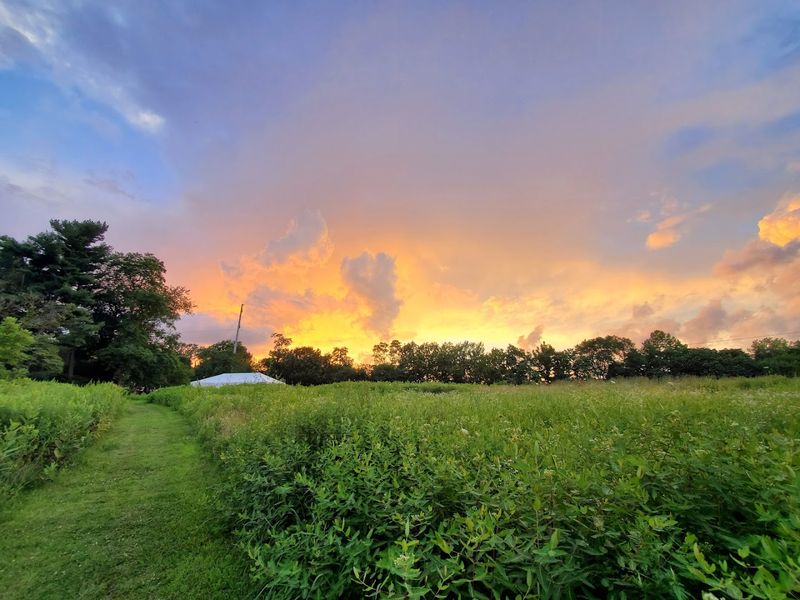
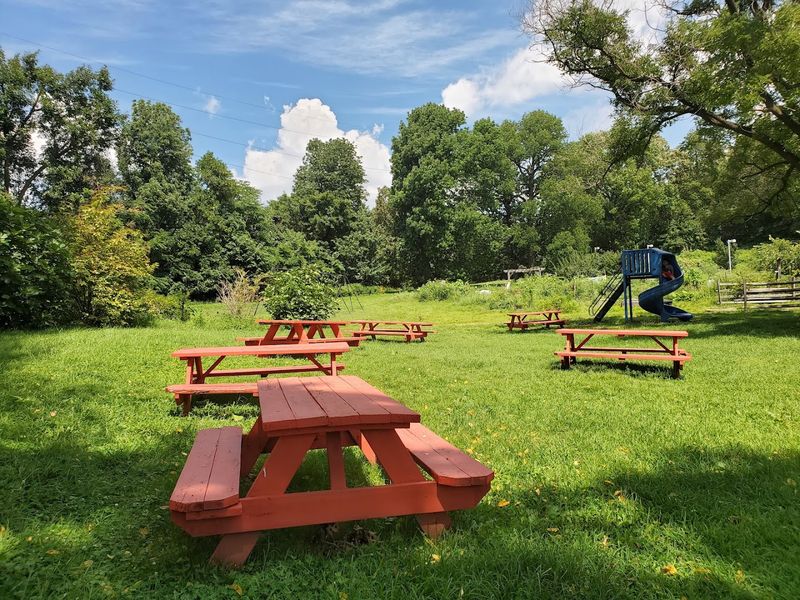
The property includes open meadows, shaded groves, and formal garden areas that each offer distinct moods and settings. Families spread picnic blankets on sunny lawns while solo visitors find solitary corners for reflection.
The garden’s design encourages slow exploration rather than rushed sightseeing, rewarding those who take time to notice seasonal changes and subtle botanical details throughout the grounds.
Rare Plant Collections At Bartram’s Garden
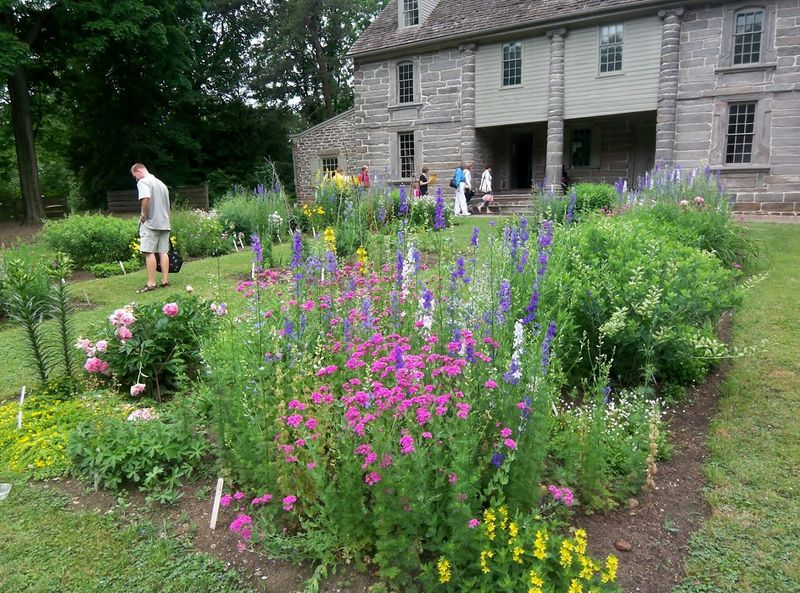
Bartram’s Garden maintains plant collections that botanists travel considerable distances to study. The garden specializes in preserving species that John Bartram introduced to cultivation, including varieties that have become rare or disappeared from their native habitats.
These living archives provide crucial genetic material for conservation efforts and botanical research.
Among the garden’s treasures stands the oldest surviving ginkgo tree in the United States, a male specimen that displays spectacular golden foliage each autumn without producing the notoriously malodorous fruit that female ginkgos bear. This single tree represents a direct link to Bartram’s original plantings and his role in introducing Asian species to American gardens.
The collections also include native species that Bartram discovered during his explorations. Plants that now appear commonly in gardens worldwide first entered cultivation through this Philadelphia property.
Staff members continue adding to the collections, focusing on native Pennsylvania species and plants with historical significance to the Bartram family’s work, ensuring that future generations can study and appreciate America’s botanical heritage.
A Birdwatcher’s Paradise At Bartram’s Garden
The combination of river access, mature trees, and diverse plantings makes Bartram’s Garden a magnet for bird species year-round. The Academy of Natural Sciences regularly hosts birding walks here, and participants have documented impressive species lists during these outings.
Waterfowl congregate along the Schuylkill River shoreline while woodpeckers work the older trees and hawks patrol overhead.
The garden’s habitat diversity supports both resident and migratory birds. Spring and fall migrations bring unexpected visitors, and the birding community stays alert for rare sightings.
A painted bunting appeared recently, creating excitement among local ornithologists who rushed to observe this unusual visitor to Pennsylvania.
Even casual visitors notice the abundant bird activity. The garden provides binoculars for loan and maintains feeding stations that attract common species for easy observation.
Early morning visits reward birders with peak activity periods when songbirds are most vocal. The riverside location serves as a crucial stopover point for birds traveling along the Atlantic flyway, making almost any visit potentially productive for those interested in avian observation.
The Unique Beauty Of Bartram’s Garden’s Spaces
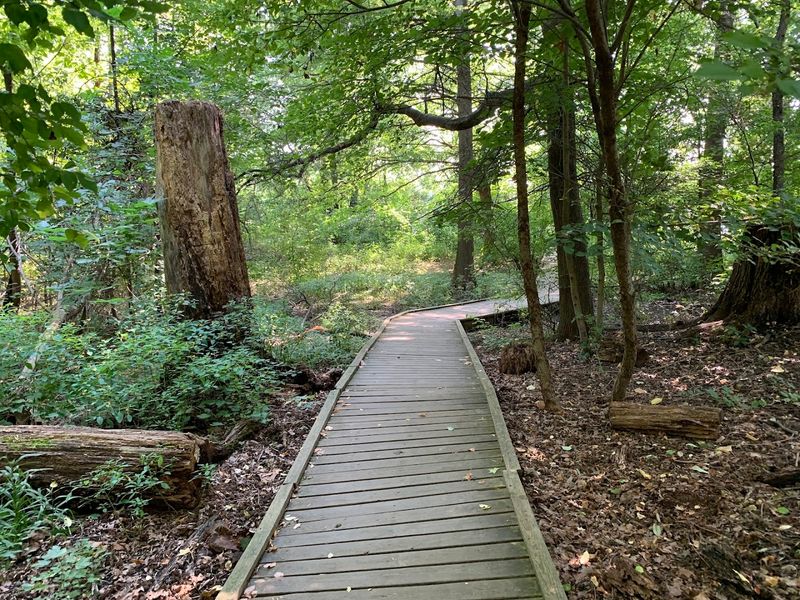
Bartram’s Garden resists simple categorization because it encompasses so many distinct environments within its boundaries. Formal perennial borders display careful color coordination and seasonal planning, while other areas embrace a wilder aesthetic that some visitors initially mistake for neglect but actually represents deliberate habitat creation.
This tension between cultivation and wildness gives the garden its distinctive character.
The property includes a working community farm, historic buildings, a koi pond, and riverside docks that each contribute different experiences. Recent additions include outdoor art installations where canvases attached to tree trunks create unexpected gallery spaces.
A playground attracts families with young children who can explore nature in supervised safety.
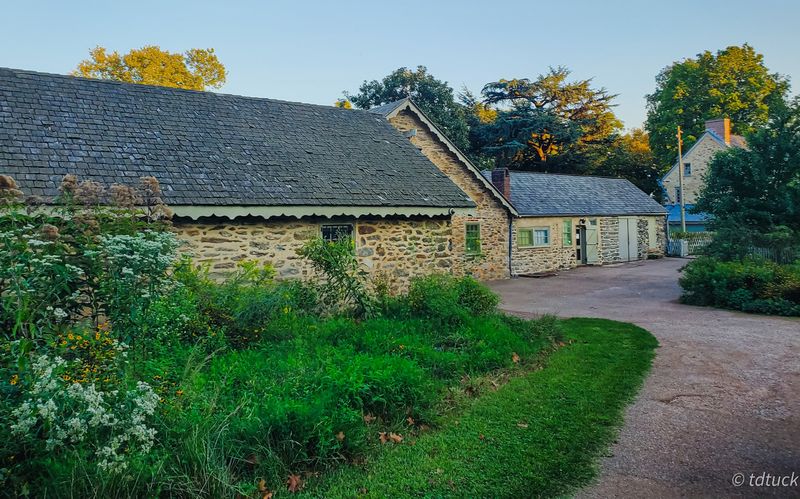
Architectural elements complement the plantings beautifully. The stone buildings constructed by the Bartram family anchor the landscape with their solid presence.
Modern facilities like the welcome center and restrooms blend respectfully with historic structures. Water bottle filling stations and well-marked trails demonstrate how the garden balances preservation with contemporary visitor needs, creating spaces that feel both timeless and accessible.
Bartram’s Garden: A Peaceful Refuge From City Life
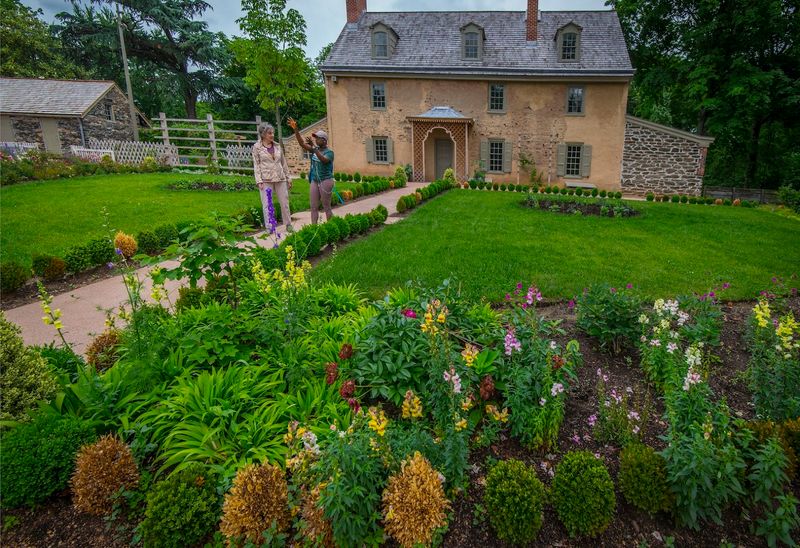
Philadelphia residents describe Bartram’s Garden as their secret escape when urban pressure becomes overwhelming. The garden absorbs city noise remarkably well, creating acoustic privacy that seems impossible given the property’s location within metropolitan boundaries.
Traffic sounds diminish to background murmurs as visitors move deeper into the grounds, replaced by natural soundscapes that calm overstimulated minds.
The garden’s free admission removes financial barriers that keep some people from accessing green spaces. This democratic approach means anyone can benefit from the psychological restoration that nature contact provides.
Regular visitors establish personal routines, returning weekly or even daily to walk familiar paths and observe seasonal progressions.
Carved benches positioned throughout the property invite extended stays. People stretch out on these comfortable resting spots, gazing up through tree canopies at the sky.
Some arrive specifically to decompress before or after flights at the nearby airport. Others come during lunch breaks from city jobs, stealing brief moments of tranquility that carry them through stressful afternoons in office buildings just miles away.
Bartram’s Garden’s Role In Botanical Research
Modern botanical research continues at Bartram’s Garden, maintaining the tradition of scientific inquiry that John Bartram established nearly three centuries ago. The garden collaborates with universities and research institutions on projects ranging from plant genetics to climate change adaptation.
Its historical collections provide baseline data about how species have changed over extended periods.
The seed house, a historic structure on the property, once served as America’s first commercial seed business. Today it represents the garden’s ongoing commitment to plant propagation and distribution.
Staff members save seeds from heritage varieties, participate in conservation networks, and share plant material with other institutions working to preserve botanical diversity.
Educational programming introduces visitors to botanical science in accessible ways. Workshops cover topics from plant identification to sustainable gardening practices.
The garden hosts cooking demonstrations using heritage vegetables and herbs, connecting historical agriculture with contemporary food culture. These programs transform abstract research into practical knowledge that participants can apply in their own gardens, extending the garden’s educational mission beyond its physical boundaries.
Why Bartram’s Garden Is A Must-Visit For Nature Lovers
Nature enthusiasts find endless reasons to visit and revisit Bartram’s Garden throughout the year. The property offers free kayaking and fishing access along the Schuylkill River, activities that connect visitors directly with aquatic ecosystems.
Cycling trails accommodate both leisurely rides and serious training, while walking paths suit every fitness level and mobility need.
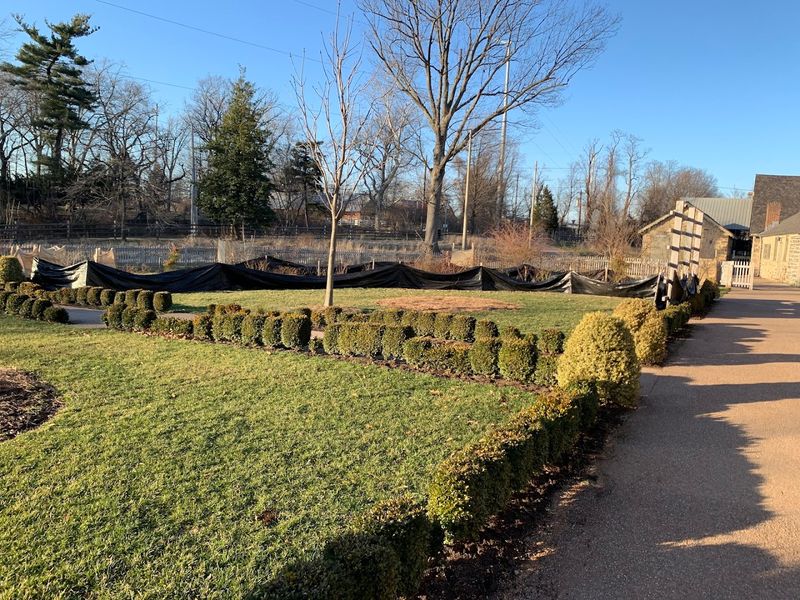
The garden’s seasonal transformations reward frequent visits. Spring brings waves of flowering bulbs and blooming trees, summer offers lush foliage and active wildlife, autumn displays spectacular color changes, and winter reveals the garden’s structural bones and evergreen collections.
Each season presents different photographic opportunities and learning experiences.
Special events enhance the regular garden experience. Wine tastings, wedding facilities, and family activity days demonstrate the property’s versatility as both preserved historic site and active community resource.
The 4.6-star rating from over two thousand reviews reflects genuine visitor satisfaction. People appreciate discovering that such a significant natural and historical treasure exists without charging admission, remaining accessible to everyone who seeks connection with plants, history, and the peace that gardens provide.