
8 Areas In Mississippi Where Alligators Have Been Spotted Far From The Coast
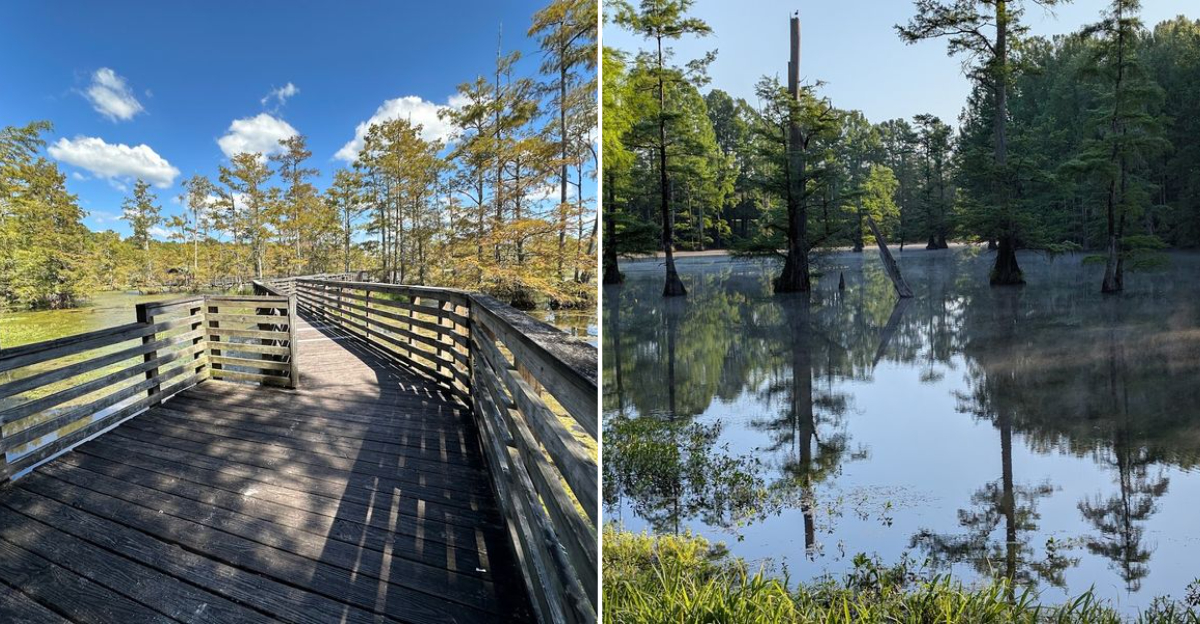
The dark waters of Mississippi hold a thrilling secret for travelers who love true wilderness. Seeing a massive alligator glide through an inland bayou beats any crowded theme park experience.
The sudden ripple in a quiet creek turns an ordinary afternoon into an unforgettable story. Local kayakers know the rush of spotting an ancient shape resting on a muddy bank.
These freshwater spots offer a rare chance to see prehistoric giants completely in their element. Visitors find themselves slowing down to scan the edges of beautiful lily pads.
The excitement of the chase draws outdoor enthusiasts away from typical tourist trails. Every bend in the river brings a fresh dose of adrenaline and mystery.
This is raw nature waiting to be discovered by anyone seeking a real adventure.
1. Ross R. Barnett Reservoir
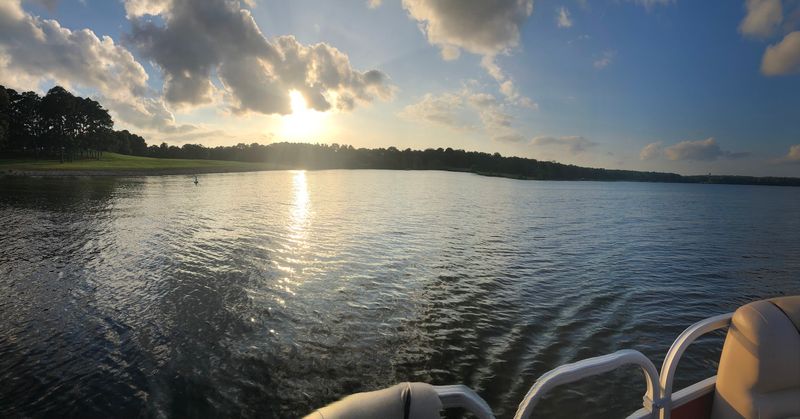
Locals call it “The Rez,” and honestly, the nickname fits perfectly. This reservoir sits between Madison and Rankin Counties, and Rankin County holds the highest alligator density in the entire state.
That is a wild thing to learn on a casual Tuesday.
Thousands of gators call this place home, and their population keeps climbing. The marshy banks and calm open water make it basically a five-star resort for alligators.
They are not going anywhere anytime soon.
People come here to boat, fish, kayak, and hike the shoreline trails. So yes, humans and alligators are regularly sharing the same water.
Most encounters stay uneventful, but it keeps things interesting.
Local hunters have pulled out what people describe as “dragon-size gators” during alligator season. The stories get bigger every year, as stories tend to do around here.
But the photographic evidence is genuinely impressive.
Back in 2020, a swimmer reportedly had an unexpected run-in with a smaller gator. Nobody was seriously hurt, but that story spread through town like wildfire.
It is now basically a reservoir legend.
The surrounding parkland offers great picnic areas, walking paths, and scenic overlooks. Families visit all the time without ever seeing a single gator.
But the possibility always adds a certain electric energy to the outing.
Sunrise at The Rez is something special. The water turns golden, birds call from the tree line, and somewhere out there, a massive reptile is silently watching.
It is equal parts beautiful and thrilling.
2. Theodore Roosevelt National Wildlife Refuge
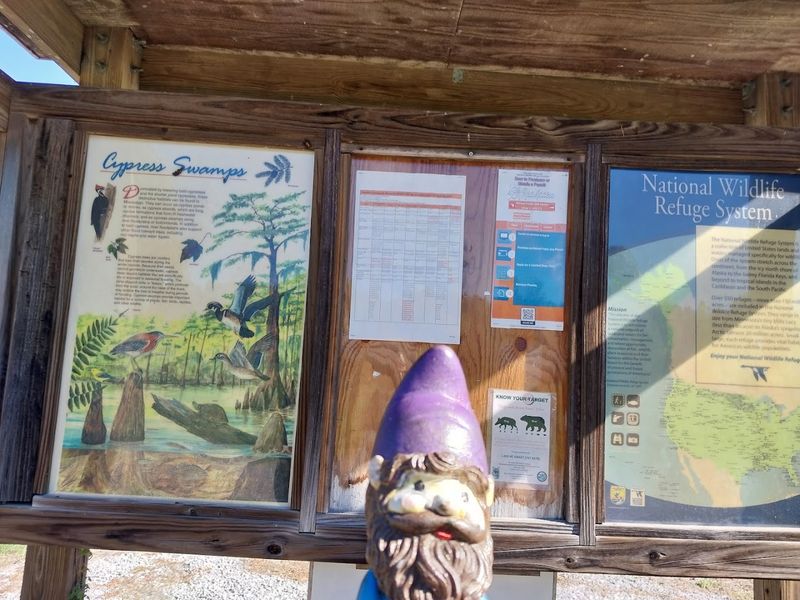
Named after the most outdoorsy president America ever had, this refuge does not disappoint. It is part of a larger complex headquartered at Panther Swamp National Wildlife Refuge.
The whole area covers over 40,000 acres of stunning Mississippi Delta terrain.
Bottomland hardwood forests stretch as far as you can see. Cypress-tupelo sloughs wind through the landscape like nature’s own highway system.
Alligators cruise these waterways regularly, sunning themselves along muddy banks with zero apologies.
Wildlife observation roads let you explore without needing a boat. You can drive slowly, windows down, scanning the water’s edge for any movement.
More often than not, something scaly and ancient will reward your patience.
Photography here is next level. The combination of Spanish moss, dark water, and dramatic tree silhouettes creates an atmosphere that feels genuinely cinematic.
Alligators just make the whole scene even better.
Birding is also a major draw, with migratory species stopping through in huge numbers. But the alligators lounging along the slough edges steal the spotlight every single time.
Nobody is looking at the birds when a six-footer slides into view.
This area is crucial for the ecological health of the Mississippi Delta region. Wetland habitats here support an extraordinary range of species.
It is one of those places where you realize how important preservation really is.
The refuge has a calm, almost secretive quality to it. Roads are quiet, crowds are minimal, and nature feels completely in charge.
That is exactly why people keep coming back. Visit it at 12595 MS-149, Yazoo City, MS 39194.
3. Bienville National Forest
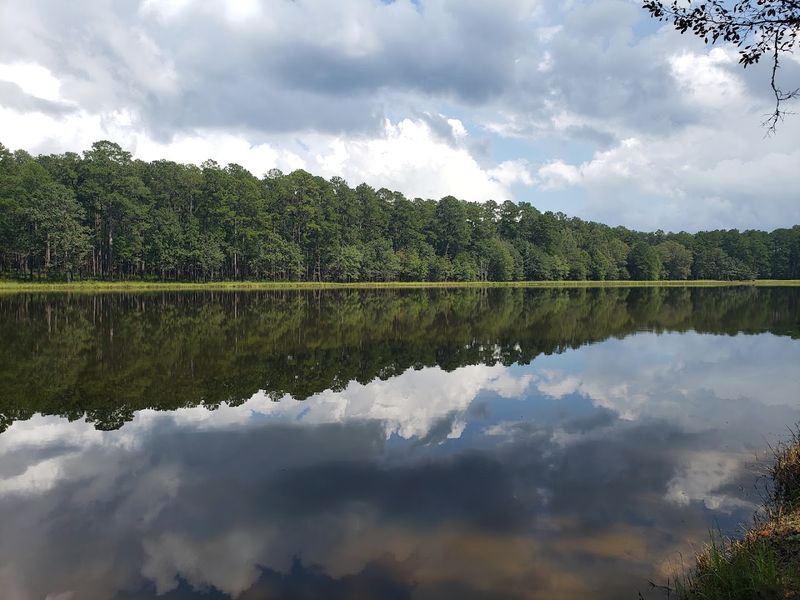
Covering over 170,000 acres of central Mississippi, Bienville National Forest is genuinely massive. Mixed pine and oak stands cover the hills, and two rivers, the Leaf and the Strong, wind through the whole thing.
It feels like stepping into a different world entirely.
Alligators are known to inhabit every single county in Mississippi. That is the official word from state wildlife officials, and Bienville is no exception.
The forest holds suitable watery habitats, including Marathon Lake and Shongelo Lake.
Confirmed sightings inside the forest are less documented than at dedicated refuges. But the habitat is absolutely right for alligators to move through and settle in.
Anywhere there is slow-moving water in Mississippi, gators tend to follow.
The Bienville Pines Scenic Area is worth visiting on its own merits. Ancient longleaf pines tower overhead, and the whole area has a cathedral-like stillness.
You feel small in the best possible way.
Hiking and exploring the forest roads is a popular activity for locals and visitors alike. Birdwatching is excellent here, and deer and turkey hunting draw serious outdoors enthusiasts every season.
The forest supports an impressive range of wildlife beyond just reptiles.
If you are paddling along the Leaf River or fishing near Marathon Lake, keep your eyes scanning the banks. Alligators are opportunistic and quiet.
They have a way of appearing exactly when you least expect them.
Bienville rewards patient explorers who slow down and pay attention. The forest does not advertise its secrets loudly.
It just quietly holds them, waiting for the right visitor to notice.
4. Sam D. Hamilton Noxubee National Wildlife Refuge
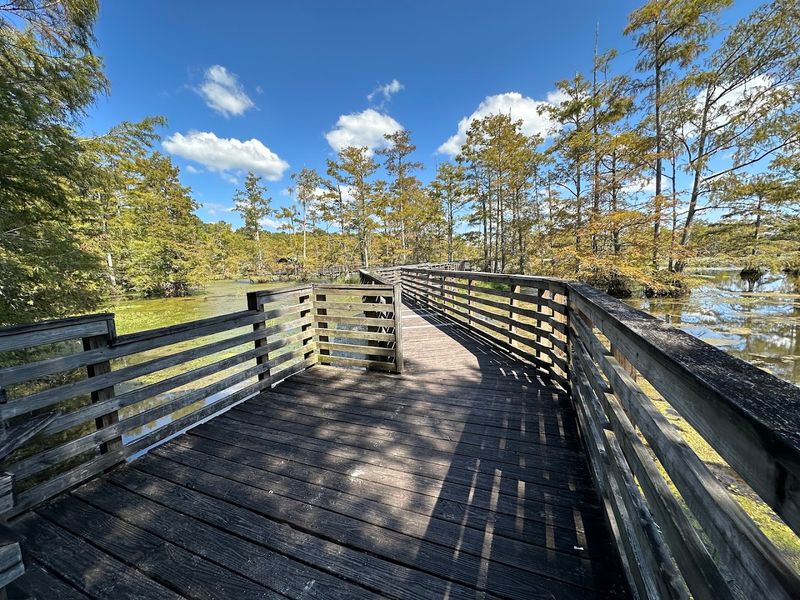
About 200 alligators live here, and some of them are absolutely massive. We are talking up to 13.5 feet long and nearly 1,000 pounds of pure prehistoric power.
That is not a rumor. That is a documented fact from the refuge itself.
Noxubee spans 48,000 acres of bottomland woodlands, wetlands, and two major lakes. Bluff Lake is the star of the show.
The Cypress Cove boardwalk is where you want to be on a warm sunny afternoon.
Alligators were first introduced here back in 1969. They thrived so well that the population has been growing strong ever since.
Mississippi State University students even visit regularly to study them up close.
The spillway area near Bluff Lake is another hotspot for gator sightings. You might catch one just floating there, completely unbothered, like it owns the place.
Honestly, it kind of does.
Wildlife photography opportunities here are genuinely outstanding. The mix of cypress trees, open water, and morning mist makes every shot look like a professional nature documentary.
Bring a good zoom lens, just in case.
Birding is also incredible here, with bald eagles and wood ducks sharing the habitat. But let’s be real, everyone is really here hoping to spot a gator.
And most visitors leave very satisfied on that front.
The refuge offers a peaceful, almost meditative experience that feels worlds away from everyday life. It is one of those places where nature completely takes over.
You leave feeling genuinely humbled by what Mississippi is hiding inland. Find this place at 13723 Bluff Lake Rd, Brooksville, MS 39739.
5. Pascagoula River State Wildlife Management Area
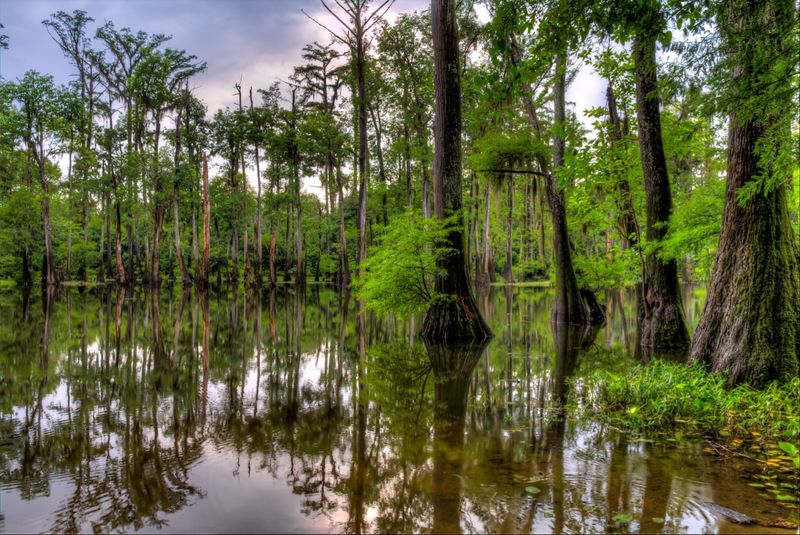
The Pascagoula River is one of the last major undammed rivers in the entire contiguous United States. That single fact makes it extraordinary.
Undisturbed water means undisturbed wildlife, and alligators here have thrived for thousands of years without much human interference.
The WMA spans roughly 37,000 acres of bottomland wilderness. It is remote, wild, and absolutely magnificent.
About a quarter of Mississippi’s entire alligator population lives within the Pascagoula River Basin.
Locals have long called this the Singing River, based on an old Indigenous legend about mysterious sounds rising from the water at dusk. Whether you believe the legend or not, the atmosphere near the river at sunset is genuinely eerie and beautiful.
Pair that with a gator gliding by, and you have a memory for life.
Cypress knees poke out of the dark water everywhere you look. Alligators rest near the buttressed tree trunks, blending in so perfectly you almost miss them.
The area near Upper Rhymes is particularly known for sightings.
Kayaking through the oxbow lakes and backwater swamps is an unforgettable experience. The water is dark, the forest is dense, and the wildlife is everywhere.
It is the kind of paddling trip that makes you feel like an actual explorer.
No dams mean natural flooding cycles still happen here. Those flood pulses create rich, productive habitats that support everything from fish to birds to reptiles.
Alligators absolutely love this dynamic environment.
Visiting here feels like traveling back in time. The wilderness is thick, the silence is deep, and the gators are very real.
The address is 1505 Eastover Dr, Mississippi 39211.
6. LeFleur’s Bluff State Park
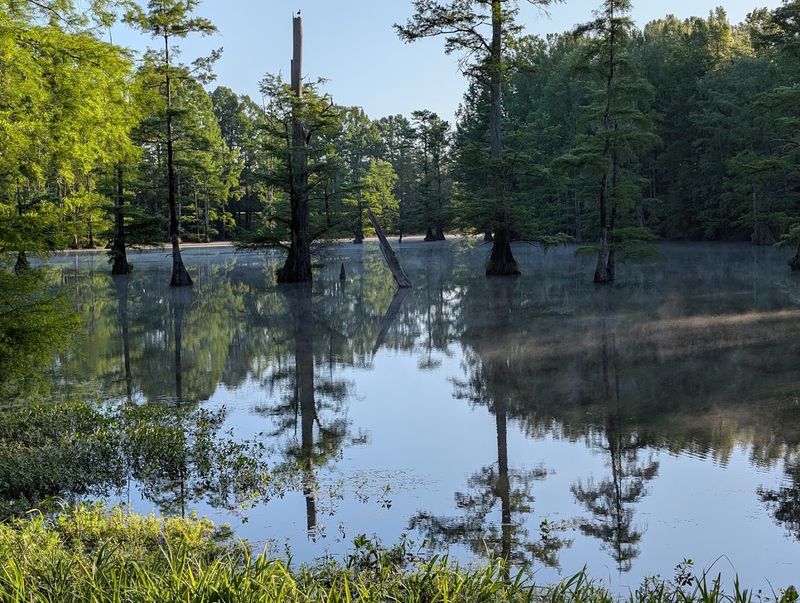
LeFleur’s Bluff State Park sits right in the heart of the city, and it is one of the most surprising urban wildlife experiences you will ever have. Three hundred and five acres of trails, lakes, and swampland, all within city limits.
Mayes Lake is the centerpiece of the park. Fishing and kayaking happen here regularly.
And somewhere in or near that water, alligators are doing their thing completely unbothered by the surrounding city noise.
The Mississippi Museum of Natural Science is located right inside the park. Inside, there is a greenhouse swamp exhibit where you can actually watch live alligators basking under controlled conditions.
It is the perfect preview before you hit the trails.
Nature trails wind through scenic swampland and along the Pearl River corridor. Walking these paths feels genuinely different from anything you would expect inside a state capital.
The city disappears quickly once you are in the trees.
Wildlife here includes deer, turtles, herons, and, of course, the resident alligators. Spotting one on the trail or near the lake edge is not unusual for regular park visitors.
Most people treat it as a fun bonus to their morning walk.
The park is popular with joggers, families, and birdwatchers who appreciate easy access to real nature. Nobody has to drive hours to find wild Mississippi here.
It is right there, waiting between the traffic lights and the office buildings.
LeFleur’s Bluff proves that alligators do not need remote wilderness to survive. They just need water and a little peace.
Jackson provides both. Head to 3315 Lakeland Terrace, Jackson, MS 39216.
7. Hillside National Wildlife Refuge
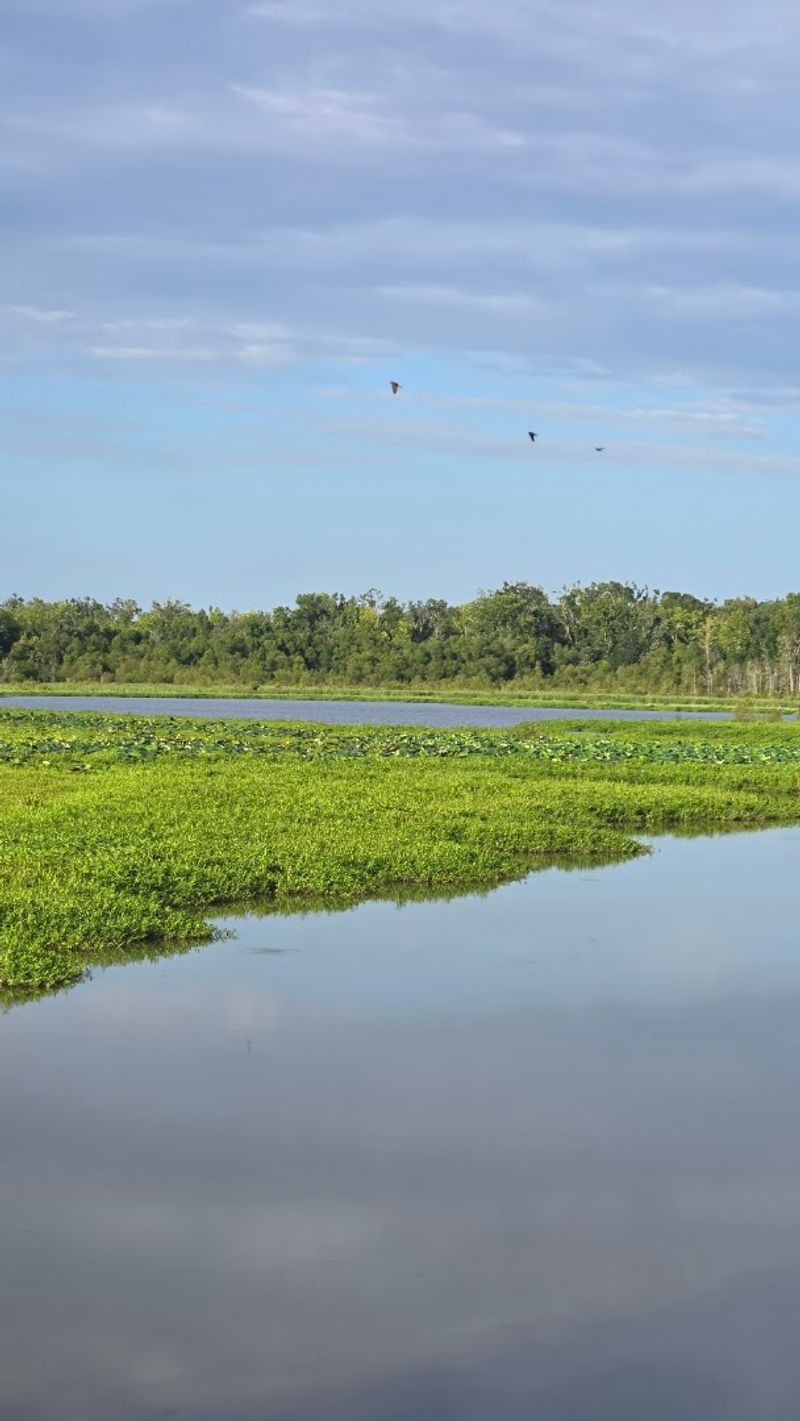
Hillside National Wildlife Refuge has a trail literally named the Alligator Slough Nature Trail. That should tell you everything you need to know about what lives here.
The name is not just for atmosphere. It is a warning and an invitation at the same time.
The refuge covers 15,000 acres in Holmes County, sitting deep in the Lower Mississippi River Alluvial Valley. Bottomland hardwood forests, wetlands, and cypress-tupelo sloughs make up the landscape.
It is dense, green, and teeming with life.
Over 225 species of migratory birds use this refuge as a critical stopover and nesting ground. Birders travel from all over to walk the trails here.
But the alligators lurking in the sloughs tend to distract even the most focused birding enthusiasts.
There is also a 0.6-mile disabled-accessible nature trail winding through the unique habitats. That means almost everyone can experience this incredible place firsthand.
Accessibility in a wild refuge like this is genuinely rare and worth celebrating.
Agricultural land surrounds the refuge on multiple sides, which makes the contrast even more striking. You go from open fields to an ancient swamp forest in the span of a short drive.
The wildlife inside the refuge boundaries feels protected and abundant.
Alligators here are well-suited to the slough environment. Slow, dark water and heavy tree cover give them exactly what they need.
Sightings along the Alligator Slough trail are common enough that visitors know to stay alert.
Hillside is one of those quiet refuges that does not get nearly enough attention. But the people who know it love it deeply.
Find this place located at 4349 Christmas Place Rd, Lexington, MS 39095.
8. Coldwater River
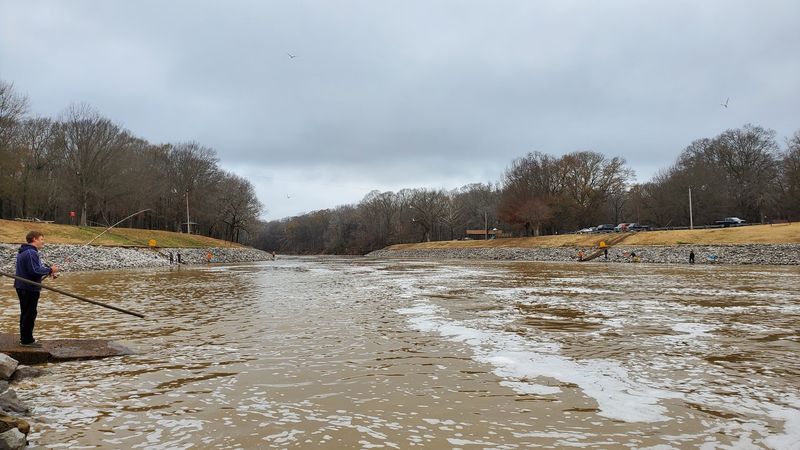
Most people think of alligators as a Deep South coastal thing. Then someone catches a five-foot gator in a creek connected to the Coldwater River in DeSoto County, and suddenly northern Mississippi is in the conversation.
That actually happened, and it turned a lot of heads.
The Coldwater River stretches 220 miles through northwestern Mississippi. It is a tributary of the Tallahatchie River, which feeds into the larger Mississippi River watershed.
That network of connected waterways is exactly how alligators travel and expand their range northward over time.
Alligators in northern Mississippi are still considered occasional rather than common. But wildlife officials confirm that sightings do happen, and the river corridor provides real habitat for them.
The water is slow in many sections, shaded by overhanging trees, and full of fish.
The Coldwater River National Wildlife Refuge runs along the river and serves as a key sanctuary for migratory birds. Most of the refuge is closed to general public access, which is actually good for the wildlife living inside it.
An observation tower is available for anyone wanting a wildlife viewing experience from a safe vantage point.
Fishing along the accessible stretches of the Coldwater River is popular with locals. Catfish, bass, and crappie are the usual targets.
The idea that a gator might be sharing the same stretch of water adds a certain edge to the whole experience.
The river has a quiet, unhurried quality that feels removed from modern life. It moves at its own pace through flat northwestern Mississippi farmland.
And somewhere along its banks, at least one alligator is doing the same thing.