
10 California Day Trips That Give You A Vacation Feel Without Breaking $50
Fifty dollars and a full tank can completely change the shape of a California weekend. The state often makes that feel out of reach until someone lays out where the numbers still work.
Day trips that feel like a vacation without a vacation budget belong to a very specific category.
California has more of them than its expensive reputation suggests, scattered across coastline, desert, and mountain terrain that doesn’t charge for the view.
Each place on this list was chosen for a simple reason: it delivers the kind of day people usually associate with trips that cost far more. This budget covers entry, food, and the drive home, with enough left over to make doing it again feel reasonable.
1. Muir Woods National Monument
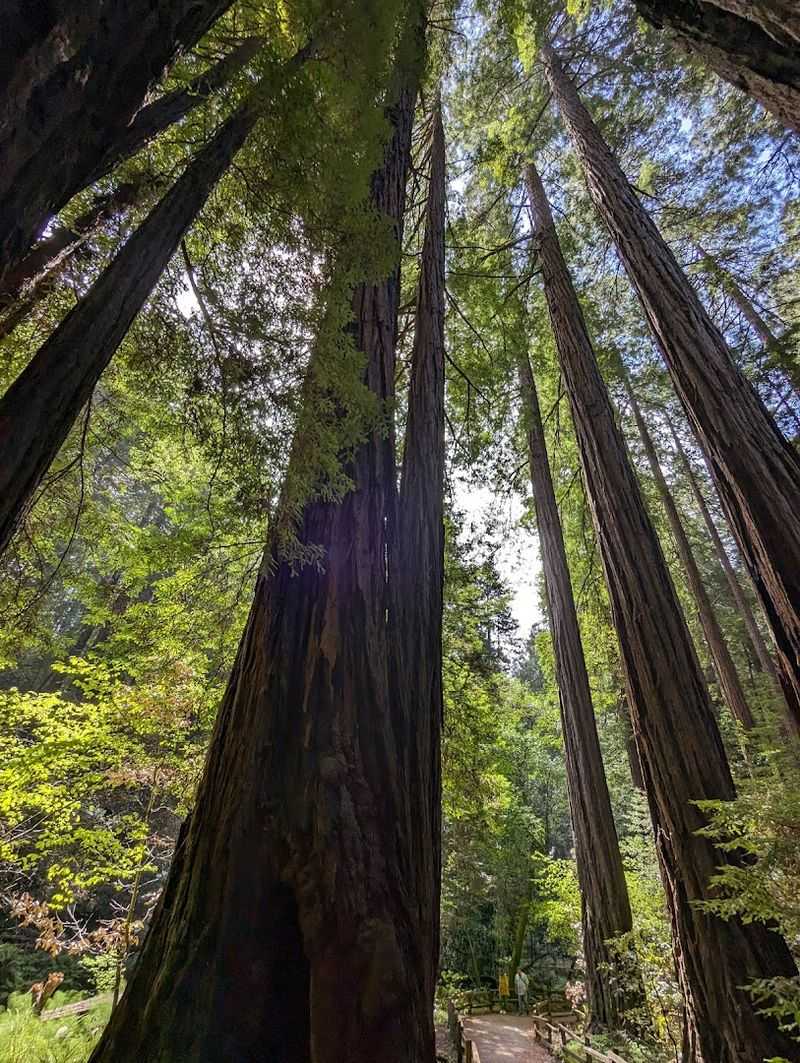
Entering Muir Woods feels like the trees are slowly swallowing you whole. In the best way possible.
These coastal redwoods shoot up over 250 feet, and the air smells like earth, moss, and something ancient. You immediately forget what day it is.
The main loop trail is easy and well-marked. It winds along Redwood Creek and takes about an hour at a relaxed pace.
Families, solo hikers, and people who just needed to breathe all share the path together.
Weekday mornings are the golden hours here. Crowds thin out, the light filters through the canopy in dramatic rays, and you can actually hear birds instead of other people’s podcasts.
Bring a jacket because the temperature drops noticeably under the trees.
Reservations are required for parking and shuttle access, so plan. The shuttle from Sausalito is a smart move.
It saves parking headaches and adds a scenic little adventure to the start of your day.
No dogs are allowed on the trails, but the monument connects to Mount Tamalpais State Park if you want to extend your hike. Rangers are genuinely enthusiastic and happy to point you toward the quieter paths.
2. Point Reyes National Seashore
Point Reyes is the kind of place that makes you question why you ever stay indoors. It has everything: wild beaches, elk herds, a historic lighthouse, and coastal bluffs that look borrowed from Ireland.
It covers over 70,000 acres of pure California drama.
The Tule Elk Reserve at Tomales Point is a must. You hike out, and suddenly, hundreds of elk are just hanging around like they own the place.
Spoiler: they do. The trail is about nine miles round trip, but absolutely worth every step.
Limantour Beach is another highlight. The water is cold, the sand is wide, and the silence is genuinely restorative.
You can walk for miles without seeing a single food stand or souvenir shop. That alone feels like a luxury.
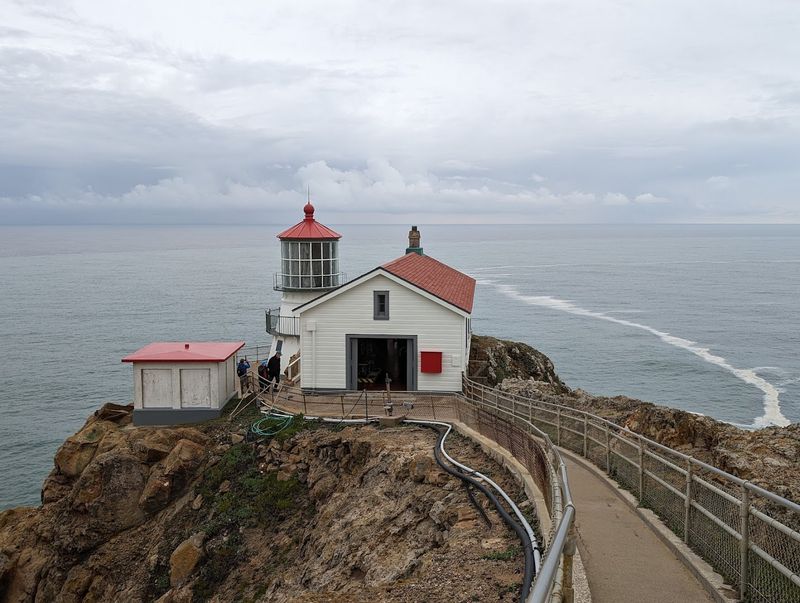
The Point Reyes Lighthouse sits at the end of a windy road and even windier stairs. On clear days, you can spot gray whales migrating offshore between December and April.
Rangers give free talks near the lighthouse on weekends.
Birders absolutely love this seashore too. Over 490 bird species have been recorded here, making it one of the top birding spots in the country.
Grab a trail map at the Bear Valley Visitor Center before heading out.
3. Año Nuevo State Park
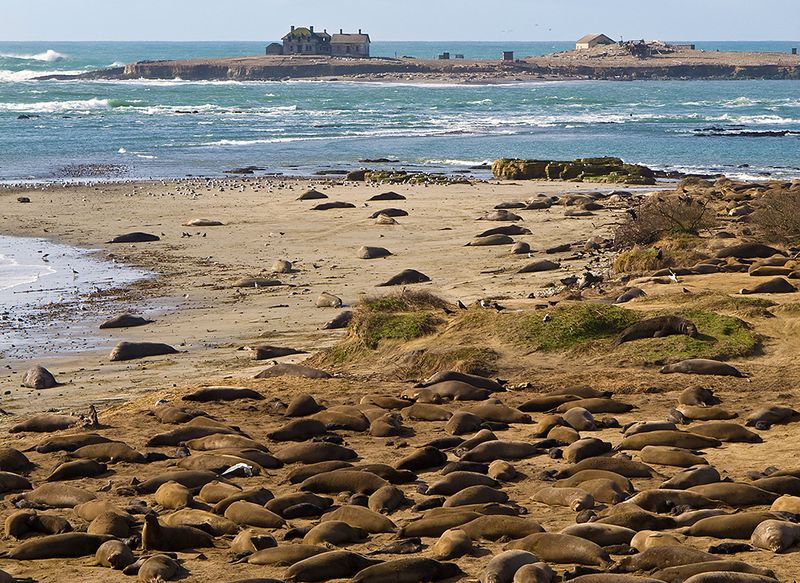
Nothing prepares you for the sheer spectacle of hundreds of elephant seals just flopped across a beach, snoring and occasionally flinging sand at each other.
Año Nuevo State Park is where that chaos lives, and it is genuinely one of the most entertaining free shows in California.
Northern elephant seals come here every year to breed, give birth, and molt. Peak season runs from December through March.
During that time, guided tours are required and sell out fast. Book weeks in advance if you want the winter experience.
Outside of breeding season, you can explore the park on self-guided walks. The trails wind through coastal scrub and dunes before opening up to the beach.
Even in the off-season, you’ll likely spot a few seals lounging around like they’re on permanent vacation.
The landscape itself is surprisingly beautiful. Coastal wildflowers bloom in spring, and the views toward the Pacific are wide and unobstructed.
It’s the kind of scenery that makes you stop mid-sentence just to stare.
Parking fills up on weekends, especially in winter. Arrive early and bring layers because the coastal wind is relentless and wonderful.
The ranger-led tours are informative and genuinely fun. Guides share stories about individual seals like they’re old friends.
4. Pfeiffer Big Sur State Park
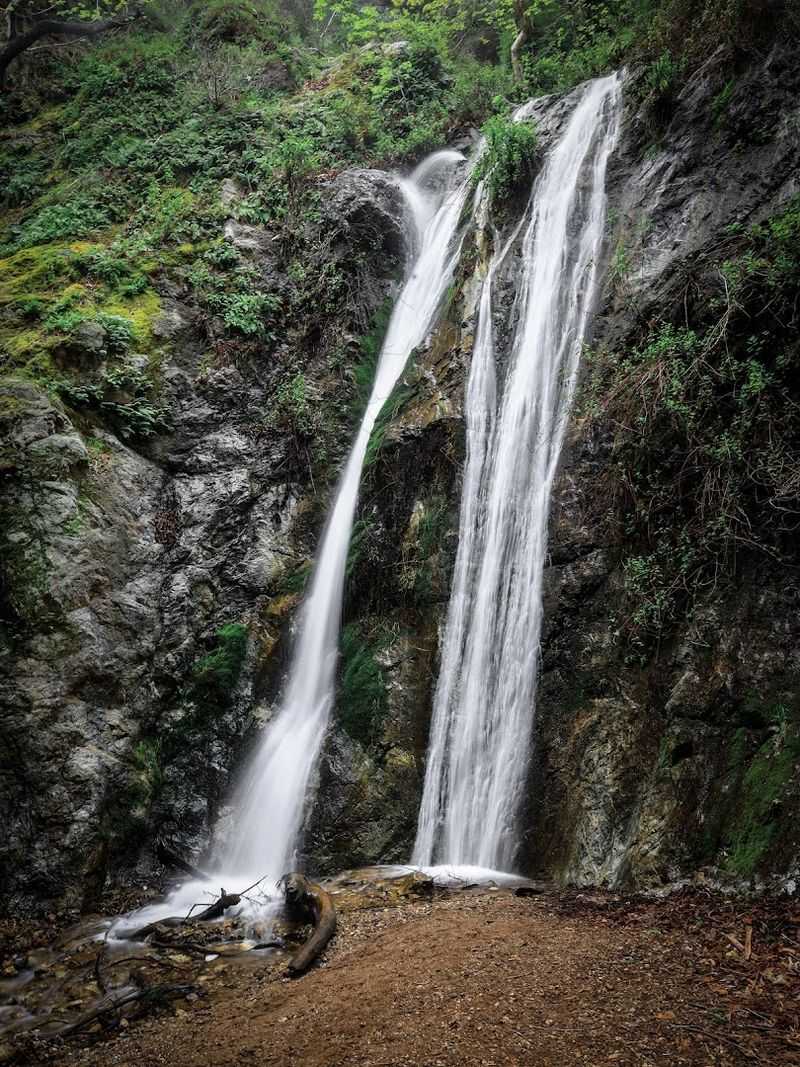
Big Sur is the kind of place travel writers run out of adjectives trying to describe. Pfeiffer Big Sur State Park sits at the heart of it, where redwood groves meet the Santa Lucia Mountains, and everything looks slightly unreal.
You feel the shift the second you step out of your car.
The Valley View Trail is short but punches above its weight. It climbs quickly and rewards you with a sweeping panorama of the canyon and coastline.
On a clear day, the view stretches all the way to the Pacific. It takes about 45 minutes, and most people can handle it.
Pfeiffer Falls is the park’s showstopper during the wet season. After winter rains, the waterfall flows beautifully into a fern-lined gorge.
The trail to reach it is just over a mile round trip. Even without peak flow, the redwood canyon around it is stunning year-round.
Wildlife sightings here are common. Deer wander through campsites casually.
Condors occasionally circle overhead, which is both majestic and slightly intimidating. The park also connects to Pfeiffer Beach, famous for its purple sand caused by manganese garnet in the cliffs.
Cell service is minimal throughout Big Sur, and that is honestly a feature, not a bug. Bring a paper map and enjoy being unreachable for a few hours.
5. Crystal Cove State Park
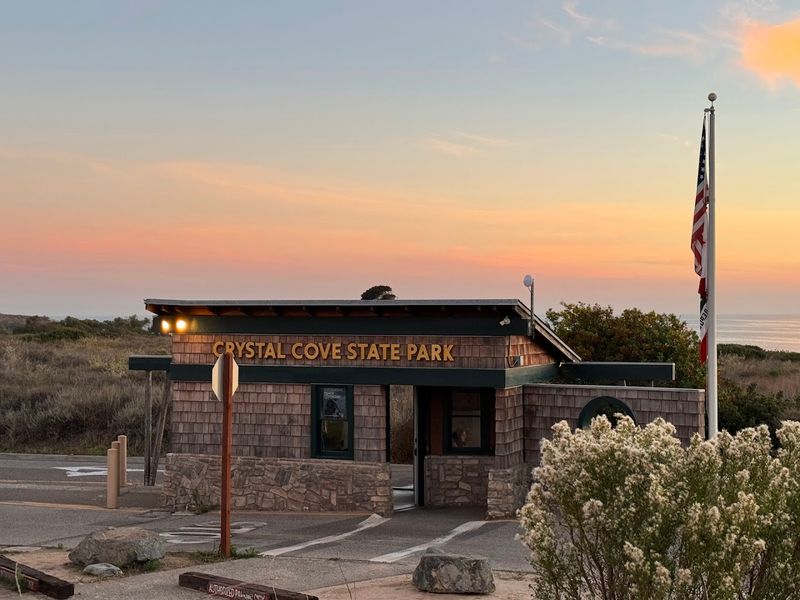
Crystal Cove is Southern California’s best-kept secret that somehow everyone already knows about. The beach here is wide, clean, and framed by sandstone bluffs that glow orange in late afternoon light.
It looks like a screensaver, but you can actually touch it.
The historic district features 46 vintage beach cottages from the 1920s through the 1950s. Some are available as overnight rentals, but even walking through the area is a trip back in time.
The whole stretch has a nostalgic, unhurried quality that feels completely removed from modern life.
Snorkeling is surprisingly good off the rocky sections of the beach. The underwater reserve protects sea life, so you’ll spot garibaldi fish, sea urchins, and the occasional leopard shark gliding along the sandy bottom.
Bring your own gear to keep costs down.
The backcountry trails above the beach are less crowded and equally beautiful. El Moro Canyon Trail winds through coastal sage scrub with views that stretch across the Pacific on clear days.
Mountain bikers and hikers share the upper trails comfortably.
Parking is the main cost here, and it fills up fast on weekends. Arriving before 8 a.m. is the move.
The beach itself is free to access once you’re parked. Lifeguards patrol during the summer months.
6. Torrey Pines State Natural Reserve
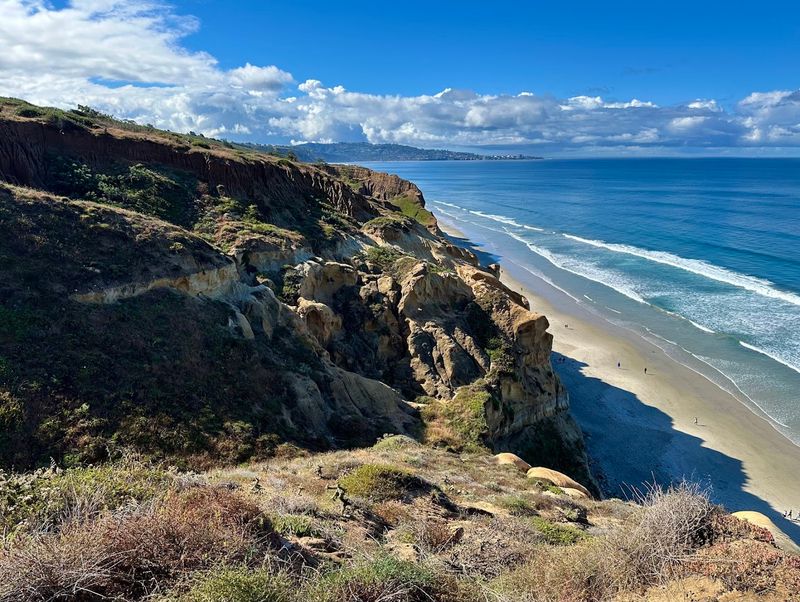
Torrey Pines might be the most dramatic free hike in all of Southern California. The trails run along eroded sandstone bluffs above the Pacific, and every turn offers a view that stops you in your tracks.
The rare Torrey pine tree grows almost nowhere else on Earth.
Only about 6,000 of these trees exist in the wild. Half of them live here, clinging to the bluffs with twisted branches shaped by decades of coastal wind.
They look like something out of a Japanese ink painting. Standing among them feels oddly significant.
The Beach Trail drops you down to a wide, uncrowded stretch of sand below the cliffs. Tide pools appear at low tide along the rocky edges.
Bring a tide chart and a sense of wonder because the marine life in those pools is surprisingly diverse and colorful.
Parry Grove Trail is short but packed with scenery. The overlooks along the Razor Point and Yucca Point trails are equally spectacular.
Most loops can be completed in under two hours, making this a perfect half-day adventure.
No dogs, no bikes, and no collecting of any natural materials are allowed inside the reserve. Those rules keep the place pristine.
Parking fills up by mid-morning on weekends, so earlier is always better here. The visitor center has great exhibits about the local ecology.
The address is 12600 N Torrey Pines Rd, La Jolla, CA 92037.
7. Paramount Ranch
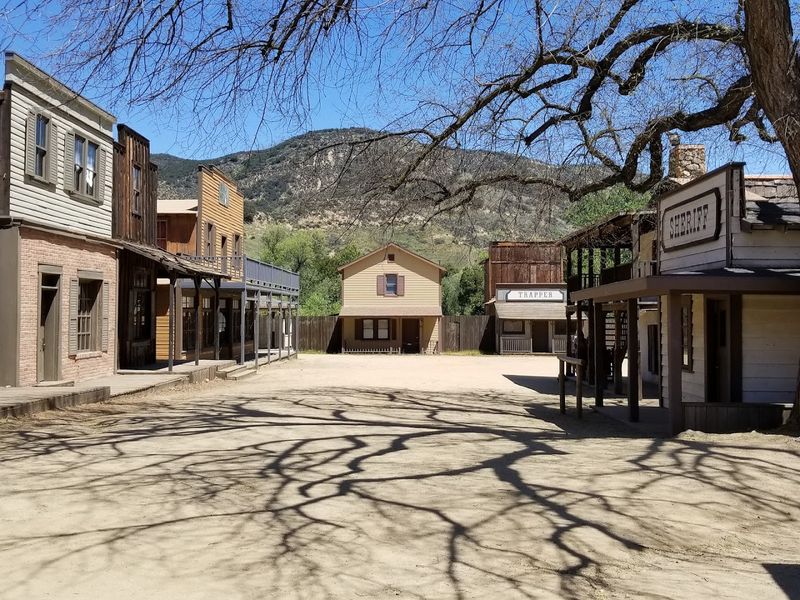
Paramount Ranch is where Hollywood literally built a fake town in the Santa Monica Mountains and then let the public wander through it for free. The Western Town set has appeared in over 100 films and TV shows since the 1920s.
Walking the dusty main street feels like being on a movie set, because you basically are.
Shows like Dr. Quinn, Medicine Woman, filmed here for years. The HBO series Westworld also used the location before the 2018 Woolsey Fire destroyed the original structures.
The National Park Service has since rebuilt the iconic Western Town, and it looks fantastic again.
Beyond the set, the ranch has miles of hiking and equestrian trails through oak woodland and chaparral. The Backdrop Trail loops around the property with views of the surrounding mountains.
Spring wildflowers turn the hillsides golden and purple in good rain years.
Birding is excellent here, too. Red-tailed hawks circle overhead while acorn woodpeckers hammer away at oak trees.
The combination of open grassland and dense woodland creates an ideal habitat for a wide range of species. Bring binoculars if you have them.
There is no admission fee, which makes this one of the best free half-days in the greater Los Angeles area. Dogs on leash are welcome on most trails.
The parking lot is free and spacious. Find this spot at 2903 Cornell Rd, Agoura Hills, CA 91301.
8. Salvation Mountain

Salvation Mountain is unlike anything else on this list, or honestly, anywhere else in the country. A man named Leonard Knight spent over 28 years building this massive folk art installation in the middle of the Sonoran Desert.
He used adobe, straw, and thousands of gallons of donated paint to create something genuinely jaw-dropping.
The mountain rises about 50 feet and is covered in bright flowers, Bible verses, and declarations of love. The colors are almost violently cheerful against the pale desert backdrop.
Every surface has been painted, repainted, and painted again. It feels alive in the strangest way.
Leonard passed away in 2014, but a nonprofit now maintains the site and keeps his vision intact. Volunteers regularly repaint sections to prevent weathering from the brutal desert climate.
The dedication people put into preserving this place is its own kind of story.
The Slab City community sits just beyond the mountain. It’s a self-governing off-grid settlement that draws artists, nomads, and free spirits from all over.
Wandering through it adds another layer of weird and wonderful to the visit.
The drive out here is remote. The nearest town is Niland, and services are limited.
Bring water, snacks, sun protection, and a full tank of gas before you head out. There is no admission fee, and the experience is completely unforgettable.
9. Antelope Valley Poppy Reserve
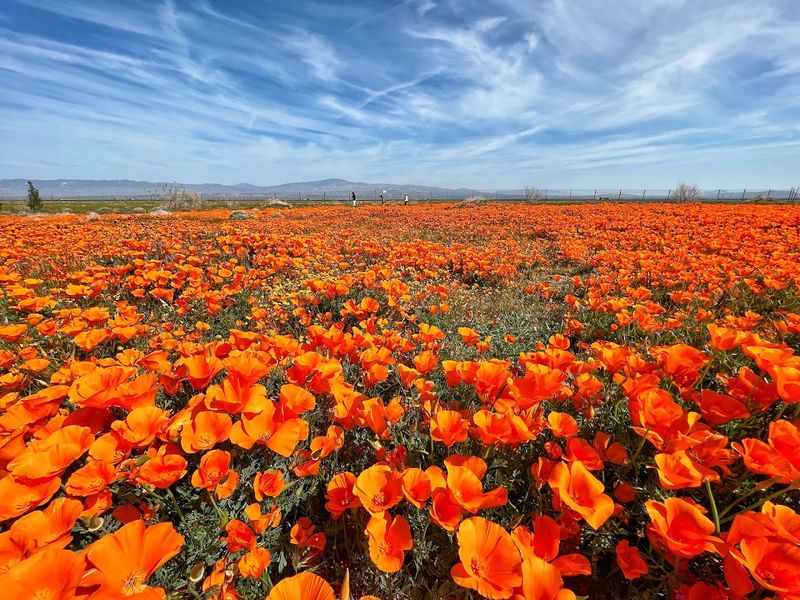
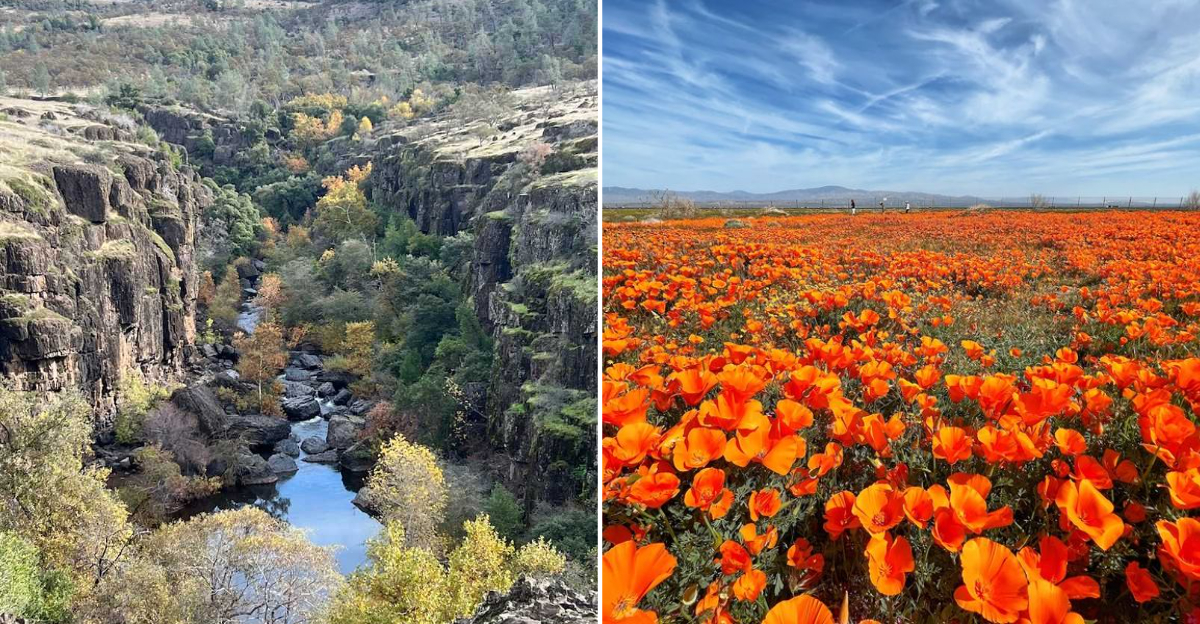
Once a year, if the rain cooperates, the hills northwest of Lancaster turn completely orange. The Antelope Valley California Poppy Reserve becomes the most photographed patch of ground in the state.
Seeing it in person is genuinely shocking. Photos simply do not prepare you for the scale of it.
California poppies are the state flower, and this reserve protects one of the largest natural displays anywhere. Peak bloom typically runs from mid-March through mid-April, though it shifts depending on winter rainfall.
Checking the reserve’s bloom hotline before driving out is strongly recommended.
Eight miles of trails wind through the reserve, ranging from flat and easy to moderately hilly. The Poppy Loop is the most popular and takes about 90 minutes.
Every direction you look during peak bloom is an unbroken carpet of orange stretching to the horizon.
Non-peak visits are still worthwhile. Goldfields, cream cups, and owl’s clover also bloom here in good years, adding yellow and purple to the palette.
Even without poppies, the Tehachapi Mountains backdrop makes the landscape scenic and worth the drive.
Weekends during peak bloom get extremely crowded. Arriving before 9 a.m. is essential to snag parking and avoid the worst of the crowds.
Weekday mornings are dramatically quieter and more magical. Dogs on leash are welcome on the trails.
Visit this place at 15101 Lancaster Rd, Lancaster, CA 93536.
10. Upper Bidwell Park
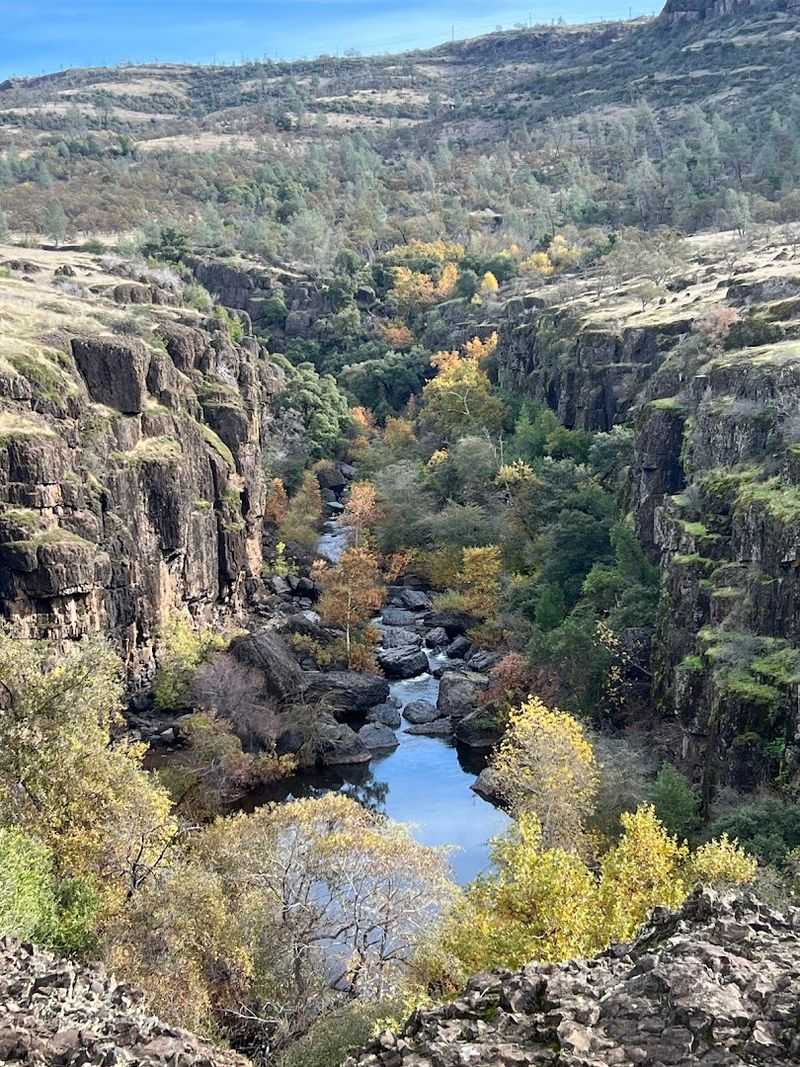
Bidwell Park is one of the largest municipally owned parks in the United States.
Upper Bidwell is a wilder, rockier section where Chico Creek cuts through basalt canyon walls and forms natural swimming holes that locals cherish in summer. The water is cold and clear and absolutely perfect.
One Mile Recreation Area gets crowded, but venture further up the canyon and the crowds thin fast. Salmon Hole and Bear Hole are legendary local spots.
Getting there requires a bit of a hike, which is exactly what keeps them from becoming overrun.
The park has over 80 miles of trails for hikers, mountain bikers, and equestrians. Upper Park Road winds alongside the creek through oak woodland that turns golden in autumn.
Squirrels, deer, and wild turkeys are regular trail companions. Great horned owls hunt the area at dusk.
Film history buffs take note. Several scenes from the original 1938 Adventures of Robin Hood, starring Errol Flynn, were filmed in Bidwell Park.
The oak trees and rocky terrain provided a convincing Sherwood Forest backdrop. That detail makes the place feel even cooler.
Admission to the park is free, and parking along the road is also free in most areas. Bring creek shoes for the swimming holes because the rocks are slippery. Summer afternoons get hot, so mornings are ideal for hiking.