
Climb This High-Altitude Nevada Hike For The State’s Most Breathtaking Fall Colors
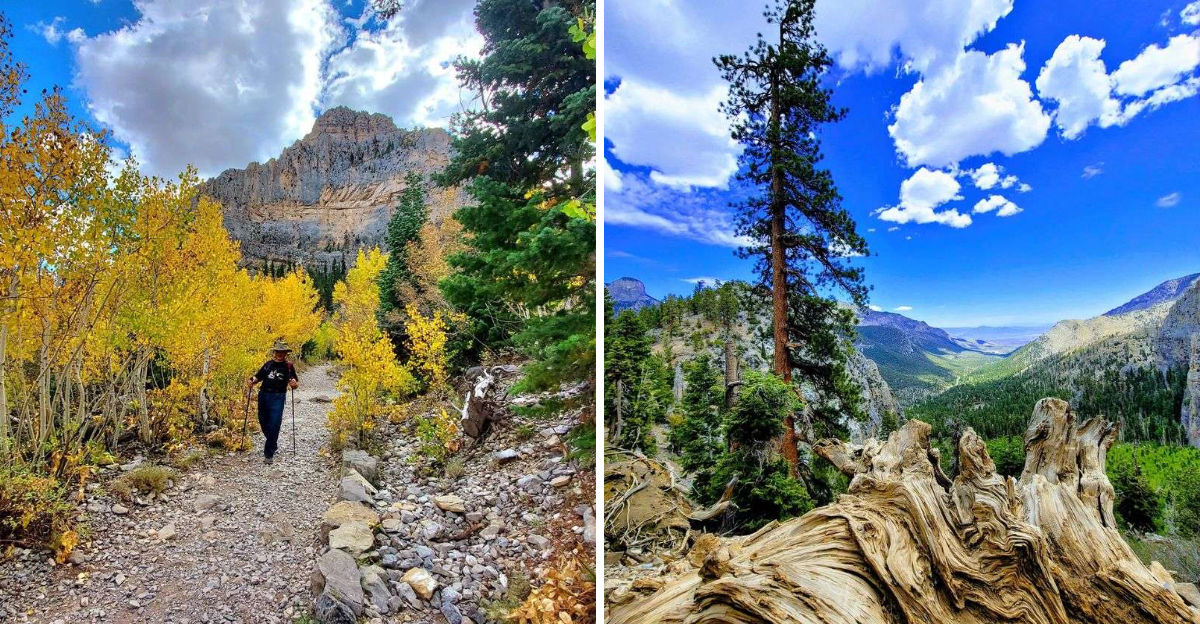
Dusted peaks sit less than an hour from neon-lit streets, and that swap alone should pull you toward the mountains.
Cool air replaces desert heat almost instantly once the climb begins. Pines crowd the path, then aspens take over in bright gold clusters that shimmer with every breeze.
Each switchback reveals another slice of canyon below, and the view keeps growing.
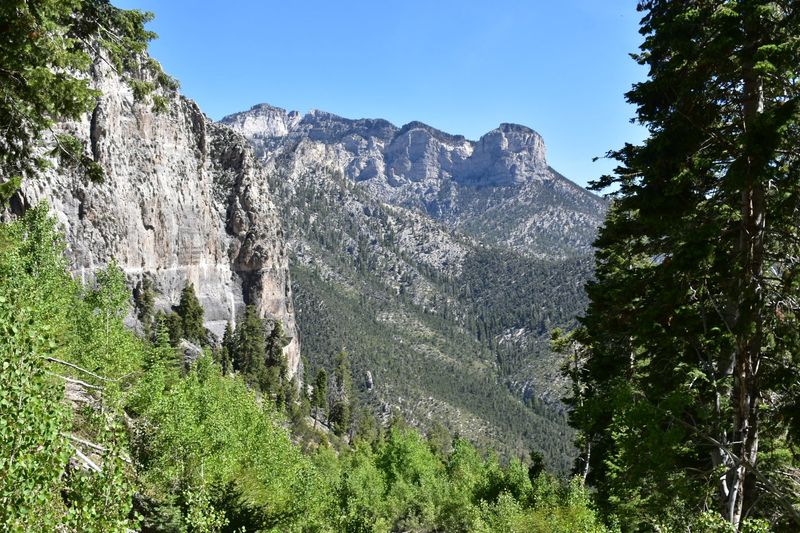
Cliffs rise pale and sharp against a deep blue Nevada sky. Near the top, a rocky perch opens up completely, wind rushing past.
Color spills across the slopes beneath your boots. Nevada rarely offers a payoff this close to a big city.
Curious how far those golden groves actually stretch, and whether your timing will catch them at their brightest? One good weekend could answer that.
A Cool Mountain Escape Just Outside Las Vegas
Snow-dusted peaks and neon lights in the same day. That is the strange arithmetic of southern Nevada, and the Cathedral Rock Trail proves it.
The trailhead sits inside the Spring Mountains National Recreation Area, a short drive up Kyle Canyon from the valley floor. Elevation does the heavy lifting here.
Temperatures on the mountain often run far cooler than in the city below. Pines replace creosote.
Aspens replace Joshua trees.
The hike starts near 7,500 feet, which explains the immediate change in air quality. Breathing feels sharper within the first few switchbacks.
You can find the path at Mt Charleston, NV 89124, USA, sharing its start with the Cathedral Rock Picnic Area parking zone.
Round trip measures roughly 2.6 to 3 miles, with close to 1,000 feet of gain. Most hikers finish in a couple of hours.
That short distance packs an unusual amount of scenery for the effort. Forest, cliffs, water, and summit views all appear along the way.
Few desert cities can claim an alpine forest this close to downtown.
Aspen Groves That Glow Like Lanterns
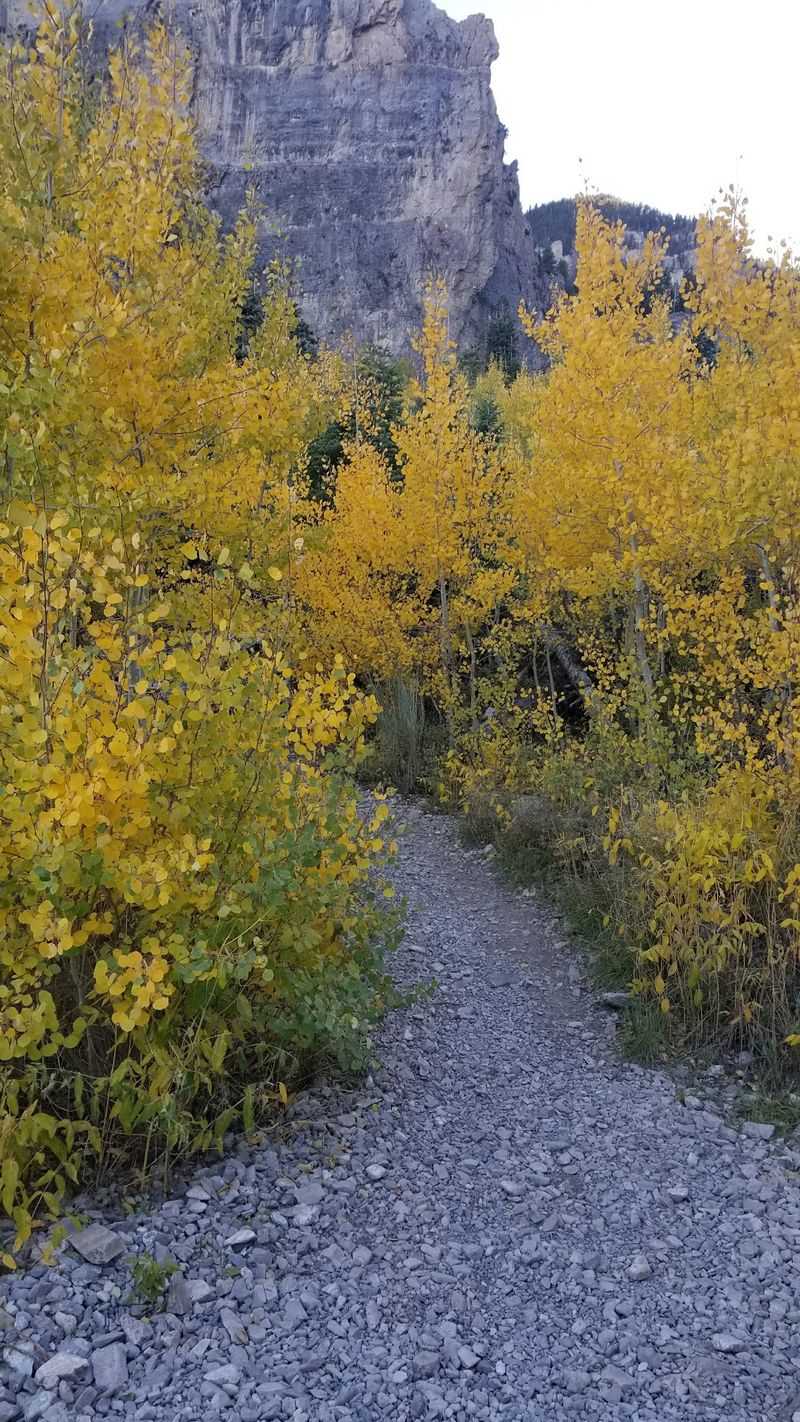
Yellow. Everywhere yellow.
Autumn on the Cathedral Rock Trail belongs to the aspens, and they show up in thick clusters along the lower and middle stretches of the climb.
Quaking aspen leaves flutter with the smallest breeze. Sunlight passes through them and turns whole groves into something close to stained glass.
Shades range from soft butter to burnt orange, with occasional deep red mixed in. The color shifts depending on the day and the elevation.
What makes the display so striking is the contrast. Dark green white fir and ponderosa pine frame every golden patch.
Peak color on Mount Charleston generally lands somewhere between mid-September and late October. The first two weeks of October are often the sweet spot, though weather can shift the timing.
Morning light works beautifully for photos, especially with backlit leaves. Late afternoon sun warms the canyon walls instead.
Wind adds a soundtrack. Aspen leaves rattle softly, a sound hikers rarely forget.
Autumn here rewards anyone willing to watch conditions and pick their day carefully.
Kyle Canyon Opens Up Below
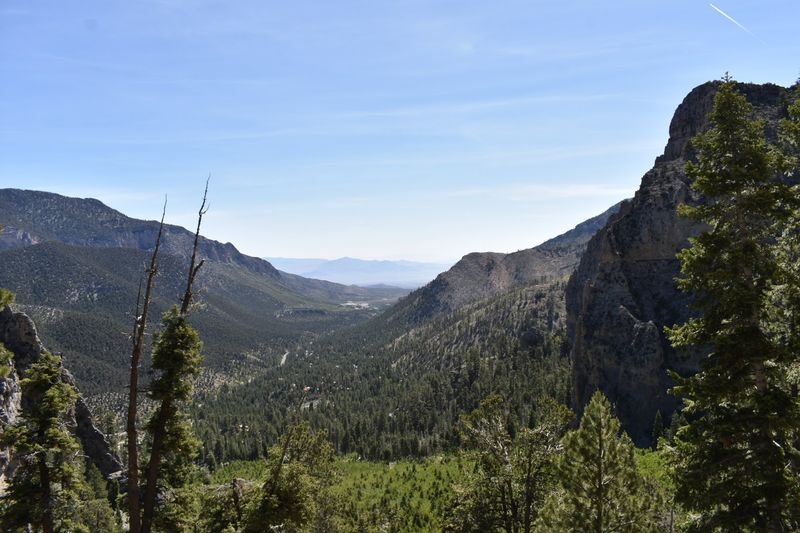
Each switchback buys a bigger view.
Climbing the Cathedral Rock Trail feels like slowly raising a curtain on Kyle Canyon, and the reveal gets better with every hundred feet gained.
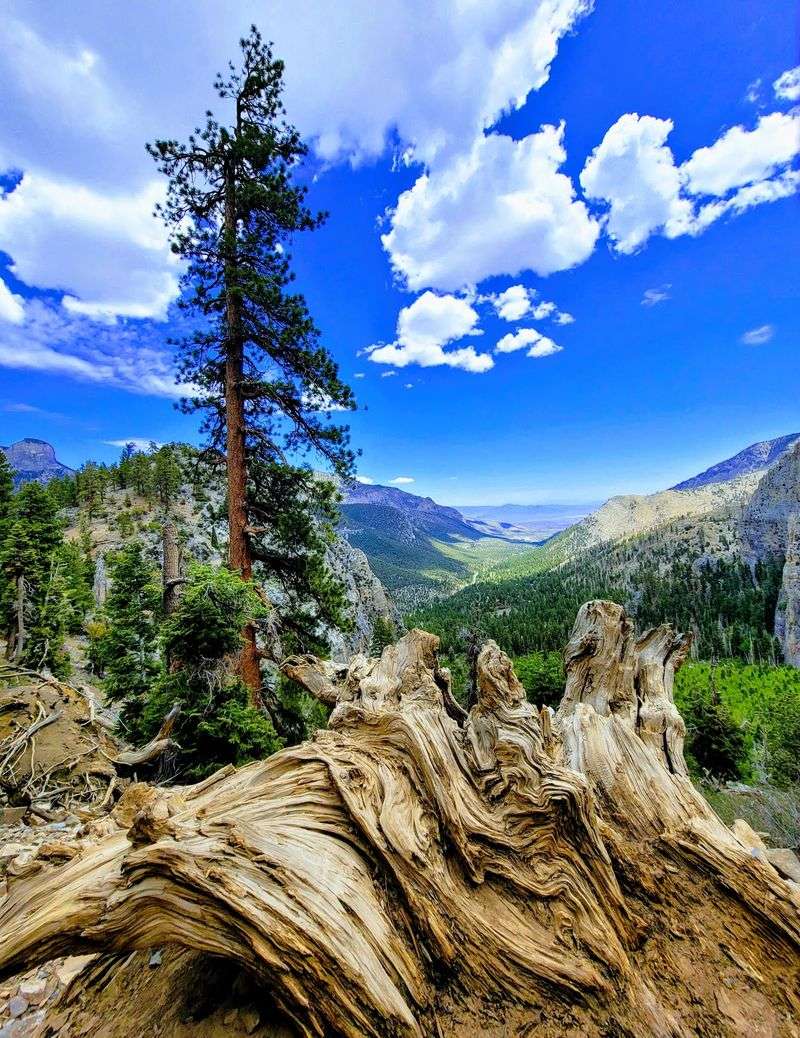
Forested slopes stretch below, stitched together with rocky ribs and pale limestone. Cabins and picnic areas shrink into small specks.
Charleston Peak dominates the western horizon. Lee Peak and Mummy Mountain fill in the rest of the skyline.
The scale surprises first-time visitors. These are real mountains, not desert hills, and the Spring Mountains rise thousands of feet above the surrounding basin.
Several natural viewpoints appear along the route, some with logs or benches nearby. Stopping is encouraged rather than rushed past.
Autumn adds another layer, since golden aspen patches show up as bright brushstrokes across the canyon floor and side drainages.
Clear days stretch sightlines toward the flatter desert country to the east. Haze can soften that, so early hours often win.
Nevada scenery rarely gets more vertical than this canyon panorama.
The Rocky Perch At The Top
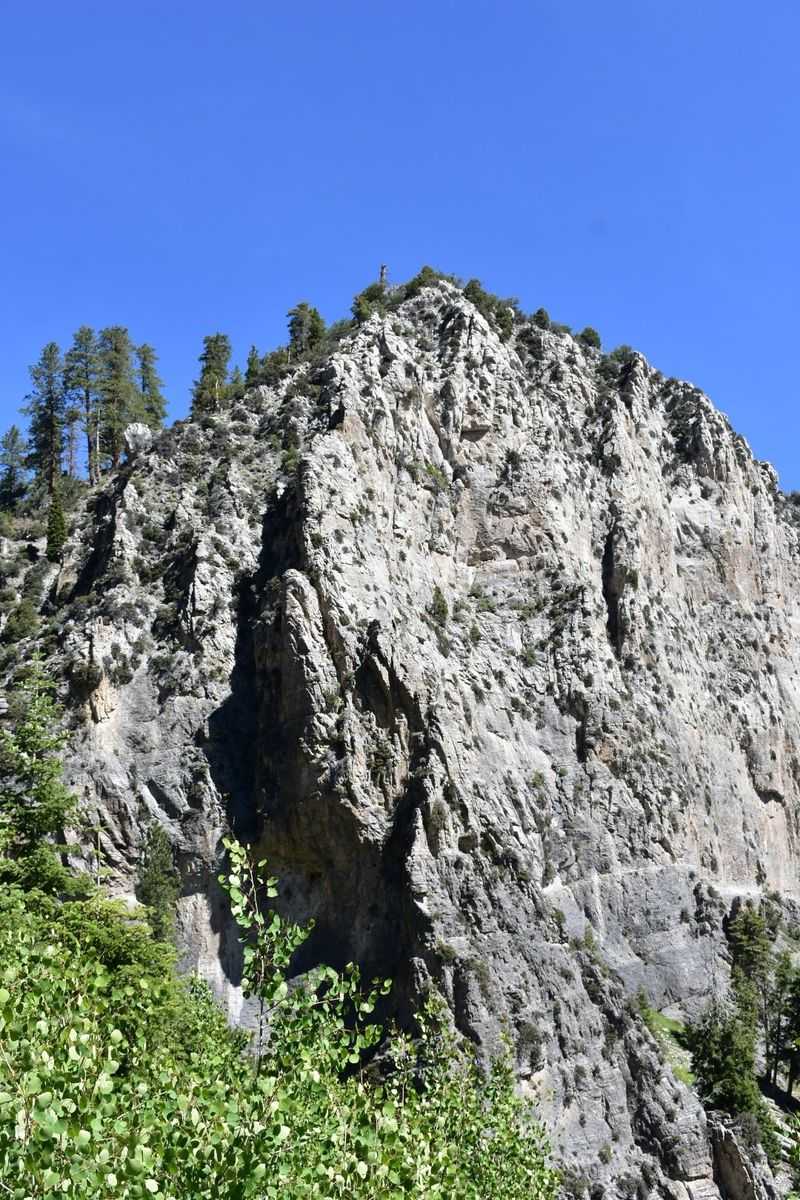
The last stretch earns its reward.
Near the top of the Cathedral Rock Trail, the path steepens and the tread turns rockier, with loose gravel demanding careful footing.
Then the trees thin out. Suddenly there is sky on almost every side.
The summit area is a broad rocky shelf, open enough to sit and rest while the wind moves through. Views sweep across Kyle Canyon and out toward the ranges beyond.
On clear days, hikers can pick out the flat desert stretching east. That contrast between alpine forest and open basin sticks with people.
Caution matters up here. Edges are real, footing can be uneven, and rushing near drop-offs is never worth it.
Wind at the top often feels stronger than at the trailhead, so an extra layer earns its place in the pack.
Autumn visitors get bonus points, since golden aspen clusters dot the slopes below like scattered coins.
Plenty of Nevada summits require all-day suffering. This one asks for a morning.
Timing Your Trip For Peak Color
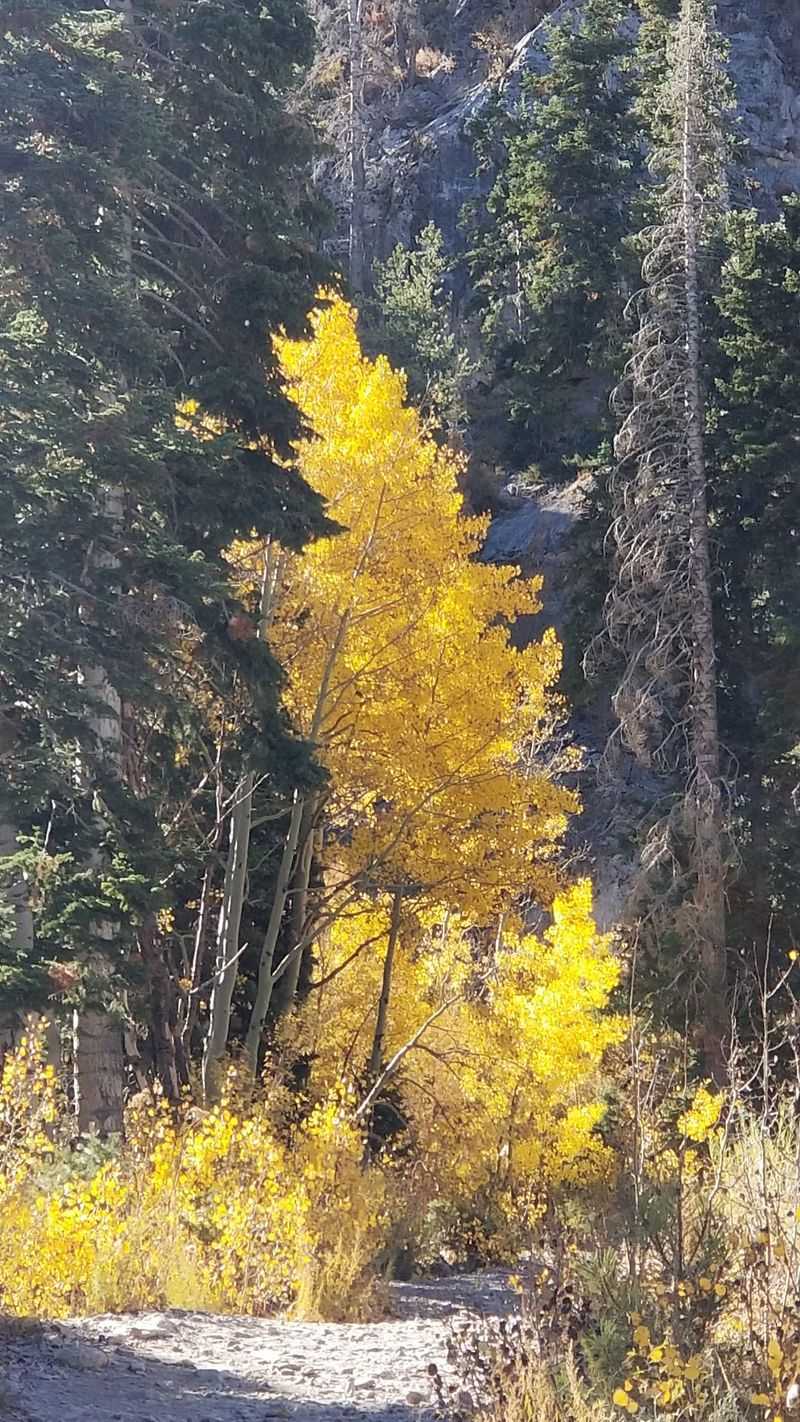
Guessing peak color is part science, part luck.
Fall foliage on Mount Charleston generally builds through late September and holds into October, with many years peaking during the first half of that month.
Elevation plays a big role. Higher groves usually turn first, while lower ones hang on a little longer.
Weather can shuffle the schedule. A warm stretch delays things, and a sudden cold snap or windstorm can strip leaves quickly.
Checking recent trail reports or local fall color updates before driving up saves disappointment. Conditions change week to week.
Summer works well too, since the Cathedral Rock Trail offers cooler air than the scorching valley below. Spring brings wildflowers instead of gold.
Late fall and early spring can involve snow, ice, or temporary closures at higher elevations. Traction devices sometimes become necessary.
Weekday visits during autumn feel calmer than weekends, when the canyon draws crowds chasing the same leaves.
Flexibility beats a fixed date every single time on this mountain.
Parking, Restrooms, And Getting There Early
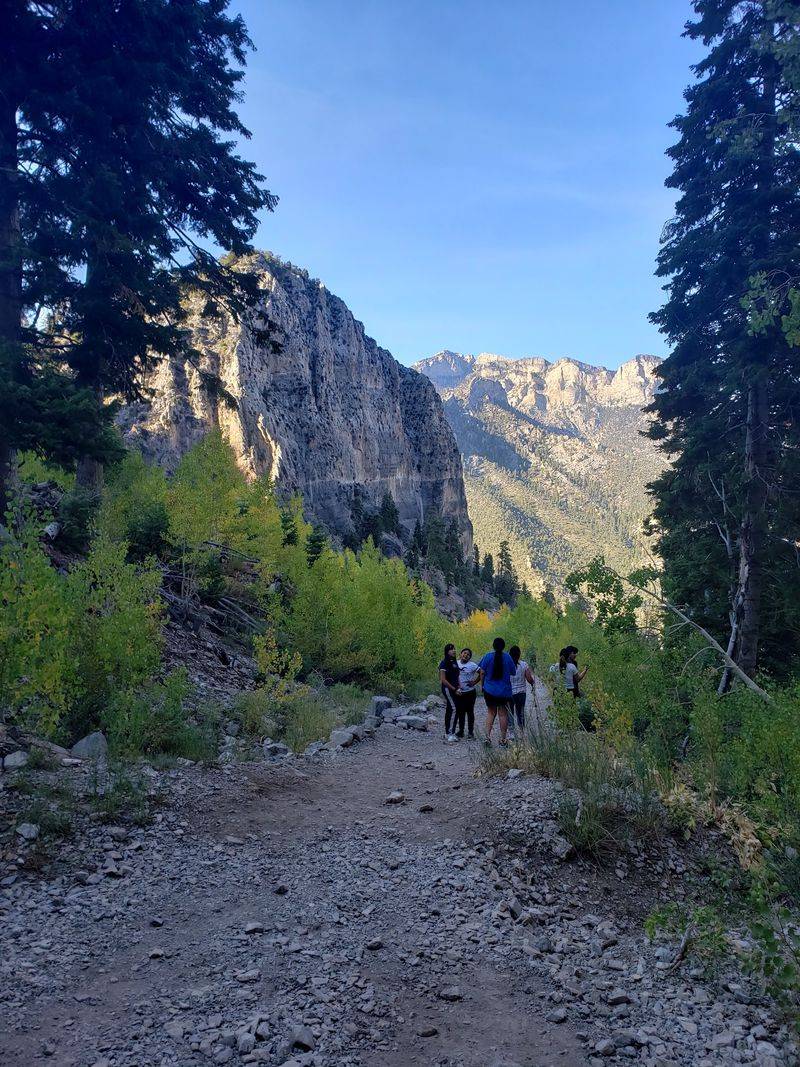
Arrive late and the mountain may say no.
The Cathedral Rock Trail starts near the Cathedral Rock Picnic Area, sharing a trailhead zone with the South Loop route up toward Charleston Peak.
A sizable parking lot serves the area. Restrooms are typically available near the trailhead, which hikers always appreciate.
Autumn weekends fill that lot fast. Peak foliage draws Las Vegas day-trippers by the carload.
Getting there early, ideally soon after sunrise, solves most parking headaches. Cooler temperatures and softer light come free with the deal.
Parking along narrow canyon roads is discouraged and sometimes restricted, so patience beats improvisation.
The drive up Kyle Canyon climbs steadily, and the road curves plenty. Taking it slow keeps everyone comfortable.
Cell service can be spotty in the mountains, so downloading a map beforehand is smart planning.
Picnic tables near the start make a fine finish line for snacks after the descent.
Simple logistics, handled early, turn a stressful morning into an easy one.
How Hard The Climb Really Feels
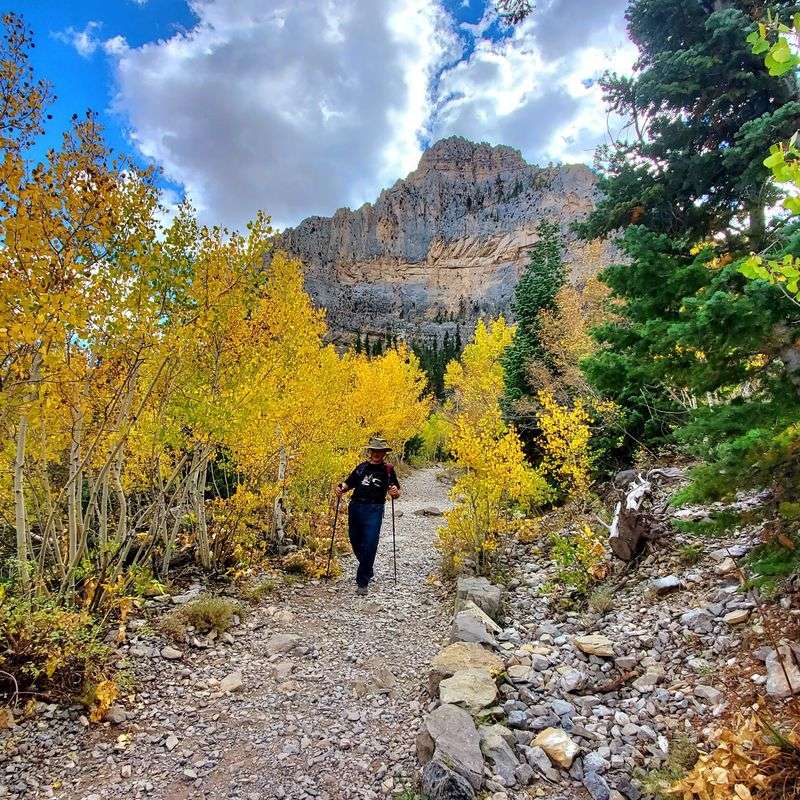
Moderate, but honest about it.
Ratings for the Cathedral Rock Trail usually land in the moderate range, thanks to a steady incline that rarely lets up for long.
Total gain sits close to 1,000 feet across a short distance. That math means consistent climbing rather than gentle strolling.
Altitude is the wild card. Starting near 7,500 feet, visitors coming from lower elevations may feel winded sooner than expected.
Spending a little time in the Mount Charleston area first can help the body adjust. Slow pacing helps even more.
Water matters at altitude, and dry mountain air pulls moisture faster than people realize. Bringing more than seems necessary is wise.
Benches and large logs appear along the path, offering practical excuses to stop and enjoy the scenery.
Near the summit, loose rock and steeper pitches call for sturdy shoes with real grip.
Families with older kids often manage the route fine with breaks and snacks.
Effort here stays reasonable, and the payoff arrives quickly.
A Hidden Waterfall And Towering Cliffs
Water in the desert always feels like a plot twist.
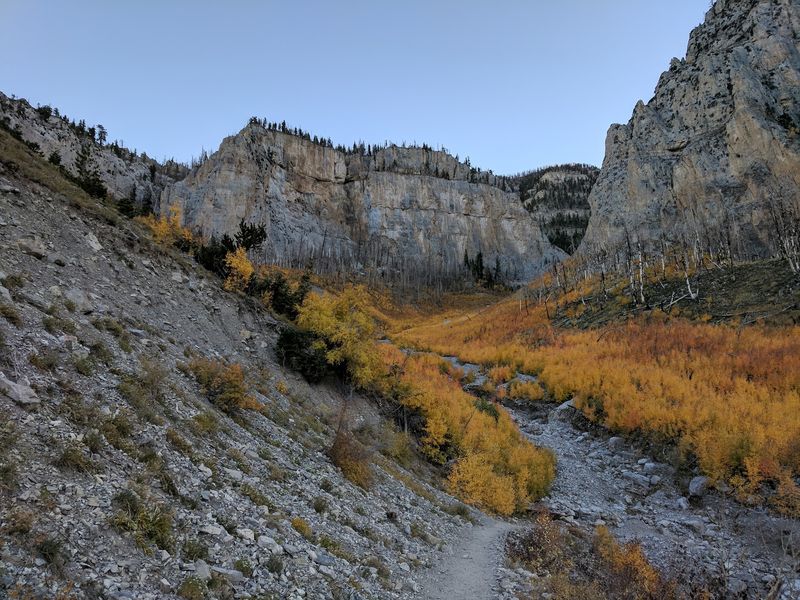
A short side path off the Cathedral Rock Trail leads toward a small trickling waterfall tucked into the rock, a quiet detour worth the extra minutes.
Flow varies with the season. Spring melt usually brings more water, while late summer can reduce it to a drip.
Above the trail, pale cliff faces rise sharply, including the dramatic walls known as Echo Cliffs. Their scale makes hikers stop mid-step.
Limestone gives these formations their light color and jagged texture. Layers tell a long geological story.
Wildlife occasionally makes an appearance, from chipmunks scurrying across roots to birds calling from the canopy.
The Spring Mountains function as a sky island, an isolated high-elevation habitat surrounded by desert. Certain plants here grow nowhere else on Earth.
Staying on established paths protects those fragile species and keeps the slopes stable.
Autumn light hitting those cliffs, with gold leaves below, makes for the kind of scene cameras struggle to capture.
Bringing Dogs And Sharing The Trail
Four-legged hikers welcome.
Dogs are commonly seen on the Cathedral Rock Trail, and leashed companions make the climb feel like a family outing rather than a solo mission.
Leashes keep everyone safer, especially near steeper sections and loose rock close to the summit.
Waste bags are non-negotiable. Packing out everything protects water sources and keeps the forest pleasant for the next group.
Water for dogs deserves space in the pack too. Altitude and dry air affect them just as much as their humans.
Rocky ground can wear on paws, so checking pads during breaks is a good habit.
Trail etiquette smooths things out for all. Uphill hikers generally get the right of way, and stepping aside costs nothing.
Voices carry in canyon air, so keeping noise low lets others enjoy the rustling aspens.
Autumn crowds mean more encounters on narrow stretches, and a little patience goes a long way.
Cathedral Rock Trail proves that Nevada’s best fall colors sit within reach of anyone willing to climb a little.