
Kids Get 1,200 Acres Of Trails, Lake Shore, And History At This Mississippi State Park
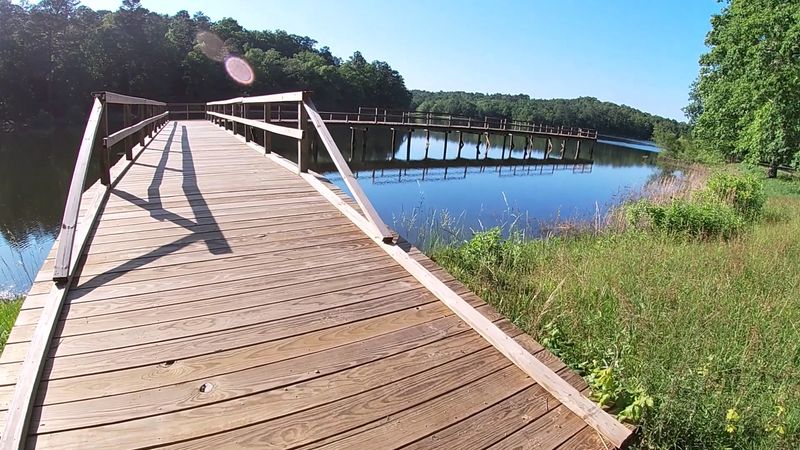
Drive far enough into the northeast corner of Mississippi and the flat farmland starts folding into hills, which feels almost like a mistake the first time you see it. Tucked into those hills sits a park where sandstone boulders stack up like something borrowed from the Appalachians, a creek slides under a swaying footbridge, and a 45-acre lake catches the late light.
Families come for a four-dollar carload of trails, fishing, and 1930s stonework, and most leave planning a second trip. It is the kind of Saturday that costs less than lunch and sticks in a kid’s memory for years.
A Corner Of Mississippi That Looks Like Somewhere Else
Tishomingo State Park sits at 105 County Road 90 in Tishomingo, Mississippi, right up in the northeast corner of the state where the Appalachian foothills finally run out of steam. Tishomingo County is roughly an hour and a half from Tupelo and a short hop from the Alabama line.
The park covers around 1,530 acres by the official count, with most descriptions landing somewhere between 1,200 and 1,530 depending on which boundary you measure. Either way, it holds the title of Mississippi’s largest state park.
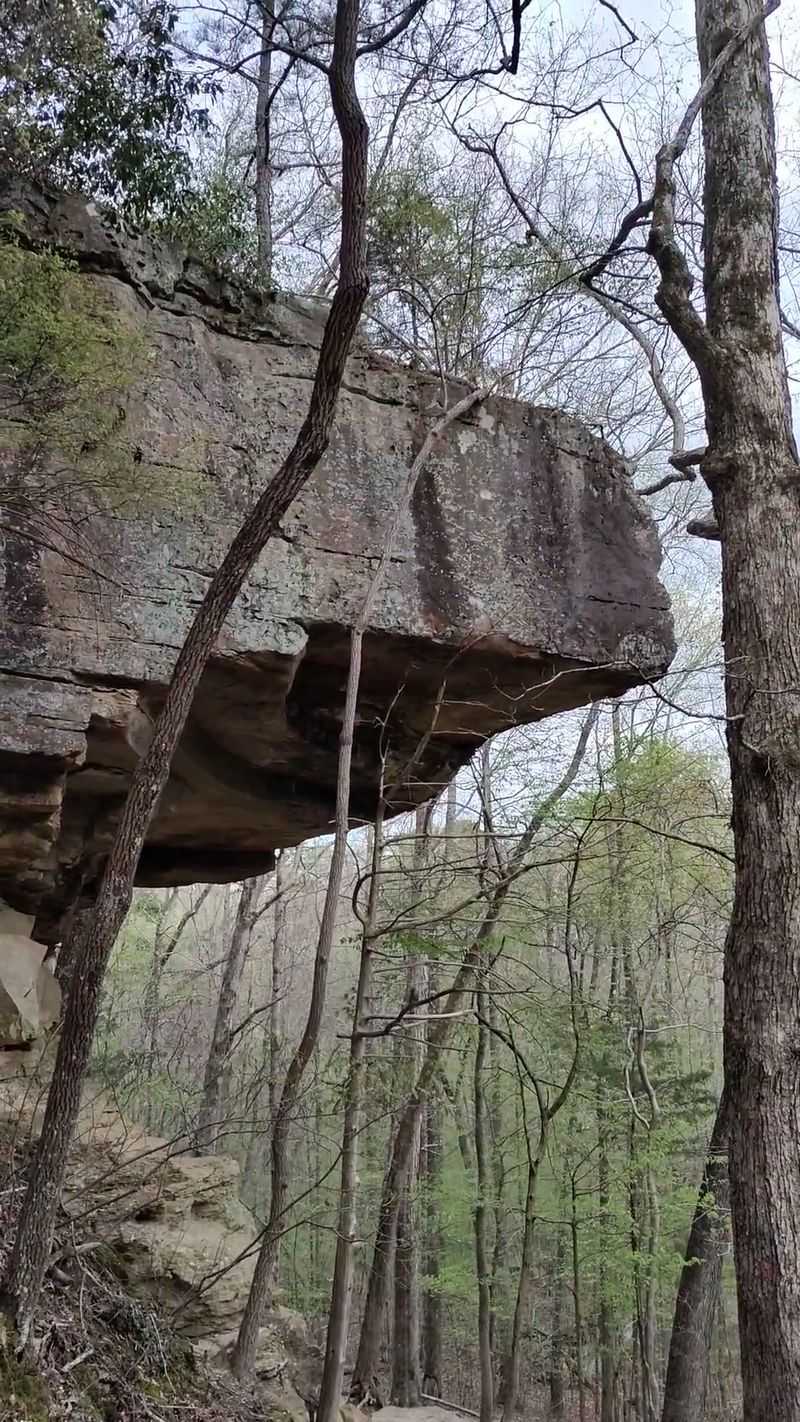
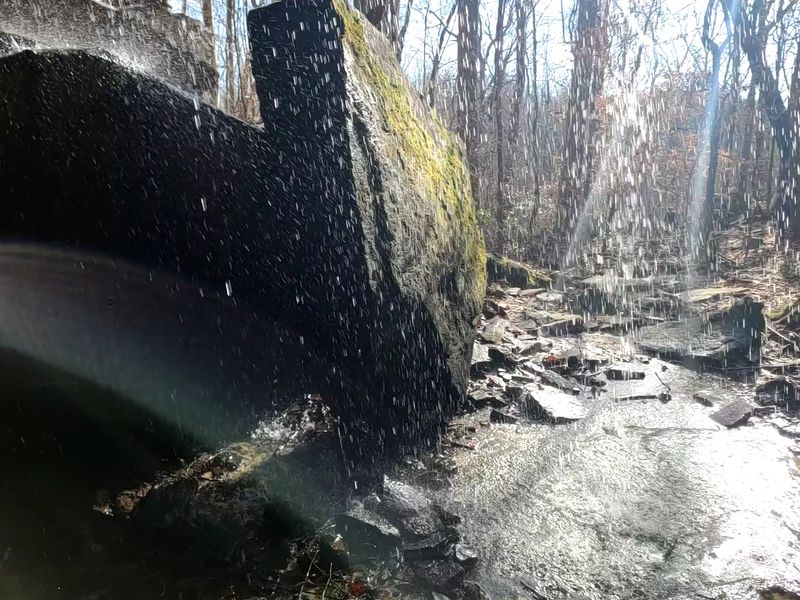
Geology is the headline here. Massive sandstone outcroppings, moss-lined crevices packed with ferns, and natural springs create scenery that surprises anyone who assumes Mississippi is all bottomland and pine.
Visitors regularly mention how hard it is to believe you are still in the state when you are standing under a rock ledge taller than your house. Bear Creek cuts through the middle, Haynes Lake spreads out behind the campground, and the Natchez Trace Parkway slices straight through the property.
For families, that mix means one gate fee buys hiking, fishing, history, and a swinging bridge in a single afternoon.
The Chickasaw Leader Behind The Name
Chief Tishomingo, a respected leader of the Chickasaw Nation, was born near this stretch of country and spent time hunting and fishing along these creeks. The park carries his name, and that connection gives the whole place a weight that goes beyond scenery.
Human history here runs far deeper than the 1800s. Archaeological work in the area points to native peoples living along Bear Creek as early as 7000 BC, which makes this one of the longest continuously used landscapes in Mississippi.
Kids tend to grasp that better standing on a rock shelf than reading it in a textbook. Point out the overhangs and springs, mention that families camped in these same spots thousands of years ago, and watch the idea land.
The Natchez Trace Parkway adds another layer. That route began as a network of footpaths used by native travelers, later worn deeper by traders, farmers, and settlers heading north.
Driving a few miles of the Trace on your way in or out turns the visit into a rolling history lesson that nobody has to sit still for.
Crossing Bear Creek On The Swinging Bridge
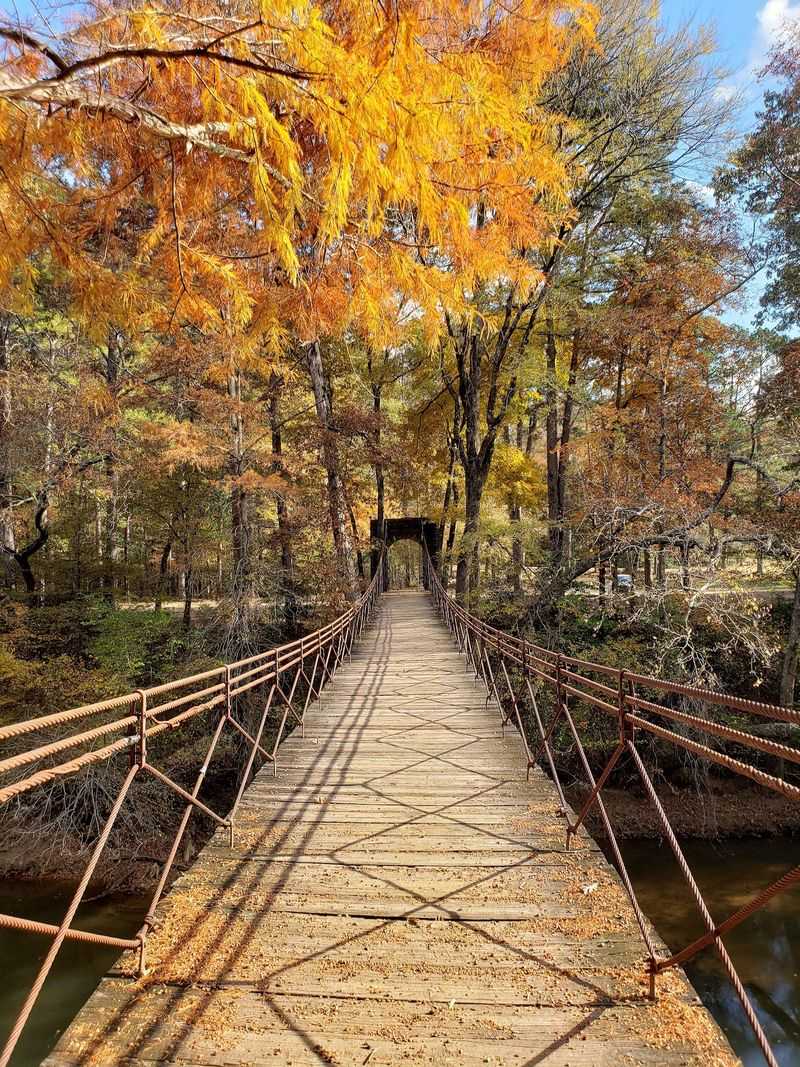
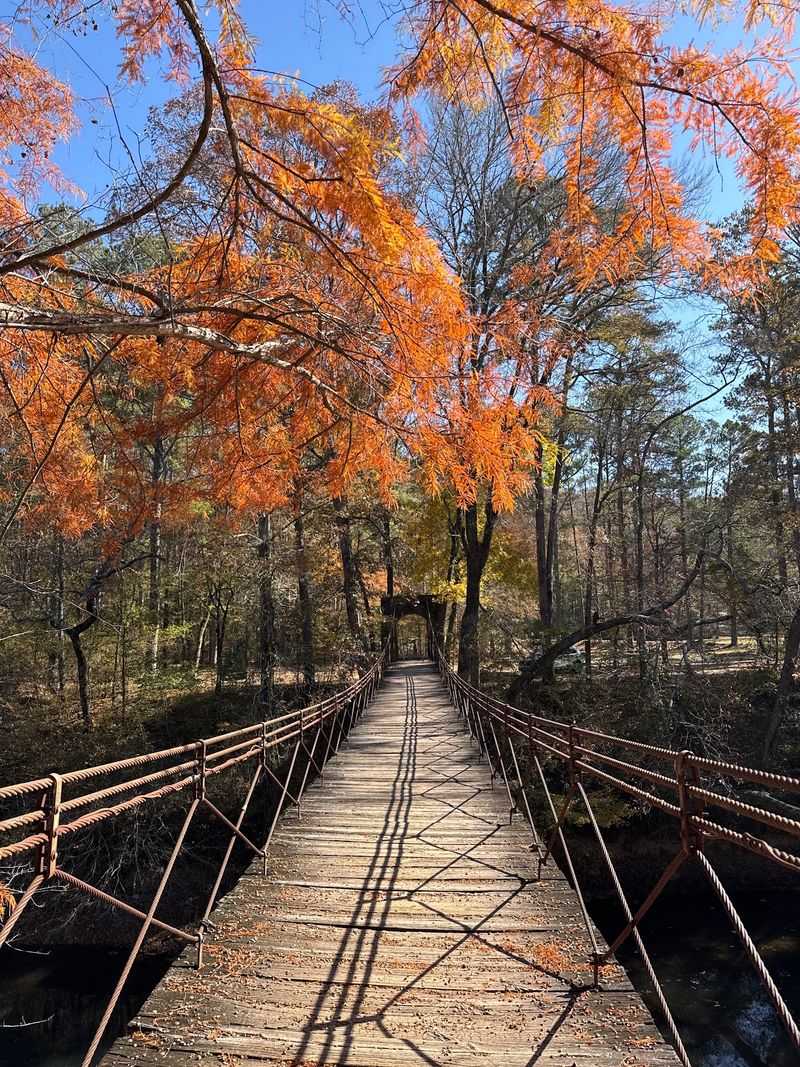
Ask anyone who grew up visiting what they remember, and the swinging bridge comes up first. Suspended above Bear Creek, the pedestrian span wobbles just enough to make a seven-year-old shriek and then immediately demand another crossing.
It is the single most talked-about feature in the park, mentioned again and again by people who have walked it since childhood. Parents hold the cables.
Kids bounce on purpose. Somebody always stops halfway to look down at the water moving over the rocks.
Below the bridge, Bear Creek runs clear over sandstone in dry weather and turns brown and fast after heavy rain, so the view changes with the season. Benches and flat rocks near the banks make good spots to sit and let younger children throw pebbles.
Regulars often describe this area as the most peaceful part of the park, especially early in the morning before day-use traffic picks up. Parking sits close by in the lot near the CCC lodge, so families with strollers or grandparents along do not face a long walk to reach it.
Bring a camera. This is the photo everyone takes home.
Thirteen Miles Of Trails, Sorted By Effort
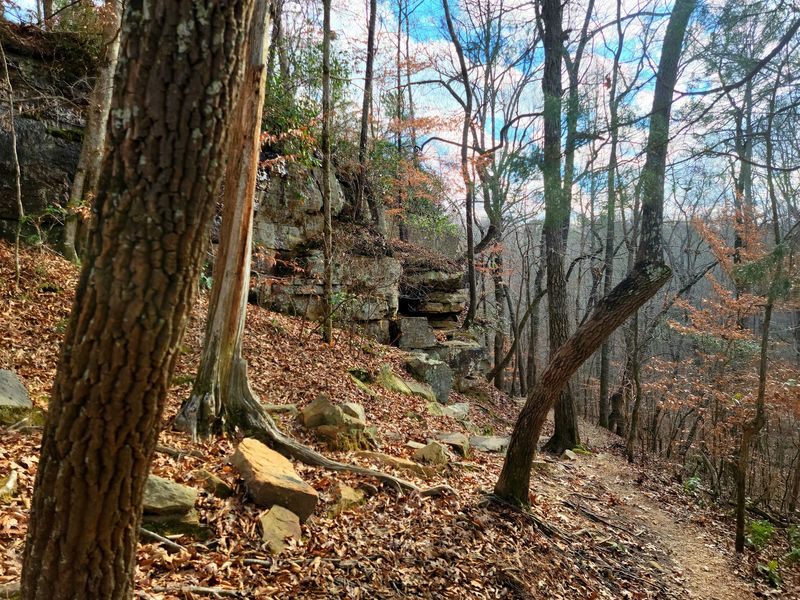
Seven named trails wind through the park, adding up to roughly 13 miles total. They range from short, flat loops to rockier routes with roots and elevation changes that will get a teenager breathing hard.
CCC Pond Trail and Bear Creek Trail sit at the easy end and work well for beginners, younger walkers, and anyone who wants scenery without a workout. Trail #7 is the only true loop, though hikers often link several segments together to avoid backtracking.
Hikers consistently praise how well marked the paths are and how quickly the terrain shifts from open woods to narrow passages between boulders. Ferns fill the shaded crevices.
Natural springs trickle out of the rock in spots you would not expect.
Tree cover keeps the trails noticeably cooler than open ground, which matters enormously on a July afternoon in Mississippi.
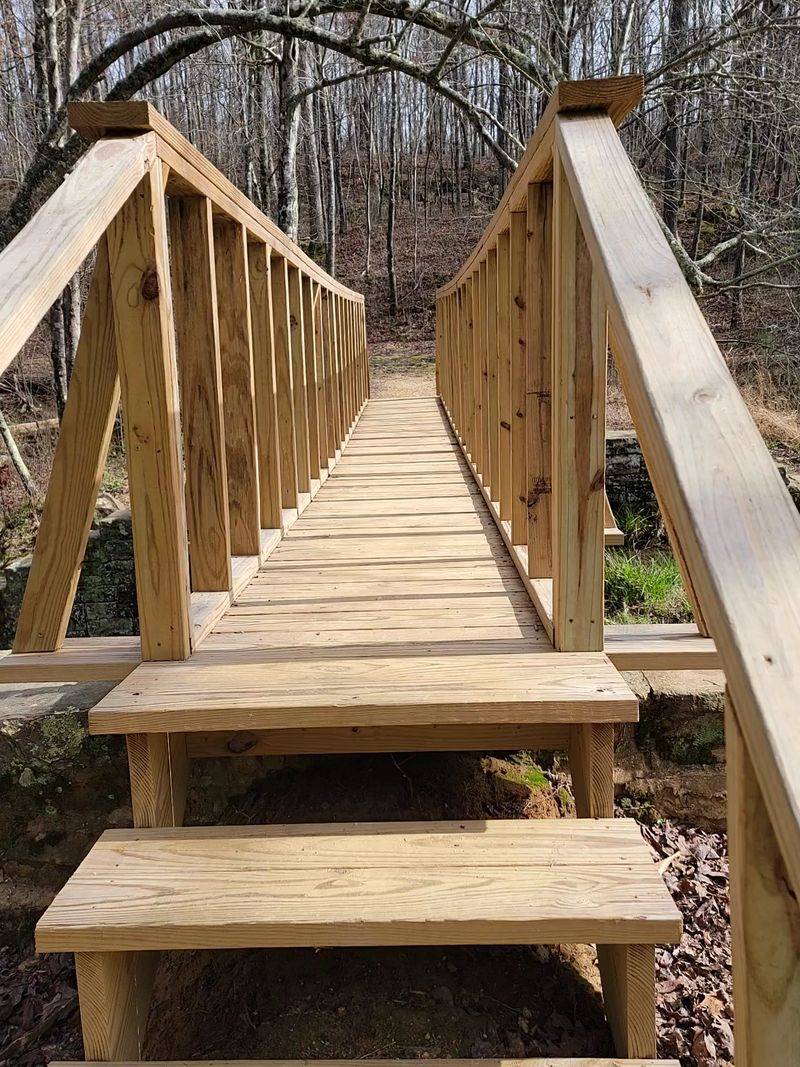
Some visitors have reported fallen trees across sections of trail and bridges showing their age, so check conditions at the office before committing to a longer route with small children. Sturdy shoes beat sandals here every single time.
Haynes Lake And The Fishing Shoreline
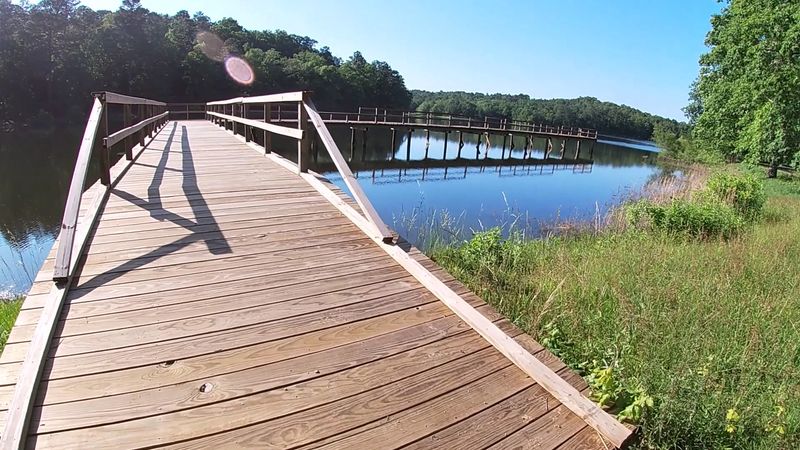
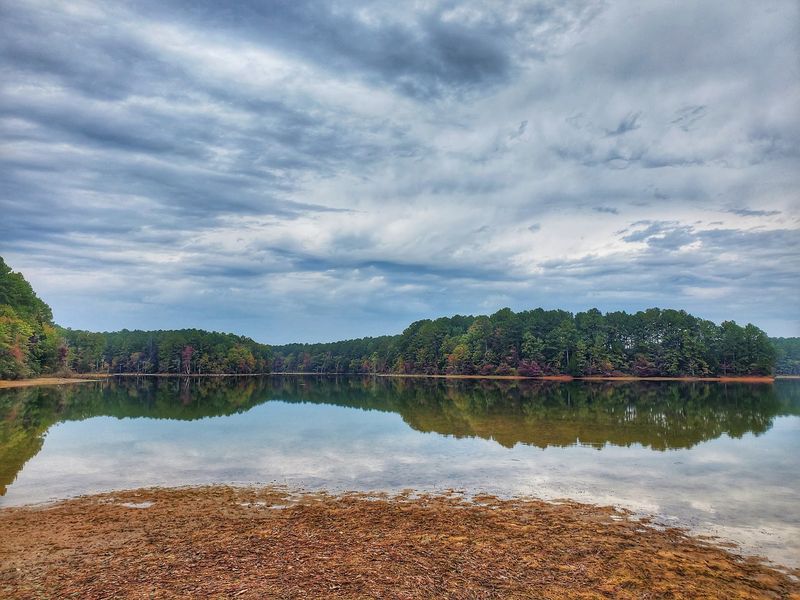
Forty-five acres of stocked water sit at the heart of the park, edged by hardwoods and reachable by dock and boat ramp. Haynes Lake is where a lot of families end up when hiking legs give out.
Fishing is the main draw. Anglers work the banks and the shoreline near the premium campsites, and the catch tends toward bass and panfish.
One note worth knowing in advance: fishing from the campground area is generally limited to registered campers, so day visitors should plan on the public access points.
Canoeing and kayaking are both popular on the lake and on Bear Creek. The park also runs guided canoe float trips along the creek, supplying the gear so families do not have to haul anything from home.
Those floats drift past bluffs and heavy green banks at a pace slow enough for kids to trail their hands in the water.
Swimming in the lake is not permitted, so set expectations before the drive. The view from the back campground loop, where the water catches evening light, is reason enough to walk down.
Stonework Left Behind By The Civilian Conservation Corps
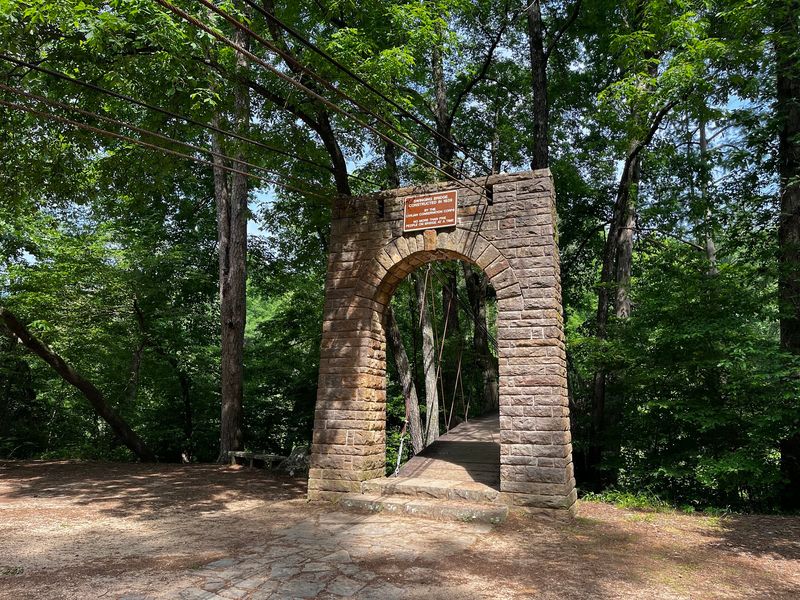
Back in the 1930s, crews from the Civilian Conservation Corps shaped much of what visitors still use today. The stone archway at the entrance, several trail sections, the lodge, and a cluster of cabins all trace back to that era of hand-cut rock and heavy labor.
Those cabins remain some of the most charming lodging in the state park system, with thick stone walls and screened porches that catch the evening breeze. Guests who have stayed note one quirk worth planning around: stone holds cold, so winter mornings inside can be genuinely chilly.
A group camp cluster of cabins also sits on the property, the kind of setup families use for reunions when the whole extended crew wants to be in one place.
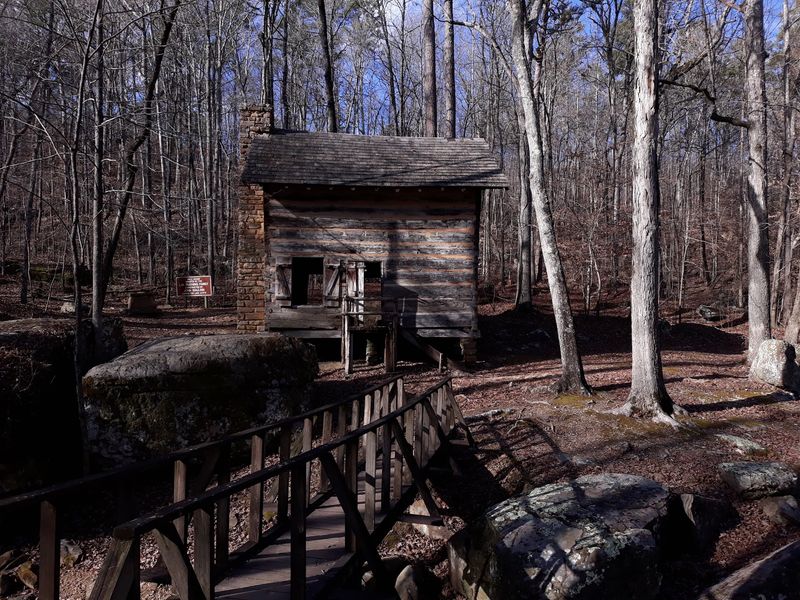
The Pioneer Cabin sits in a pretty roadside spot and makes an easy stop even if you are only passing through. It has been boarded up at times, which frustrates history-minded visitors hoping to see inside.
Even from the outside, the craftsmanship is obvious. Point out the hand-fitted stones to kids and the 1930s suddenly feel close.
Disc Golf, Playgrounds, And Old-School Fun
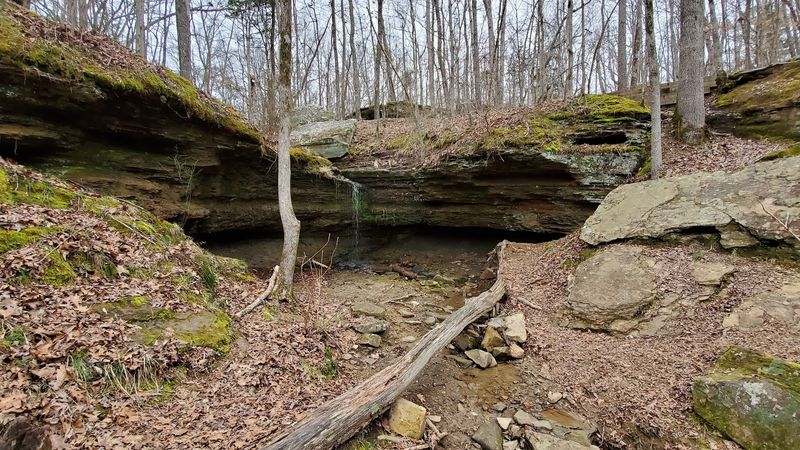
Three disc golf courses spread across the park give teenagers and adults something to do that does not involve a trailhead. Discs are cheap, the courses wind through trees, and a casual round burns an easy hour or two.
Disc golf comes up often among repeat visitors, several of whom treat it as their main reason for showing up. Courses vary in length, so beginners can start short and work up.
Playgrounds are a different story, and honesty helps here. The equipment leans old-school, with metal slides and a seesaw that have clearly been in place for decades.
Some visitors find it dated.
Others report their kids, including one teenager, got a real kick out of playing on gear that looks like it came straight out of a grandparent’s photo album. For multi-generational trips, that nostalgia can be half the fun.
A swimming pool exists on the grounds, historically operating in late spring and summer, but it has been out of service for an extended stretch and visitors have found it closed. Check with the park before promising anyone a swim.
Camping From Full Hookups To Tent Sites
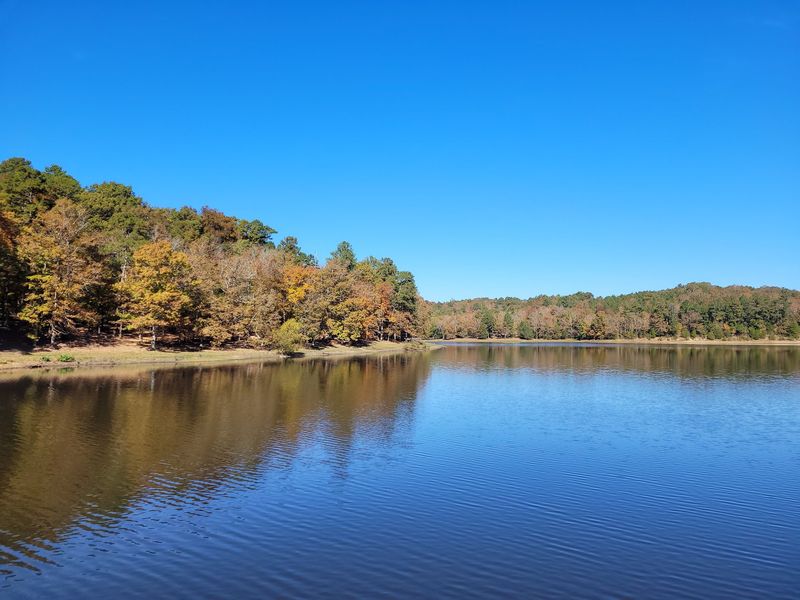
Campers who pull off the Natchez Trace on a whim have a habit of going back for their rig. The newer campground section, roughly sites 38 through 62, draws steady praise for spacious paved pads, level ground, landscaping, and lake views from the sites around the back circle.
Each site comes with a charcoal grill and a stone fire ring. Full hookups including sewer are available, along with a dump station, and the office sells ice and firewood.
The older loop is a mixed bag. Some sites are small or awkward, a few have steep drops just off the pad, and the restrooms and showers serving the whole campground sit in that older section.
Visitors describe those facilities as clean but dated, and several have noted limited working restrooms at various times. Cell service is spotty throughout, which some families count as a feature.
Primitive tent camping is available too. Extending a stay can be handled online, which helps when the weather turns nice and nobody wants to leave.
The Natchez Trace Parkway Running Through It
Few state parks in the country have a national parkway cutting straight through them. The Natchez Trace Parkway bisects this one, and the park entrance sits within easy reach of milepost access.
Driving the Trace is an experience by itself. No commercial traffic, no billboards, a 50 mph pace, and unbroken forest on both sides make it one of the calmest roads in the South.
Plenty of people discover the park entirely by accident while driving it, pulling in to look around and then changing their plans for the week. That happens often enough that it has become part of the park’s reputation.
For families, the Trace turns a single destination into a loop. Combine a morning of hiking with an afternoon scenic drive, stop at pull-offs along the way, and the day stretches without anyone having to spend more money.
The route also connects the park to other stops in the region, including nearby waterfront spots and a small free museum a short drive away. Tishomingo works equally well as a destination or a very good excuse to slow down.
Who Has The Best Time Here
Picture a six-year-old and a grandmother on the same Saturday. Both can enjoy this park, but the route matters.
Easy trails, the swinging bridge, the roadside rock formations, and the lakeshore are all reachable without serious effort, and some outcroppings sit close enough to the road that a short walk gets you there. Those are the stops for young kids and older relatives.
Elementary-age children through teenagers get the most out of the longer trails, the disc golf courses, and a canoe float on Bear Creek. There is climbing terrain in the park as well, which appeals to older kids with energy to burn.
Honest caveat: a few visitors have felt the park skews more toward campers passing through than toward toddler-focused amenities, largely because the pool has been closed and the playgrounds are aged. Families expecting splash pads and new equipment may feel let down.
Families who come for woods, water, and rocks tend to leave delighted. Strollers struggle on the rougher trails, though paved campground roads and the lodge area handle wheels fine.
Fees, Hours, Parking, And What To Pack
Four dollars per vehicle covers day use, with an extra fifty cents per person for groups larger than six. That is the whole cost of admission for a family of four, which is hard to beat anywhere in Mississippi.
Park grounds are accessible around the clock, while the office typically keeps daytime hours in the 8 AM to 5 PM range. Lighting is minimal after dark, so plan hikes for daylight.
Parking is plentiful, including a large lot near the CCC lodge and the swinging bridge, which puts the most popular features within a short walk.
Pack sturdy closed-toe shoes, because roots and uneven rock are everywhere on the trails. Bring water, bug spray in warm months, and snacks, since dining options inside the park are limited.
Cell coverage is thin, so download maps before you arrive. Pets are welcome on a leash throughout the park but are not allowed in the lodge, cabins, or swim areas.
Newer RV sites and one cottage are built with accessibility in mind, though trail terrain remains rugged.
Worth The Drive Northeast
Nobody would call this park polished. Funding has clearly been stretched thin, a few bridges and restrooms show their years, and the pool has sat unused for a long stretch.
What has not faded is the land itself. Sandstone ledges, spring-fed crevices, a creek worth sitting beside, and a lake that goes glassy at dusk do not need a maintenance budget to impress anyone.
Staff members come up repeatedly in conversation as friendly and helpful, and the newer campground loop shows what the whole place could look like with more investment. Longtime visitors talk about it with real affection, the way people talk about a favorite spot they have been returning to since childhood.
For Mississippi families weighing a cheap Saturday, four dollars a carload buys 13 miles of trails, a wobbling footbridge, thousands of years of history, and hills that should not exist in this state.
Go early in summer for shade and cooler air, or in fall when the hardwoods turn. Pack good shoes, keep expectations pointed at nature rather than facilities, and this corner of Tishomingo County delivers.