
Mark Twain Called These Mississippi Small Towns Dreamlike And 160 Years Later Nothing Has Changed
Calling something dreamlike was not Mark Twain’s usual move. He was more of a sharp wit, dry humor kind of writer.
When Twain looked at certain Mississippi small towns along the river and reached for that word, it meant something real. Most people still have not caught on. The towns were not waiting around for anyone to catch on, either. A hundred and sixty years have gone by.
The river still runs the same course. The porches still hold. The easy pace that made Twain stop and stare has not picked up speed since he left. Mississippi has that effect on places.
Go visit one of these towns on a random Tuesday. Bring absolutely nothing to do. You will leave with the strange sense that you just stumbled onto something the rest of the country forgot to notice.
1. Aberdeen
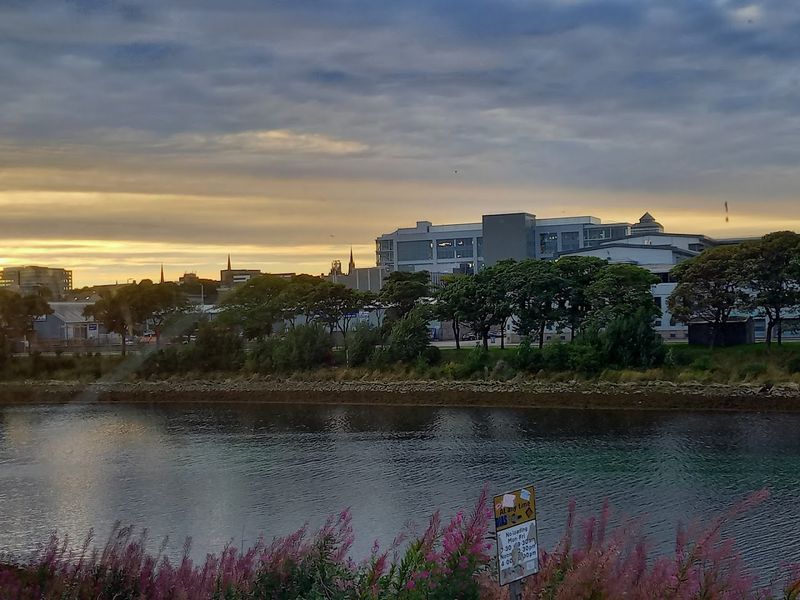
Aberdeen is the kind of town that makes you feel like you accidentally stepped through a time portal and nobody told you the password to get back. Once Mississippi’s second largest city, Aberdeen was a booming Tombigbee River port during the cotton era.
When that era ended, the town simply paused, and the architecture stayed right where it was.
Over 200 buildings in Aberdeen sit on the National Register of Historic Places. The streets follow the same basic layout they had in the 1840s.
Antebellum mansions, Greek Revival homes, Italianate buildings, Victorian structures, and Queen Anne houses line block after block in remarkably solid condition.
The Magnolias, an 1850 antebellum home at 732 W Commerce St, Aberdeen, MS 39730, is open for tours on weekdays from 10am to noon. The Old Aberdeen Cemetery dates all the way back to 1838 and feels like a quiet outdoor history museum.
During annual pilgrimage season, guides in period dress walk visitors through the town’s layered past.
Aberdeen is also the birthplace of blues legends Bukka White and Mississippi John Hurt, two musicians whose sounds shaped American music for generations. The town carries both architectural beauty and cultural depth in equal measure.
You get antebellum grandeur on one corner and the roots of the blues on the next, which is honestly a combination that very few places on earth can offer. Aberdeen does not advertise itself loudly, and that restraint is part of its charm.
The town simply exists, unchanged and unbothered, exactly as Twain might have recognized it from the river.
2. Carrollton
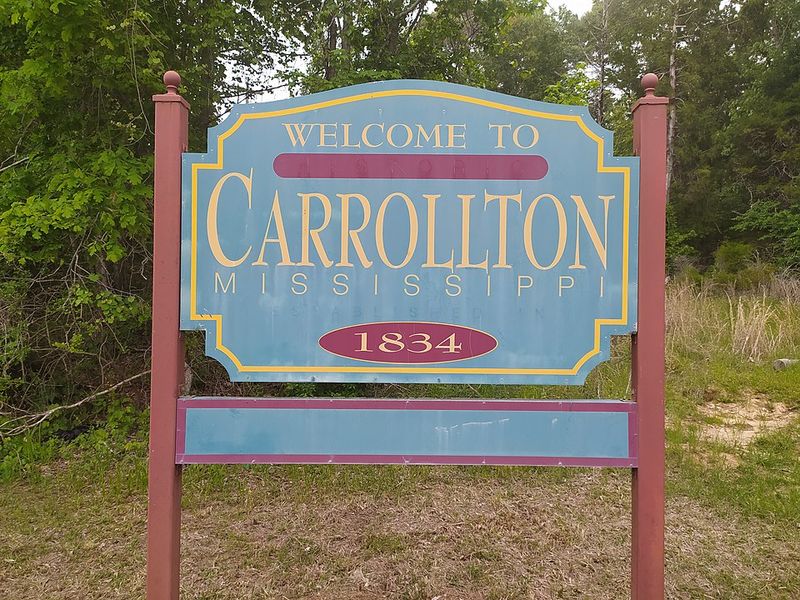
With a population of roughly 200 people, Carrollton might be the most perfectly preserved small town you have never heard of. Officials have formally described it as one of Mississippi’s most perfectly preserved 19th-century communities, and that is not tourist brochure talk.
That is just the honest truth about a place that never changed because it never needed to.
When Hollywood came to Carrollton in 1968 to film The Reivers, a movie set in 1904, the production crew covered the gas station and spread a little dirt on the streets. That was the entire preparation.
The town itself required almost no alteration to pass as the early 1900s, which says everything you need to know about how little has shifted here over the decades.
Homes range from antebellum estates to Victorian cottages, and Gothic churches stand on the same corners they have occupied for 150 years. The Carroll County Courthouse at 600 Lexington St, Carrollton, MS 38917 anchors the square with quiet authority.
It is the kind of building that looks like it was built to last forever and then proceeded to do exactly that.
Carrollton rewards the kind of traveler who moves slowly and pays attention to details. The town has no major commercial strip, no chain restaurants interrupting the view, and no neon signs competing with the rooflines.
What it does have is an almost surreal completeness, a whole community that looks the way Mississippi looked before the modern world arrived with its usual bag of changes.
If you want to understand what Twain was describing when he wrote about dreamlike river towns, Carrollton is a very convincing answer to that question.
3. Woodville
Founded in 1811, Woodville holds a kind of record that most towns would brag about constantly. The Woodville Republican has published without interruption since 1823, making it Mississippi’s oldest continuously operating newspaper.
That means the paper survived wars, floods, economic collapses, and the invention of the internet. Respect.
St. Paul’s Episcopal Church, built in 1823 and standing at 259 Church St, Woodville, MS 39669, is one of the oldest churches in the entire region. The Wilkinson County Courthouse still anchors the square, just as it has for generations.
Woodville sits in the southwestern corner of Mississippi near the Louisiana border, and the geography gives it a particular quietness that feels less like silence and more like the town simply decided to breathe slowly on purpose.
Rosemont Plantation at 921 MS-24 is the boyhood home of Jefferson Davis and sits just outside town. Tours are available by appointment, so call ahead before making it the centerpiece of your visit.
The plantation adds a significant layer of American history to an already historically dense area, though the town itself is worth the drive on its own terms.
Woodville is the kind of place that stopped growing and simply stayed, which sounds like a setback but actually turned out to be a gift. The town never bulldozed its old buildings to build something newer and shinier.
The streets feel like they belong to a different century, and the people who live there seem perfectly fine with that.
For visitors who appreciate genuine history over manufactured nostalgia, Woodville delivers something rare: a Southern town that looks exactly like itself, unpolished and completely honest about it.
4. Raymond
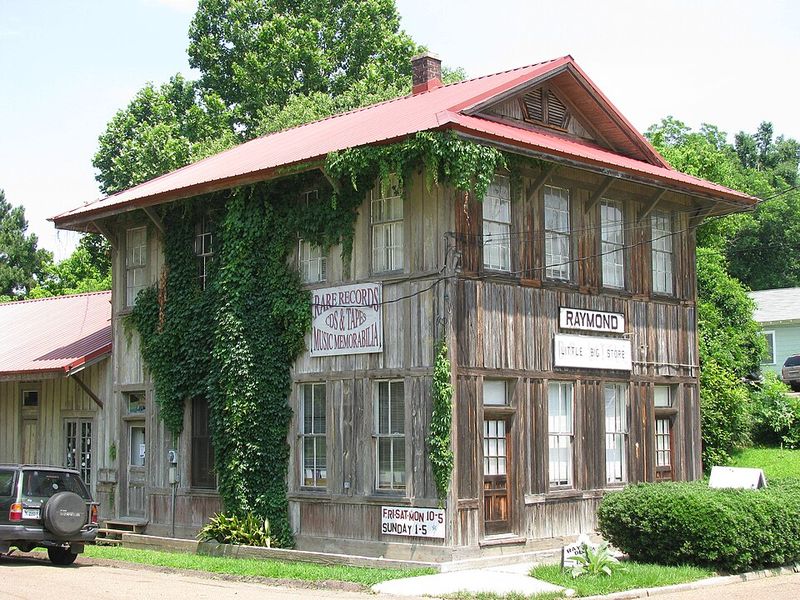
Raymond carries more history per square foot than most towns three times its size. Serving as a trading hub and county seat since the early 1800s, the town built itself around commerce and civic life in equal parts.
The Hinds County Courthouse at 110 Courtyard Sq, Raymond, MS 39154 was built in 1857 and still stands on the same square where it has always stood, looking completely unbothered by the passing centuries.
In May of 1863, the Battle of Raymond unfolded right here as part of General Grant’s Vicksburg campaign. When it was over, the townspeople buried the Union soldiers who had fallen in the battle.
That act of quiet dignity during a brutal conflict says a great deal about the character of the place. A Confederate cemetery sits nearby, and the whole area around the square carries the weight of that history in a way that feels respectful rather than theatrical.
Raymond Military Park marks the battle site, and the surrounding antebellum buildings complete a picture of a town that has barely shifted since the Civil War era.
The Natchez Trace Parkway runs close by, making Raymond an easy and deeply rewarding stop for road travelers moving through central Mississippi.
What makes Raymond stand out in a state full of historic towns is the density of intact history within walking distance of a single square. You do not need a guided tour to appreciate it, though one certainly helps.
The courthouse, the cemetery, the battlefield, and the old storefronts all exist within a compact area that rewards a slow afternoon of exploration.
Raymond is not flashy about what it has, and that understated confidence makes it one of the most genuine stops on any Mississippi history road trip.
5. Canton

Canton has a courthouse square so well preserved that Hollywood directors keep showing up and asking to borrow it.
The Madison County Courthouse has stood on Canton’s square since 1858, and the surrounding storefronts look so much like the early 20th century that film crews arrive needing almost nothing in the way of set decoration.
The address is 100 N Union St, Canton, MS 39046, and it is one of the most photogenic courthouse squares in the entire South.
My Dog Skip in 2000, O Brother Where Art Thou in 2000, and The Minute You Wake Up Dead in 2022 were all filmed here. Directors specifically chose Canton because the square requires no modification to pass for earlier eras.
That is not a coincidence. That is what happens when a town refuses to replace its beautiful old buildings with parking lots and fast food restaurants.
The Canton Movie Museum displays film posters along the square storefronts, giving visitors a fun way to connect the town’s current appearance with its cinematic history.
Antique shops fill the original buildings, and browsing through them feels like a treasure hunt where the building itself is part of the prize.
The twice-yearly Canton Flea Market draws over 100,000 visitors, which is genuinely remarkable for a town of Canton’s size.
Canton has figured out something that most small towns are still trying to understand. Preservation is not about freezing a town in amber.
It is about maintaining the bones of a place so that future generations can still feel the original pulse of the community. Canton’s square hums with that original pulse every single day, whether a film crew is in town or just a handful of antique hunters looking for something worth keeping.
Either way, Canton delivers.
6. Lexington
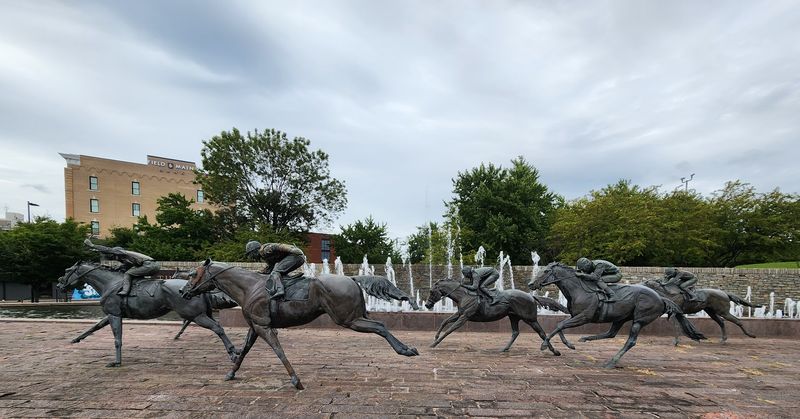
Lexington is the kind of discovery that feels like finding a twenty-dollar bill in an old jacket pocket. Incorporated in 1836, the town has a historic district containing 225 historic buildings, one monument, and several original brick streets.
That district was added to the National Register of Historic Places in 2001, and it is a genuinely large district for a community of roughly 1,600 people.
The brick-paved courthouse square at 103 Wall St, Lexington, MS 39095 dates to the antebellum era and has the kind of texture underfoot that modern pavement simply cannot replicate.
Walking across those original bricks while looking up at buildings that have stood since before the Civil War is an experience that hits differently than any museum exhibit could manage.
Lexington also holds a surprisingly important place in American agricultural history. The 4-H movement was founded here in 1907 as the Corn Club, a fact that most people outside Mississippi have never heard.
That origin story adds another layer of historical significance to a town that already has plenty to offer in the way of preserved architecture and quiet Southern atmosphere.
Tourism infrastructure in Lexington is minimal, which is worth knowing before you visit. There is no robust visitor center waiting to hand you a map, and the Google Maps presence is thin.
What Lexington offers instead is an unfiltered, genuinely unchanged small town experience that more polished destinations have long since traded away for visitor amenities. For travelers who prefer their history straight with no chaser, Lexington is an honest and rewarding find.
Pack a lunch, wear comfortable shoes, and give yourself a few hours to walk the brick streets without any particular agenda. The town will do the rest.
7. Natchez
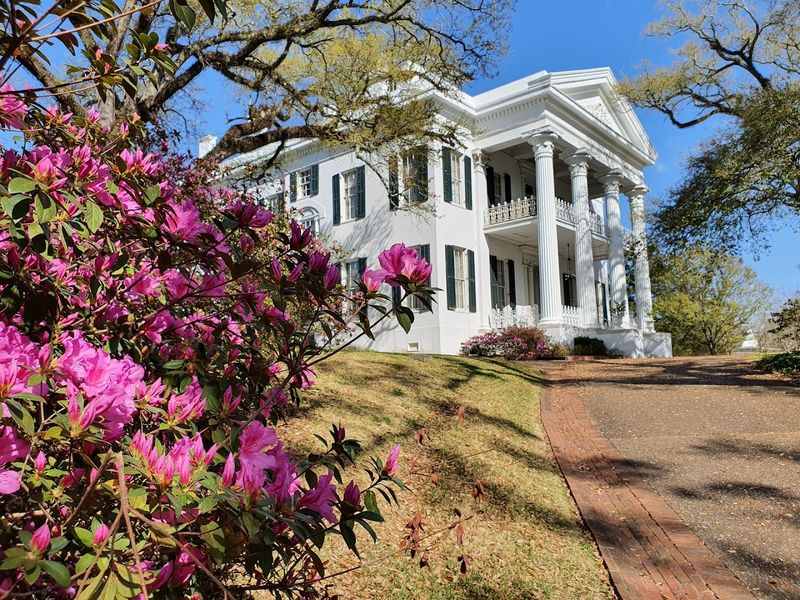
Natchez might be the most elegant town on the entire Mississippi River, and it has been that way for over 300 years. More than 300 antebellum mansions survive here in various states of gorgeous preservation, and many of them are open for tours year-round.
The city has resisted the kind of homogenization that flattened the historic character of so many other American towns, and the result is something that feels genuinely timeless.
Mark Twain described Mississippi River towns as comely, clean, well built, and pleasing to the eye. Natchez fits every word of that description and then adds a few layers of grandeur on top.
Streets shaded by ancient live oaks draped in Spanish moss give the city a softness that photographs well but feels even better in person. The pace of life here moves at the speed of the river, which is to say it moves at a pace that your nervous system will thank you for.
The Natchez National Historical Park preserves the city’s layered past, covering European settlement, the cotton economy, and the history of African enslavement with honesty and depth.
Grand mansions like Stanton Hall and Longwood anchor the architectural story, while the bluffs above the river offer views that Twain himself would have recognized from the pilothouse of a steamboat.
Natchez is located in the southwestern corner of Mississippi along US-84, and it serves as both a destination and a gateway to the wider Natchez Trace Parkway experience.
Spring pilgrimage season brings the town to full bloom, with historic homes open for tours and the whole city dressed in its finest. But honestly, Natchez is worth visiting in any season. The beauty here does not take a day off, and neither does the history.