
Massachusetts Has Its Own Real-Life Narnia, And It’s Hiding In A Glacial Ravine
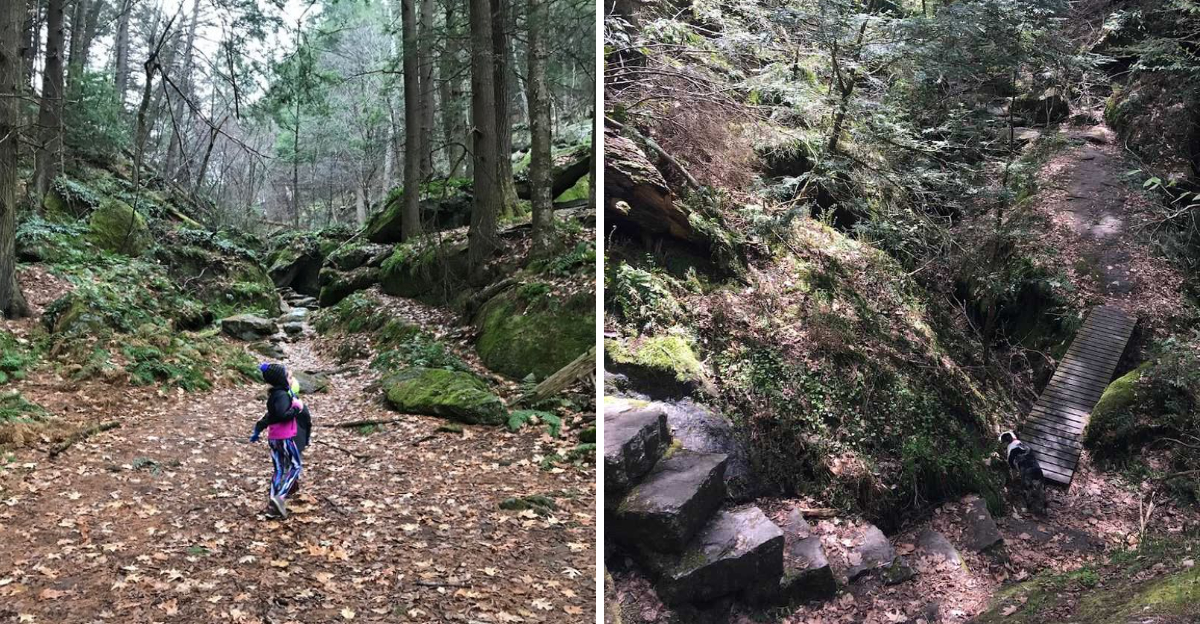
Massachusetts does not need a wardrobe door to pull you into another world.
One short walk can lead past mossy boulders, cool stone walls, tall trees, and a ravine that feels straight out of a fantasy book.
The air changes fast here. Sunlight slips through the leaves, the rocks rise around you, and the trail starts to feel more like a secret passage than a regular hike.
It is the kind of place that makes kids slow down and adults reach for their phones, then forget why they grabbed them. Glacial history shaped the land, but imagination does the rest.
In 2026, this quiet Massachusetts escape still feels wonderfully unreal. If Narnia had a New England address, it might look a lot like this.
A Geological Marvel Unveiled
Long before the first European settler set foot in the Berkshires, forces of unimaginable scale were already at work shaping this place.
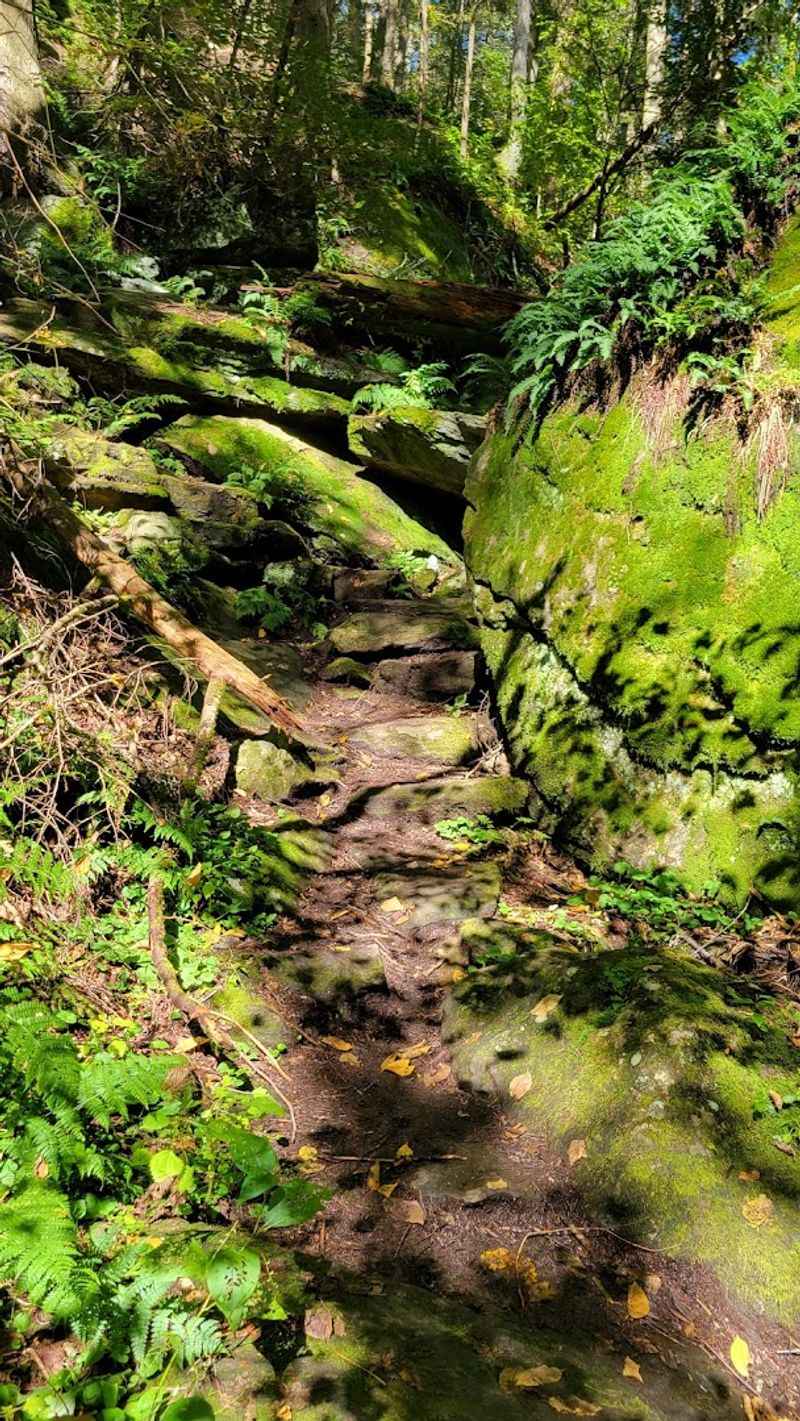
Glaciers advancing and retreating over thousands of years left behind a narrow, quarter-mile-long fissure carved into the hillside above Stockbridge, Massachusetts.
The result is a ravine unlike anything else in New England.
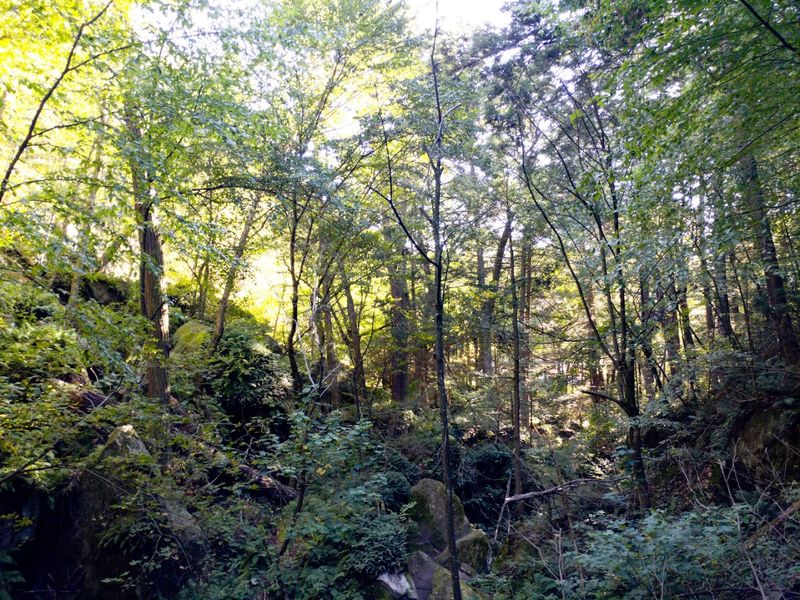
The walls rise steeply on both sides, and the floor is a chaotic arrangement of massive boulders, many blanketed in thick emerald moss. Small caves and crevices open between the rocks, adding a layered complexity to the terrain that rewards careful observation.
The north-south orientation of the ravine is not incidental. That alignment limits direct sunlight throughout the day, creating conditions that define everything about the glen’s character.
Geologically speaking, what visitors experience at Ice Glen is a preserved record of the last ice age, still visible and tangible in the present day. The crags, the overhangs, and the peculiar angles of the stone all speak to a violent past.
Standing among those boulders, one gets a quiet but firm reminder that the landscape of Massachusetts was not always this peaceful.
Ancient Sentinels Of The Gorge
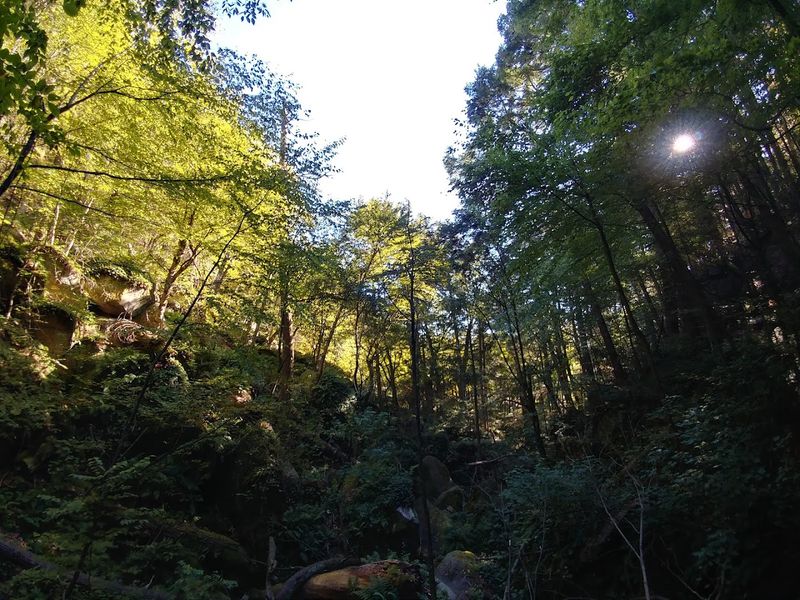
Reputedly, the largest white pine in Massachusetts stands at the southern end of Ice Glen, reaching 150 feet into the sky with a circumference of thirteen feet.
That single tree is worth the hike on its own. But it does not stand alone.
The gorge supports an old-growth forest of pine and hemlock that is exceptionally rare in New England, where most original timber was cleared for farmland and fuel centuries ago.
Another specimen, believed to be the largest eastern hemlock in Massachusetts and possibly all of New England, reaches 132 feet tall.
Some of these trees are estimated to be between 300 and 400 years old, meaning they were already mature when the first missionaries arrived to meet the Mohicans in 1734.
The reason these trees survived is straightforward: the terrain was simply too rugged and inaccessible for loggers to bother with. What was once an obstacle became a form of unintentional preservation.
Walking beneath that canopy, with trunks of extraordinary girth rising on all sides, produces a feeling that is difficult to articulate but impossible to dismiss.
These are not just trees. They are witnesses to centuries of undisturbed time.
Where Winter Lingers In Summer’s Embrace
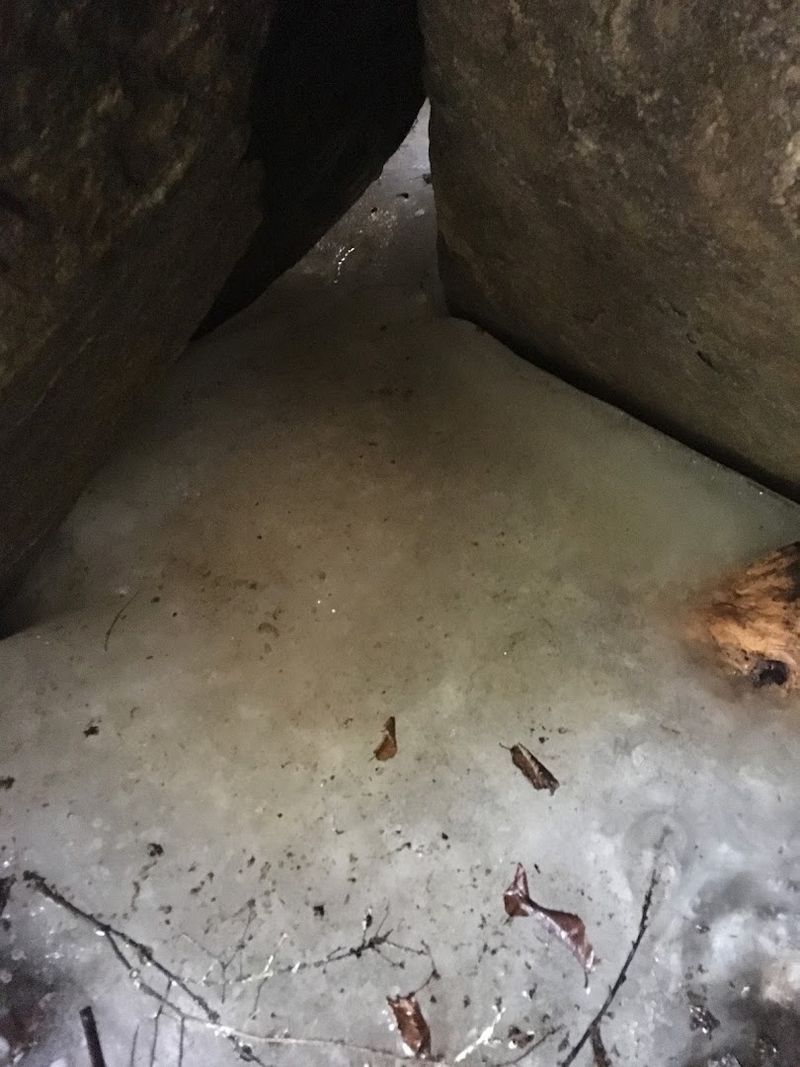
The name Ice Glen is not poetic license. It is a straightforward description of something that actually happens here, something that surprises nearly every first-time visitor.
Ice and snow collect in the deep crevices between the boulders at the floor of the ravine and remain there long after the surrounding landscape has fully transitioned into summer warmth.
The combination of the ravine’s depth, its dense overhead canopy, and its north-south alignment conspires to block direct sunlight almost entirely from the lower sections of the glen. Cold air sinks and pools among the rocks.
The result is a microclimate that can feel several degrees cooler than the meadows just a short walk away. On a hot July afternoon, the drop in temperature as one descends into the glen is immediate and unmistakable.
For families visiting during a warm Berkshire summer, this natural air conditioning adds an element of genuine surprise to the hike.
Children who expect a typical forest trail suddenly find themselves breathing cold air and spotting remnants of winter wedged beneath ancient stone.
It reframes the entire experience, turning an already unusual landscape into something that feels almost implausible.
An Otherworldly Journey Through Stone And Shadow
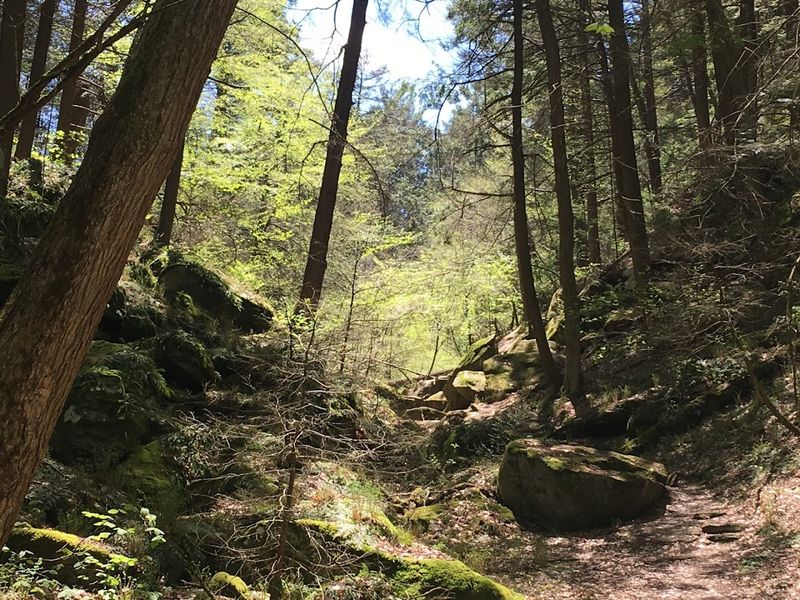
Two minutes into the trail, according to one visitor, the sensation of being in a different world entirely sets in. That is not an exaggeration born of enthusiasm.
The visual environment inside Ice Glen is so distinct from ordinary forest hiking that the brain genuinely needs a moment to recalibrate.
Sunlight arrives in fragments, filtered through the dense hemlock canopy and interrupted by the steep rock walls. Shadows fall across moss-covered boulders at angles that shift constantly as one moves through the ravine.
The rocks themselves form small caves and overhangs that create pockets of complete darkness just feet away from brighter clearings.
Local folklore has long suggested that fairies and elves inhabit this curious landscape, and while that may sound fanciful, the glen does possess a quality that makes such stories feel less absurd than they might elsewhere.
Herman Melville, who knew the area well, wrote of the glen in a way that placed it firmly in the realm of the mythic and untamed.
Visitors today often reach for similar language without realizing they are echoing a literary tradition more than a century old. The glen earns those comparisons honestly.
Navigating The Boulder-Strewn Path
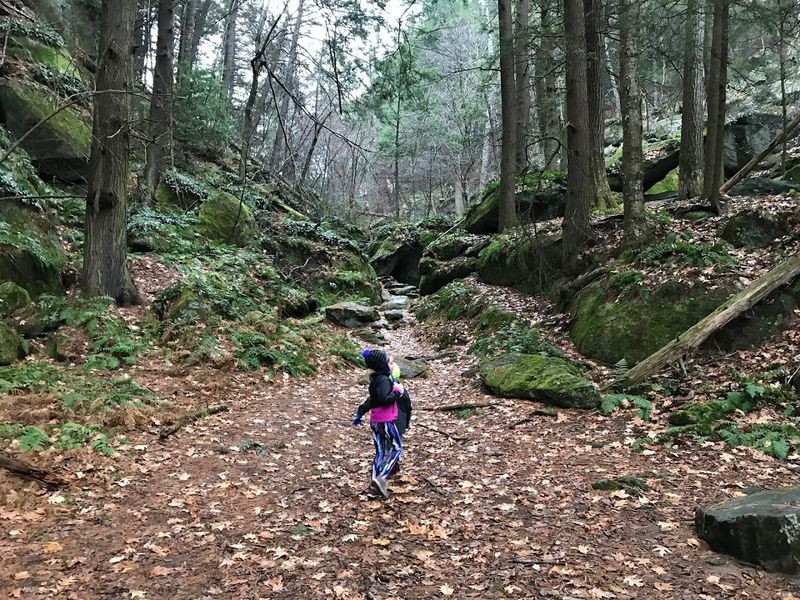
A round trip through Ice Glen covers approximately one mile, but that distance should not be mistaken for an easy afternoon stroll. The trail requires hands and feet.
Visitors climb over, duck under, and squeeze between boulders that in some places are stacked well above head height. The terrain is genuinely demanding and fully engaging from start to finish.
The journey typically begins by crossing the Goodrich Memorial footbridge, which connects Laurel Hill Park to the glen’s trail network.
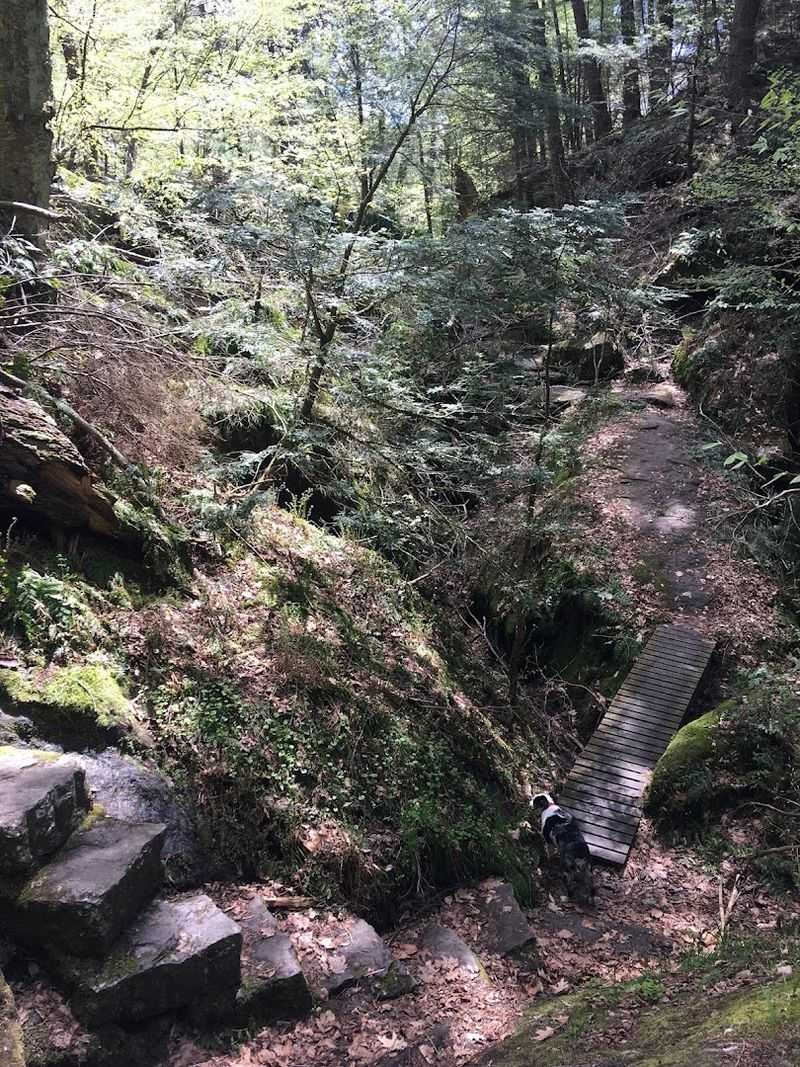
From there, the path descends into the ravine and immediately begins to challenge comfortable assumptions about what hiking means.
Sturdy boots with good ankle support are not optional here. The rocks can be slick, especially after rain, and surfaces that look solid occasionally shift underfoot.
Despite the physical effort involved, the experience consistently earns enthusiastic descriptions from those who complete it. The ruggedness is part of the reward.
Emerging from the boulder field at the far end of the glen, with the forest opening back up and the light returning to normal levels, produces a satisfaction that easier trails rarely deliver.
For hikers who want something that actually challenges them, Ice Glen delivers without apology.
Echoes Of History In The Ravine
In 1891, a lawyer and civic leader named David Dudley Field donated 40 acres of land, including the glacial cleft, to the Town of Stockbridge. That act of generosity is the reason Ice Glen remains accessible and undeveloped today.
Without it, the story of this ravine might have ended very differently.
The property and its trails are maintained by the Laurel Hill Association, founded in 1853 and recognized as one of the oldest civic beautification societies in the United States.
The organization has been tending to the glen and its surrounding landscape for well over a century, a quiet form of institutional care that rarely gets the recognition it deserves.
The Goodrich Memorial Bridge, which serves as the gateway to the trail, was first erected in 1895 and later replaced in the 1940s with a suspension footbridge.
The old-growth trees within the glen predate all of this human history by centuries. They were already standing when missionaries first made contact with the Mohican people in 1734.
That layering of natural and human history, compressed into a single narrow ravine in western Massachusetts, gives Ice Glen a depth that goes well beyond its physical dimensions.
Literary Footprints In A Verdant Wild
Herman Melville mentioned the glen in Chapter 102 of Moby Dick, referring to it as the “Icy Glen” and using it as a symbol of wild, verdant, untamed nature. That reference was not incidental.
Melville lived in Pittsfield, Massachusetts, close enough to visit the Berkshires regularly, and he knew Ice Glen firsthand.
He actually guided Nathaniel Hawthorne through the ravine on at least one occasion, turning a geological curiosity into a shared literary experience between two of America’s most significant nineteenth-century writers.
The thought of those two men picking their way across the same boulders that hikers navigate today adds a layer of cultural weight to an already remarkable place.
Writer Katharine Mixer Abbott described Ice Glen as “the most curious fissure in all Berkshire,” a characterization that has aged remarkably well. The glen has a way of producing that kind of language in people.
Something about the combination of scale, shadow, and silence pushes visitors toward description, as though the place itself demands to be recorded.
For anyone who appreciates the intersection of natural history and literary tradition, Ice Glen offers a rare and genuine point of contact between landscape and imagination.
Safeguarding A Primeval Landscape
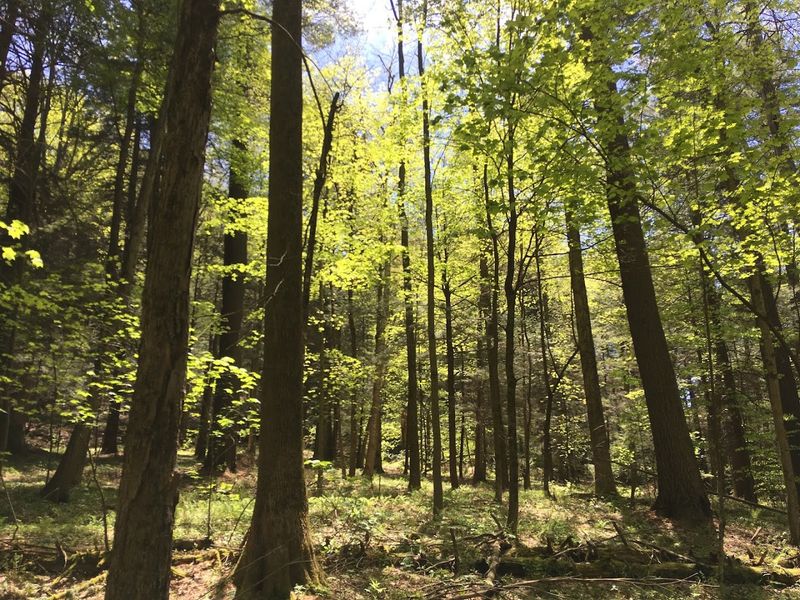
The old-growth trees of Ice Glen have faced serious threats in recent years, most notably from invasive insects targeting the ancient hemlock and ash populations.
The woolly adelgid, a small but destructive pest, has caused widespread hemlock decline across the northeastern United States, and Ice Glen’s irreplaceable specimens were directly at risk.
In response, the town of Stockbridge collaborated with certified arborists and tree specialists to develop a comprehensive treatment plan.
The effort involved GPS mapping of individual trees and targeted pesticide applications designed to protect the most significant specimens without disrupting the broader ecosystem.
The scale of the intervention reflects how seriously the community takes its responsibility toward this landscape.
Those conservation efforts have paid off. Many of the threatened hemlocks and ash trees have been preserved, and Ice Glen has since been formally inducted into the national Old-Growth Forest Network.
That designation recognizes it as a protected, publicly accessible example of mature native forest, a status that comes with both prestige and ongoing obligation.
The glen is owned by the town of Stockbridge, and the combination of municipal stewardship and community engagement has kept this primeval landscape intact for future generations to experience.
The Enduring Mystique Of The Berkshire Fissure
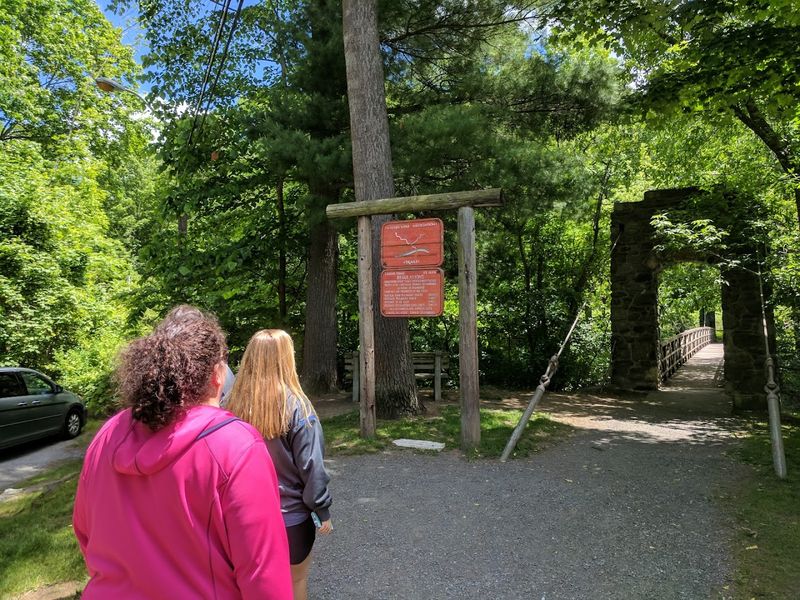
Ice Glen sits at Stockbridge, MA 01230, in the southern Berkshires, reachable by parking at the dead end of Park Street and crossing the footbridge into Laurel Hill Park.
The full loop, which exits onto Ice Glen Road and returns via Route 7 and Park Street, takes most visitors about an hour to complete.
A nearby watchtower trail offers sweeping views above the ridgeline for those who want to extend the outing.
What makes the glen genuinely unusual is not any single feature but the accumulation of them.
The lingering ice, the ancient trees, the boulder-filled floor, the literary history, and the microclimate all operate together to produce an environment that feels categorically different from the surrounding landscape.
Visitors frequently remark on how quickly that sense of difference sets in, often within the first few minutes of entering the ravine.
The glen asks nothing elaborate of its visitors. No entrance fee, no guided tour requirement, no elaborate preparation beyond appropriate footwear and a reasonable degree of physical fitness.
What it offers in return is an encounter with a landscape that has remained essentially unchanged for centuries. That kind of continuity is increasingly rare, and Ice Glen holds it with quiet, unhurried confidence.