
6 Mississippi Churches That Have Witnessed So Much History Their Walls Could Write A Novel
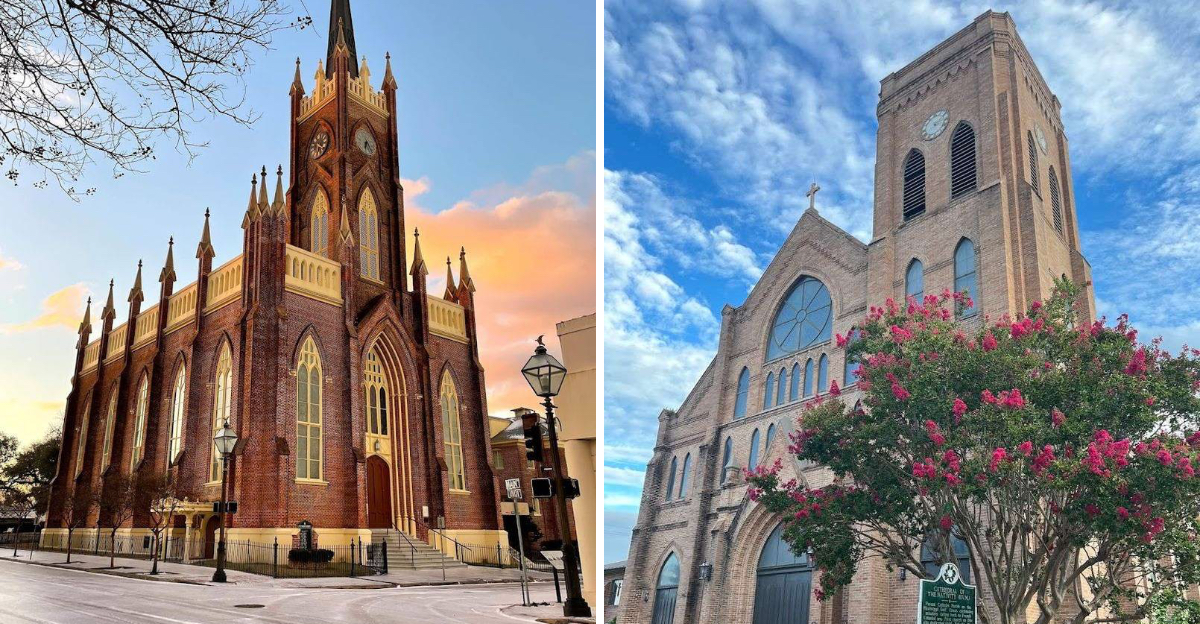
What if the most breathtaking church in the entire South was hiding in plain sight, and most people just drove right past it?
Mississippi’s oldest Catholic building still in active use has been standing on a Natchez bluff since 1843, and the moment you catch your first glimpse of that soaring Gothic spire, something shifts.
The brick facade carries a quiet authority that stops you cold. Inside, the transformation is complete.
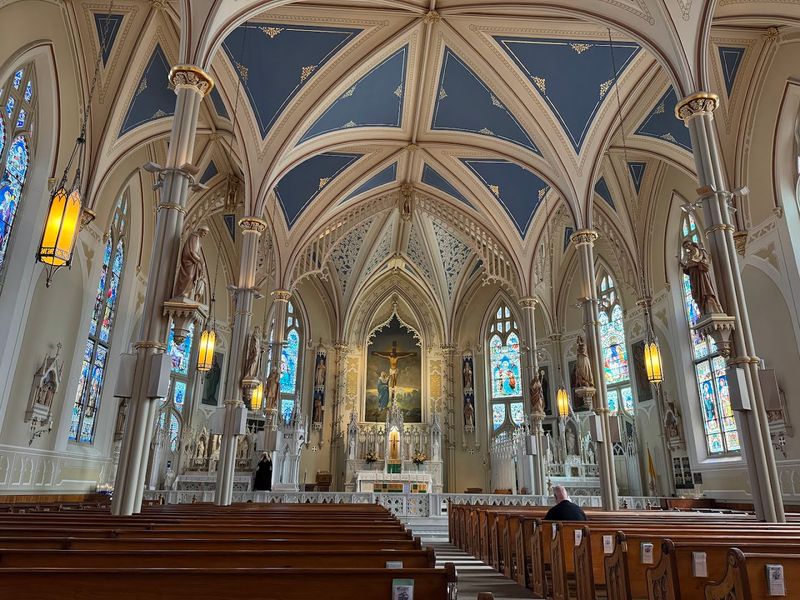
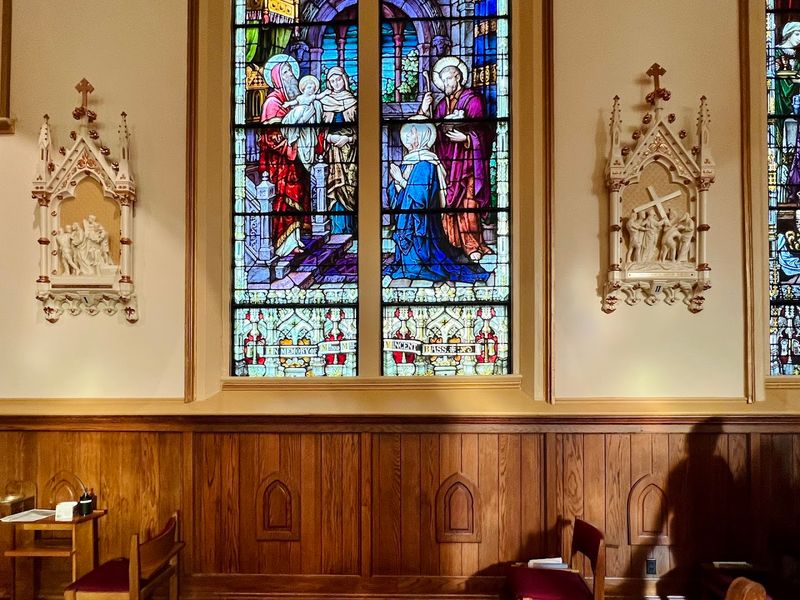
Italian marble altars, hand-painted frescoed walls, and stunning Austrian stained glass dating to the 1880s create an interior so rich it almost doesn’t feel real.
Mississippi delivers surprises like this constantly, but this one lands differently. A minor basilica with papal recognition, centuries of Civil War and antebellum history woven into every stone, and a congregation still worshipping here today.
Worth the detour.
Why Mississippi Churches Are History Books In Disguise
Mississippi is not just a state. It is a layered story told in brick, wood, and stained glass.
Long before textbooks recorded the Civil War, Reconstruction, and the Civil Rights Movement, Mississippi churches were already at the center of it all. They served as meeting places, shelters, schools, and sometimes the only safe gathering spot in a community.
Black congregations built spiritual homes under enormous pressure. White congregations wrestled with complicated histories.
Both left behind buildings that still stand today, quietly holding every prayer and protest they ever witnessed.
The architecture alone tells you something. Romanesque arches, Gothic spires, hand-carved details, all built by craftsmen who poured their entire identity into the work.
These structures were never just buildings.
Mississippi’s geography adds another layer. Hurricanes rolled in from the Gulf.
Floods crept up from the Delta. Fires broke out during periods of unrest.
Yet so many of these churches refused to fall.
What makes Mississippi churches so remarkable is their stubborn survival. They outlasted the conflicts that surrounded them.
They outlasted the congregations that sometimes abandoned them. Some even outlasted the towns they once anchored.
Visiting these places is not a passive experience. You feel the weight of everything that happened here.
The silence inside these old sanctuaries is not empty. It is full.
A Brief History Of Mississippi Churches That Witnessed It All
Church buildings in Mississippi date back to the early 1800s, when settlers and missionaries moved through the dense forests and river valleys of the Deep South.
Episcopal, Presbyterian, Catholic, and Baptist congregations all planted roots here early. Each denomination brought its own architectural style and its own relationship to the land and its people.
The antebellum period produced some of the most striking church buildings in the South. Wealthy planters funded grand sanctuaries as symbols of status and faith.
Enslaved people worshipped in those same spaces, often in segregated galleries, building spiritual communities that would later become independent congregations of their own.
The Civil War tested every congregation. Some churches became field hospitals.
Others were looted or burned. A handful survived intact, their walls absorbing the chaos of a nation tearing itself apart.
Reconstruction brought new church buildings and new congregations, particularly among freed Black communities who were finally able to worship freely and publicly. These churches quickly became cornerstones of political and social organizing.
By the 20th century, Mississippi churches were front and center again during the Civil Rights Movement. Mass meetings, voter registration drives, and community organizing all happened inside these sanctuaries.
Today, the surviving historic churches of Mississippi carry all of that history forward. They are not museums.
They are still active, still breathing, still telling their stories to anyone willing to listen.
First Presbyterian Church, Port Gibson, Mississippi
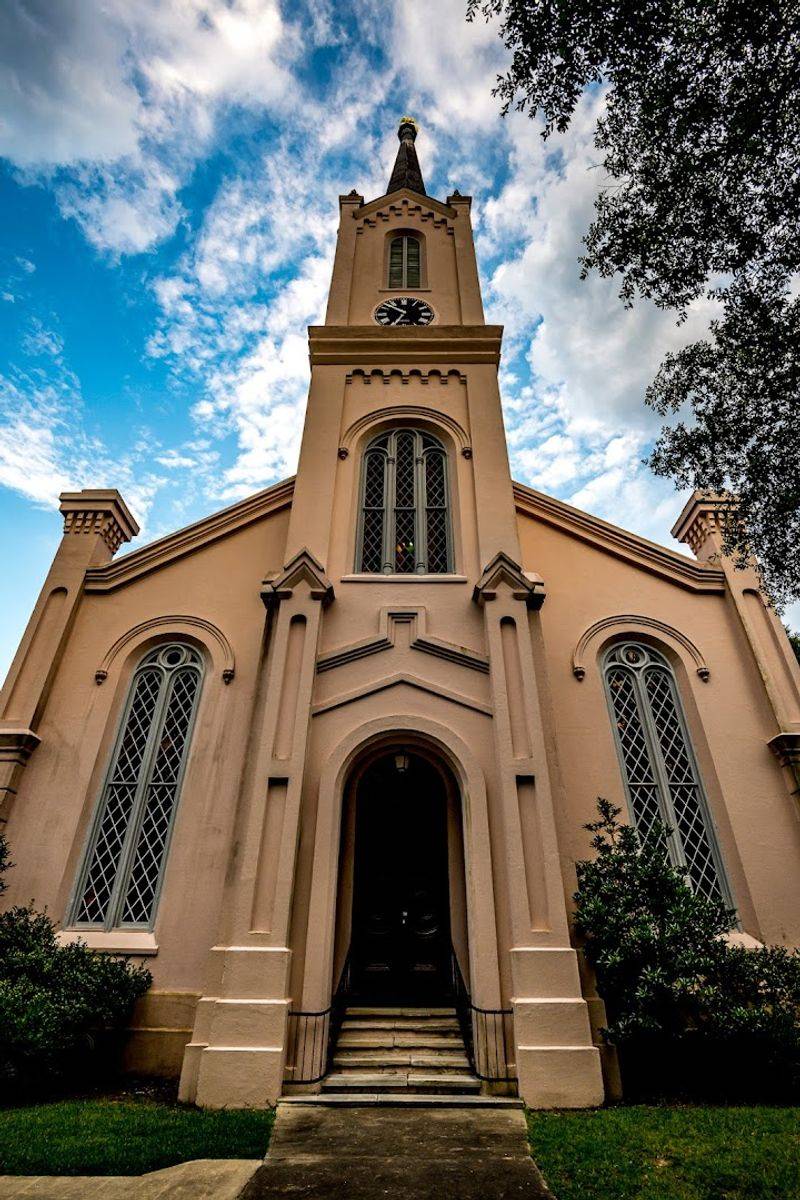
That iron hand pointing straight up from the steeple is not a decoration. It is a statement.
First Presbyterian Church in Port Gibson, Mississippi, has been making that statement since 1859. The famous sculpture on its spire, a hand with an index finger extended toward the sky, was originally carved from wood by a local craftsman.
The current version, made from sheet iron, has been pointing heavenward since 1901.
The hand measures over ten feet tall. The index finger alone stretches four feet.
It is one of the most recognized religious landmarks in the entire state.
But the building itself deserves just as much attention. The Romanesque Revival sanctuary is considered among the oldest of its kind in the region.
Its thick walls and rounded arches give it a weight and permanence that feels deeply intentional.
Port Gibson sits along the Natchez Trace corridor, and the church reflects the ambition of a prosperous antebellum town. It survived the Civil War largely intact, which is remarkable given how much of the surrounding region was devastated.
Ulysses S. Grant reportedly called Port Gibson too beautiful to burn.
Whether that story is entirely accurate or not, the town and its church are still standing, which says something.
Plan to walk the surrounding streets when you visit. The church sits within a historic district that rewards slow exploration.
Address: 605 Church St, Port Gibson, MS 39150.
Saint Mark’s Episcopal Church, Raymond, Mississippi
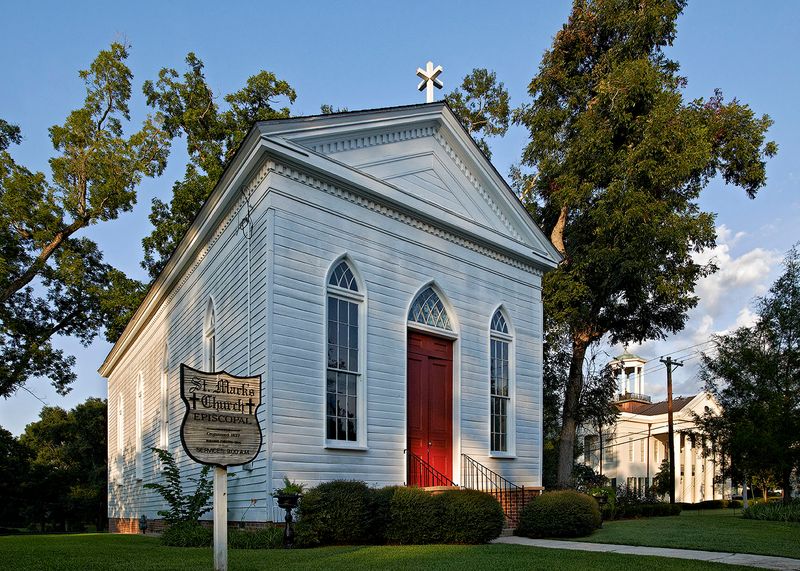
Raymond, Mississippi, is a small town with a Civil War battle attached to its name, and Saint Mark’s Episcopal Church was right in the middle of it.
The church at 205 W Main St has been part of Raymond’s identity for well over a century. Its Gothic Revival design reflects the Episcopal tradition of careful, restrained craftsmanship.
Pointed arched windows and clean lines define the exterior without overwhelming it.
During the Vicksburg Campaign of 1863, the Battle of Raymond brought Union and Confederate forces into direct conflict just outside town. Churches in Raymond, including Saint Mark’s, were pressed into service as field hospitals in the aftermath.
The pews that once held Sunday congregants instead held wounded soldiers.
That kind of history does not wash out. It settles into the wood and the walls and stays there.
Raymond is also the seat of Hinds County, which gives the town an added layer of civic importance. Saint Mark’s has stood through the full arc of that history, from the antebellum era through Reconstruction and beyond.
The surrounding cemetery adds another dimension to a visit here. Headstones from the 1800s tell their own stories in carved dates and names, many of them connected directly to the families who built and sustained the congregation.
Raymond is a short drive from Jackson, making this an easy addition to any Mississippi history itinerary.
Address: 205 W Main St, Raymond, MS 39154.
Cathedral Of The Nativity Of The Blessed Virgin Mary, Biloxi, Mississippi
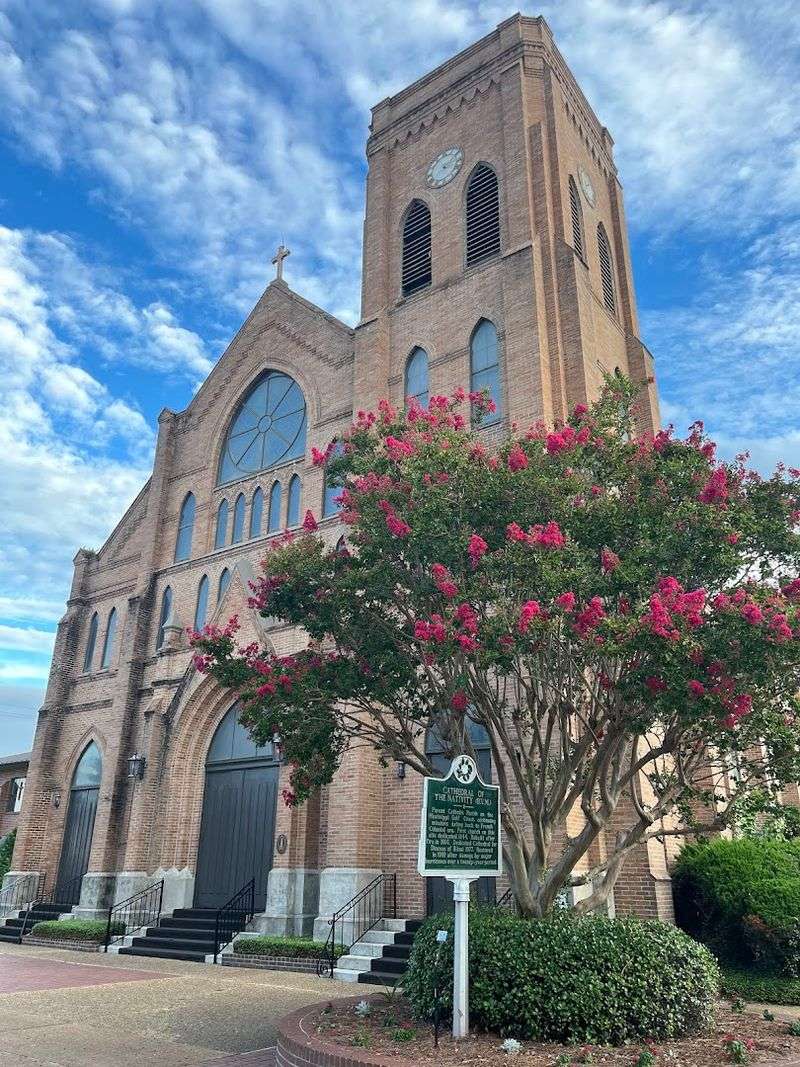
Right on the Gulf Coast, where hurricanes have reshaped the landscape more than once, this cathedral has refused to disappear.
The Cathedral of the Nativity of the Blessed Virgin Mary at 870 Howard Ave in Biloxi, Mississippi, is one of the oldest Catholic institutions on the Mississippi Gulf Coast. The congregation traces its roots deep into the 19th century, anchoring the Catholic community of Biloxi through generations of change.
The building itself carries the marks of survival. Hurricane Camille in 1969 caused widespread destruction across the Gulf Coast.
Hurricane Katrina in 2005 was even more catastrophic. The cathedral endured both storms, though not without damage and subsequent restoration work.
That repeated cycle of damage and rebuilding is woven into the identity of the place. Each restoration effort brought the community back together around a shared commitment to keeping the cathedral standing.
The interior reflects that layered history. Details added across different eras sit alongside original elements, creating a visual timeline of the congregation’s resilience.
The architecture blends classical Catholic influences with the particular character of the Gulf South.
Biloxi itself is a fascinating destination. The coast, the seafood culture, and the deep French and Spanish colonial heritage all converge here.
The cathedral sits at the heart of that convergence.
Visiting during a weekday morning gives you the best chance to experience the space quietly and at your own pace.
Address: 870 Howard Ave, Biloxi, MS 39530.
Old Rodney Presbyterian Church, Rodney, Mississippi
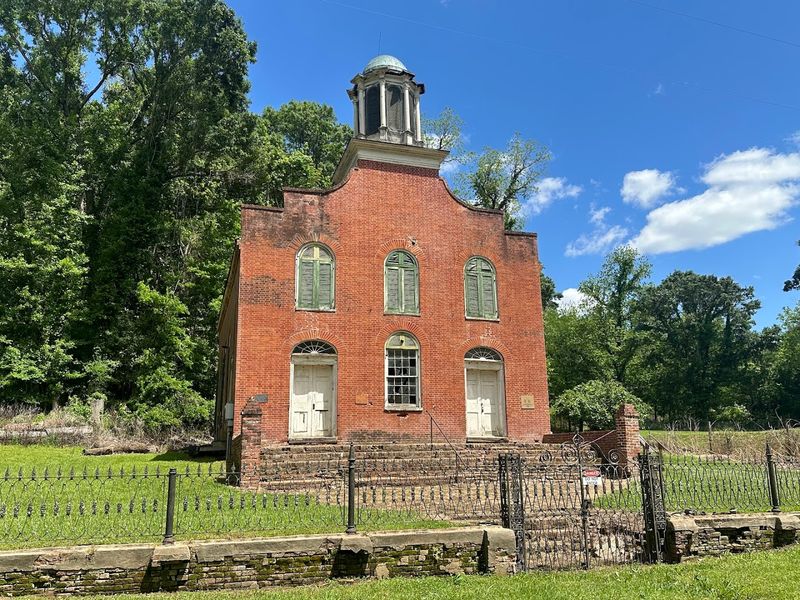
Rodney, Mississippi, is technically a ghost town, and Old Rodney Presbyterian Church is its most haunting landmark.
Located off Lorman near the Mississippi River in Jefferson County, Rodney was once a thriving river port in the early 1800s. The church was built to serve a prosperous, growing community.
Then the river shifted. Trade dried up.
The town slowly emptied out.
What remains today is a striking red brick shell of a Gothic Revival church, its arched windows open to the sky, trees pressing in from all sides. Cannonball marks from the Civil War are reportedly still visible on the exterior walls.
Union gunboats on the Mississippi River fired on Rodney during the war, and the church caught some of that fire.
The building has been deteriorating for decades. No active congregation maintains it.
Nature has been steadily reclaiming the structure, which makes it both beautiful and urgent to see before it changes further.
Getting to Rodney requires some effort. The road is unpaved and not always easy to navigate depending on weather and season.
That remoteness is part of what makes the visit so memorable. You earn the sight of it.
Photographers and history enthusiasts have been quietly making pilgrimages here for years. The combination of Civil War history, architectural grandeur, and natural decay creates something that feels unlike any other site in Mississippi.
Address: Rodney, MS, off Lorman, MS 39096.
Our Lady Of The Gulf Catholic Church, Bay St. Louis, Mississippi
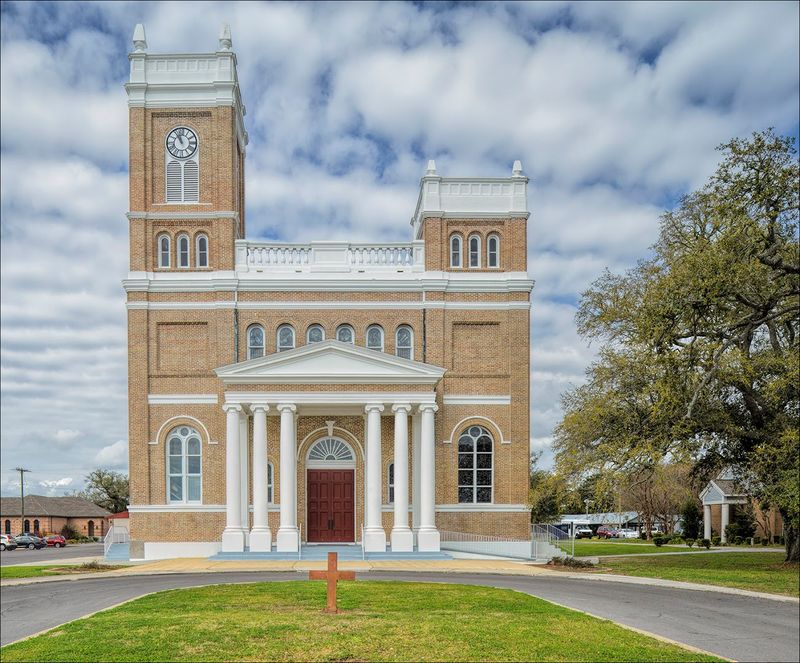
Bay St. Louis has a creative, artistic soul, and Our Lady of the Gulf Catholic Church has been its spiritual anchor for nearly two centuries.
The church at 228 S Beach Blvd traces its origins back to the early 19th century, making it one of the oldest Catholic parishes on the Mississippi Gulf Coast. The congregation grew alongside the town, which became a popular retreat destination for New Orleans families seeking Gulf breezes and quieter surroundings.
That mix of local community and outside visitors shaped the parish’s character in interesting ways. The church served a diverse congregation that included French Creole families, fishermen, and seasonal residents, all gathering under the same roof.
Like its neighbor in Biloxi, Our Lady of the Gulf faced the full force of Hurricane Katrina in 2005. The storm caused severe damage to the building and the surrounding community.
The rebuilding process took years and required enormous community effort.
The restored church stands today as a testament to what Bay St. Louis residents are made of. The town itself has become known for its resilience and its thriving arts scene, and the church remains central to that identity.
The location along Beach Boulevard gives the church a setting that feels almost cinematic. The Gulf of Mexico is visible nearby, and the surrounding streets are lined with historic homes and local galleries.
This is a place worth lingering around, not just visiting quickly.
Address: 228 S Beach Blvd, Bay St. Louis, MS 39520.
St. Mary Basilica, Natchez, Mississippi
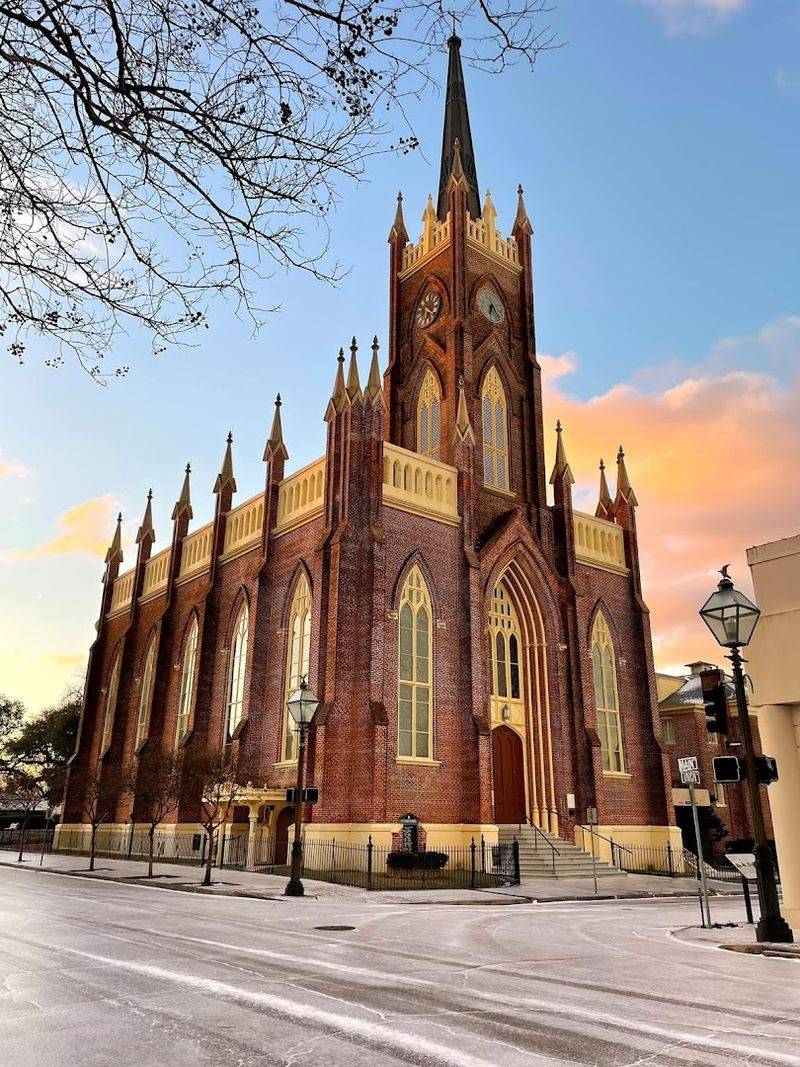
St. Mary Basilica is a minor basilica and once served as the cathedral for the state diocese. The oldest Catholic building still in use in Mississippi, the church received its first blessing in 1843.
Construction began in 1842 after the Diocese of Natchez was established in 1837. The building was dedicated on December 25, 1843, but took until 1882 to be fully completed.
It was consecrated on September 19, 1886, and remained the cathedral of the diocese until 1977. It was designated a minor basilica in 1998.
Three Gothic-style altars carved from Carrara marble anchor the sanctuary. The two side altars arrived in 1903, while the main central altar was installed in 1930.
Twelve of the 16 stained-glass windows were designed by Tiroler Glasmalerei of Austria and installed between 1884 and 1893.
The brick structure features ornamental pinnacles and buttresses. The central square tower, capped with a spire, has a recessed Gothic-arched entrance that pulls your eye upward before you even reach the door.
The basilica sits within the Natchez On-Top-of-the-Hill Historic District, adjacent to Natchez Memorial Park on Union Street. Natchez itself carries one of the deepest concentrations of antebellum history anywhere in the South, and the basilica anchors the upper bluff district surrounded by landmarks that reward unhurried exploration.
Rome granted St. Mary the elevated status of minor basilica in 1998, an honor it shares with only 70 of the 250 dioceses in the United States. The congregation still worships here today, and visitors are welcome.
Address: 105 S Union St, Natchez, MS 39120.