
7 Mississippi Courthouses So Beautiful Locals Say They’re The Real Landmarks
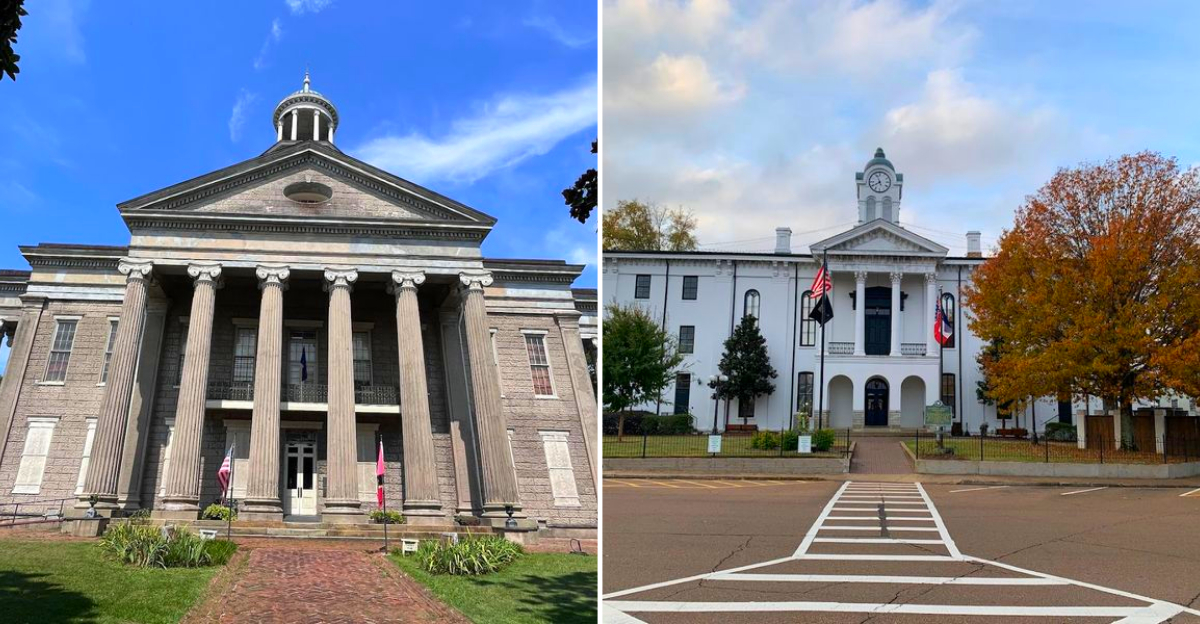
Mississippi town squares often tell you where the heart of a community sits, and more often than not, it stands under a courthouse clock. Across the state, these buildings do far more than handle records, hearings, and paperwork.
They anchor downtowns, frame local festivals, watch over veterans memorials, and remind residents of the stories that shaped their counties. Some rise with grand columns and domes.
Others charm visitors with red brick, clock towers, arched windows, or details that feel carved from another century. Locals know these courthouses are not just government buildings.
They are meeting places, photo stops, symbols of pride, and in many towns, the most beautiful landmark around.
From Civil War history to literary connections and small-town tradition, these eight Mississippi courthouses prove architecture can carry memory just as powerfully as any museum.
1. Madison County Courthouse, Canton
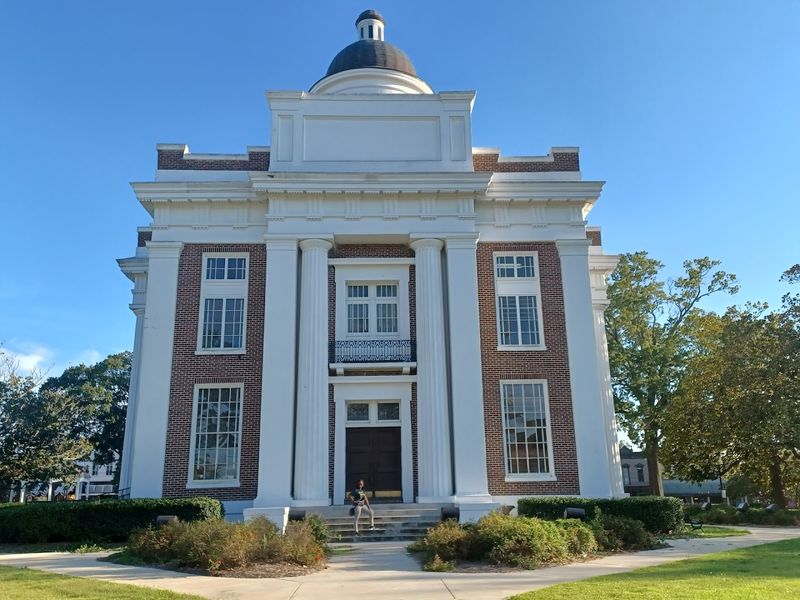
Hollywood came knocking in Canton, and the Madison County Courthouse answered the door with full columns and zero hesitation. Built in 1855, this Greek Revival gem is one of only seven pre-Civil War courthouses still standing in Mississippi.
It served as the dramatic backdrop for the 1996 film adaptation of John Grisham’s film and honestly, the building earned top billing.
The courthouse sits at the center of a square widely considered one of the finest architectural groupings in the entire South. It is listed on the National Register of Historic Places and designated as a Mississippi Landmark.
Photographers show up regularly just to capture the way morning light hits those front columns.
Find the courthouse at Canton, MS 39046, right in the heart of the historic square. The surrounding storefronts and shaded sidewalks make the whole block feel like a movie set, which, technically, it was.
Locals say the square during the Canton Flea Market is an experience all on its own.
If you have never driven through Canton just to stand in front of this courthouse and feel genuinely impressed by a government building, now is your chance.
Canton itself has built a reputation as one of the more charming small cities in central Mississippi, and the square surrounding the courthouse anchors a downtown full of independent shops, antique dealers, and locally owned restaurants that reward a slow afternoon.
The Canton Flea Market draws thousands of visitors twice a year and uses the square as its natural centerpiece, turning the courthouse grounds into the backdrop for one of the most photographed outdoor markets in the entire state.
2. Claiborne County Courthouse, Port Gibson
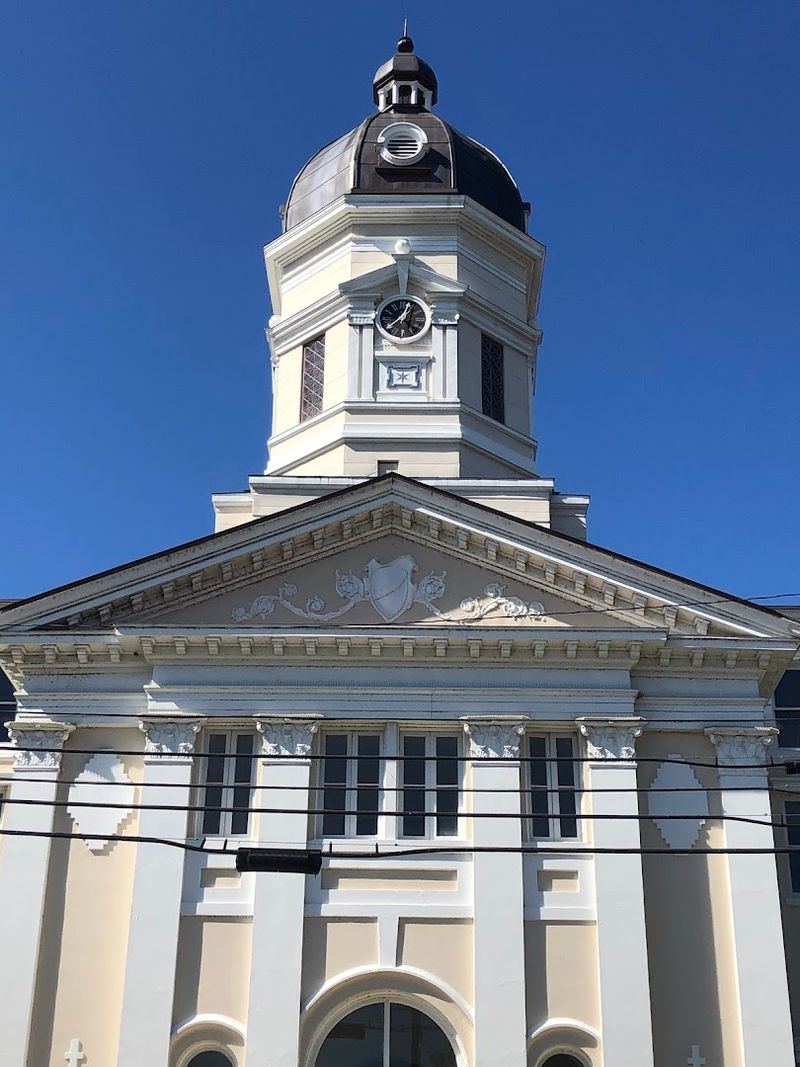
Port Gibson is a town Ulysses S. Grant reportedly called too beautiful to burn during the Civil War, and the Claiborne County Courthouse makes that quote feel completely earned.
The original structure dates to 1845, making it one of the oldest courthouse buildings still standing in Mississippi. Multiple historical markers and war memorials dot the grounds, turning a courthouse visit into a genuine walking history lesson.
Find the building at 410 Market St, Port Gibson, MS 39150, anchoring a quiet square in a town that time has treated with unusual kindness.
The architecture alone prompted one visitor to write that the building is worth a special trip, and that kind of spontaneous praise says everything.
It carries a 4.8 rating, which for a small-town courthouse is practically legendary.
Port Gibson sits along the Natchez Trace corridor in southwest Mississippi, making it a natural stop for road trippers moving between Natchez and Jackson. The town has a handful of other remarkable antebellum structures nearby, but the courthouse remains the centerpiece.
There is something quietly powerful about standing in front of a building that has watched nearly 180 years of Mississippi history unfold from the same spot on Market Street.
The Natchez Trace Parkway passes within easy reach of Port Gibson, making the courthouse a natural and rewarding stop for anyone driving the full parkway corridor between Natchez and Nashville.
The town’s collection of antebellum churches, including the famous First Presbyterian Church with its golden hand pointing skyward from the steeple, surrounds the courthouse area with additional architectural landmarks that turn a single stop into a full walking tour.
Port Gibson rewards visitors who arrive without a tight schedule and leave when the light changes.
3. Old Courthouse Museum, Vicksburg
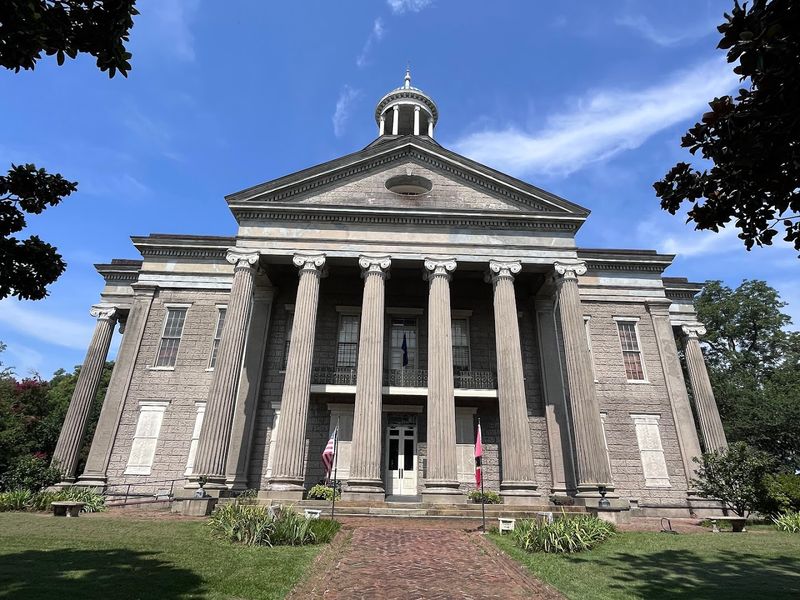
Perched on a hilltop like it owns the entire city of Vicksburg, the Old Courthouse Museum is the kind of building that makes your jaw do something embarrassing in public.
Built in 1858 in the Greek Revival style, it commanded views of the Mississippi River during the Civil War and has been commanding attention from visitors ever since.
Today the building operates as a full museum packed with Civil War artifacts, local history, and exhibits that bring the region’s past to life in vivid detail. Admission runs about ten dollars, which is genuinely one of the better deals in Mississippi.
You can find it at 1008 Cherry St, Vicksburg, MS 39183, and the hilltop setting alone makes the short climb completely worth it.
People who visit specifically mention that the exterior is stunning even on days when the museum is closed. The massive columns and elevated position give it a presence that photographs cannot fully capture.
It holds a 4.6 rating, making it one of the most consistently praised historic sites in the state. Vicksburg already has plenty of history, and this courthouse is its most photogenic chapter.
The museum’s collection inside is genuinely worth the ten-dollar admission on its own merits, independent of the building’s architectural drama.
Civil War artifacts, period documents, and local history exhibits fill rooms that have been meticulously preserved, and the hilltop views from the grounds offer one of the better vantage points over the city of Vicksburg.
Cherry Street leading up to the courthouse passes through a historic residential district that gives the approach its own sense of occasion before the building even comes into full view.
4. Lafayette County Courthouse, Oxford
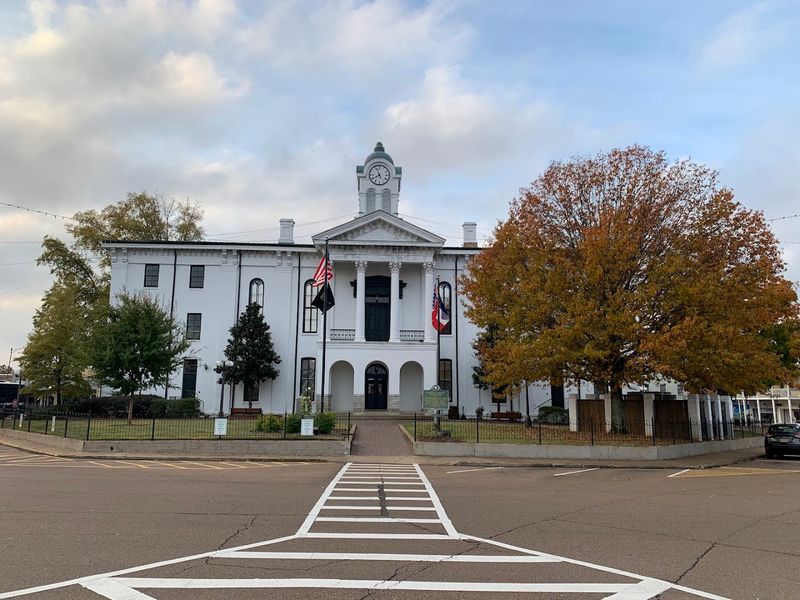
Oxford has a literary reputation that stretches around the world, and the Lafayette County Courthouse sits at the center of it all, quite literally.
William Faulkner referenced the Oxford courthouse square throughout his writing, weaving it into the fictional Yoknapatawpha County that made him a Nobel Prize winner.
The building itself is a well-proportioned Renaissance style structure that feels both stately and approachable.
The original courthouse was destroyed by fire during the Civil War in 1864, and the current structure rose from that history with even more character.
Bells still chime from the tower on the square, and visitors consistently say the sound is something they did not expect to love as much as they do.
Head to 142 Courthouse Square, Oxford, MS 38655, and you will find the building anchoring a square full of independent bookshops, restaurants, and the kind of energy that only a college town with deep literary roots can produce.
The University of Mississippi is just minutes away, making this an easy stop on any Oxford itinerary.
The bells, the columns, and the Faulkner connection make this courthouse genuinely one of a kind.
Square Books, one of the most celebrated independent bookstores in the American South, sits directly on the same square as the courthouse.
This means a single afternoon in Oxford can cover Nobel Prize literary history, a working courthouse bell tower, and a bookstore that writers travel specifically to visit.
The combination of academic energy, literary legacy, and genuine architectural beauty makes the Lafayette County Courthouse square one of the most layered and satisfying town centers in all of Mississippi, worth visiting even for people who think courthouses are boring.
5. Marshall County Courthouse, Holly Springs
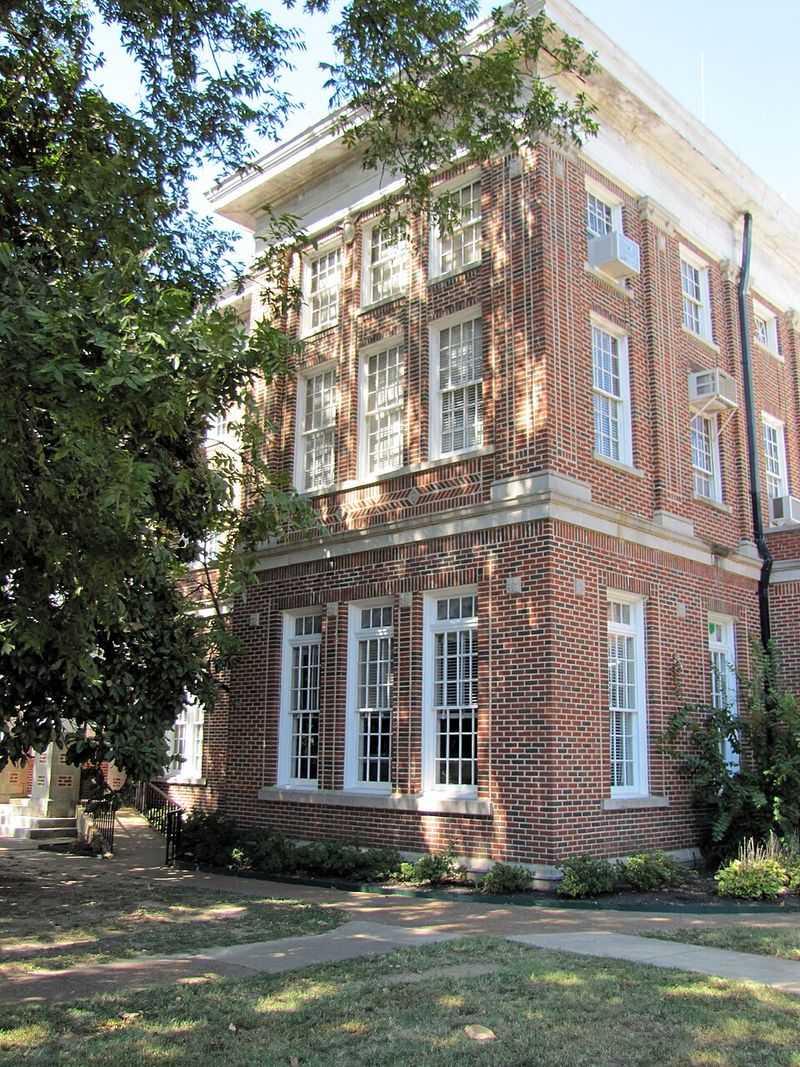
Holly Springs is quietly one of the most remarkable small towns in the American South, and the Marshall County Courthouse is a big reason why.
The town survived the Civil War with more than 60 pre-Civil War buildings still intact, one of the densest concentrations of antebellum architecture anywhere in the country.
The courthouse anchors a square that feels genuinely preserved rather than restored.
The building is an architecturally significant antebellum structure that holds its own even in a town full of historic competition. Holly Springs sits in the northern hill country of Mississippi, about 35 miles southeast of Memphis, Tennessee.
The surrounding square features period storefronts and shaded sidewalks that make the whole area feel like an outdoor museum with a working zip code.
What makes the Marshall County Courthouse stand out is how naturally it fits into the broader story of Holly Springs. It is not a single showpiece surrounded by parking lots.
It belongs to a full neighborhood of historic buildings that reinforce each other. Spend an afternoon walking the Holly Springs square and you will understand why preservation advocates treat this town like a treasure.
The courthouse is the crown, but the whole square is the jewel box around it.
Holly Springs also hosts the annual Pilgrimage each spring, a beloved tradition that opens several of the town’s antebellum homes to the public for tours.
Timing a visit to coincide with the Pilgrimage turns an already remarkable architectural destination into a multi-layered cultural event.
The Hill Country surrounding Holly Springs adds a geographic beauty to the drive in that flatland Mississippi cannot offer, and the combination of rolling terrain, hardwood forests, and a historic square makes the town one of the most complete and satisfying day trips in the northern part of the state.
6. Wilkinson County Courthouse, Woodville
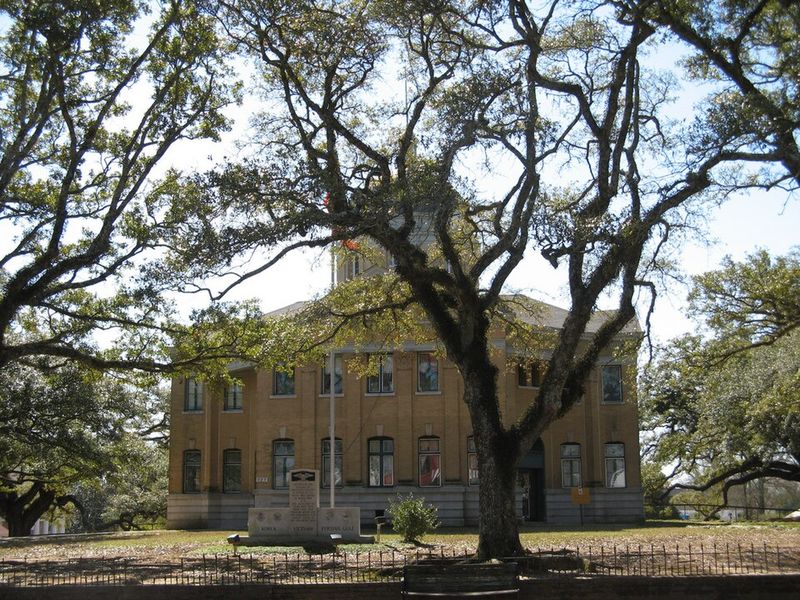
Woodville is the kind of Mississippi town that rewards curiosity, and the Wilkinson County Courthouse is the reward at the center of it.
The building has anchored Woodville’s town square since the antebellum era, and it carries that age with a quiet dignity that modern buildings simply cannot manufacture.
Woodville is also notable as the boyhood home of Confederate President Jefferson Davis, adding another layer to an already history-rich address.
The courthouse has been cited as a defining feature of the town, the architectural anchor that gives Woodville its identity as a surviving example of small-town antebellum Mississippi. It sits in Wilkinson County in the far southwest corner of the state, not far from the Louisiana border.
Getting there requires a deliberate detour, and locals will tell you that is exactly the point.
Woodville moves at its own pace, and the courthouse square reflects that rhythm. The surrounding area features historic churches, old storefronts, and the kind of unhurried atmosphere that is genuinely hard to find anymore.
Visitors who make the trip consistently describe a sense of stepping into a place where history did not just happen but stayed. The Wilkinson County Courthouse is proof that the most meaningful landmarks are sometimes the ones you have to go looking for.
Rosemont Plantation, the childhood home of Jefferson Davis, sits just east of Woodville and is open for tours, giving the whole area a density of historical significance that rewards the drive into Wilkinson County from any direction.
The far southwest corner of Mississippi is genuine off-the-beaten-path territory, meaning crowds are never a concern and the experience of standing in front of the courthouse on a quiet weekday feels completely private.
That combination of deep history and genuine solitude is increasingly rare and worth going out of your way to find.
7. Hinds County Courthouse, Raymond
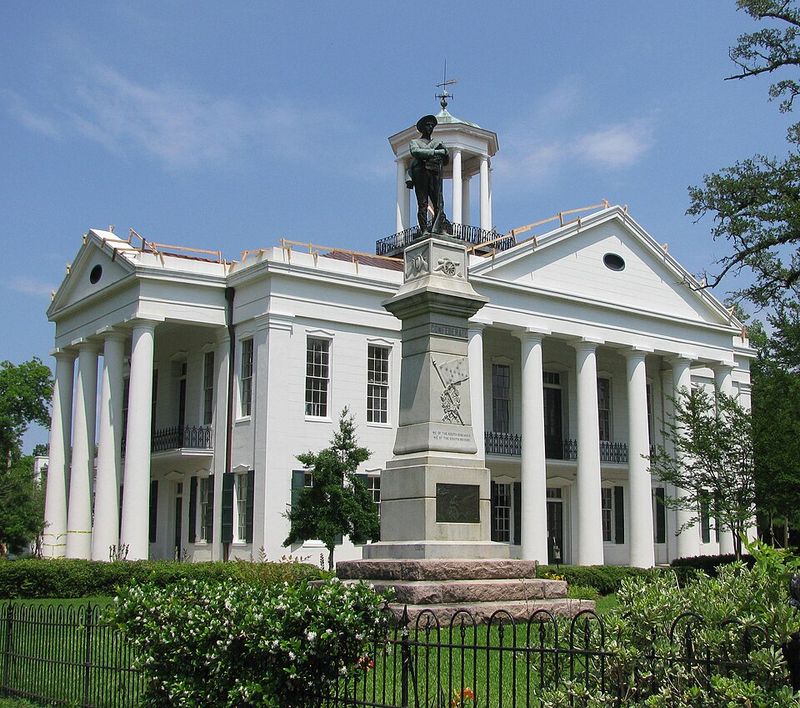
Raymond, Mississippi is the kind of place that history books mention briefly and then move on from, but the town itself has never forgotten what happened there.
On May 12, 1863, Union and Confederate forces clashed in the Battle of Raymond, a fight that shaped the Vicksburg Campaign and ultimately influenced the outcome of the Civil War.
The Hinds County Courthouse stood through all of it.
The courthouse sits within compact walking distance of the battlefield itself, making Raymond one of the few places in the country where you can move from a historic civic building to a Civil War battlefield on foot.
Dense historical markers surround the courthouse grounds, and each one adds context to a building that witnessed one of the most consequential military campaigns in American history.
Raymond serves as the county seat of Hinds County and sits about 15 miles southwest of Jackson, Mississippi’s state capital. The town is small and quiet now, but the courthouse gives it a gravity that larger cities sometimes lack.
For history enthusiasts who want to go beyond the famous battlefields and museums, Raymond offers something rare: an authentic, largely undisturbed historic environment where the past and the present share the same square.
The Raymond battlefield is maintained by the City of Raymond and includes interpretive markers that walk visitors through the troop movements and key moments of the May 1863 engagement.
Few Civil War sites in Mississippi offer this kind of compact, walkable combination of civic architecture and battlefield history in the same square mile.
The drive from Jackson along Raymond Road passes through a transitional landscape of suburban edges giving way to open countryside, and arriving in Raymond from that direction gives the small town an almost cinematic quality that larger, more developed destinations rarely manage to produce.