
10 Mississippi Day Trips Where Admission And Parking Cost $10 Or Less
A ten dollar bill in Mississippi buys petrified logs older than dinosaurs, a ghost town the forest has mostly taken back, and the roadside spot where the teddy bear got its name. Try getting that anywhere else for the price of a sandwich.
Every stop on this list charges ten dollars or less to get in, and most throw in parking for free, which is the part that quietly ruins the math at bigger attractions elsewhere. Nothing here asks you to plan around a ticketing window or budget for a whole day’s admission.
Grab the keys, pack a cooler so lunch does not blow the budget, and let the Magnolia State handle the rest.
1. Mississippi Petrified Forest – Flora
Trees that turned to stone 36 million years ago sit right there on the trail, and you can walk up and touch them. Seven dollars gets an adult through the gate at 124 Forest Park Road in Flora, which feels like a bargain for time travel.
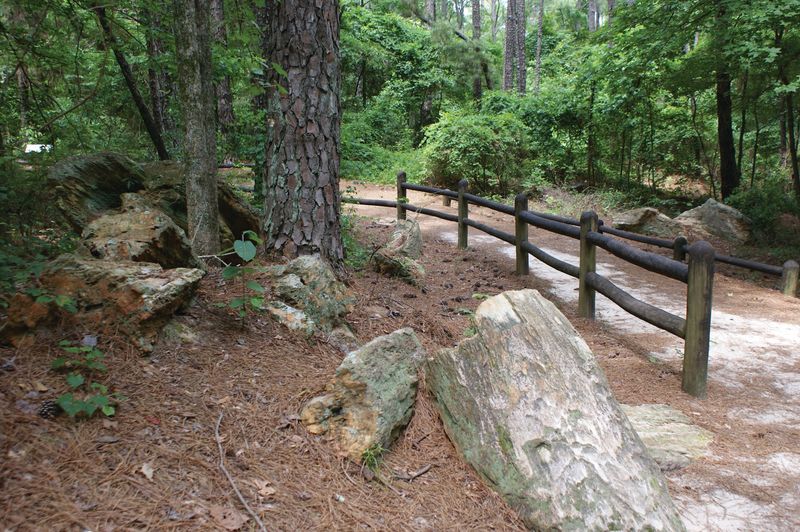
Giant logs once floated down a prehistoric river and settled in the sand. Minerals slowly replaced the wood fiber, cell by cell, until the trunks became solid rock. Today they rest along a short, sandy loop trail that winds through gullies and hardwoods.
Bring shoes you do not mind dusting off. The path runs about half a mile and stays easy enough for grandparents and grade schoolers alike. Interpretive signs explain what happened without drowning you in geology jargon.
The onsite museum holds a surprising rock and mineral collection, plus fossils and gemstones. Kids usually beeline for the gift shop, where polished stones cost pocket change. Parking sits just outside the entrance and costs nothing extra.
Here is a detail worth bragging about later. The site earned National Natural Landmark status, making it the only petrified forest of its kind in the eastern United States. Not bad for a spot about 20 miles northwest of Jackson, hiding behind a modest wooden sign.
2. Grand Village Of The Natchez Indians – Natchez
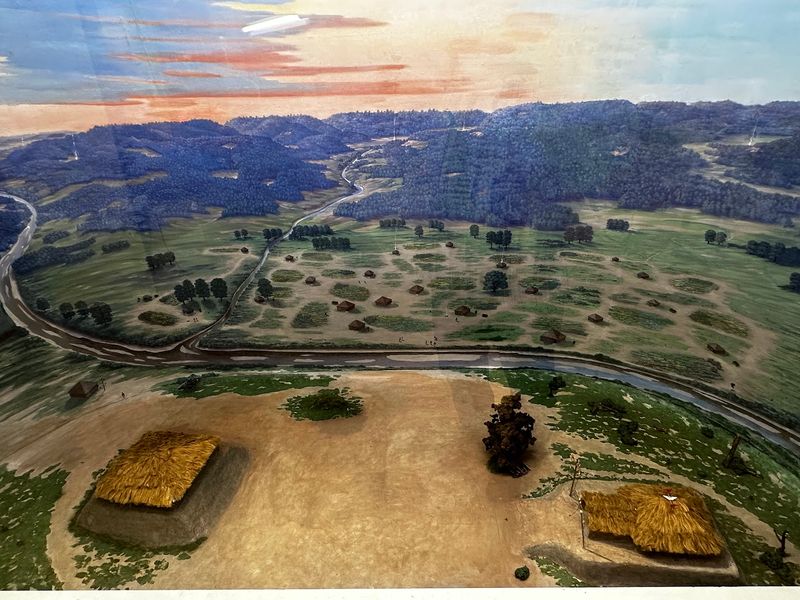
Three earthen mounds rise from a wide green field, and standing beside them costs absolutely nothing. The Grand Village of the Natchez Indians sits at 400 Jefferson Davis Boulevard in Natchez, and both admission and parking are free.
Between roughly 1682 and 1729, this ground served as the ceremonial heart of the Natchez people. French colonists wrote detailed accounts of what they saw here, which makes the site unusually well documented for its era.
A reconstructed Natchez house stands near the mounds with a thatched roof and mud-plastered walls. Peeking inside gives you a real sense of scale and shade. The museum nearby displays pottery, tools, and beadwork pulled from careful excavations.
The nature trail follows St. Catherine Creek under mossy oaks and is flat the whole way. Birders do well here in spring. Picnic tables sit in the shade if you packed sandwiches, which you absolutely should.
Plan on an hour and a half to see everything without rushing. Rangers and staff happily answer questions, and they know how to make 300 years old feel like yesterday. For a free stop, the depth of history here punches far above its price tag.
3. Rocky Springs Ghost Town – Hermanville
A town of 2,600 people once stood here, and now the forest has taken almost all of it back. Rocky Springs waits at Milepost 54.8 on the Natchez Trace Parkway near Hermanville, free to visit with free parking.
Cotton farming built the place in the early 1800s. Yellow fever, the boll weevil, and eroded soil emptied it out by the 1930s. What remains feels like a set of clues scattered through the trees.
Follow the trail from the parking area and you will pass rusted safes, brick cisterns, and worn stone steps leading nowhere. The Rocky Springs Methodist Church, built in 1837, still stands and still holds services. Its cemetery sits quietly beside it.
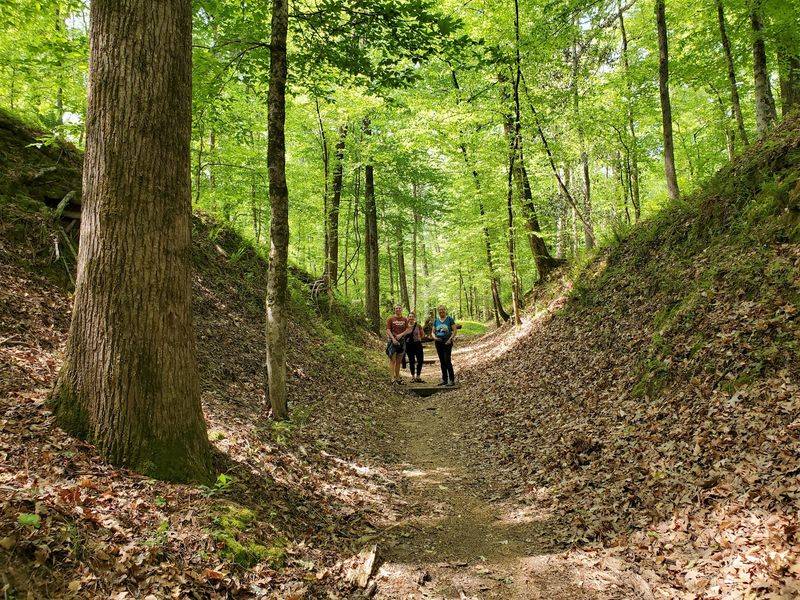
The old Natchez Trace itself cuts through the woods here as a sunken path. Generations of boots and hooves carved it several feet below ground level. Walking it is genuinely eerie in the best possible way.
Wear closed-toe shoes and bring bug spray in warm months, because Mississippi mosquitoes take their jobs seriously. A campground and restrooms sit nearby. Set aside an hour, though history buffs tend to lose track of time completely.
4. W.M. Browning Cretaceous Fossil Park – Baldwyn
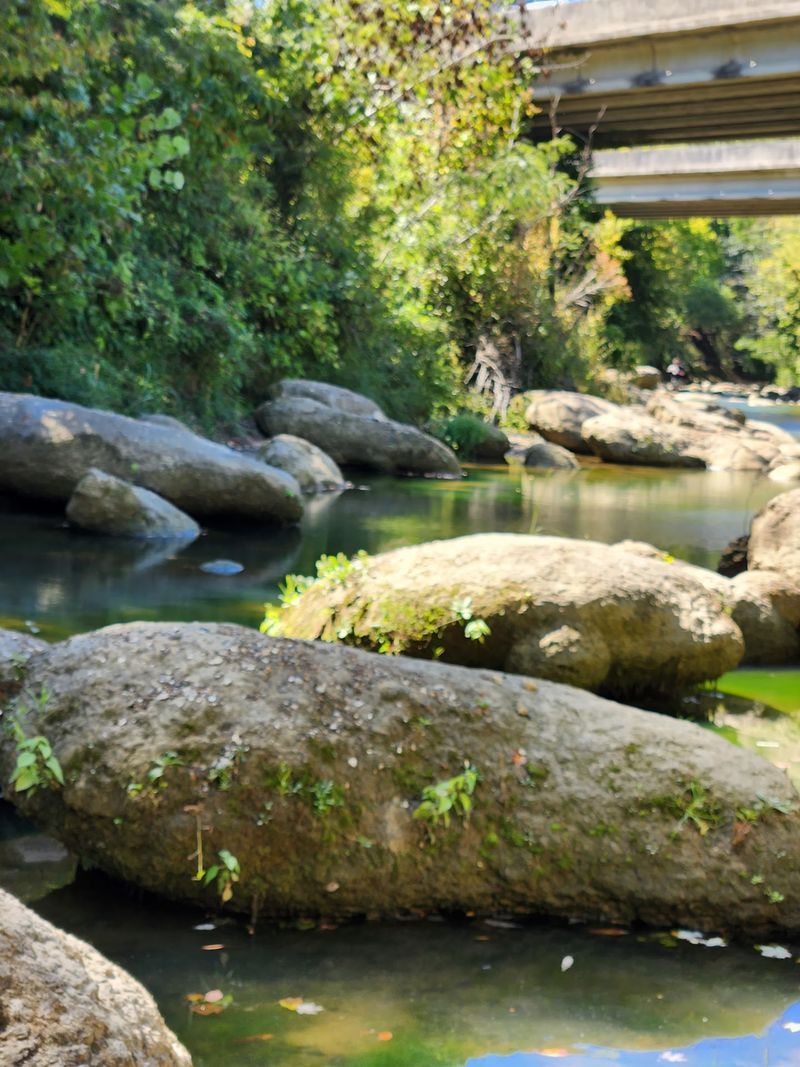
Free fossil hunting where you keep what you find sounds too good to be true, and yet here we are. The W.M. Browning Cretaceous Fossil Park sits along U.S.
Highway 45 near Baldwyn, with no admission fee and no parking fee.
Roughly 75 million years ago, a shallow sea covered this part of north Mississippi. Sharks, ancient clams, and squid-like creatures lived and settled into the mud. The chalky sediment they left behind still gives up treasure.
Visitors sift through the creek bed and exposed banks for shark teeth, oyster shells, and coral fragments. Small finds turn up regularly with patience and a sharp eye. Collecting for personal use is allowed, which is rare and wonderful.
Pack a small trowel, a mesh strainer, and a bag or box for your haul. Rubber boots beat sneakers by a mile, since the creek water is shallow but persistent. Sun protection helps too, because shade runs thin.
Interpretive panels explain what you are holding, so a random gray triangle becomes a shark tooth with a name. Families with curious kids usually stay much longer than planned. Few free stops in the state send you home with actual souvenirs from the Cretaceous.
5. Fort Rosalie And Forks Of The Road – Natchez
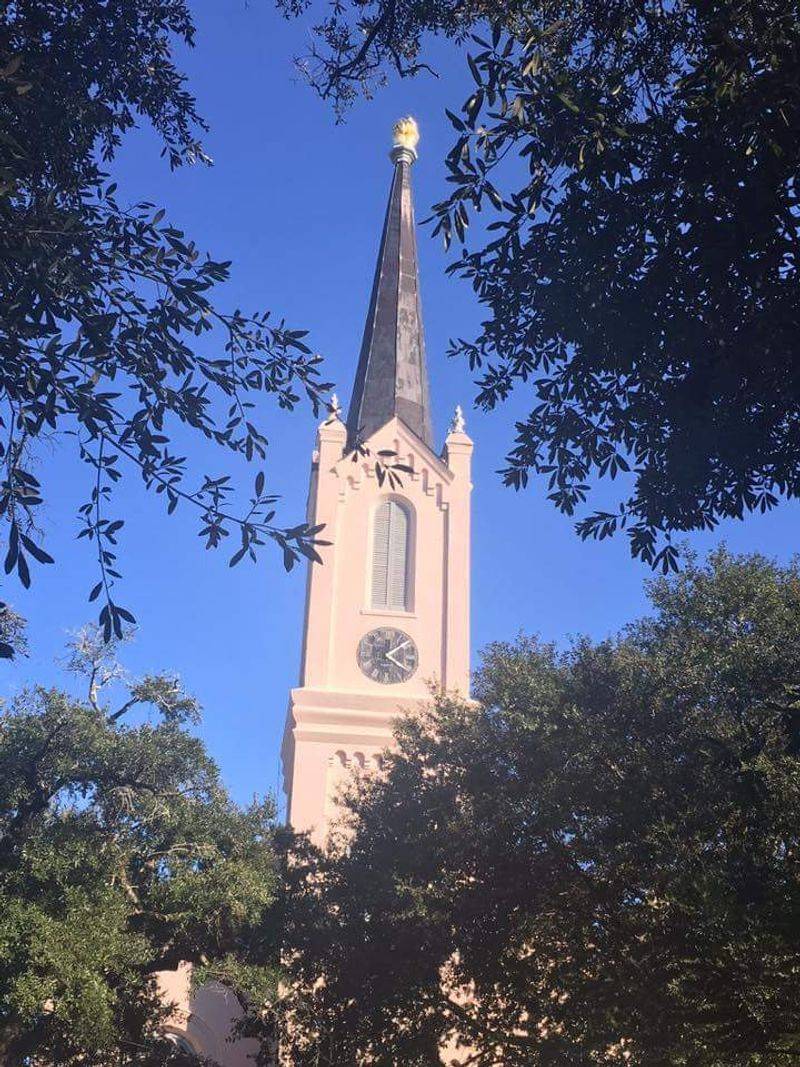
Two Natchez sites carry enormous historical weight and charge nothing at all to visit. Fort Rosalie sits along South Canal Street, and Forks of the Road stands at 105 Liberty Road, both part of Natchez National Historical Park.
French colonists built Fort Rosalie in 1716 on a bluff high above the Mississippi River. The site changed hands among the French, British, Spanish, and Americans. Today the grassy overlook offers one of the finest river views in the state.
Forks of the Road tells a much heavier story. By the 1830s it ranked among the largest slave markets in the South. Interpretive panels and iron sculptures now mark the ground with honesty and care.
Both stops sit close enough to combine into one morning. Neither requires an entrance pass, and street parking is easy to find. Comfortable shoes matter more than anything else you pack.
Take your time reading the signs. The National Park Service wrote them thoughtfully, and rushing through would miss the point entirely. Visitors often describe leaving quieter than they arrived, which feels like the appropriate response.
Stop by the park visitor center downtown first if you want context before you walk the grounds.
6. Melrose Estate Grounds – Natchez
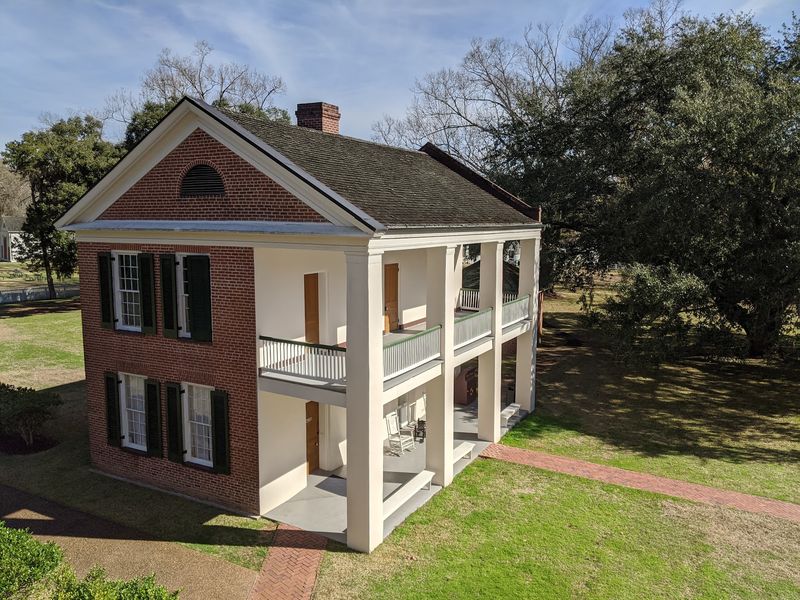
Eighty acres of oaks, gardens, and outbuildings sit open to the public in Natchez for exactly zero dollars. Melrose Estate, at 1 Melrose Montebello Parkway, lets you roam the grounds free of charge.
The Greek Revival mansion went up in the 1840s and remains one of the best preserved antebellum estates in the country. You can admire the columns and symmetry from the lawn without paying a cent. A guided interior tour runs $10 for adults if curiosity wins.
The grounds hold far more than a pretty house. Original slave dwellings still stand and are interpreted by the National Park Service, giving the property its full and truthful story. Reading those panels matters as much as seeing the parlor.
Formal gardens, a carriage house, a dairy barn, and ancient live oaks fill out the walk. Spanish moss hangs low enough to make photographers giddy. Paths stay mostly level and easy underfoot.
Come early in the day for cooler air and softer light. Parking is free and close to the entrance. Mississippi has plenty of grand old homes, but few let you wander this freely for this little.
7. Clarkco State Park – Quitman
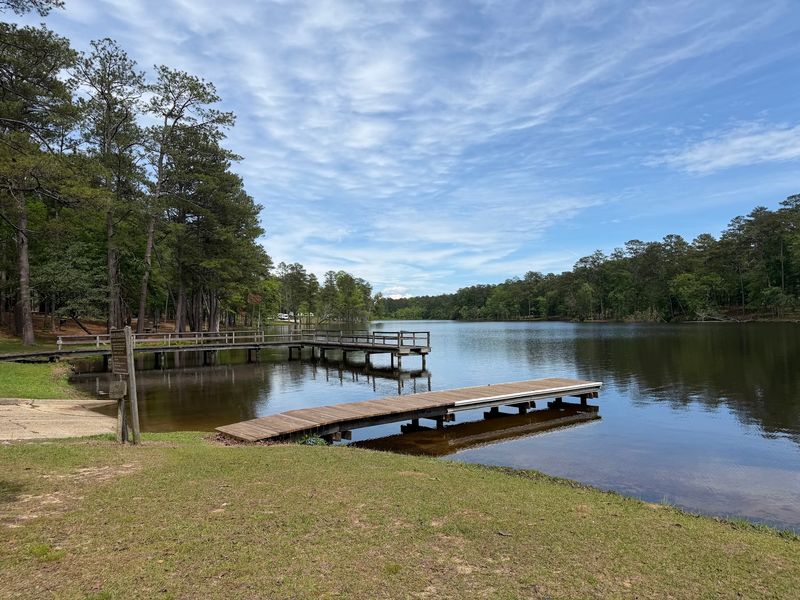
Two dollars per person. That is the entire day-use price at Clarkco State Park, and children five and under get in free.
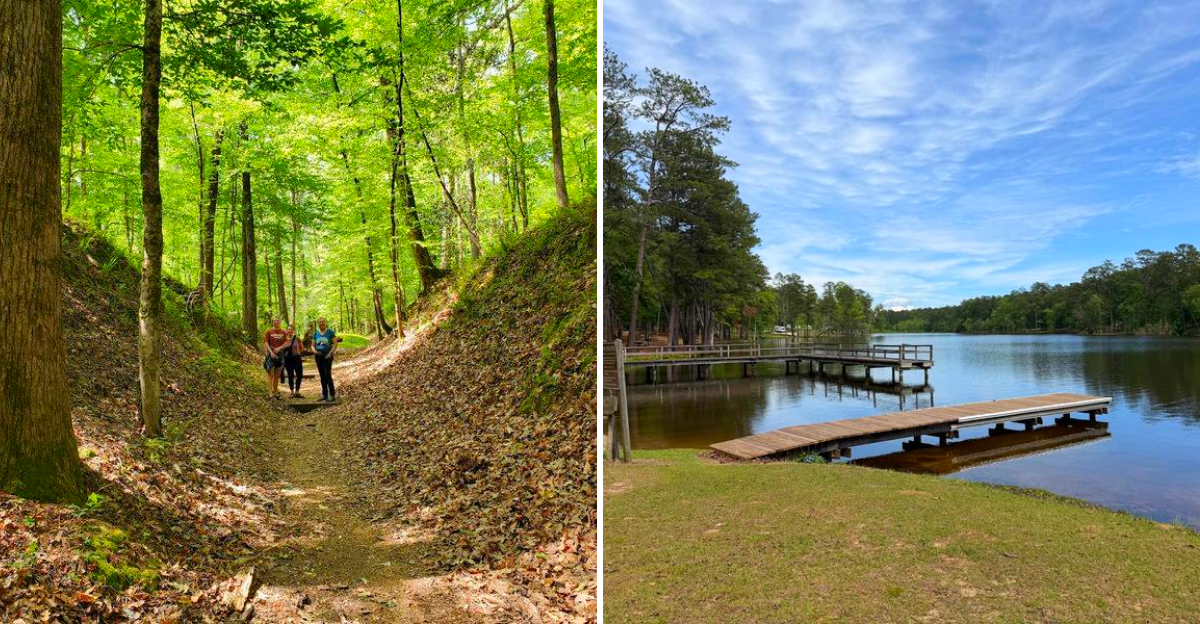
The park sprawls across pine woods around a 65-acre lake at 386 Clark County Road in Quitman. Fishing piers, a swimming beach, and picnic pavilions ring the shoreline. Anglers chase bass, bream, and catfish here year-round.
Hiking trails wind through the pines and stay pleasantly shaded, which counts for a lot in a Mississippi August. Disc golf players have a course to work through as well. Playgrounds keep smaller visitors busy while adults stake out a shady table.
Kayaks and paddleboats are usually available to rent during the warm season. Call ahead if watercraft is the main draw for your trip, since hours shift with the calendar. The lake stays calm and beginner-friendly.
Clarkco opened in the late 1930s as one of the state’s original parks, built with help from Depression-era work programs. That heritage shows in the sturdy stonework and thoughtful layout.
Pack a cooler, a fishing pole, and a decent towel. For the price of a candy bar, you get a whole day outdoors and change back.
8. Mississippi Museum Of Natural Science – Jackson
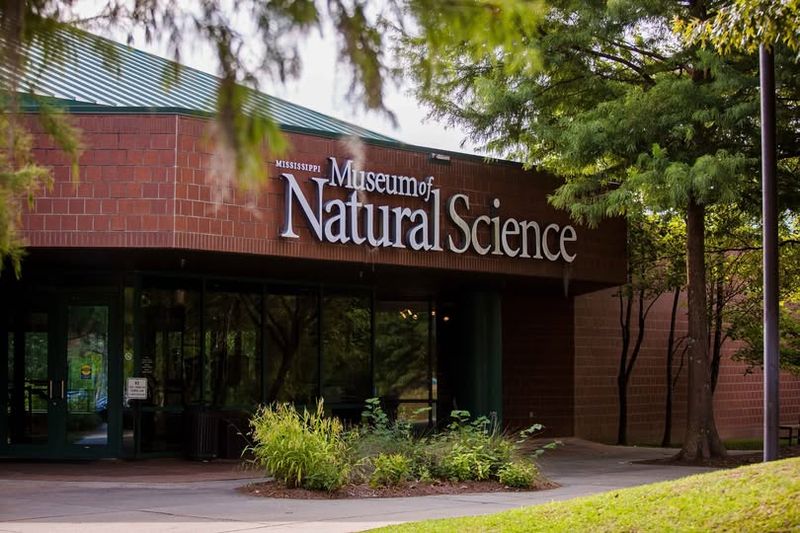
A 100,000-gallon aquarium system, a greenhouse full of carnivorous plants, and fossil skeletons under one roof. The Mississippi Museum of Natural Science sits at 2148 Riverside Drive in Jackson, with adult admission at $7 and free parking.
Youth tickets run $5, seniors pay $6, and children under five walk in free. Families can do the whole museum for less than the cost of movie tickets. The building anchors LeFleur’s Bluff State Park, so the setting is green and quiet.
Inside, aquariums showcase Mississippi fish, turtles, and alligators in habitats built to match their real homes. The natural history galleries cover swamps, forests, and the Gulf coast. A 20,000-gallon tank usually draws the longest stares.
Outdoors, roughly two and a half miles of nature trails cross a 300-acre swath along the Pearl River. Boardwalks cut through wetland where herons and turtles do their thing. Trail access comes with your ticket.
Bring water and a hat if you plan to hike after the galleries. Weekday mornings are the calmest time to visit. The gift shop stocks fossils and puzzles priced for allowance money, which parents may or may not consider good news.
9. Onward Store – Onward
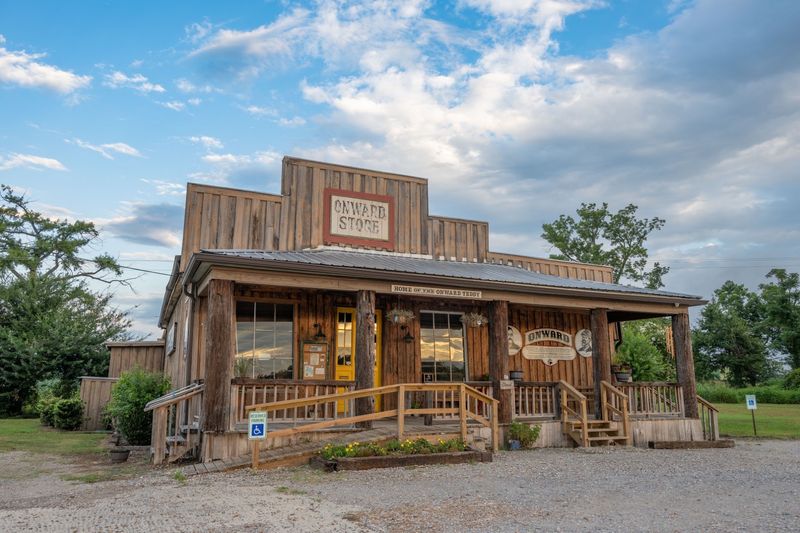
The teddy bear was born on this patch of Delta ground, and browsing the place costs nothing. The Onward Store sits at 6693 U.S. Highway 61 in Onward, where Highway 61 meets Mississippi Highway 1 near Rolling Fork.
In November 1902, President Theodore Roosevelt joined a bear hunt in this area. He refused to shoot a bear that had been tied up for him, calling it unsportsmanlike. Cartoonists ran with the story, a toymaker followed, and Teddy’s bear became a household name.
A state historical marker on the grounds spells out the whole tale. The store itself dates back to 1913 and still looks the part, with a metal roof and a worn wooden porch. Free parking sits right out front.
Step in and you will find groceries, gas, and a kitchen serving hot plates to hungry travelers. Locals gather here, so conversation comes easy. Sweet tea and a burger make a fine pit stop.
Photo opportunities are plentiful, especially with the marker and the vintage signage. Combine it with a drive up Highway 61 for the full Delta experience. Few roadside stores in Mississippi can claim they inspired a global toy.
10. Meridian Railroad Museum – Meridian
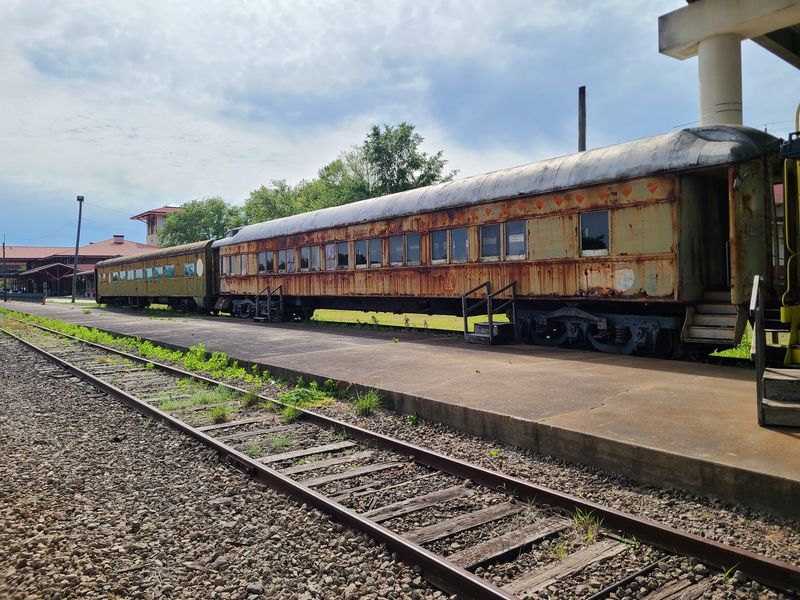
All aboard for five dollars, and kids ride the history free. The Meridian Railroad Museum sits at 1805 Front Street in downtown Meridian, with adult admission at $5, free entry for ages 16 and under, and free parking nearby.
Meridian grew up as a rail hub, and at one point several major lines crossed here. The museum lives in a restored building right beside the active Union Station. Trains still rumble past while you tour, which is a nice touch.
Exhibits include lanterns, uniforms, signal equipment, tools, and heaps of photographs. Model train layouts run for visitors and tend to captivate adults faster than children. Volunteers know the stories behind nearly every object on display.
Hours are limited, so check ahead before you drive over. Weekend afternoons are typically your best bet. An hour covers the museum comfortably.
Downtown Meridian gives you plenty to pair with the visit. The Mississippi Arts and Entertainment Experience and the restored Threefoot Building sit within walking distance. Local cafes handle lunch without much fuss.
For train lovers and casual browsers alike, five dollars buys a solid slice of Mississippi transportation history.