
Mississippi Is Home To One Of The Most Magnificent Gothic Revival Churches Ever Built In The USA
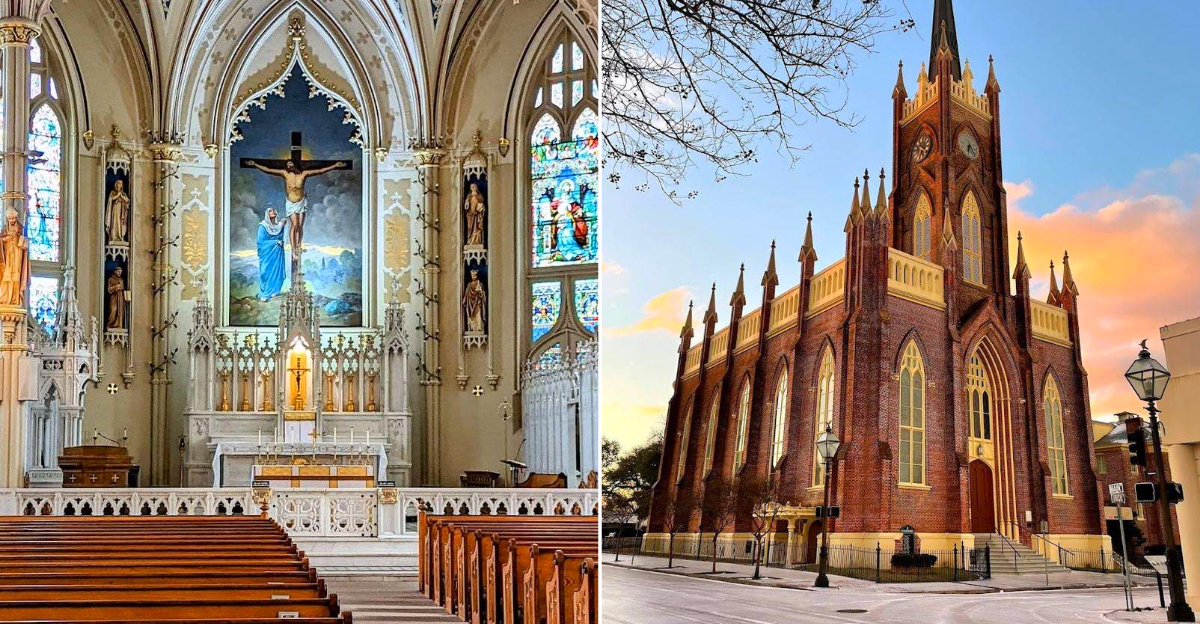
Most people pass through Mississippi without expecting architecture to stop them in their tracks. This church stops them anyway.
The pointed arches reach upward with a conviction that feels less like a design choice and more like a declaration.
The stonework catches light differently at different hours and rewards the person who comes back a second time to check.
Gothic Revival makes demands of a visitor that other styles never bother with and this Mississippi example makes them more forcefully than almost any other building of its kind in the country. The interior does what only the greatest examples of this style consistently manage.
It makes the noise inside a person’s head go quiet without asking permission. The scale is correct in a way that took generations of builders arguing over proportions to arrive at and the craftsmanship reflects every year of that argument.
Mississippi carries more architectural history than most visitors arrive expecting to find and this church sits at the absolute peak of that inventory.
Drive to it. Walk around it slowly before going inside. The outside is making its own case and it deserves the full attention before the doors even open.
A Church That Stops You Cold Before You Even Walk Through The Door
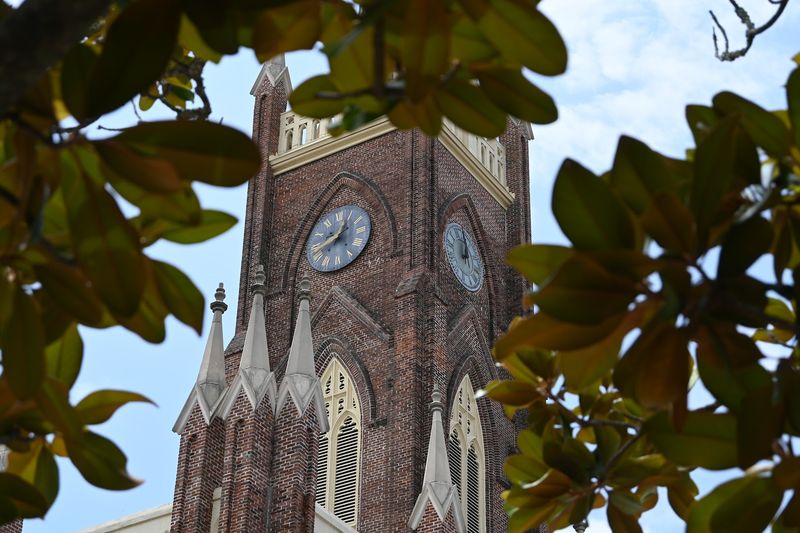
Not every building earns a second glance, but some earn a full stop. St. Mary Basilica is exactly that kind of place.
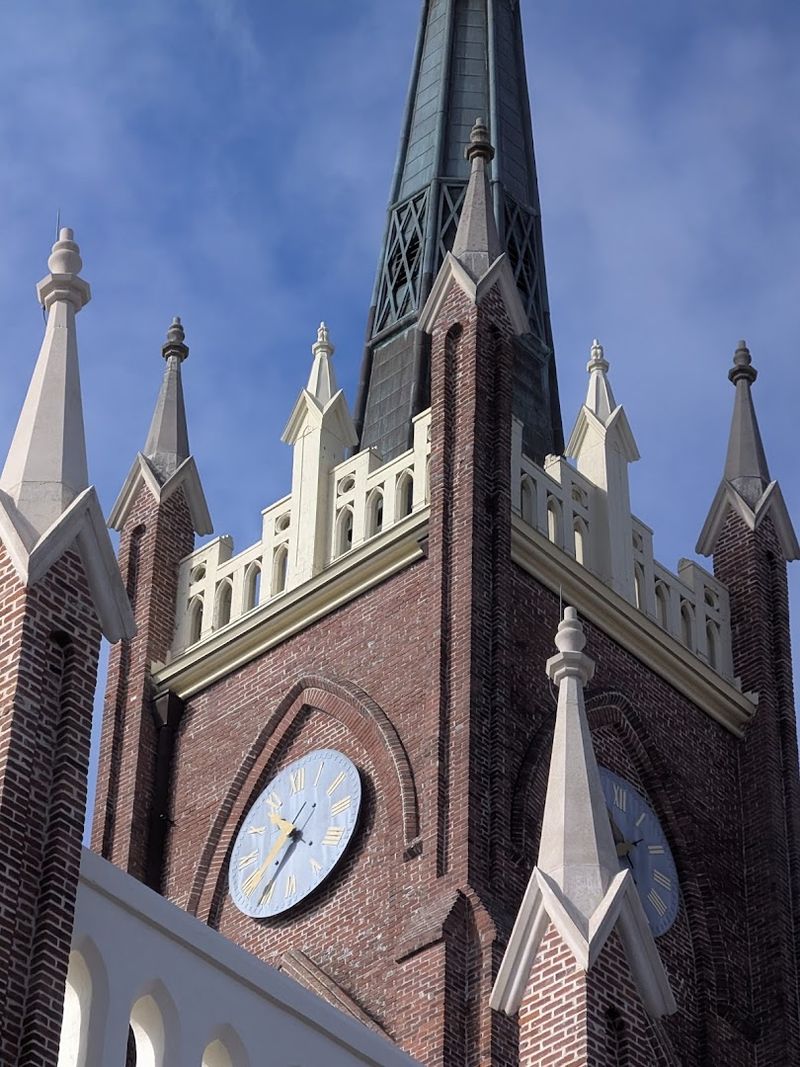
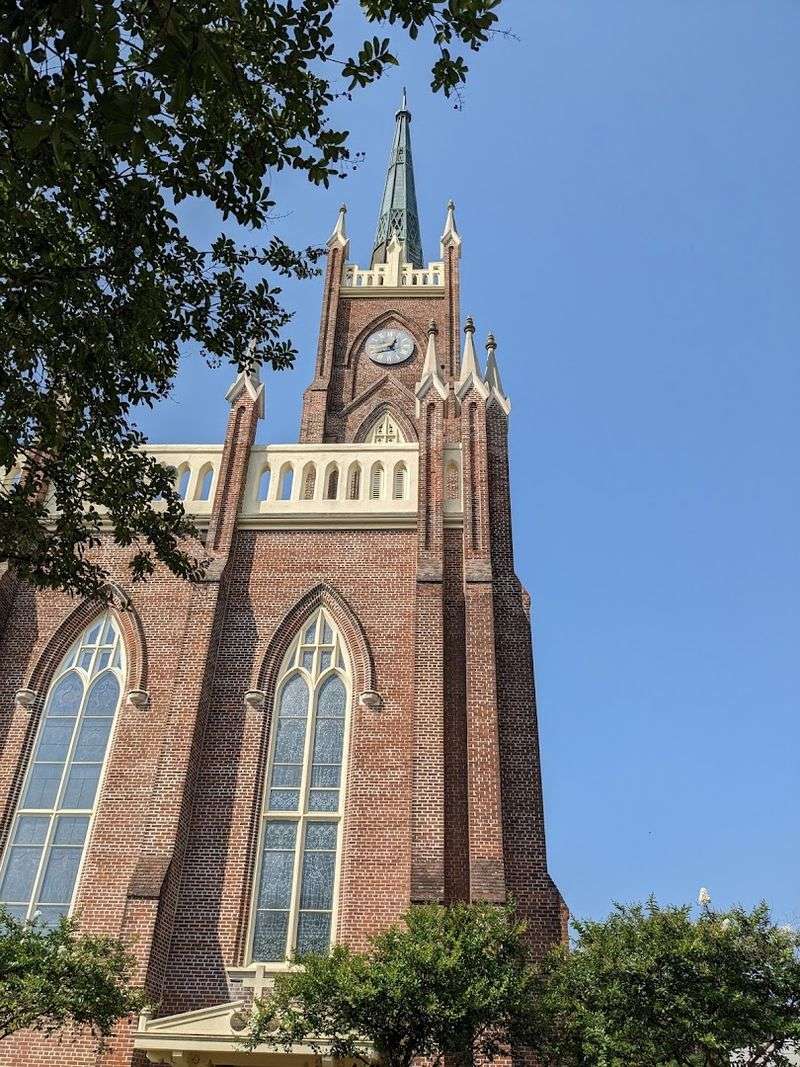
The moment you catch sight of its central square tower crowned with pinnacles and a soaring spire, something shifts in your chest. The brick facade carries a quiet authority that no photograph fully captures.
The front entrance is framed by a recessed Gothic arch that pulls your eye upward and inward at the same time. Ornamental pinnacles ring the roofline, giving the structure a skyward energy that feels almost restless.
Every angle of the exterior tells a story of careful planning and serious craftsmanship.
Construction began in 1842, and the building was largely complete on the outside by the mid-1840s.
The full structure was not finished until 1882, meaning generations of builders poured their skill into this single project.
What stands today is the result of decades of devotion translated into stone, brick, and mortar. Few buildings in the American South carry that kind of layered history so visibly and so gracefully on their exterior walls.
St. Mary Basilica Is Mississippi’s Crown Jewel Of Sacred Architecture
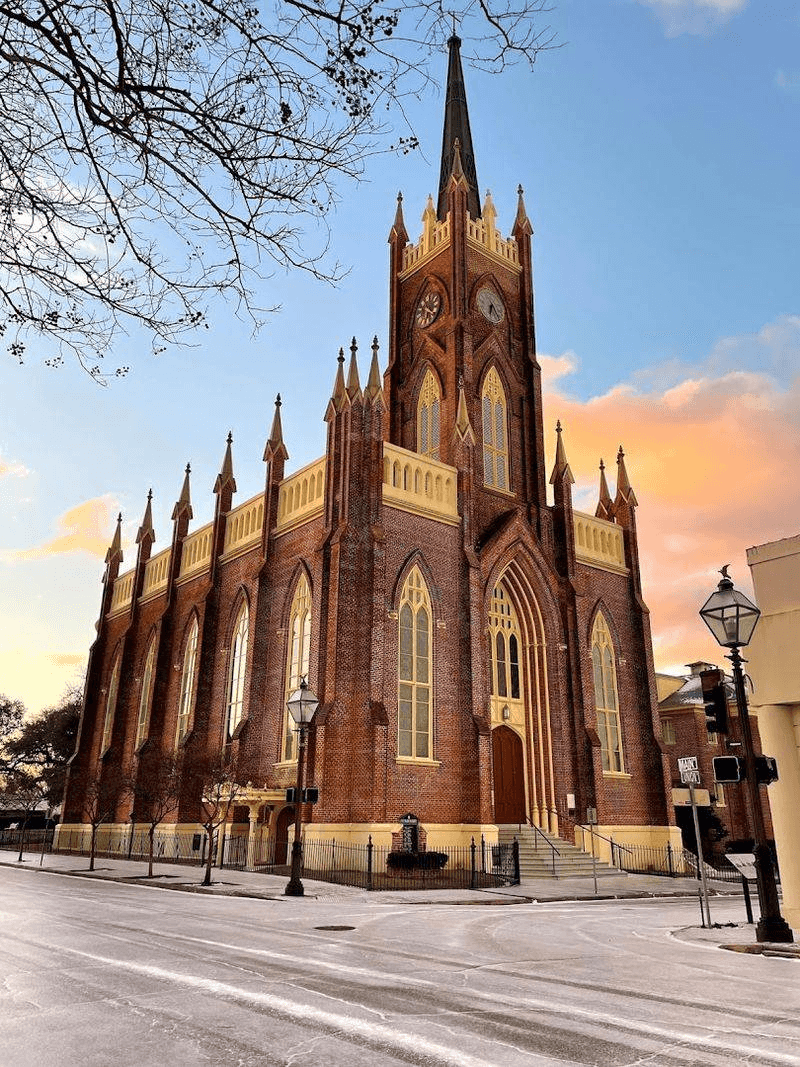
Right in the heart of Natchez, at 105 S Union St, stands a building that rewrites your expectations of what a church in the American South can look like. St. Mary Basilica was originally dedicated on Christmas Day in 1843 under the name Our Lady of Sorrows.
That dedication date alone gives you a sense of the drama and devotion baked into its foundation.
The church served as the cathedral for the Diocese of Natchez for well over a century, anchoring the spiritual life of the region until the diocesan headquarters moved to Jackson in 1977. Even after that transition, the basilica never lost its standing or its pull on visitors and faithful alike.
Its reputation only grew stronger with time.
On September 8, 1998, Pope John Paul II elevated St. Mary to the status of a minor basilica, with the formal dedication following on September 25, 1999. That honor places it among an extraordinarily select group of churches in the United States.
With open hours running from 7:15 AM to 4:15 PM daily and a phone line at 601-445-5616, planning a visit is refreshingly straightforward for a place this remarkable.
The Architects Who Gave This Vision Its Bones
Great buildings do not appear by accident. Behind St. Mary Basilica stands a trio of architectural minds whose combined vision produced something genuinely extraordinary.
Baltimore architect Robert Cary Long Jr. designed the original church, bringing a refined Gothic sensibility to the Mississippi landscape at a time when that style was still finding its footing in America.
James Hardie served as the supervising architect and contractor on the ground, translating Long’s drawings into actual brick and mortar. That partnership between visionary design and steady hands-on execution is exactly why the structure has endured so well.
Good intentions alone never built anything worth visiting twice.
Documentary evidence also points to the involvement of Patrick C. Keeley, a prominent architect of Catholic churches based in New York, who advised on the design at some point during the process.
Keeley was one of the most respected church architects of his era, responsible for hundreds of Catholic buildings across North America. His fingerprints on this project, even in an advisory role, add another layer of significance to an already impressive pedigree.
The result of all three influences is a building that feels cohesive, confident, and beautifully resolved from every angle.
Gold Leaf, Vaulted Ceilings, And An Interior That Earns Every Gasp
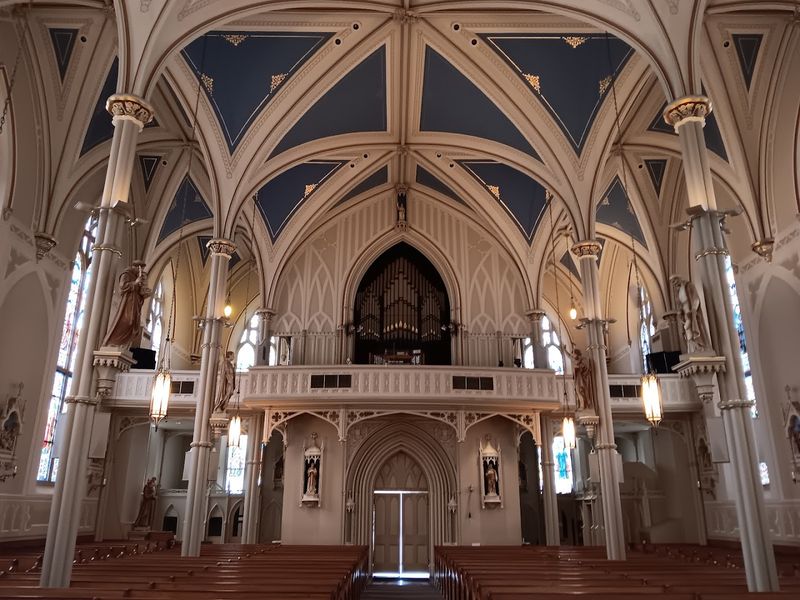
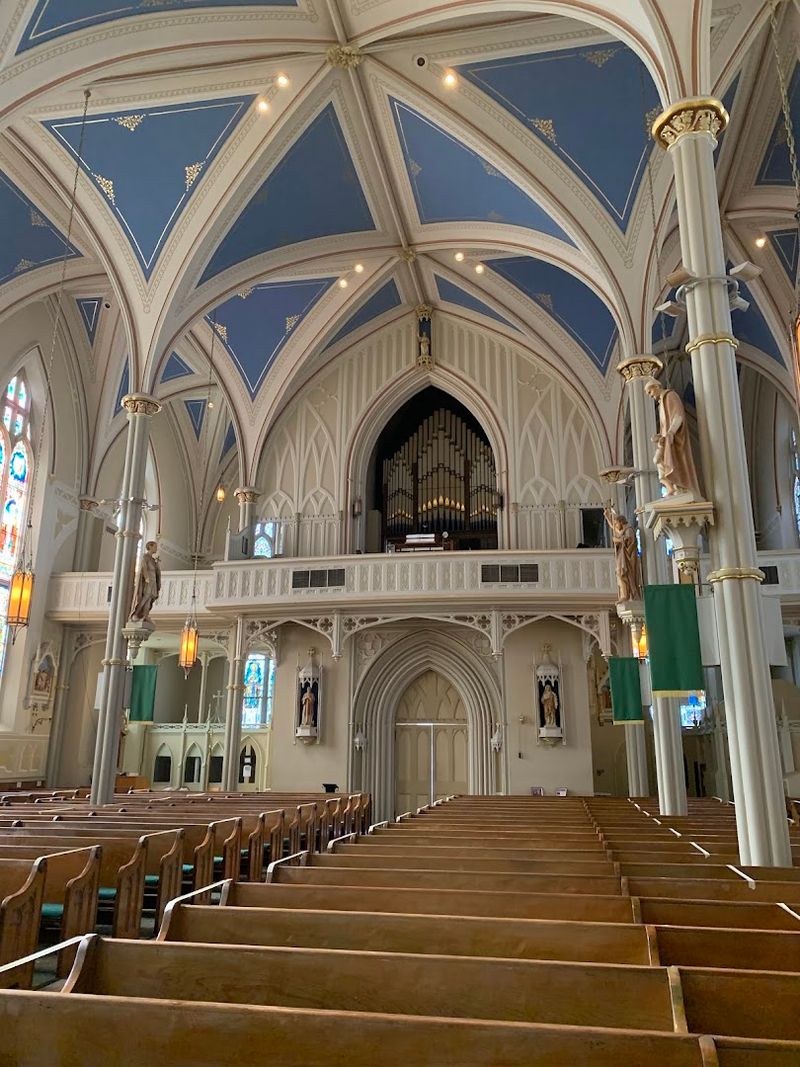
Prepare yourself before you look up. The interior ceiling of St. Mary Basilica features ribbed vaulting painted in a soft, luminous blue accented with 23-karat gold leaf.
The effect is simultaneously airy and opulent, like standing inside a sky that someone decided to gild for good measure.
Multi-color stencils, trompe l’oeil painting, and free-hand artistry cover the walls and architectural surfaces with a richness that rewards slow, careful looking.
The frescoes were completed in 1888 by artist Erasmus Humbrecht, and they remain a vivid testament to the skill and patience of craftsmen who worked without modern tools or shortcuts.
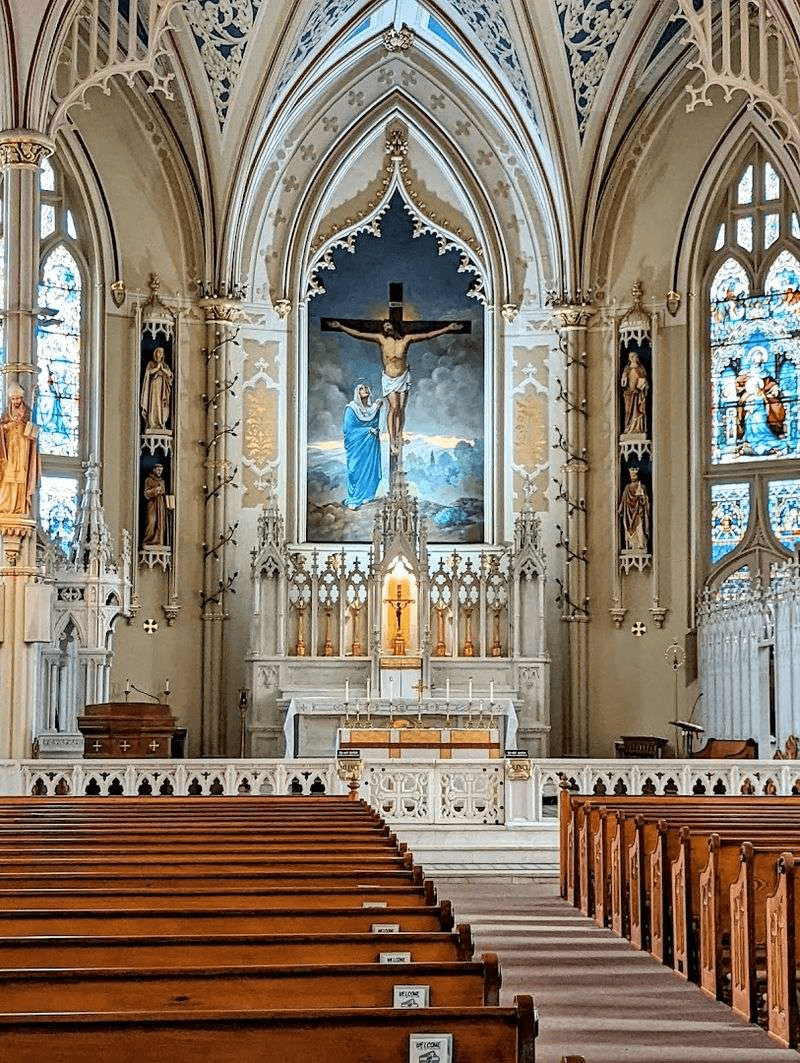
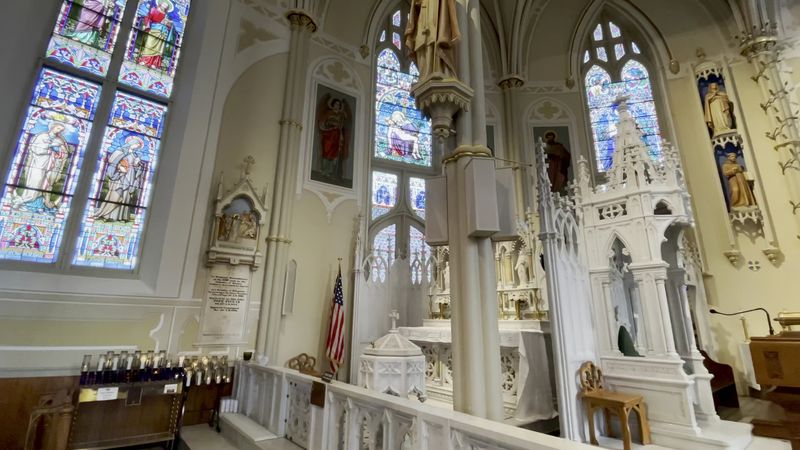
Three Gothic-style altars carved from Carrara marble sourced directly from Italy anchor the sanctuary. The two side altars arrived in 1903, while the main central altar was installed in 1930.
The communion rail, Episcopal chair, and decorative screens are also crafted from the same Italian marble, creating a visual harmony that is consistent and deeply considered. Every surface in this building feels intentional.
Nothing was placed casually, and nothing feels out of place. The interior of St. Mary Basilica is a complete artistic statement delivered in the language of faith.
Stained Glass Windows That Turn Sunlight Into Scripture
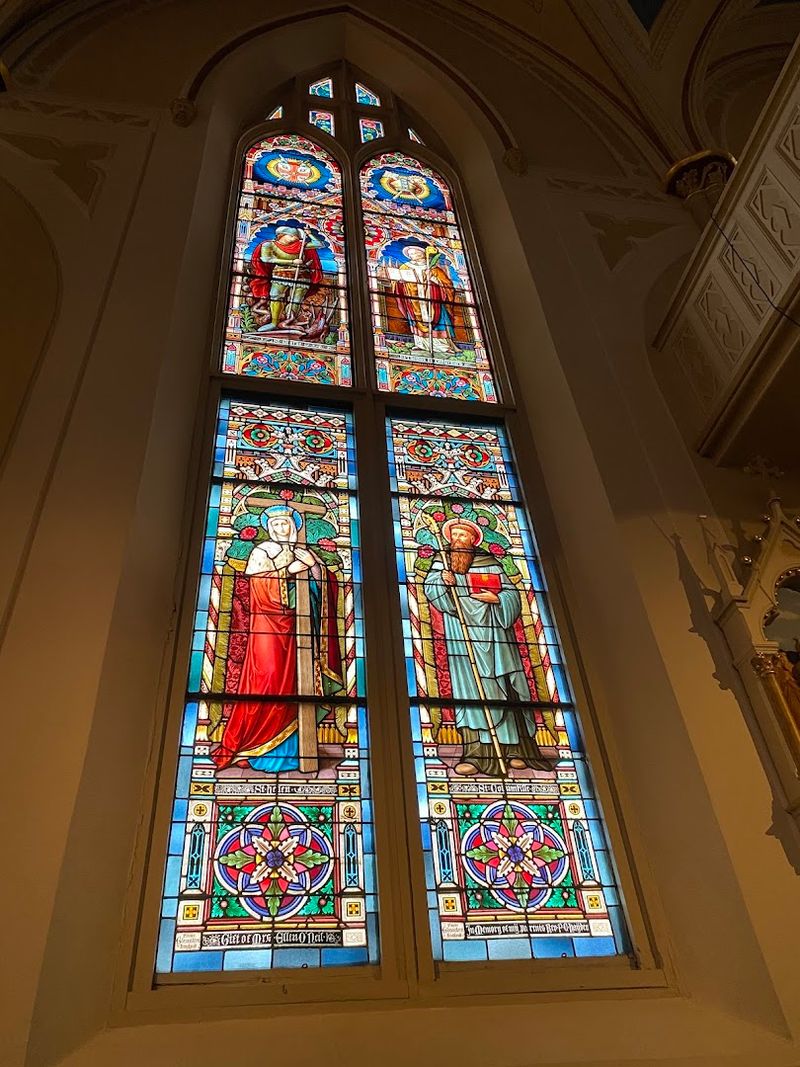
Sunlight behaves differently inside St. Mary Basilica. Sixteen stained-glass windows filter the Mississippi sun into pools of color that move slowly across the marble floors throughout the day.
Visiting on a bright morning gives you an experience that no evening tour can replicate.
Twelve of those windows were designed by Tyroler Glassmalerei of Innsbruck, Austria, and installed between 1884 and 1893.
That Austrian studio was among the most respected stained-glass workshops in the world during that period, and their work in Natchez reflects the full depth of their craft.
The biblical narratives depicted in those panels are rendered with a clarity and emotional weight that still resonates well over a century later.
The remaining four windows were designed by Emil Frei of St. Louis, Missouri, and added in 1961. Frei was a celebrated American stained-glass artist whose work graces churches across the country.
The blending of two distinct artistic voices across nearly eighty years of window installation could have felt disjointed, but inside St. Mary Basilica the overall effect remains unified and spiritually cohesive. The windows alone justify the visit.
They are, without any exaggeration, among the finest examples of the art form in the entire American South.
The Oldest Catholic Building Still Standing And Still Serving In Mississippi
Age is just a number until a building reaches the kind of age that makes historians sit up straight. St. Mary Basilica holds the distinction of being the oldest Catholic building still in active use in all of Mississippi.
That is not a ceremonial title. Services are held regularly, and the parish remains a living, breathing community of faith.
The building was consecrated on September 19, 1886, after years of gradual completion.
The fact that it has survived war, storms, and the passage of nearly two centuries while remaining structurally sound and visually spectacular is a tribute to both its original construction and the generations who cared for it afterward.
Following storm damage in 1998, the basilica underwent exterior restoration work.
Interior restoration began in 2001, led by Waggoner and Ball Architects with interior artistry handled by Conrad Schmitt Studios, one of the most respected ecclesiastical restoration firms in the country.
The care taken during that restoration process shows in every detail you encounter today. Nothing about the interior feels patched or compromised.
It feels preserved, honored, and maintained with the kind of seriousness that a building of this age and importance genuinely deserves.
Natchez Itself Sets The Stage For Everything You Are About To See
A great building needs a great setting, and Natchez delivers without hesitation. Perched on a bluff above the Mississippi River, Natchez is one of the oldest cities in the American South and carries its history with a relaxed, open-handed confidence.
The streets downtown are lined with antebellum architecture, mature oak trees, and a general atmosphere that makes you slow your pace without even realizing it.
The city has long attracted travelers interested in history, architecture, and Southern culture, and St. Mary Basilica sits comfortably at the center of that story.
The surrounding neighborhood is part of the Natchez On-Top-of-the-Hill Historic District, which was listed on the National Register of Historic Places in 1979 with the basilica recognized as a contributing property.
Spending a full day in Natchez before or after visiting the basilica is a genuinely rewarding way to experience the region. The city rewards walkers and unhurried explorers in particular.
Gardens, historic homes, and river views all compete for your attention in the most pleasant way possible.
But for many visitors, it is the basilica that lingers longest in memory, the kind of place that keeps working on you quietly for days after you have returned home.
Planning Your Visit So You Get Every Bit Of What This Place Offers
Timing your visit to St. Mary Basilica takes a little thought, and that thought pays off handsomely. The basilica is open every day of the week from 7:15 AM to 4:15 PM, which gives you a generous window for a self-guided exploration.
Arriving mid-morning on a bright sunny day gives you the best possible light through those sixteen stained-glass windows.
The church is free to enter and open to all visitors regardless of faith background. You are welcome to explore at your own pace, which means you can spend as much time as you need in front of the Carrara marble altars or studying the Humbrecht frescoes without feeling rushed.
A small garden area on the property adds a peaceful outdoor complement to the interior experience.
For questions or to confirm service schedules before your visit, the basilica can be reached at 601-445-5616, and additional information is available at stmarybasilica.org. Parking in the area around 105 S Union St is generally manageable for most visitors.
Bring a camera, but also be prepared to put it down occasionally. Some moments inside St. Mary Basilica are better absorbed directly than through a screen.
Why This Basilica Belongs On Every American Architecture Bucket List
America has no shortage of impressive churches, but very few of them pack this much architectural ambition, artistic richness, and historical depth into a single building.
St. Mary Basilica belongs in any serious conversation about the finest Gothic Revival structures ever built on American soil.
That is not regional pride talking. That is a straightforward architectural assessment.
The combination of Long’s original design, Keeley’s advisory influence, Humbrecht’s frescoes, Austrian stained glass, Italian marble, and 23-karat gold leaf vaulting would be remarkable in a major metropolitan cathedral.
Finding all of it together in Natchez, Mississippi, makes the experience genuinely surprising in the best possible way.
Few buildings in the country reward curiosity as generously as this one. Every return visit reveals something new, a detail in the stencilwork, a shift in how the afternoon light hits the marble, a fresco figure you somehow missed before.
St. Mary Basilica is the kind of place that earns a permanent spot in your personal list of great American places. The trip to Natchez is worth making for this building alone, and the building will give you more than you thought to ask for.