
Mississippi’s Gulf Coast Has 5 Lighthouses And Forts That Tell The Story Of Life On The Water
I only meant to grab a quick bite along the Mississippi coast, but a white tower by the highway kept pulling my eyes away from the menu. A few stops later, I had climbed old stairs, read faded markers, and stood on sand where explorers once landed.
The lighthouses and forts on this stretch of shoreline tell how people sailed, defended, and built lives beside shallow, stormy water. Each one shares a different chapter, and together they make a story you can actually walk through.
1. Biloxi Lighthouse, Biloxi, MS
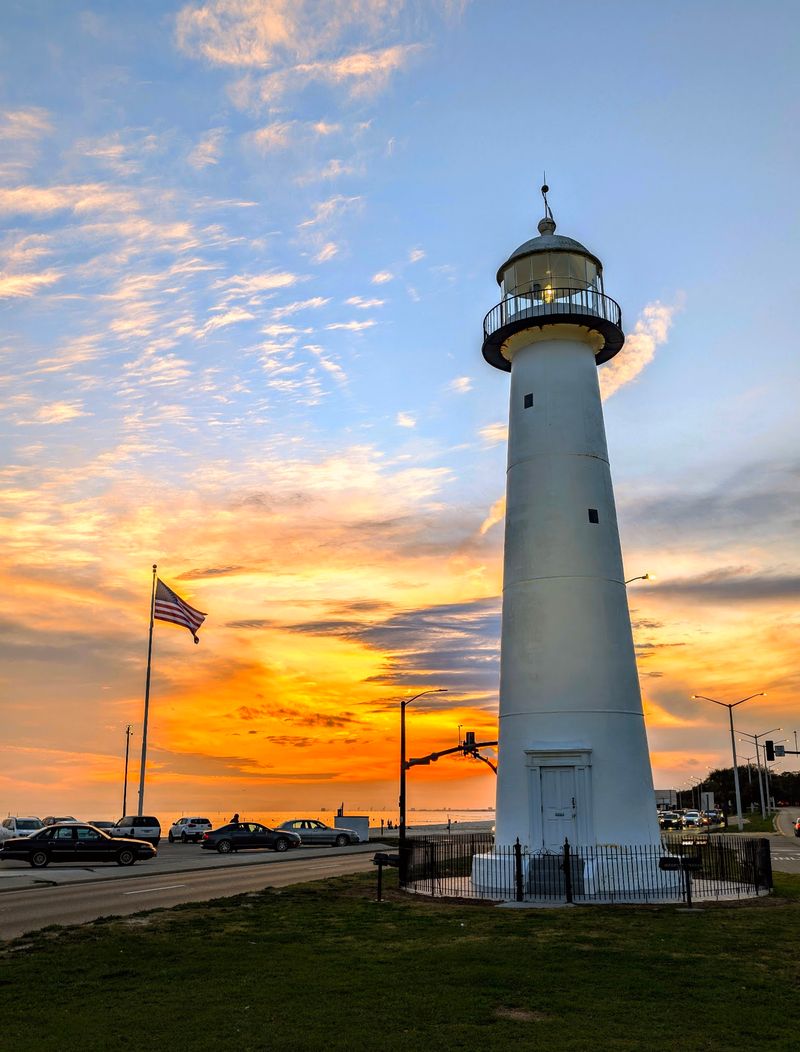
Picture a gleaming white tower standing right in the middle of a busy beach highway, with cars flowing past on both sides. Built in 1848, the Biloxi Lighthouse was one of the first cast-iron lighthouses in the American South.
Its beam guided ships across the Mississippi Sound, then the main water route toward the port of New Orleans.
Women kept this light burning for more years than at any other lighthouse in the country. One keeper served an amazing 52 years.
That steady care helped the tower survive storm after storm, including Hurricane Camille in 1969 and Hurricane Katrina in 2005.
After Katrina, the lighthouse stood almost alone among the damage, and it became a symbol of the coast’s toughness. Inside, 57 steps lead up the 64-foot tower.
Blue lines painted on the walls show how high past storm surges rose, which makes the history feel very real.
Morning guided tours are small, with room for only eight people at a time, so plan to arrive early. Free parking sits beside the beach, and the visitor center is just across the road.
The sand nearby stays clean and calm, great for group photos after your climb.
2. Fort Massachusetts
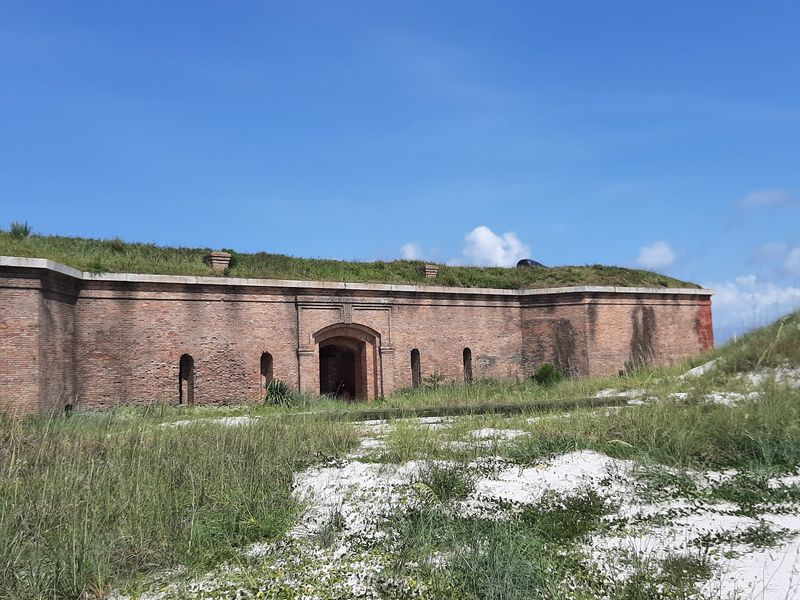
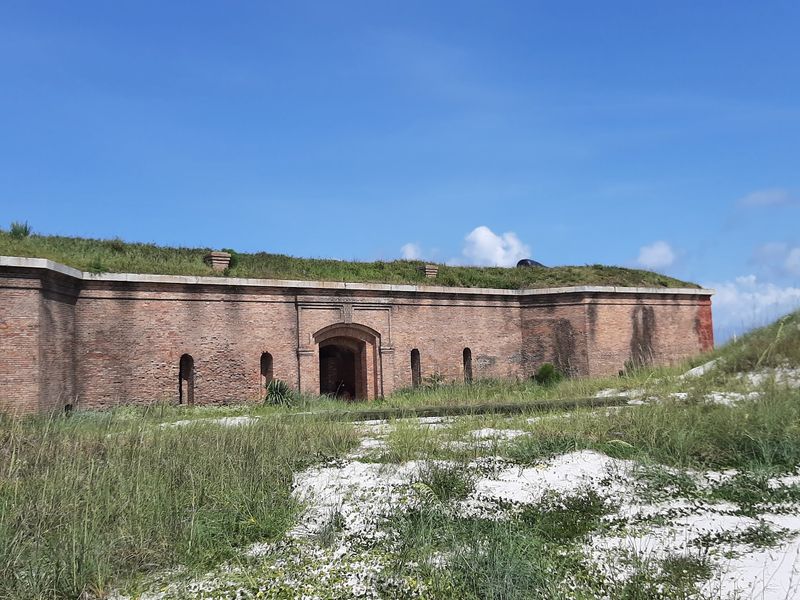
Getting here means leaving land behind. Fort Massachusetts sits on West Ship Island, part of Gulf Islands National Seashore, and the only way to reach it is by boat.
Dolphins often play alongside the ferry during the ride across the Sound, which sets the mood perfectly.
Why build a fort out here at all? Ship Island has a natural deep-water harbor, and after the War of 1812, leaders knew it needed protection.
Work on the brick fort began in 1859 and lasted through the Civil War, finally wrapping up in 1866.
During that war, the island changed hands. Union troops made it a major base and launched the expedition to capture New Orleans from these shores.
Soldiers and sailors also faced yellow fever and hurricanes, which made island life anything but easy.
The army left around 1900, yet the rounded fort still faces its old harbor, sturdy and well preserved. The National Park Service offers free self-guided visits plus ranger tours at set times.
Hours run daily from 10:15 AM to 2:15 PM, and booking ferry tickets ahead is smart. Bring sunscreen, since the beach and shelling are part of the fun.
3. Round Island Lighthouse, Pascagoula, MS
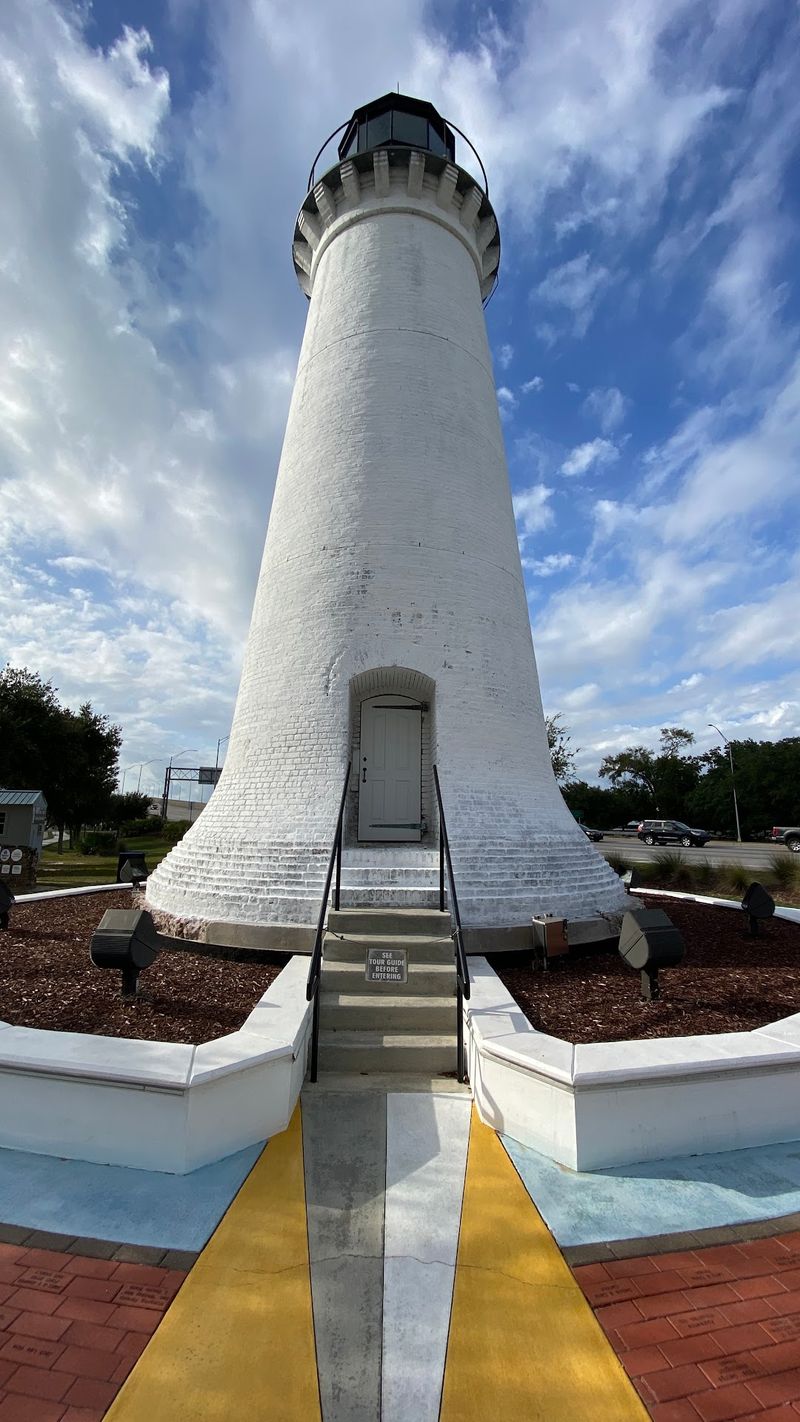
Some lighthouses stay put. Round Island Lighthouse packed up and moved.
Its story starts on a small island near Pascagoula, where sandy ground was too weak for the first tower planned in 1833.
A stronger brick tower, 50 feet tall, finally rose in 1859. A fourth-order Fresnel lens helped sailors find their way into Pascagoula Harbor and out to the Gulf of Mexico.
The light was automated in 1944 and later taken out of service.
Then the storms hit hard. Hurricane Georges knocked the tower down in 1998, and Katrina damaged what was left in 2005.
Instead of letting it slip away, the community moved the surviving pieces, including the original lantern gallery, to the mainland in 2010.
A careful restoration finished around 2014 and 2015, and now most of the original lighthouse stands safely near the Pascagoula River. Guided tours explain its long journey, and tower climbs give you a fresh view of the area.
Doors open Fridays and Saturdays from 10 AM to 5 PM, and a paid lot handles parking. Bring a camera, because the white tower makes a striking photo for the whole family.
4. Fort Maurepas City Park & Nature Preserve, Ocean Springs, MS
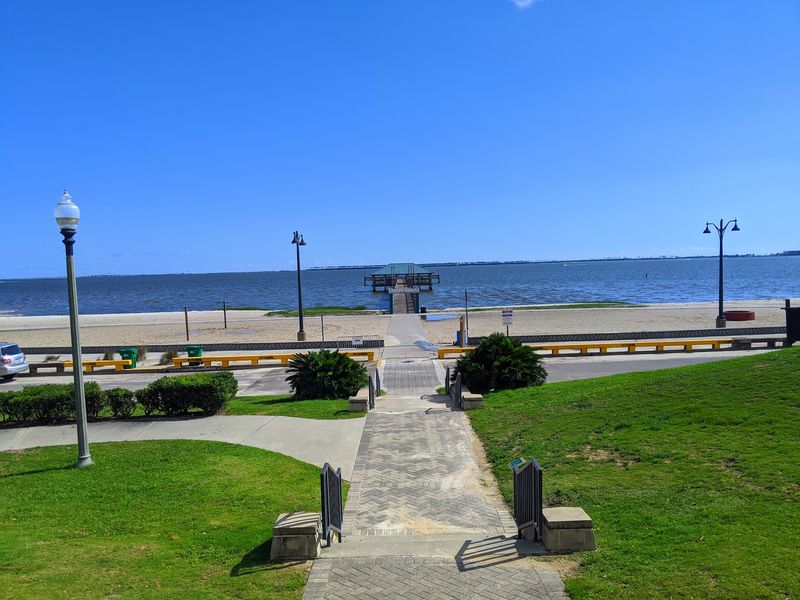
In April 1699, French explorers stepped ashore near today’s Ocean Springs and started something big. They built Fort Maurepas, Mississippi’s first European settlement and the early capital of French Louisiana.
Its job was to guard the way to the Mississippi River.
The fort had four corner bastions made of squared logs, twelve cannons, barracks, a storehouse, and a chapel. Life was rough, with heat, little fresh water, and frequent sickness.
Ships anchored at deep water off Ship Island, linking the settlement to the sea.
Hurricanes and shifting sandbars kept causing trouble. A fire destroyed the fort in 1719, and the capital moved to New Biloxi in 1720 for easier access from Ship Island.
Today the site is a lively city park. Signs share the colonial history, and wood carvings add a creative touch along the paths.
Families find a playground, a small splash pad, picnic tables, covered areas, a stage, and restrooms.
Wide views stretch across the Sound to Deer Island, and the beach is right there. Dogs are welcome too.
A short trip to the nearby marina lets you watch fishing boats and buy fresh seafood. Hours run daily from 6 AM to 9 PM.
5. Ship Island Lighthouse, Gulfport, MS
Shallow water fooled plenty of sailors along this coast. Shifting sand bars and sudden storms made the Mississippi Sound tricky, so ships needed a dependable light at its entrance.
That light belonged to Ship Island.
Funding came in 1848, but land disputes held things up. The first 45-foot brick tower was done in November 1853 and shone for the first time on Christmas Day.
In 1861, Confederate forces darkened it and removed its lens, and Union troops restored the beam by late 1862.
Erosion proved the toughest enemy of all. The brick tower was abandoned in 1885 and slid into the Sound by 1901.
A wooden tower built in 1886 lasted until Hurricane Camille in 1969, and a replica later fell to Katrina.
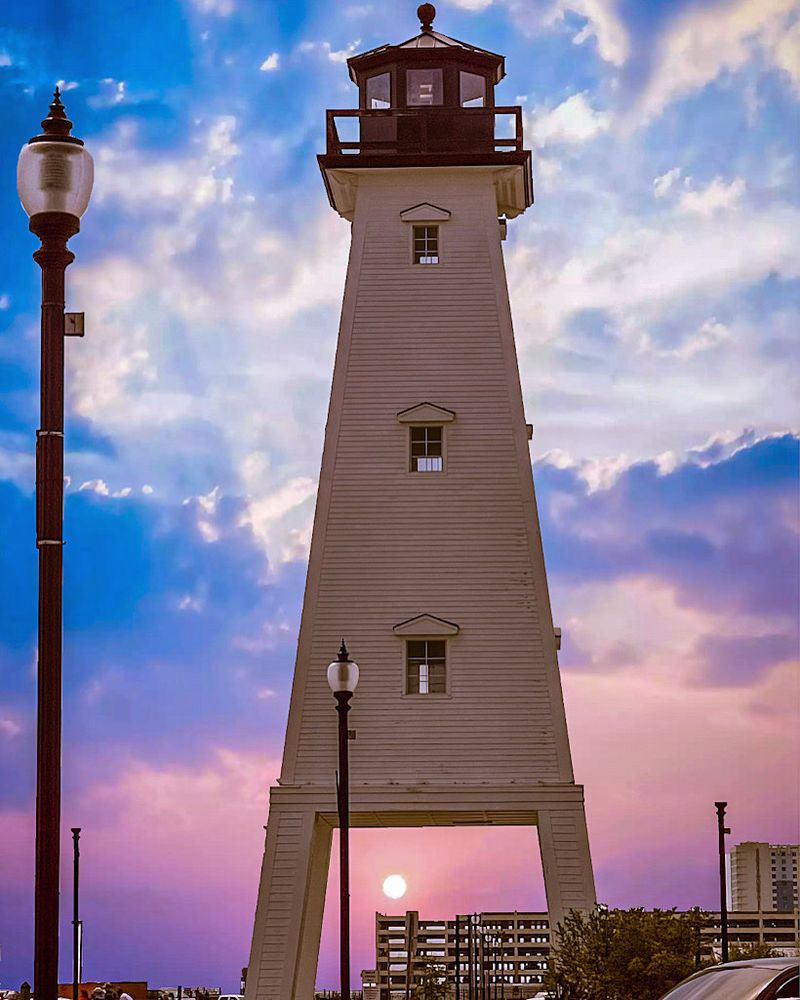
So what can you see on the mainland? A Ship Island Lighthouse stands in a harbor-front park in Gulfport, letting you enjoy the classic wooden design without a boat ride.
A historical marker sits almost right underneath it, sharing the story of the tower and the island it once guarded. Take a relaxed stroll around the park, watch the harbor, and imagine keepers watching for ships offshore.