
Most Visitors Miss This Abandoned Mississippi Spot, But Locals Know To Stay Away After Dark
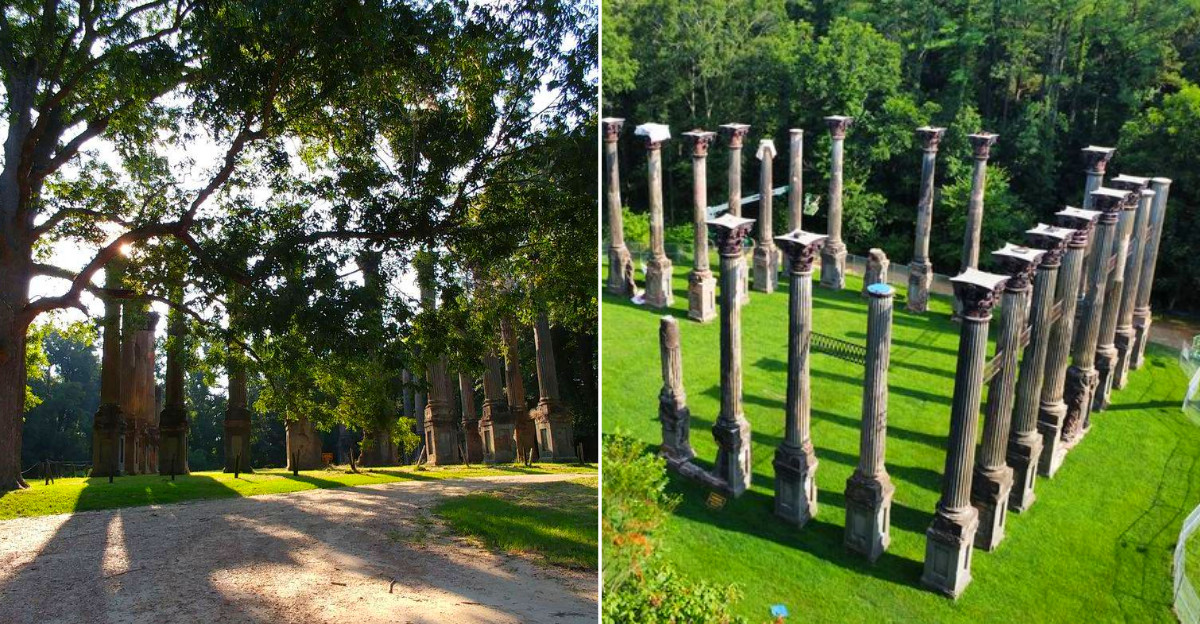
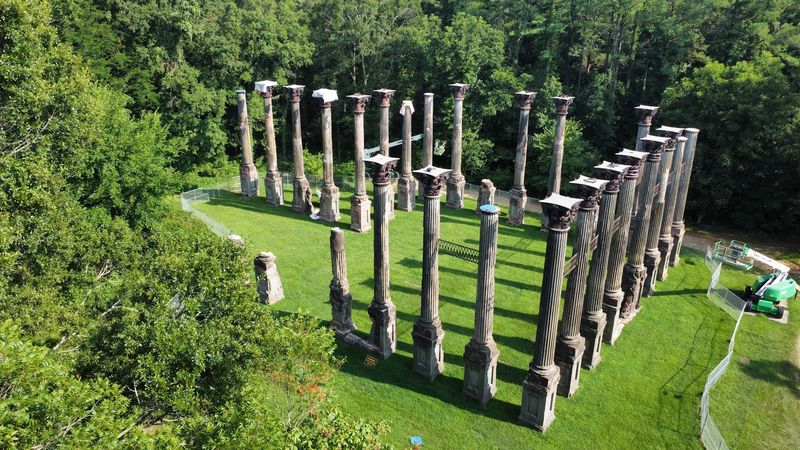
Twenty three enormous columns stand in a Mississippi field with no roof above them and no walls between them. They once held up the largest antebellum mansion the state ever built, until a fire in 1890 left nothing but the bones.
Most road trippers cruise past the turnoff without knowing anything is down the gravel lane. That is the strange part. Something this large and this old usually announces itself, and this one has been standing quietly in a field for well over a century.
The gates close before nightfall. People nearby will tell you that is exactly how it should be, and after standing among those columns at dusk it is hard to argue.
Columns Without A House
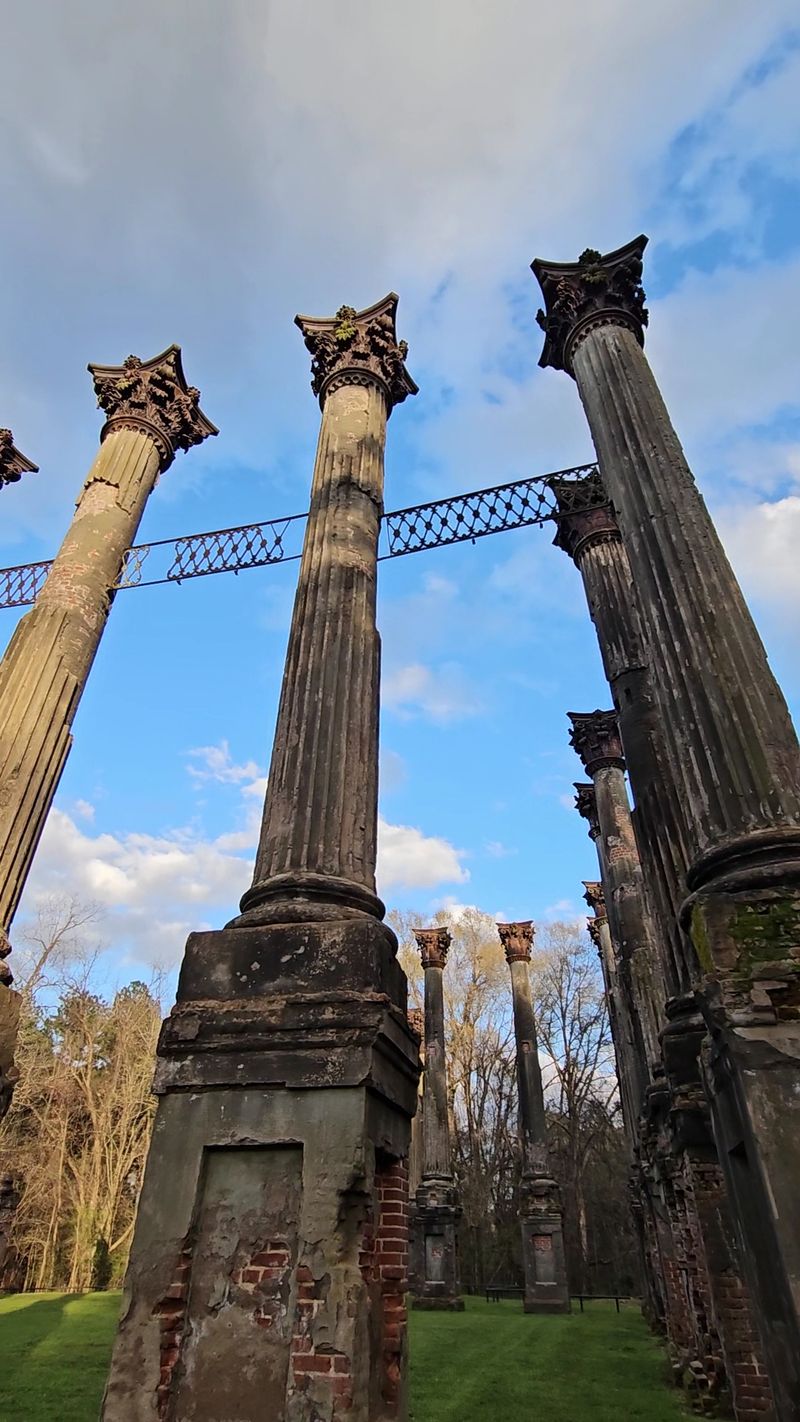
Nothing prepares you for the first look. The road bends through thick woods, the trees open, and suddenly a colonnade rises out of the grass like the leftovers of a Greek temple that wandered into the Deep South.
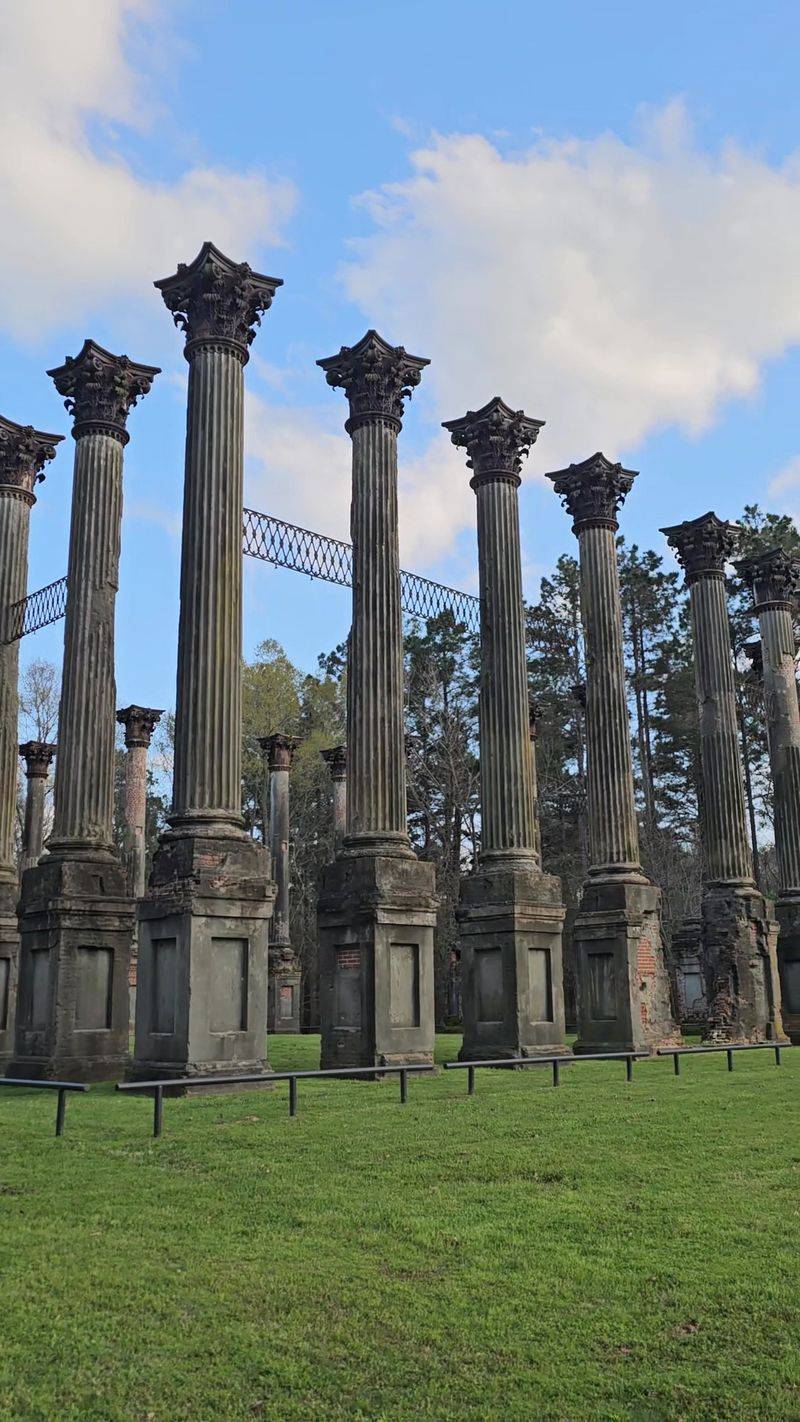
Twenty three intact columns remain, along with five partial ones. Each stands roughly 40 to 45 feet tall, built from brick and finished in stucco, crowned with carved Corinthian capitals.
What makes the sight so strange is the absence. No walls. No floors.
No staircase. Just the frame of something enormous, with sky where the ceilings used to be.
Ornamental ironwork still ties parts of the structure together, and the craftsmanship holds up beautifully after more than 160 years of weather. Visitors tend to go quiet here without being told to.
The clearing sits inside a wildlife management area, so birdsong and wind through the pines make up the entire soundtrack. Bring a camera, because photographs of these columns look almost unreal.
Fifteen minutes covers the walk. Most people linger far longer, circling back for one more look before returning to the car.
Windsor Ruins On Rodney Road
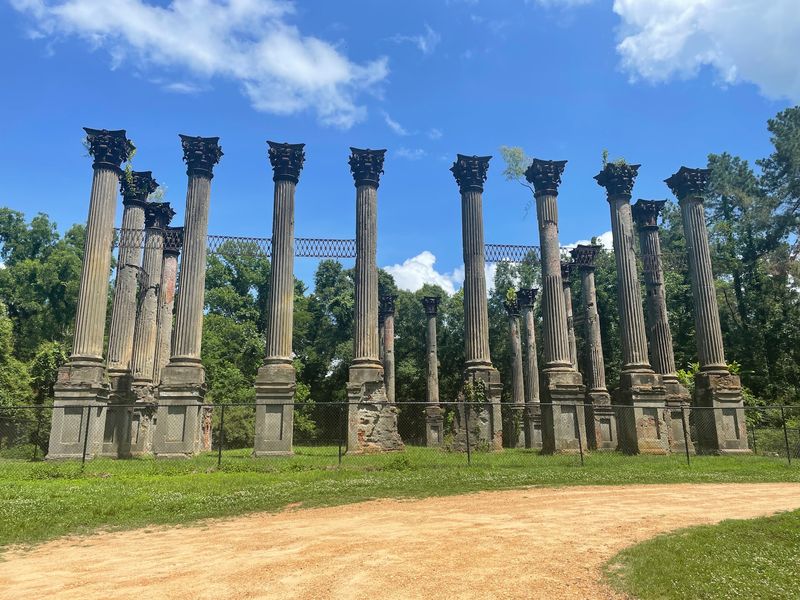
The place carries the name Windsor, and you will find it along Rodney Road in Port Gibson, MS 39150, roughly 10 to 12 miles southwest of town in Claiborne County.
Alcorn State University sits nearby, which helps with directions when phone service gets thin. And it does get thin out there.
Construction on the mansion started in 1859 and wrapped up in 1861. The finished home was the largest antebellum Greek Revival residence ever raised in Mississippi.
The state owns the property now. It covers about 2.1 acres and falls under the care of the Mississippi Department of Archives and History, after descendants of the original family donated the land in 1974.
Admission costs nothing. Gates open at eight in the morning and close at 7:30 in the evening, every day of the week.
Signage on site fills in the history without overwhelming you. Plaques line the walking path with details about the family, the fire, and the years that followed.
Fuel up before you go. Once you turn onto that road, services disappear fast.
A Mansion Built For Cotton Money
Money built Windsor, and plenty of it. The mansion cost about $175,000 back in the early 1860s, which lands somewhere north of six million dollars in today’s terms.
Commissioned for a wealthy cotton planter named Smith Coffee Daniell II, the house measured 64 feet on every side and rose three full stories. An attached ell stretched another 59 feet by 26.5 feet.
Add that up and you get around 17,000 square feet of living space. Somewhere between 23 and 25 rooms filled it, and every single one had its own fireplace.
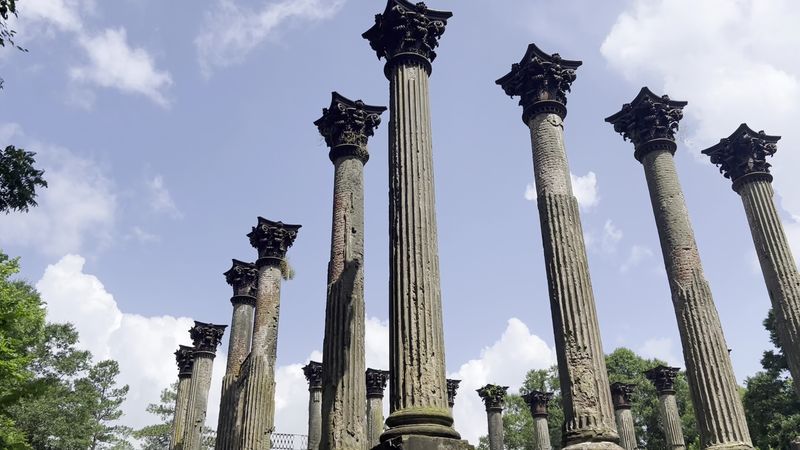
Twenty nine Corinthian columns wrapped the exterior. A domed cupola crowned the roof, giving anyone who climbed up there a view for miles across the river country.
Wealth of that scale in that era came from enslaved labor, a hard truth the site’s own signage addresses. The story of Windsor cannot be separated from it.
Standing in the field today, the footprint feels almost impossible. Pace off 64 feet and you start to understand the ambition behind the place.
Plumbing Ahead Of Its Time
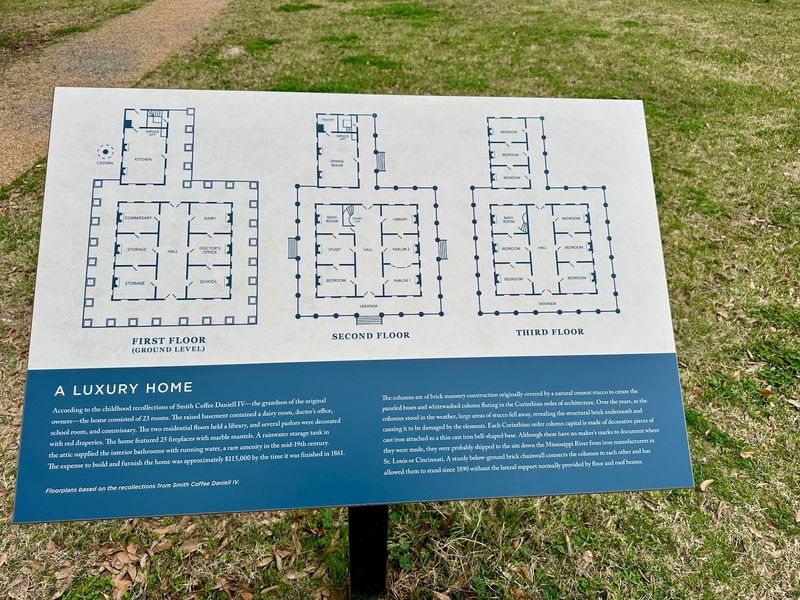
Here is a detail that surprises nearly everyone. Windsor had indoor bathrooms in 1861, at a time when most grand homes still relied on outbuildings and hauled water.
A tank in the attic collected rainwater and fed the fixtures below. Gravity did the work, quietly and without fuss.
The ground floor basement level held far more than storage. A schoolroom, a doctor’s office, a dairy, and a commissary all operated under the same roof.
Think of it as a self contained village stacked inside one building. Children studied downstairs while supplies moved through the commissary a few doors away.
None of that survives, of course. The fire took every wooden beam and floorboard, leaving only masonry behind.
Reading the plaques along the path fills in these pieces, and they reward a slow walk rather than a quick loop. Kids especially perk up at the rainwater plumbing story.
Engineering nerds will appreciate how much thinking went into a house built without electricity or municipal water. The columns get the attention, but the plumbing deserves a nod.
Why The Gates Close At Dusk
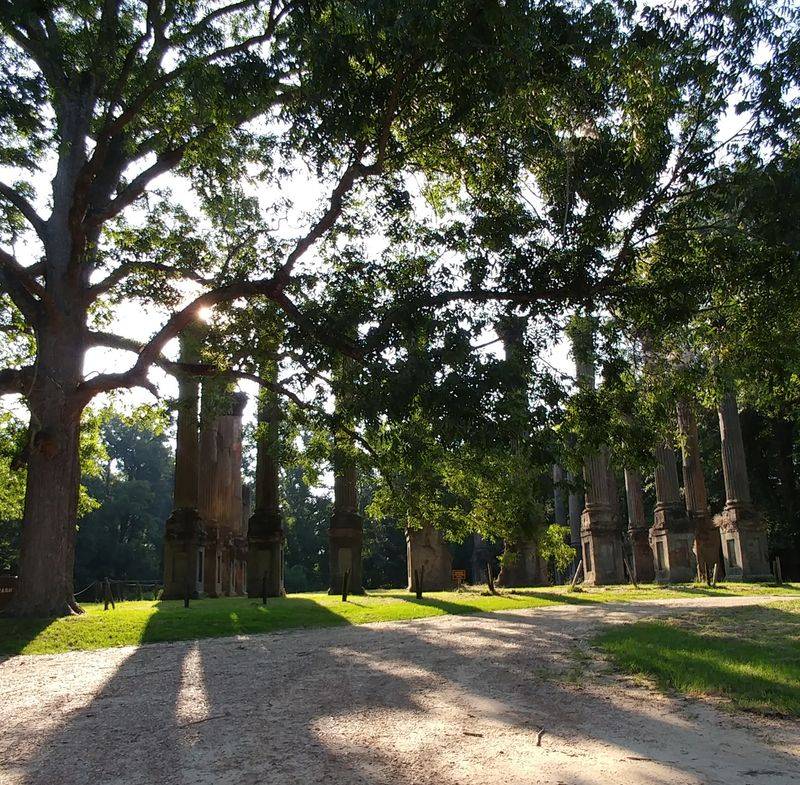
Sunset is the cutoff, and there is good reason behind it. The site closes at 7:30 in the evening, with gates locked and nobody on duty overnight.
No attendant staffs the property during open hours either. You drive in, park, and explore on your own.
Once the light fades, the surrounding wildlife management area goes properly dark. No streetlamps, no houses nearby, and cell coverage that comes and goes.
The roads leading out are narrow, hilly, and full of blind curves. Driving them after dark with no shoulder and no lighting is a genuinely poor plan.
Local folks know the drill and clear out early. Visitors sometimes push their luck chasing sunset photographs and end up navigating those bends by headlight alone.
Plan your arrival for late afternoon instead. The low sun hits the stucco beautifully and you still have daylight for the drive back toward Port Gibson.
Respecting the schedule is not just about rules. It is about not getting turned around on backroads where the nearest gas station is a long way off.
Ghost Stories Locals Repeat
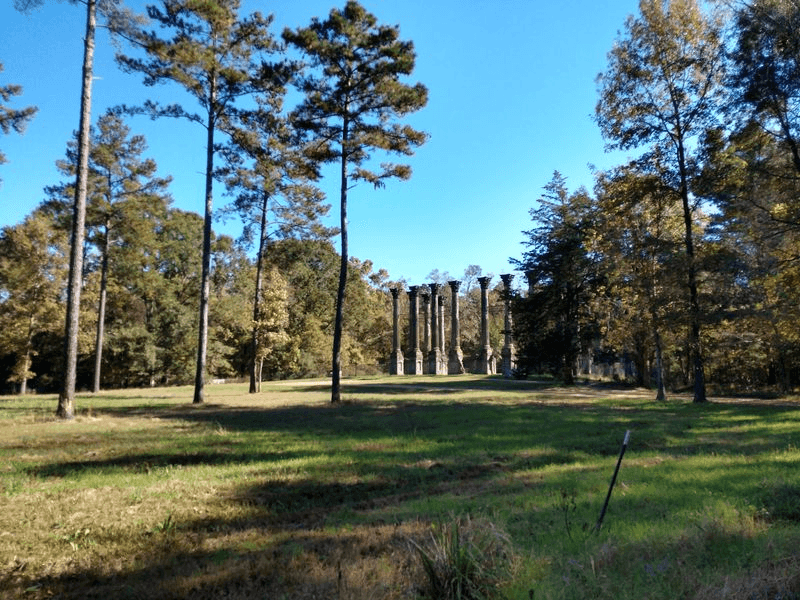
Every ruin collects legends, and Windsor has gathered a full shelf of them. Ask around Claiborne County and you will hear plenty.
The eeriness makes sense once you see the setting. Deep woods, ravines dropping away on either side, and the Mississippi River not far off through the trees.
Wildlife adds to the atmosphere. Deer move through the clearing at dawn, and the woods rustle with things you cannot quite identify.
Nothing about the site is presented as haunted. The signage sticks to documented history, which honestly makes the place more affecting than any spooky tale could.
The columns themselves do the heavy lifting. Twenty three of them standing in a row with nothing between them creates a silence that feels physical.
Overcast days heighten everything. Gray sky behind pale stucco turns the whole clearing into something out of an old painting.
Skeptics and believers both leave with the same reaction, which is a quiet sort of awe. Whatever stories float around out there, the actual history is remarkable enough on its own.
The Loop Trail And Safety Rail
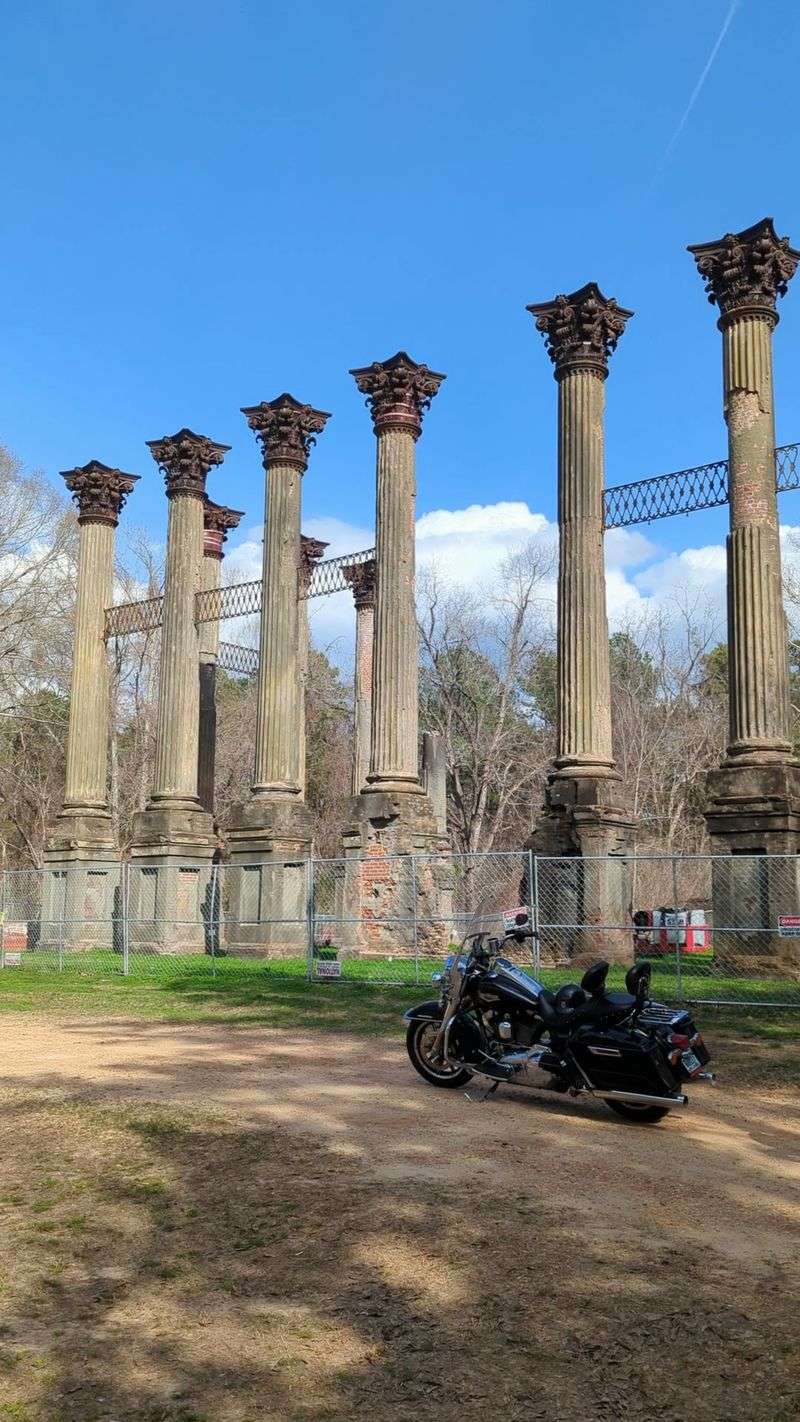
Access here is better than you might expect for such a remote spot. A gravel path circles the entire ruin, level enough to qualify as ADA accessible.
Strollers and wheelchairs handle it without trouble. The surface stays firm and the grade barely changes.
A low pipe rail rings the columns now. The barrier keeps vehicles at a distance and marks the boundary, since the structures are not stable enough to walk directly beneath.
Stabilization work has happened in stages over the years, with the most recent project finishing in 2023. Tall construction fencing from that effort has since come down.
You can still get remarkably close. The rail sits near enough that you can study individual bricks and see where stucco has peeled away to reveal the work underneath.
Interpretive panels stand at intervals along the loop. Reading them all adds maybe twenty minutes to the visit and it is time well spent.
The whole circuit takes fifteen minutes at a comfortable pace. Photographers should budget considerably more.
An Easy Detour Between Two River Towns
Natchez to the south, Vicksburg to the north, and Windsor sitting quietly between them. If you are driving that stretch, the detour costs you very little.
The Natchez Trace Parkway runs nearby, which makes the whole area a natural fit for a slow travel day. Port Gibson itself is worth a wander.
Getting there is half the fun. The approach roads roll and twist through hills and hollows, which is why motorcyclists and sports car drivers show up regularly.
Curves come fast, so keep your speed sensible. Gravel washes onto the pavement after heavy rain.
Bethel Presbyterian Church stands about three miles south, built in 1823 and no longer holding services but still carefully maintained. It makes a fine second stop.
Combining Windsor with the church and a drive along the Trace fills an afternoon nicely. None of it feels rushed.
Set your navigation before you leave town since signal drops out along the way. A screenshot of the route saves headaches.
Best Hours To Show Up
Timing turns a good visit into a great one. Early morning brings soft light, cool air, and often the entire clearing to yourself.
Gates open at eight, and being first through them is a genuine treat. Mist sometimes hangs low across the grass at that hour.
Late afternoon works nearly as well. The sun drops behind the tree line and warms the stucco to a honey color that photographs beautifully.
Midday summer heat is the one stretch worth avoiding. Shade is scarce and the humidity settles in heavy.
Fall and spring offer the most comfortable conditions. Cooler temperatures, fewer insects, and better light all around.
Weekdays run quieter than weekends, though this site rarely gets crowded regardless. Solitude is part of the appeal.
Whatever hour you choose, leave with daylight to spare. The 7:30 closing time arrives sooner than you think when you are busy circling those columns for one last photograph, and the drive back out deserves a clear windshield and good visibility.