
Nevada Is Home To One Of The Most Breathtaking Historic Churches In The American West
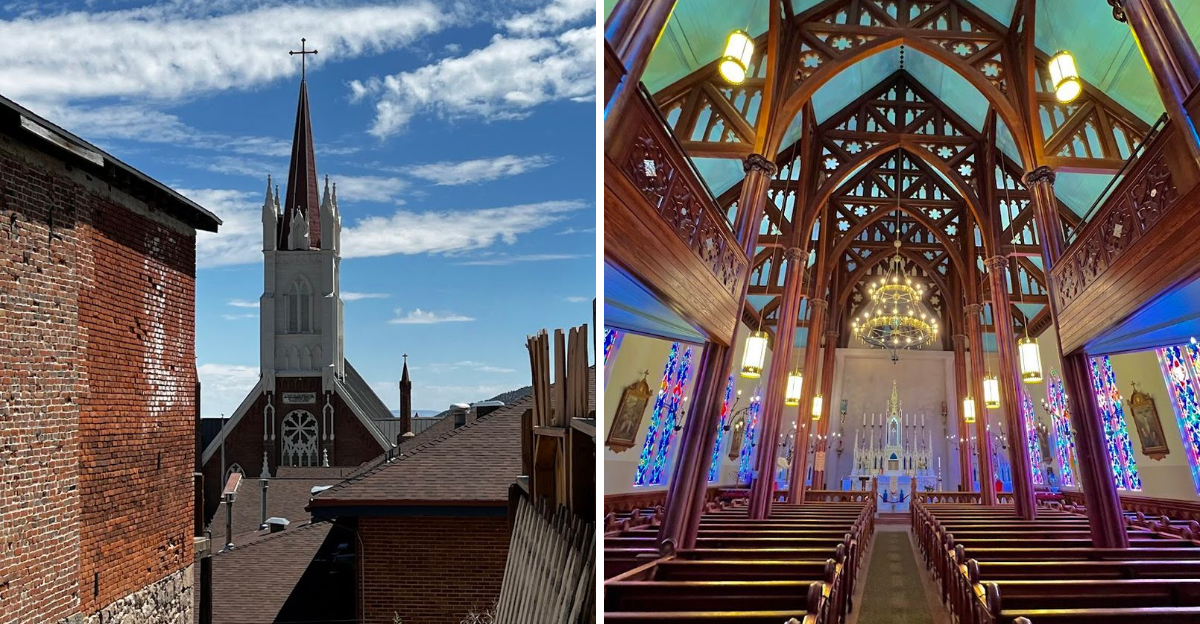
High above a former silver boomtown, an old church still carries the drama of Nevada’s mining days. Its walls hold stories of immigrant families, Sunday services, hard work, fire, loss, and stubborn rebuilding.
The Comstock era brought fortunes fast, but it also brought chaos, crowded streets, and the constant risk of everything changing overnight. After flames tore through town in the 1870s, worshippers did not simply walk away.
They rebuilt, returned, and left behind a place that still feels charged with grit and faith. Step inside, and the Old West feels less like a movie set and more like a lived-in memory.
You can almost imagine miners settling into pews during long Sunday mornings while lamplight flickered across the sanctuary.
Nevada’s Oldest Active Catholic Church Still Welcomes Worshippers
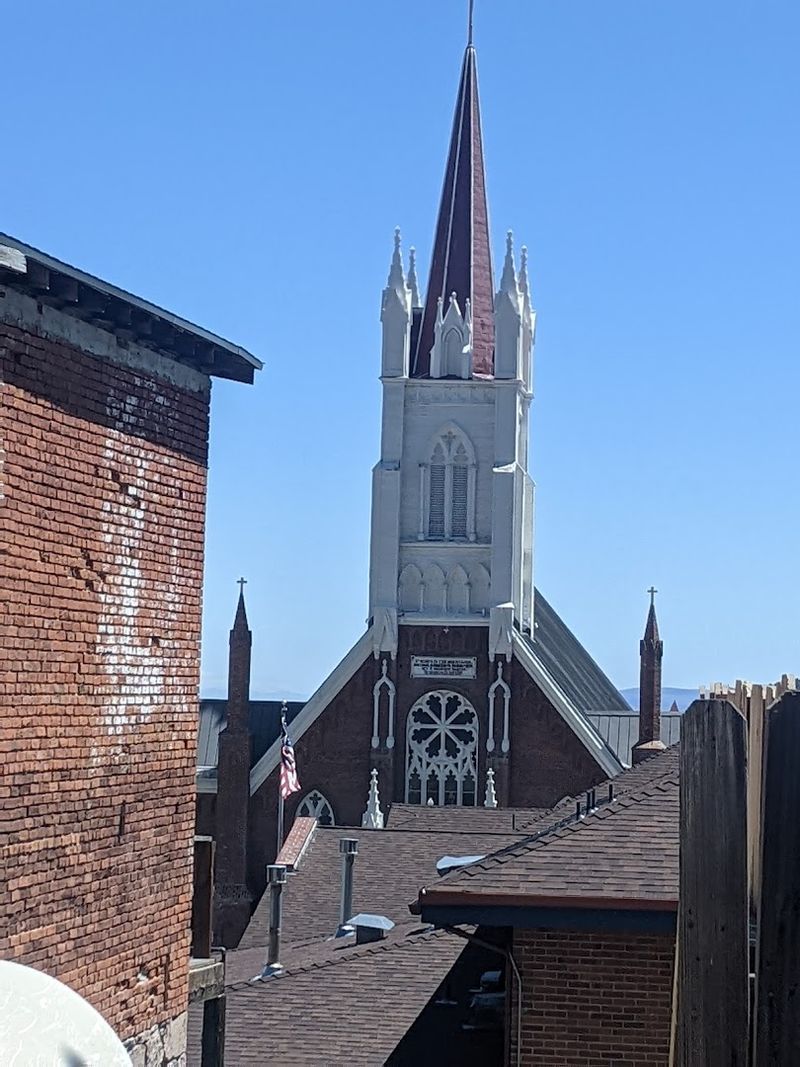
St. Mary’s in the Mountains holds the distinction of being Nevada’s oldest continuously operating Catholic church. Mass has been celebrated here since the earliest days of the Comstock mining boom, making it a living connection to the state’s frontier past.
The congregation that gathers here today walks the same aisles their ancestors did over a century ago.
Located at 111 E St in Virginia City, the church continues its ministry to residents and visitors alike. Services follow the same traditions established by pioneer priests who served rough mining camps.
The building functions as both an active house of worship and a window into Nevada’s religious heritage.
This dual role makes St. Mary’s unique among western churches. Visitors can attend services or simply explore the sanctuary between worship times.
The church welcomes anyone interested in experiencing a piece of authentic frontier Catholicism.
The Present Church Is The Fourth Built By The Congregation
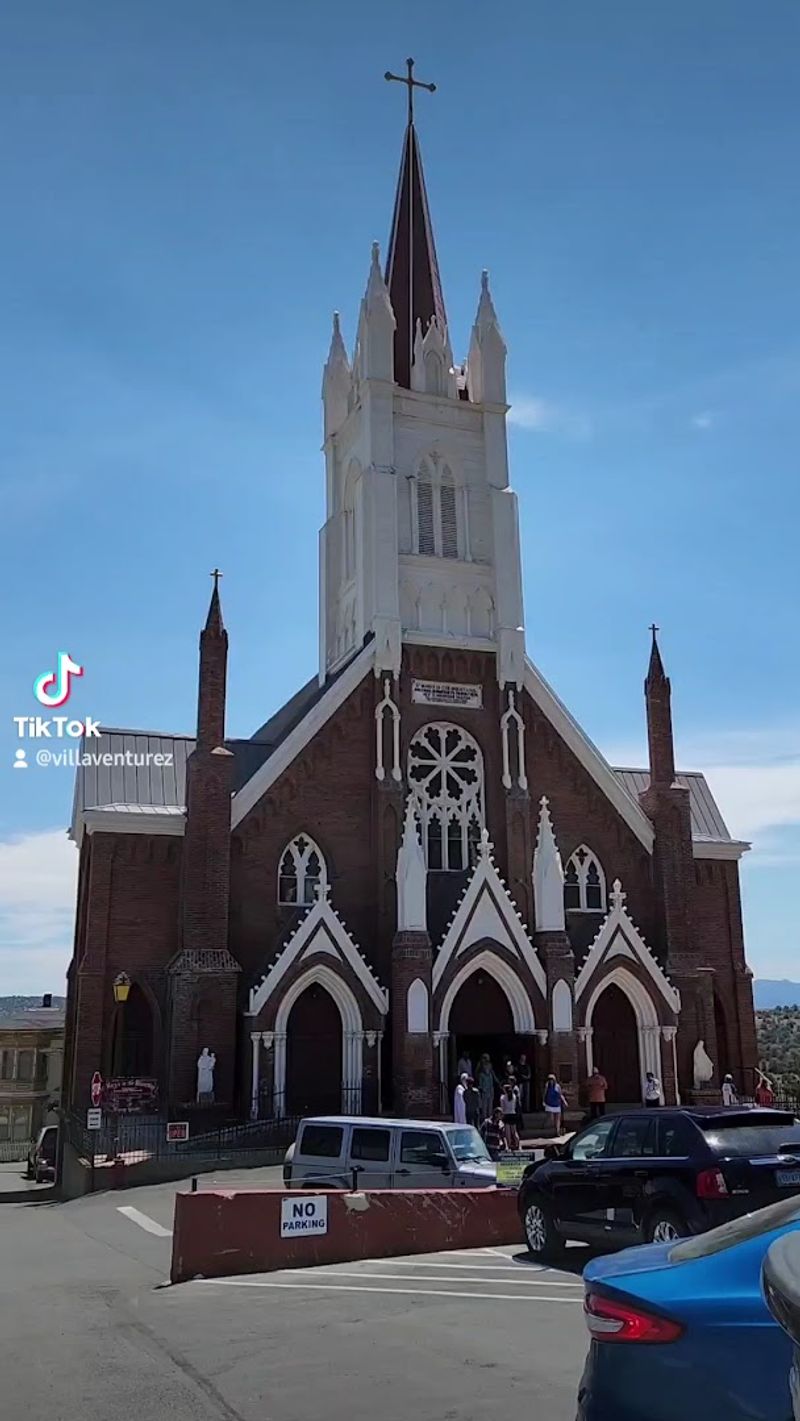
Before the current structure took its place on the hillside, three earlier churches served Virginia City’s Catholic community. Father Hugh Gallagher opened the first modest building in 1860, only to watch winter winds tear it apart.
His determination led to a second attempt, but the congregation quickly outgrew that space as silver strikes brought thousands to the Comstock.
Father Patrick Manogue erected a third church in 1864, moving the location one block from the original site. That building served faithfully until the catastrophic fire of 1875 swept through Virginia City.
The present church, originally constructed in 1868, underwent significant rebuilding after the flames damaged it severely.
Each iteration reflected the growing prosperity and permanence of the mining community. The progression from simple structure to Gothic masterpiece mirrors Virginia City’s own transformation from tent camp to established town.
The Great Fire Of 1875 Nearly Erased It From Virginia City
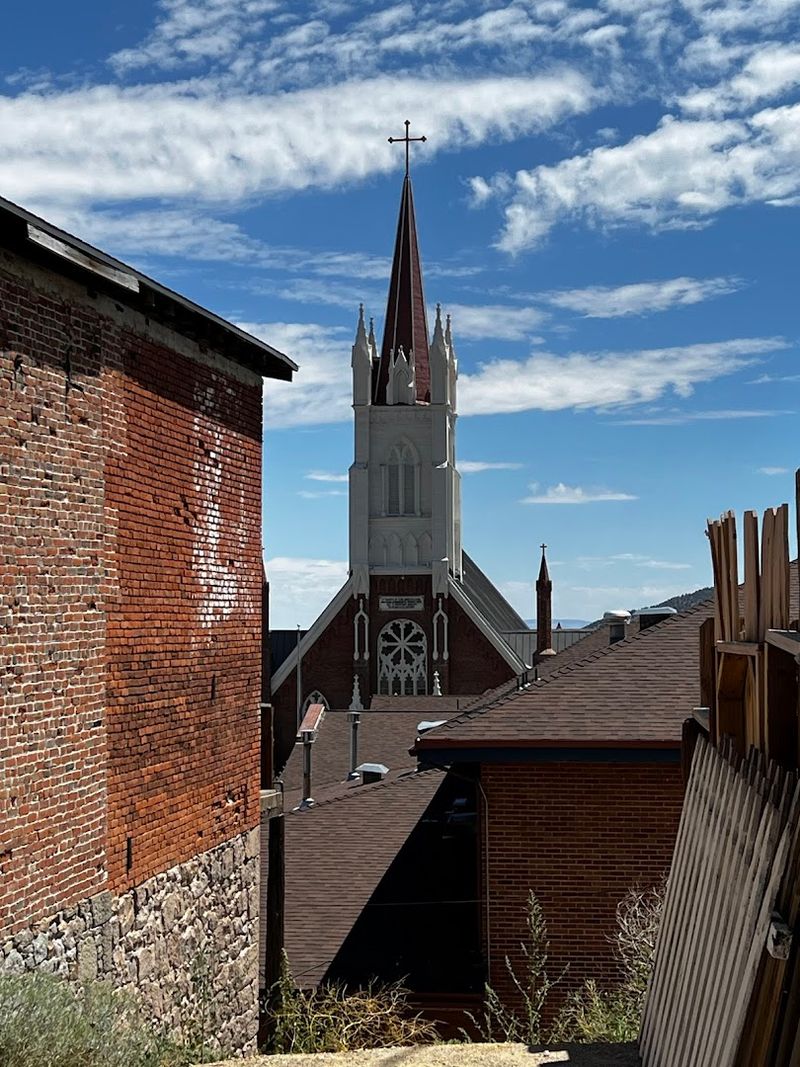
October 26, 1875 brought disaster to Virginia City when flames erupted and spread with terrifying speed. The fire consumed block after block of wooden buildings, driven by strong winds that turned the town into an inferno.
St. Mary’s stood directly in the path of destruction, and parishioners watched helplessly as their beloved church suffered severe damage.
The blaze destroyed roughly two thousand buildings across Virginia City’s commercial and residential districts. Families lost homes, businesses disappeared, and community landmarks turned to ash.
The Catholic church, though damaged, fared better than many structures that vanished completely.
Survivors faced a choice between abandoning the fire-scarred town or rebuilding from the ruins. The congregation of St. Mary’s chose resilience.
Their decision to restore the church helped anchor the community during its darkest hour and demonstrated faith that Virginia City would rise again.
The Church Rose Again And Was Dedicated In 1877
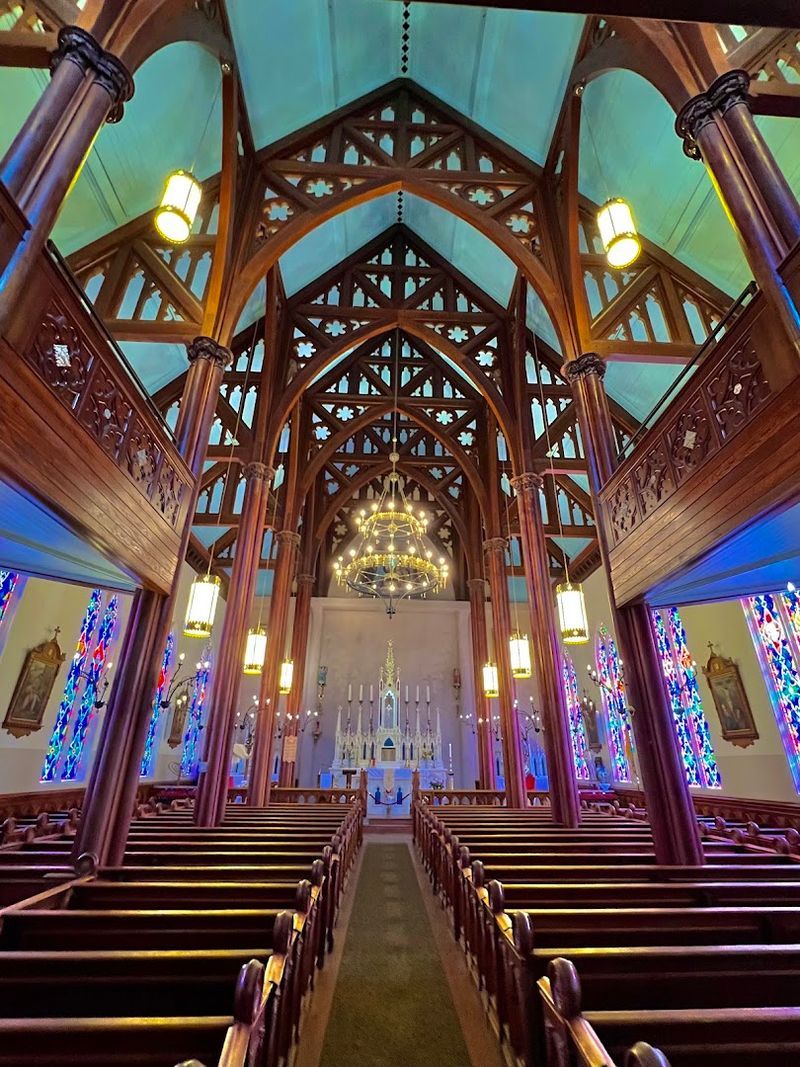
Reconstruction began almost immediately after the 1875 fire stopped burning. Workers cleared debris, salvaged what materials they could, and started rebuilding the damaged sections.
The congregation poured resources and labor into restoring their spiritual home, determined to create something even finer than before.
By 1877, the restored St. Mary’s stood ready for dedication. The rebuilt structure incorporated improvements and refinements that enhanced its Gothic beauty.
Parishioners who had worshipped in temporary quarters finally returned to a permanent sanctuary.
The dedication ceremony marked a turning point for Virginia City’s recovery. Other buildings had risen from the ashes, but the church’s completion symbolized hope and continuity.
Families who had considered leaving decided to stay, encouraged by the physical proof that their community would endure. The bells that rang on dedication day announced not just a restored church but a revitalized town.
Gothic Architecture Gives The Building Its Dramatic Appearance
St. Mary’s commands attention through its Gothic Revival design, a style that brought European elegance to the rough Nevada landscape. Pointed arches, steep roof lines, and vertical emphasis create an upward movement that draws the eye toward heaven.
The white exterior stands in brilliant contrast to the dusty brown hills surrounding Virginia City.
Tall windows punctuate the walls, their frames echoing the Gothic pointed arch motif. The bell tower rises above the main structure, visible from throughout the town.
Decorative trim and careful proportions elevate the building beyond simple frontier construction.
This architectural choice reflected the aspirations of Comstock miners who had struck it rich. They wanted their church to match the grandeur of cathedrals back east and in Europe.
The result feels both familiar and surprising, a refined design executed in wood rather than stone.
Thousands Of Comstock Residents Once Filled Its Pews
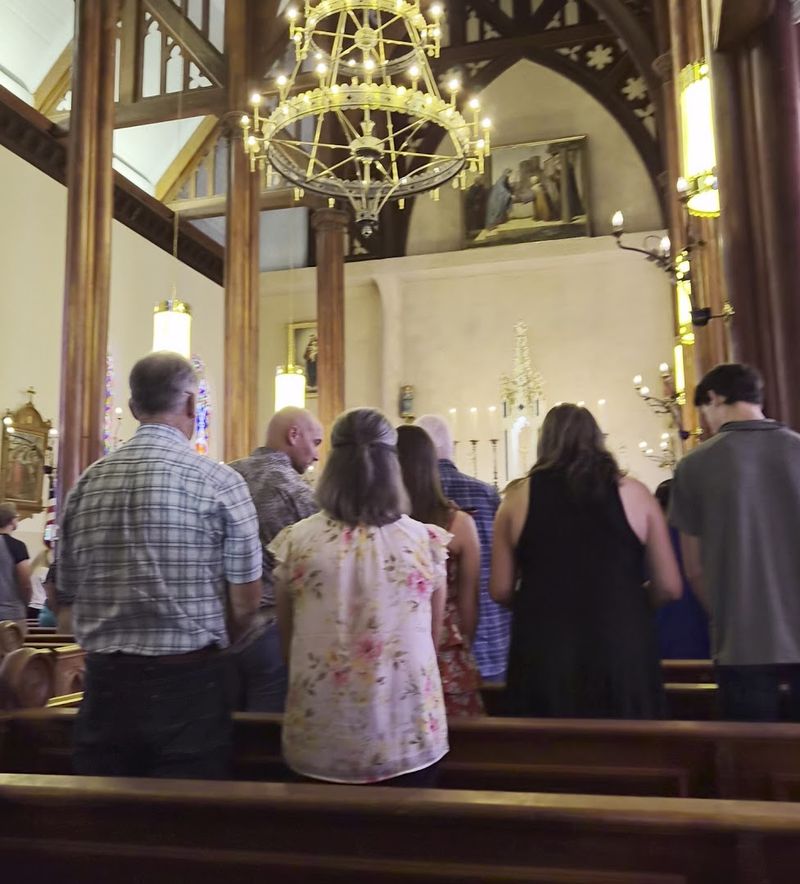
During the Comstock boom years, St. Mary’s struggled to accommodate everyone who wanted to attend Mass. Thousands of Catholic miners and their families crowded into Virginia City, and the church served as their spiritual and social center.
Sunday services saw standing room only, with overflow crowds spilling into the aisles.
The congregation represented a cross-section of mining society, from laborers to mine owners. Women in their finest dresses sat beside men still dusty from underground shifts.
Children fidgeted in pews while their parents prayed for safety in the dangerous mines.
Today the sanctuary feels spacious, a reminder of how dramatically Virginia City’s population has declined. The same pews that once barely held everyone now accommodate a much smaller community.
Walking through the quiet church, you can almost hear the echoes of those packed services.
Irish Italian And Mexican Families Helped Shape Its Early Story
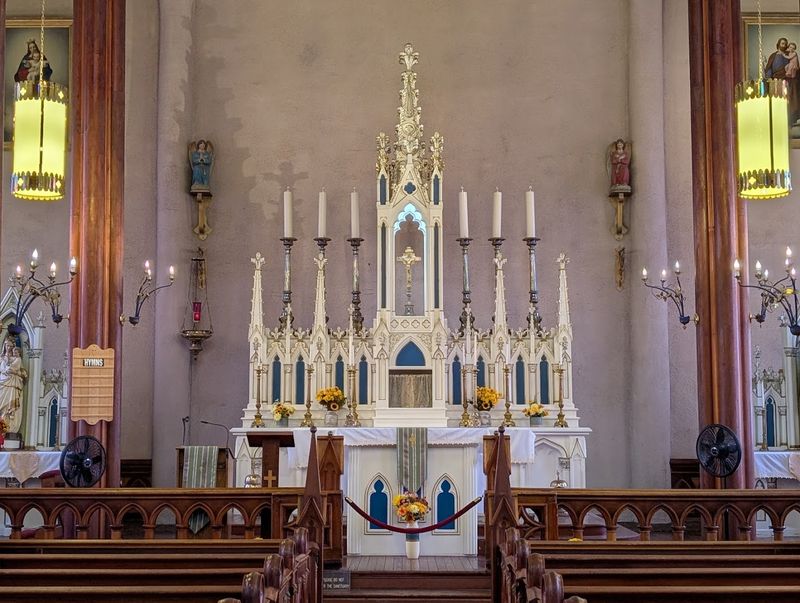
St. Mary’s congregation reflected the international character of Comstock mining camps. Irish immigrants arrived first, many bringing experience from California’s earlier gold rush.
Italian families followed, establishing businesses and joining the underground workforce. Mexican miners contributed skills learned in their homeland’s silver districts.
Each group brought distinct traditions that enriched parish life. Irish families organized charitable societies and social events.
Italian craftsmen contributed their talents to church decoration and maintenance. Mexican parishioners introduced devotional practices from their native regions.
This cultural blend created a vibrant community that transcended ethnic divisions. Baptisms, weddings, and funerals brought everyone together in shared faith.
The church became neutral ground where different nationalities found common purpose. Their collective efforts built and sustained St. Mary’s through boom times and economic collapse, creating a legacy that outlasted the silver that brought them here.
Colorful Stained Glass Fills The Interior With Light
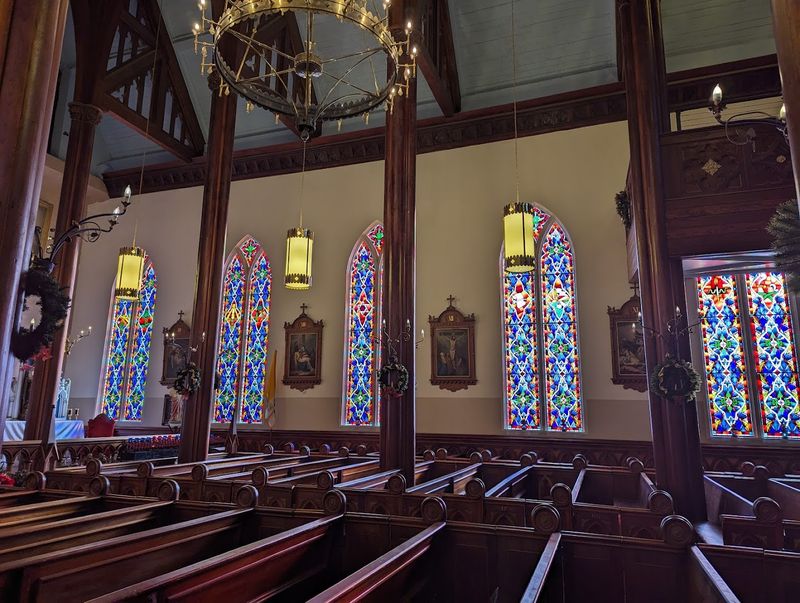
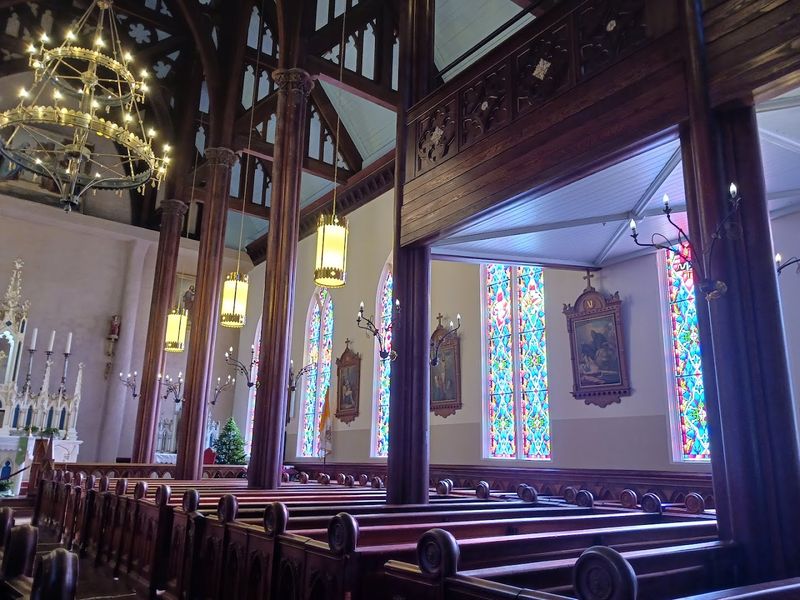
Sunlight transforms St. Mary’s interior as it passes through stained glass windows depicting saints and biblical scenes. The colored panes cast shifting patterns across wooden pews and whitewashed walls.
Morning light produces different effects than afternoon sun, creating an ever-changing display throughout the day.
Each window tells a story through carefully arranged glass pieces. Deep blues, rich reds, and brilliant golds combine in traditional religious imagery.
The craftsmanship reflects the congregation’s investment in beauty as well as function.
These windows served practical and symbolic purposes in frontier Nevada. They provided privacy while admitting light, and their religious subjects offered visual teaching tools for a congregation that included many who could not read.
Standing inside on a sunny day, surrounded by colored light, you understand why generations found inspiration here. The windows remain among the church’s most photographed features.
An Original Gas Chandelier Was Finally Electrified In 2009
Suspended from the ceiling hangs a chandelier that once burned gas to illuminate evening services. The fixture dates to the church’s nineteenth-century origins, when gaslight represented modern technology.
Miners who worked deep underground by candlelight appreciated the steady glow it provided during night services and special occasions.
For over a century, the chandelier remained in place but unused as the church switched to electric lighting. Preservationists hesitated to modify the historical fixture.
Finally, in 2009, skilled craftsmen found a way to electrify it while maintaining its original appearance.
The conversion required careful work to install wiring without damaging ornate metalwork. Now the chandelier functions again, providing both light and a tangible connection to gas-lit evenings when miners gathered after their shifts.
Looking up at it, you see the same fixture that illuminated weddings and Christmas masses during Virginia City’s glory days.
A Baptismal Font Survived The Devastating 1875 Fire
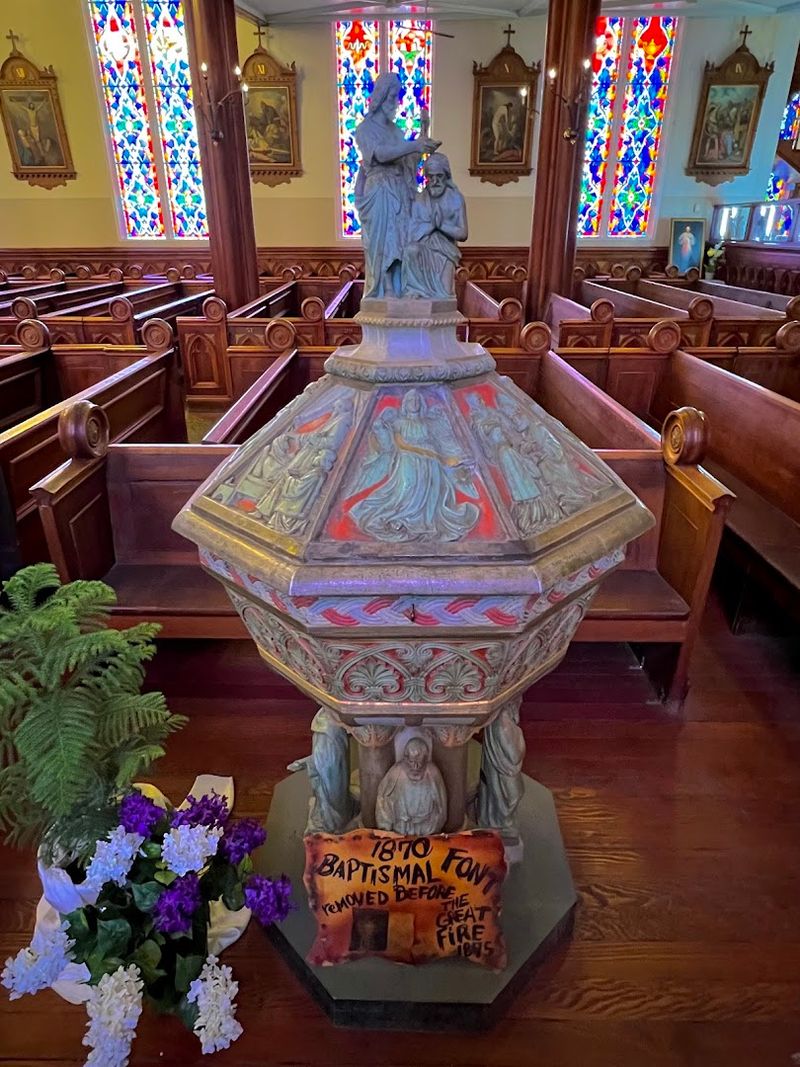
Among the few items rescued from the 1875 fire stands a baptismal font that continues its sacred function today. The basin shows no visible fire damage, suggesting parishioners carried it to safety as flames approached.
Countless infants have been baptized in this font across five generations.
The font’s survival carries symbolic weight for the congregation. While buildings burned and possessions turned to ash, this essential liturgical object endured.
Its preservation seemed to promise that the church itself would survive and continue its mission.
Examining the font reveals craftsmanship typical of frontier religious furnishings. Simple but dignified, it reflects the practical aesthetics of mining town Catholicism.
Parents who bring children for baptism today use the same font their great-great-grandparents did. The worn surface bears witness to over a century of sacramental use, making it one of St. Mary’s most precious historical treasures.
The Lower Level Museum Preserves Nevada’s Catholic History
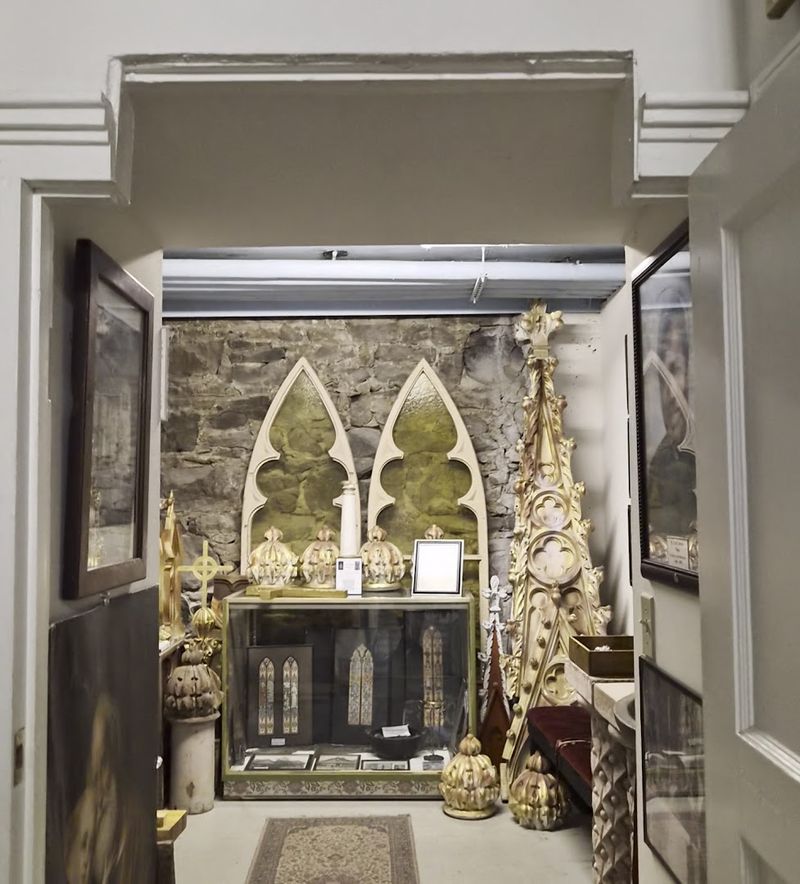
Descending to the church basement reveals a museum documenting Nevada’s Catholic heritage from frontier days forward. Display cases hold vestments worn by early priests, liturgical objects from vanished mining camp churches, and photographs of long-ago congregations.
The collection extends beyond St. Mary’s to encompass Catholic history across the state.
Artifacts include items that survived church closures when mining towns became ghost towns. Chalices, candlesticks, and altar cloths found new homes here after their original parishes disappeared.
Historical photographs show churches that no longer exist and priests who served isolated communities.
The museum operates free of charge, welcoming anyone interested in frontier religious life. Volunteers maintain the displays and can explain the significance of various items.
Visitors often spend more time in the museum than they planned, drawn into stories of faith practiced under challenging circumstances. The collection preserves memories that might otherwise have vanished with Nevada’s ghost towns.
Visitors Can Enter The Church And Museum Without Paying Admission
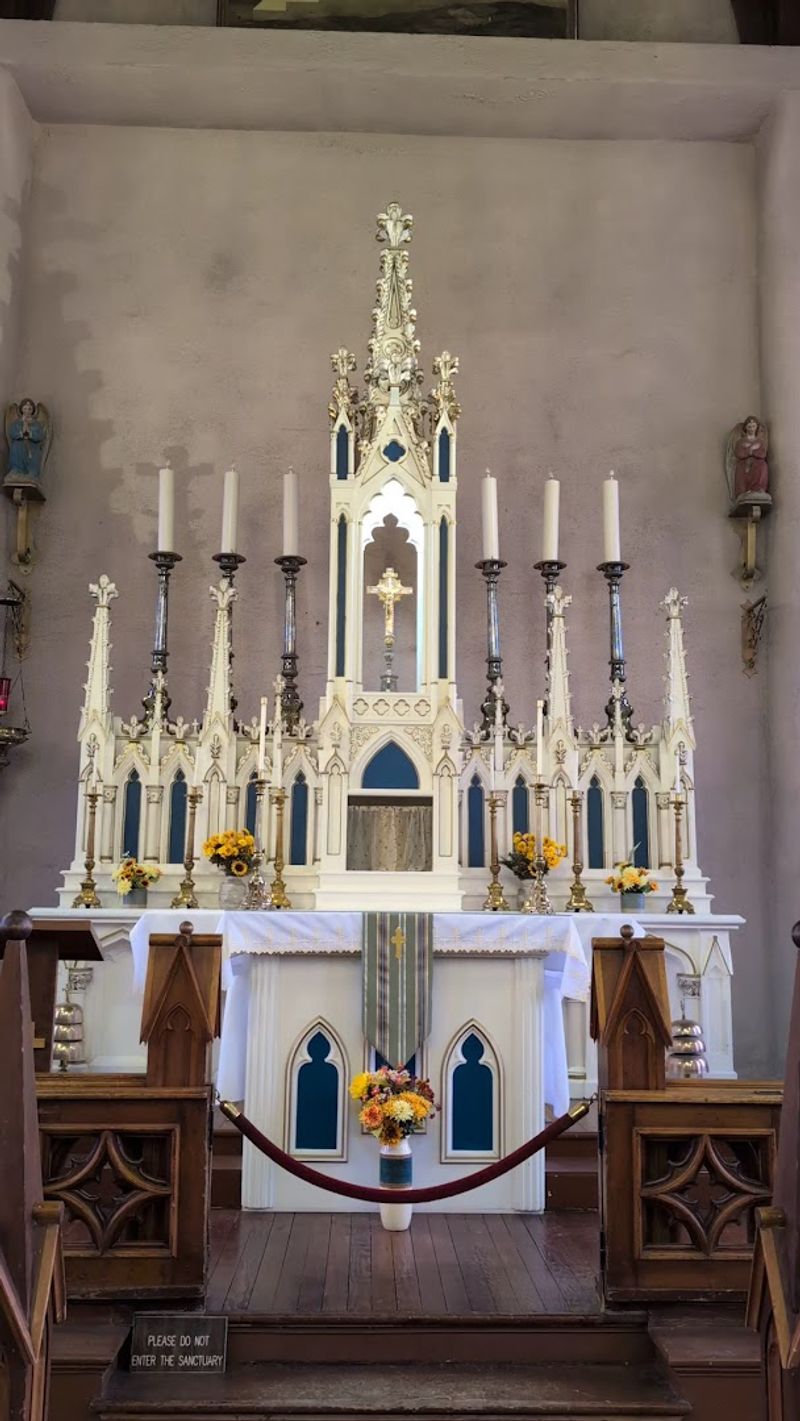
St. Mary’s maintains an open-door policy that welcomes visitors regardless of their ability to contribute financially. No admission fee restricts access to the sanctuary or museum.
This generosity reflects the church’s mission to share its history and beauty with everyone who makes the journey to Virginia City.
A small gift shop near the entrance offers postcards, candles, and other items for those who wish to support the church’s preservation. Purchases help fund ongoing maintenance of the aging building.
Staff members often share historical information and answer questions about the church and town.
The free admission policy means anyone can experience this National Catholic Historical Site. Families on tight budgets, curious passersby, and dedicated history enthusiasts all receive the same warm welcome.
This accessibility ensures St. Mary’s continues serving the public as it has for over a century, offering beauty and historical connection without financial barriers.