
New York Has Glacial Boulders Sitting In The Middle Of City Streets That Settlers Built Around Rather Than Move
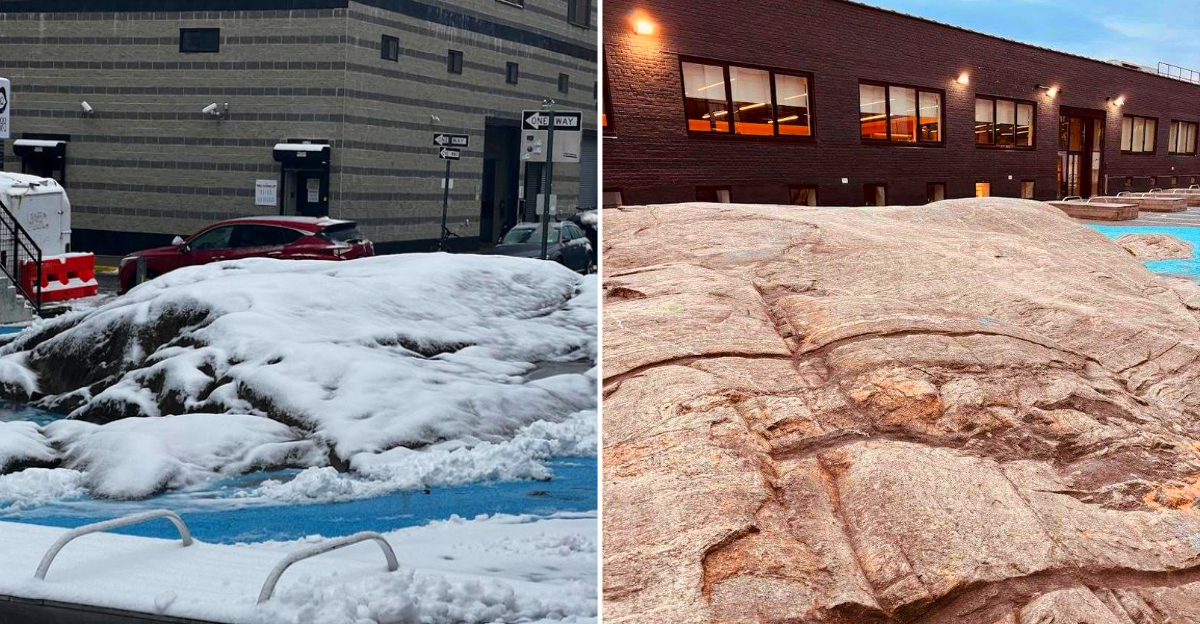
New York is famous for building upward, but one of its strangest landmarks proves the city also knows when to build around something.
In Long Island City, Queens, an enormous glacial boulder still sits where generations of planners, builders, and residents simply learned to live with it.
Cars pass nearby, sidewalks bend around it, and daily life moves on beside a rock that existed long before streets, subway lines, brownstones, or the skyline itself. One minute you are in the middle of ordinary city traffic.
The next, you are standing beside a relic shaped by ancient geology and stubborn enough to outlast every human plan around it.
New York has plenty of monuments, but this one was not built by anyone. It was left behind by ice, time, and a city that decided moving it was not worth the fight.
A Rock That Rewrites The Rules Of City Planning
Most cities pave over everything in their path. New York had other plans, at least when it came to one very stubborn piece of the Earth.
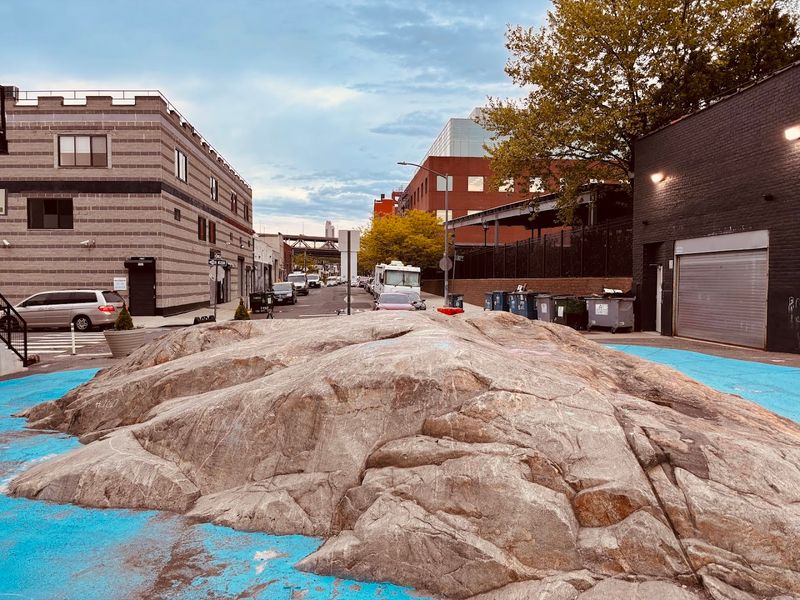
A colossal slab of rock, roughly 500 million years old, refused to cooperate with urban development, and the city eventually learned to respect that.
The rock is not a transported boulder that landed here by accident. Geologists identify it as an outcropping of bedrock, a piece of the planet’s deep foundation that was exposed and shaped by the Wisconsin Ice Sheet somewhere between 18,000 and 20,000 years ago.
That glacial force carved, smoothed, and polished it into the form you see today.
Measuring approximately 55 feet long, 12 feet wide, and standing about 9 feet tall, the rock commands serious attention. Early city planners looked at it, looked at their budgets, and collectively decided that moving it was simply not worth the effort.
A 1919 work order even referenced discussions about rerouting the street grade just to avoid dealing with it. Smart call, honestly.
Ancient Glacier Rock At 43-30 12th Street
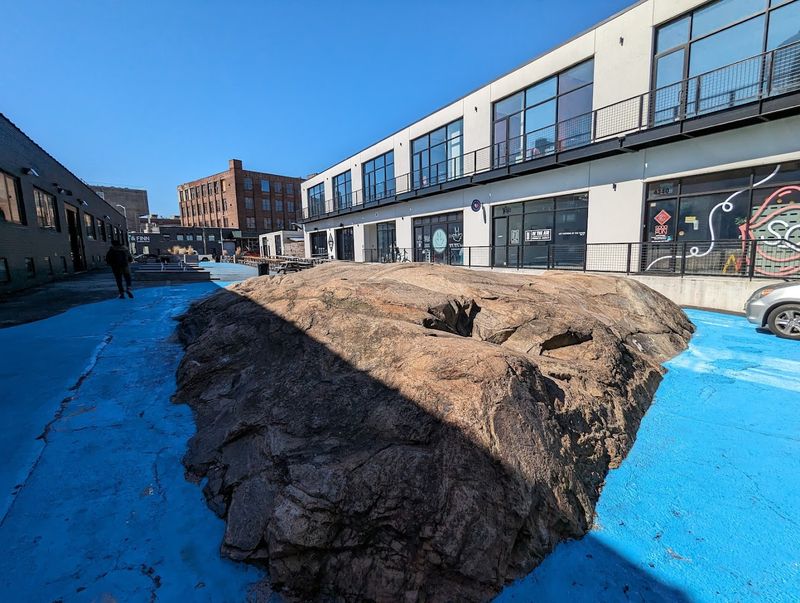
Right in the middle of a Queens block, between 44th Avenue and 43rd Road on 12th Street, sits one of the most quietly extraordinary spots in New York City.
The Ancient Glacier Rock at 43-30 12th Street, Long Island City, NY 11101 is open 24 hours a day, every single day of the year, and admission costs exactly nothing.
For most of its urban life, the rock simply blocked traffic and confused drivers.
That changed in 2019 when the Department of Transportation partnered with the VOREA Group and the Street Seats program to transform the surrounding stretch of 12th Street into a pedestrian plaza.
The design was handled by MAPOS Architecture, and the inspiration came from Christo and Jeanne-Claude’s 1983 art installation called Surrounding Islands.
A vivid neon blue outline now traces the rock’s perimeter, giving it an almost otherworldly glow after dark. Picnic tables, comfortable seating, and planters fill the space around it, turning what was once a traffic obstacle into a genuine community gathering spot.
The rock holds a 4.5-star rating, which is genuinely impressive for a piece of gneiss.
Half A Billion Years Of Geological History
Gneiss is not the flashiest word in geology, but it describes something genuinely remarkable.
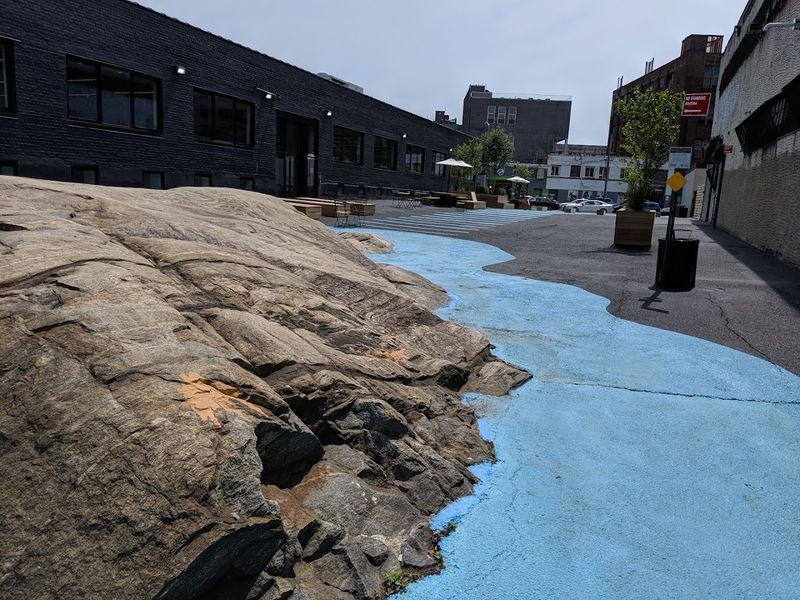
The Ancient Glacier Rock is composed of this metamorphic stone, formed deep within the Earth under extreme pressure and heat, and it has been around for approximately 500 million years.
For context, that predates dinosaurs by a comfortable margin.
The Wisconsin Ice Sheet, a glacier that once stretched across much of North America, is responsible for the rock’s current appearance.
As that massive sheet of ice advanced and retreated, it scraped across the bedrock surface, leaving behind smooth contours and faint striations that geologists can still read today.
The ice originated from regions now known as New England and Canada, and it reshaped the entire landscape of what eventually became New York City.
What makes the Ancient Glacier Rock particularly special is that it is not a glacial erratic, which is a boulder carried and dropped by a glacier from somewhere else. The rock is actual bedrock, meaning it belongs to the very foundation of this land.
The glacier revealed it rather than deposited it. That distinction makes it a rarer and more significant geological feature than most people realize.
When Settlers Chose Nature Over Demolition
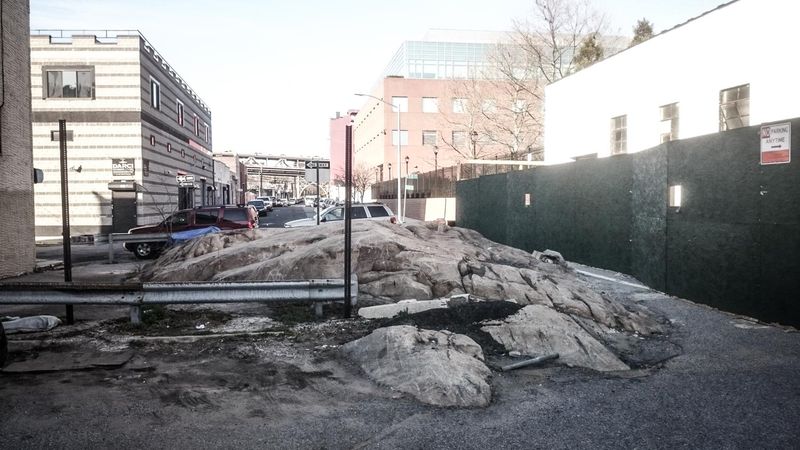
Early Long Island City was a place of rapid industrial growth, and the pressure to pave, build, and connect streets was intense. When workers encountered the Ancient Glacier Rock, the obvious question was how to get rid of it.
The answer, after careful consideration, was that they simply would not.
Moving or demolishing a rock of that size would have required enormous effort and expense. A documented 1919 work order shows that city officials seriously discussed altering the street grade around the rock rather than attempting its removal.
That pragmatic decision turned out to be one of the more accidentally brilliant choices in the neighborhood’s history.
For decades, the rock sat in the road, splitting traffic flow and baffling newcomers who had no idea why a street suddenly ended at a boulder. It was an inconvenience that became a landmark.
The choice to work around nature rather than bulldoze through it reflects a kind of accidental wisdom that modern urban planning often tries to recreate deliberately.
New York, in this particular case, got it right the first time purely out of practicality.
The Plaza That Turned A Problem Into A Place
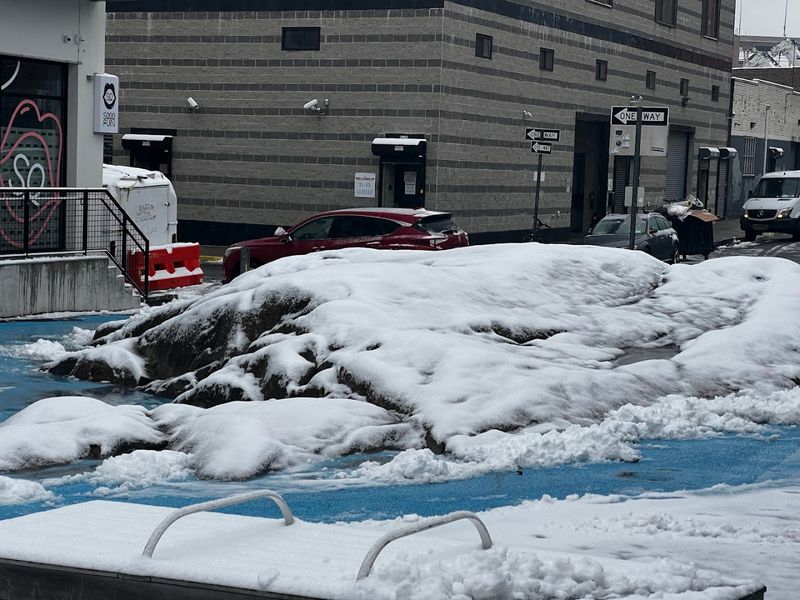
Few urban transformations are as satisfying as watching a neglected eyesore become a beloved community space. The 2019 redesign of the area surrounding the Ancient Glacier Rock is exactly that kind of story.
What had been a crumbling, underused stretch of road became a thoughtfully designed pedestrian plaza that people actually want to spend time in.
MAPOS Architecture led the design work, drawing inspiration from the 1983 Christo and Jeanne-Claude installation Surrounding Islands, in which bright fabric was draped around islands in Biscayne Bay, Florida.
Translating that concept to a Queens street, the designers used a striking neon blue outline to frame the ancient rock, creating a visual contrast between the prehistoric and the contemporary that feels both playful and respectful.
The plaza now features picnic tables, seating areas, and planters that soften the hard urban edges around the rock. Residents use the space for casual gatherings, lunch breaks, and quiet moments away from the city’s constant motion.
The Department of Transportation’s Street Seats program made the conversion possible, and the result is a public space that earns its place in the neighborhood.
It is proof that good design can honor history while creating something genuinely useful.
Long Island City As Your Backdrop

The neighborhood surrounding the Ancient Glacier Rock is worth exploring on its own terms.
Long Island City has gone through one of the more dramatic reinventions of any New York neighborhood, shifting from a heavy industrial zone into one of the borough’s most energetic and culturally rich areas.
The contrast between its gritty past and its current vitality is part of its appeal.
Gantry Plaza State Park sits along the East River waterfront and offers some of the most striking views of the Manhattan skyline available anywhere in the city.
Restored gantry cranes from the neighborhood’s industrial era stand along the waterfront as sculptural reminders of what this place used to be.
Hunter’s Point South Park extends the promenade further south, giving visitors more space to walk, sit, and take in the water.
MoMA PS1, one of the most respected contemporary art centers in the country, calls Long Island City home. The building itself is a former public school, and the exhibitions inside consistently push boundaries.
The streets between the rock and these destinations are lined with repurposed factory buildings, independent restaurants, and coffee shops that reflect the neighborhood’s ongoing evolution. Queens delivers variety in a way few places can match.
How To Make The Most Of Your Visit
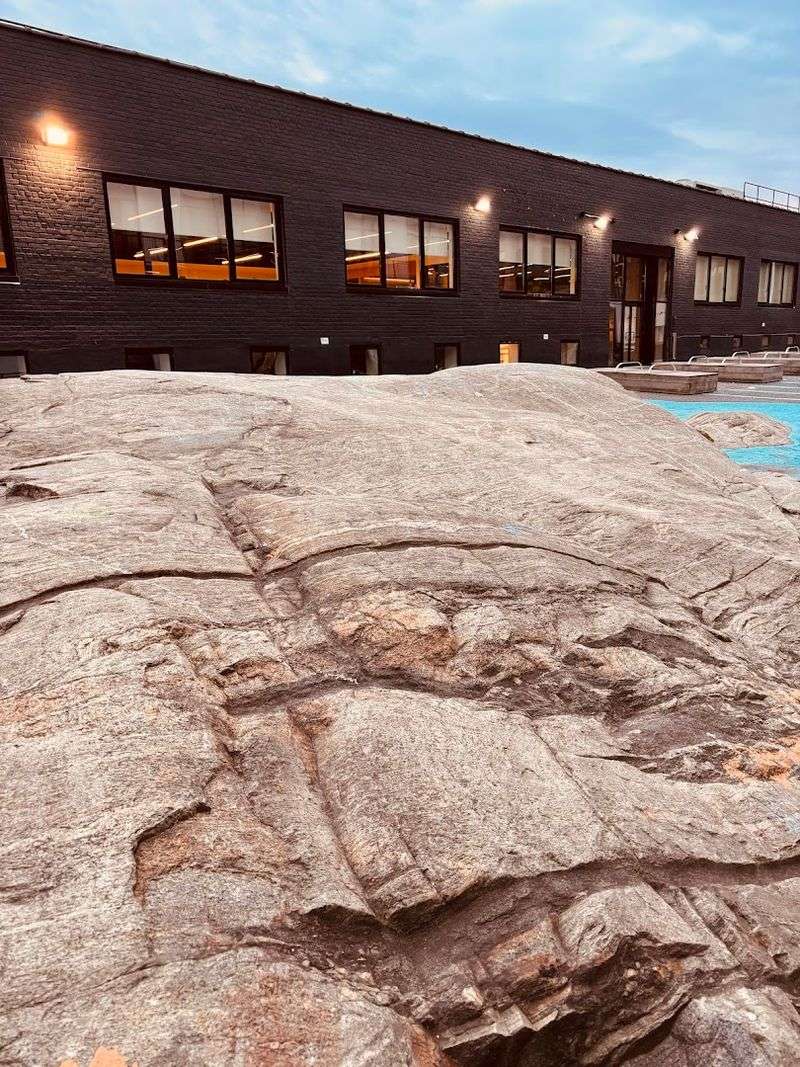
Getting to the Ancient Glacier Rock is straightforward from most parts of New York City. The 7 train stops at 33rd Street in Queens, and from there the walk to 12th Street takes about ten minutes through a neighborhood that rewards attention.
Comfortable shoes are a reasonable choice if you plan to explore the waterfront parks afterward.
The rock is accessible at any hour, so early mornings offer a quieter experience while evenings bring out the neon blue glow that makes the plaza feel like a different place entirely after dark.
Bringing a camera is worth the effort because the contrast between the ancient stone and the surrounding urban grid is a genuinely compelling visual.
Plan to spend time in the surrounding area rather than treating the rock as a quick stop. Gantry Plaza State Park is a short walk away and pairs well with the geological history lesson the rock provides.
MoMA PS1 is also nearby for anyone who wants to continue the theme of unexpected encounters with remarkable things. The Ancient Glacier Rock is the kind of destination that works best when you give it room to breathe.
Let the neighborhood tell the full story, and you will leave Long Island City with something more than a photo.