
One Man Spent 40 Years Carving A Garden Underground In California And The Result Is Breathtaking
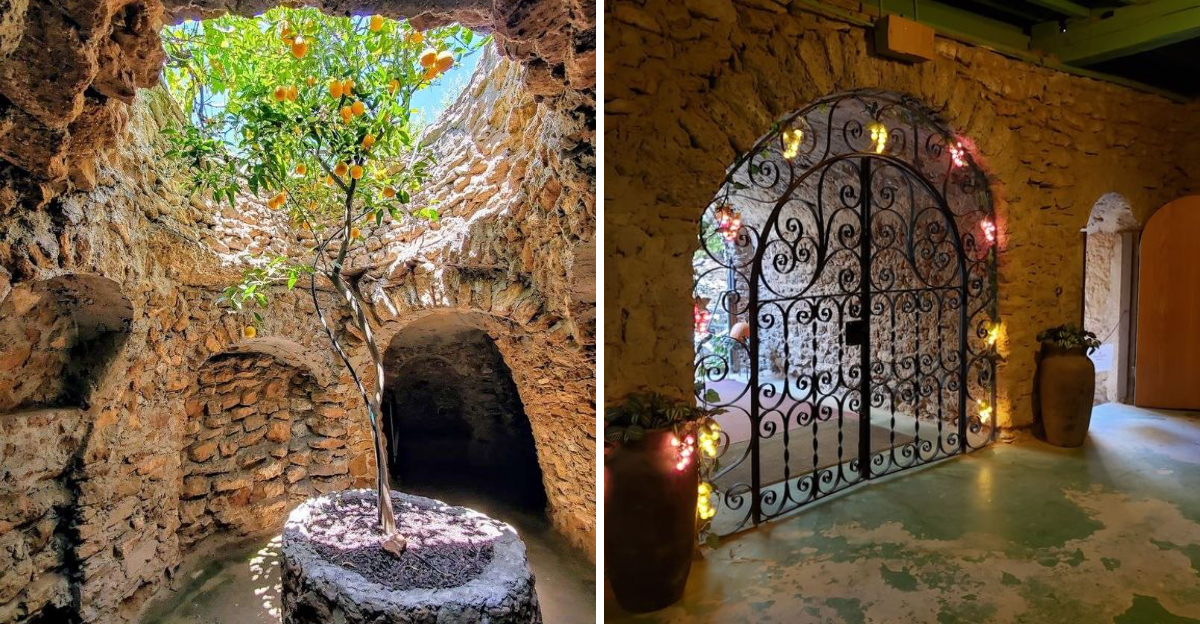
Few places in California reward curiosity the way this one does. Most people drive right past it without a second thought.
Beneath an ordinary city street in the Central Valley, one Sicilian immigrant carved an entire underground world by hand over four decades. We are talking tunnels, grottoes, courtyards, and fruit trees that grow below the surface and still produce today.
Rooms branch into more rooms. Down it goes across three separate levels.
The architecture pulls from ancient Roman catacombs, the microclimate keeps the air noticeably cool, and every inch was built without a single blueprint. It is the kind of place that leaves you quietly amazed long after the tour ends.
Book a guided visit and let California do what it does best.
The Extraordinary Story Behind The Underground Gardens
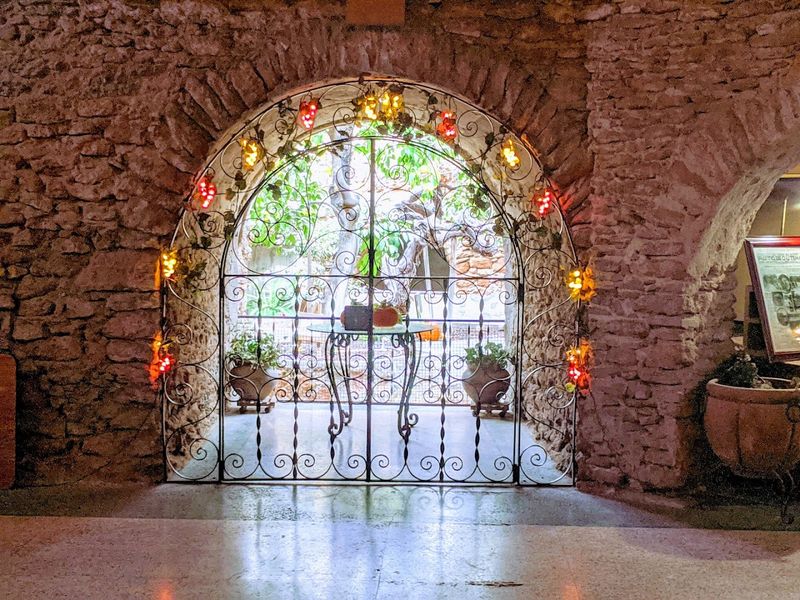
Hard soil stopped a lot of dreamers in the early 1900s. It did not stop one determined Sicilian immigrant who arrived in California with big plans and found the land nearly impossible to farm.
The ground beneath Fresno, California is notorious for its hardpan, a dense, rock-like layer just beneath the surface that makes traditional farming brutal. Instead of walking away, the creator of what would become the Forestiere Underground Gardens made a radical decision.
He would go underground.
Starting in 1906, he began carving rooms, tunnels, and courtyards beneath his property by hand. He used only basic tools like shovels, picks, and a wheelbarrow.
Mules helped occasionally, but the vision and the labor were almost entirely his own.
He worked without blueprints. Every room, arch, and passageway came straight from his imagination.
By the time construction ended with his passing in 1946, he had created something that California had never seen before and has not seen since.
What It Feels Like To Step Below The Surface
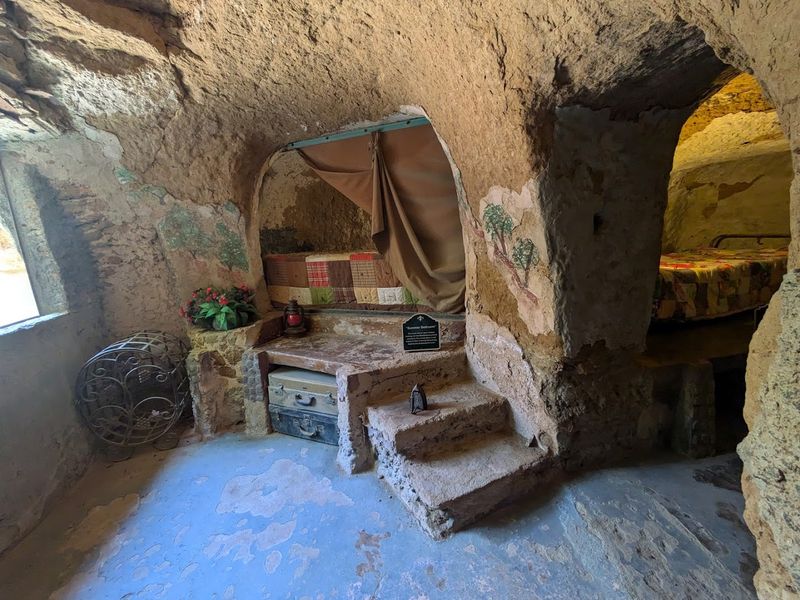
The moment you descend below street level at 5021 W Shaw Ave in Fresno, California, the temperature drops noticeably. On a scorching Central Valley summer day, that shift feels almost surreal.
The underground environment maintains temperatures roughly 10 to 20 degrees cooler than the surface during summer months. That was entirely intentional.
The builder designed his subterranean home to be a livable, breathable refuge from the punishing California heat.
Stone archways frame every turn. The pathways vary in width, which was not an accident.
The widths were carefully calculated to maximize airflow through the entire complex.
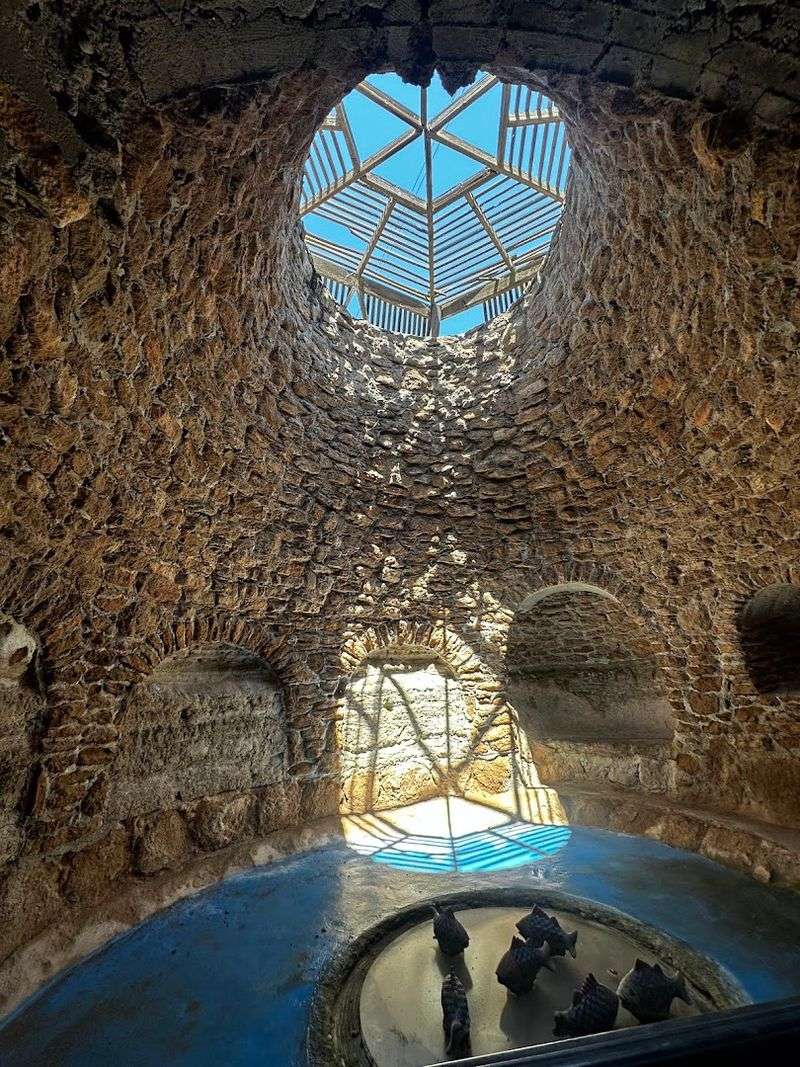
Natural light enters through skylights carved into the ceiling above, casting soft, shifting patterns across the stone walls and floors. Rainwater follows the same paths, feeding the plants and trees growing far below ground level.
The atmosphere is unlike anything above the surface. It feels ancient, calm, and almost cathedral-like in certain rooms.
Visitors often describe the experience as stepping into a completely different world hidden just beneath ordinary California life.
The Roman Inspiration That Shaped Every Arch And Dome
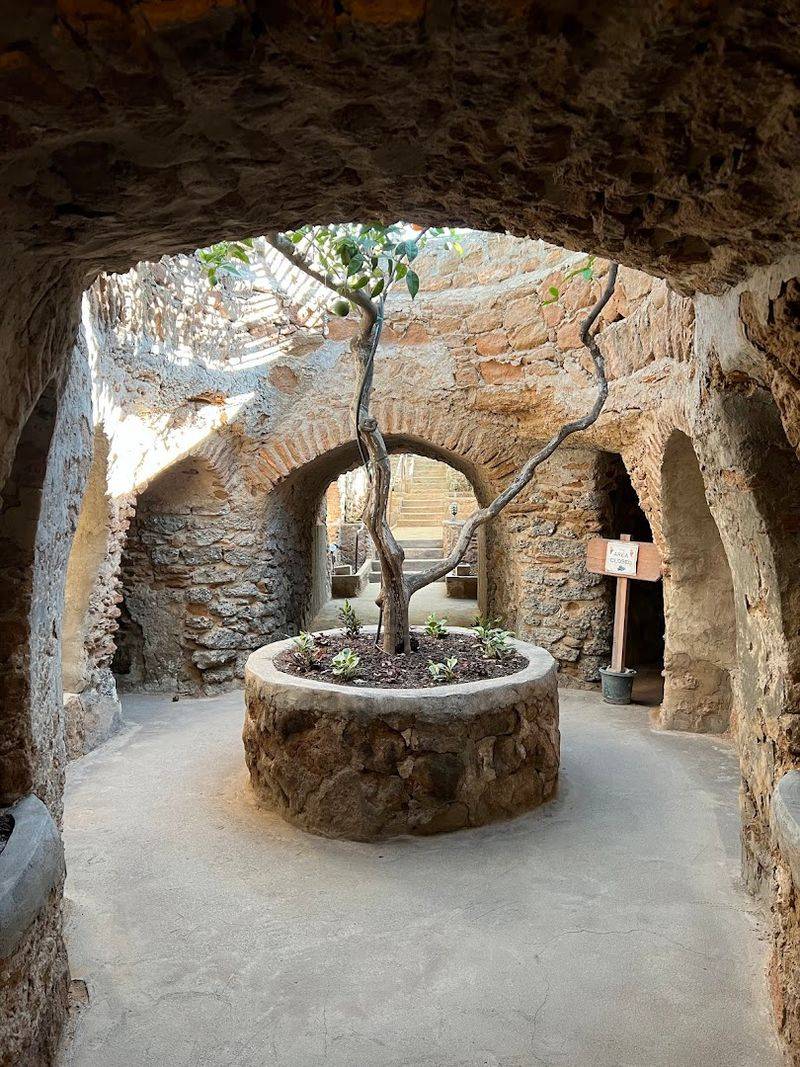
Growing up in Sicily, the builder had seen ancient Roman architecture up close. Catacombs, wine cellars, and stone archways were part of everyday life in that part of Italy.
When he began carving into the hardpan beneath Fresno, those images stayed with him. The result is a subterranean complex that feels less like a garden and more like an ancient Roman settlement hiding beneath California soil.
Roman arches appear throughout the tunnels and rooms. Columns support domed ceilings.
The hardpan itself, the very material that made farming so difficult, became the building block for everything.
Rather than hauling in outside materials, he sculpted the excavated earth into structural forms. The arches are not decorative extras.
They carry real weight and have done so for over a century without cracking.
The craftsmanship is especially striking given that no formal engineering training was involved. Pure observation, memory, and instinct guided every curve.
The Roman influence gives the gardens an air of timeless elegance that feels completely out of place beneath a Central Valley neighborhood, in the best possible way.
Fruit Trees Growing Underground, And Actually Producing
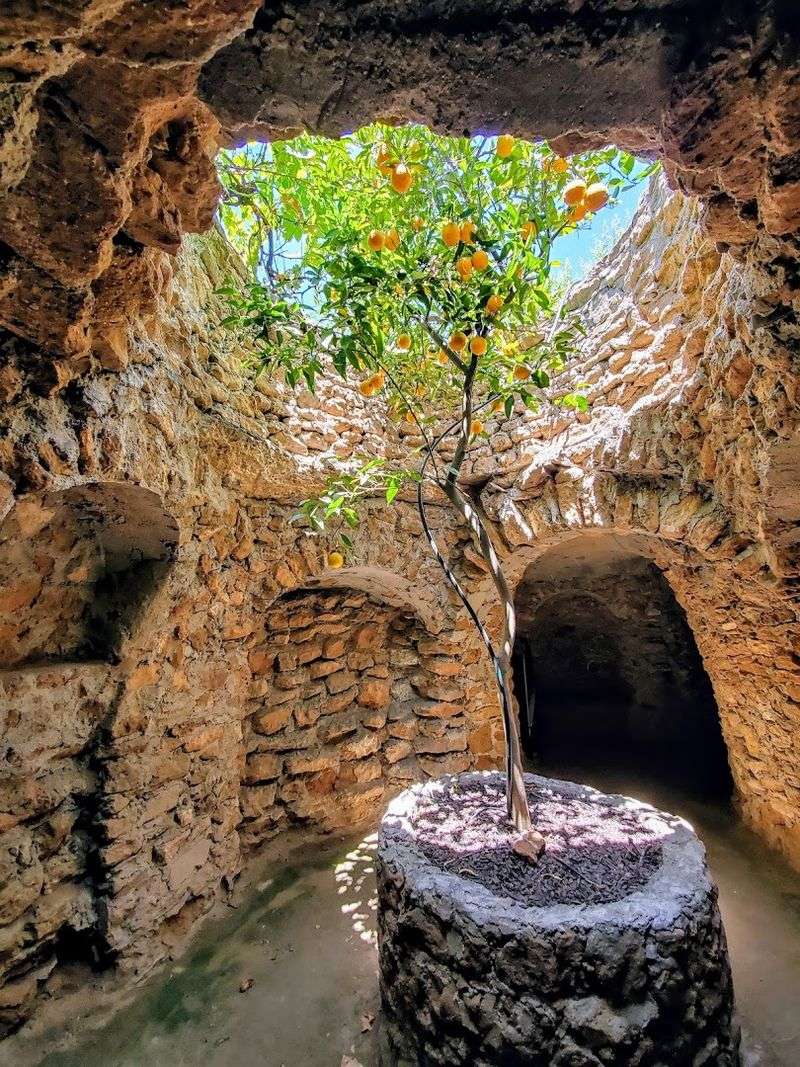
Fruit trees growing underground sounds like a riddle. At the Forestiere Underground Gardens, it is simply Tuesday.
The complex is home to dozens of fruit-bearing trees and vines, many of which are over a century old. Citrus varieties thrive down here.
So do kumquats, loquats, jujubes, quinces, dates, and grapes. The skylights deliver just enough sunlight to keep them alive and productive.
One of the most talked-about features is a single tree grafted to produce multiple types of fruit. Lemons, oranges, and grapefruit growing from the same trunk is the kind of thing that makes visitors stop mid-sentence.
The underground microclimate plays a huge role in this. Summer heat never reaches the roots.
Winter frost cannot touch the branches. The plants live in a protected environment that the surface world simply cannot offer.
The builder was not just an artist or an architect. He was a serious horticulturist who figured out how to make the most stubborn land in California bloom, just from a very unexpected direction.
The Scale Of What One Person Built By Hand
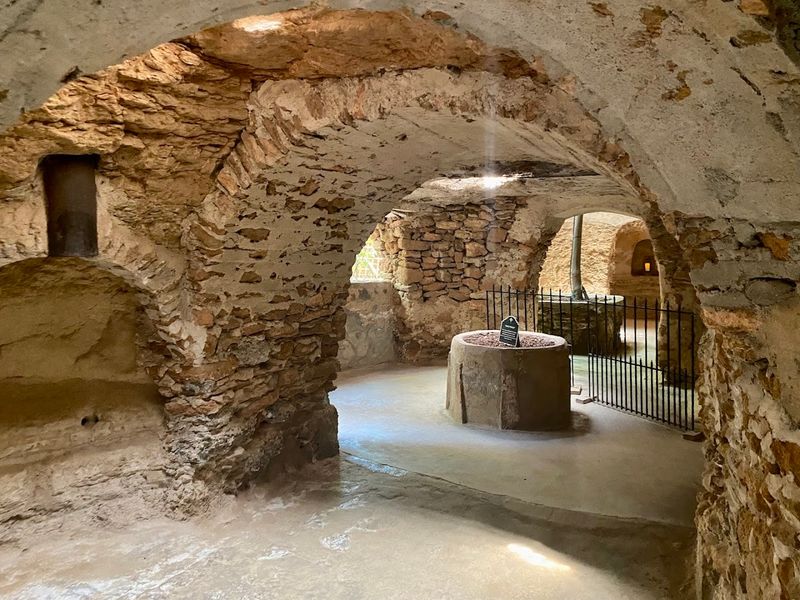
Numbers help put this into perspective. The underground complex originally covered more than 10 acres.
It reaches depths of up to 25 feet below the surface. It includes 65 individual underground rooms, as documented in the National Register of Historic Places.
One person built all of it. By hand.
Over 40 years.
The scale is genuinely hard to process while standing inside it. Rooms open into courtyards.
Courtyards connect to tunnels. Tunnels branch into grottoes.
The layout feels organic rather than planned, which makes sense given that no blueprints were ever used.
An 800-foot-long auto tunnel was also part of the design, which adds another layer of ambition to an already staggering project. The builder was not just thinking about survival or farming.
He was building a full underground world.
California has no shortage of big projects, but very few were completed by a single person working alone with hand tools. The sheer physical commitment required to carve this much material from the earth, decade after decade, is something most people cannot fully imagine without seeing it firsthand.
Hidden Rooms With Surprising Purposes
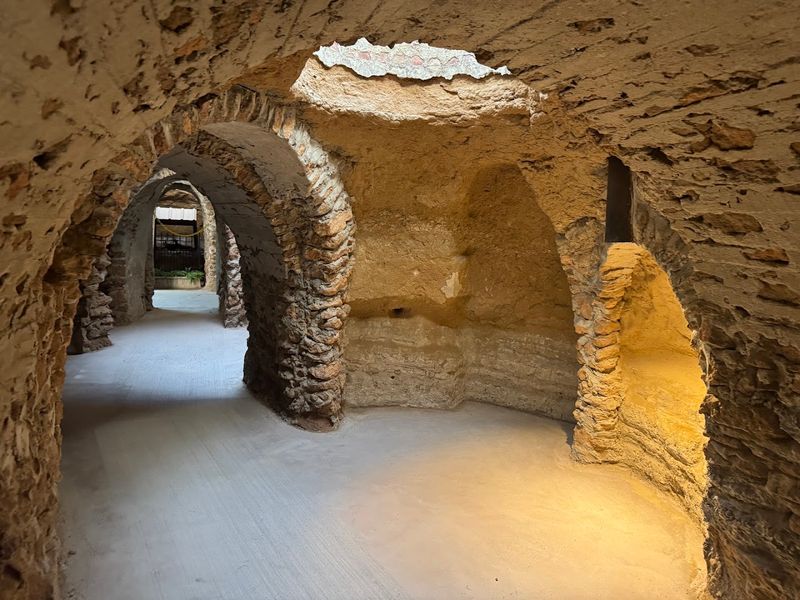
Beyond the tunnels and fruit trees, the underground complex holds some genuinely unexpected spaces. The builder did not just carve out a place to sleep and farm.
He built a life down there.
A small chapel sits within the complex, quietly carved from the same hardpan as everything else. It is a personal, intimate space that reflects the builder’s deep cultural and spiritual roots from his Sicilian homeland.
There was also a glass-bottomed aquarium, now a former feature of the site. An underground fishing pond was part of the design as well, suggesting the builder wanted his subterranean home to be as fully functional as any home above ground.
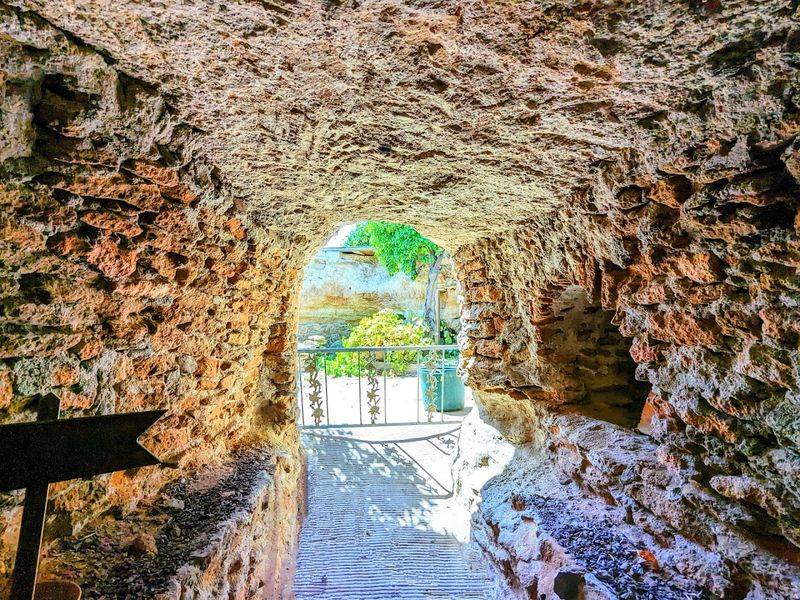
Open-air courtyards break up the enclosed tunnels, giving the space a surprising sense of openness in certain areas. These courtyards also serve a practical purpose, allowing light and air to circulate through the underground network.
Each room tells a slightly different story about the person who built it. Exploring the complex feels less like a museum visit and more like reading someone’s private journal, written entirely in stone and soil.
A National Landmark That Almost Nobody Knows About
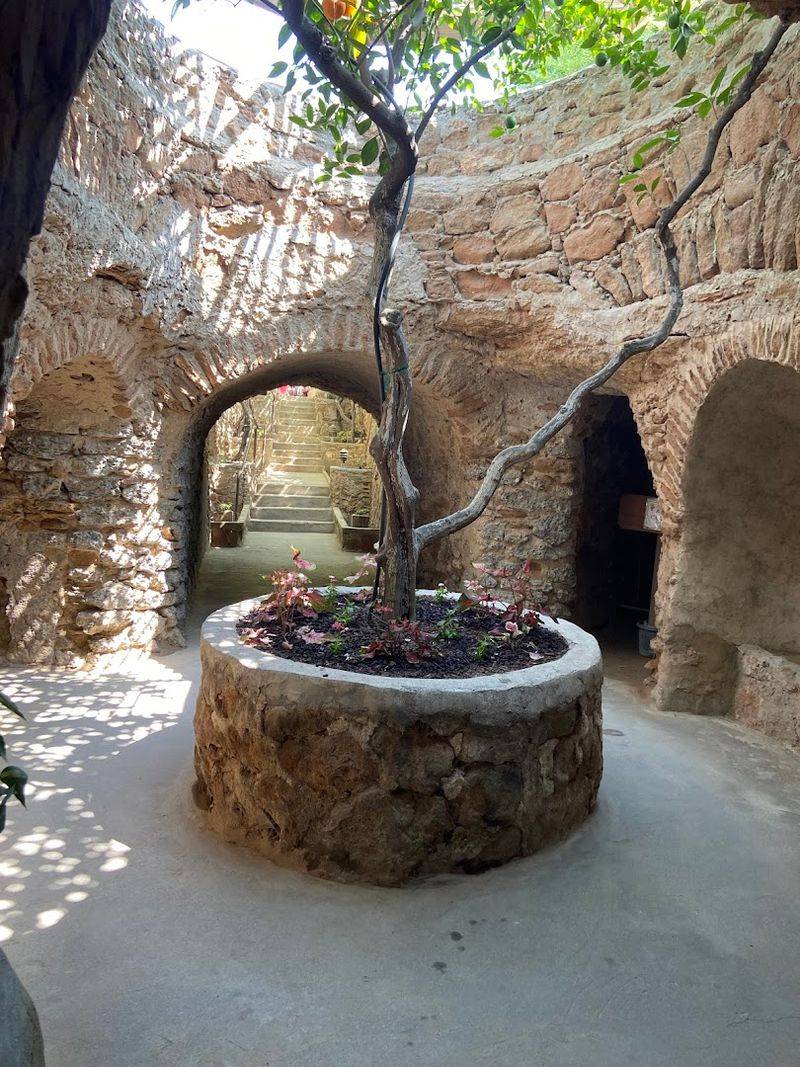
The gardens earned a spot on the U.S. National Register of Historic Places in 1977, and California followed the next year with Historical Landmark designation number 916.
Despite those credentials, plenty of people drive past it on Shaw Ave without a second glance. The above-ground presence is modest.
The real story is entirely below the surface.
Media coverage has helped raise the profile over the years. The New York Times has featured the gardens.
HGTV included it in a program called Xtreme Gardens. CNN has also covered the site.
Still, it remains far less known than its status deserves.
The Forestiere family continues to operate the site through the Forestiere Historical Center. Guided walking tours are the primary way visitors experience the complex, and the guides bring a deep personal connection to the history of the place.
For a landmark of this significance, sitting quietly in one of California’s largest cities, the underground gardens remain one of the most underappreciated historic sites in the entire country. That may actually be part of the appeal.
What To Expect On A Guided Tour
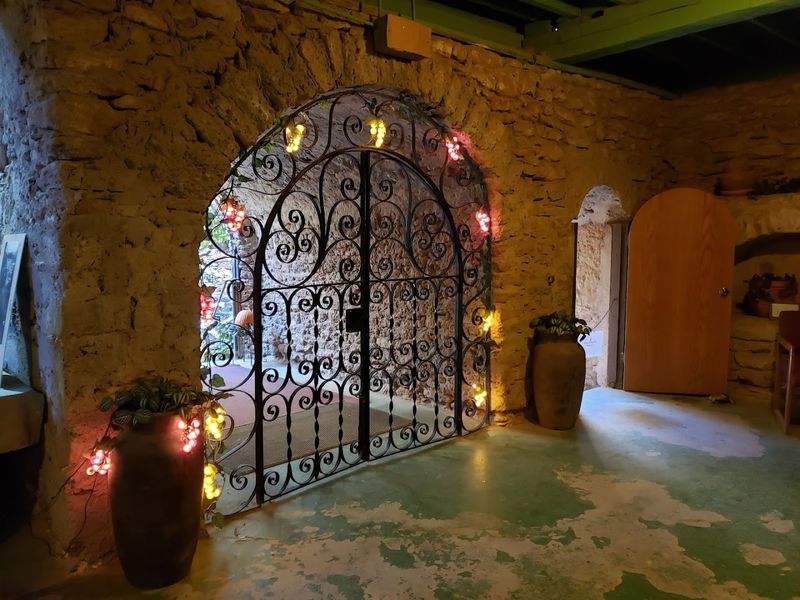
Guided tours are the only way to experience the underground complex. Self-guided exploration is not an option, and honestly, that makes the visit better rather than worse.
Tours run for approximately one hour and cover the key rooms, tunnels, courtyards, and gardens. Groups tend to be small, which creates a more personal atmosphere and makes it easier to ask questions along the way.
The guides know the history in detail. They cover the builder’s origins, his motivations, the construction process, and the specific features of each space.
Questions get real, thoughtful answers rather than rehearsed scripts.
The underground temperature stays cooler than the surface, so bringing a light layer is a smart move even during summer. The pathways are earthen and uneven in places, so comfortable closed-toe shoes are a smart choice for the tour.
Reservations are recommended, especially for same-day visits. The gardens close during winter months, typically from December through most of March, so planning around the open season matters.
Photography is welcome during the tour, which means visitors leave with images that are almost impossible to believe were taken in California, let alone beneath a city street.
The Microclimate That Makes It All Work
Building underground was not just about escaping the heat, though that was certainly part of the motivation. The builder discovered something remarkable along the way.
The subterranean environment creates distinct microclimates that plants actually love. Summer temperatures underground run 10 to 20 degrees cooler than the surface.
In Fresno, California, where summer heat regularly becomes extreme, that difference is enormous.
Winter works the other way. The underground insulation protects plants from frost that would damage or destroy them on the surface.
The result is a growing environment that functions almost like a natural greenhouse, without any artificial systems.
Skylights channel both light and rainwater directly to the plants. The varying widths of the pathways and tunnels were designed to move air efficiently through the entire space.
Every element of the design connects to the others in a system that still functions more than a century later.
Modern horticulturalists would recognize many of these principles. The remarkable part is that the builder figured all of it out independently, through observation and trial, without any formal scientific training or outside guidance.
Planning Your Visit To This One-Of-A-Kind California Destination
Getting to the Forestiere Underground Gardens is straightforward. The address is 5021 W Shaw Ave, Fresno, California, and street parking is available nearby, though it can occasionally require a short walk depending on construction activity in the area.
The site operates seasonally, closing through the winter months. Spring, summer, and fall are the windows for visiting, with summer being particularly popular since the underground cool is such a contrast to the Central Valley heat outside.
Calling ahead to reserve a spot is a good idea, especially for same-day plans. The small group format means tours can fill up quickly during busy periods.
A gift shop on site sells items including produce grown in the gardens, which makes for a genuinely local souvenir. Military discounts are available at the entrance.
Children of walking age and older tend to enjoy the experience, though strollers are not permitted inside the tunnels. Older kids who like history and unusual places find it especially engaging.
This is one of those California destinations that rewards the curious and leaves everyone else wondering why they waited so long to visit.