
13 Outdoor Museums In Mississippi Featuring One-Of-A-Kind Exhibits
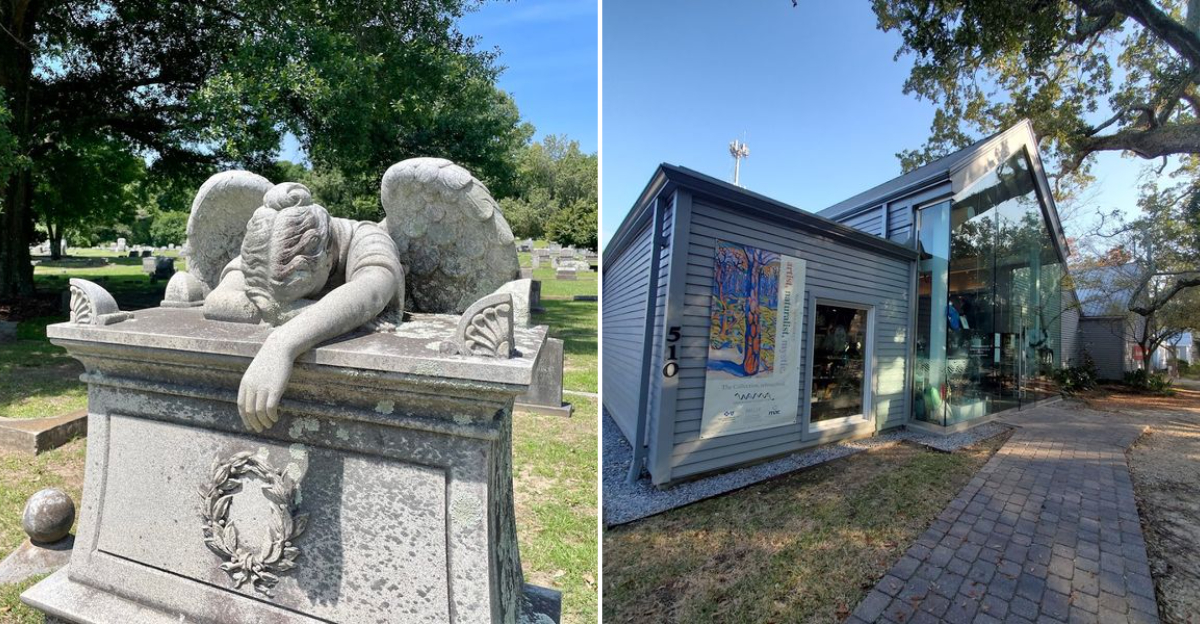
History breathes differently under the open Southern sky, away from the sterile climate control of traditional museum corridors. Sculptures made of reclaimed river iron and historic log cabins stand directly on the sun-baked earth.
The damp grass and shifting daylight become part of the exhibition design itself. Mississippi preserves these cultural landscapes across thirteen distinct open-air properties that celebrate regional creativity and historical resilience.
Visitors encounter giant folk-art environments, preserved civil rights landmarks, and prehistoric earthworks scattered throughout the pine forests.
The exhibits weather naturally over time, developing a unique patina that indoor displays can never truly replicate. Walking these sprawling grounds feels less like studying a textbook and more like uncovering an ongoing story.
1. Mississippi Petrified Forest
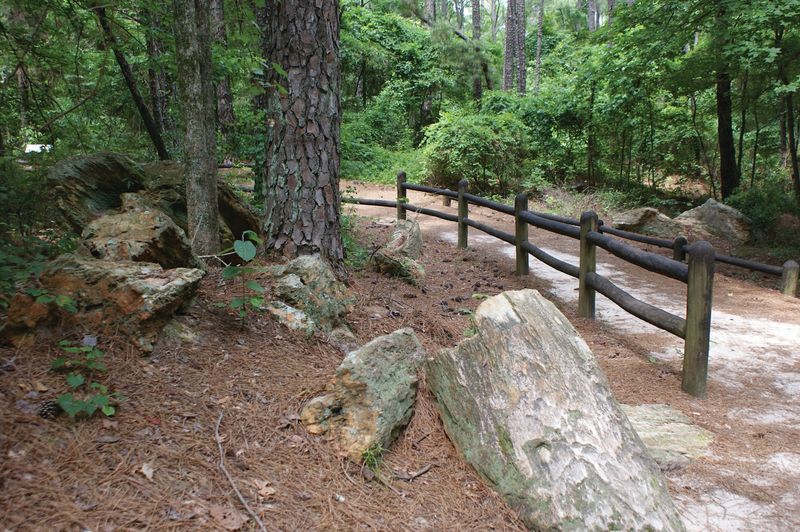
Thirty-six million years ago, a massive flood buried a forest here. Time and pressure turned those ancient trees into solid stone.
Walking the trails at Mississippi Petrified Forest feels completely surreal. You keep expecting the logs to feel like wood, but nope, pure stone every single time.
Some of the petrified logs stretch over a hundred feet long. Erosion keeps slowly uncovering new pieces, so the landscape actually changes over time.
This is a National Natural Landmark, which means it is officially recognized as one of the most significant natural sites in the country. There are only a handful of petrified forests in the eastern United States, and Mississippi has one of the best.
The self-guided trail winds through the forest at a relaxed pace. Little signs along the path explain what you are seeing without making it feel like a lecture.
Kids absolutely love touching the stone logs and watching their brains try to process it. Adults do the same thing, honestly.
You will find yourself picking up every rock, wondering if it used to be a tree. It is that kind of place.
Find it located at 124 Forest Park Rd, Flora, MS 39071.
2. Grand Village Of The Natchez Indians
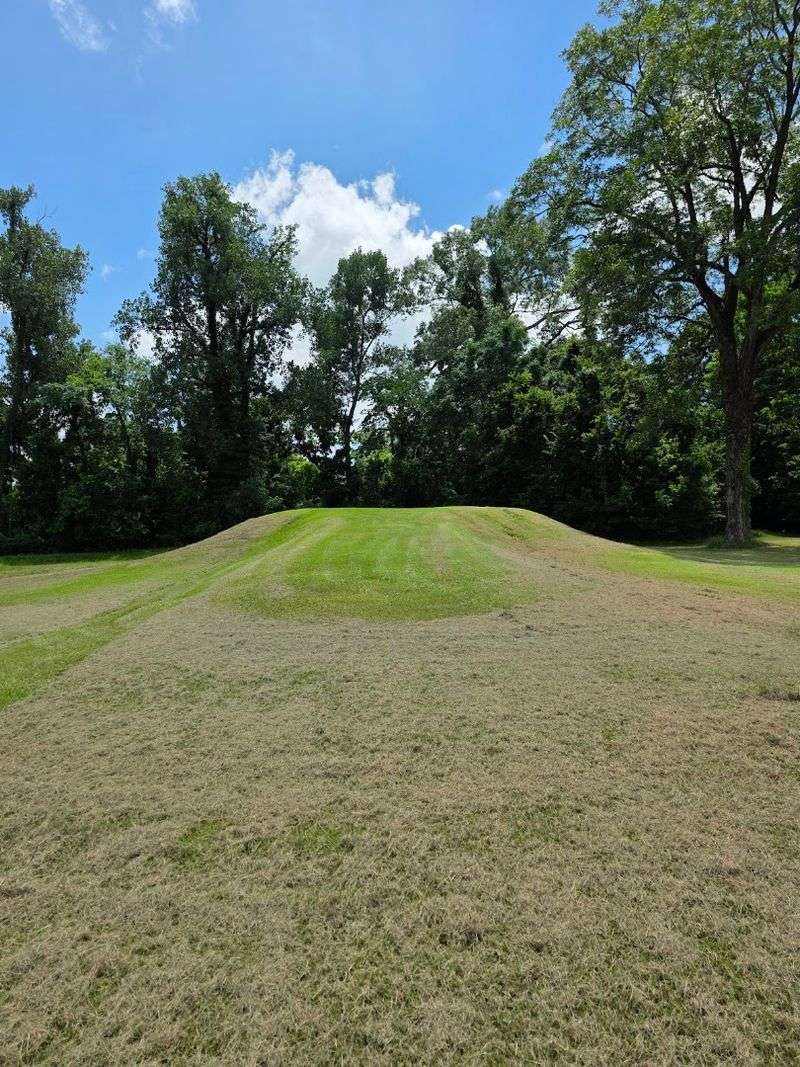
Long before European settlers arrived, the Natchez people built a thriving civilization right here. The Grand Village of the Natchez Indians preserves what remains of that world.
Three large ceremonial mounds anchor the site. These were not just piles of dirt but sacred spaces used for rituals, burials, and political gatherings.
A reconstructed Natchez Indian home stands on the grounds. It gives you a surprisingly clear picture of daily life centuries ago without needing a single word of explanation.
The nature trail is quiet and easy to walk. It winds past native plants and open fields, giving you space to actually think about what this land once meant to the people who called it home.
The on-site museum adds important context to the outdoor experience. Artifacts, maps, and exhibits explain the complex social structure of the Natchez, including their unique Sun Chief leadership system.
What makes this place special is the combination of outdoor space and genuine history. You are literally standing on ground that witnessed centuries of ceremony and community.
That connection to the past feels rare and worth slowing down for. Find it at 400 Jefferson Davis Blvd, Natchez, MS 39120.
3. Grand Gulf Military State Park
Grand Gulf Military State Park is one of those places that quietly holds enormous historical weight. This was a major Confederate strongpoint during the Civil War, and the landscape still shows it.
Remnants of Fort Wade and Fort Cobun are still visible. Old gun trenches and earthworks stretch across the park, giving you a real sense of the military strategy used here.
An observation tower rises above the trees and offers sweeping views of the Mississippi River. On a clear day, the view alone is worth the visit.
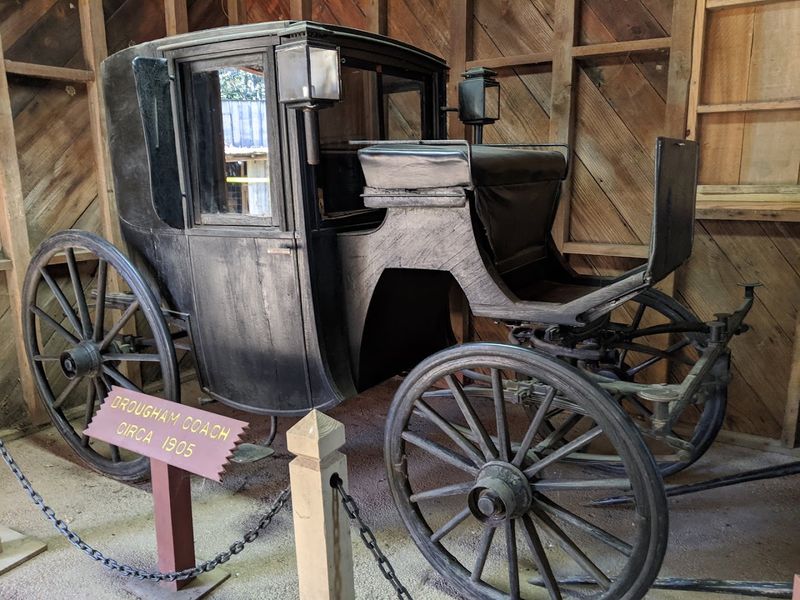
The park also displays historic coaches, carriages, and Civil War artifacts in its museum building. Outside, the grounds invite you to wander and imagine what this place looked like during battle.
There is a campground here too, which means you can spend the night surrounded by history. Waking up in a place like this hits differently than a regular campsite.
Families, history buffs, and casual visitors all find something to connect with at Grand Gulf. It is not overwhelming or overly academic.
It just puts you in the middle of an important story and lets you explore at your own pace. Head to 12006 Grand-Gulf Rd, Port Gibson, MS 39150.
4. Vicksburg National Military Park
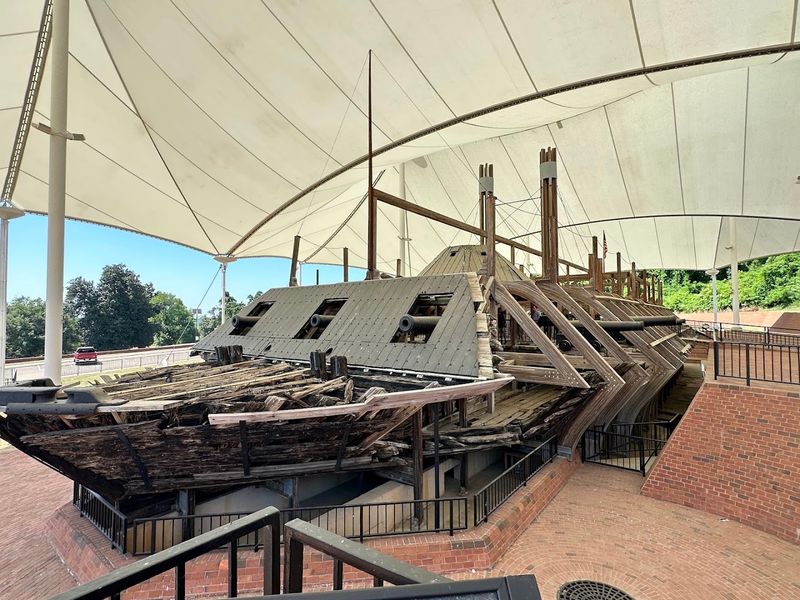
Vicksburg National Military Park is genuinely massive, and that scale is part of what makes it so powerful. Twenty miles of reconstructed trenches wind through the landscape.
Over 1,400 monuments and markers stand across the park. Each one represents a regiment, a state, or an individual act of courage during one of the Civil War’s most decisive sieges.
The 47-day Siege of Vicksburg in 1863 turned the tide of the entire war. Walking these grounds, you start to understand just how brutal and strategic that campaign really was.
The restored USS Cairo Gunboat is a highlight that most visitors do not expect. This ironclad warship was raised from the Yazoo River and is one of the best-preserved Civil War vessels anywhere in the country.
You can drive the park road or walk sections of it. Either way, the sheer number of monuments creates an atmosphere that is both solemn and awe-inspiring.
Ranger-led tours are available and genuinely worth joining. The stories they share about individual soldiers and battle moments make the whole experience feel personal rather than textbook.
Plan to spend several hours here. You will want them.
Visit it at 3201 Clay St, Vicksburg, MS 39183.
5. Emerald Mound
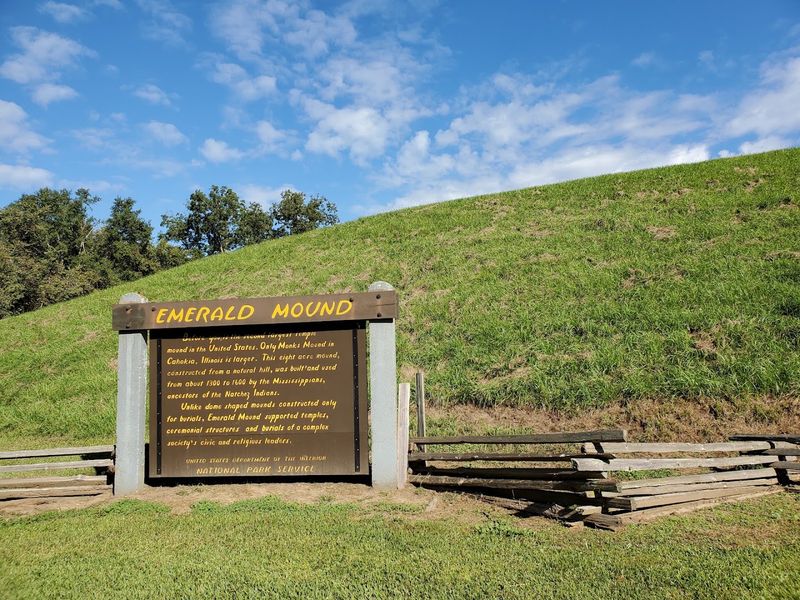
Emerald Mound is the third-largest pre-Columbian earthwork in North America. Let that sink in for a second.
Built by ancestors of the Natchez people between 1250 and 1600 CE, this mound covers about eight acres at its base. It is enormous in a way that photos cannot fully capture until you are standing right next to it.
Two smaller mounds sit on top of the main platform. These elevated structures were used for ceremonial buildings and were likely home to the most important community leaders.
The site sits along the Natchez Trace Parkway, making it an easy stop on a longer road trip. The National Park Service maintains it beautifully, and the grounds are open year-round.
You can walk up the mound and stand on the summit. The views of the surrounding countryside are genuinely beautiful, especially in the golden light of late afternoon.
Most people drive past without stopping, which is honestly their loss. This is one of those quiet, underrated landmarks that rewards anyone willing to slow down and look up.
There are no crowds, no lines, and no noise. Just ancient history and open sky.
Find it at Emerald Mound Rd, Natchez, MS 39120.
6. Windsor Ruins
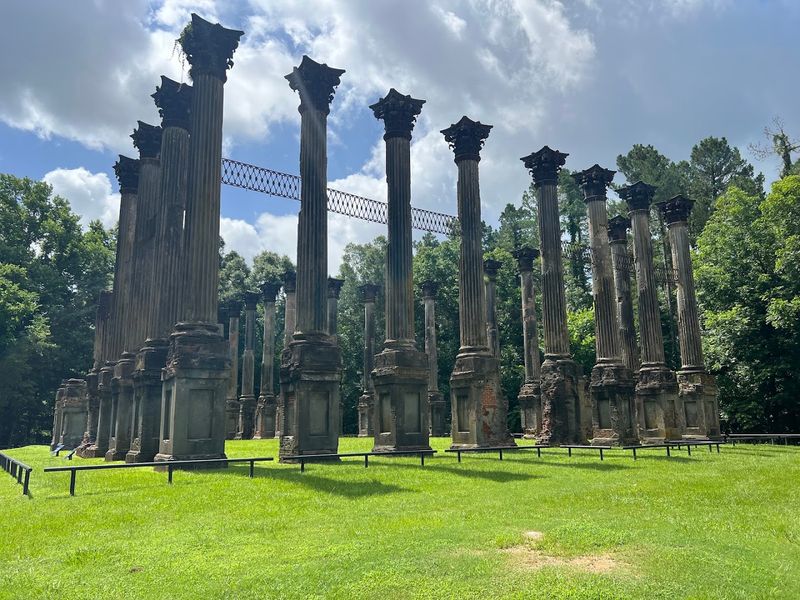
Twenty-three towering Corinthian columns rise from a Mississippi field, and nothing else is left. The mansion they once supported burned to the ground in 1890, and these columns are all that survived.
Windsor was one of the grandest antebellum homes in the entire South. It had five stories, running water, and breathtaking architectural detail.
Then one careless fire ended it all.
What remains is somehow more striking than any fully intact building. The columns stand in perfect rows, draped in Spanish moss, surrounded by silence and trees.
It is genuinely haunting in the best possible way.
Writers, photographers, and filmmakers have been drawn to Windsor Ruins for decades. Mark Twain even referenced Windsor in his writings after seeing it from a steamboat on the Mississippi River.
Getting there requires a short drive down a rural road, which feels like a real discovery. There is no entrance fee and no formal tour, just you and one of the most dramatic landscapes in the state.
Bring a camera, obviously. But also just bring your full attention, because Windsor Ruins is the kind of place that makes you think about time, loss, and beauty in the same breath.
This spot is located on Rodney Rd, Port Gibson, MS 39150.
7. Dockery Farms
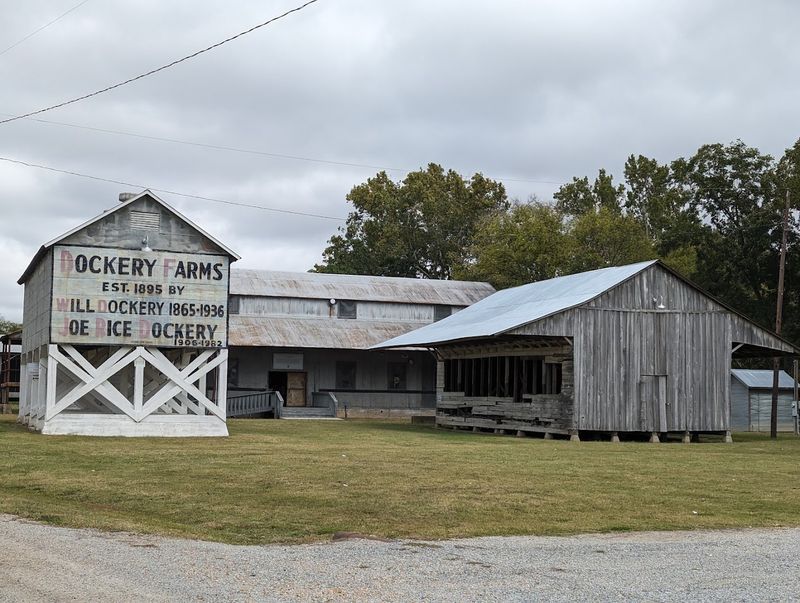
If the Blues had a hometown, it would be Dockery Farms. Musicologists and historians widely consider this Delta plantation the birthplace of one of America’s most powerful musical traditions.
Charley Patton, the godfather of Delta Blues, lived and played here in the early 1900s. Robert Johnson, Howlin Wolf, and other legendary musicians all had connections to this land.
The original farm structures still stand. The cotton gin, commissary, and grain elevator have all weathered decades of Mississippi summers and still carry that raw, historic energy.
Walking the grounds, you can almost hear the music that grew out of long days in the fields and late nights on the porch. The Blues was not born in a recording studio.
It was born right here.
A historical marker explains the site’s significance, and the visual environment does the rest. Flat Delta land stretches endlessly in every direction, and the sky feels enormous above it all.
Dockery Farms is not a polished tourist attraction. It is a real, working piece of American music history that happens to welcome visitors.
That authenticity is exactly what makes it worth the drive. Find it at 229 MS-8, Cleveland, MS 38732.
8. Friendship Cemetery
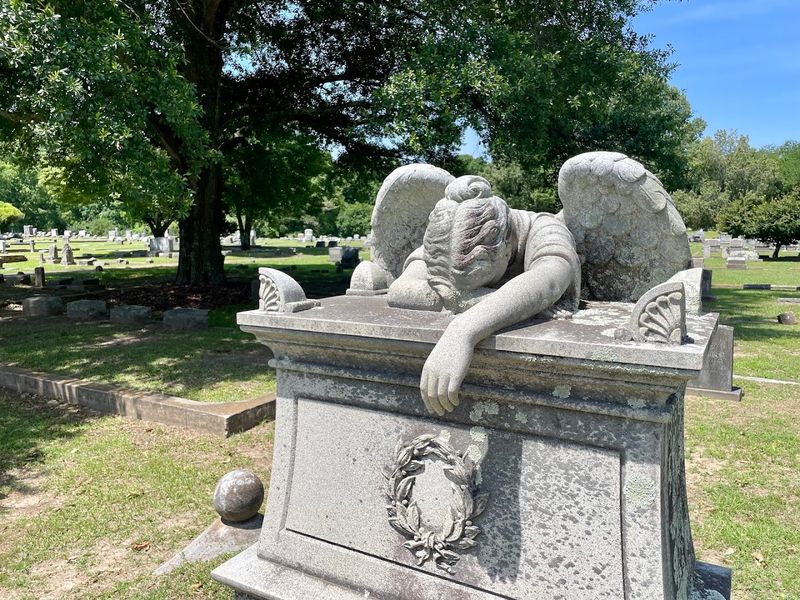
Friendship Cemetery holds a place in American history that most people have never heard about. This is where Decoration Day, the predecessor to Memorial Day, is believed to have originated.
After the Civil War, local women gathered here in April 1866 to place flowers on the graves of both Union and Confederate soldiers. That simple act of grace sparked a national tradition.
Over 2,000 Confederate soldiers are buried here alongside civilians and community members. The cemetery spans several acres and feels more like a quiet garden than a typical burial ground.
Intricate family plots feature iron fencing, carved statuary, and generations of names etched into stone. Each section tells a different chapter of Columbus history.
The atmosphere is peaceful in a way that is hard to explain without actually being there. Massive old oak trees shade the paths, and the whole place invites slow, thoughtful walking.
Friendship Cemetery is beautifully maintained and genuinely moving to visit. Whether you come for the Civil War history, the genealogy connections, or just the quiet beauty of the grounds, you will leave with something meaningful.
It earns its reputation as one of Mississippi’s most significant and soulful outdoor spaces. Visit at 4th St S, Columbus, MS 39701.
9. Rowan Oak
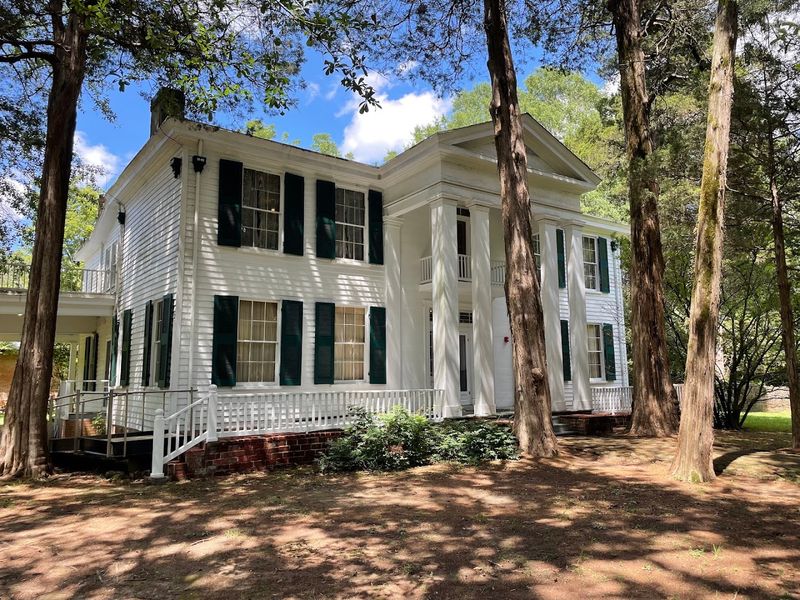
William Faulkner wrote some of the most celebrated novels in American literature while living at Rowan Oak. The cedar-lined driveway leading up to the house sets the tone immediately.
Faulkner bought the property in 1930 and lived here until he passed away in 1962. He even outlined the plot of one of his novels directly on the walls of his study, and those outlines are still visible today.
The four-acre landscaped grounds surrounding the house are beautiful and easy to explore. Old trees, open lawns, and a quiet barn create an atmosphere that feels genuinely lived-in rather than staged.
Bailey Woods, a 29-acre nature reserve directly behind the property, is free to walk. Trails wind through old-growth forest, and it is exactly the kind of place where a novelist would go to think.
The smokehouse and stable still stand on the property. These structures add depth to the story of daily life at Rowan Oak beyond the famous literary connections.
Even if you have never read a word of Faulkner, this place is worth visiting. The combination of literary history, beautiful outdoor spaces, and genuine Southern atmosphere makes Rowan Oak one of Oxford’s most rewarding experiences.
Find it at 916 Old Taylor Rd, Oxford, MS 38655.
10. Walter Anderson Museum Of Art
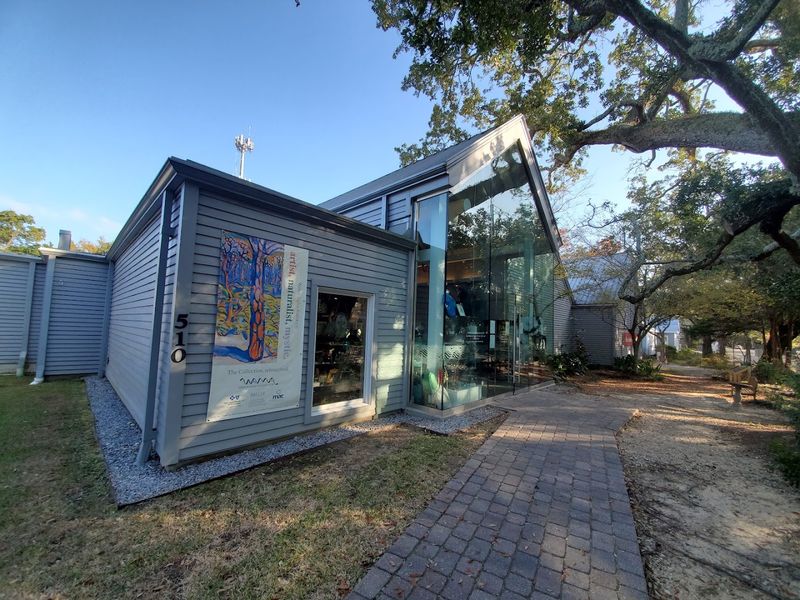
Walter Anderson was one of the most original American artists of the 20th century, and Ocean Springs knew it long before the rest of the country caught on. His work is wild, detailed, and completely unlike anything else.
The museum extends well beyond its interior walls with an outdoor program called Art in the Open. Site-specific sculptures and installations bring Anderson’s vivid natural imagery into the actual environment.
Anderson spent years paddling alone to Horn Island, a barrier island off the Mississippi Gulf Coast, to paint. That fierce commitment to nature shows in every piece of his work.
The outdoor installations are designed to interact with light, weather, and the surrounding landscape. They change depending on when you visit, which gives you a reason to come back more than once.
Ocean Springs itself is a charming, artsy coastal town that pairs perfectly with a museum visit. The streets near the museum are lined with galleries, cafes, and local shops that reflect the same creative spirit.
Anderson’s legacy is one of total devotion to the natural world, and experiencing his art outdoors honors that. The connection between his vision and the actual Mississippi landscape is something you genuinely feel when you are there.
Visit at 510 Washington Ave, Ocean Springs, MS 39564.
11. Mississippi Museum Of Natural Science
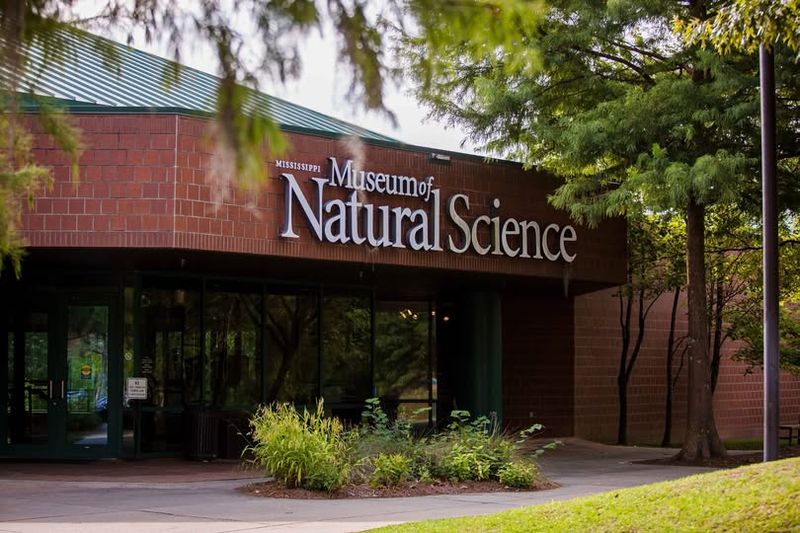
Two miles of outdoor trails wind through the grounds of the Mississippi Museum of Natural Science, and every stretch of those trails has something worth stopping for. This is not your average nature walk.
The Dinosaur Trail features massive three-dimensional models of prehistoric creatures scaled to actual size. Kids go absolutely wild for it, and honestly, so do most adults once they see a life-size dinosaur emerging from the trees.
The Swamp is a massive greenhouse filled with native Mississippi plants, live turtles, fish, and amphibians. It recreates a real Mississippi wetland environment in a way that feels completely immersive.
The outdoor habitats showcase the incredible biodiversity of the state. Mississippi has more species of freshwater fish than almost any other state, and the museum makes sure you know it.
Live animal exhibits, aquariums, and rotating outdoor displays keep the experience fresh on repeat visits. Staff naturalists are often on the trails and happy to answer questions without making you feel like you are in school.
This museum strikes a perfect balance between education and genuine outdoor exploration. It is the kind of place where curiosity drives the whole visit, and you leave knowing more than you expected.
Located at 2148 Riverside Dr, Jackson, MS 39202.
12. INFINITY Science Center

Right near the Louisiana border, INFINITY Science Center is hiding one of the most jaw-dropping outdoor exhibits in the entire country. Not many places can say they have an actual Saturn V rocket sitting outside.
The Apollo Saturn V first stage on display here is colossal. Standing next to it, you immediately understand why the Apollo missions felt impossible and then miraculous.
The outdoor grounds also feature a tsunami buoy and a riverine training boat. These exhibits connect the center’s NASA focus with the real-world science happening in the Gulf Coast region.
The Biome Boardwalk trails through coastal habitats native to the Pearl River estuary. It is a surprisingly peaceful walk that puts you right in the middle of the same ecosystem NASA scientists work to protect.
INFINITY sits adjacent to the NASA Stennis Space Center, which means the rocket fuel testing you might hear in the distance is completely real. That background detail adds a layer of excitement that no exhibit can manufacture.
The combination of space history and coastal ecology makes this science center genuinely unique. You go from looking up at rocket engines to looking down at marsh grass, and it all makes perfect sense here.
Find it at 1 Discovery Cir, Pearlington, MS 39572.
13. La Pointe-Krebs Museum
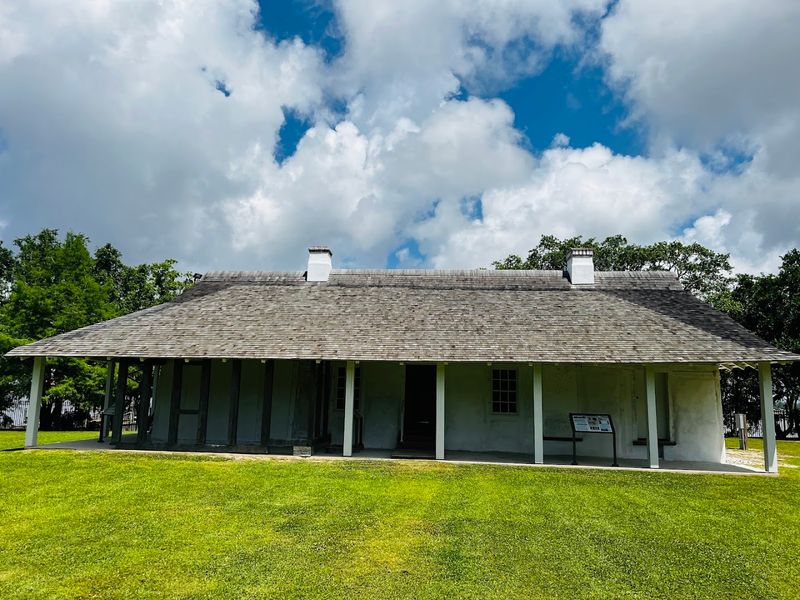
La Pointe-Krebs is the oldest scientifically dated building in the entire state of Mississippi. That alone makes it worth seeking out.
The French Colonial house was built in 1757 using tabby concrete, a construction method that mixes oyster shells, lime, sand, and water. It is a technique rarely seen outside of coastal colonial settlements, and this example has survived remarkably well.
The 3.5-acre estate grounds tell centuries of layered history. French, Spanish, British, and American ownership all left marks on this property over the years.
Walking the grounds, you get a real sense of how Gulf Coast life looked in the 18th century. The site sits close to the Pascagoula River, which was a critical trade and travel route for early settlers.
The museum offers guided tours that connect the architectural details to the broader story of colonial Mississippi. The guides bring genuine enthusiasm to the history, which makes the whole visit more engaging.
Pascagoula is not always on the top of Mississippi travel lists, but La Pointe-Krebs gives it a serious claim to attention. Anywhere you can stand inside a building that predates the American Revolution is worth the detour.
Visit at 4602 Fort St, Pascagoula, MS 39567.