
12 Public Gardens Across New York With Rare Blooms And Scenic Walks You Won’t Find Anywhere Else
Rare blooms have addresses in New York and this list has all of them. These public gardens are scattered across the state and they produce genuine awe in even the most casual visitor.
The walks are scenic and the collections are serious. To top it off, the experience of moving through a garden this carefully curated does something restorative that is truly difficult to replicate anywhere else.
New York public gardens in 2026 are delivering at a level that deserves a much bigger audience than most of them currently attract.
The gardens reward your approach with something worth coming back for every single year without the experience ever feeling repeated.
1. Brooklyn Botanic Garden
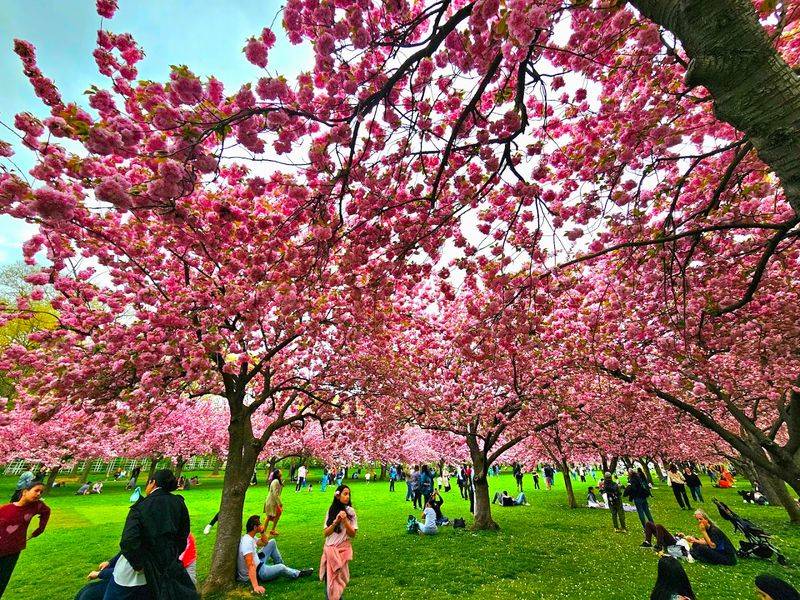
Cherry blossom season at Brooklyn Botanic Garden hits different. Every spring, thousands of people flood through the gates at 990 Washington Avenue in Brooklyn to witness the Hanami celebration under a canopy of pink and white blossoms.
It is one of those moments that makes you feel genuinely lucky to live near this city.
The garden spans 52 acres and packs in an extraordinary amount of variety for its size. The Cranford Rose Garden alone holds over 1,200 varieties of roses, some dating back nearly a century.
The Japanese Hill-and-Pond Garden is considered one of the oldest Japanese-style gardens in any American public park, built back in 1915.
Beyond the roses and cherry trees, the Fragrance Garden was specifically designed for visitors with visual impairments, featuring braille signs and plants chosen for their texture and scent.
The Native Flora Garden showcases plants local to the New York region.
Admission is affordable and free on certain days, making it one of the most accessible green escapes in all of Brooklyn. Honestly, this place earns every bit of its reputation.
2. Untermyer Gardens Conservancy
Back in the 1920s, people called Untermyer Gardens the most spectacular garden in all of America. Standing inside the walled Persian Garden today, it is genuinely hard to argue with that title.
Located at 945 North Broadway in Yonkers, this place carries a kind of theatrical grandeur that feels almost cinematic.
The Persian-inspired walled garden is considered one of the finest in the entire Western Hemisphere.
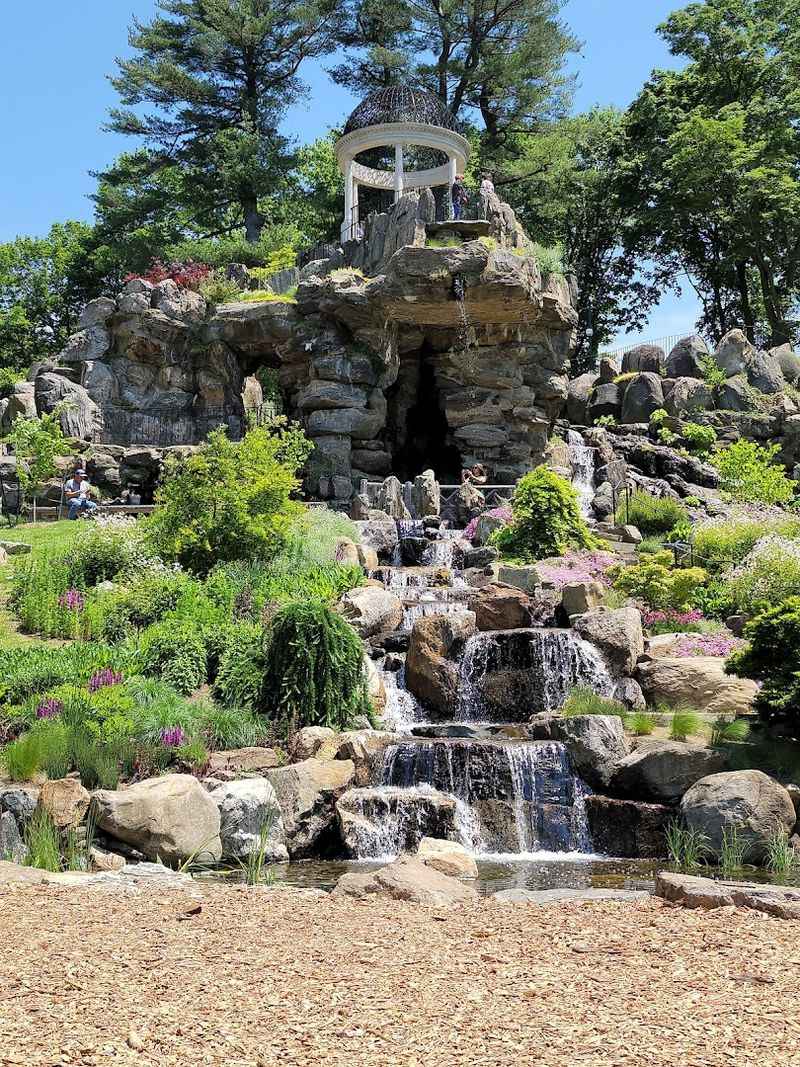
Two 2,000-year-old Roman columns frame a breathtaking view of the Hudson River, and the Temple of Love structure sits surrounded by five waterfalls and six cataracts.
That is not a garden feature, that is a whole production.
Restoration work has been ongoing since 2011, and the results are stunning. Rare plant collections continue to expand, and seasonal blooms keep the landscape shifting throughout the year.
The garden is free and open to the public, which feels almost too generous given how extraordinary the grounds are. Visiting on a weekday morning gives you the best chance of having the walled garden nearly to yourself.
Bring a camera because your phone storage will not be enough for everything you will want to capture here.
3. Planting Fields Arboretum State Historic Park
Not many people know that Long Island is hiding one of the most spectacular arboretums on the entire East Coast.
Planting Fields Arboretum in Oyster Bay stretches across 409 acres of Gold Coast estate land, and every single acre earns its place.
The address is 1395 Planting Fields Road in Oyster Bay, and yes, the drive out there is part of the experience.
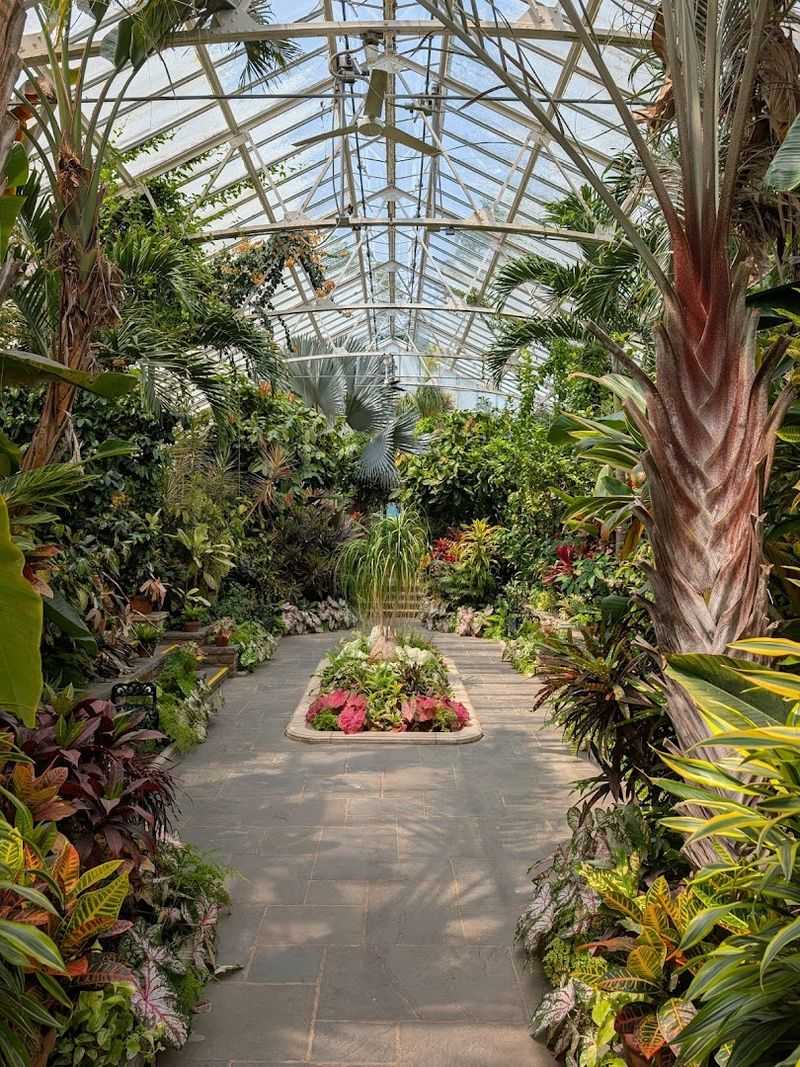
The greenhouse complex here is genuinely world-class.
The Camellia collection inside the greenhouse buildings is one of the largest in the northeastern United States, featuring hundreds of varieties in bloom during late winter when everything else outside looks bare and grey.
That contrast alone is worth the trip.
Rhododendrons put on a jaw-dropping show each spring, covering the landscape in deep purples, pinks, and whites.
The Synoptic Garden organizes plants by family, making it a surprisingly educational walk even for people who do not consider themselves plant enthusiasts.
The Tudor Revival mansion on the grounds adds a layer of architectural drama to the whole visit. Admission is charged per vehicle on weekends, but the scale and quality of what you get in return makes it one of Long Island’s best-kept secrets.
4. Buffalo And Erie County Botanical Gardens
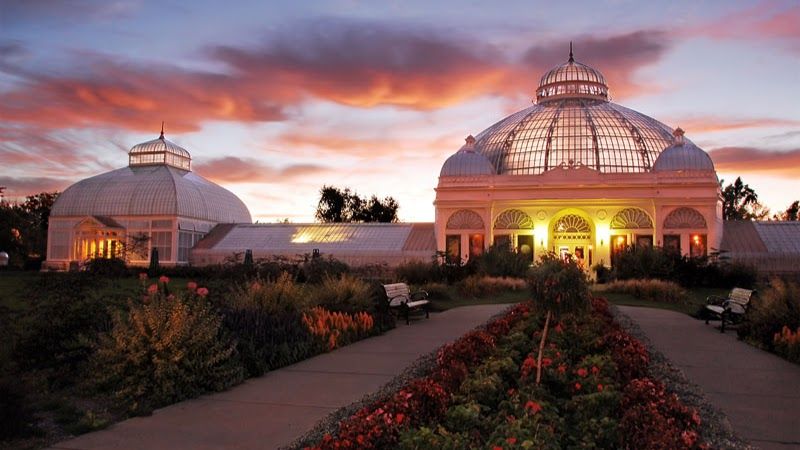
Few buildings in all of New York State are as visually striking as the Victorian crystal palace that houses the Buffalo and Erie County Botanical Gardens.
Designed by Lord and Burnham and completed in 1900, the glass conservatory at 2655 South Park Avenue in Buffalo looks like something straight out of a fairytale, even from the parking lot.
Step inside and the temperature shift is immediate. Tropical plants tower overhead, palms stretch toward the glass ceiling, and rare specimens from around the world fill every corner.
The collection spans plants from South American rainforests to Mediterranean climates, all thriving year-round regardless of how brutal the Buffalo winter gets outside.
Monthly festivals and rotating exhibits keep the experience fresh no matter when you visit. The cactus and succulent collection draws serious plant collectors from across the region.
The recently completed outdoor expansion added new garden spaces that complement the historic conservatory beautifully.
Buffalo does not always get the credit it deserves as a destination city, but this botanical garden is the kind of attraction that genuinely changes people’s minds.
Admission is reasonably priced and the staff are some of the most knowledgeable and enthusiastic you will encounter at any garden in the state.
5. Cornell Botanic Gardens
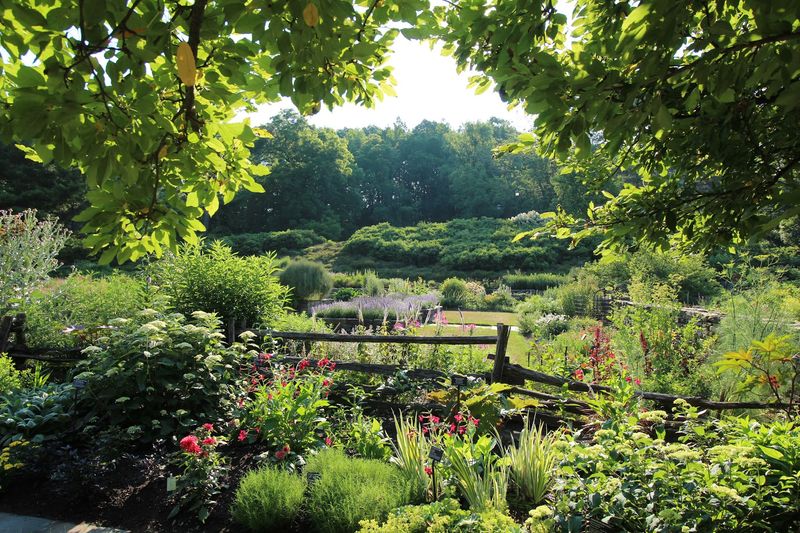
Cornell Botanic Gardens might be the most underrated free attraction in all of upstate New York.
Spread across more than 4,000 acres surrounding Cornell University in Ithaca, the gardens include natural areas, gorges, wetlands, and curated botanical collections that together create one of the most diverse outdoor experiences in the entire state.
The F.R. Newman Arboretum at One Plantations Road in Ithaca holds over 1,000 plant species organized into collections that range from conifers to flowering trees.
The Mundy Wildflower Garden showcases native plants in a setting that feels genuinely wild rather than manicured.
Gorge trails running through the property pass by waterfalls and dramatic rock formations that have nothing to do with botany but everything to do with why people fall in love with this place.
The Robison Herb Garden is a favorite among culinary-minded visitors, featuring over 800 varieties of herbs organized by use and origin.
Everything here is completely free to visit, which is almost hard to believe given the scope and quality of the collections.
Cornell students often study here, giving the garden a lively, intellectual energy that feels distinct from any other public garden in New York. Plan for at least half a day.
6. Sonnenberg Gardens And Mansion State Historic Park
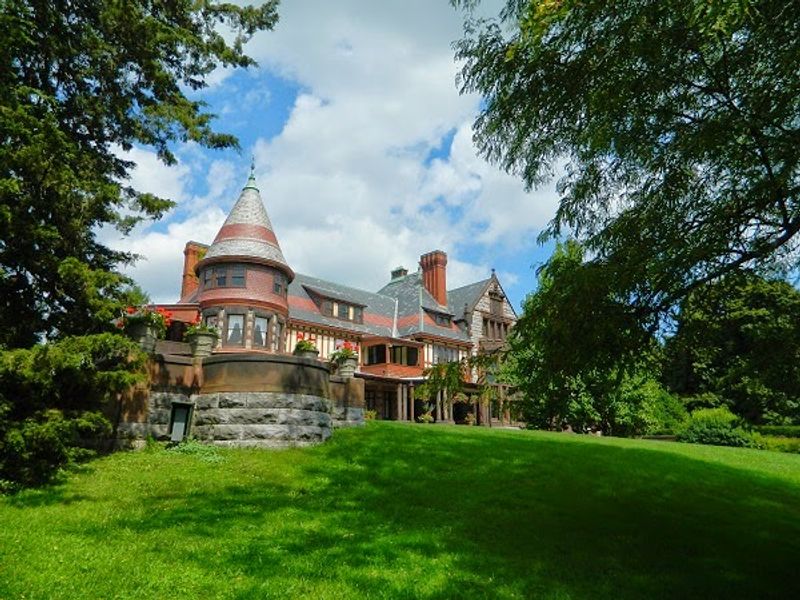
There are nine distinct gardens on the grounds of Sonnenberg, and each one feels like a completely different world.
Built in 1887 by Frederick and Mary Clark Thompson, the Queen Anne-style mansion at 151 Charlotte Street in Canandaigua anchors an estate that was once considered one of the most magnificent private gardens in North America.
The Thompsons had taste and, clearly, a very large gardening budget.
The Rose Garden alone contains thousands of fragrant blossoms arranged in a formal Victorian style that rewards slow, unhurried walking.
The Japanese Garden, the Italian Garden, the Old-Fashioned Garden, and the Pansy Garden each carry their own distinct personality.
Moving from one to the next feels like flipping through the pages of a very beautiful book.
The greenhouse complex is particularly impressive, housing a collection of rare and exotic plants that thrive under its glass roof throughout the year.
Guided tours of the mansion offer context about the Gilded Age history behind the property.
Sonnenberg is located in the Finger Lakes region, so pairing a visit with a drive around Canandaigua Lake makes for a genuinely spectacular day trip from anywhere in western or central New York.
The grounds are open seasonally from May through October.
7. Wave Hill Public Garden And Cultural Center
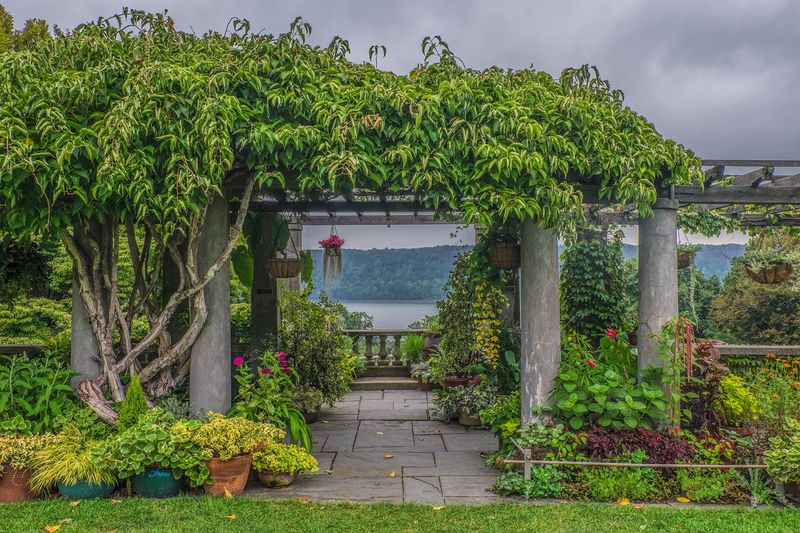
Standing at the pergola at Wave Hill on a clear afternoon and looking out across the Hudson River toward the New Jersey Palisades is one of those New York moments that stops you completely in your tracks.
Located at 4900 Independence Avenue in the Riverdale section of the Bronx, Wave Hill sits on 28 acres of land that somehow manages to feel both carefully cultivated and genuinely wild at the same time.
The Flower Garden is the crown jewel of the property, featuring a rotating cast of rare and unusual perennials, annuals, and tropicals that change with every season.
The Wild Garden takes a deliberately naturalistic approach, celebrating the kind of untamed beauty that formal gardens often try to suppress.
The Aquatic Garden features waterlilies and other water-loving plants in a setting that feels quietly meditative.
Mark Twain and Theodore Roosevelt both lived on this land at different points in history, which adds a layer of cultural richness to what is already a visually extraordinary place. Free admission is available on certain mornings throughout the year.
The cultural programming includes art exhibitions and workshops that make Wave Hill more than just a garden. For Bronx residents especially, this place is a genuine neighborhood treasure that the rest of the city often sleeps on.
8. Mohonk Preserve Testimonial Gateway
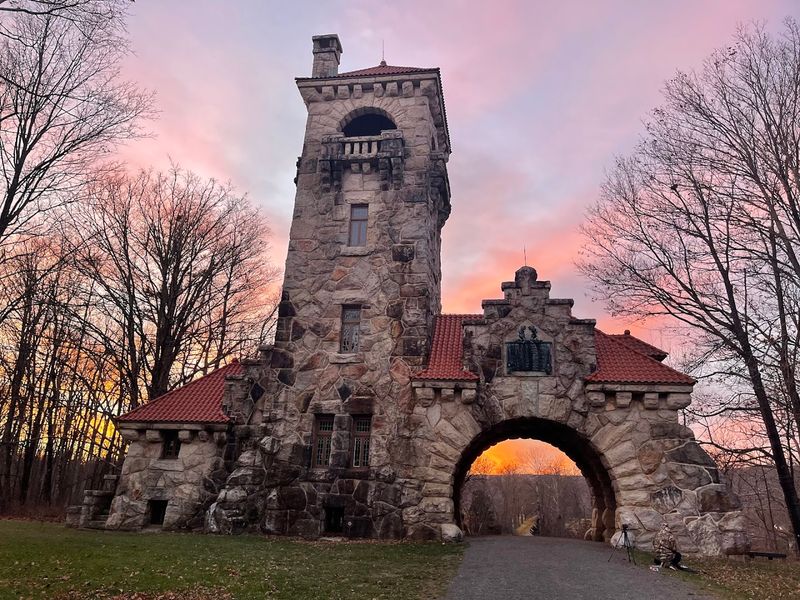
Few places in New York State deliver the kind of raw, wide-open beauty that the Mohonk area around New Paltz provides.
The Testimonial Gateway sits at the entrance to the Mohonk Mountain House property, and the surrounding Mohonk Preserve offers some of the most spectacular walking terrain in the entire Hudson Valley.
The preserve is accessible via Mountain Rest Road in New Paltz, and the scenery starts impressing you well before you reach the trailhead.
The gardens around the Mohonk Mountain House grounds include perennial borders, a putting green garden, and a kitchen garden that has been producing vegetables and herbs for the historic hotel since the Victorian era.
The formal garden areas are maintained with meticulous care and sit dramatically against a backdrop of Shawangunk Ridge cliffs that rise sharply behind the property.
Wildflowers along the preserve trails bloom in waves from early spring through late autumn, with different species taking center stage each month.
The combination of cultivated garden spaces and wild natural terrain makes the Mohonk experience genuinely unique among New York public gardens.
The cliffside paths offer views that feel more like the Swiss Alps than upstate New York. Day passes for the preserve trails are available, and the investment is absolutely worth every penny for what you get in return.
9. Snug Harbor Cultural Center And Botanical Garden
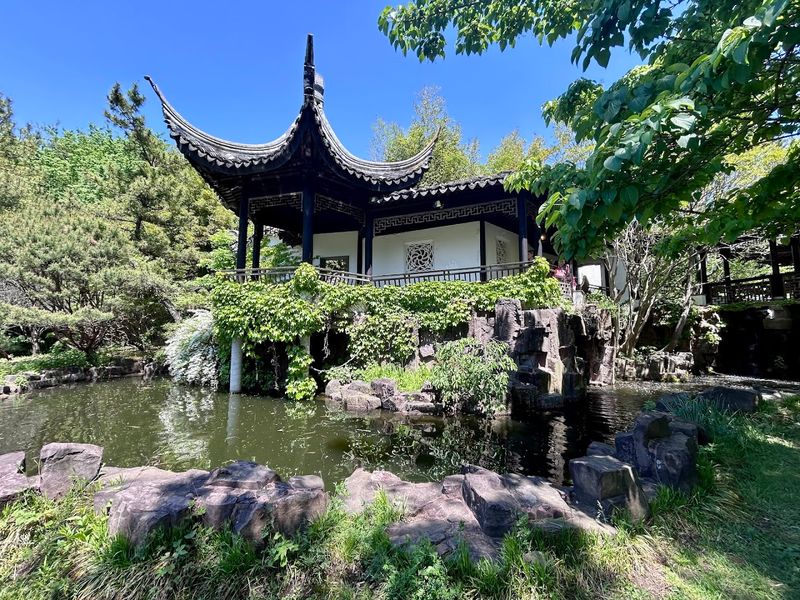
Staten Island does not always get the respect it deserves from the other four boroughs, but Snug Harbor is the kind of place that makes a very convincing argument.
Located at 1000 Richmond Terrace in Staten Island, the cultural center and botanical garden complex spans 83 acres of Greek Revival architecture, diverse gardens, and wetlands.
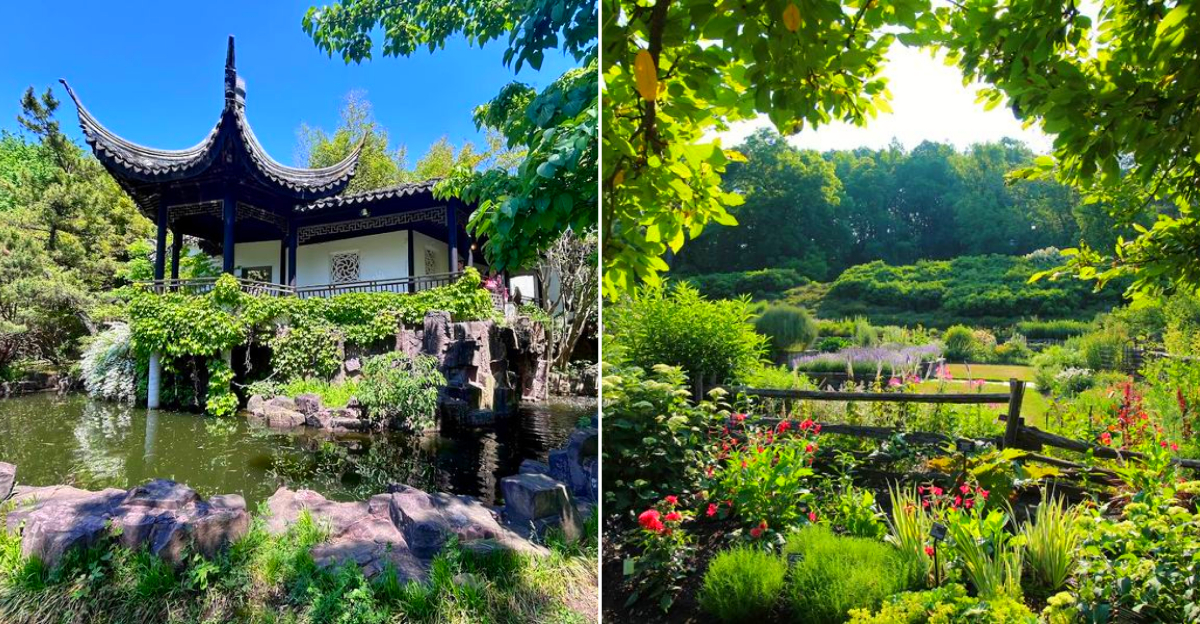
The Chinese Scholar’s Garden is the crown achievement of the property.
Built by craftsmen from Suzhou, China using traditional techniques and materials, it is one of only two authentic Chinese Scholar’s Gardens in the entire United States.
The level of detail in the pavilions, rock formations, and plantings is extraordinary and rewards genuinely slow exploration.
The New York Chinese Scholar’s Garden sits alongside a rose garden, a perennial garden, a Tuscan-inspired Italian Renaissance garden, and a Healing Garden filled with woodland plants.
The wetland areas attract serious birdwatchers throughout the year.
The grounds are free to walk, with admission charged only for the Scholar’s Garden and certain special exhibitions.
10. Bayard Cutting Arboretum State Park
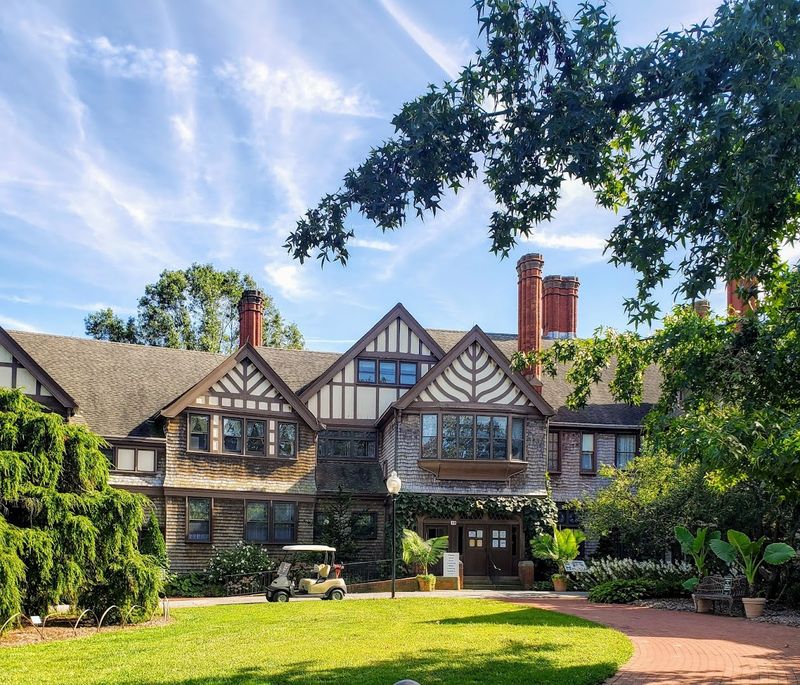
William Bayard Cutting built this arboretum in 1887 as a gift to the people of Long Island, and over a century later that gift keeps paying extraordinary dividends.
Located at Montauk Highway in Great River, the arboretum sits along the Connetquot River on Long Island’s South Shore and covers 690 acres of carefully planted specimen trees and wildflower walks.
The conifer collection here is one of the finest in the northeastern United States.
Giant sequoias, weeping beeches, and rare dawn redwoods line the main walking paths, creating a cathedral-like canopy effect that is especially dramatic in autumn when the color contrast between deciduous and evergreen trees reaches its peak.
The rhododendron collection bursts into color each spring and draws visitors from across the region.
Five distinct walking trails wind through different sections of the property, ranging from easy riverside strolls to longer routes through the more naturalistic wooded areas.
The Tudor Revival mansion on the grounds is open for tours and houses a small museum about the Cutting family and the arboretum’s history.
Parking fees apply as it is a New York State Park, but an Empire Pass covers entry. Early morning visits in any season offer the quietest and most atmospheric experience on the grounds.
11. Clark Botanic Garden
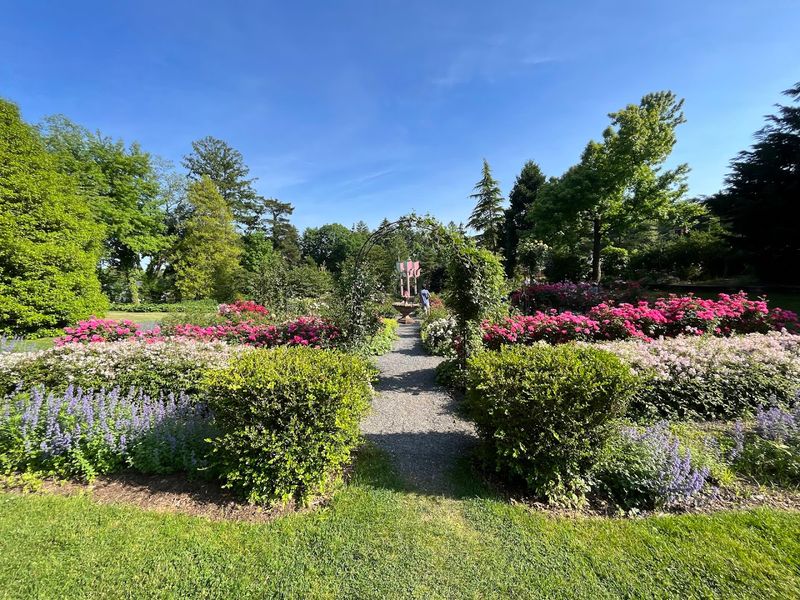
Clark Botanic Garden is Long Island’s best-kept secret and a genuine gem hiding in plain sight in Albertson. Operated by Nassau County and located at 193 I.U.
Willets Road in Albertson, the 12-acre garden packs an impressive variety of plant collections into a surprisingly intimate space that rewards careful, unhurried exploration.
The rose garden here is a particular highlight, featuring hundreds of varieties in a formal layout that peaks in June but continues offering blooms well into autumn.
The perennial border is one of the most thoughtfully designed in the New York metropolitan area, with plant selections chosen to ensure that something is always in bloom from early spring through the first frost.
The woodland garden provides a shaded contrast to the sunny formal areas.
A teaching garden dedicated to horticultural education makes Clark especially valuable for families with curious kids who want to understand where food and flowers actually come from.
The sensory garden, designed with accessibility in mind, features plants selected for fragrance and texture.
Admission is free, which feels almost absurd given the quality and care evident throughout every section of the grounds.
Weekday mornings are particularly peaceful here, with mostly local gardeners and retirees who treat the space with the quiet reverence it genuinely deserves.
Clark rewards return visits in every season.
12. Stonecrop Gardens
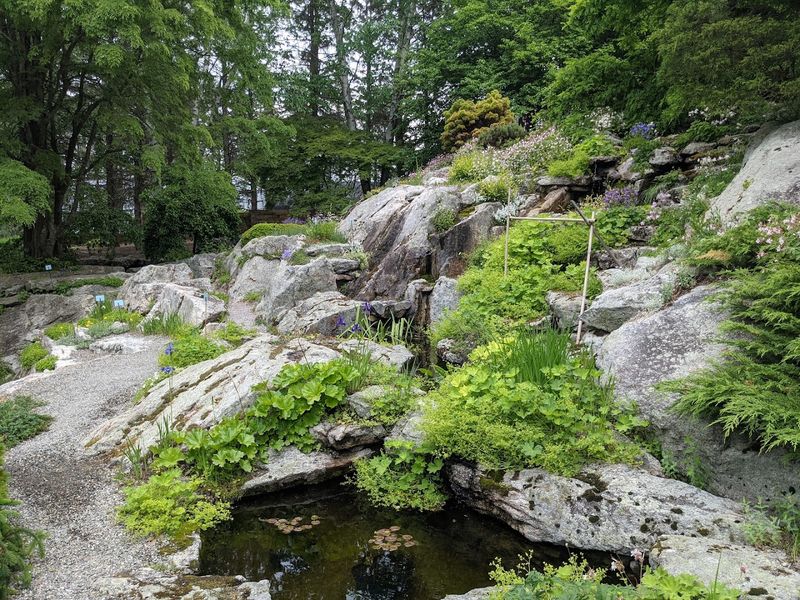
Stonecrop Gardens in Cold Spring operates on a level of horticultural sophistication that is genuinely rare anywhere in the country.
Founded by Anne and Frank Cabot, the garden at 81 Stonecrop Lane in Cold Spring sits in the Hudson Highlands. It covers approximately 12 acres of terrain that ranges from formal enclosed gardens to naturalistic woodland and wetland areas.
Getting here requires a bit of a drive, but the reward is completely proportional to the effort.
The enclosed flower garden features an extraordinary collection of unusual perennials and tender plants that most public gardens would never attempt to grow in a Northeast climate.
The alpine house and cliff rock garden showcase rare mountain plants from around the world, displayed with the kind of precision and knowledge that reflects decades of expert cultivation.
The aquatic and bog garden adds another layer of botanical diversity that few gardens of any size can match.
Stonecrop is open only on select days from April through October, and advanced reservations are strongly recommended because capacity is intentionally limited to preserve the quality of the experience.
The garden also operates a specialty nursery where rare plants propagated on-site are available for purchase.
For serious plant enthusiasts, a visit to Stonecrop is less of a casual outing and more of a pilgrimage. It absolutely lives up to that level of expectation.