
Tennessee Made History With These Groundbreaking American Firsts

Some places are remembered for one major moment. Tennessee has a much longer list.
Over the years, bold ideas, unexpected breakthroughs, and history making decisions have given the Volunteer State a powerful place in the American story. Many of these achievements changed daily life in ways people still feel today.
A few began with simple experiments. Others required courage, persistence, and a willingness to challenge what everyone else accepted.
The most surprising part? Several of these firsts are rarely mentioned, even though their influence reached far beyond Tennessee.
This is not just a collection of dates and facts. Each story reveals how one idea can grow into something much bigger and leave a mark for generations.
Some accomplishments brought progress. Others sparked debate and changed the direction of entire industries.
Tennessee has made history more times than most people realize, and these groundbreaking firsts prove just how far its influence has traveled.
1. The First State Admitted After A Period Of Federal Territorial Government

Before Tennessee showed up, nobody had a clear script for how a federal territory becomes a full state.
On June 1, 1796, Tennessee changed that forever by becoming the 16th state in the Union, and the first to make the leap after being governed as an organized federal territory, specifically the Southwest Territory.
What made this moment truly bold was the method. Tennessee’s leaders elected a governor, senators, and a congressman before Congress had even officially said yes.
That audacious move became known as the “Tennessee Plan,” a template that future territories would later follow.
The story is anchored in Knoxville, the state’s first capital, where Blount Mansion still stands as a National Historic Landmark.
It was home to William Blount, the Southwest Territory’s first and only governor, who steered Tennessee’s determined push toward statehood.
Walking through that mansion today feels like stepping into the room where the nation’s expansion first learned how to follow a map.
2. The First Former Confederate State Readmitted To Congress

Reuniting a fractured nation is never simple, and Tennessee proved that even the hardest roads can lead somewhere meaningful. On July 24, 1866, Tennessee became the first former Confederate state to regain its seat in the U.S.
Congress, a milestone that carried enormous symbolic weight for a country still raw from division.
The key that unlocked the door was ratification of the Fourteenth Amendment, which guaranteed equal citizenship and legal protections. Tennessee moved faster than its Southern neighbors, and that speed earned it a historic distinction no other state could claim.
Nashville, the state capital, carries the quiet weight of this chapter in every stone of its civic buildings.
There is no single monument marking this legislative turning point, but the decision rippled outward, influencing how Reconstruction unfolded across the entire South.
Tennessee did not just rejoin a government; it helped define what reconciliation could look like, setting a precedent for the long and complicated work of bringing a divided country back together again.
3. Tennessee Passed The Nation’s First Child Passenger Restraint Law
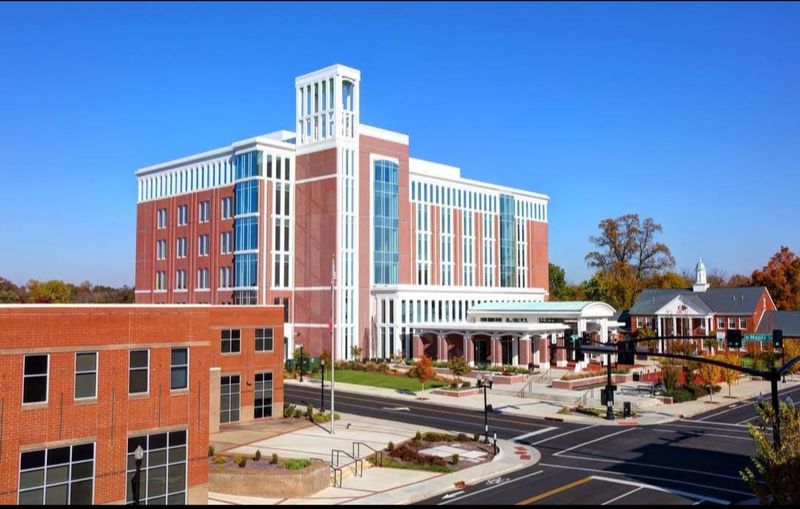
Every parent who buckles a child into a car seat today owes a quiet thank-you to a pediatrician from Murfreesboro.
Dr. Robert Sanders, affectionately nicknamed “Dr. Seat Belt,” spent years pushing for a law that most people had never even considered necessary.
His persistence paid off in 1977, when Tennessee passed the country’s first child passenger restraint law.
The law took effect on January 1, 1978, and it did not stay a Tennessee story for long. Within just a few years, the ripple effect reached every corner of the country, and by 1985, all 50 states had adopted similar legislation.
That is the kind of impact one determined doctor and one forward-thinking state can have.
In Murfreesboro, a Tennessee Historical Commission marker at the corner of West Burton Street and North Maple Street honors Dr. Sanders and his life-saving legacy.
A small sign on a street corner might seem modest, but the lives protected by child restraint laws across the nation tell the real story of how big that moment actually was.
4. The Nation’s First Statewide College Promise Program
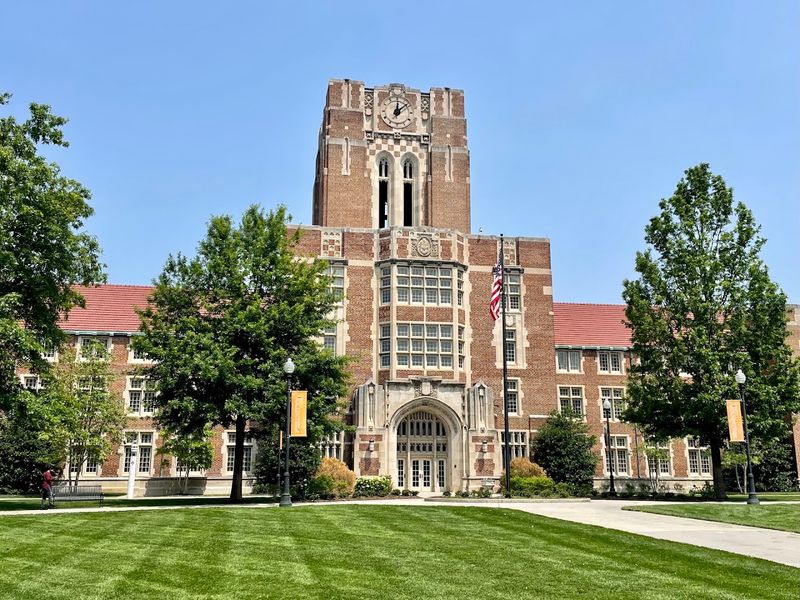
Paying for college has long been one of the biggest hurdles for American students, and Tennessee decided to tackle that problem head-on.
In 2014, the state created Tennessee Promise, making it the first in the nation to launch a statewide program offering eligible high school graduates tuition-free access to community and technical colleges.
Students who entered college in 2015 were the first to benefit.
The program works as a last-dollar scholarship, meaning it covers remaining tuition costs after other financial aid has been applied.
It does not pay for every college expense, but it removes the single biggest financial barrier for many students who might otherwise skip higher education entirely.
Tennessee Promise sparked a national conversation about making college more accessible, and dozens of states have since created their own versions.
For Tennessee, the program reflects a broader philosophy: that a well-educated workforce starts with removing obstacles, not adding them.
What began as a state-level experiment quickly became a blueprint that reshaped how the entire country thinks about the connection between opportunity and education.
5. The First State To Offer Two Free School-Day ACT Opportunities

For many students, the ACT is a high-stakes test that comes with a high price tag. Tennessee decided to change that equation entirely.
The state became the first in the country to give public high school students not one, but two free chances to take the ACT during regular school hours, removing both the financial and logistical barriers that often kept students from performing their best.
The first opportunity arrives during junior year, built right into the school calendar so no student has to arrange a weekend trip to a testing center.
Then, the state funds a second attempt during senior year, giving students a real shot at improving their scores before college applications are due.
This approach reflects something practical and smart: a single test on a single day does not always capture what a student is capable of.
By doubling the opportunity and eliminating the cost, Tennessee gave its students a genuine advantage in the college admissions process, proving that thoughtful policy can open doors that financial pressure might otherwise keep firmly shut.
6. The Nation’s First Registered K-12 Teacher Apprenticeship
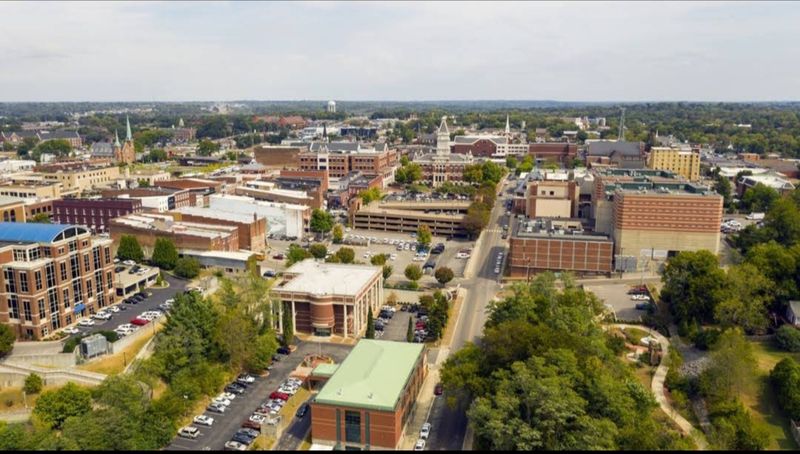
Teacher shortages are a real problem across the United States, and Clarksville decided to tackle it with a genuinely creative solution.
In January 2022, a partnership between the Clarksville-Montgomery County School System and Austin Peay State University launched the first federally registered K-12 teacher apprenticeship program in the entire country.
The model is refreshingly practical. Apprentices earn a paycheck while working in classrooms, gaining hands-on experience at the same time they complete their academic coursework.
No waiting until graduation to figure out if teaching is the right fit; apprentices learn the craft while doing the craft.
Tennessee doubled down on this approach by also becoming the first state to sponsor Teacher Occupation Apprenticeship programs more broadly, cementing its reputation as a laboratory for education innovation.
Clarksville, a city known for its connection to Fort Campbell and its growing arts scene, added a new chapter to its identity as a place where forward-thinking ideas take root.
The program has since drawn national attention from states eager to address their own teacher pipelines.
7. The First State Law Specifically Protecting Voices Against AI Cloning

Artificial intelligence can now clone a person’s voice with unsettling accuracy, and Tennessee was the first state in the country to say: not without permission.
The ELVIS Act was signed into law in March 2024 and took effect on July 1, 2024, adding a person’s voice to the list of legally protected personal rights in Tennessee.
The name is no accident. Tennessee is the birthplace of rock and roll royalty, the home of country music, and a place where a performer’s voice is quite literally their livelihood.
But the law does not stop at protecting famous artists. Any individual, regardless of fame or fortune, is covered under its provisions against unauthorized AI-generated impersonations.
Nashville, widely celebrated as Music City, is the natural backdrop for this kind of pioneering legislation. The ELVIS Act has already sparked conversations in legislatures across the country, with other states studying its framework as a model.
Tennessee once again found itself ahead of the curve, this time in the rapidly shifting world where technology and personal identity collide.
8. The Nation’s First State Regulatory Framework For Fusion Machines

Nuclear fusion has long been described as the energy source of the future, and Tennessee just decided the future starts now.
Rules that took effect on June 9, 2026, made Tennessee the first state in the nation to establish its own comprehensive regulatory framework specifically covering nuclear fusion machines and the activities surrounding them.
This is not just bureaucratic paperwork. Having a clear regulatory structure signals to researchers, investors, and energy companies that Tennessee is open for business in one of the most exciting and consequential fields in modern science.
It creates a defined pathway for developing and operating fusion technology safely and efficiently.
Oak Ridge, a city with deep roots in nuclear history dating back to the Manhattan Project, is expected to play a central role in this new chapter.
The proposed Type One Energy commercial fusion power plant near Oak Ridge is among the early candidates to operate under the new framework.
Tennessee is once again positioning itself at the frontier of something enormous, proving that a state with a rich scientific past is not finished writing its future yet.
9. America’s First Fully Self-Service Grocery Store Opened In Memphis

Picture this: a time when buying groceries meant handing a written list to a store clerk, waiting while they gathered each item, and then paying for the whole bundle. That was simply how shopping worked, until Clarence Saunders had a different idea entirely.
In September 1916, he opened the first Piggly Wiggly at 79 Jefferson Street in Memphis, Tennessee, and retail was never the same again.
Saunders’ concept was radical for its era. Customers walked through designated aisles, picked products off open shelves themselves, and paid at a central checkout on the way out.
No clerk, no waiting, no guesswork. The experience put the shopper in control, and shoppers loved it immediately.
The Piggly Wiggly model spread rapidly across the country, becoming the foundation for the modern supermarket as the world knows it today.
Memphis honors this chapter of retail history at the Pink Palace Museum and Planetarium, which features a replica of the original store.
Saunders built more than a grocery chain; he redesigned the entire relationship between a customer and a store, one aisle at a time.
10. The Electric Cotton Candy Machine Was Invented In Nashville

Here is a detail that never gets old: the person who helped invent cotton candy was a dentist. Nashville’s own William Morrison, working alongside confectioner John C.
Wharton, developed an electric machine in 1897 that could spin heated sugar into the airy, cloud-like threads now beloved at fairs and carnivals around the world.
They called their creation “fairy floss,” which honestly sounds even more magical than cotton candy. The invention made its grand public debut at the 1904 World’s Fair in St. Louis, where it caused a sensation.
Nearly 70,000 boxes were sold during the fair, which is a remarkable number for a brand-new product that most people had never seen before.
The irony of a dentist co-inventing one of the world’s most sugary treats has delighted people for over a century, and rightfully so.
Nashville, a city already famous for its music and its hot chicken, can add this particular sweet triumph to its long list of cultural contributions.
The next time a swirl of pink sugar appears on a stick, remember that it all started with a Nashville dentist with a very inventive side hustle.
11. The First Reactor Designed And Built For Continuous Operation Ran In Oak Ridge

Oak Ridge carries a weight of history that few cities can match.
On November 4, 1943, the X-10 Graphite Reactor fired up for the first time, and the Department of Energy recognizes it as the first nuclear reactor ever specifically designed and constructed for continuous operation.
That distinction places Oak Ridge at a turning point in the history of science itself.
The reactor was a critical piece of the Manhattan Project, the wartime research effort that fundamentally changed the trajectory of the 20th century.
While earlier reactors had demonstrated that a sustained nuclear chain reaction was possible, the X-10 was engineered from the ground up to keep running, producing materials needed for further research at a scale that had never been attempted before.
Today, the X-10 Graphite Reactor is part of the Manhattan Project National Historical Park in Oak Ridge.
Oak Ridge earned its place on the map through extraordinary scientific ambition, and that legacy continues to define the city’s identity long after the wartime era faded into the history books.