
The 4.6-Mile Kentucky Hike With Limestone Caves And Cliffside Views That Seem Almost Unreal
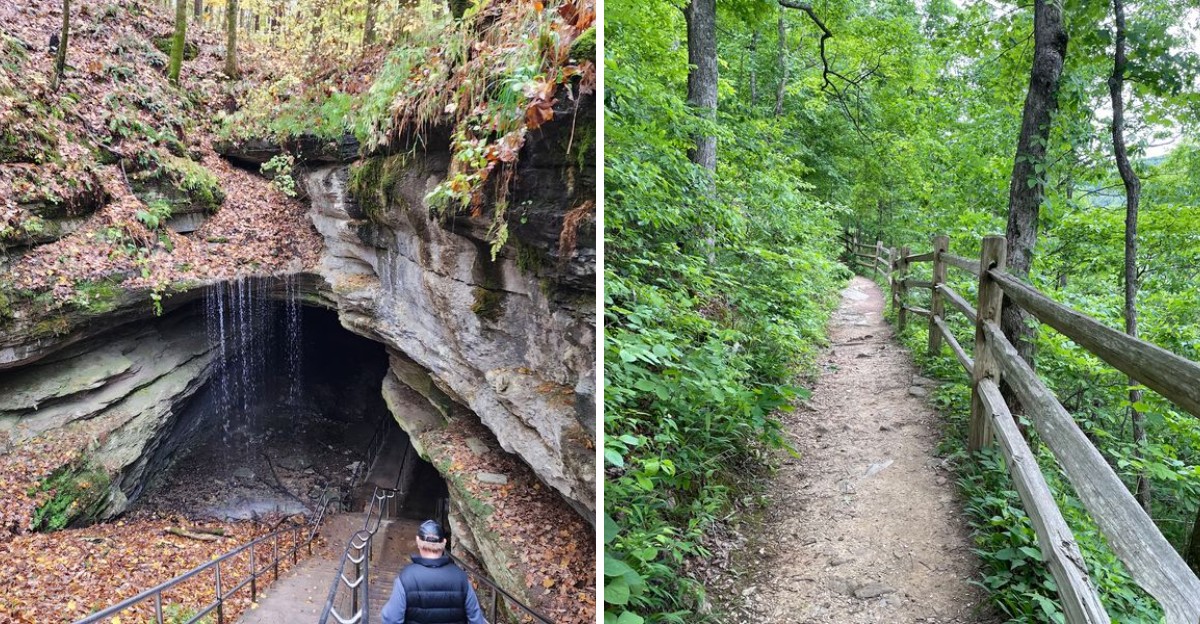
Somewhere beneath your boots, more than 400 miles of mapped cave passages twist through the dark. That’s the longest known cave system on the planet, and you can hike right over it.
Up top, the ground plays tricks too. Sinkholes dip into the forest floor, cave mouths open beside the path, and sandstone bluffs drop toward a green river valley. I like how one walk can feel like a geology lesson and a postcard at the same time.
This loop sits in south-central Kentucky, and it runs roughly four and a half miles. That’s short enough for an afternoon but packed with more surprises than some all-day treks.
I can’t imagine a better way to understand a cave than by first walking its roof. So what exactly is waiting along those bluffs?
You Are Basically Strolling Across The Roof Of The World’s Longest Cave
Mammoth Cave National Park holds a record that sounds made up. Over 400 miles of cave passages have been surveyed here, and explorers keep finding more.
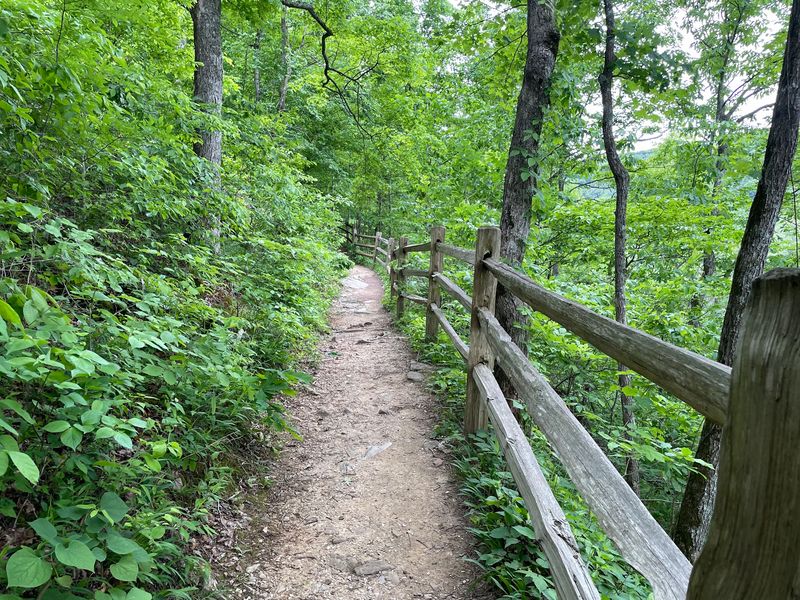
The best part for hikers is the trail network around the visitor center. A loop linking the Green River Bluffs, Sinkhole, and Heritage trails covers roughly four and a half miles.
Some hikers stretch it a bit with nearby connectors like River Styx Spring Trail. The visitor center area holds about 7.2 miles of trails, so building your own route is easy.
Entry to the park and its surface trails is free. Paying only kicks in for cave tours, campgrounds, and picnic shelters, which feels like a pretty generous deal.
The park is open around the clock all year for surface activities. Services like the visitor center and cave tours keep shorter hours, so plan around those.
Wear real hiking shoes, since the path rolls up and down along the bluffs. Pack water, too, because Kentucky summers average in the high 80s and the forest air can feel sticky.
A morning start gives you cooler temperatures and more time to wander. You will probably want that extra time once the views show up.
The Bluffs Hand You A River Valley View Worth The Uphill Effort
High above the Green River, the trail clings to the edge of tall bluffs. Exposed sandstone cliffs line parts of the route, and the drop below is real.
Through gaps in the trees, the Green River Valley spreads out like a giant green quilt. Spring and summer turn it into a wall of leaves, while fall adds plenty of color.
Sunset Point is one of the most popular spots to soak in the scene. The name gives away its best hour, and the view earns every bit of the hype.
Treat these cliffs with respect, especially with kids or dogs along. Stay on the marked path and skip any urge to creep closer for a dramatic photo.
The Green River matters to the cave below, too. Water shaped this whole region, carving the valley while also dissolving rock underground.
Bring a small pair of binoculars if you have them. Scanning the river and the far ridges makes the overlook stop last longer.
Honestly, the bluffs feel like the trail’s way of saying thanks for the climb. A quick snack break here never feels rushed.
Watch The Ground Because It Has Been Quietly Sinking For Ages
Those bowl-shaped dips in the forest are not random. They are sinkholes, and they tell the story of the whole park in one glance.
The land above Mammoth Cave is called karst. Over millions of years, water dissolved the ancient limestone bedrock, leaving tunnels below and collapses above.
That rock dates back to the Mississippian period, which is wildly old. Rainwater slowly ate through it, forming underground rivers and the giant cave you are standing over.
The Sinkhole Trail gives you a close look at these features. Some are wide and gentle, while others feel deeper than you expect for a forest floor.
Kids usually love this part, and it makes a great science moment. Ask them where they think the rainwater goes, then explain it heads underground into the cave.
Stick to the trail around the edges instead of scrambling inside. Slopes can be slippery, especially after rain, and the region gets about 50 inches of rain a year.
Once you notice sinkholes, you start spotting them everywhere. Kentucky suddenly looks a lot less flat and a lot more mysterious.
A Gated Cave Entrance Protects Some Very Sleepy Neighbors
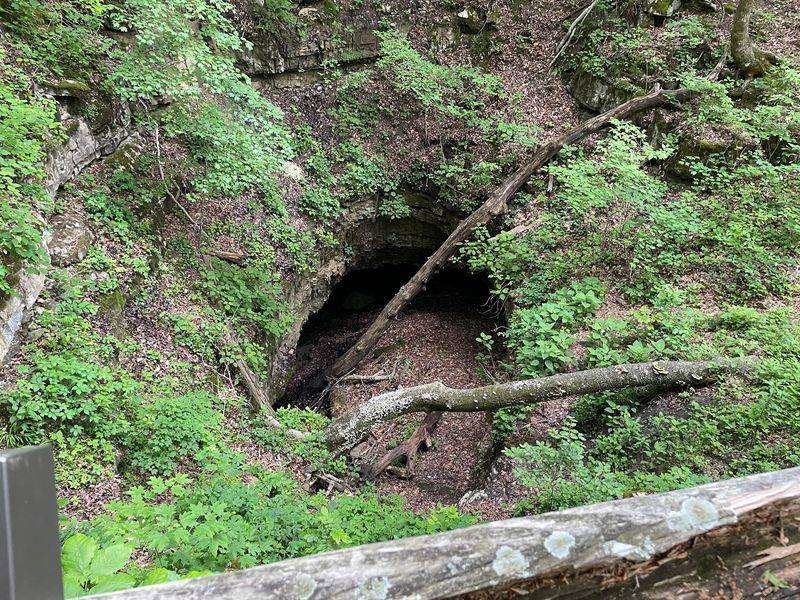
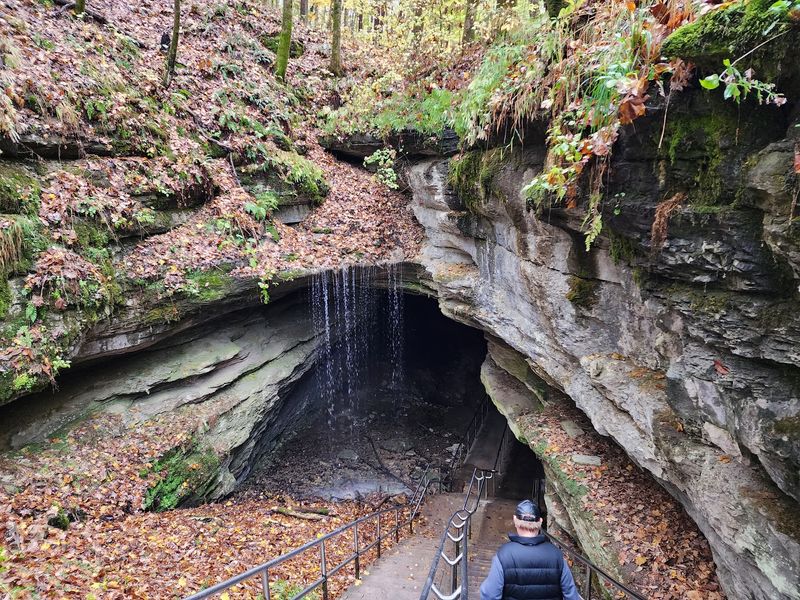
Bats get the VIP treatment here, and fair enough. Dixon Cave, one of the cave openings you can see near the trails, sits behind a protective gate.
The gate keeps people out so endangered Indiana bats and gray bats can hibernate in peace. Winter rest matters a lot for these small creatures.
Seeing a cave mouth from the surface feels a little thrilling. Cool air, dark rock, and a hint of the hidden world below make it easy to linger.
Please stay outside any closed or gated cave. Even quiet visitors can disturb resting bats, and the rules exist for good reasons.
The trails also offer views of historic cave entrances and surface limestone formations. It’s a sneak preview before any underground tour you book later.
Bring a phone or camera, but keep your flash pointed at the trail, not the cave. Respectful snapping is the name of the game.
I believe moments like this make the hike special. You are not just looking at scenery, you are sharing the woods with wildlife that depends on this exact spot.
Spring Water Pops Out Of The Hillside Like A Magic Trick
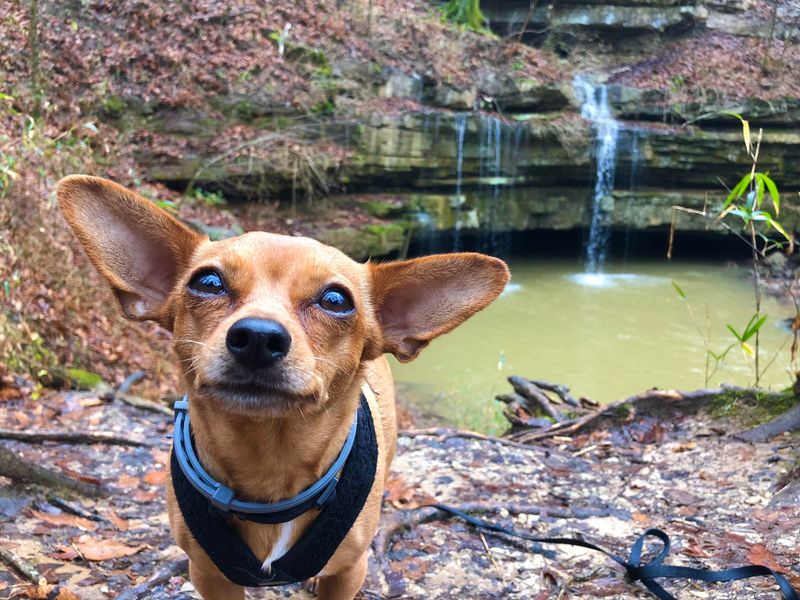
Underground rivers do not stay hidden forever. At River Styx Spring, water from inside the cave system flows out into daylight.
The River Styx Spring Trail links up with the Green River Bluffs Trail. Adding it to your loop is an easy way to see where the cave’s plumbing leads.
The name comes from Greek myths, which gives it a spooky storybook feel. In real life, the spot is calm and shady, with a quiet pool to admire.
Thickets of beech and sycamore line parts of these trails. Sycamores often love wet ground, so they fit right in near the water.
Plan for a bit more downhill on the way in. What goes down must come back up, and your legs will remember that on the return.
This stretch counts among the most accessible and scenic hikes near the visitor center. That makes it a strong choice for mixed groups with different energy levels.
Standing here, the cave stops feeling like an idea. You can see its water moving, which connects everything you have walked past so far.
Thank A 1930s Work Crew For All That Shade
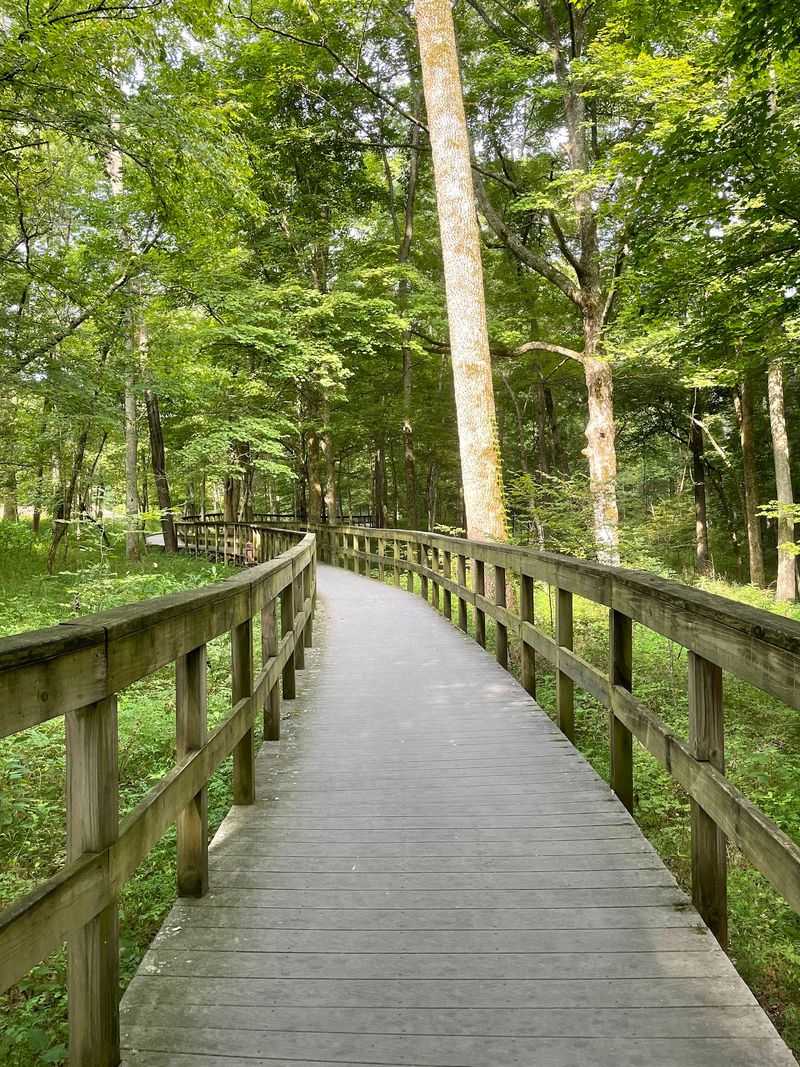
Plenty of the forest looks wild and ancient. Surprise, a lot of it was planted by the Civilian Conservation Corps in the 1930s and 1940s.
The CCC also built trails and historic cottages across the park. So some of the very paths you walk carry their handiwork.
The Heritage Trail adds more history right near the visitor center. Surface trails in this area also feature historic train engines and cemeteries.
Mammoth Cave was authorized as a national park in 1926. It officially became one on July 1, 1941, protecting the cave, the river valley, and the hills around it.
Big global honors followed later. The park became a World Heritage Site in 1981 and an International Biosphere Reserve in 1990.
Read the signs along the way, because they add nice context without slowing you much. Kids can turn spotting old structures into a mini scavenger hunt.
It’s fun to realize a forest can have a backstory. Every shady stretch on a hot Kentucky afternoon is a small gift from that crew.
Your Hike Starts At A Hub With Maps, Snacks, And Tour Tickets
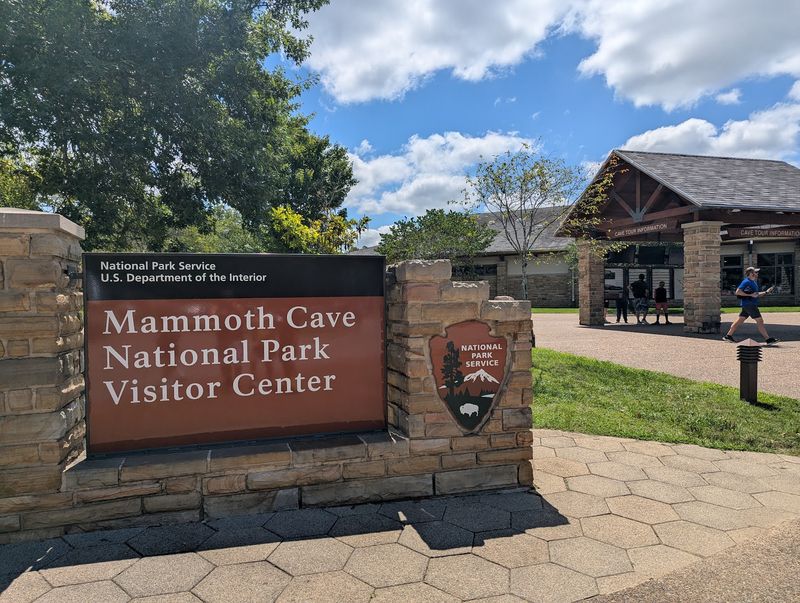
Every good adventure needs a home base. The Mammoth Cave Visitor Center fills that role, sitting at 1 Mammoth Cave Pkwy, Mammoth Cave, KY 42259.
Inside, you’ll find maps, park information, and tickets for cave tours. Exhibits cover the cave’s geology and history, which helps everything outside make more sense.
There is also a gift shop and a café. Grabbing a bite before or after your loop beats hiking on an empty stomach.
Getting there takes a little planning. The National Park Service advises against relying only on GPS and offers directions from Interstate 65 exits instead.
No entrance gate greets you on arrival. That makes it simple to roll in, park, and get your boots moving.
Check visitor center hours before you go, since they are more limited than trail access. Showing up early also gives you a shot at snagging a cave tour the same day.
Think of this spot as a launch pad. You leave with a map, a plan, and probably a souvenir you did not technically need.
Go Underground After The Trail For The Full Two-Level Experience
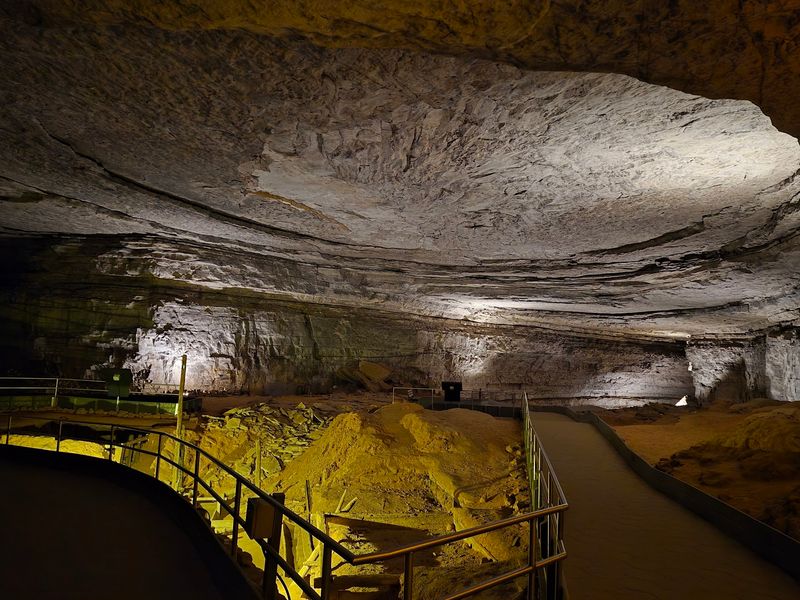
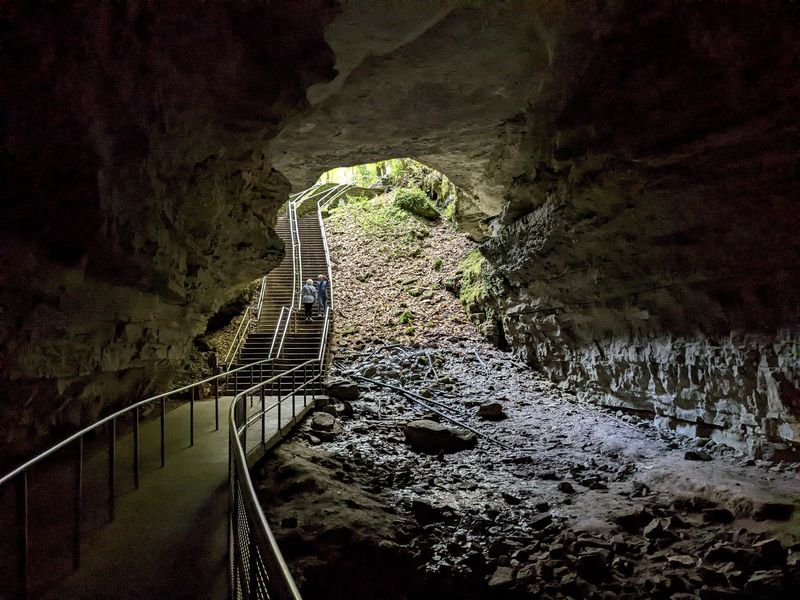
Walking over the cave is great, but walking inside it completes the story. Pairing your hike with a ranger-led cave tour makes for one memorable day.
Inside, the temperature stays at a steady 54 degrees Fahrenheit. In July, that feels amazing, so pack a light jacket even when it’s hot outside.
People have used this cave for a very long time. Indigenous peoples sheltered here and gathered minerals as early as 5,000 BCE.
Tourism here began around 1816, earlier than at many other national parks. Enslaved guides like Stephen Bishop, Mat, and Nick Bransford became famous for leading visitors.
Bishop explored many miles of passages and created the cave’s first map. His work still shapes how people understand this place today.
Tours do cost money and can fill up, so buy tickets ahead when you can. Choose one that matches your group’s fitness and comfort level.
After seeing sinkholes and springs from above, the passages below feel familiar in a strange way. Mammoth Cave National Park rewards visitors who explore both levels.
Stay The Night And Turn One Hike Into A Whole Weekend
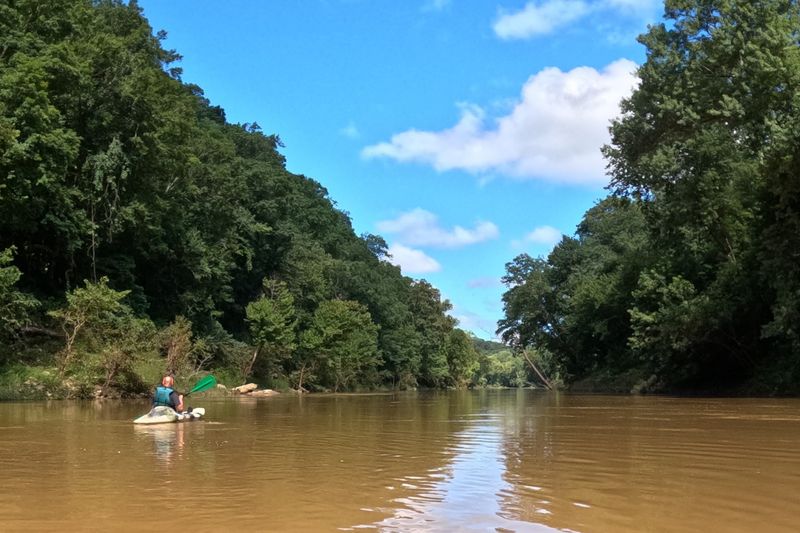
Leaving after one loop feels like reading only the first chapter. Mammoth Cave National Park covers about 53,000 acres, so there’s lots more to explore.
Camping options include Mammoth Cave Campground, Maple Springs Campground, and Houchin Ferry Campground. Backcountry camping is also allowed with a permit.
Paddlers can canoe or kayak on the Green and Nolin rivers. Anglers can cast a line there, too, which makes a relaxing follow-up to bluff hiking.
Cyclists have the Mammoth Cave Railroad Bike and Hike Trail. Horseback riding, wildlife watching, and stargazing round out the surface fun.
Picnic areas are scattered around the park as well. A packed lunch in the shade is a solid reward after those river views.
Spring tends to bring the most rain, so pack layers and waterproof gear. Winters hover in the low 40s, which can make for crisp, quiet trail days.
Kentucky clearly saved some of its best scenery for this corner of the state. Give it a weekend, and that 4.6-mile hike might become your favorite tradition.