
The Abandoned Mississippi Ghost Town With Ruins Massive Enough To Spot From The Highway
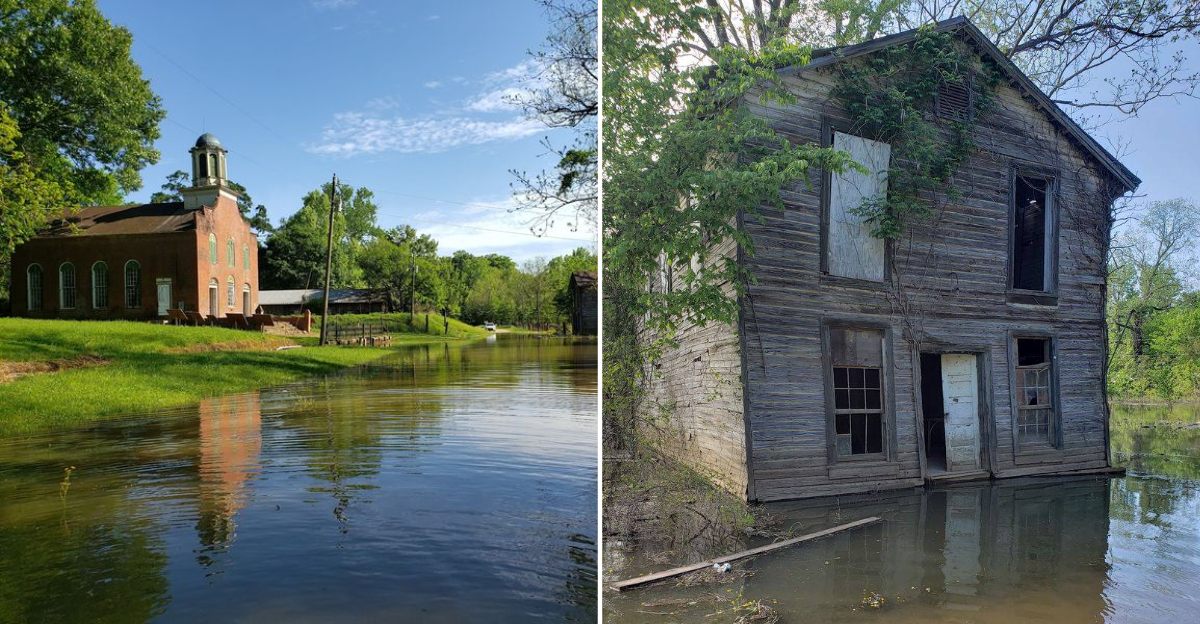
It’s hard to imagine a place that once buzzed with life now standing completely empty. This Mississippi ghost town holds ruins massive enough to spot directly from the highway.
Buildings here stand quietly, weathered by time but still recognizable despite years of neglect. Nothing about the town feels restored or maintained beyond what nature has already done to it.
Explorers who venture through often describe the silence as the strangest part of the entire experience. Stories about what happened here shift depending on who tells them, though the core details rarely change.
Photography opportunities exist throughout, especially where structures still hold onto their original character. This ghost town proved that sometimes the most striking history stands quietly in plain sight.
Historical Significance Of Ghost Towns
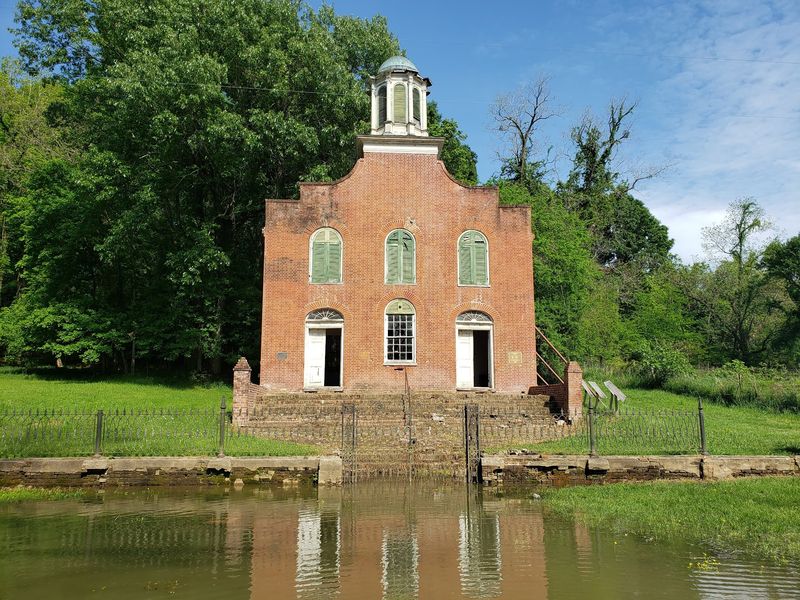
Back in 1828, this little riverside settlement was a serious contender. Rodney went toe to toe with Natchez and Vicksburg as a busy Mississippi River port, moving cotton, people, and gossip.
Here is the wild part. Rodney missed becoming the state capital by three votes in 1817, and it came close again after incorporation.
The town had Mississippi’s first opera house, and two newspapers before the Civil War even started. For a place now swallowed by woods, that is quite a resume.
Then things fell apart in stages. Yellow fever epidemics hit in the 1840s and again in 1898, fires burned through in 1852 and 1869, and Union troops plundered the town during the war.
The knockout punch came around 1869 to 1870, when the Mississippi River shifted its channel and left Rodney sitting two to three miles inland. Steamboats could not reach it anymore, and a port town without a river is just a town with regrets.
Railroads bypassed the area entirely in the 1880s, sealing the deal. By 1930, Rodney was officially disincorporated, which is the government’s polite way of saying nobody lives here now.
What remains is a rare snapshot of American boom and bust, sitting quietly at Rodney, Mississippi.
Architectural Features Of Ancient Ruins
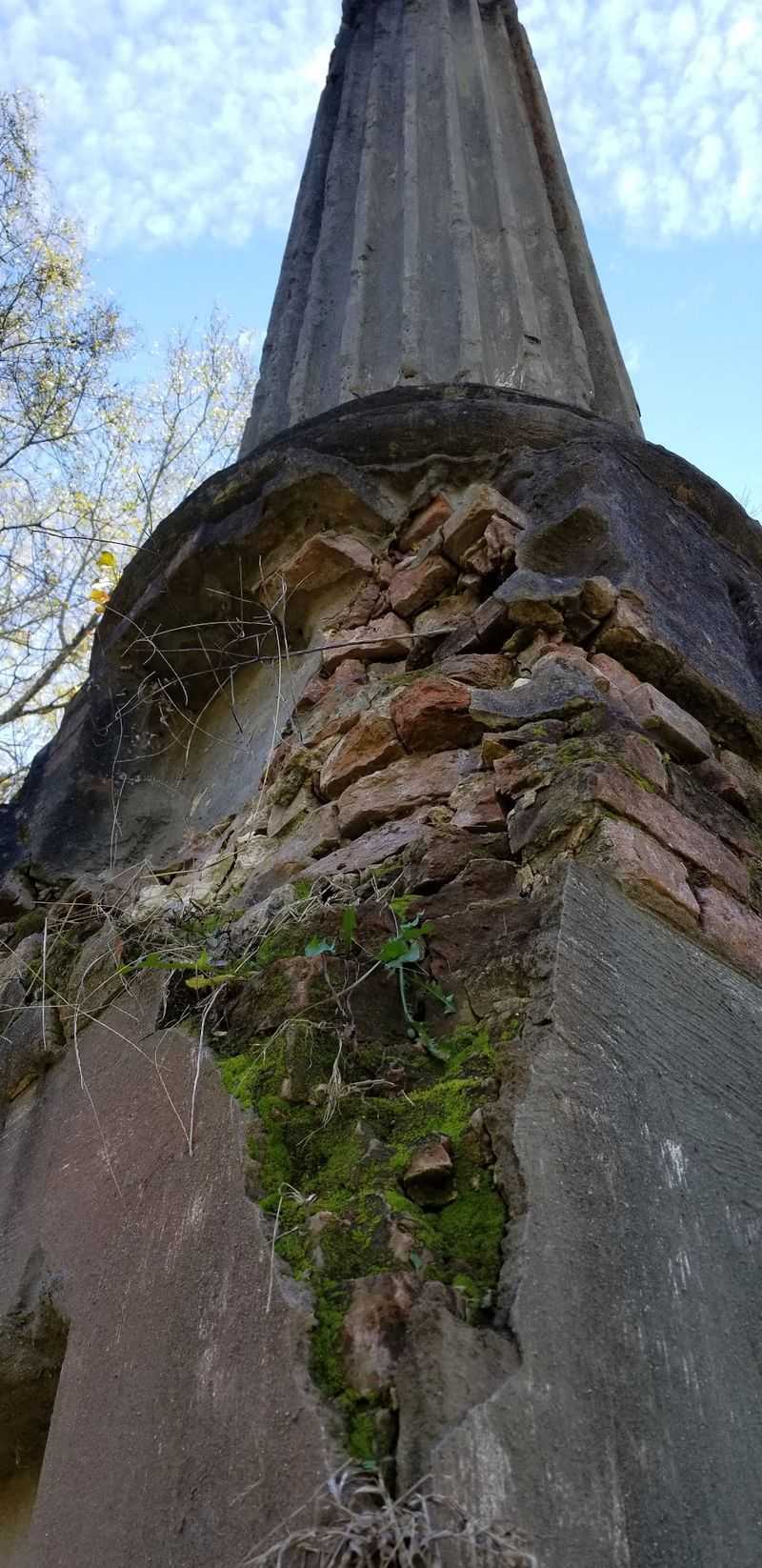
The star of the show is the Rodney Presbyterian Church, finished in 1832. Historians call it the most distinctive surviving Federal-style church in all of Mississippi, and standing in front of that brick facade, the claim holds up.
Look above the balcony windows, and there is a replica cannonball wedged into the brick. It marks the spot where the USS Rattler shelled the building during the Civil War, which is a fairly dramatic form of architectural detail.
Not far off sits the Alston Grocery Store, built around 1840 in a Greek Revival style. It once handled everyday business for a town that expected to keep growing forever.
Then there is the Rodney Baptist Church, also known as Mt. Zion Baptist Church No. 1, dating to roughly 1850.
Its design mixes Greek Revival with Gothic Revival touches, a combination that gives it a slightly unusual silhouette.
Most other structures are in rough shape. Vines climb the brickwork, roofs sag, and floodwater from the river’s old channel has chewed through wood and plaster for well over a century.
What survives still shows real craftsmanship. Hand-laid brick, tall arched windows, and proportions that were meant to impress visitors arriving by steamboat rather than by rutted dirt road.
Impact On Local Culture And Heritage
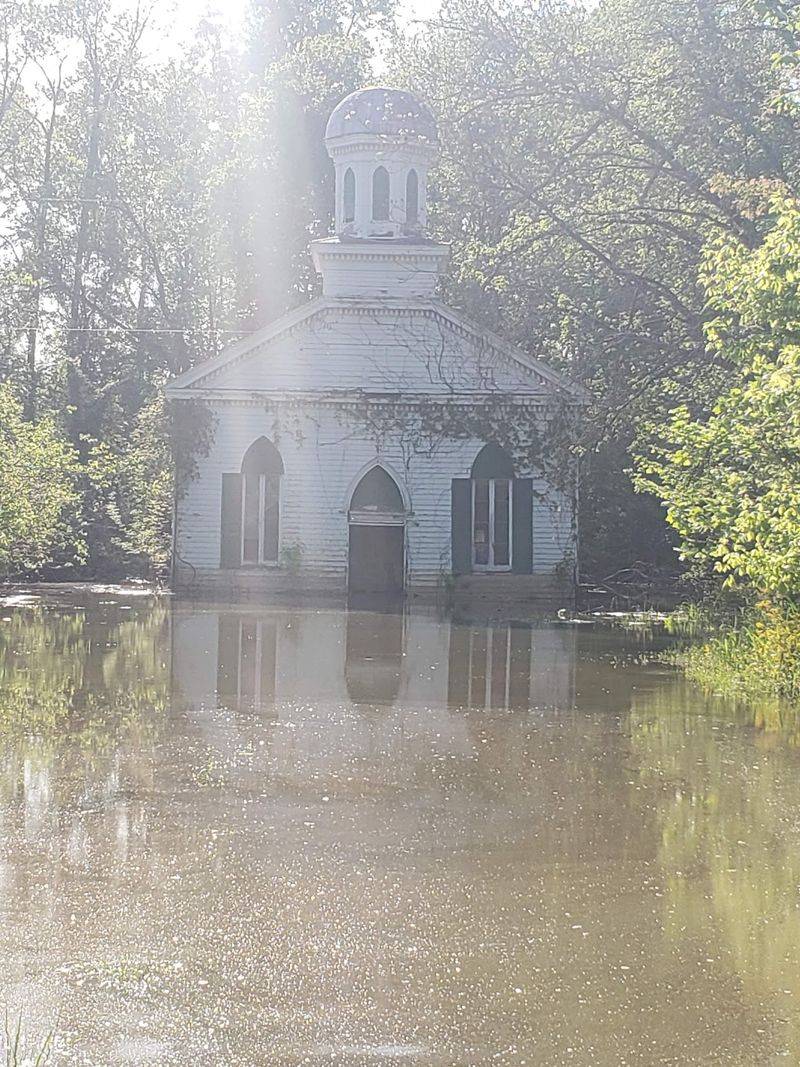
Writers noticed Rodney long before ghost town hunters did. Novelist Eudora Welty used the town as a setting in her novella The Robber Bridegroom, borrowing its river-country atmosphere for a story full of tall tales.
Around 1940, photographer Marion Post Wolcott documented the emptying town for the Farm Security Administration. Her images captured shuttered storefronts and quiet streets in a place that had already given up on a comeback.
The whole Rodney Center Historic District is listed on the National Register of Historic Places. That designation recognizes not just old buildings but the layered story attached to them.
Local lore keeps things lively. In 1863, Confederate cavalry slipped into town and captured Union sailors who were attending a Sunday service at the Presbyterian Church.
The response was swift and loud. The gunboat USS Rattler opened fire on the church, and that single afternoon became the most retold moment in Rodney’s history.
Modern context matters too. Rodney sits in Jefferson County, which ranks among the poorest and most food-insecure counties in the country, so preservation competes with plenty of urgent local needs.
Heritage here is not polished or packaged. It lives in family memory, church records, and a handful of buildings refusing to fall.
Conservation Efforts And Preservation Challenges
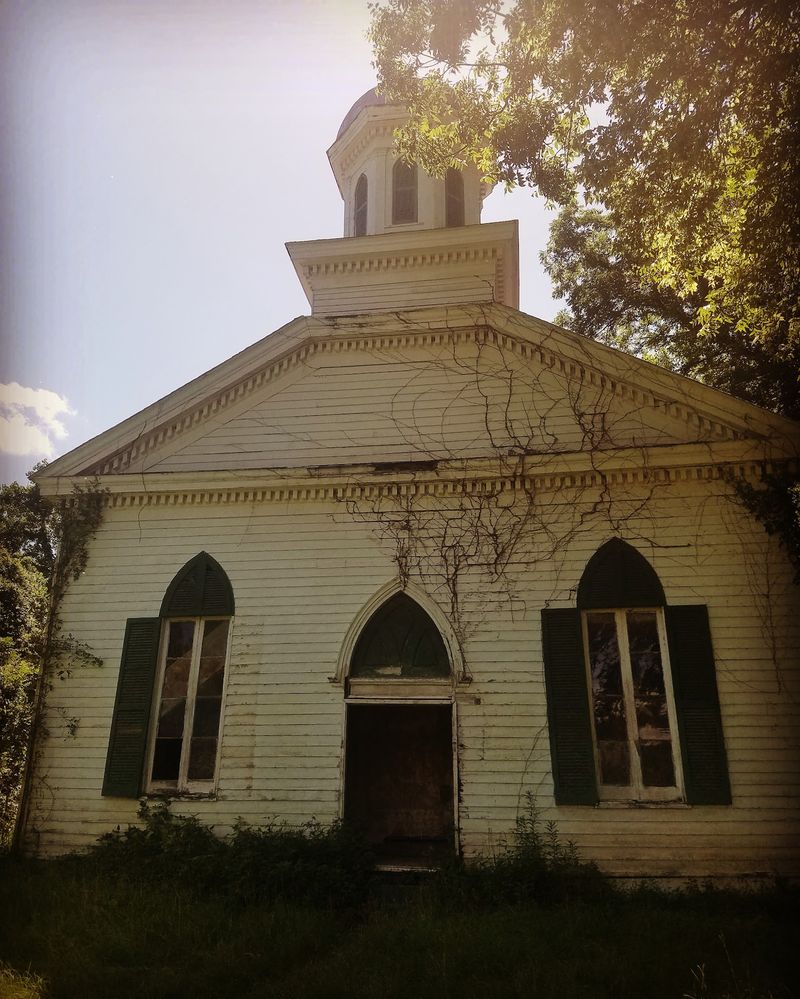
Saving a ghost town is not a weekend project. The Rodney History and Preservation Society has taken on the Presbyterian Church, working to stabilize and restore the building that anchors the whole site.
Their timing matters. In 2003, the Mississippi Heritage Trust named the church one of the ten most endangered historic places in the state, which is a flattering title nobody wants.
Flooding is the biggest villain in the story. The river’s old channel still swamps the area regularly, and every flood soaks brick, warps wood, and undoes progress.
Damage compounds over time. Water gets in, mortar weakens, floors rot, and vegetation pushes into cracks until walls start pulling apart on their own.
Money is the other hurdle. Fundraising drives the entire effort, and restoration on historic masonry requires skilled hands rather than volunteers with a bucket of mortar mix.
Progress tends to happen in small increments. A roof section here, a window frame there, each repair buying more time for a structure that has already survived shelling, fire, and abandonment.
Visitors can help simply by treating the site gently. Leaving bricks where they lie and staying out of unstable buildings costs nothing and protects what preservationists are fighting to keep upright.
Visitor Experience And Accessibility
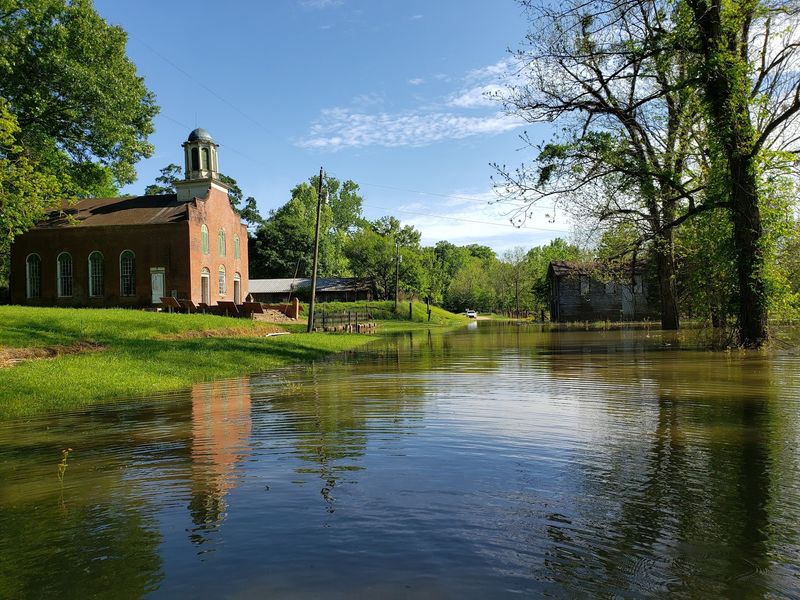
Reaching Rodney is genuinely part of the story. The drive involves a long stretch of degraded road that switches between cracked blacktop and plain dirt without much warning.
Ruts, potholes, and washboard sections are standard. Low-clearance cars have a hard time, and rain turns portions of the route into something closer to pudding.
Most people start from US Highway 61 near Lorman, or exit the Natchez Trace Parkway at milepost 37. From there the route strings together MS-552, Fellowship Road, Firetower Road, and finally Rodney Road.
Cell service gets unreliable out in the Jefferson County backwoods, so downloading maps ahead of time saves a lot of frustration. Printed directions are not a bad backup either.
Once the trees open up, the mood changes fast. Empty buildings, silence, and the sense that a whole community simply walked away give the place a genuinely eerie feeling.
Daylight is your friend here. The town has no services, no restrooms, and nobody staffing anything, so packing water and snacks is basic common sense.
Adventurous travelers make up most of the visitors, and the ones who enjoy it tend to be the type who consider a rough road part of the fun.
Natural Surroundings And Wildlife
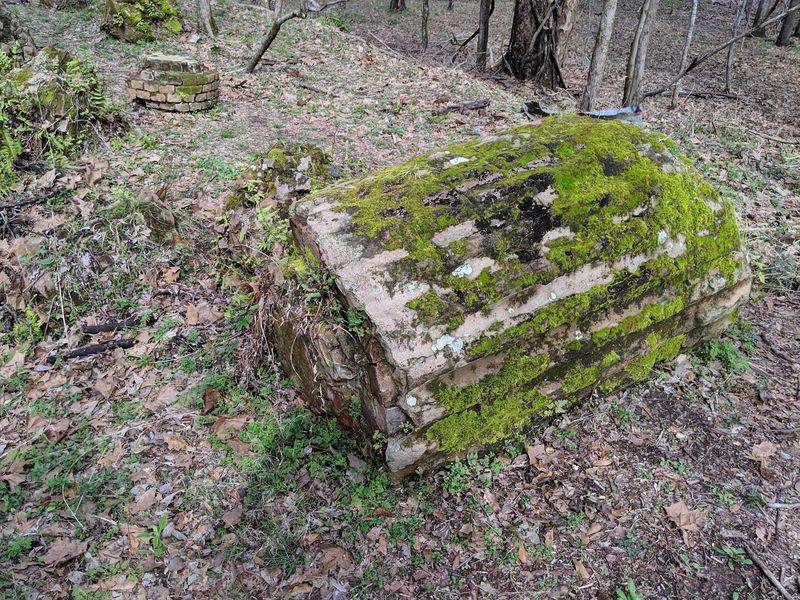
Nature has quietly taken over the real estate. Wetlands and a lake tracing the Mississippi River’s old channel now define the land where docks and warehouses once stood.
Birdwatchers do well here. The area sits along the Mississippi Flyway, one of North America’s major migration routes, which brings waterfowl and raptors through in impressive numbers each season.
Bottomland hardwood forest surrounds the site. Those woods support white-tailed deer, raccoons, bobcats, wild hogs, and the occasional black bear, though bears are endangered and protected in the state.
Alligators turn up in the wetter spots, so wandering to the water’s edge is not the smartest move. Give any large reptile a wide berth and keep moving.
Mississippi is home to more than fifty snake species, and tall grass around ruined foundations is prime habitat. Boots, long pants, and watching where you step handle most of the risk.
Behind the town rise the loess bluffs, made of fine windblown soil that erodes into steep ridges. The old cemetery and Civil War earthworks sit up there among the trees.
Mosquitoes deserve their own warning. Bug spray is not optional in warm months, unless donating blood to insects is part of your travel plan.
Mapping And Navigating Ruined Structures
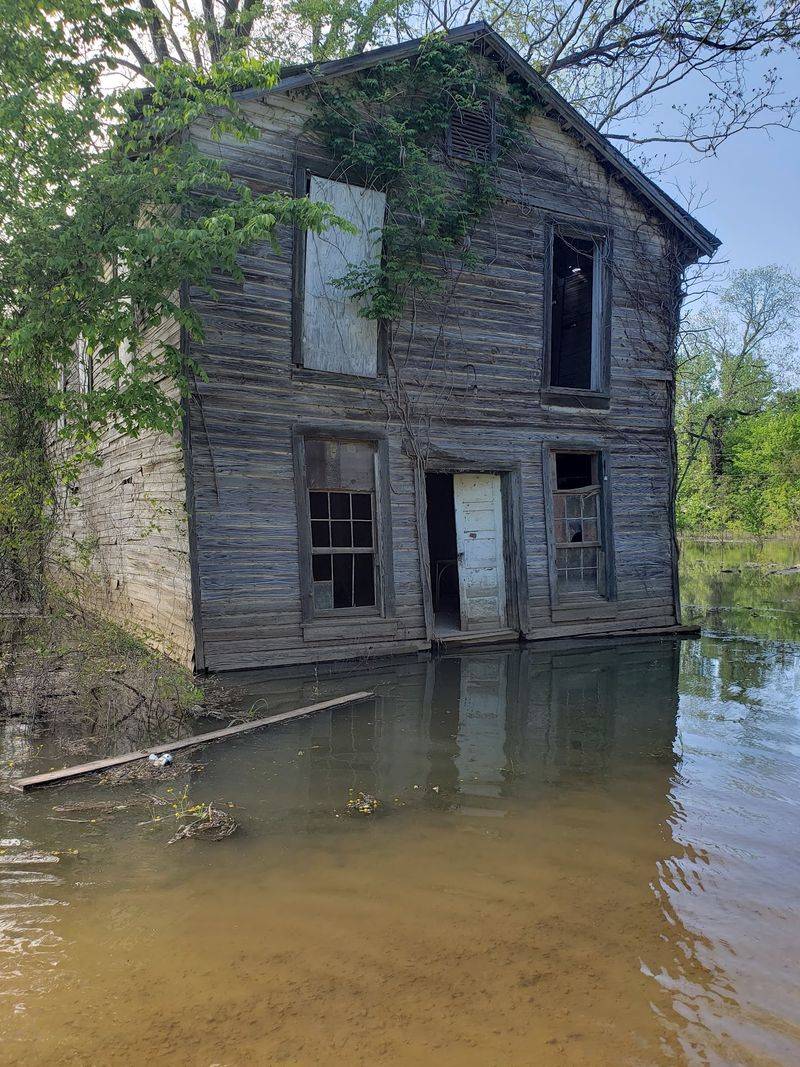
Once you park, the layout is surprisingly compact. The surviving buildings cluster inside roughly forty acres, with the Baptist church marking the southern end and the Presbyterian church anchoring the north.
Walking between them takes only a few minutes on a dry day. Mud and standing water can stretch that considerably after rain.
Overgrowth hides a lot. Brick foundations, old steps, and rusted debris sit under vines and grass, which makes slow walking far smarter than confident striding.
Structural safety is the main concern. Floors inside these buildings have absorbed decades of floodwater, and boards that look solid can give way without any warning creak.
Basements and crawl spaces are worth skipping entirely. Collapse risk, mold, and animals that have moved in make those spaces a bad trade for a slightly better photo.
No official trail map or signage guides you around, so planning the route in advance helps. Satellite imagery saved to your phone works better than hoping for a signal.
Traveling with at least one other person is wise. Help is far away, roads are rough, and a twisted ankle out here turns into a much bigger problem than it would in town.
Photography Tips For Ruins And Landscapes
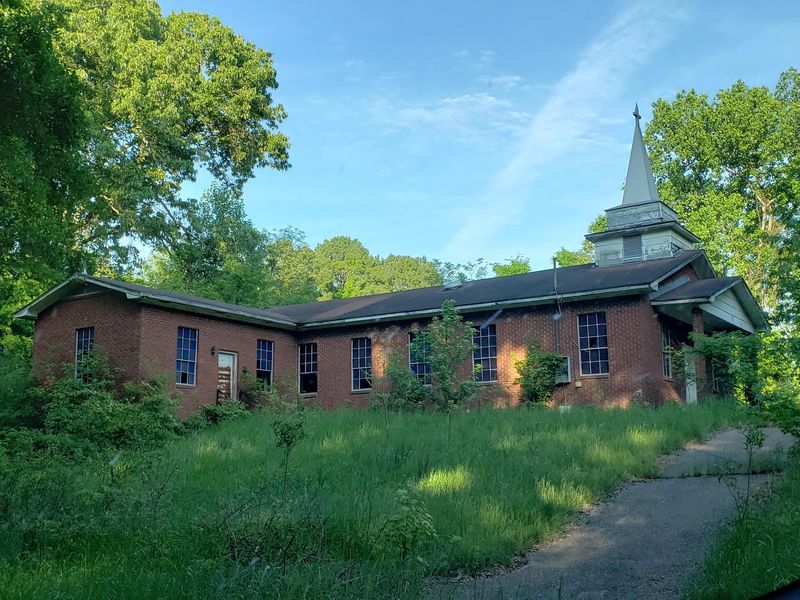
Photographers tend to fall hard for this place, and for good reason. A wide-angle lens captures how large the church feels against the overgrown clearing around it.
Switch to a telephoto for the fun details. Crumbling mortar joints, peeling paint, and the cannonball above the balcony windows all reward tight framing.
Interiors run dark. A tripod is close to essential, since longer exposures are the only way to keep shadow detail without turning everything into noise.
Bring a flashlight for two reasons. It helps with footing on uneven floors, and it doubles as a light painting tool during long exposures.
Early morning light works best. The sun sits low, the air is often misty over the wetlands, and you will likely have the entire site to yourself.
Angles change everything here. Crouching low makes doorways loom, while shooting from a rise behind the buildings shows how thoroughly the forest is winning.
Texture tells the story better than wide shots sometimes. Weathered brick, warped boards, and rusted hardware carry a century of neglect in a single frame.
One rule matters more than gear. Move through like a ghost, disturb nothing, take only photographs, and leave the ruins exactly as they were found.