
The Best Sight In The World Is Actually A Road Sign That Says Welcome To Massachusetts
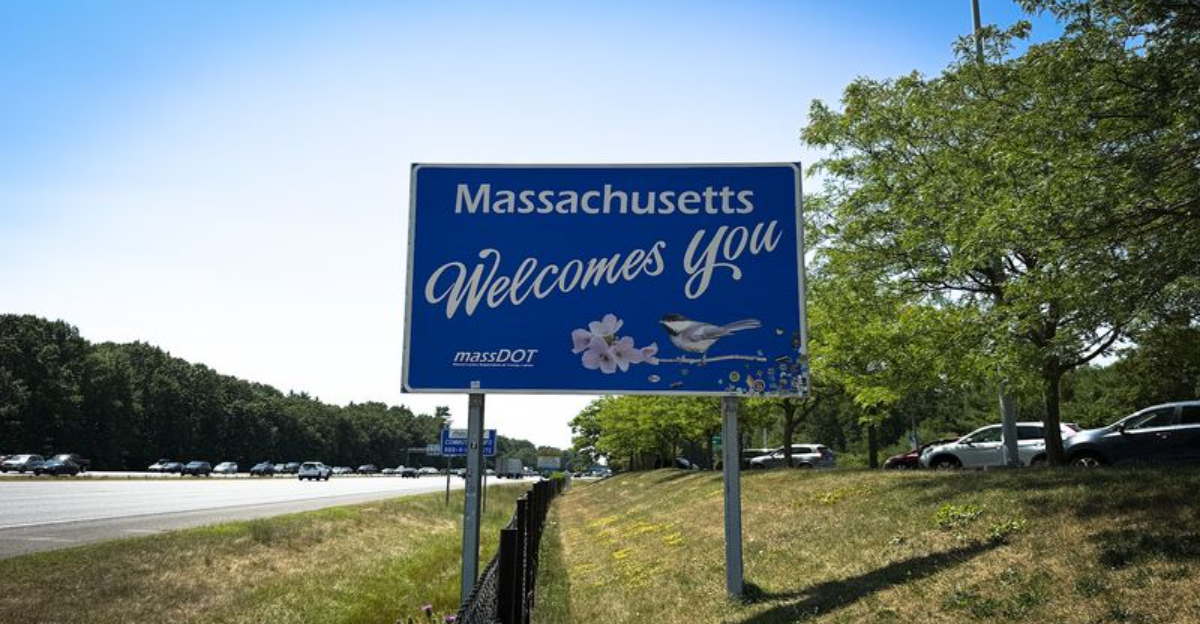
A road sign should not make anyone emotional, yet this one somehow does. That first glimpse of “Welcome to Massachusetts” can feel like the start of a whole new mood.
Suddenly, the map feels more exciting. Beaches, old towns, seafood stops, mountain views, college streets, and city lights all seem closer at once.
Maybe you are crossing the border for a weekend trip. Maybe you are coming back after too much time away. Either way, the sign has a strange little power.
It promises clam shacks, harbor walks, fall color, Red Sox chatter, quiet trails, and history around nearly every corner.
Massachusetts knows how to pack a lot into one welcome. By the time that sign appears, the trip already feels like it has a story.
The Sign That Marks The Beginning Of Something Good
Road signs rarely earn a second glance. Most drivers pass them without a thought, eyes fixed on the lane ahead.
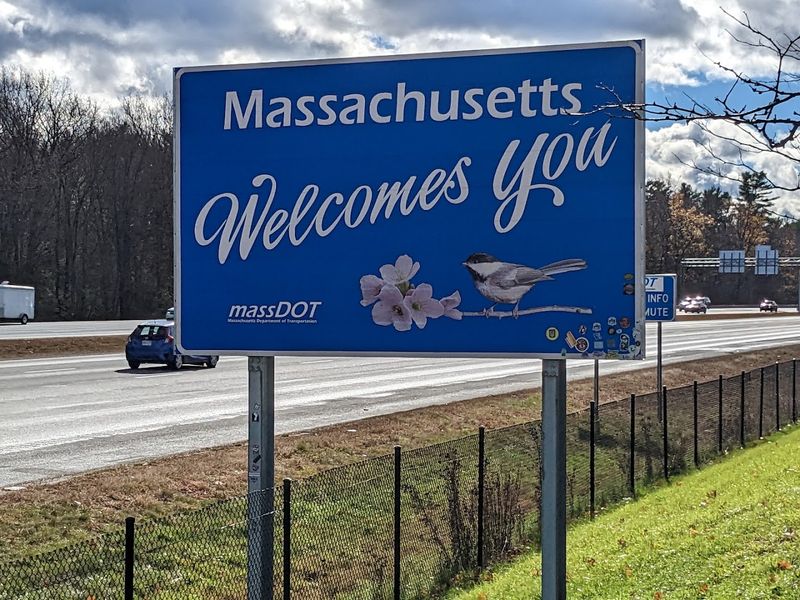
But the Welcome to Massachusetts sign on I-95 in Salisbury operates differently on the human mind. It registers not just as information, but as relief.
Positioned near the New Hampshire state line, this sign greets southbound travelers at the very first breath of Massachusetts soil. The location at I-95, Salisbury, MA 01952 places it perfectly at the threshold of a state that carries enormous cultural and historical weight.
Boston, Cape Cod, the Berkshires, and dozens of storied towns all begin here, announced by a single rectangular sign.
For commuters returning from weekend trips, college students heading back to school, and families wrapping up summer adventures in New England, this sign functions as a psychological landmark.
It says the journey is almost over, or that the real adventure is just beginning.
Few objects on American highways carry that kind of dual meaning. The sign is simple, standard in its design, and yet it holds a quiet authority that travelers across decades have come to recognize and genuinely appreciate.
Interstate 95 And The Road That Connects It All
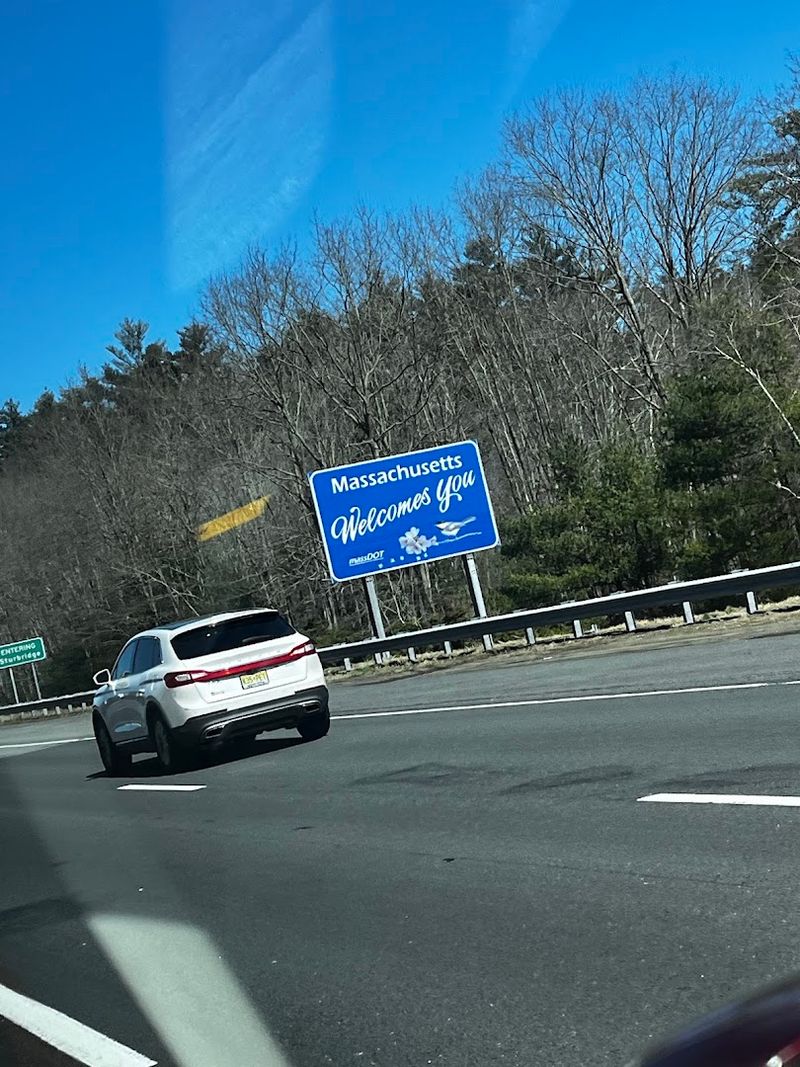
Interstate 95 is not just a road. It is the spine of the entire East Coast, running from the tip of Florida all the way through Maine.
In Massachusetts, it covers 92 miles, threading through communities, coastlines, and cities before crossing into New Hampshire at Salisbury in the north.
That stretch of I-95 through Massachusetts carries an enormous volume of traffic every single day. Commuters, long-haul drivers, vacationers, and first-time visitors all share the same lanes.
The highway connects the Rhode Island border in the south to the New Hampshire line in the north, passing through or near some of the most historically significant places in the country.
What makes this particular section of I-95 memorable is how it frames the welcome sign experience. Drivers moving south feel the transition from New Hampshire’s quieter, more rural corridor into the denser, more energized atmosphere of Massachusetts.
The landscape shifts gradually, and then the sign appears. It is a moment that feels earned after miles of anticipation.
For anyone who has driven this route more than once, the sight of that sign becomes a reliable and strangely comforting ritual of arrival.
Salisbury As A Gateway Town Worth Knowing
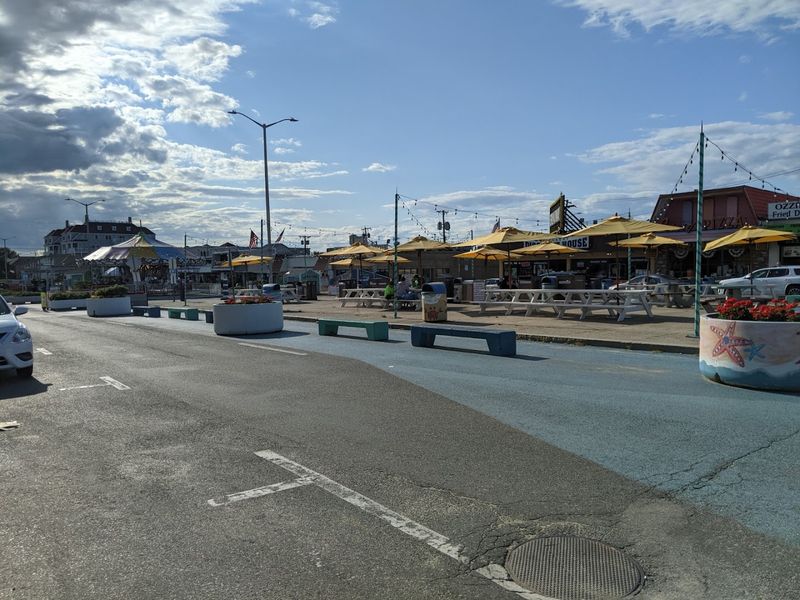
Salisbury does not always get the recognition it deserves. Sitting at the very northern edge of Massachusetts, it functions primarily as a pass-through point for travelers on I-95.
But the town itself has a character that rewards anyone who takes a moment to slow down and look around.
The community sits along the Atlantic coast, with Salisbury Beach drawing visitors every summer. The area has a relaxed, unpretentious quality that feels distinctly different from the busier resort towns further south.
Local shops, seafood spots, and open stretches of shoreline give it a genuine New England personality that does not perform for tourists.
As the home of the Welcome to Massachusetts sign, Salisbury serves as the literal and symbolic entry point into the Commonwealth for northbound and southbound I-95 travelers.
The North of Boston Convention and Visitors Bureau operates a rest area right beside the sign, giving travelers a reason to stop, stretch, and get oriented before continuing their journey.
It is a small but thoughtful detail that transforms a highway exit into an actual welcome. For anyone crossing into Massachusetts for the first time, Salisbury offers a calm and genuine introduction to the state ahead.
The Welcome Center That Makes The Stop Worth It
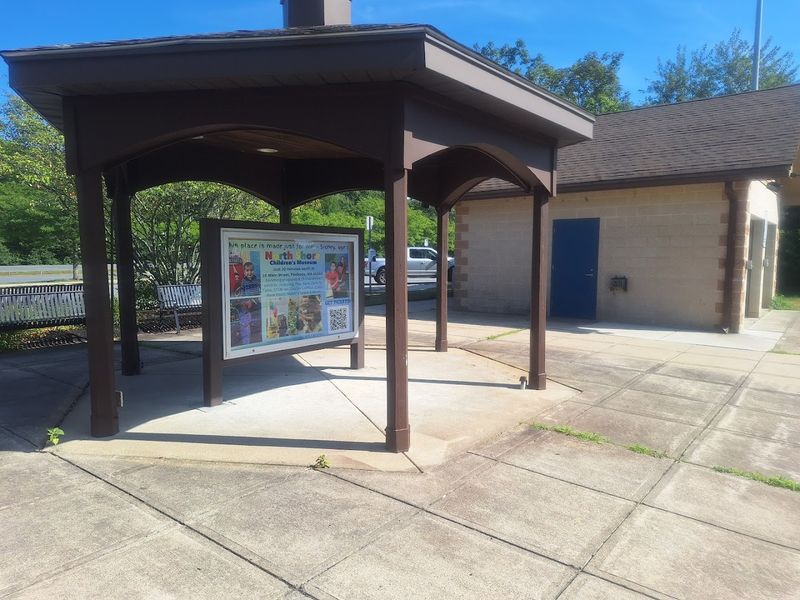
A sign on its own is one thing. A sign paired with a well-maintained rest area is something considerably more useful.
The Welcome to Massachusetts sign on I-95 sits directly beside the North of Boston Convention and Visitors Bureau, which operates as both a rest stop and an information hub for travelers entering the state.
The facility includes clean parking for both passenger vehicles and semi-trucks, public restrooms during operating hours, and a staffed interior where visitors can pick up maps, brochures, and local recommendations.
Staff members are known to be friendly and genuinely helpful, which makes the stop feel less transactional and more like an actual welcome into the Commonwealth.
The center closes at 5 PM, which is a limitation worth knowing before planning an evening stop. After hours, the parking lot remains accessible and the sign is still visible, but the indoor amenities are unavailable.
For daytime travelers, though, the combination of free parking, clean facilities, and informative staff makes this one of the more functional and pleasant welcome stops on the entire East Coast corridor.
The experience of stopping here, even briefly, gives the sign a context that turns a photo opportunity into a genuine moment of transition.
Why Road Signs Carry More Emotion Than We Admit
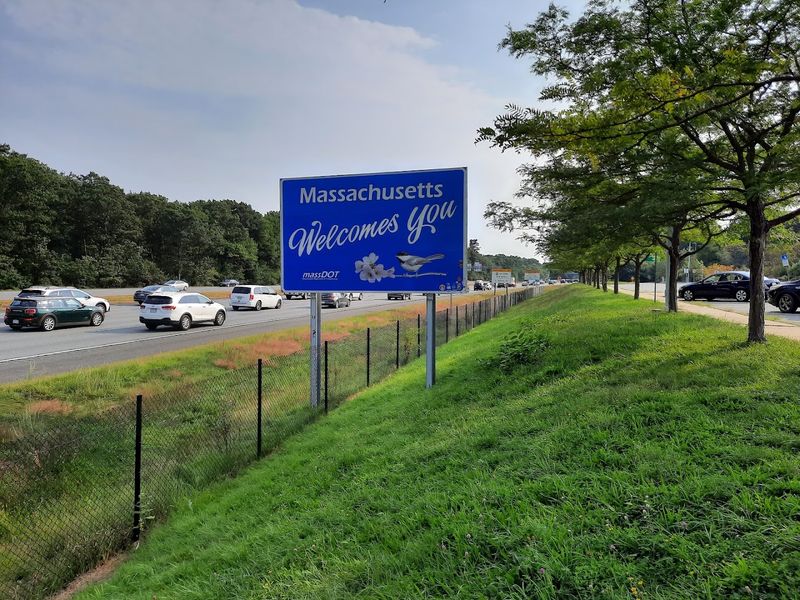
There is a branch of psychology that studies how physical landmarks affect our sense of place and identity. Road signs fall squarely into that territory.
They are markers that tell us not just where we are, but who we are in relation to a specific geography. The Welcome to Massachusetts sign taps into that instinct directly.
For people who grew up in Massachusetts, seeing that sign after time away produces something close to involuntary relief. The shoulders drop, the breath slows, and a quiet sense of recognition settles in.
It is the same feeling a person gets when they hear a familiar song or smell something from childhood. The sign does not create that emotion. It simply unlocks what was already there.
For first-time visitors, the sign works differently. It signals entry into a place with a reputation, a history, and a personality that precedes every arrival.
Massachusetts carries the weight of the American Revolution, world-class universities, championship sports teams, and a coastline that has shaped generations of writers and artists.
The sign at I-95 in Salisbury is the first sentence of that story. It does not need to say much. The name alone does the work.
Photographing The Sign And Making The Moment Last
Road trip photography has its own quiet culture.
Travelers collect images of state signs the way others collect stamps or postcards, and the Welcome to Massachusetts sign on I-95 is one of the more photogenic stops on the northeastern corridor.
The setup here is genuinely convenient compared to many state border signs that sit in unsafe or inaccessible locations.
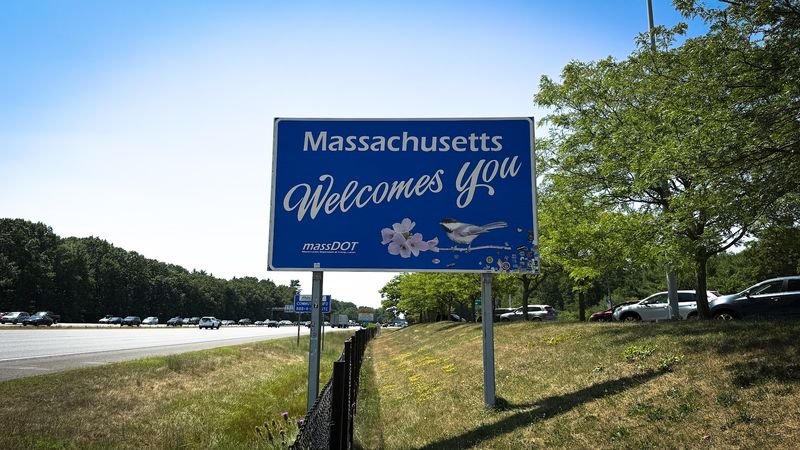
After parking at the adjacent welcome center, visitors walk a short distance to a grassy slope near the fence line where the sign stands. There is enough space to position yourself comfortably, take a clean shot, and move on without feeling rushed or crowded.
The sign faces the highway, so the background in photographs typically includes the open road and a stretch of Massachusetts sky.
Some visitors have noted that stickers have accumulated on the sign over the years, which adds a layer of informal character to what is otherwise a standard highway fixture.
The massDOT signage visible behind the welcome sign also appears in many photos, giving the images a layered, documentary quality.
For anyone documenting a road trip through New England, this stop offers a reliable, safe, and genuinely satisfying photo moment that requires minimal effort and delivers a memorable keepsake.
The Design Language Of State Welcome Signs
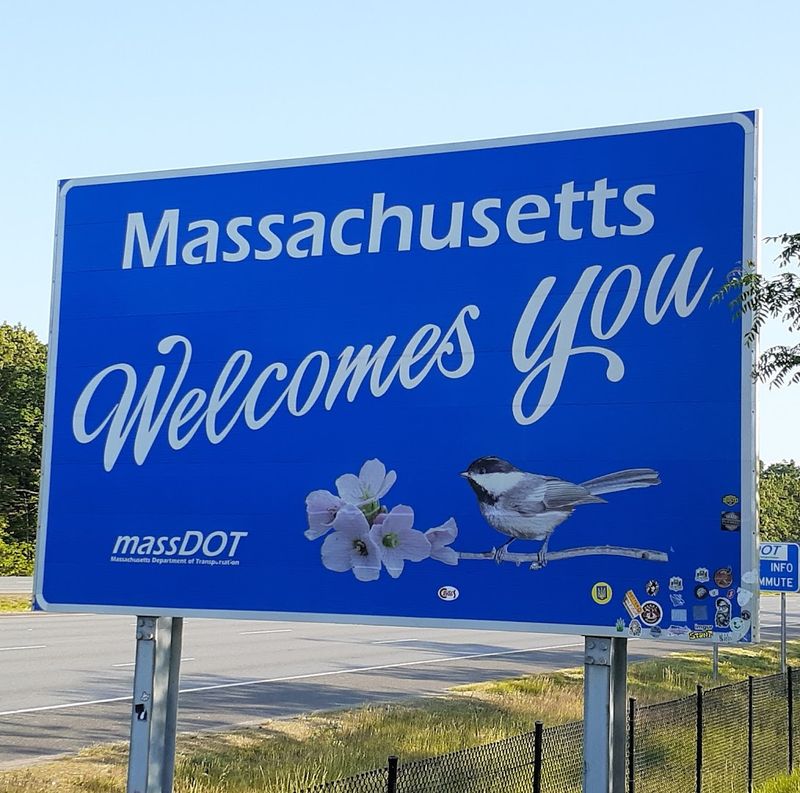
State welcome signs follow a fairly consistent design vocabulary across the United States. Most are rectangular and mounted at a height visible from a moving vehicle.
The Welcome to Massachusetts sign on I-95 follows this convention, which some visitors find pleasantly familiar and others find slightly disappointing given the state’s rich visual heritage.
Massachusetts has a separate tradition of distinctive signage. The state’s bookleaf-shaped town line signs, designed in the 1930s, are a well-known example of how Massachusetts once prioritized visual identity in its road infrastructure.
Those signs remain unique on American highways and are still in use today throughout the Commonwealth’s towns and cities.
The I-95 border sign does not carry that same design ambition, and some travelers have noted that the font combination and imagery feel like a missed opportunity.
One visitor famously observed that the phrasing Massachusetts Welcomes You reads less naturally than Welcome to Massachusetts, a small but legitimate point about the rhythm of language on public signage.
Despite these critiques, the sign fulfills its core function with clarity and authority.
It announces arrival. It names the place. And for the people who have been waiting to see it, that is more than enough to make the moment significant.
What Returning To Massachusetts Actually Feels Like
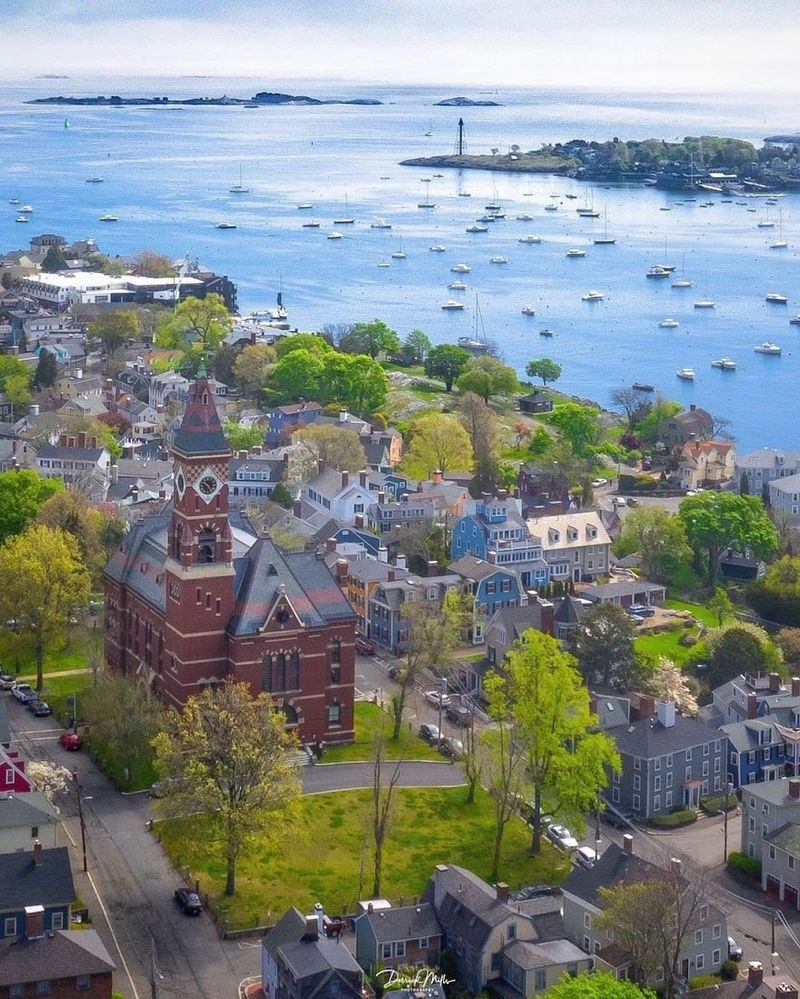
Ask anyone who has lived in Massachusetts and then moved away what happens when they drive back across the state line. The answers are remarkably consistent.
There is a physical response that precedes any conscious thought. The sign appears, and something in the body recognizes it before the brain has time to process the information.
That recognition is tied to everything Massachusetts represents to the people who grew up there.
The particular quality of light on the coast, the density of history in the architecture, the directness of the local personality, and the specific rhythm of life in New England all come flooding back in the seconds after the sign passes the windshield.
For travelers who have never been to Massachusetts before, the sign carries a different kind of promise. It announces a state that has produced an outsized share of American history, literature, science, and culture.
The universities, the harbors, the forests, and the old colonial towns are all waiting just beyond that rectangle on I-95 in Salisbury.
The sign is not the destination. It is the doorway. And like any good doorway, it matters less for what it is than for what it opens into. That is why it remains, for many, the best sight on the road.