
The California Coastal Gem Tourists Keep Driving Right Past
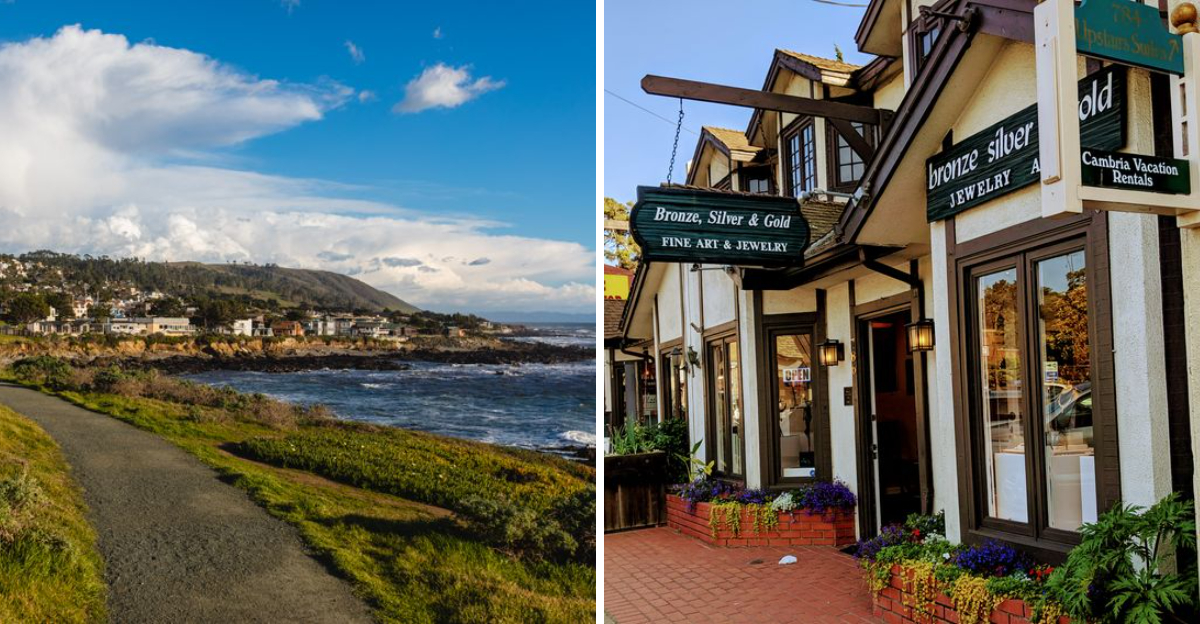
Most travelers racing between San Francisco and Los Angeles barely glance at the small town sign along Highway 1. Cambria sits right there in plain sight, a coastal settlement that somehow escaped the crowds and commercialization that swallowed so many California beach towns.
While tour buses pile into more famous stops up and down the coast, this quiet community goes about its business with galleries, trails, and shoreline that belong more to the locals and the occasional curious visitor than to any tourism machine. It remains one of those rare places where you can still hear the ocean without competing with a hundred other people trying to do the same thing.
Cambria Sits Along Scenic Highway 1 On California’s Central Coast
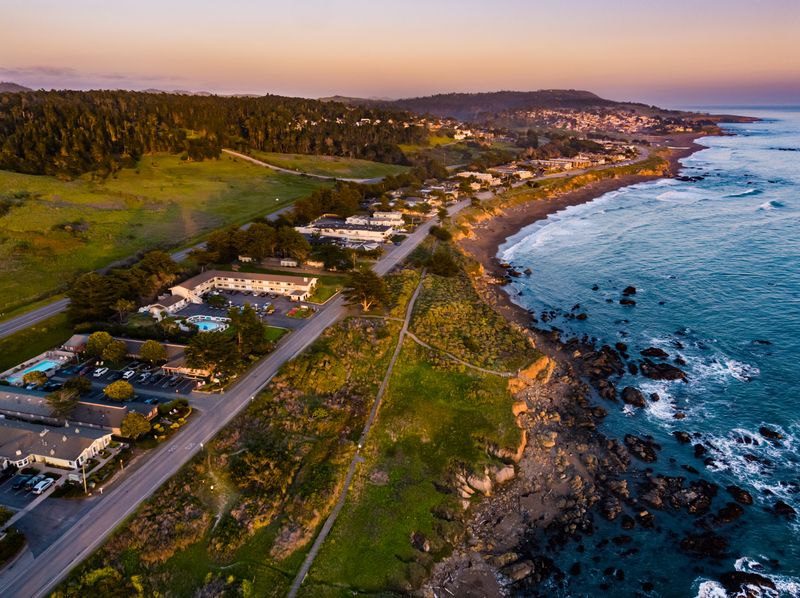
The drive along California State Route 1 unfolds as a series of curves and vistas, each bend revealing another stretch of coastline or hillside. Cambria appears midway through that journey, positioned almost exactly between two major cities yet feeling removed from both.
The town occupies a particular stretch of San Luis Obispo County where Monterey pines grow thick enough to create actual forest, one of only three native groves of this species left in the world.
Highway 1 cuts directly through the community, splitting it into distinct areas that locals navigate with ease and visitors discover gradually. The elevation changes enough to offer different perspectives on the same ocean, some views framed by trees and others wide open to the horizon.
Cambria chose its name back in 1869, adopting the Latin word for Wales, though any resemblance to that distant country remains debatable.
The location itself explains much of the town’s character. Far enough from major metropolitan areas to discourage day-trippers, close enough to make a reasonable detour for those willing to slow down and explore something off the main tourist circuit.
Moonstone Beach Offers A Peaceful Alternative To Busier Shores
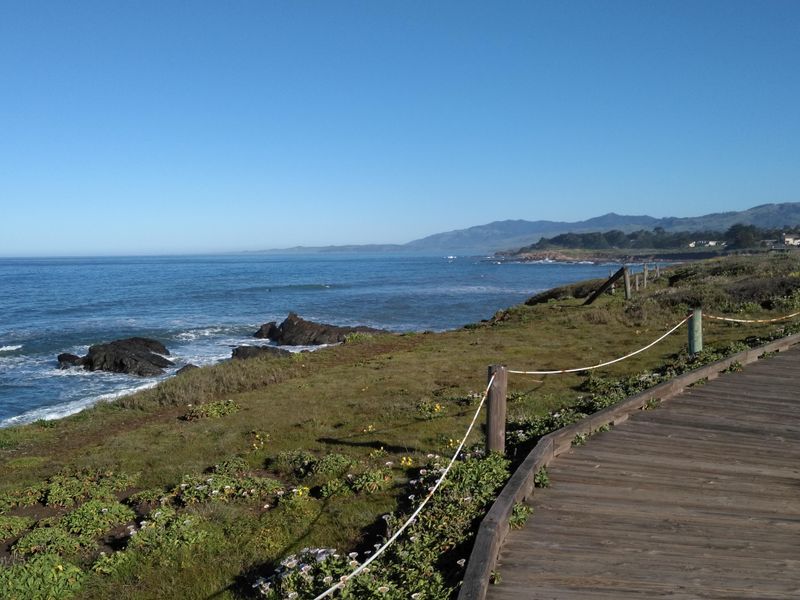
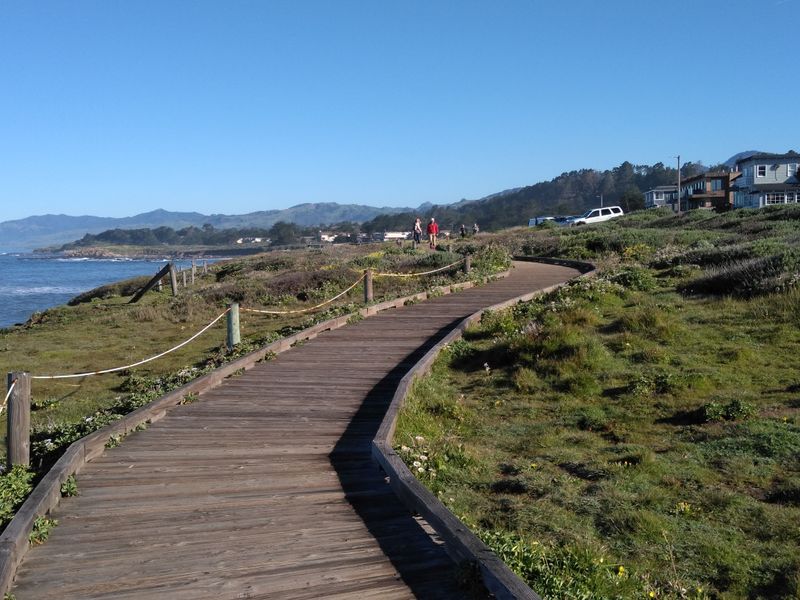
The name comes from the translucent stones that wash up along this particular stretch of sand, small rounded pieces that catch light in a way that justifies the romantic designation. Moonstone Beach runs for about a mile, backed by low bluffs and accessible via a wooden boardwalk that keeps foot traffic off the fragile dunes.
The beach itself attracts tide poolers, stone collectors, and people content to walk without any particular destination in mind.
Unlike the packed beaches further south or the tourist-heavy stretches near major cities, Moonstone maintains a quieter atmosphere even during peak season. The water stays cold year-round, which discourages swimmers and keeps the focus on observation rather than recreation.
Seals often haul out on offshore rocks, visible from the beach without requiring binoculars or special equipment.
Several small inns and lodges line the bluff above the beach, their rooms facing west toward sunsets that draw photographers and couples looking for that particular quality of coastal light. The beach remains public and free, with parking areas that fill slowly even on weekends.
The Blufftop Boardwalk Delivers Sweeping Ocean Views
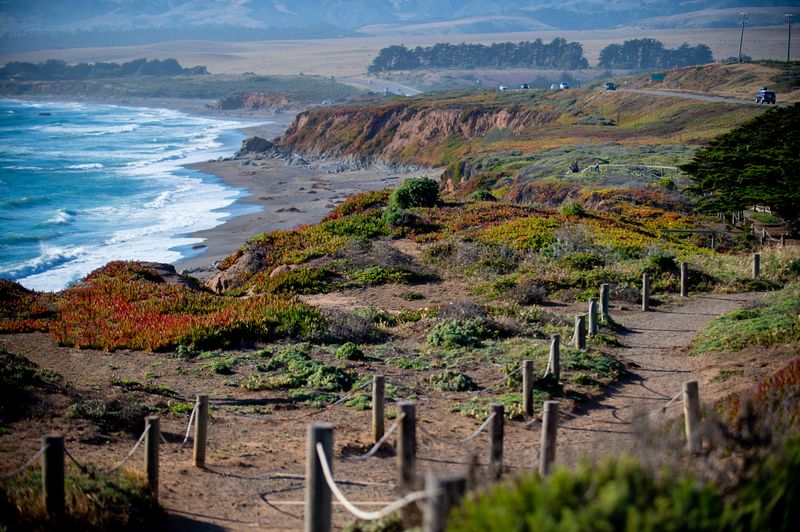
A wooden pathway follows the bluff line above Moonstone Beach, elevated just enough to provide unobstructed views while keeping walkers safely back from the edge. The boardwalk stretches for over a mile, connecting various access points and creating a level walking surface that accommodates strollers, wheelchairs, and anyone who prefers pavement to sand.
Benches appear at regular intervals, positioned to take advantage of particular views or sheltered spots.
The construction feels purposeful rather than ornamental, built to withstand salt air and coastal weather while blending into the landscape. Native plants grow thick on both sides, their roots holding the sandy soil in place and providing habitat for birds that dart between the vegetation.
Morning walks often reveal fresh animal tracks crossing the path, evidence of nighttime visitors that retreat before humans arrive.
The boardwalk functions as both destination and transit route. Some people complete the entire length as exercise, returning to their starting point for a two-mile round trip.
Others pick a bench and stay put, content to watch waves and seabirds for an hour or more without feeling any pressure to move along.
Historic East Village Is Packed With Independent Boutiques
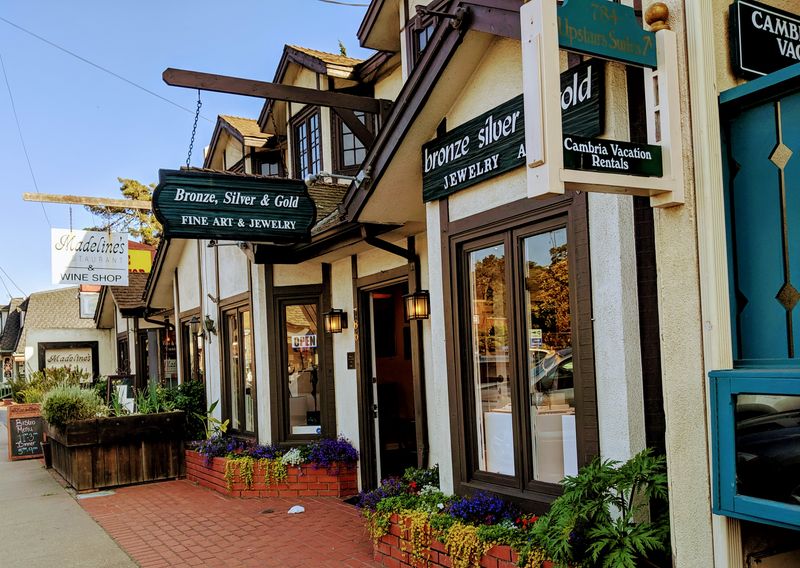
Main Street through East Village maintains the scale and character of an earlier California, before chain stores and corporate planning homogenized every commercial district. The buildings sit close to the street, their storefronts displaying merchandise that reflects individual owner taste rather than corporate directives.
Art galleries occupy spaces next to clothing boutiques, bookshops neighbor wine merchants, and restaurants operate out of converted houses that retain their residential proportions.
Walking the few blocks of concentrated retail requires more time than the distance suggests. Each shop warrants at least a brief look inside, if only to appreciate the curation and the fact that you probably will not find the same items anywhere else.
The owners often work the floor themselves, ready to discuss their inventory with genuine knowledge rather than scripted sales pitches.
East Village developed first, back when Cambria functioned primarily as a logging and dairy community rather than a tourist destination. That history shows in the architecture and the layout, a practical arrangement that later proved charming enough to attract visitors looking for something beyond generic beach town shopping.
West Village Feels Like A Storybook Seaside Neighbourhood
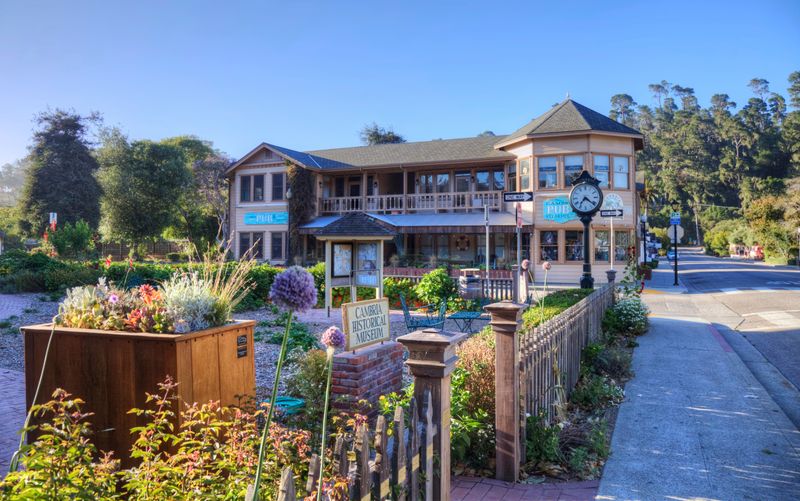
Burton Drive anchors West Village, a commercial strip that developed later than its eastern counterpart and reflects a different aesthetic. The buildings lean toward cottage style, smaller in scale and set back slightly from the road with landscaping that softens the retail edges.
Pines grow thick here, creating shade and lending the area a forested quality uncommon in beach communities.
The shops and restaurants maintain the independent character found throughout Cambria, but West Village skews slightly more residential in feeling. Galleries display local artwork, small cafes serve breakfast until early afternoon, and specialty food shops stock provisions that suggest actual cooking rather than just snacking.
The pace feels even slower here, if such a thing can be measured, with fewer day visitors and more locals running errands.
Several nurseries operate in West Village, their outdoor displays spilling onto sidewalks with plants suited to coastal conditions. The proximity to residential neighborhoods means you might encounter someone walking their dog or pushing a stroller, evidence of daily life continuing alongside whatever tourism the town generates.
The storybook comparison holds up better here than in many places that claim such character.
Fiscalini Ranch Preserve Protects Miles Of Coastal Trails
Four hundred and thirty acres of coastal land remain undeveloped thanks to community effort and conservation funding that secured Fiscalini Ranch as permanent open space. The preserve stretches from marine terraces along the bluff to forested uplands inland, encompassing multiple ecosystems within walking distance of town.
Miles of trails cross the property, some following the dramatic coastline and others winding through pine forest and grassland.
The Bluff Trail ranks as the most popular route, offering ocean views and relatively easy walking on well-maintained paths. Marine terraces create natural viewing platforms where whales pass during migration season and seabirds nest in the cliff face.
Inland trails climb into higher terrain, passing through stands of Monterey pine and into areas where wildflowers bloom in spring.
Dogs run off-leash in designated areas, making the preserve particularly popular with local pet owners. The trail system connects to town streets, allowing residents to walk from their homes directly into protected wilderness.
Fiscalini Ranch represents the kind of community asset that distinguishes Cambria from purely tourist-focused coastal towns, a resource preserved for daily use rather than occasional visits.
Cambria’s Art Galleries Reflect Its Creative Community
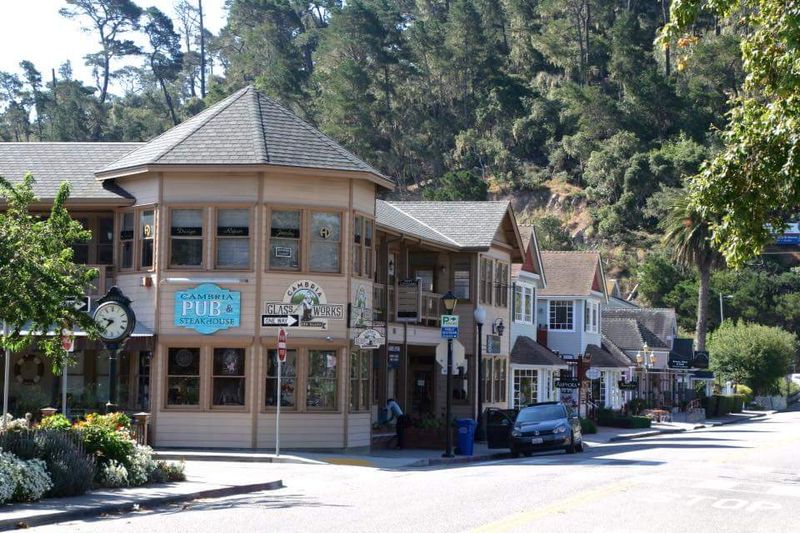
Artists settled in Cambria decades ago, drawn by affordable property, natural beauty, and distance from commercial art world pressures. That migration created a concentration of working artists unusual for a town this size, and galleries followed to display and sell their output.
The current gallery scene mixes established spaces that have operated for years with newer ventures, all showing work that ranges from traditional landscape painting to contemporary sculpture and mixed media.
Most galleries focus on regional artists, though some include pieces from beyond the immediate area. The work tends toward representational rather than abstract, with coastal themes appearing frequently but not exclusively.
Quality varies as it does anywhere, but the overall standard remains high enough to attract serious collectors alongside casual browsers.
Gallery owners maintain regular hours but operate with flexibility, sometimes closing for lunch or stepping out briefly while trusting visitors to browse unsupervised. First Friday gallery walks happen monthly, drawing crowds that move between spaces while sipping wine and discussing the current shows.
The art community functions as both economic engine and cultural anchor, giving Cambria an identity beyond its coastal location.
It’s Just Minutes From Hearst Castle — Yet Far Less Crowded
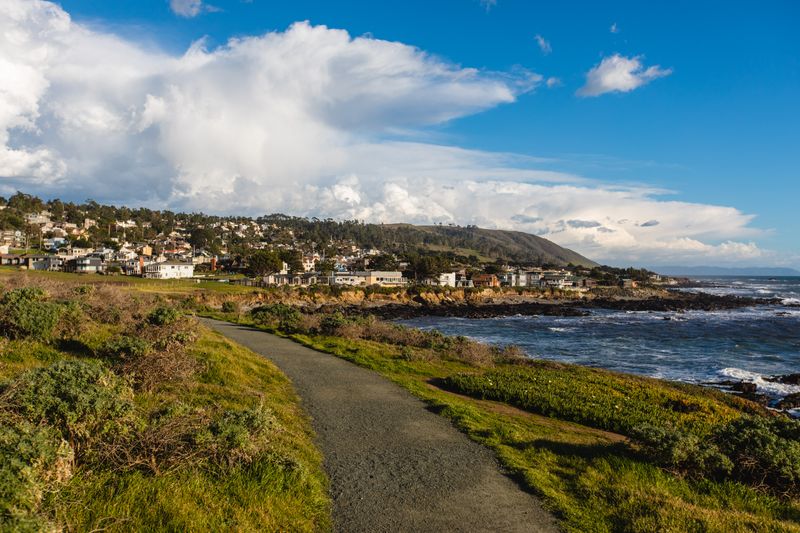
San Simeon sits seven miles north, home to the extravagant hilltop estate William Randolph Hearst built over three decades starting in 1919. Tour buses arrive daily, depositing visitors who spend several hours touring the castle and grounds before departing for their next scheduled stop.
Most never make it to Cambria, their itineraries planned around major attractions rather than small towns that require slower exploration.
This proximity to a world-famous landmark benefits Cambria in specific ways. The castle draws people to the general area, and a percentage of those visitors extend their stay to explore the surrounding region.
Those who choose to overnight in Cambria rather than rushing through discover a town that offers its own rewards beyond serving as a base for castle tours.
The contrast between the two destinations could hardly be sharper. Hearst Castle represents wealth, ambition, and architectural excess on a scale few individuals ever achieve.
Cambria operates at human scale, its attractions requiring no admission fees or advance reservations. You can visit both in a single day, but understanding either one properly demands more time than most tourists allocate.
Local Wineries And Tasting Rooms Add To The Coastal Charm
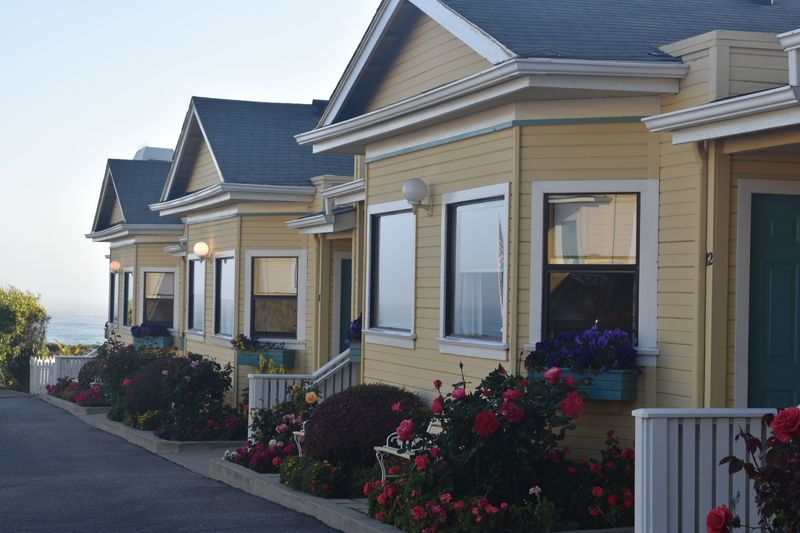
San Luis Obispo County wine country extends to the coast, with several small producers operating tasting rooms in Cambria itself. These outposts pour wines from vineyards located inland where conditions favor grape growing, bringing the product to visitors who might not venture into the primary wine regions.
The tasting rooms occupy converted houses and small commercial spaces, maintaining the casual atmosphere that characterizes the town generally.
The focus tends toward smaller production wineries rather than major labels, with staff who can discuss vineyard practices and winemaking decisions in detail. Tastings proceed at a relaxed pace, without the rushed feeling that plagues some high-traffic wine destinations.
Many rooms offer flights that showcase a range of varietals, allowing comparison and education alongside simple enjoyment.
Several tasting rooms include outdoor seating where you can purchase a glass or bottle to enjoy on site. The combination of wine, coastal air, and no pressure to hurry creates an appealing afternoon activity.
The wine industry adds another layer to Cambria’s economy and identity, connecting the town to the broader Central Coast wine region while maintaining its distinct coastal character.
Wildlife Sightings Are Common Along The Shoreline
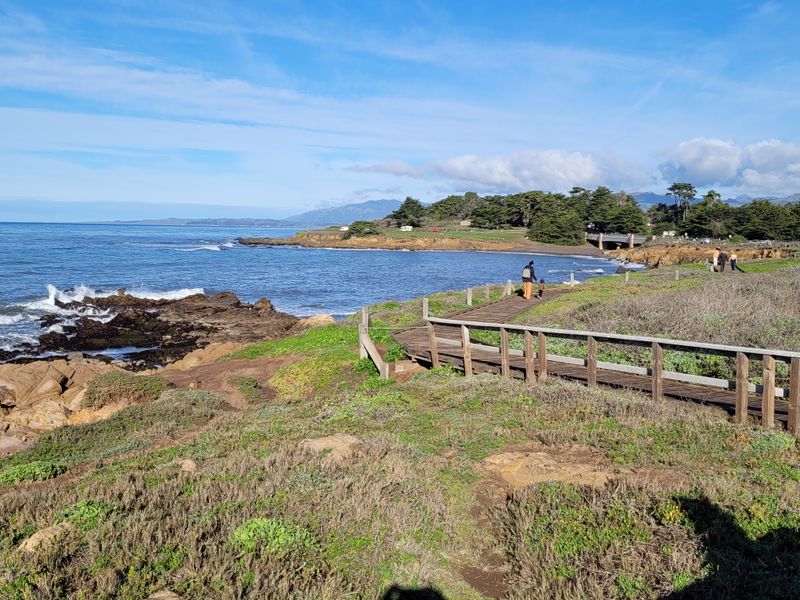
Harbor seals haul out on rocks visible from shore, their bulk unmistakable even at a distance. Sea otters float in kelp beds just offshore, cracking shellfish on rocks balanced on their chests while floating on their backs.
Gray whales pass during their annual migration between Alaska and Baja California, close enough to shore that patient observers can spot their spouts and occasional breaches without boats or special equipment.
Tide pools reveal smaller marine life at low water, anemones and starfish clinging to rocks while hermit crabs scuttle between crevices. Shorebirds work the sand at the water’s edge, probing for invertebrates with specialized bills.
Pelicans cruise in formation just above the waves, occasionally folding wings to plunge after fish.
The wildlife viewing requires no permits, guides, or fees. You simply need to show up at the right time and pay attention.
Early morning and late afternoon tend to offer the best opportunities, though animals operate on their own schedules regardless of human preferences. Binoculars help but are not essential for most sightings.
The regularity of these encounters reminds visitors that Cambria functions as habitat first and tourist destination second.