
The Hidden High-Desert Towns In Eastern California Most Travelers Miss
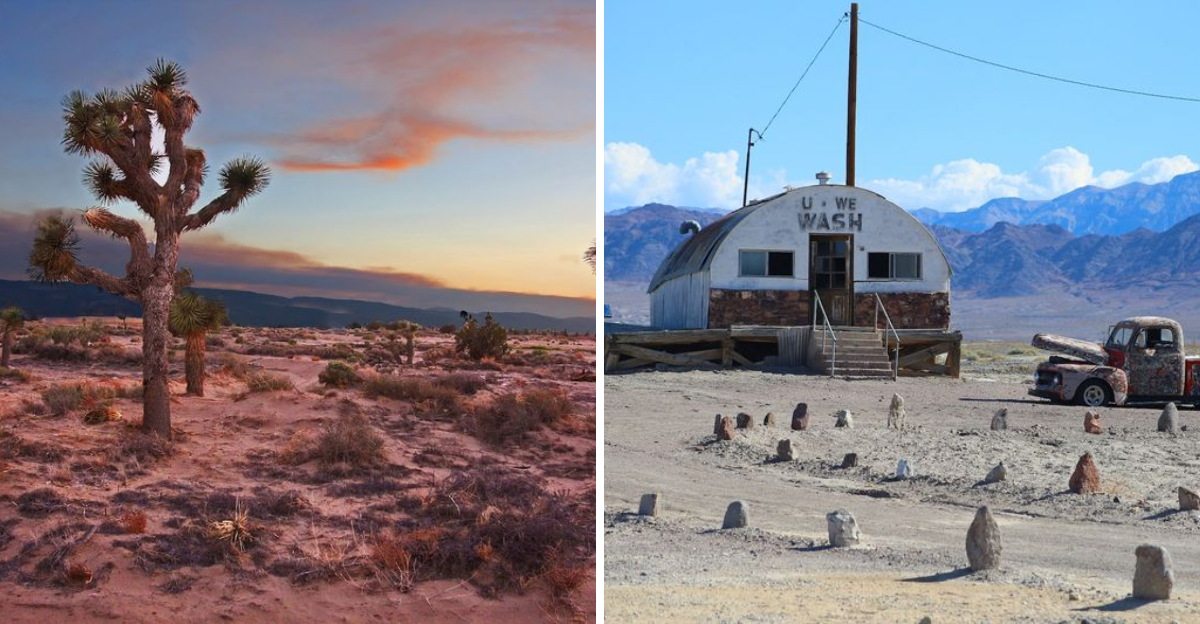
Eastern California stretches out like a secret waiting to be discovered, where the high desert meets mountain peaks and endless blue skies. While most tourists rush toward the coast or famous national parks, they completely overlook these small towns that offer something far more authentic and unexpected.
Each of these places has its own personality, from quirky roadside stops to mountain gateways that feel frozen in time. Get ready to explore nine towns that locals love but most travelers never even know exist.
1. Bishop
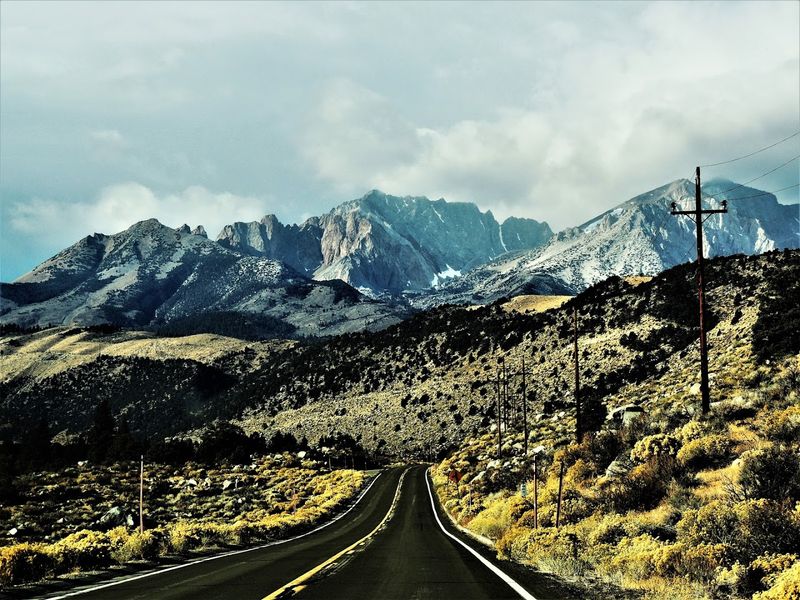
Bishop sits at 4,150 feet elevation where the Sierra Nevada meets the White Mountains, creating one of California’s most dramatic backdrops. This town of about 3,800 people serves as the unofficial capital of the Owens Valley, and it’s where climbers, hikers, and fishing enthusiasts gather before heading into the wilderness.
You’ll find more outdoor gear shops per capita here than almost anywhere else in the state.
The main street feels like stepping back to the 1950s, with locally owned diners serving massive breakfasts and bakeries that have been using the same recipes for decades. Schat’s Bakery alone is worth the drive, famous for its sheepherder bread that people drive hours to buy.
The town hosts the Mule Days celebration every Memorial Day weekend, drawing thousands for what might be the world’s largest mule show.
Surrounding Bishop are hundreds of climbing routes, hot springs hidden in the desert, and access to Ancient Bristlecone Pine Forest where trees over 4,000 years old still grow. The fishing in nearby lakes and streams is legendary among anglers.
Bishop manages to feel both remote and welcoming, a genuine mountain town that hasn’t been polished for tourists but works perfectly because of it.
2. Lone Pine
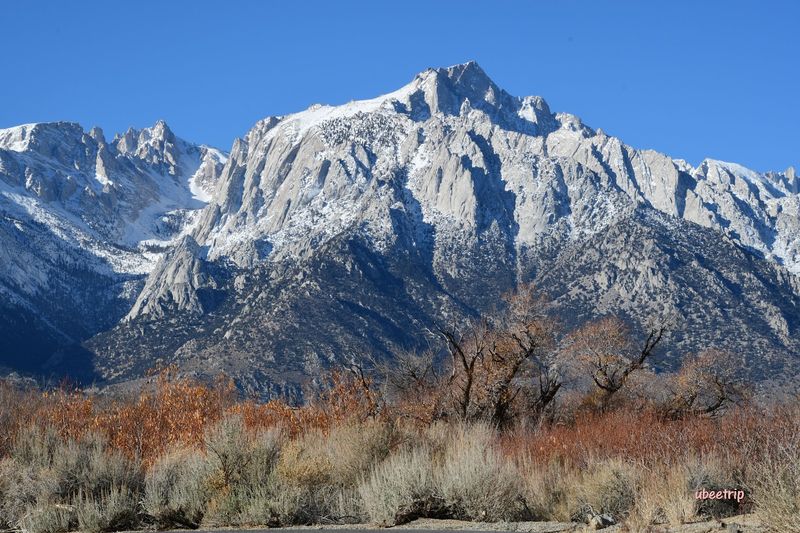
Mount Whitney towers over Lone Pine at 14,505 feet, making it the tallest peak in the lower 48 states and creating a skyline that stops you mid-sentence. This tiny town of fewer than 2,000 residents sits at the base of this giant, serving as the jumping-off point for Whitney summit attempts and gateway to the Alabama Hills.
Those rounded orange rocks you’ve seen in countless Western films? That’s here.
Hollywood discovered Lone Pine in the 1920s, and over 400 movies and TV shows have filmed in the Alabama Hills since then. The Museum of Western Film History downtown showcases this legacy with props, costumes, and stories from classics like “Gunga Din” and “Iron Man.” Walking through those rocks feels surreal when you recognize formations from movies you’ve watched dozens of times.
Beyond the film history, Lone Pine offers genuine small-town charm with family-run restaurants, a historic main street, and locals who actually wave at strangers. The town celebrates its heritage during the Lone Pine Film Festival each October.
Whitney Portal Road climbs from town into the mountains, passing campgrounds, hiking trails, and eventually reaching the trailhead where hundreds attempt the Whitney summit each day during summer months.
3. Lee Vining
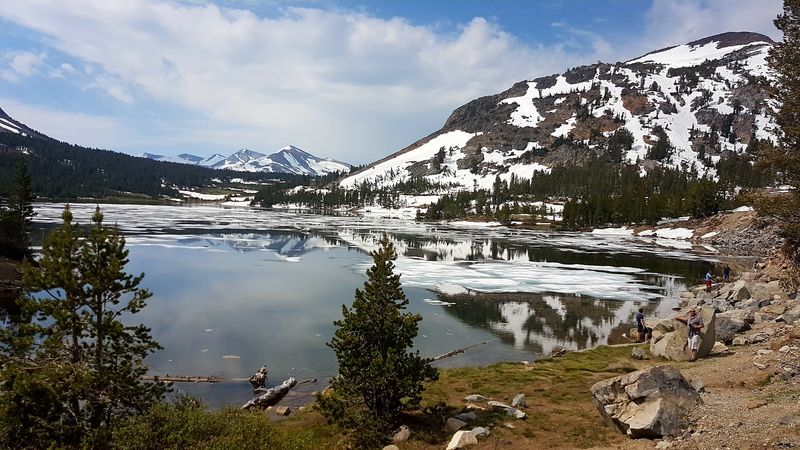
Perched on the western shore of ancient Mono Lake at 6,781 feet elevation, Lee Vining feels like the edge of the world in the best possible way. Population hovers around 220 year-round residents, though that swells during summer when Tioga Pass opens and provides the eastern entrance to Yosemite National Park.
The town exists primarily because of its location, serving travelers for over a century.
Mono Lake itself is the main attraction, a saline lake over one million years old with bizarre tufa towers rising from the water like sculptures from another planet. These calcium carbonate formations create an otherworldly landscape that photographers and nature lovers find irresistible.
The lake supports trillions of brine shrimp and alkali flies, which in turn feed millions of migratory birds each year.
Downtown Lee Vining consists of a few blocks with essential services, surprisingly good restaurants, and the excellent Mono Basin Scenic Area Visitor Center that explains the lake’s ecology and history. Whoa Nellie Deli inside the Mobil station serves gourmet food that seems impossible for a gas station, including fish tacos that rival anything on the coast.
The surrounding landscape offers hiking, photography, and access to ghost towns like Bodie.
4. Ridgecrest
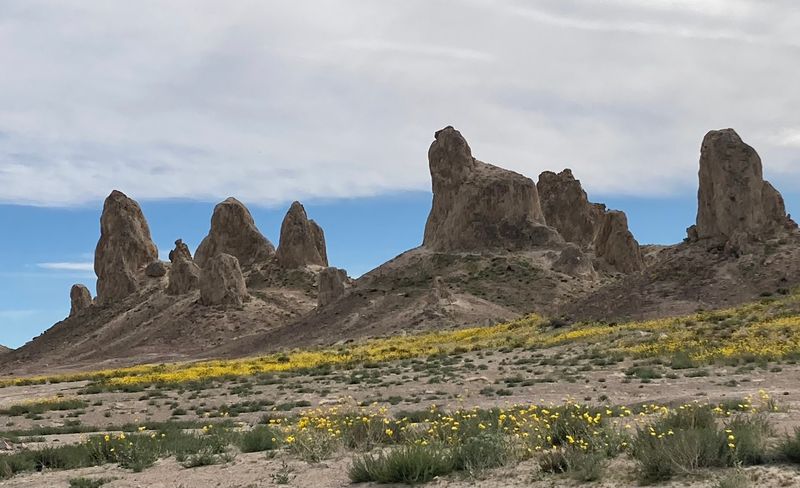
Ridgecrest sprawls across the Indian Wells Valley with nearly 30,000 residents, making it the largest town on this list by far. What it lacks in quaintness it makes up for with genuine desert character and proximity to some seriously cool places most people never hear about.
The town grew up around the Naval Air Weapons Station China Lake, and that military presence still shapes the community today.
The real draws here are the surrounding attractions rather than the town itself. Ridgecrest serves as the gateway to Death Valley National Park’s western entrance, putting you in the park in under an hour.
It’s also the closest town to the Trona Pinnacles, those alien-looking tufa spires rising from the dry lakebed that have appeared in sci-fi films and music videos for decades.
The Maturango Museum downtown focuses on the natural and cultural history of the northern Mojave Desert, with excellent exhibits on Native American heritage and desert ecology. They also organize tours into the China Lake petroglyphs when the military base allows access.
Ridgecrest has all the amenities you’d expect from a larger town, making it a practical base for exploring the region. Summer temperatures regularly exceed 100 degrees, so plan accordingly and bring more water than seems reasonable.
5. Pioneertown
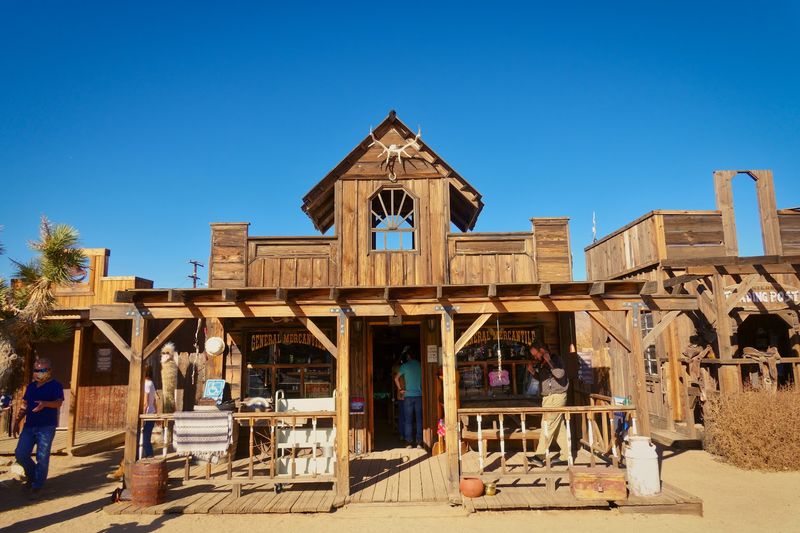
Built in 1946 as a live-in movie set by Hollywood investors including Roy Rogers and Gene Autry, Pioneertown looks exactly like what it is: a perfectly preserved Old West town plunked in the high desert. The false-front buildings along Mane Street (yes, spelled that way) once hosted filming for dozens of westerns and still function as businesses today.
Walking these dusty streets feels like stepping onto a film set because that’s literally what happened.
Only about 350 people call Pioneertown home year-round, living in houses scattered around the historic core. Pappy & Harriet’s Pioneertown Palace anchors the town, a legendary honky-tonk that books surprisingly big-name musicians and serves barbecue to packed crowds on weekend nights.
The contrast between the weathered western setting and indie rock bands creates something magical that keeps people coming back.
Mock gunfights still happen on Mane Street during tourist season, performed by local volunteers who take the tradition seriously. The surrounding high desert offers hiking, rock formations, and access to Joshua Tree National Park just down the road.
Pioneertown embraces its quirky identity without becoming a theme park, maintaining an authentic weirdness that feels increasingly rare. Stay past sunset when the desert sky fills with more stars than seems possible.
6. Inyokern
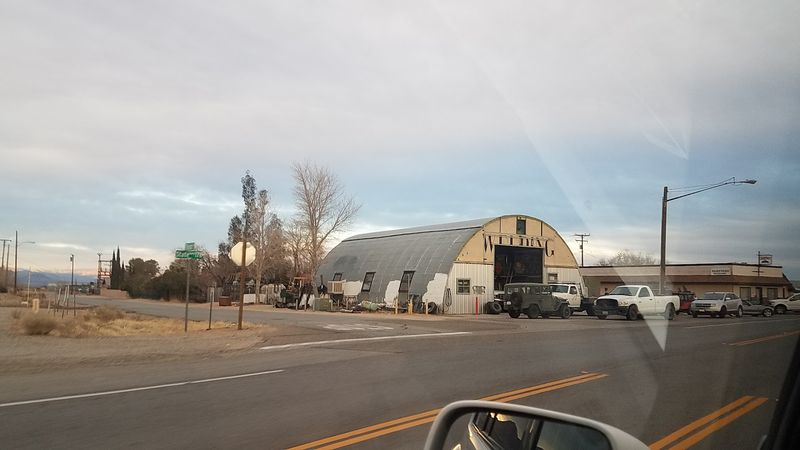
Blink while driving Highway 395 and you’ll miss Inyokern completely, which is exactly what most travelers do. This unincorporated community of about 1,000 people exists primarily as a crossroads where Highway 178 heads east toward Death Valley and west toward Lake Isabella and the Kern River Valley.
The name combines “Inyo” and “Kern,” the two counties that meet here, though it sits entirely within Kern County now.
Inyokern Airport serves the area with a surprisingly long runway originally built for military use, now home to civilian aviation and occasional aerospace testing. The Mojave Desert surrounds the town completely, with creosote bushes, Joshua trees, and mountains visible in every direction.
Summer heat here is intense, regularly topping 105 degrees, while winters bring surprisingly cold nights and occasional frost.
There’s not much tourist infrastructure in Inyokern itself, which is precisely its appeal for certain travelers. A few gas stations, small restaurants, and essential services serve locals and passing drivers.
The real reason to know about Inyokern is its position as a launching point for adventures into the surrounding desert wilderness. Indian Wells Valley spreads out to the north, while the southern Sierra Nevada rises to the west.
It’s a working desert town that doesn’t pretend to be anything else.
7. Tecopa
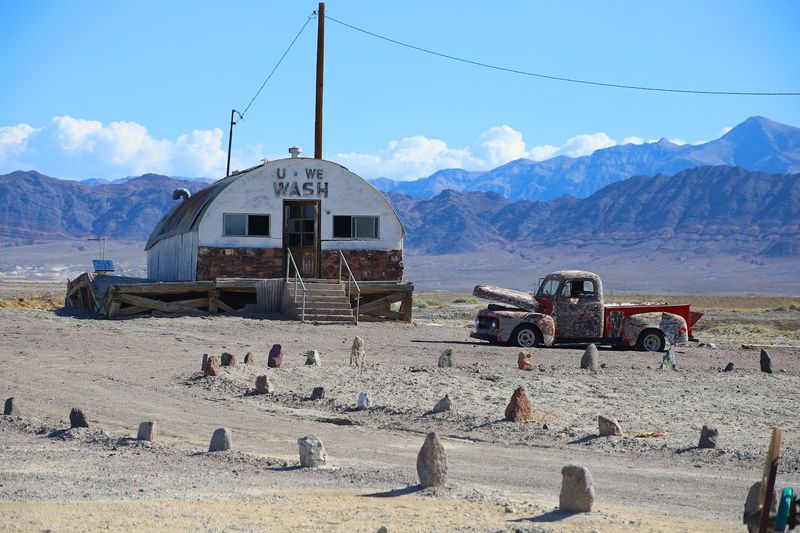
Tecopa exists for one glorious reason: natural hot springs bubbling up from deep underground at the perfect soaking temperature. This tiny community of about 150 permanent residents sits in the Mojave Desert near Death Valley, attracting visitors who seek the healing and relaxing properties of mineral-rich thermal waters.
The springs have drawn people for thousands of years, first Native Americans and later settlers and health seekers.
Several bathhouses operate in Tecopa, some clothing-optional and others more traditional, all fed by the same geothermal sources. The water emerges at around 108 degrees Fahrenheit, loaded with minerals that leave your skin feeling incredibly soft.
Soaking under desert stars with mountains silhouetted against the night sky creates an experience that’s both primal and deeply relaxing. The community maintains a wonderfully weird, artistic vibe with quirky sculptures and painted buildings.
Tecopa Hot Springs Resort and other facilities offer day use or overnight camping near the pools. The town also serves as a convenient base for exploring Death Valley National Park, located just 30 minutes north.
Winter brings pleasant temperatures and the main visitor season, while summer heat drives most people away. China Ranch Date Farm lies nearby, an unexpected oasis with hiking trails and fresh dates for sale.
8. Mojave
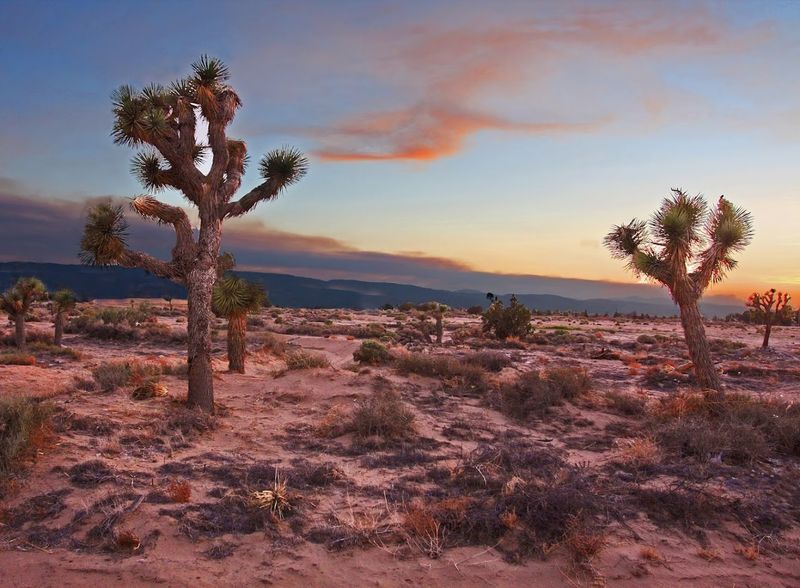
Mojave sits where the desert, aerospace industry, and railroad history collide at 2,762 feet elevation in the high desert. About 4,000 people live here, many connected to the Mojave Air and Space Port, where commercial spaceflight companies test vehicles and retired airliners sit in long rows waiting for their fate.
The dry desert air preserves aircraft perfectly, making this a major storage and recycling center for planes.
The town grew up around the Southern Pacific Railroad, which still runs through the center of town with freight trains rumbling past at all hours. That railroad heritage shows in the older buildings downtown and the town’s linear layout following the tracks.
Wind energy has also become huge here, with thousands of turbines spinning on the hills surrounding town, generating power for Southern California cities.
Mojave serves as a gateway to the Tehachapi Mountains to the west and the vast Mojave Desert spreading in every other direction. The landscape feels stark and beautiful, with Joshua trees, creosote, and wide-open spaces that seem to stretch forever.
Scaled Composites and other aerospace companies conduct test flights from the spaceport, occasionally offering public viewing opportunities. It’s an unlikely place that combines space-age technology with Old West railroad heritage in ways that somehow work together perfectly.
9. Hinkley
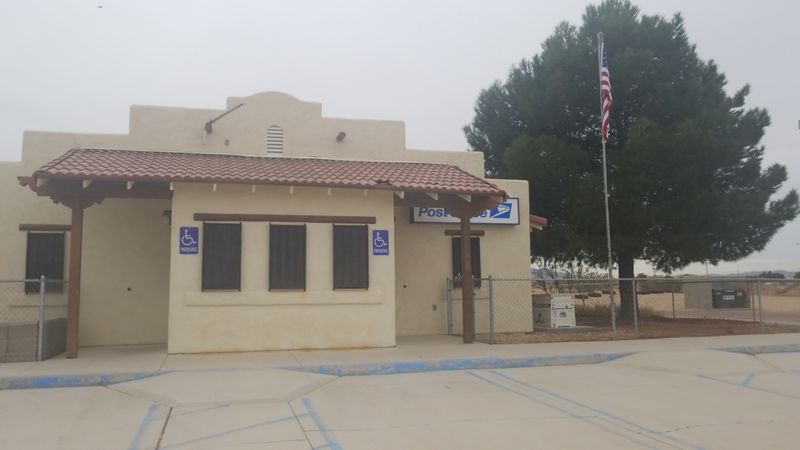
Hinkley achieved unwanted fame in the 1990s when environmental activist Erin Brockovich exposed groundwater contamination from a Pacific Gas & Electric compressor station, leading to one of the largest direct-action lawsuits in U.S. history. That story became a hit movie, but it also devastated this tiny community.
Today, fewer than 2,000 people live in Hinkley, down from its peak, though the town continues on.
Located in the Mojave Desert between Barstow and Bakersfield along Highway 58, Hinkley spreads out across the desert with widely spaced homes and properties. The landscape is classic high desert: flat expanses dotted with Joshua trees, creosote bushes, and desert wildflowers that explode with color after winter rains.
Mountains rise in the distance on all sides, creating horizons that seem impossibly far away.
There’s no real downtown or tourist infrastructure here, just a community of people living quiet desert lives. The contamination cleanup continues decades later, with PG&E still monitoring and treating groundwater.
Despite its troubled history, Hinkley offers something increasingly rare: true desert solitude and wide-open spaces. It’s a place to understand how environmental issues affect real communities and to experience the raw beauty of the Mojave Desert away from crowds and commercialization.