
The Massive German Festival In The California Mountains Where Bavarian Traditions Come Alive Every Year
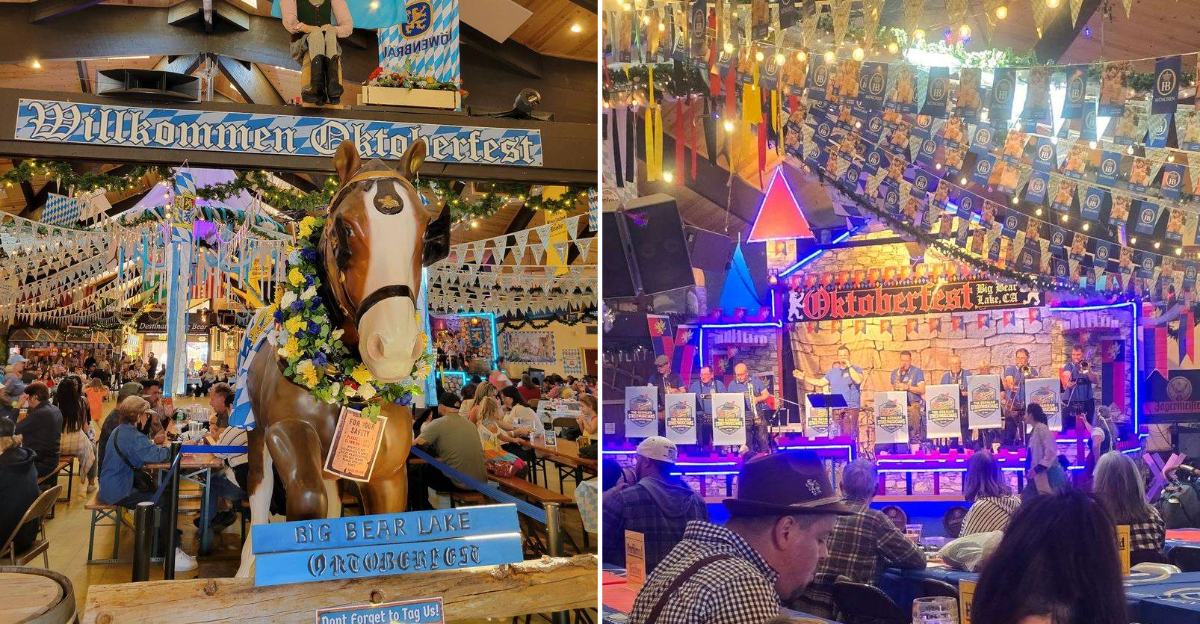
Germans are true masters when it comes to putting together a proper festival. This massive gathering in the California mountains brings Bavarian traditions to life every single year.
Vendors, music, and performances fill the grounds throughout the entire event. Nothing about the festival feels adapted or simplified for an American audience.
Regulars return annually, treating the celebration as an unofficial tradition worth planning around. Visitors unfamiliar with Bavarian culture often leave with a genuine appreciation after experiencing it firsthand.
Local businesses benefit from the surge in foot traffic throughout the festival’s entire run. This festival proved that authentic tradition can thrive far from its original home when done right.
History Of Bavarian Festive Traditions
Back in 1969, German immigrants Hans and Erika Bandows bought a local hotel, rebranded it as the Bavarian Lodge, and decided Big Bear needed an Oktoberfest.
That decision turned into one of Southern California’s longest-running German celebrations.
The whole idea traces back to Munich, Germany, where the original Oktoberfest began in 1810 to celebrate the wedding of Crown Prince Ludwig I and Princess Therese. A royal party got so popular that people just kept throwing it every single year.
Bavarian culture itself stretches back more than 1,500 years, making it one of the oldest in Europe. Its customs grew out of farming life, Christian holidays, and big community gatherings where costumes, music, and food carried real meaning.
What makes the Big Bear version interesting is that it did not copy Munich so much as translate it. Mountain setting, alpine air, and a hall built to feel like a festival tent.
Traditions like these matter because they keep identity alive across oceans and generations. A family that arrived in California decades ago can still hear the music their grandparents danced to.
The festival typically runs across several weekends from September into early November, which is a long stretch by any standard. That length gives it room to feel less like an event and more like a season.
Find it at 42900 Big Bear Blvd, Big Bear Lake, CA 92315.
Traditional German Foods And Specialties
Bratwurst, knockwurst, and kielbasa show up here like the headliners they are. Each one usually arrives with homemade sauerkraut that the kitchen guards behind a so-called secret recipe.
Schnitzel holds its own on the menu, crisp and wide enough to hang off the edge of a plate. German potato salad sits nearby, tangy instead of creamy, which surprises people expecting the picnic version.
Adventurous eaters go for pickled ham hocks, a dish that sounds intimidating and then wins converts. Bavarian dumplings round things out, soft and hearty in a way that pairs well with mountain weather.
Then there is the dessert situation. Apple strudel, sometimes made by a German baker, comes layered thin with warm fruit inside.
The pretzels deserve their own paragraph, honestly. Colossal is the right word, and they are best shared unless someone is feeling ambitious.
Outdoor vendors add variety with other quick bites, so picky eaters in a group are not stuck. Nobody has to negotiate a compromise meal.
Practical tip worth remembering: eat before the dance floor fills up, not after. Lines shrink during the music sets, and finding a table gets much easier.
Food here leans authentic rather than fair-style, with recipes built on real Bavarian technique. Attention to seasoning and preparation shows up in the details, which is exactly why the menu keeps regulars loyal for years.
Folk Music And Dance Performances
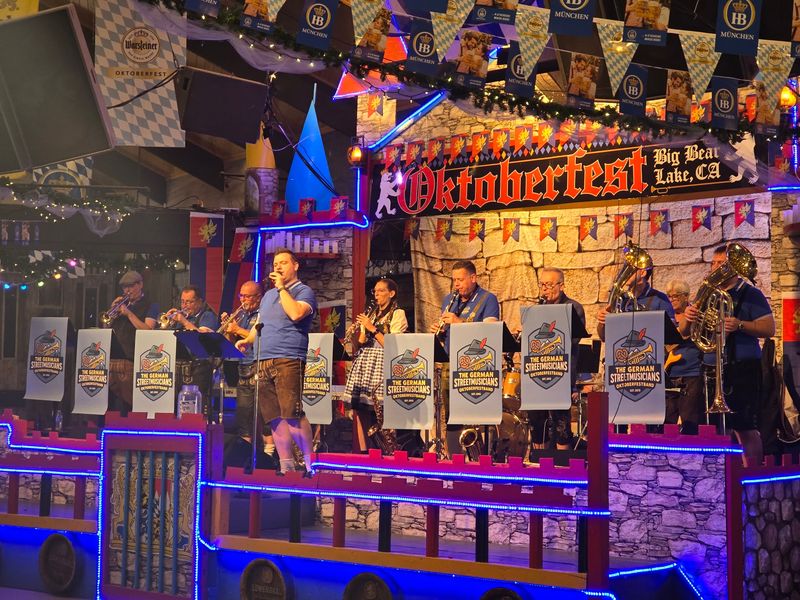
Live German music runs through this festival like a heartbeat, and the bands are not local imitations. Many travel directly from Germany to play these weekends in the mountains.
Polka and oompah dominate the set lists, delivered with brass, accordion, and enough volume to fill a hall. Two stages have operated in past years, meaning the sound rarely stops.
Audience participation is basically required. Sing-alongs happen constantly, and the Chicken Dance arrives at some point whether anyone is ready or not.
One classic moment involves the call of “Zicke Zacka, Zicke Zacka,” answered by a roaring “Hoi, Hoi, Hoi!” from the crowd. That exchange comes straight from Munich, and hearing it echo through a California mountain hall is genuinely fun.
Bands mix things up more than expected. Traditional polkas share space with classic rock covers, country hits, and modern dance favorites.
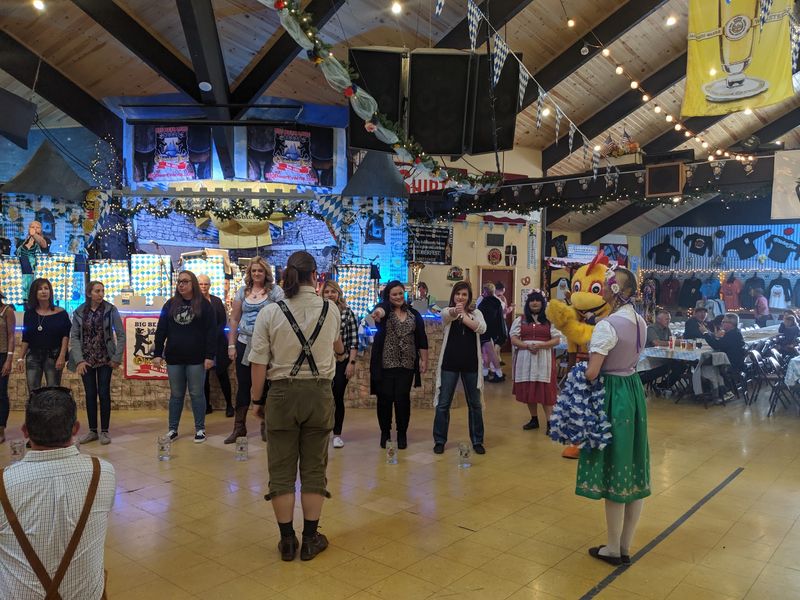
Line dancing has become its own attraction, drawing groups who barely know the steps and figure it out mid-song. Nobody seems to mind the learning curve.
Entertainment stretches for hours on festival days, sometimes running nearly nonstop through an afternoon. Grandparents, teenagers, and toddlers all end up moving at some point.
For anyone hoping to actually dance, the middle of a set beats the very start. Crowds loosen up fast once the first sing-along lands.
Artisan Crafts And Handmade Souvenirs
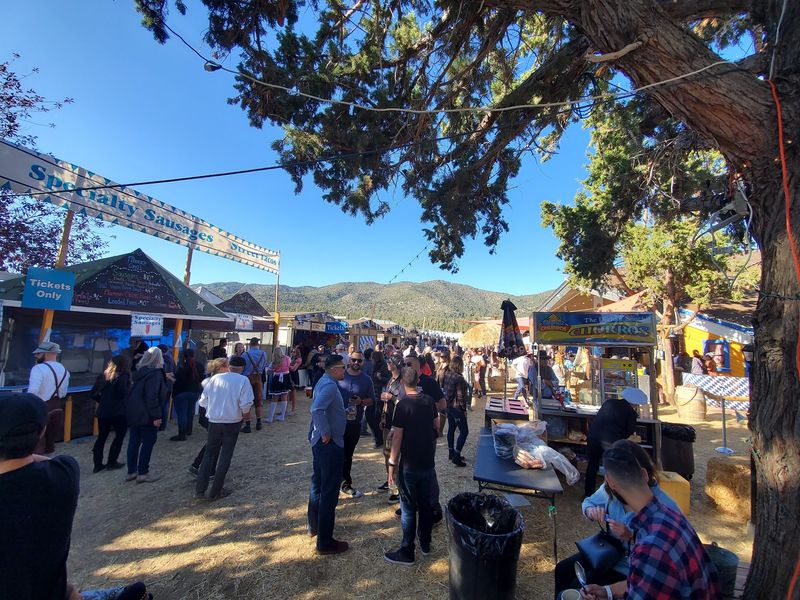
Shopping here happens along an area called the Budenstrasse, which translates roughly to a street of booths. Exhibitors and artisan vendors line it up, and browsing takes longer than most people plan for.
Past years have featured old-time photography setups, where visitors dress up and walk away with a sepia-toned keepsake. Alpaca wool goods have also appeared, which makes sense given how quickly mountain evenings cool off.
Stein engraving has been available at the festival too. Personalizing one turns a souvenir into something a family actually keeps on a shelf instead of in a closet.
The onsite gift shop stocks German-themed items and quality steins, so nobody has to hunt far for something festive. Collectors tend to make it their first stop.
Elsewhere around Big Bear, shops sell valley-inspired goods like handmade pine sculptures and carved owls. Locally designed apparel fills out the mix for anyone wanting a wearable reminder of the trip.
What makes the market work is scale. There are enough booths to feel like a real hunt, without so many that decision fatigue sets in.
Bring cash and patience, and give yourself time before the music pulls everyone toward the stages. Browsing during a band break is smart planning.
Handmade items also carry a story, which beats a mass-produced magnet every time.
Family Friendly Activities And Workshops
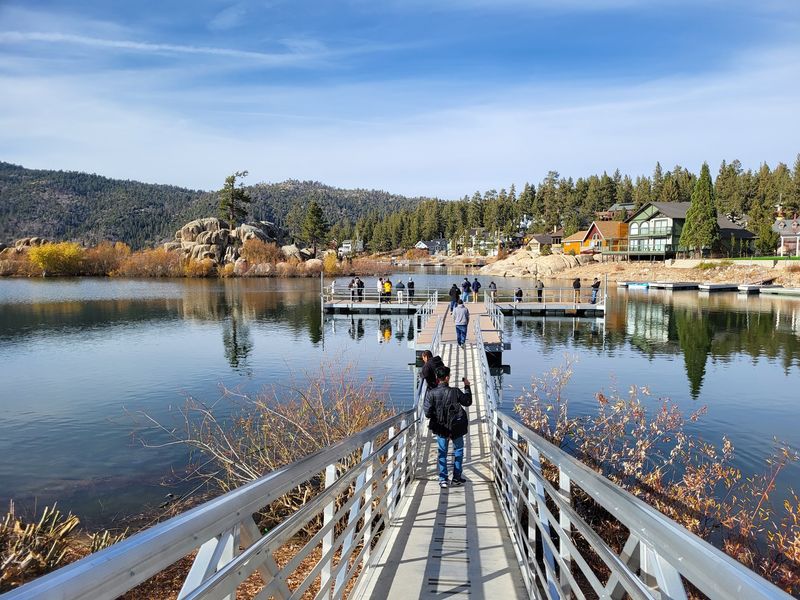
Kids are not an afterthought here, which is refreshing for a festival known mostly for its music and food. Sundays are labeled Family Fun Days, and children under 12 have enjoyed free admission on those dates in past years.
A dedicated area called the Kinder Garten holds climbing walls, mechanical bulls, and giant inflatables. Parents can actually sit down for a minute while that energy gets burned off.
Arts and crafts stations give younger children something calmer to do. Bounce houses, fair rides, and carnival-style games cover the rest of the age range.
Children’s contests usually take place on Sundays, and they turn into surprisingly competitive events. Small kids take those trophies seriously.
Adults get their own silly competitions, which honestly might be the best part. Log sawing draws big crowds, with two people working a giant saw through a log while everyone shouts encouragement.
Stein-carrying contests test arm strength and stubbornness in equal measure. Watching is entertaining even for people who would never volunteer.
Sunday tends to be the smartest choice for families overall. Crowds are more manageable, entertainment runs for hours, and the pace suits shorter attention spans.
One practical note worth planning around: parking spaces are small and fill quickly. Arriving early saves a lot of frustration with car seats and strollers.
Cultural Significance Of Bavarian Attire
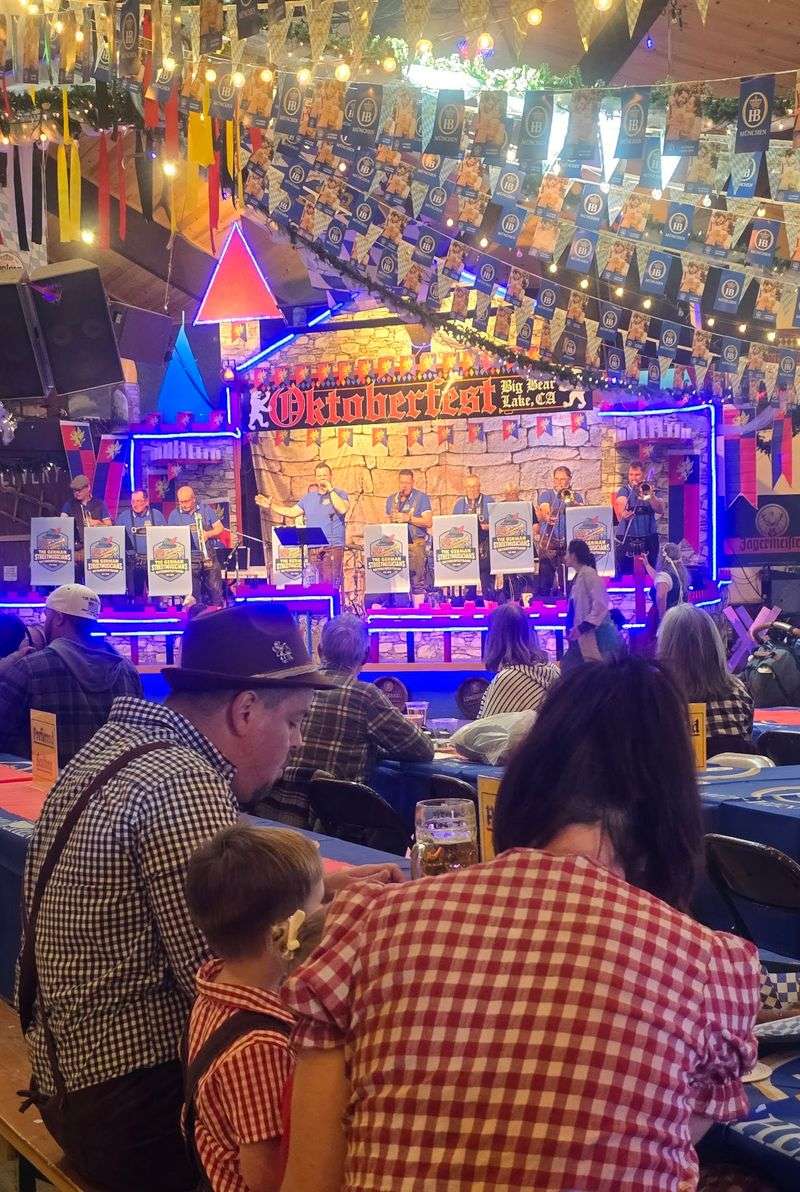
Tracht is the word for traditional German folk clothing, and plenty of festival guests wear it with real enthusiasm. These outfits have been passed down through families since the 18th century.
For women, the dirndl combines a fitted bodice, a blouse, a full skirt, and an apron. Details like embroidery and fabric choice once signaled where a woman came from.
Men wear lederhosen, leather trousers that come short or knee-length depending on preference and weather. Given the mountain chill, knee-length gets popular later in the season.
Wearing Tracht is more than a costume choice. It represents Bavarian pride and a link to generations who wore the same styles for celebrations and church.
Something shifts in the atmosphere when a large portion of the crowd dresses the part. The hall stops looking like a convention space and starts looking like a village square.
First-timers sometimes feel shy about joining in, then regret not doing it. Nobody judges the quality of an outfit, and effort counts more than authenticity.
Photos from these weekends end up in family albums for decades. That is part of why so many attendees treat dressing up as a tradition of its own.
Comfortable shoes matter more than any other detail. Dancing, standing, and walking to distant parking all add up fast.
Seasonal Decorations And Festive Ambiance
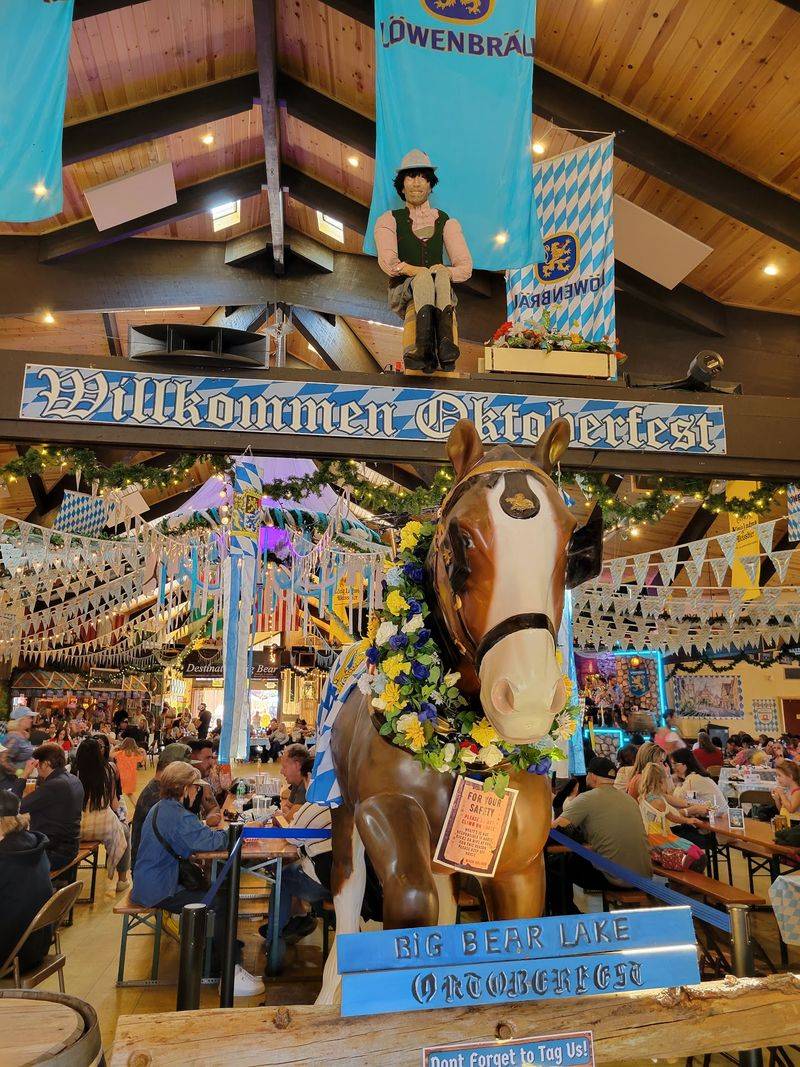
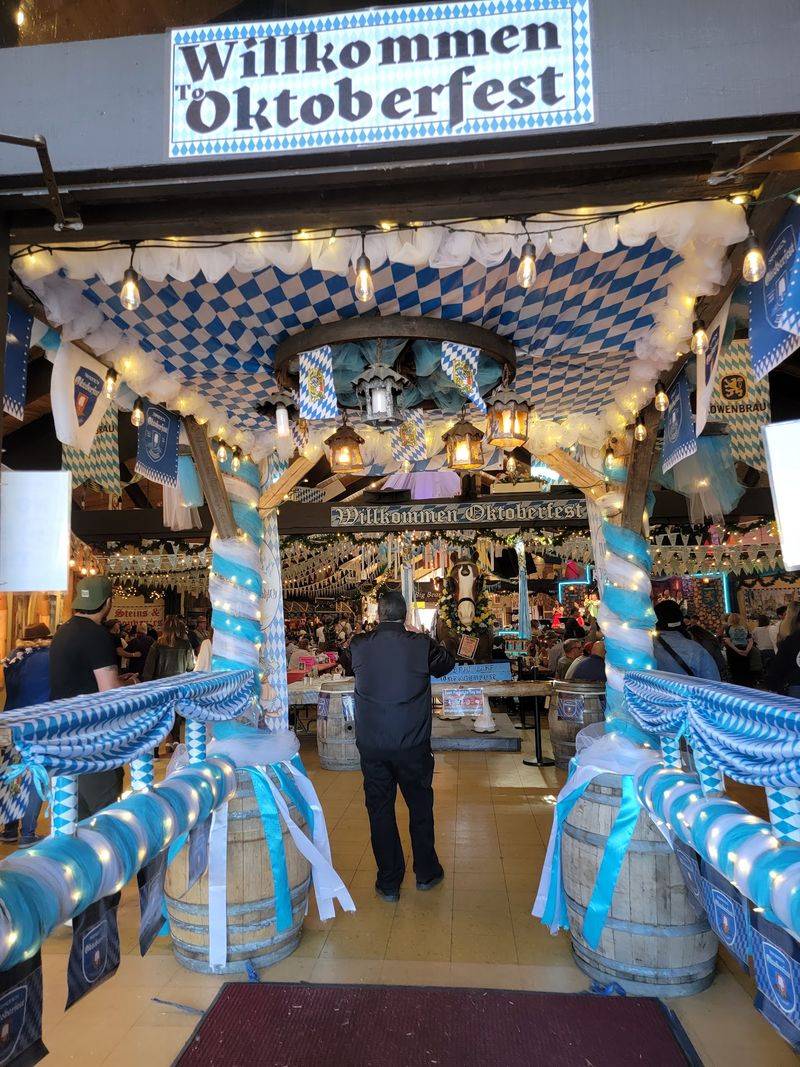
The convention center gets a full personality transplant for the season. Banners, garlands, and Bavarian styling turn a functional building into something that reads like an alpine village hall.
Its structure was built to resemble a festival tent, which gives the indoor Bier Hall an authentic shape from the start. Long communal tables encourage strangers to become temporary friends.
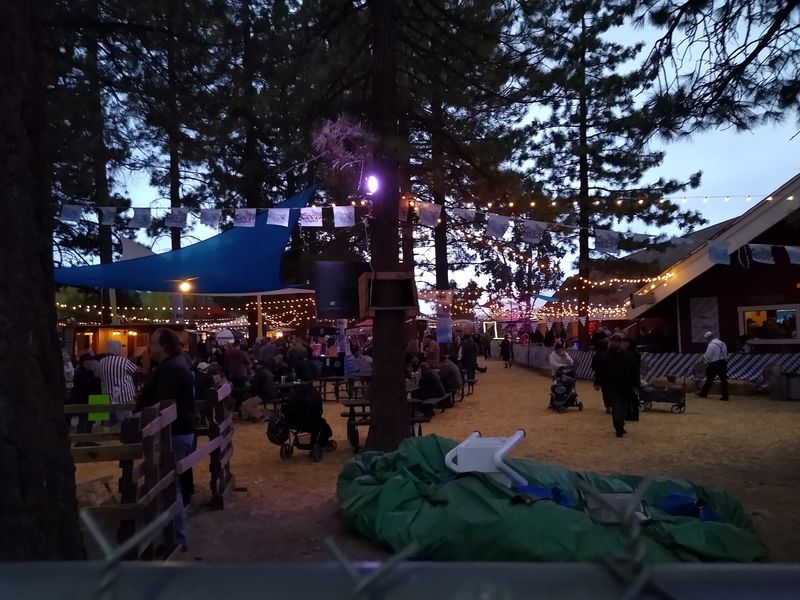
Outside, the High Altitude Bier Garten takes advantage of the setting. Towering pines and cool autumn air do work that no decorator could fake.
Big Bear Village joins in with its own seasonal decorations, so the festive feeling starts before anyone reaches the front gate. Walking through town becomes part of the experience.
Elevation genuinely changes things. Crisp mountain air, pine scent, and the sound of brass music carrying outdoors create an atmosphere that flat-city festivals cannot copy.
Evenings bring a warm glow indoors while temperatures drop outside. Layering clothing is not optional in October up here.
The mix of indoor and outdoor space also solves the weather problem neatly. Rain, wind, or sunshine, there is somewhere comfortable to land.
Sunsets over Big Bear Lake add a bonus most visitors do not expect from a festival. Arriving before dark is worth planning around, especially with a camera in hand.
Community Engagement And Volunteer Opportunities
Festivals like this one survive on people who show up and pitch in, and Big Bear has a strong culture of that. The town runs on volunteers across a surprising number of organizations.
Care for Big Bear hosts and supports sustainability-minded events, with opportunities centered on protecting the natural environment. Anyone who loves the lake and forest can plug in there.
The Southern California Mountains Foundation organizes trail work, which is physical, satisfying, and good for the region. Hikers who use those trails often end up giving back on them.
Wildlife lovers gravitate toward the Big Bear Alpine Zoo, which seeks help with rehabilitation efforts. Animals arrive injured or orphaned and need steady human support.
The Big Bear Discovery Center takes a different approach, inviting people to guide nature walks and lead arts and crafts. Public lands stewardship rounds out its programs.
Other local groups need help with animal meal prep, fundraising, and community outreach. Skills that seem ordinary elsewhere become genuinely useful here.
The convention center itself hosts events well beyond the German festival, including holiday parties and community gatherings throughout the year. Children’s Christmas events have handed out gifts and bikes to local families.
Visitors who fall for the town sometimes turn into part-time contributors. That connection is what keeps traditions like these alive decade after decade.