
The Massive Missouri Museum Where Strange Surreal Curiosities Await Around Every Corner
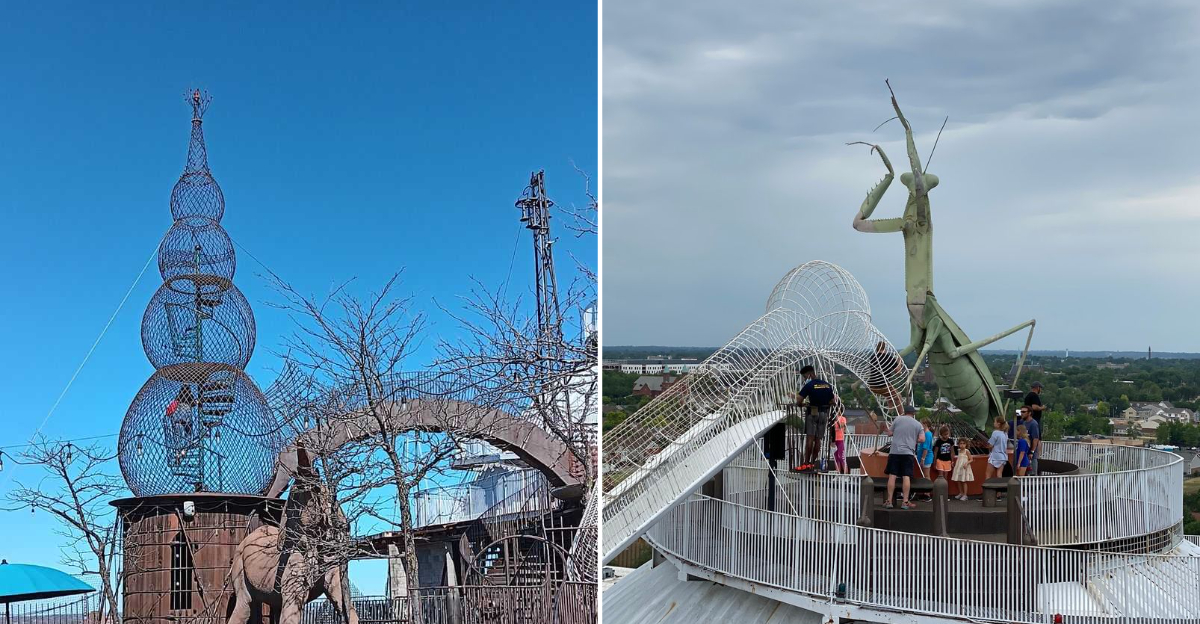
This might be one of the strangest museums you’ll ever visit, but that’s exactly what makes it special. This massive Missouri museum fills every corner with surreal curiosities most visitors have never encountered anywhere else.
Nothing about the collection feels curated for typical museum expectations. Rooms branch off into sections most first-time visitors don’t expect to find inside.
Regulars treat repeat visits as necessary, since one trip rarely covers everything on display. Exhibits range from bizarre historical artifacts to oddities that defy easy explanation.
Families often lose track of time completely once they start exploring deeper into the building. This museum proved that sometimes the strangest attractions make for the most memorable visits.
History And Origins Of The Wildest Museum In St. Louis
Back in 1993, artist and sculptor Bob Cassilly and his then-wife Gail bought a mostly empty building that nobody else seemed to want. The old International Shoe Company factory and warehouse was huge, dusty, and full of possibilities.
Construction started almost right away, and here is the fun part. The whole project stayed largely secret while the crew worked, so the public had no idea what was taking shape behind those brick walls.
Curious visitors finally got a peek on New Year’s Eve 1996. What they walked into was a construction site slowly turning into something nobody had a name for yet.
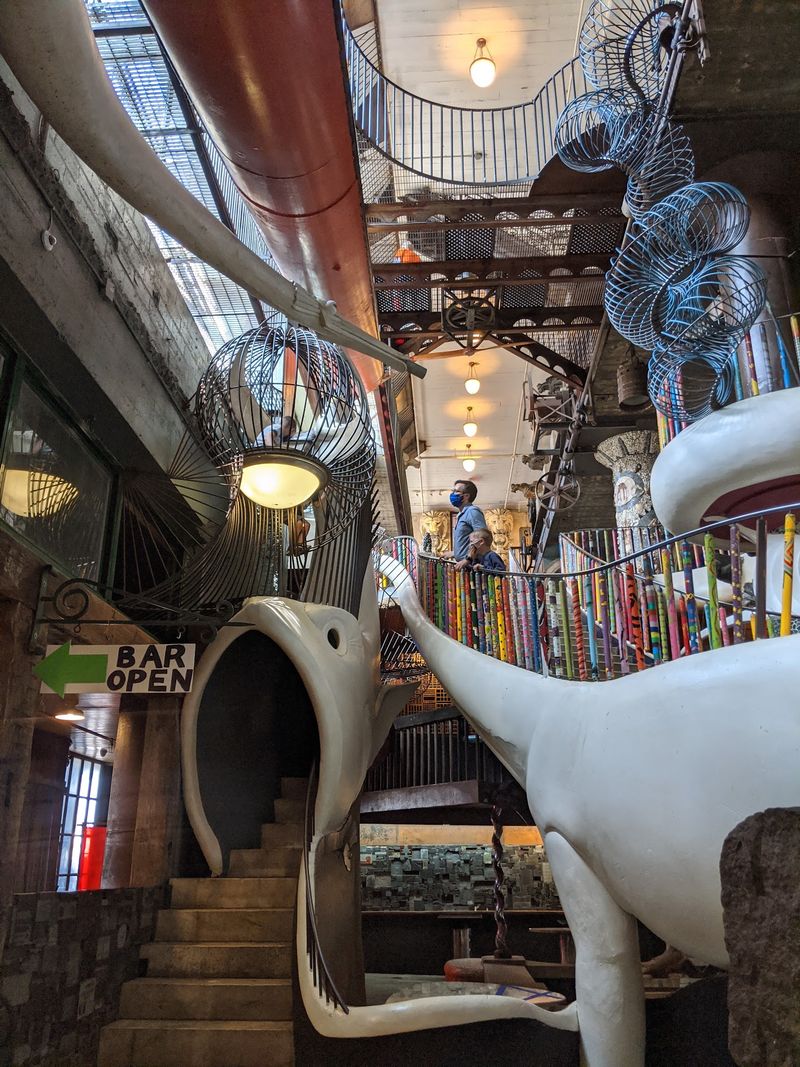
The official opening came on October 25, 1997, right after crews finished the giant whale in the lobby. A whale seemed like a reasonable centerpiece for a former shoe factory, apparently.
Cassilly stayed on as artistic director until his death in 2011, shaping the place year after year. His fingerprints are still everywhere, from the concrete caves to the odd angles that make no architectural sense but feel completely right.
Premier Parks LLC acquired the museum in January 2019, and the building keeps growing. What began as one artist’s stubborn vision now covers multiple floors and a rooftop, and it lives at 750 N 16th St, St. Louis, MO 63103.
Architectural Features And Design Elements Built From Salvage
Six hundred thousand square feet is a lot of space to fill, and the solution was refreshingly simple. Use whatever the city throws away.
Salvaged bridges, construction cranes, old chimneys, and even abandoned airplanes found new jobs here. The founders hunted for materials mostly within St. Louis itself, which gives the whole building a hometown feel.
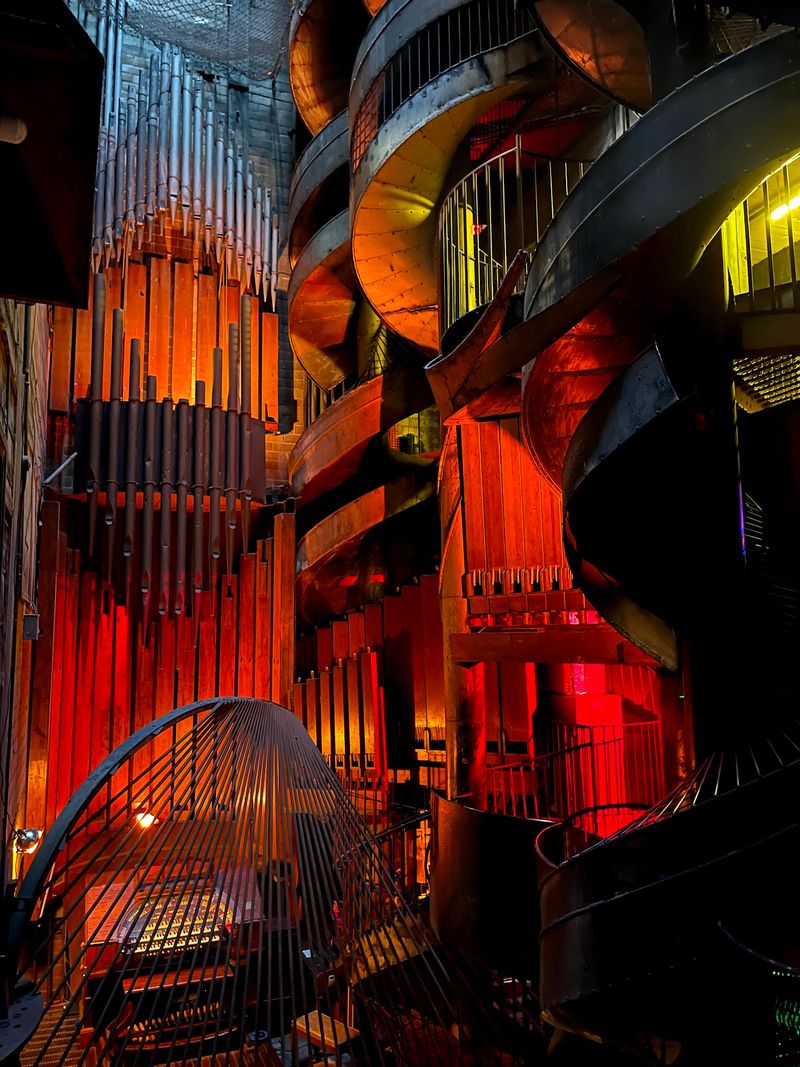
Spiral structures left over from warehouse days still twist through the interior. What once moved shoes now moves people, usually headfirst and giggling.
The first floor holds the largest continuous mosaic in the United States. Thousands of tile fragments cover the ground and climb right up the support columns, turning boring structural pillars into something worth staring at.
Nothing about the layout follows normal museum logic. Ceilings open into tunnels, floors have holes on purpose, and passageways lead somewhere unexpected instead of somewhere sensible.
That approach has picked up both local and international awards, which is a little funny for a building assembled from scrap. Architects apparently appreciate creative chaos when it is done well.
Walking through feels like exploring the inside of a machine that was built by someone with a great imagination and zero interest in straight lines. Every surface got attention, and that attention shows in the smallest details.
Interactive Exhibits And Visitor Engagement That Break Museum Rules
Most museums post signs telling people not to touch. Here, the unspoken instruction is closer to go ahead and climb that.
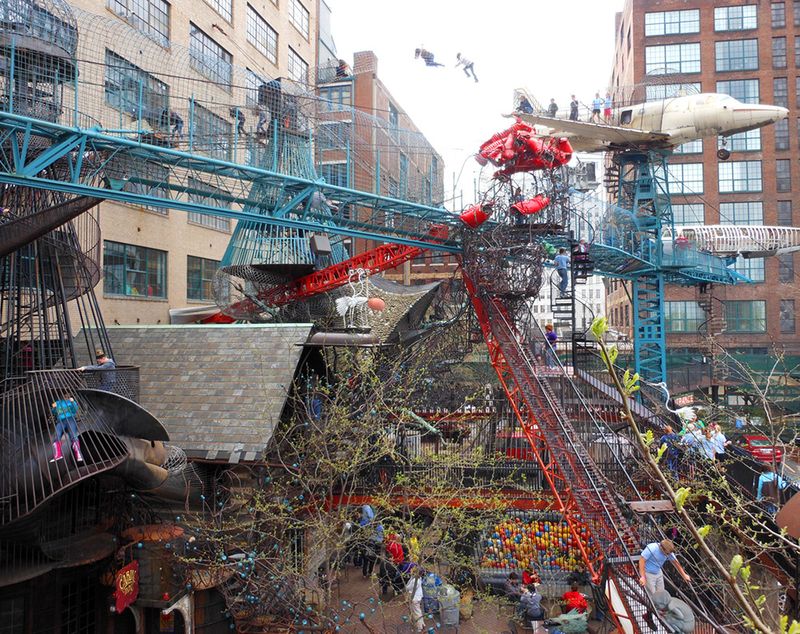
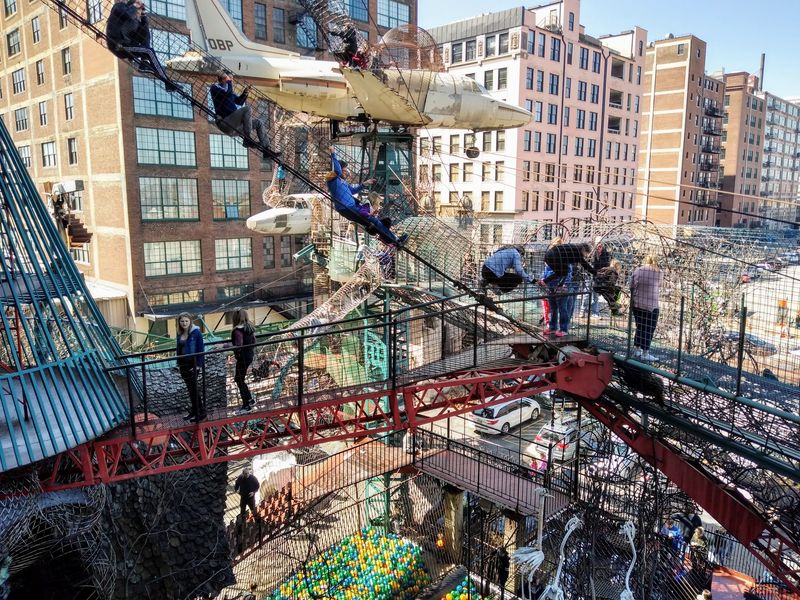
An enormous network of climbing structures winds through the building, all of it assembled from repurposed industrial and architectural pieces. Some paths are wide and obvious, others require crawling on your stomach.
The ten-story slide gets the most attention, and it has a great backstory. It used to be a shoe chute in the old factory, carrying merchandise instead of screaming humans.
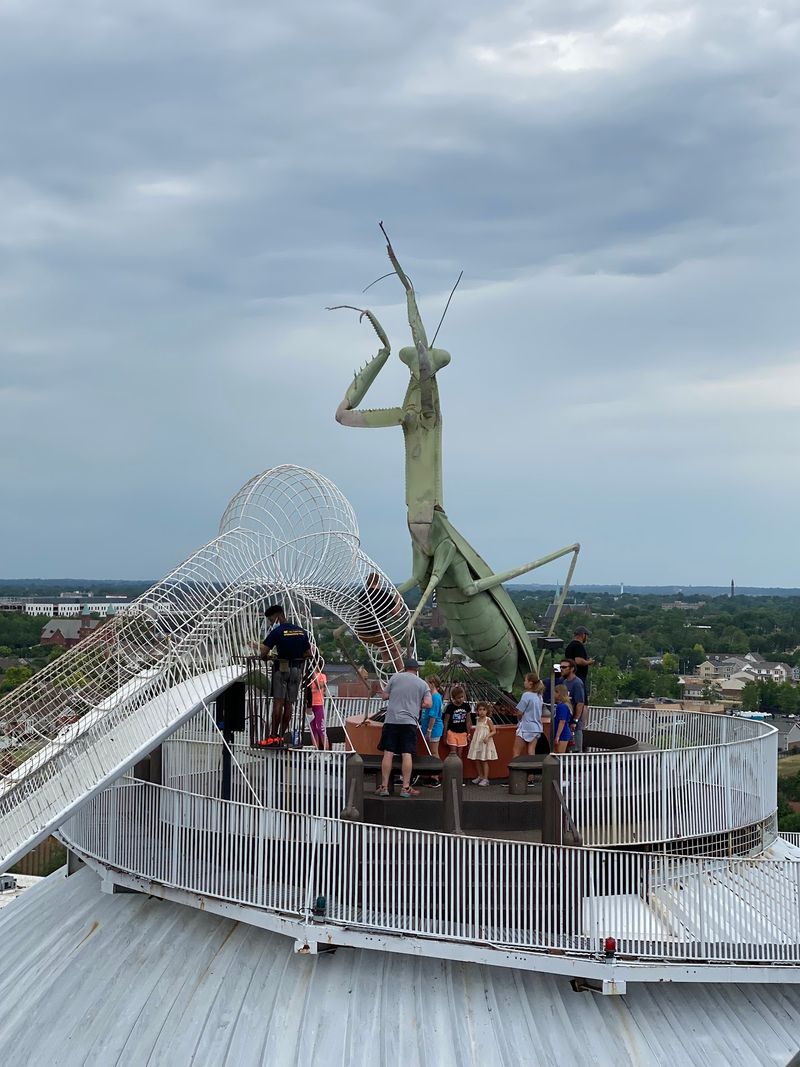
Wire tunnels stretch outside the building entirely, so visitors can crawl through metal mesh with open air below them. Not everyone loves that feeling, but plenty of people do it twice.
Human-sized hamster wheels sit waiting for anyone willing to look ridiculous. Kids run them constantly, and adults pretend they are only supervising.
Below all of that runs the underground whaleway tunnel, plus a whole system called the Original Caves. Dark, twisting, and full of false turns that somehow lead somewhere.
Headlamps and flashlights come in handy down there, and knee pads are a genuinely smart idea. Crawling across concrete for a few hours leaves marks, and comfortable clothes make the whole day easier.
Surreal Artworks And Installations You Have To See Twice
Somewhere in this building sits the world’s largest pencil. Seventy-six feet long, twenty-one thousand pounds, with working graphite and an actual eraser.
Why does it exist? Nobody really needs a reason once they see it in person.
A life-sized bowhead whale also lives inside, and unlike whales at other museums, this one is meant to be climbed. Visitors scramble up and into it without anyone blowing a whistle.
The materials list reads like an inventory from an unusual estate sale. Colorful tiles, safety deposit boxes, and stainless steel buffet pans all got worked into the artwork.
Labyrinth on the fourth floor is one of the newer additions, mixing art and architecture with relics from the city’s industrial history. Inside, there is a wall covered in vintage Twinkie pans.
A snail-shaped turbine sculpture sits in the same area, because a turbine shaped like a snail makes as much sense as anything else here. Industrial junk becomes strangely beautiful when arranged with care.
Reclaimed remnants and architectural salvage carry the entire artistic vision. Nothing was purchased new to look impressive, and that is exactly what makes the place impressive.
Walking the same hallway twice usually reveals something missed the first time around, which keeps repeat visitors coming back for more.
Educational Programs And Workshops For Every Age Group
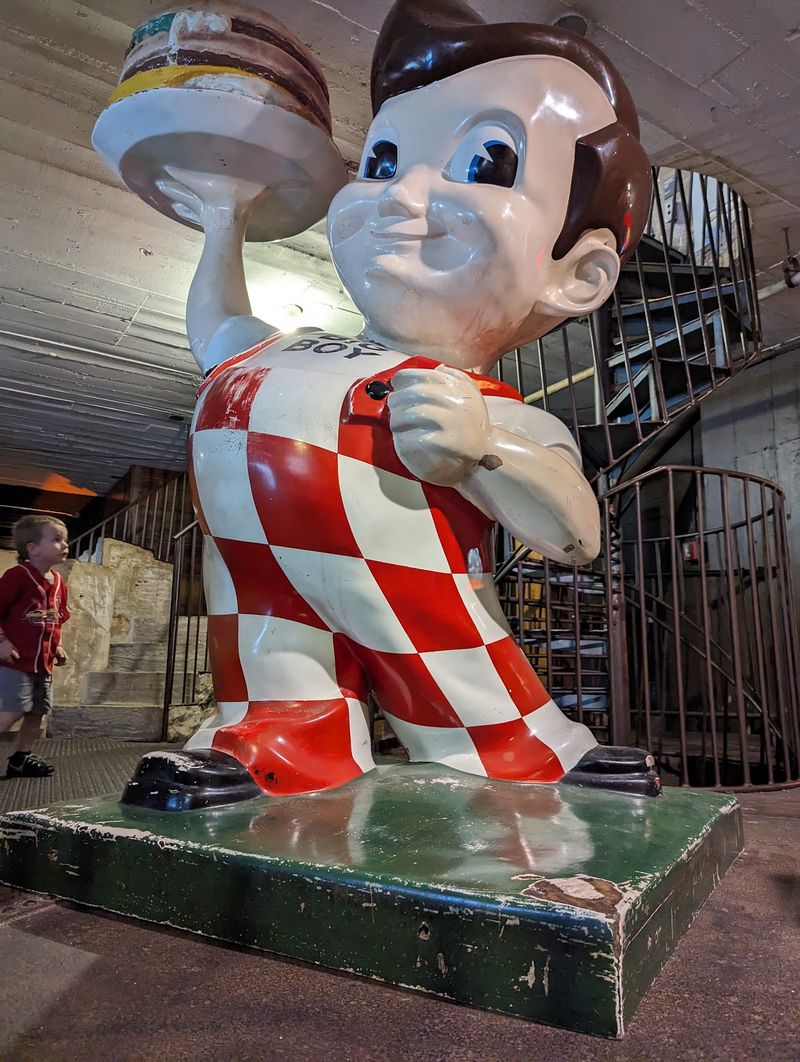
Art City on the fourth floor is where hands get messy on purpose. It functions as a maker space, open to visitors of every age.
Printmaking, clay sculpting, painting, and collage all show up in the lineup, with workshops rotating so the offerings change. Nobody needs artistic talent to join in.
During the last week of each month, the space transforms into Glow City. Black lights come on, fluorescent paints come out, and everything guests create starts glowing.
That monthly switch is worth planning around if the timing works. Painting under black light feels different from regular painting in a way kids find hard to believe.
Circus Harmony also calls the museum home, and it is a social circus with real classes. Students learn basic circus arts, aerials, juggling, unicycling, wire-walking, and tumbling.
Programs run for ages three all the way up through adults, which means a parent could theoretically learn to juggle while their kid learns to walk a wire. Or fail spectacularly at both, which is also fine.
Watching a practice session happen in the middle of a museum is its own strange pleasure. The combination of art studio and circus school under one factory roof sums up the whole philosophy pretty neatly.
Behind The Scenes Of Curiosity Curation
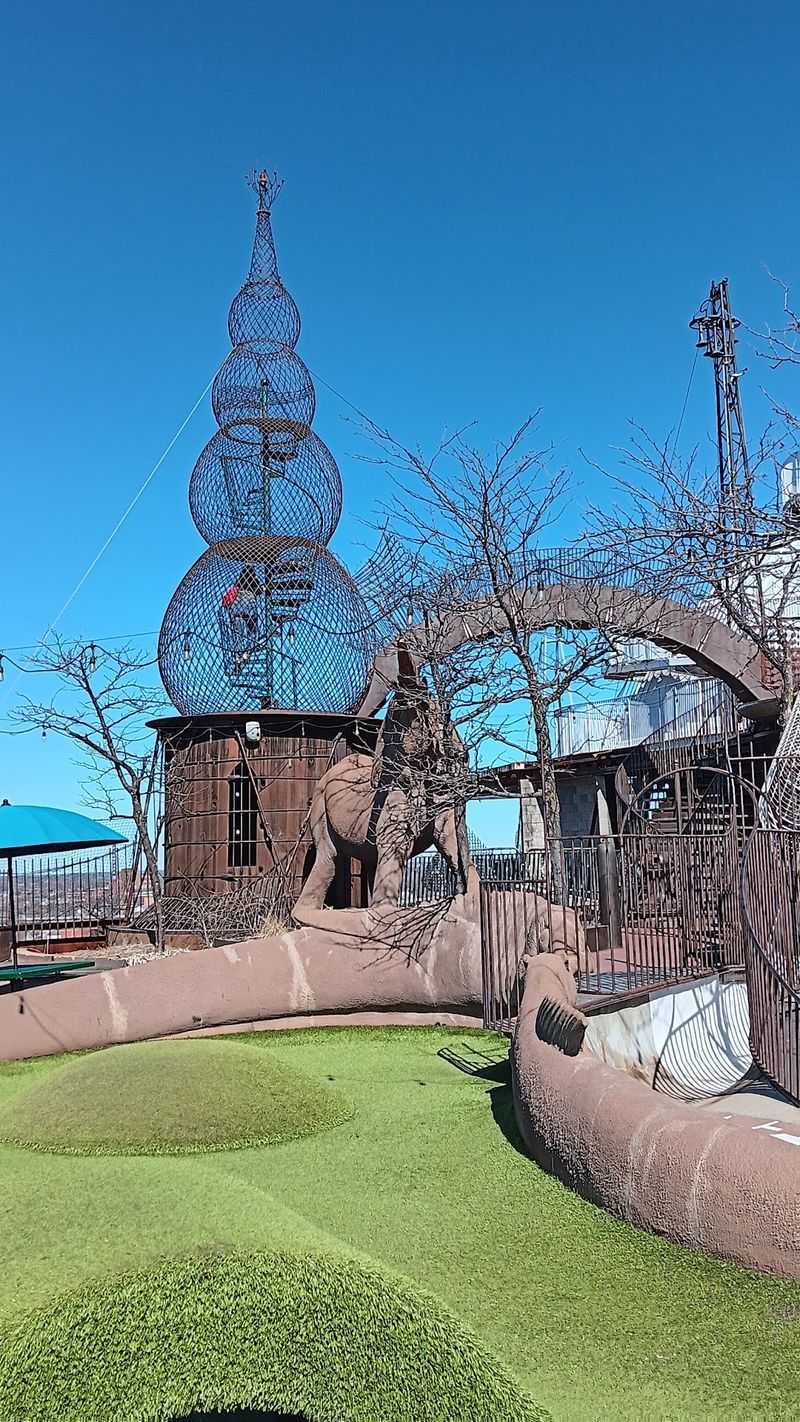
Cities throw away astonishing things. Bob Cassilly and his team of artisans built an entire museum out of exactly that.
The mission was straightforward even if the results look chaotic. Save pieces of the city’s architectural and industrial past by giving them a second life indoors.
Old stone carvings, structural fragments, and mechanical oddities got hauled in from across the St. Louis region. Instead of ending up crushed, they became walls, tunnels, and sculptures.
The Cassilly Crew still builds and expands the place today. Construction never really stopped, which is why regular visitors keep spotting things that were not there before.
Their guiding philosophy centers on discovery and creative reuse. Found objects get reimagined rather than restored, so a piece of an old bank vault might become part of a climbing route.
Figuring out how to turn a random salvaged beam into something safe and fun takes real skill. Welders, sculptors, and masons all contribute, and the craftsmanship holds up under thousands of climbing visitors.
Maintaining a structure this complex is no small job either. Parts show wear because they get used constantly, and crews are always patching, rebuilding, and adding.
The result is a museum that behaves more like a living project than a finished exhibit hall.
Family Friendly Activities And Attractions Across Every Floor
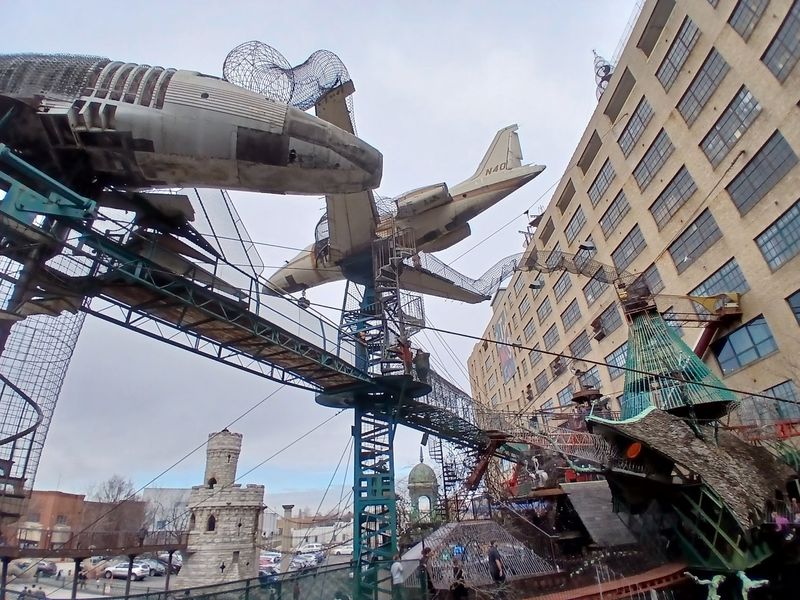
Picture a school bus hanging off the edge of a rooftop. That image alone tells you how seriously this place takes conventional safety aesthetics, and yes, it is up there.
The roof also holds a Ferris wheel, giving riders a view over downtown from a building that already feels unreal from the inside.
Down at ground level, MonstroCity sprawls outdoors with two Sabreliner 40 aircraft fuselages suspended in the air. A fire engine and castle turrets connect by bridges, all of it climbable.
The Enchanted Caves wind through the lower floors as a maze of tunnels and secret passageways. Kids vanish into one entrance and pop out somewhere their parents were not standing.
Toddler Town exists for the smallest visitors, with softer, smaller-scale fun that does not require crawling through metal. Parents of two-year-olds tend to appreciate that a lot.
Four floors plus outdoor space plus a rooftop adds up to a full day, easily. Families routinely spend five hours and still miss chunks of it.
Walkie-talkies help with big groups, and comfortable shoes are non-negotiable. Sunny days heat up the outdoor metal structures, so a cloudy afternoon actually works in your favor here.
Impact On Local Culture And Community
An abandoned factory does not usually become a neighborhood’s biggest draw. Project for Public Spaces recognized this one as a great public space, which says something about what happened here.
The transformation sparked real change around it. An empty industrial building turned into a destination, and the surrounding area gained momentum it did not have before.
Because so much of the salvage came from within St. Louis, the museum carries the city inside its walls. Bits of demolished buildings and old infrastructure live on in tunnels and mosaics.
That local sourcing creates an odd emotional pull. Longtime residents sometimes recognize architectural fragments from places that no longer exist.
Over more than two decades, the museum settled into its role as a beloved local institution. School groups, birthday parties, and out-of-town visitors all pass through the same tunnels.
Its approach to interactive learning shifted expectations about what a museum can be. Urban storytelling here happens through touch and movement rather than plaques and audio guides.
Families play together instead of walking single file past display cases. Parents crawl through tunnels alongside their kids, and grandparents ride the Ferris wheel.
Few attractions manage to preserve history while letting thousands of people climb all over it. That balance is the reason this place matters well beyond Missouri.