
The Mississippi Aquarium With One Of The Best Stingray Experiences In The South
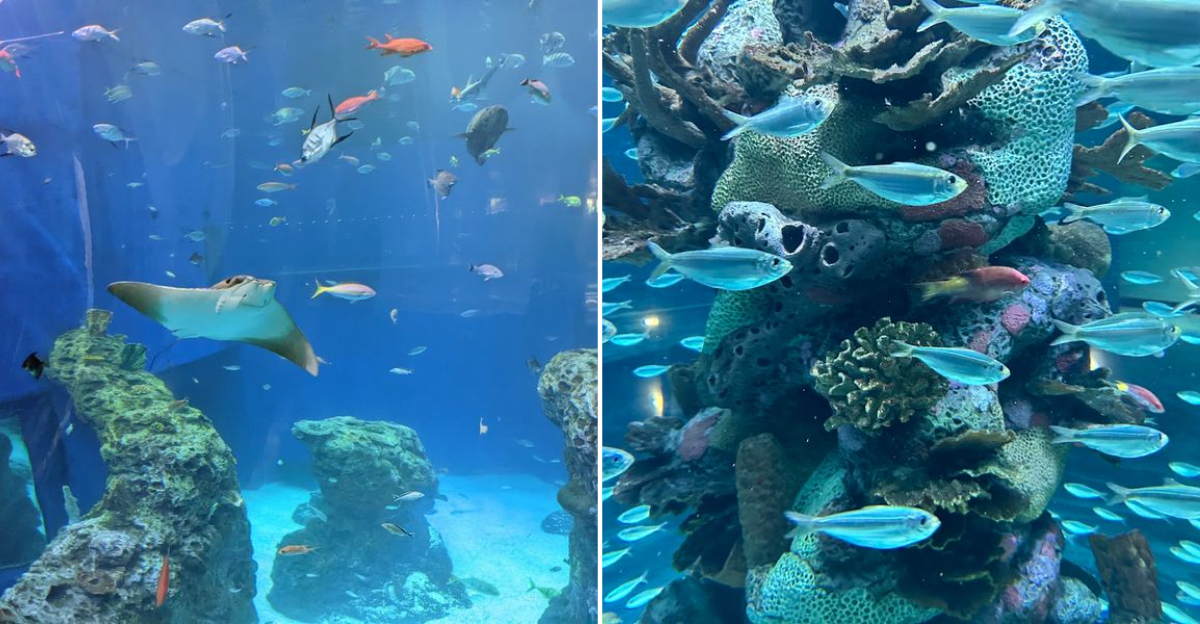
Stingrays gliding within arm’s reach produce a reaction that no amount of preparation fully anticipates. The aquarium built its reputation around exactly that moment and has been delivering it consistently ever since.
The experience does not keep the animal at a comfortable distance behind glass. It closes that distance entirely, which changes everything about what an aquarium visit can feel like.
Children who arrive nervous tend to leave converted. Adults follow the same arc at a slightly slower pace and arrive at identical conclusions.
Mississippi delivered an aquarium here that earned its place at the top of the regional conversation. A stingray encounter that most visitors describe as the unexpected highlight of the entire trip tends to do that without much additional assistance.
Overview Of Stingray Species Found In The Mississippi Aquarium
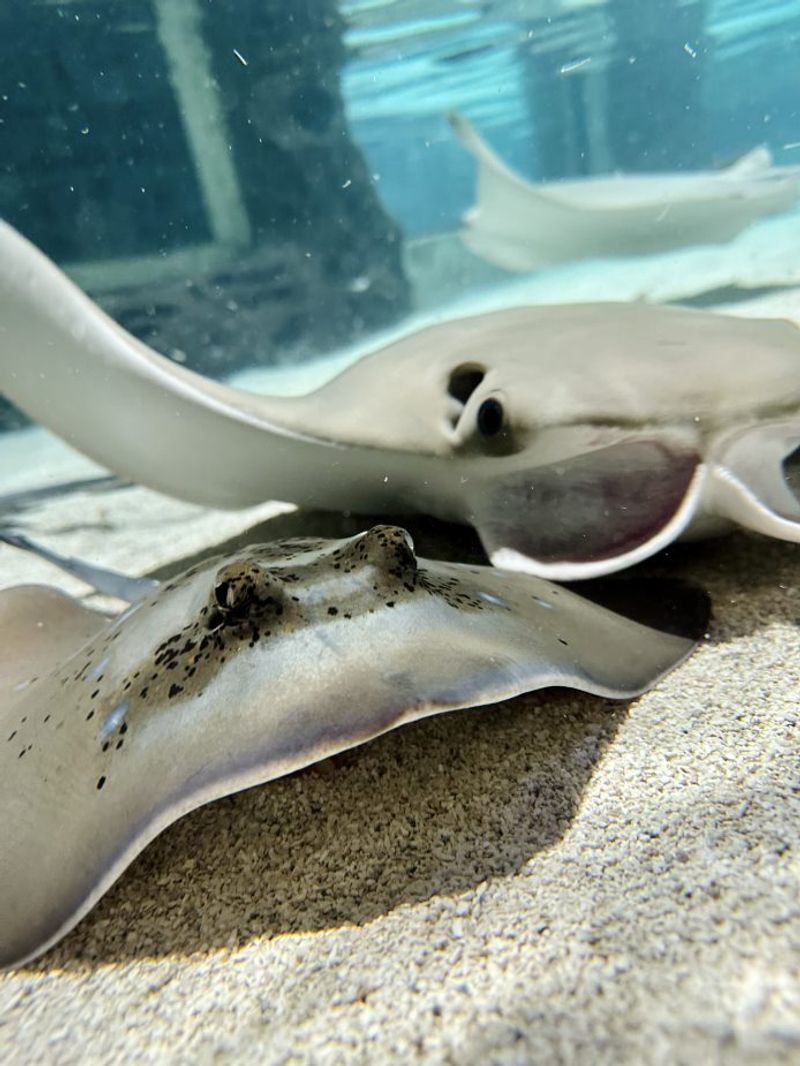
The Mississippi Aquarium is home to a surprisingly diverse group of stingray species. Yellow Rays, Atlantic Rays, and American Cownose Rays all share space here.
Blue-Spotted Maskrays add a pop of color that genuinely stops visitors in their tracks.
Southern Stingrays are also part of the collection, and they are hard to miss. These flat, wide creatures glide through the water like living kites.
Watching them move is one of those moments that makes you pull out your phone immediately.
Each species has its own personality and physical traits worth noticing. Cownose Rays travel in large groups in the wild, which makes their aquarium presence feel especially lively.
The Blue-Spotted Maskray, meanwhile, looks almost too vibrant to be real.
The variety here goes beyond just looking cool. It gives visitors a real sense of how many different stingray species call Gulf Coast waters home.
Staff members are happy to point out the differences between species if you ask. You can find all of this at 2100 E Beach Blvd, Gulfport, MS 39501.
Interactive Opportunities For Visitors With Stingrays
Touching a stingray is one of those bucket-list moments most people never expect to actually check off. At the Mississippi Aquarium, it happens regularly and without much fuss.
The touch pools put you face-to-face with real live rays gliding right up to the edge.
Visitors can gently stroke the backs of the stingrays using a flat, open hand. The texture is smooth and surprisingly firm.
First-timers always have the same reaction, which is a mix of nervous laughter and pure amazement.
The SeaTREK experience takes things up a notch for those who want more. This underwater helmet dive lets you walk along the bottom of a large tank.
Stingrays and other marine animals swim around you while you explore.
This is not a behind-the-glass-only kind of place. The aquarium clearly prioritizes real, memorable interaction over passive observation.
Kids go absolutely wild for the touch pools, and honestly, adults are not far behind. The hands-on design makes every visit feel personal and exciting rather than just educational.
Conservation Efforts And Education At The Mississippi Aquarium
Conservation is not just a buzzword here. The Mississippi Aquarium operates as a nonprofit, meaning every ticket purchase goes back into protecting coastal ecosystems.
That mission shows up in real, tangible ways throughout the facility.
The Adopt An Animal program lets visitors support specific animals financially. It is a straightforward way to contribute beyond just showing up.
Many families choose stingrays as their adopted animal, which makes sense given how popular they are.
Marine debris cleanups are organized regularly to protect Gulf Coast shorelines. The aquarium partners with local communities to make these events happen.
It is hands-on conservation work that extends well beyond the aquarium walls.
S.T.E.A.M.-focused education programs bring science, technology, engineering, arts, and math together through aquatic themes. These programs target students of all ages and connect classroom learning to real marine environments.
The aquarium functions as both a visitor attraction and a genuine educational institution.
Conservation research is also funded through the aquarium, helping scientists better understand Gulf Coast species, including the stingrays that call this place home.
Design Enhancing Visitor Stingray Experiences
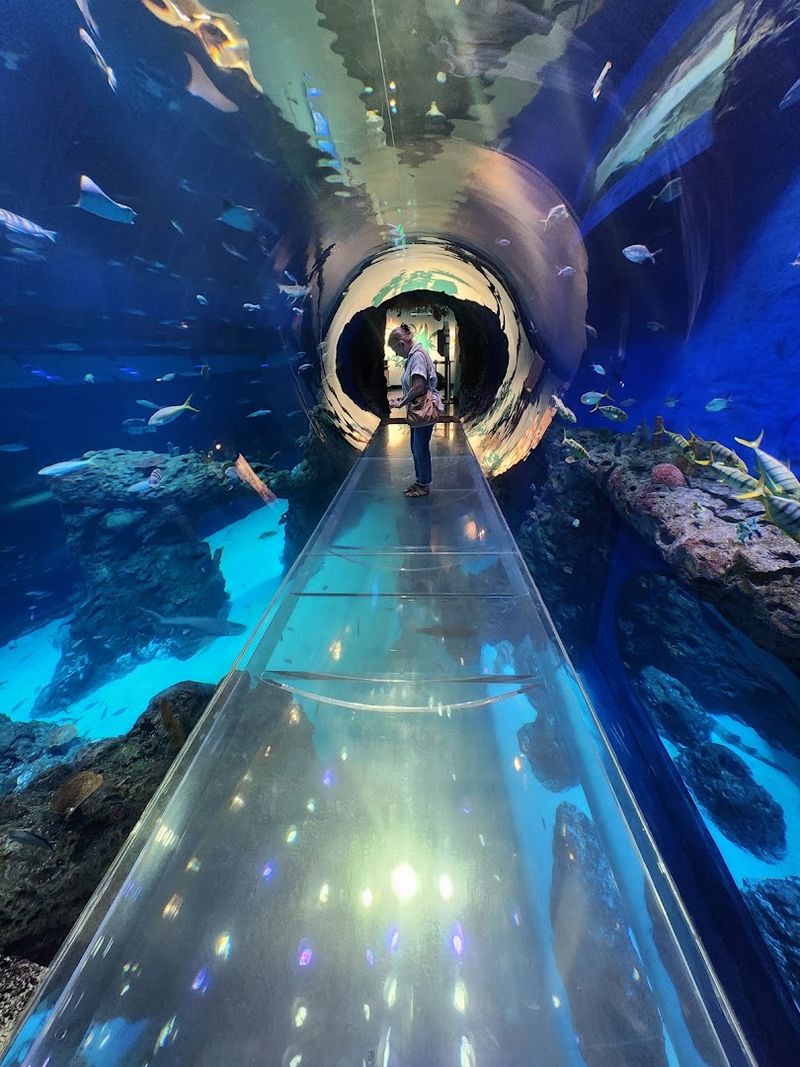
The architecture of this aquarium was clearly built with stingrays in mind. Every design choice seems to put these animals at the center of the experience.
Acrylic walls throughout the facility create a feeling of being fully surrounded by ocean life.
The 360-degree walk-through tunnel is the crown jewel of the layout. Stingrays glide overhead and along the sides while you walk through.
It is one of the only complete tunnels of its kind in the entire country.
Natural water flow patterns are built into the tank designs. This keeps the rays moving in ways that feel organic and dynamic rather than staged.
Watching a Southern Stingray bank around a corner right above your head never gets old.
Stingray silhouettes are also used as design elements in the Coral Reef biome. These visual cues guide visitors through the space while reinforcing the stingray theme.
The overall layout creates a continuous narrative as you move from exhibit to exhibit. Every corner of this place was designed to maximize your time with these animals, and the result is an experience that feels both polished and genuinely immersive.
Safe Handling Guidelines For Stingray Interactions
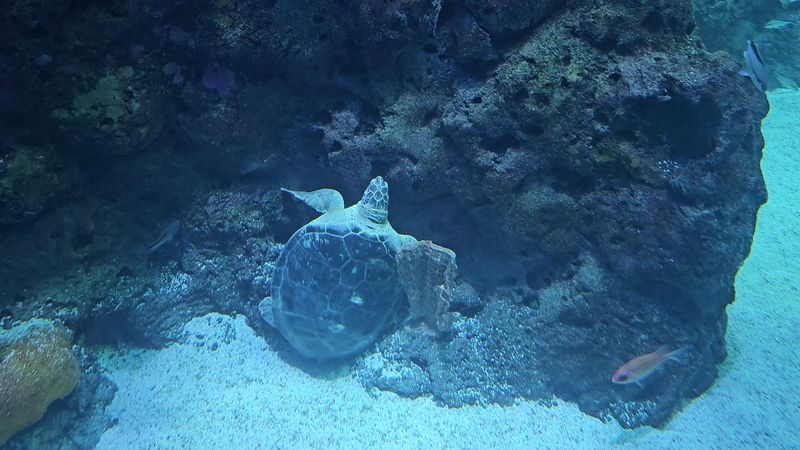
Safety around stingrays is taken seriously here, and that is a good thing. The aquarium has clear, easy-to-follow guidelines posted at every touch pool.
Staff members are always nearby to walk visitors through the proper approach before anyone reaches into the water.
The golden rule is to use a flat, open hand when stroking a ray. No poking, grabbing, or touching the belly or tail area.
These boundaries protect both the animal and the visitor, and staff enforce them consistently without being heavy-handed about it.
Some stingrays in the touch tanks have had their barbs carefully removed or trimmed. This is a common and humane practice at aquariums with interactive exhibits.
It reduces risk while still allowing for genuine, close contact with the animals.
First-time visitors occasionally hesitate at the edge of the pool, which is completely normal. Staff members are patient and encouraging without being pushy.
Once someone makes that first gentle contact with a gliding ray, hesitation disappears fast. The whole process feels safe, supervised, and well-organized.
Following the guidelines means everyone walks away with a great memory and zero drama.
Additional Marine Life Exhibits Complementing The Stingray Display
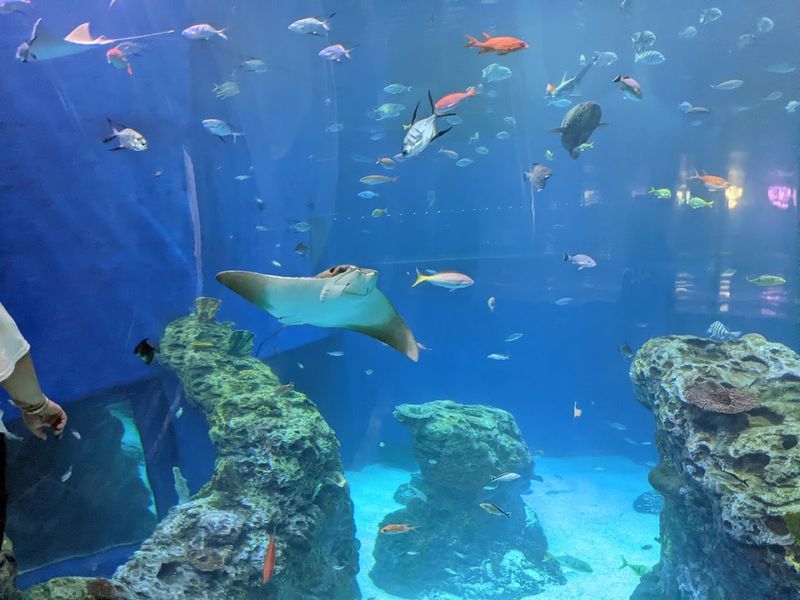
Stingrays get a lot of attention here, but they are far from the only stars of the show. The aquarium features over 200 animal species spread across indoor and outdoor habitats.
Each exhibit adds a new layer to the overall Gulf Coast story being told.
The touch pool does double duty, housing horseshoe crabs and small sharks alongside the rays. Horseshoe crabs are ancient creatures that look like they belong in a science fiction movie.
Reaching in to touch one is a strange and wonderful experience all on its own.
Outside, alligators, river otters, and beavers bring a distinctly Mississippi flavor to the mix. The river otters in particular are crowd favorites because they never stop moving.
Watching them tumble around their habitat is genuinely hilarious.
Dolphins, seahorses, and sea turtles round out the aquatic lineup in impressive fashion. The newest Changing Tides expansion adds a Kelp Forest, Amazon, and Coral Reef biome with even more species.
A two-toed sloth lives in this section, which surprises nearly every visitor who encounters it. The Secrets of the Deep exhibit highlights deep-sea corals and creatures most people have never seen before.
The variety across all exhibits makes the stingray experience feel like part of a much larger adventure.
Behind The Scenes Care And Feeding Of Stingrays
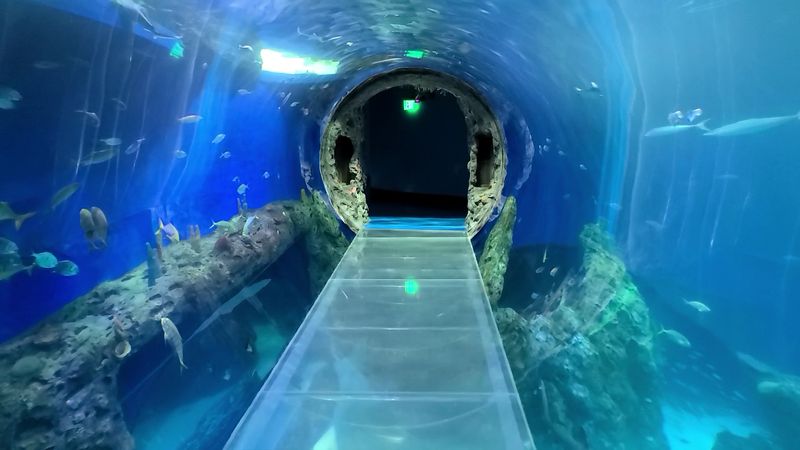
Caring for stingrays is a full-time commitment that goes far beyond filling a tank with water. The animal care team at the Mississippi Aquarium works daily to keep each ray healthy, active, and well-fed.
It is a level of dedication that most visitors never see but always benefit from.
Stingrays are carnivores with specific dietary needs. Their meals typically include live worms, frozen shrimp, and other seafood items.
Over time, many rays learn to take food directly from a keeper’s hand, which is a sign of trust and conditioning.
Water quality is one of the most critical factors in stingray care. Large filtration systems run continuously to keep tank conditions stable.
Even small changes in water chemistry can affect ray behavior and health.
Staff members monitor the animals closely every single day. Any changes in eating habits or movement patterns are flagged and addressed quickly.
The level of attention given to each animal reflects the aquarium’s broader commitment to animal welfare.
Behind every graceful ray is a dedicated team that tests the water, prepares meals, and keeps everything running smoothly. That kind of care is what makes the animals here look so healthy and comfortable.
Seasonal Events And Programs Focusing On Stingrays
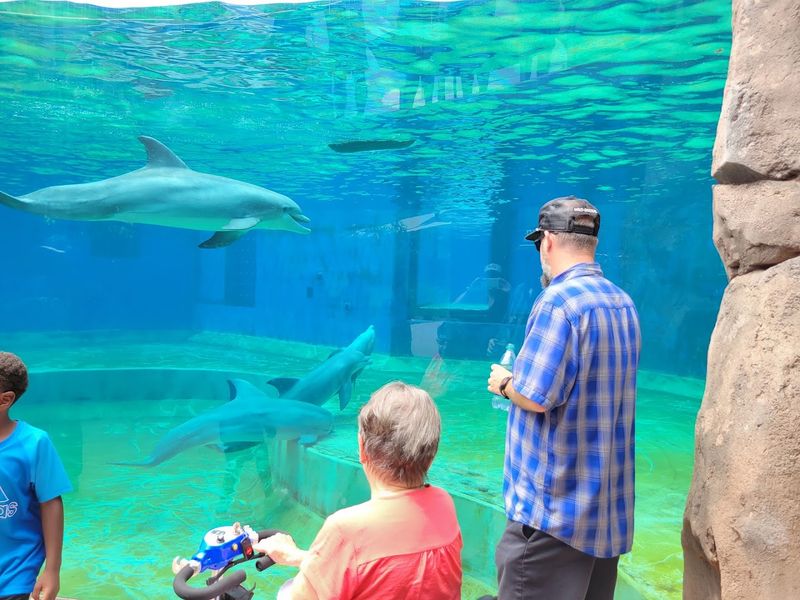
The Mississippi Aquarium keeps its calendar busy with events and programs throughout the year. These offerings go beyond standard admission and give visitors a reason to return more than once.
Stingrays frequently appear as focal points in educational programming.
Aqua Tots is one of the most popular programs available for younger visitors. It introduces small children to marine life concepts in a fun, age-appropriate way.
Stingray anatomy and behavior are often part of the curriculum, making it both educational and exciting.
Seasonal events bring themed programming that ties into what is happening in Gulf Coast ecosystems. These events rotate throughout the year and often feature special access or demonstrations.
Checking the aquarium website before your visit is always a smart move to catch something unique.
Weekend encounters offer ticketed experiences with dolphins and other marine animals. While stingray-specific encounter events vary by season, the touch pool experience is available during regular hours every day.
The aquarium also runs school group programs that incorporate stingray education into broader marine science lessons. Whether you visit with family, a school group, or alone, there is always something extra happening to make the trip feel new.
The event calendar at msaquarium.org is updated regularly, so bookmarking it pays off.