
The Mississippi Lake Town Where 19th-Century Buildings And Sidewalk Cafes Turn Main Street Into A Place Made For Wandering
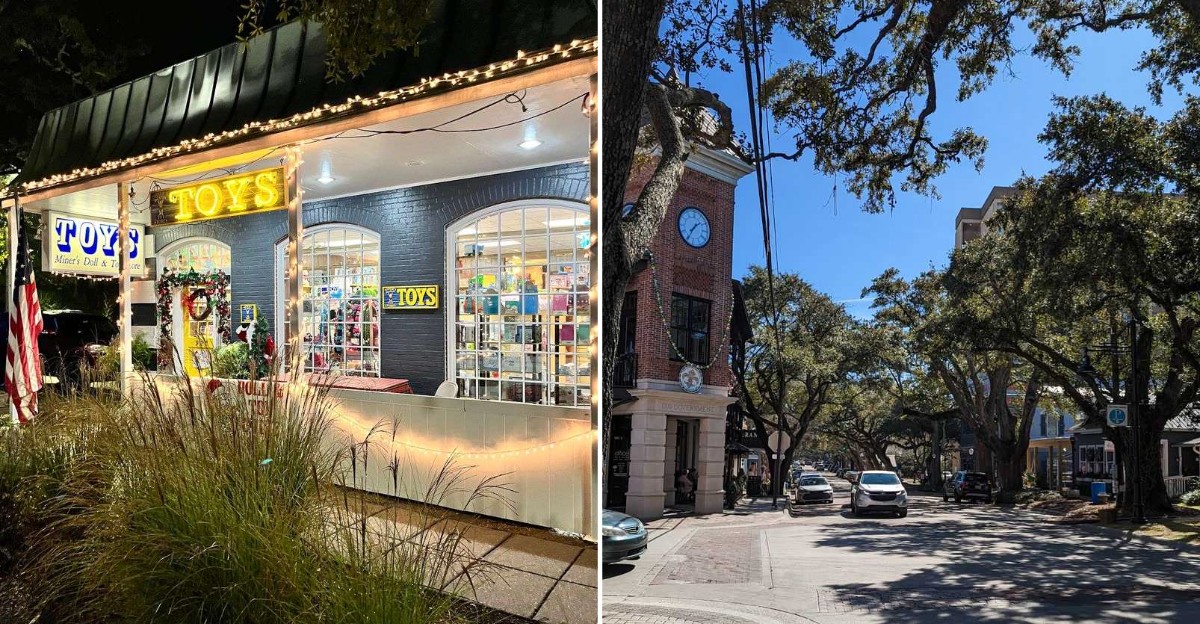
If you’ve ever wondered what towns looked like centuries ago, this Mississippi lake town gives you the chance to actually experience it. Buildings here date back to the 1800s, still standing with much of their original character intact.
Sidewalk cafes line Main Street, adding a modern touch without disrupting the historic feel of the area. Nothing about the town feels modernized beyond what actually improves daily life for residents.
Walking through here feels less like sightseeing and more like stepping through layers of time. Locals treat preservation as a genuine priority, keeping the town’s original charm intact.
Visitors often lose track of time wandering between shops and cafes without any particular destination in mind. This town proved that some places are simply made for slow, unplanned exploration.
Old Ocean Springs Historic District
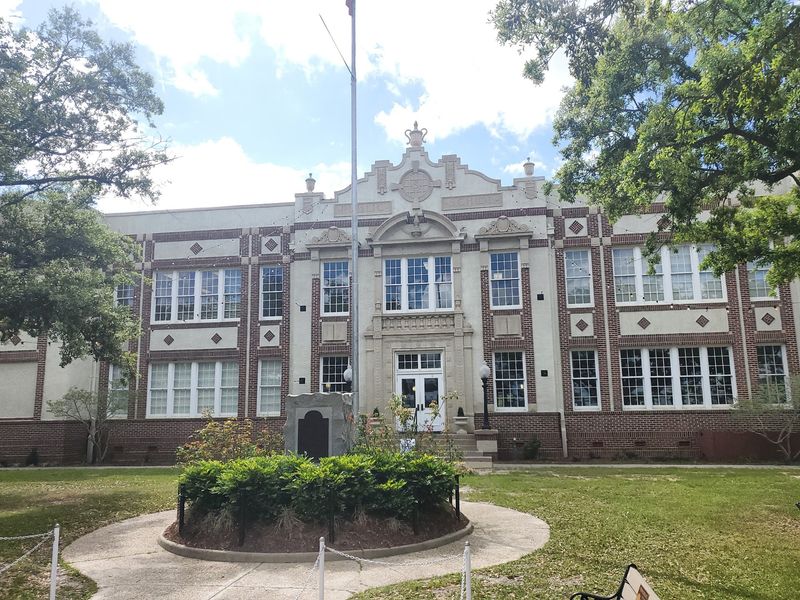
Experiencing Jackson and Washington Avenues feels like flipping through a builder’s sketchbook from the 1800s. Greek Revival columns sit near Queen Anne trim, and Craftsman bungalows share the block with shotgun houses.
Creole cottages and Planter’s cottages fill out the mix, most of them wrapped in porches. Those porches were not decoration.
Before air conditioning, a deep shaded porch was the only way to survive a Gulf Coast August.
The Louisville and Nashville Railroad depot anchors the north end of the district. The current building went up in late 1907 or early 1908, replacing an earlier depot that stood farther west, and it once linked the town to New Orleans and the rest of the coast.
Now restored and listed on the National Register of Historic Places, the depot hosts community events and the Ocean Springs Fresh Market. Produce stands under a railroad roof are a pretty good second act.
Two other buildings deserve a mention. The Charnley-Norwood house on East Beach was designed by Louis Sullivan in 1890, with the young Frank Lloyd Wright serving as a draftsman in Sullivan’s firm at the time.
The Walter Anderson Cottage at Shearwater Pottery dates to 1850. For anyone who likes reading a town through its architecture, this district rewards slow walking and a lot of looking up.
Downtown’s Artistic Core On Washington Avenue
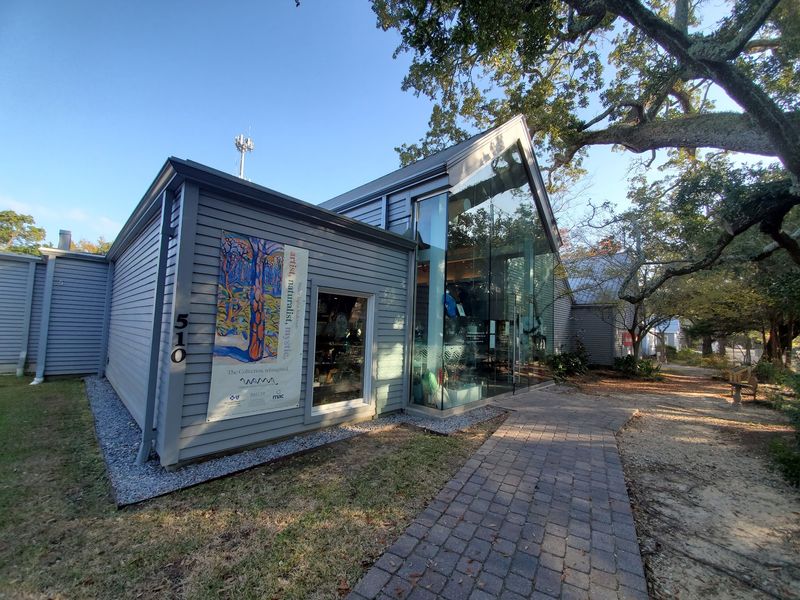
Some towns hang a mural and call themselves an arts community. Washington Avenue skipped the shortcut and became an actual gallery district, block after block.
Studios, galleries, and design shops sit under oak branches that arch across the pavement. The trees do half the work of making the street feel like an outdoor room.
The Walter Anderson Museum of Art is the cultural anchor. Anderson was a Mississippi painter who filled notebooks with the Gulf Coast, and the museum holds his paintings, drawings, and pottery in one place.
A short distance away, Shearwater Pottery has been running since 1928, started by Walter’s brother Peter Anderson. It remains a working studio and shop, so the pieces for sale come from the same grounds where they were thrown and glazed.
Hillyer House has represented American craft artists for more than 50 years, which is a long run in any retail business. The Pink Rooster takes a different approach entirely, filling a century-old estate house on Washington Avenue with art you browse room by room.
What ties it together is scale. Everything sits close enough that a single afternoon covers several galleries without any driving, and the walk between stops is half the pleasure.
Bring comfortable shoes and zero schedule.
Sidewalk Cafes And Coffee Worth Sitting Down For
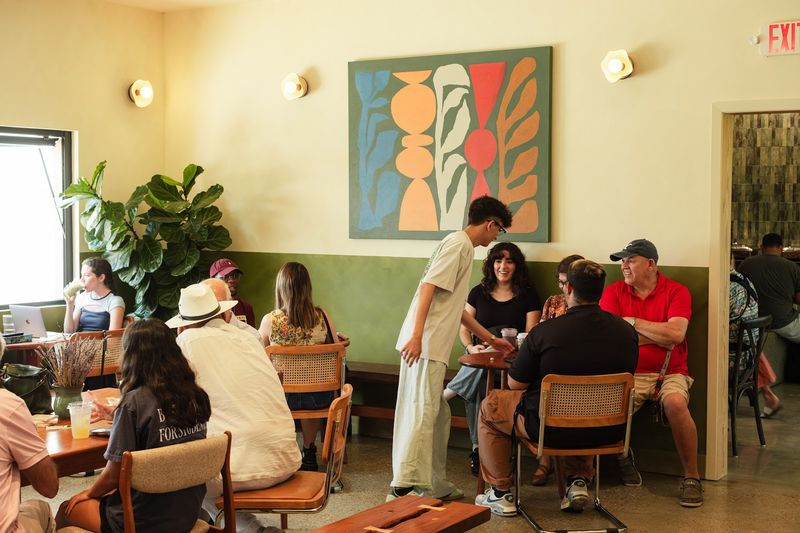
Here is the thing about a downtown with real sidewalks. People actually sit on them, and the cafes have leaned into it hard with patios, courtyards, and tables set right along the walking route.
Bright Eyed Brew Co. draws a steady crowd for its coffee creations and homemade Nutella waffles. Waffles with Nutella built in is not a decision most people struggle with.
Over on Government Street, The District Coffee Company keeps things eclectic and casual, with local artwork on the walls and patio seating that makes people-watching an official activity.
Tato Nut has legendary status for its donuts, and that reputation sometimes overshadows the coffee, which runs from frozen blended drinks to a serious dark roast. Ordering both is the correct move.
French Kiss Pastries sits on Washington Avenue in the middle of the shopping stretch, which makes it a natural pause point when the bags start getting heavy.
Beyond coffee, the downtown restaurant scene covers a lot of ground for a town this size. Outdoor courtyards show up again and again, because the coastal breeze does something for a meal that indoor seating cannot match.
Plan on eating slowly. Nobody here seems to be rushing anywhere, and the pace is contagious.
The Stories Buried Under The Streets
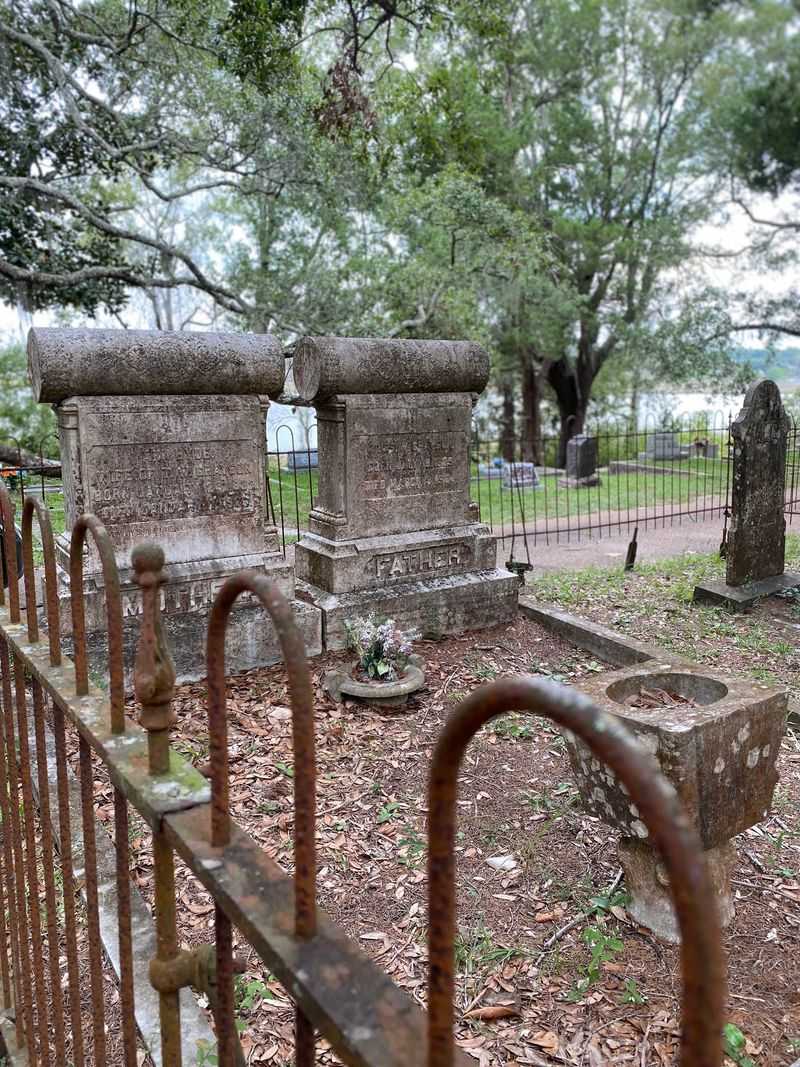
April 1699. French explorer Pierre Le Moyne d’Iberville came ashore and built Fort Maurepas, the first permanent French settlement on the Mississippi Gulf Coast.
That makes this ground older than most American cities by a wide margin.
After Mississippi joined the Union, the settlement grew into a modest village that lived off farming, fishing, and lumbering. Nothing glamorous, just steady work.
The name came later. In 1854, Dr. William Glover Austin coined Ocean Springs, pointing to the mineral springs that had people traveling here in hopes of a cure for whatever ailed them.
Health tourism was serious business in the 1800s, and those springs put the town on the map long before anyone thought about beach vacations.
Then the railroad arrived in 1870 and changed the equation again. Visitors came in larger numbers, and the seafood industry boomed, with catches processed in a string of buildings known simply as fish houses or oyster houses.
Layer all of that together and the downtown starts making more sense. The architecture, the street pattern, the depot standing where it stands, all of it traces back to those turning points.
History here is not roped off behind glass. It is the reason the sidewalks bend the way they do.
Many Independent Shops And Almost No Chains
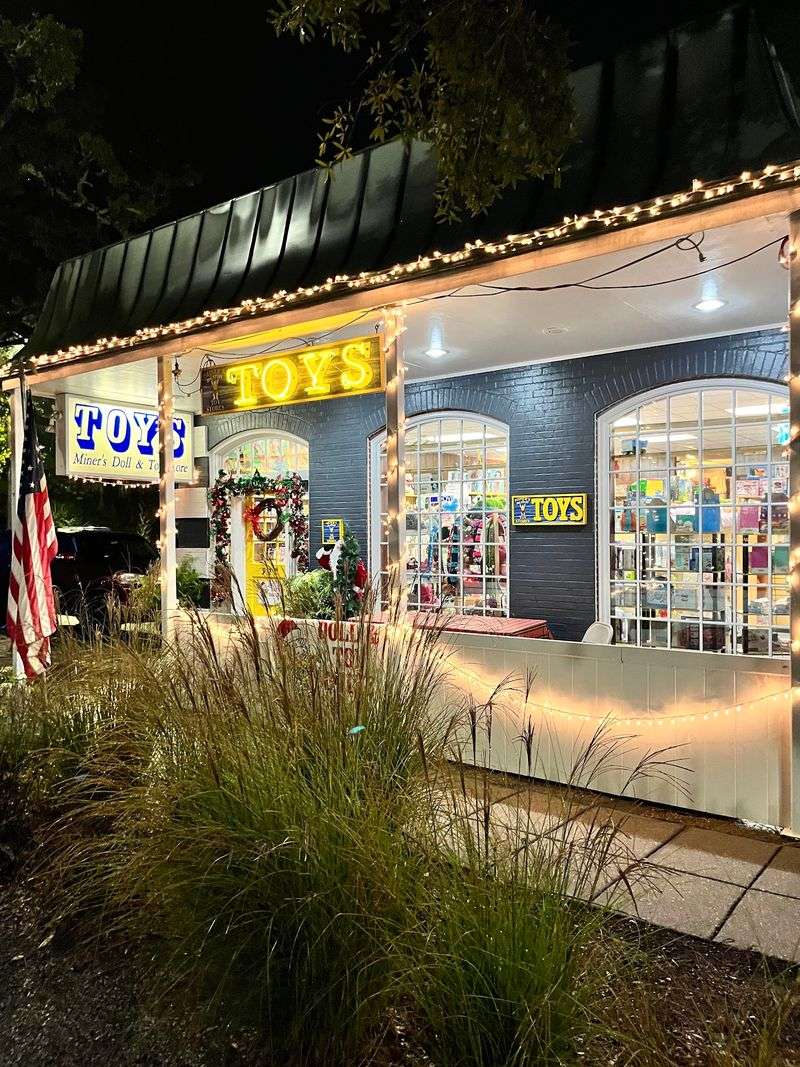
Count the chain retailers downtown, and you will run out of fingers before you start. That is not an accident; it is the whole personality of the place.
More than 100 independent shops and boutiques fill Washington Avenue and Government Street. Locally owned means the person ringing you up often knows who made the thing you are buying.
The merchandise leans artistic, which tracks in a town full of galleries. Handmade ceramics, original prints, and coastal-themed gifts show up in window after window.
Coastal Magpie stocks antiques alongside coastal home goods, the kind of mix where a serving bowl sits near something a hundred years old. Realizations is an Anderson family shop, keeping that artistic lineage in retail form.
Hillyer House pulls double duty as gallery and specialty shop, with pottery, jewelry, hand-blown glass, and sculpture sharing floor space. It has been at this for over five decades.
What makes shopping here different is the unpredictability. Two doors down from a boutique might be a design studio, then a bakery, then something you cannot categorize at all.
Budget more time than seems reasonable. Browsing turns into conversation pretty fast, and conversation eats the clock.
Green Spaces And Coastal Breezes
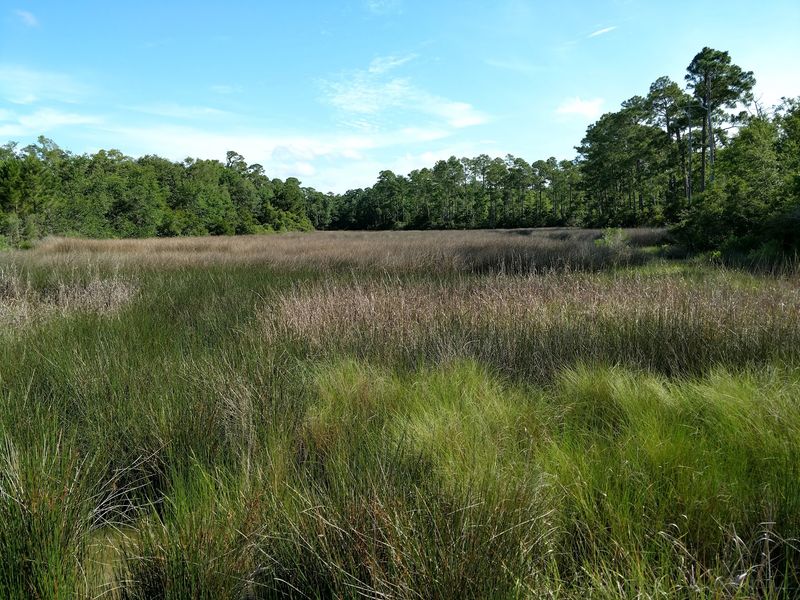
Enormous live oaks, salt marsh, and winding bayous do most of the scenery work around here. The town sits right on the coast facing Biloxi Bay, so water is never far.
Front Beach is the calm option. A fishing pier stretches out over the water and a paved path runs along the shore, which makes it easy for walkers, strollers, and anyone chasing a sunset.
Fort Maurepas Park sits nearby and honors that 1699 French landing. It comes with a public park and its own fishing pier, and it is close enough to Front Beach to walk between the two.
For something wilder, the Davis Bayou area of Gulf Islands National Seashore delivers. Camping, a nature trail, and boat launches open up the marsh side of the coast.
Davis Bayou is where the bird activity gets interesting, and the quiet is a different quiet than downtown quiet. Fewer footsteps, more herons.
The oaks deserve their own credit. Some of these trees were standing long before the railroad showed up, and their branches reach across roads like they own them.
Pack water and bug spray for the bayou. The mosquitoes have been here longer than anyone.
Why The Walkability Changes Everything Here
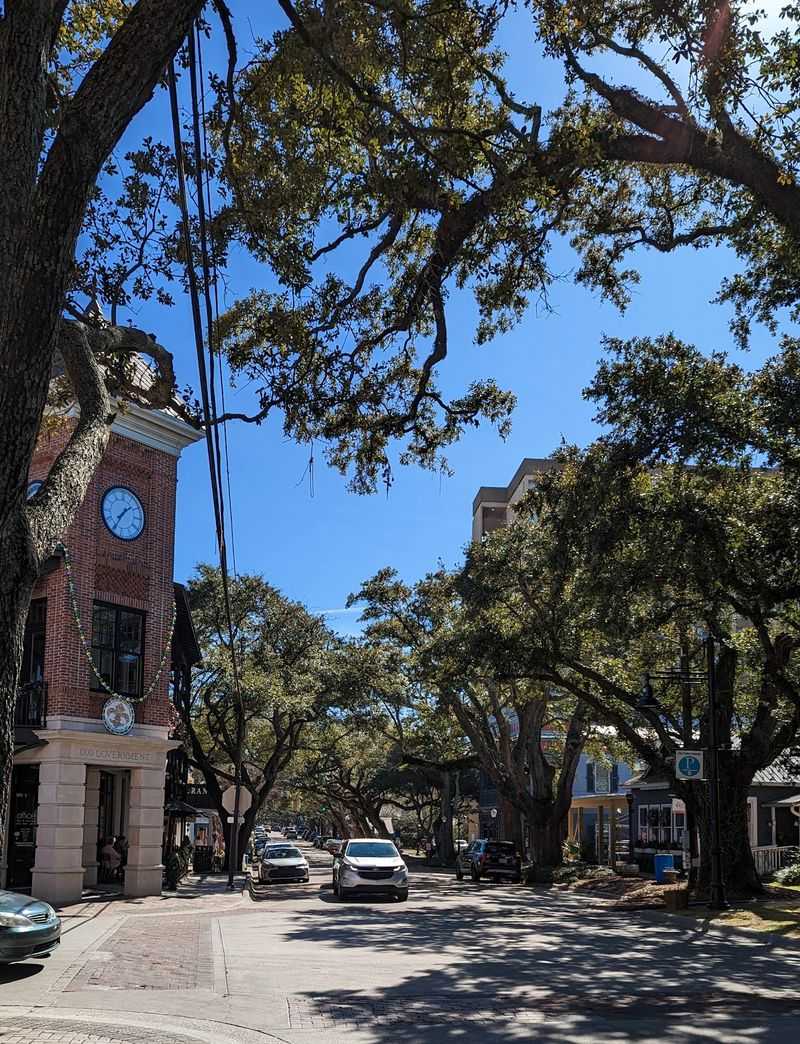
Plenty of small towns have historic buildings. Fewer have them arranged so you can actually reach all of them on foot without a parking strategy.
The downtown district is compact and safe, and the oak canopy handles the sun. Shade turns a summer walk from an endurance test into something pleasant.
Galleries, cafes, shops, and the depot all sit within the same handful of blocks. Nobody has to choose between coffee and pottery because both are a two-minute walk apart.
Walkability also changes how visitors behave. When driving is optional, people slow down, notice porch details, and wander into places they never planned on entering.
Front Beach and Fort Maurepas Park extend the walking radius toward the water. That connection between historic core and coastline is rare, and it means an afternoon can include a gallery and a pier without a car key involved.
The layout has been recognized nationally. Coastal Living named it a top 10 Happiest Seaside Town in 2015, and USA Today ranked it a top 10 Best Coastal Small Town in 2022.
Awards aside, the practical takeaway is simple. Park once, then forget where you parked for a few hours.
The Lasting Pull Of A Coastal Arts Town
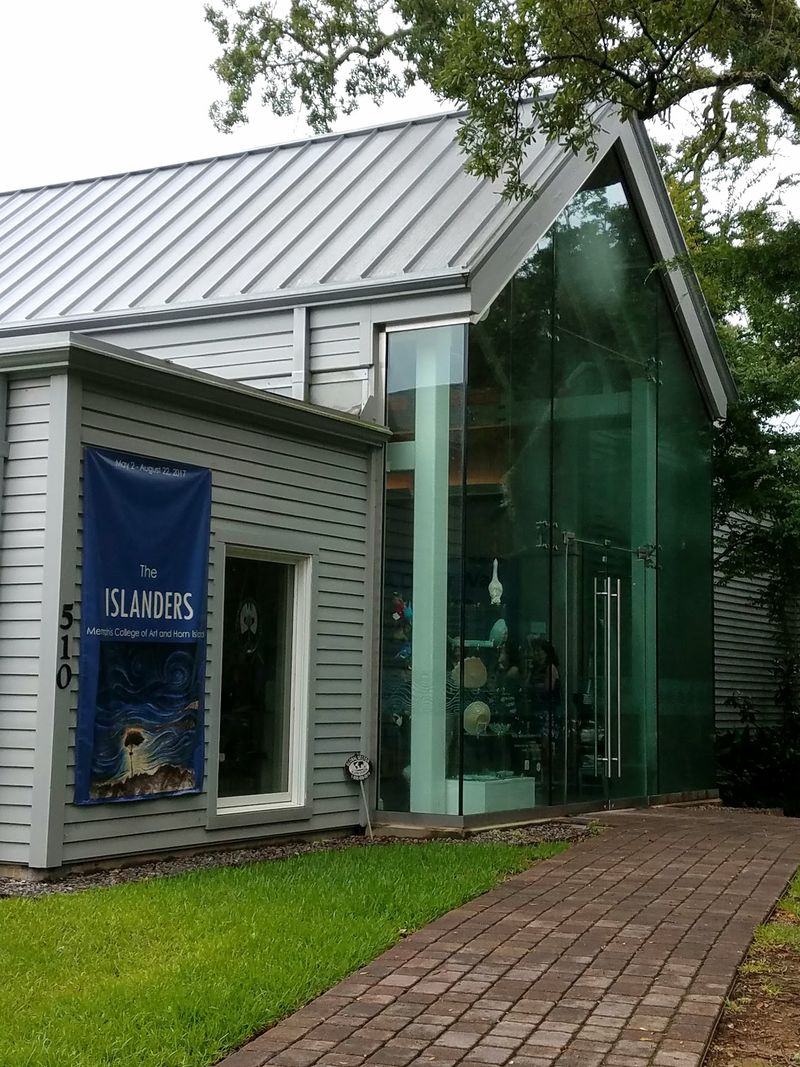
Ask what keeps people coming back, and the answer is rarely one thing. It is the stacking of several good things in a small footprint.
Coastal scenery meets a real artistic tradition here, one with roots going back to the Anderson family and the pottery studio they opened in 1928. That is close to a century of makers working in the same spot.
The historic core supplies the setting, with 19th-century houses and a restored railroad depot doing more for atmosphere than any new development could manage.
Then there is the natural side. Bayous, marshes, a quiet beach, and oaks big enough to shade an entire street give the town a softness that photographs never fully capture.
Local businesses hold it all together. With over 100 independent shops and galleries, the money and the character stay in town instead of getting shipped somewhere else.
A population of around 18,429 as of the 2020 census keeps things human-sized. Big enough for a real dining scene, small enough that the walk between stops takes minutes.
For anyone drawn to art, old buildings, and coastal quiet in one package, this Jackson County city delivers without much fuss. That is the appeal in a sentence.