
The Oregon Trail Featuring A Boardwalk Through A Forest That Looks Closed To The Public
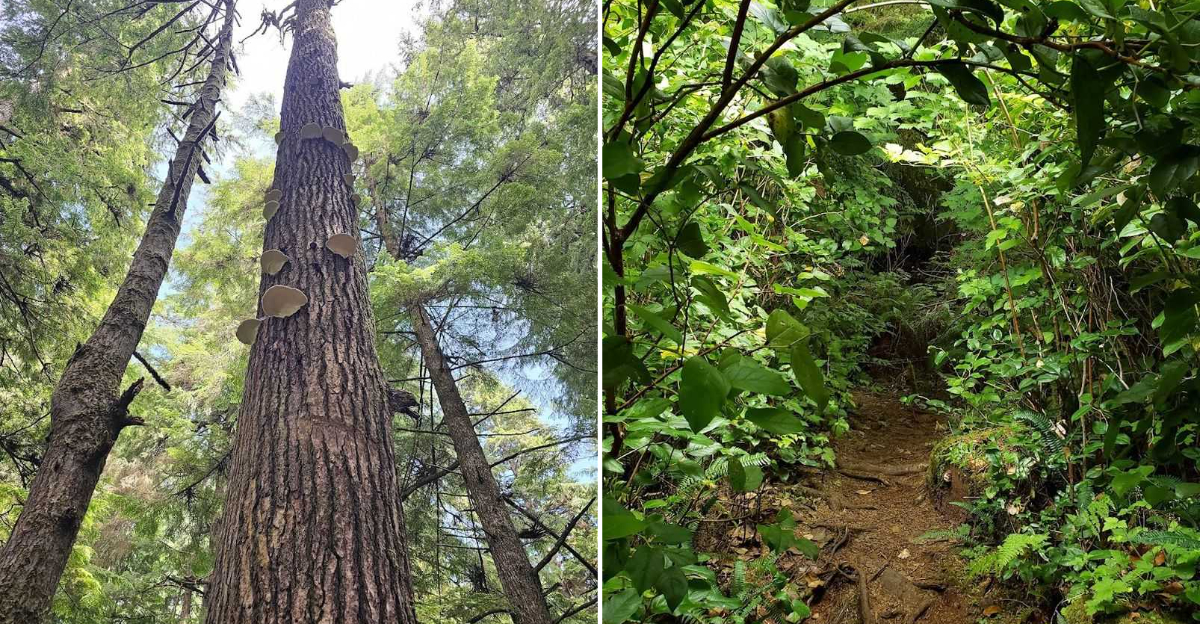
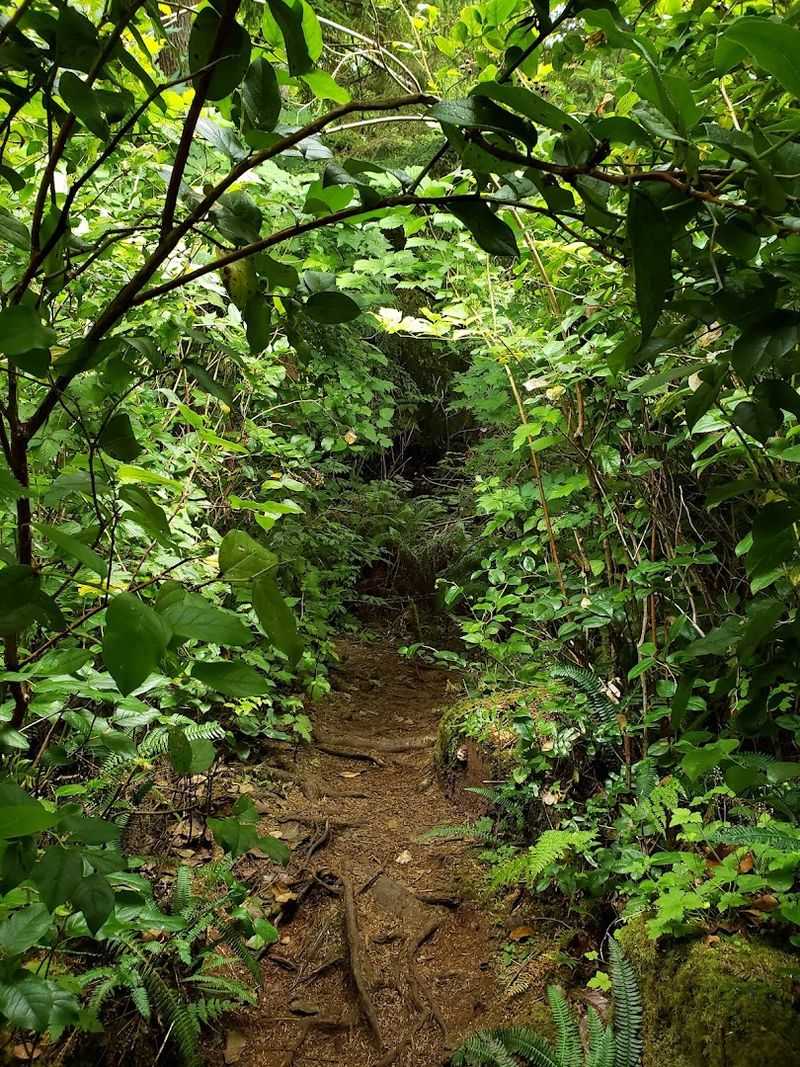
The gate looks locked until someone who has been here before walks straight through it. That detail filters out most people before the trail even begins.
Outdoor experiences that announce themselves loudly and outdoor experiences that do the opposite exist in separate categories entirely.
This trail belongs firmly in the second, a boardwalk threading through forest so dense and undisturbed that the surrounding quiet feels almost institutional.
First time visitors move slowly and speak in lower voices than they arrived with. The forest produces that adjustment without asking for it.
Oregon keeps this one close, and the people who found it have been returning that favor ever since. A trail that looks closed to everyone who hasn’t been told otherwise, and delivers something that justifies every step of the approach.
Boardwalk Construction And Design Features
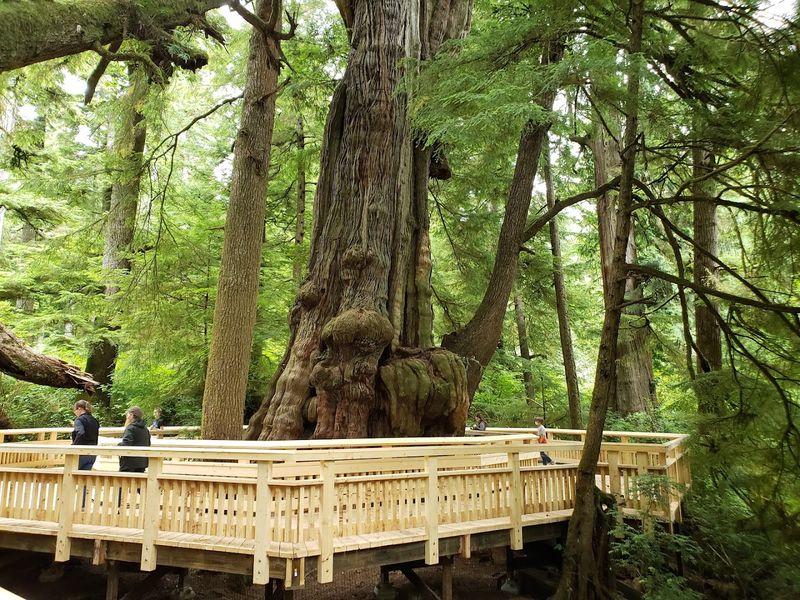
Yellow cedar planks stretch the full 1.1 miles of this trail. Every single step you take is on a solid, well-maintained boardwalk.
No muddy boots required.
The boardwalk was built specifically to protect the boggy wetland beneath your feet. Without it, the sensitive ecosystem would take a serious hit from foot traffic.
Builders designed it flat and wide enough for two people to walk side by side.
Wheelchairs roll through here easily. Strollers handle it without a struggle.
The design makes it one of the most accessible forest trails on the Oregon Coast.
Near the Big Tree at the end, a dedicated observation deck wraps around the base. It protects the root system while giving you the best possible view.
That detail alone shows how much thought went into building this place.
One thing worth knowing: the boardwalk can get slippery after rain. The wood stays damp under the thick canopy.
Grip-soled shoes are a smart call on cloudy days.
There are rest benches placed along the route. A picnic table sits near the end by the Big Tree.
A portable toilet, drinking fountain, and garbage can are available right at the trailhead.
Find it at Hwy 101 near E Washington St, Rockaway Beach, OR 97136. Parking is free, but the lot holds only about ten cars. Street parking nearby works as a backup.
Forest Flora Diversity And Identification Tips
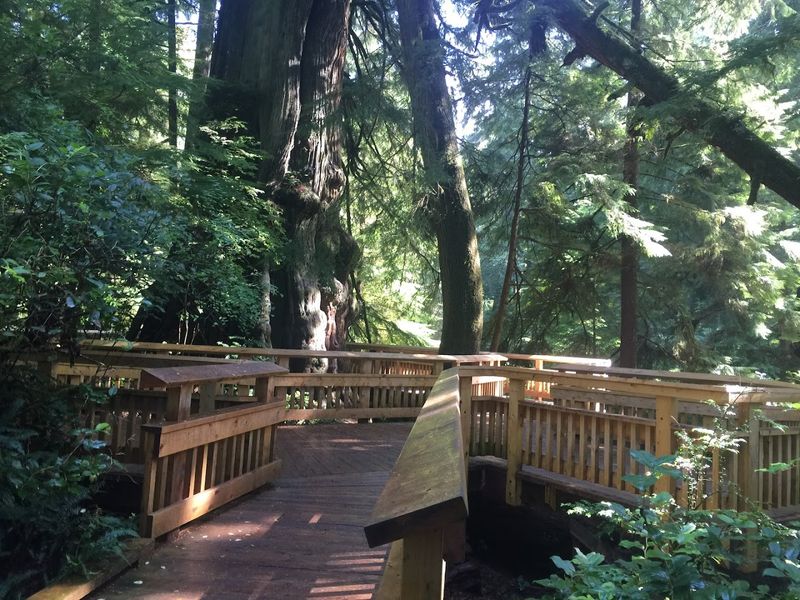
Entering this trail feels like flipping through a Pacific Northwest field guide. The 46-acre preserve packs in an impressive variety of plants.
You do not need to be a botanist to appreciate what is growing here.
Western red cedars dominate the canopy. Some of them are massive, with bark that peels in long reddish strips.
Sitka spruce grow alongside them, shooting straight up toward the gray sky.
Red alder fills the understory in many sections. Alder is a fast grower and one of the first trees to move into disturbed areas.
Spotting it here tells you something about the forest’s history.
Skunk cabbage is everywhere in the wetter sections. The leaves grow enormous, sometimes reaching three feet long.
They earned their name honestly, so maybe do not crush them.
Moss covers nearly every surface. Logs, stumps, and lower tree trunks all wear thick green coats.
It gives the whole place an almost unreal look, like a movie set for a fantasy film.
For identification, look at leaf shape and bark texture. Cedar bark is fibrous and shreddy.
Spruce bark is scaly and gray. Alder has smooth, pale bark with white patches.
Berries and blooms appear along the boardwalk in warmer months. Birds and insects follow the food sources.
Paying attention to what is flowering tells you a lot about the season.
Trail Accessibility And Visitor Guidelines
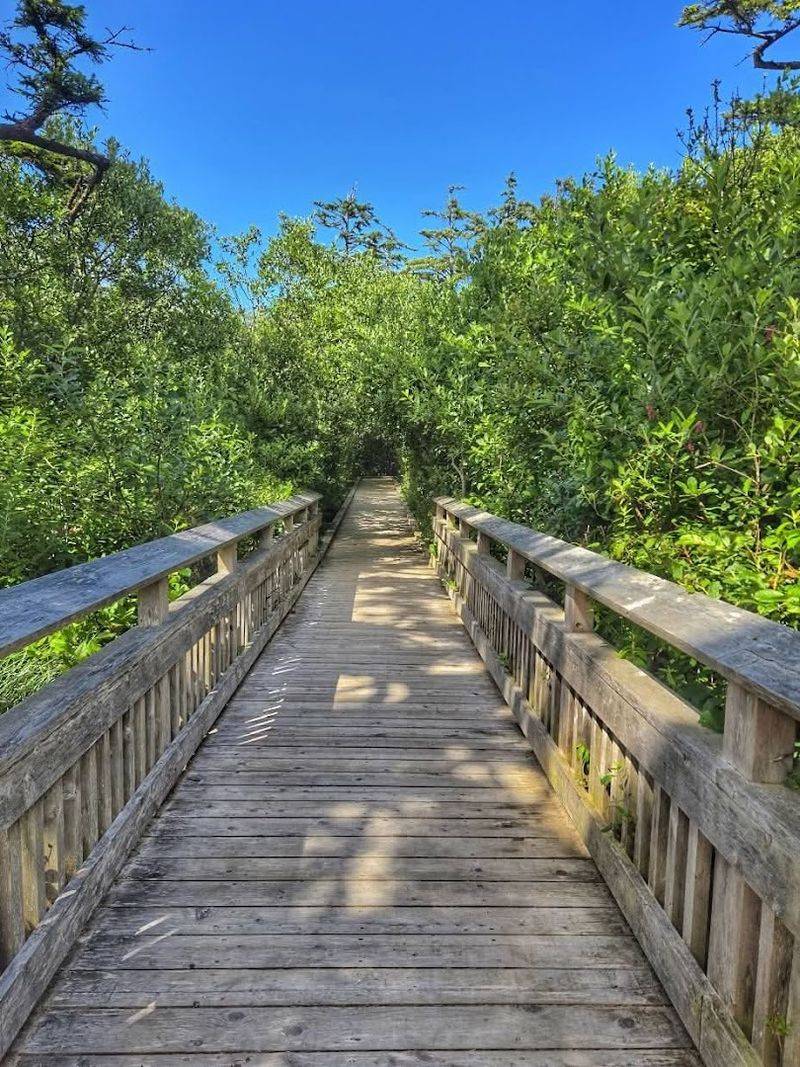
Few trails on the Oregon Coast come close to this level of accessibility. The boardwalk is flat, wide, and smooth the entire way.
Strollers, wheelchairs, and leashed dogs are all genuinely welcome here.
The trail is open daily from 7 AM to 10 PM. No permit is needed.
No entry fee either. Just show up, park, and walk.
The parking lot is small, fitting roughly ten vehicles. On busy weekends, it fills up fast.
Street parking along the road nearby is an option when the lot is full.
Dogs must stay on leashes the whole time. Visitors are encouraged to stay on the boardwalk.
The wetland ecosystem underneath is fragile, and stepping off the planks causes real damage.
There are sitting areas placed at intervals along the trail. These are great for families with young kids who need a break.
The trail is only about 1.1 miles out and back, so the whole walk takes under an hour for most people.
Pack out whatever you bring in. A garbage can is available at the trailhead.
Leave the forest cleaner than you found it, which honestly should go without saying.
One section beyond the main boardwalk junction is overgrown and blocked by fallen trees. That part is not maintained.
It is not closed by a sign, but it is rough enough to make you think twice about going further.
Historical Significance Of The Oregon Trail Route
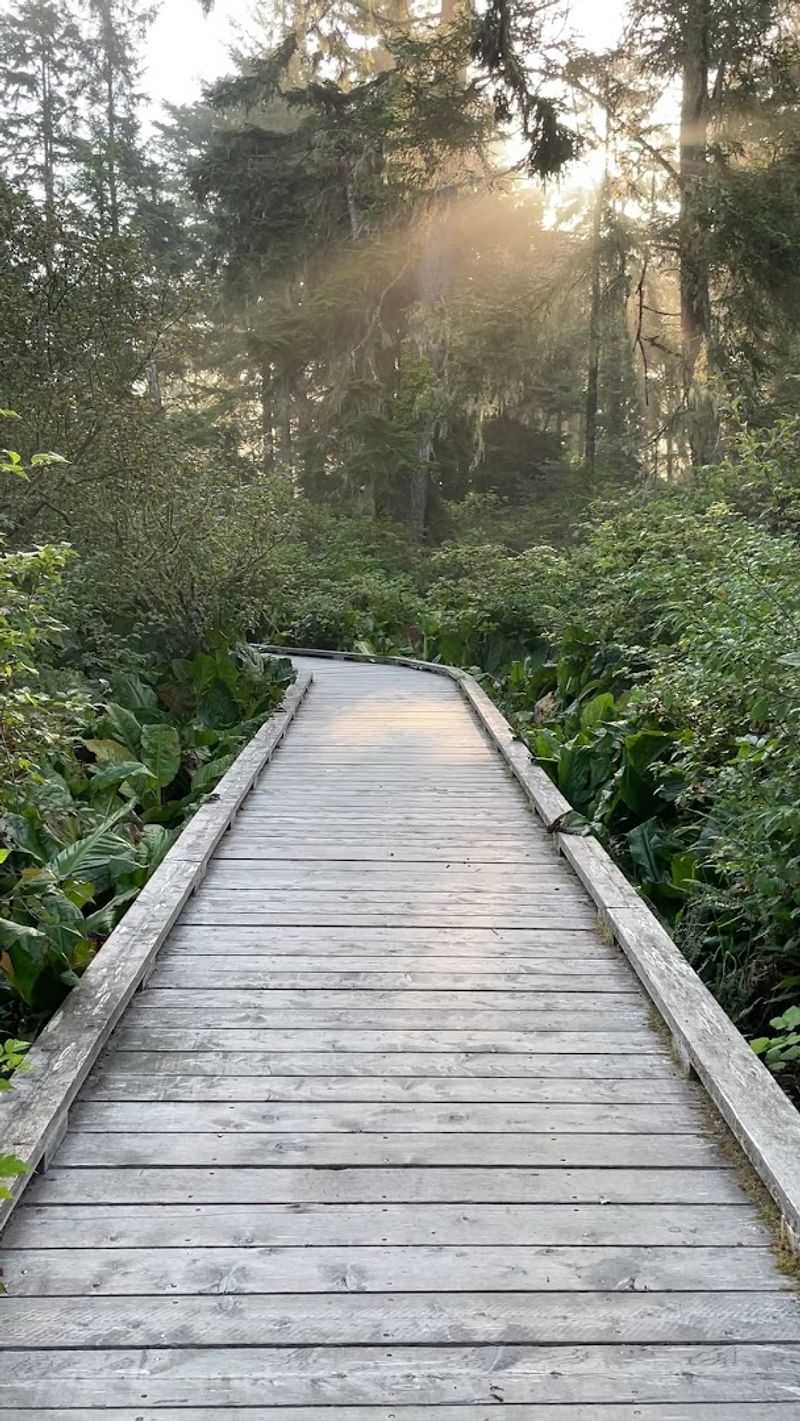
The name Oregon Trail carries a lot of weight in this state. Pioneers used it to cross the continent in the 1800s.
This trail in Rockaway Beach is a different kind of Oregon story altogether.
The Rockaway Big Tree Trailhead is sometimes called the Rockaway Beach Old Growth Cedar Preserve. It protects 46 acres of ancient forest that somehow survived logging and development.
That survival is the historical story worth knowing.
The Big Tree at the center of the preserve is a Western Red Cedar. Estimates put its age between 800 and 1,200 years old.
It was already ancient when European explorers first reached the Pacific Coast.
Old-growth forests like this one once covered enormous stretches of the Pacific Northwest. Most were cleared during the twentieth century for timber.
Finding a preserved stand this close to a highway is genuinely rare.
The boardwalk itself represents a more recent chapter. It was constructed to give the public access without destroying what it came to see.
That balance between access and preservation reflects a shift in how Oregon manages its natural spaces.
Local conservation groups and land managers worked to establish and protect this preserve. Their efforts created a public resource that costs nothing to visit.
The history here is less about dates on a plaque and more about a community choosing to protect something irreplaceable.
Standing next to a 154-foot cedar that predates the Crusades is its own kind of history lesson.
Seasonal Changes And Their Impact On Wildlife
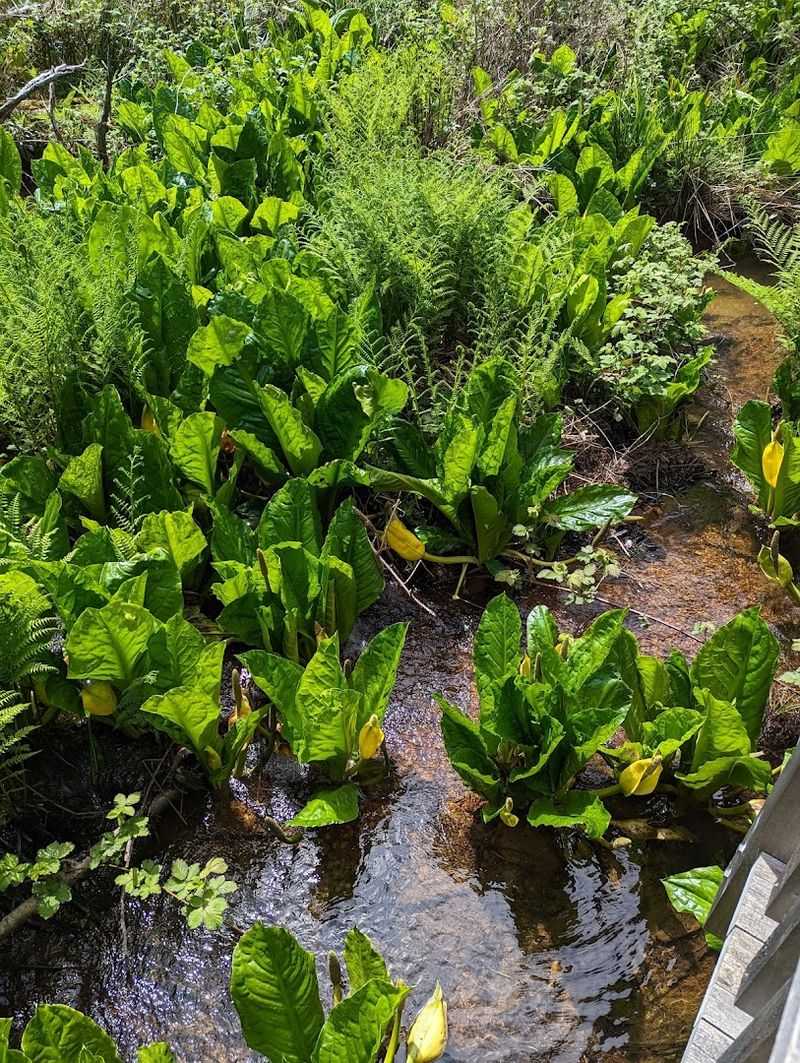
Every season brings something different to this preserve. Spring is loud with birdsong and full of blooms along the boardwalk edges.
The wetland wakes up fast once temperatures start rising.
Garter snakes show up on sunny days, stretched across logs, soaking in the warmth. Spotting one is common enough that it barely surprises regulars.
They are harmless and honestly pretty cool to see up close.
A family of hawks has been spotted nesting in a snag near the boardwalk. Ospreys have also been seen overhead, with at least one nest reported at the top of a tall, weathered tree.
Bring binoculars if birds are your thing.
Frogs are active in the wetter months. Chipmunks and squirrels move through the understory year-round.
The preserve is small but dense with life, which makes even a short walk feel eventful.
Summer brings more visitors and more wildlife activity. Berries ripen along the trail edges.
Insects hum in the skunk cabbage patches. The canopy fills in and makes the whole trail feel enclosed and cool.
Fall is quieter but still worth visiting. Leaves from the red alder turn yellow and drop.
The boardwalk gets slicker as rain returns. Fewer crowds mean more chances to hear the forest without interruption.
Winter storms have caused real damage here before. A major storm in 2023 knocked down trees on the unpaved loop section.
That damage is still visible and explains why part of the trail looks impassable.
Conservation Efforts Protecting Trail Ecosystems
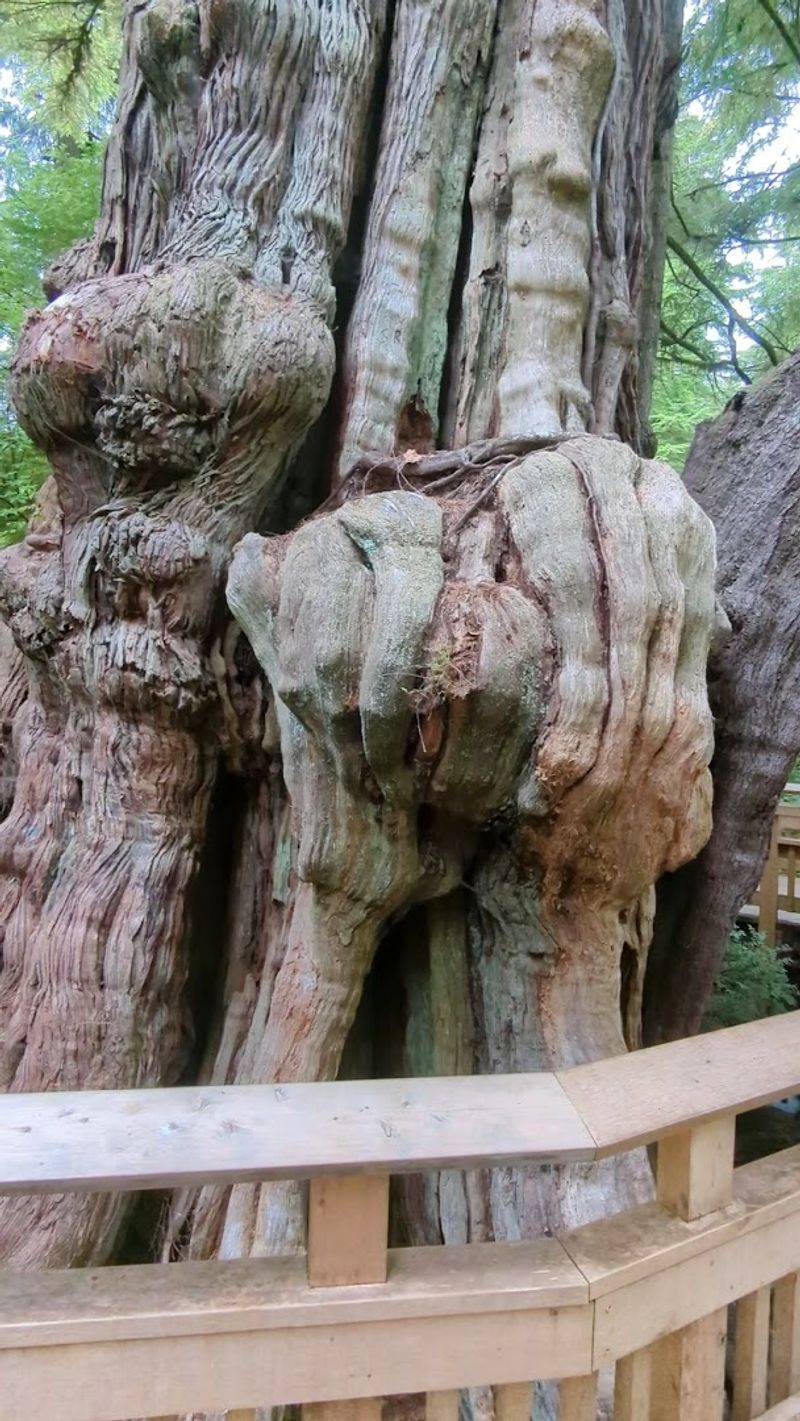
The boardwalk itself is a conservation tool. Building it elevated above the ground protects the wetland soil from compaction.
Every plank is doing a job beyond just holding your weight.
Visitors are asked to stay on the boardwalk at all times. Stepping off into the wetland disturbs root systems and plant life that took decades to establish.
The signs asking you to stay on the path are not suggestions.
The 46-acre preserve was set aside specifically to protect this ecosystem. Old-growth cedar wetlands are rare in Oregon.
Once they are gone, they cannot be rebuilt on any human timeline.
The observation deck around the Big Tree was designed with root protection in mind. Getting close to a 1,200-year-old tree is exciting.
Damaging its root system to do so would be a bad trade.
Pack-it-in, pack-it-out rules apply here. A garbage can sits at the trailhead, but nothing is provided on the trail itself.
Keeping the preserve clean is a shared responsibility every visitor carries.
Storm damage from the 2023 winter storms closed the unpaved loop section of the trail. That section remains blocked by fallen trees and is no longer maintained.
The main boardwalk was repaired and reopened, showing that active maintenance is part of the conservation effort.
Local land managers continue to monitor the preserve. Their work keeps this place functioning as a public resource.
Visiting responsibly helps ensure it stays open for future visitors.
Outdoor Photography Techniques For Forest Settings
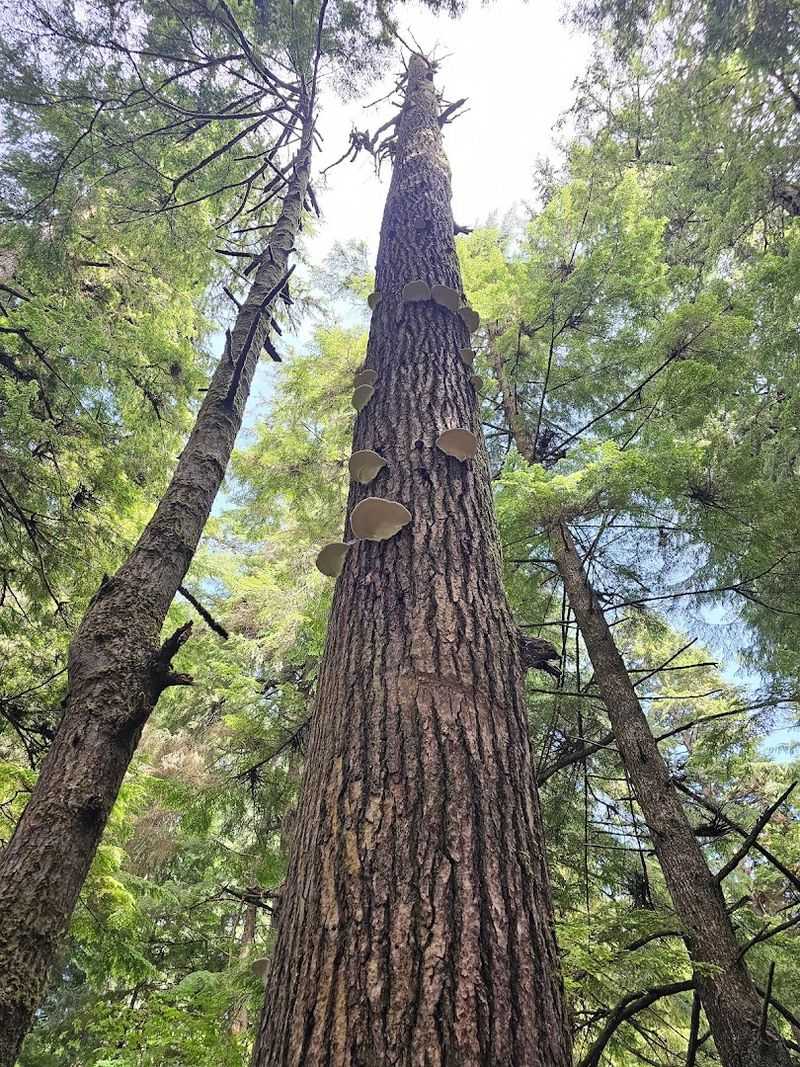
Overcast days are actually your best friend for forest photography. The clouds act like a giant softbox, eliminating harsh shadows.
The Pacific Northwest delivers that kind of light almost year-round.
The Big Tree is the obvious hero shot, but do not ignore everything else. Moss-covered logs, skunk cabbage leaves, and the boardwalk itself make strong subjects.
Look down as much as you look up.
Wide-angle lenses work well for capturing the full scale of the cedar canopy. Getting low and shooting upward emphasizes how tall these trees actually are.
A 154-foot cedar looks even bigger from ground level.
Telephoto lenses come in handy for birds. Ospreys and hawks nest near the trail.
They are not always cooperative, but patience usually pays off. Keeping your camera ready during the whole walk is worth it.
The boardwalk creates natural leading lines. Frame your shot with the planks stretching toward the Big Tree in the distance.
That composition draws the viewer straight into the scene.
Wet days add drama to forest photos. Water droplets on leaves, reflections in puddles, and mist between the trees all add atmosphere.
Just protect your gear with a rain cover or dry bag.
Clear areas along the boardwalk are designated for photos near the trees. Use those spots rather than stepping off the path.
You get a great shot and leave the ecosystem intact. That is the right move.
Recommended Gear For Hiking And Exploration
This trail is short and flat, but that does not mean you should show up unprepared. The right gear makes the difference between a great walk and a slippery, wet mess.
Oregon weather does not negotiate.
Grip-soled shoes are the top priority. The boardwalk stays damp under the dense canopy, even on days without rain.
Regular sneakers become ice skates on wet cedar planks. Waterproof trail shoes are the smart call.
A lightweight rain jacket packs down small and weighs almost nothing. Carry it even if the forecast looks clear.
The Oregon Coast changes its mind faster than you can check your phone.
Binoculars are worth bringing if wildlife is on your radar. Hawks and ospreys nest near the trail.
Garter snakes and frogs show up along the boardwalk edges. A compact pair fits easily in a small daypack.
Bring water even for a short hike. There is a drinking fountain at the trailhead, but nothing on the trail itself.
Staying hydrated on a 1.1-mile walk seems obvious, but people forget.
A small daypack handles everything you need. Snacks, a water bottle, a rain layer, and your camera all fit comfortably.
You do not need a full hiking setup for this trail.
Trekking poles are optional but useful on the slight incline near the Big Tree end of the boardwalk. The grade increases enough in the final quarter mile to make poles a comfort on wet days.